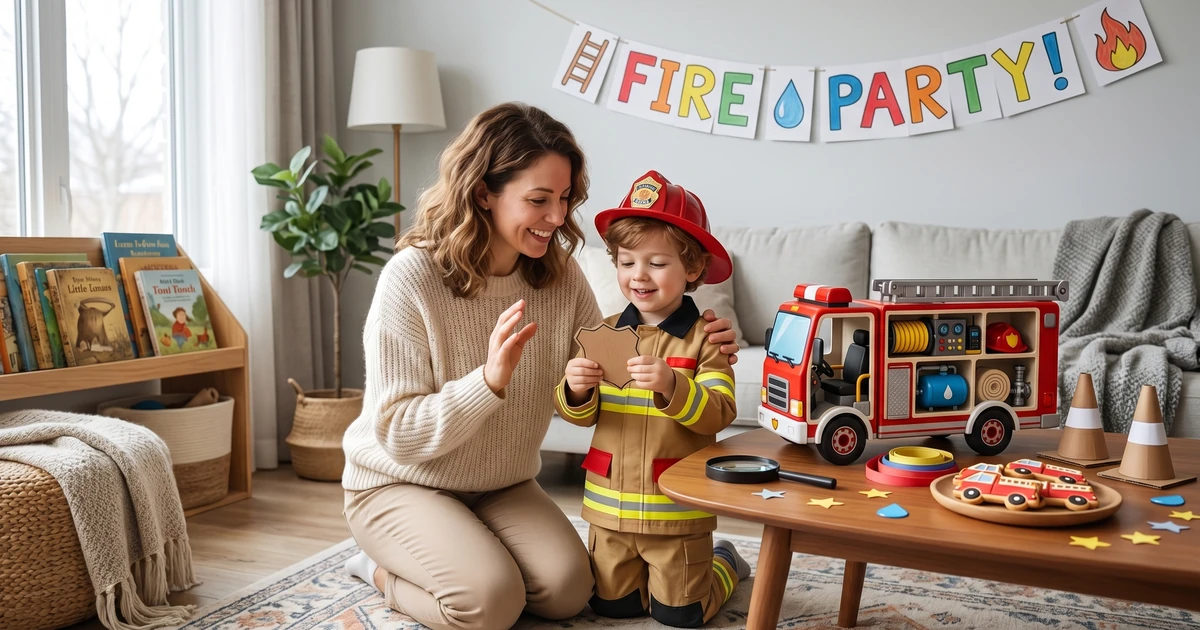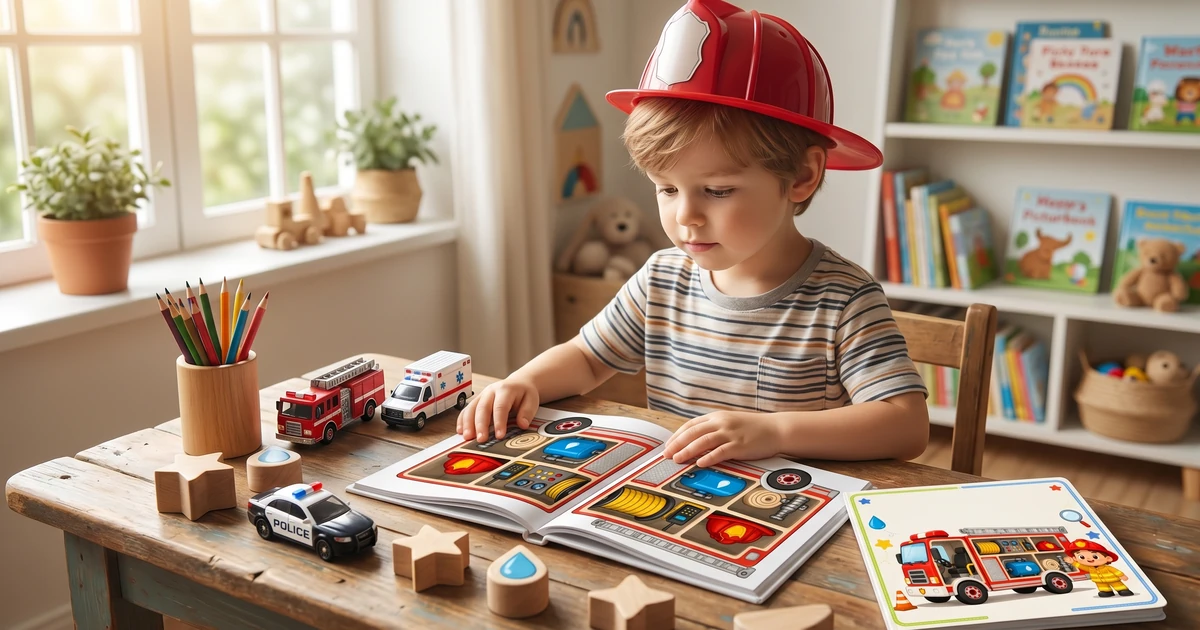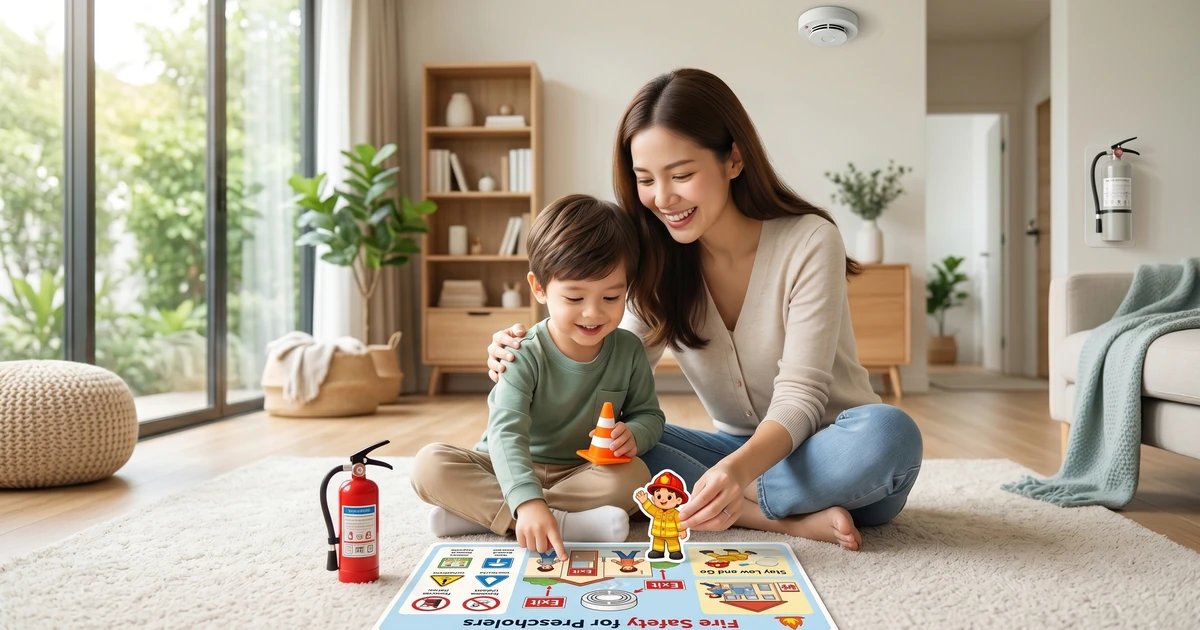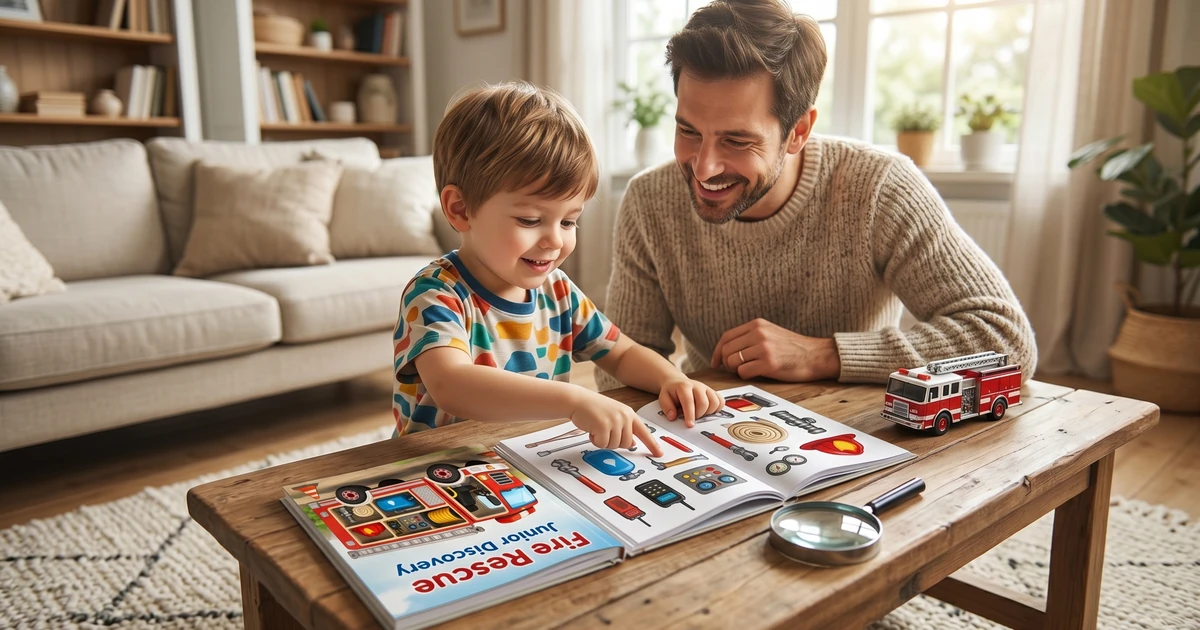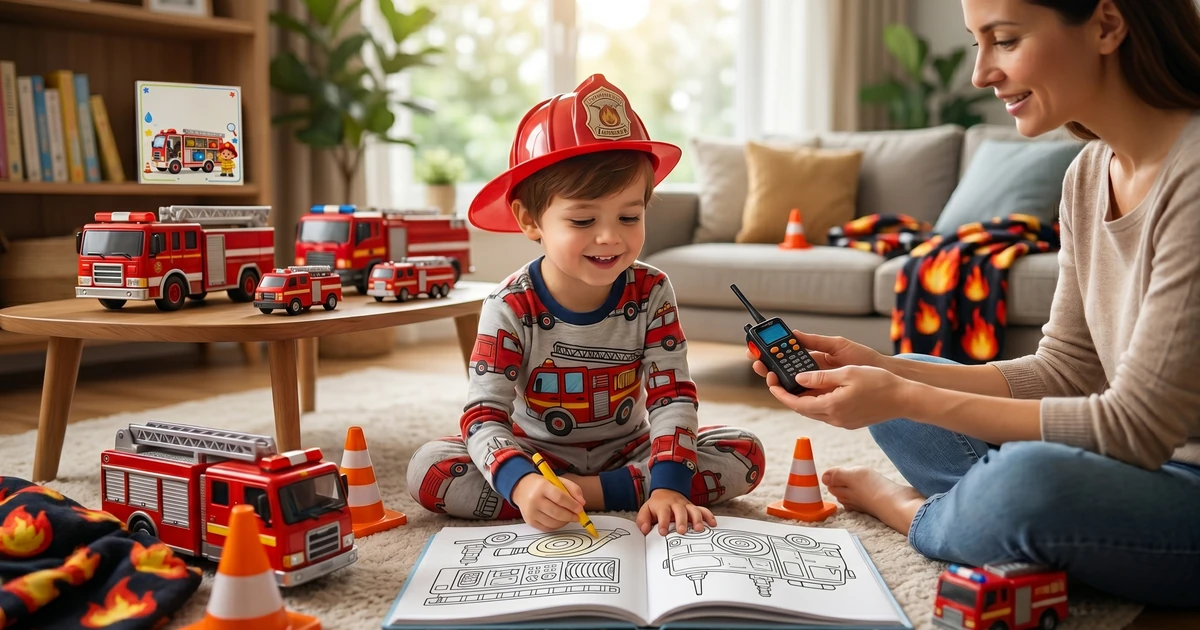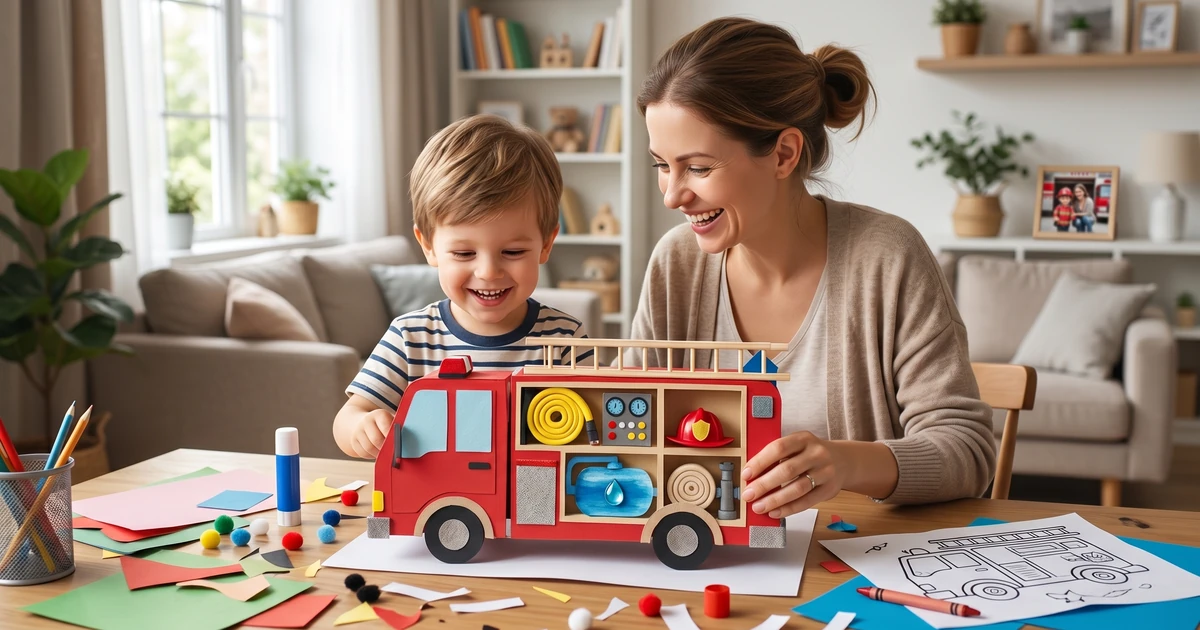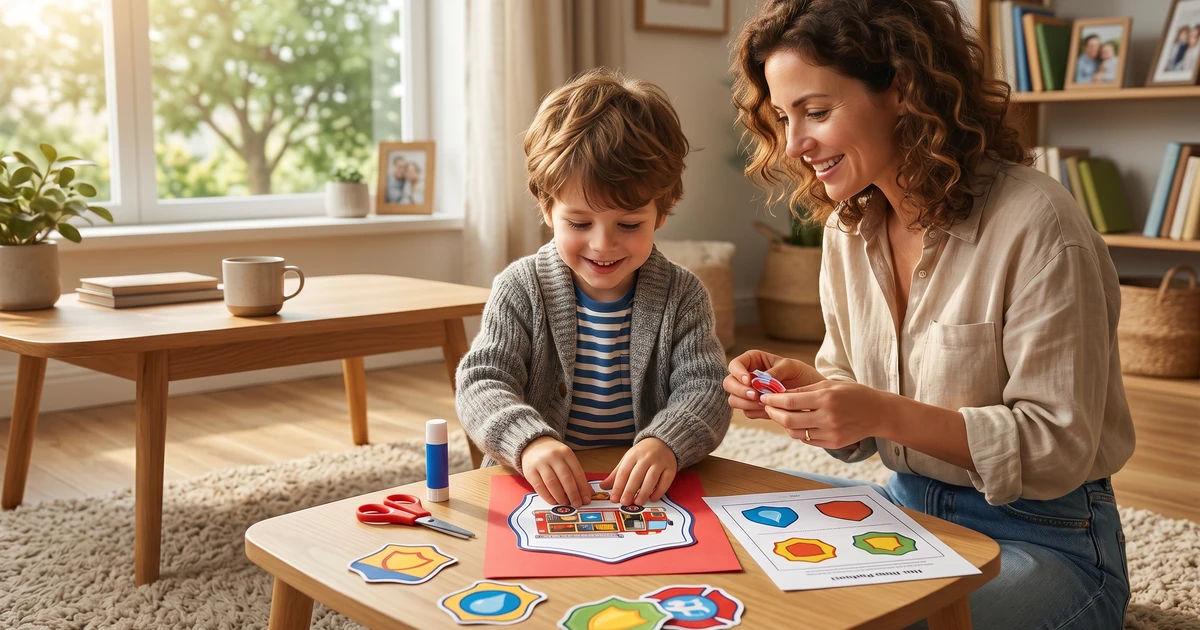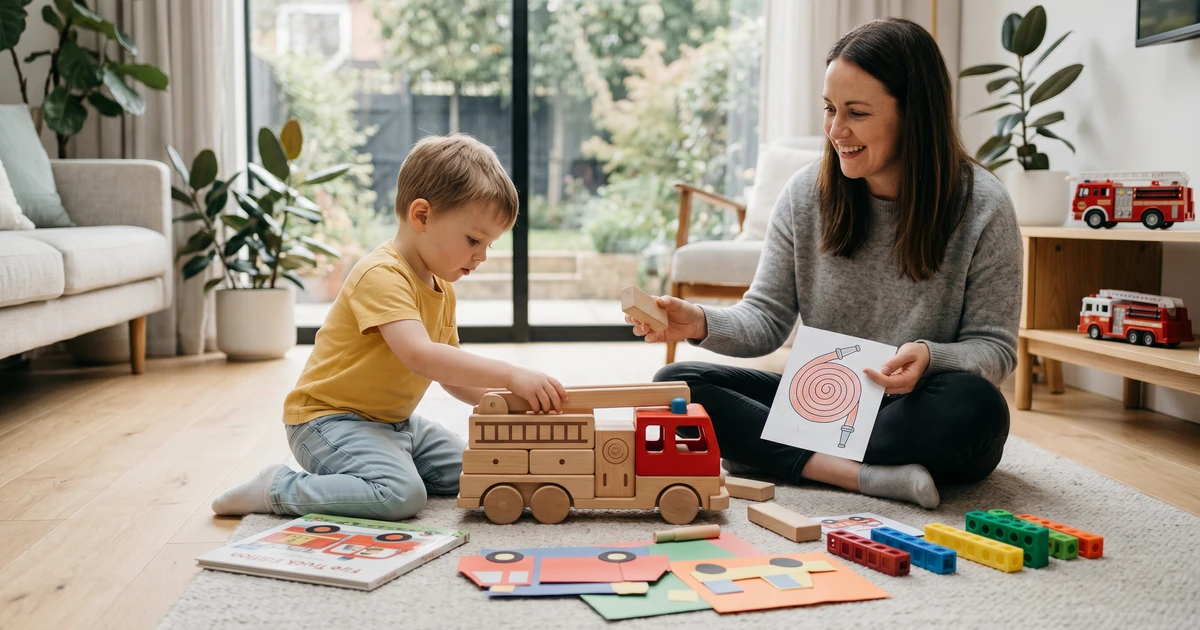

In my research as part of the Kubby Team, I spent over 40 hours analyzing parent forums, child development studies, and educator reports to understand what really works for three-year-olds. One pattern was crystal clear: the most engaged, creative, and happy children weren’t the ones with the most screen time, but the ones with the richest screen free activities. For a three-year-old, the world is a massive, tactile playground waiting to be discovered with all five senses. While digital content can be engaging, it often replaces the critical, hands-on learning that forms the foundation of cognitive and motor skills. This is the exact philosophy behind resources like our Fire Truck Activity Workbook: Ignite Your Child’s Learning, which is designed to pull children into a 3D world of play and away from the 2D screen.
GUND Official PAW Patrol Marshall in Signature Firefighter Uniform Plush Toy, Stuffed Animal for Ages 1 and Up, 6" (Styles May Vary) : Toys & Games
GUND Official PAW Patrol Marshall in Signature Firefighter Uniform Plush Toy, Stuffed Animal for Ages 1 and Up, 6" (Styles May Vary) : Toys & Games
The push for less screen time isn’t just a trend. According to the American Academy of Pediatrics, high-quality, non-digital play is essential for healthy brain development in early childhood. It builds attention spans, problem-solving skills, and the ability to navigate the real, sometimes messy, physical world. This guide dives deep into practical, screen-free activities specifically tailored for three-year-olds, explaining not just the “what,” but the “why” and “how” they support your child’s growth.
Key Takeaways:
- Screen-free play directly builds fine and gross motor skills, social-emotional intelligence, and sustained focus in ways passive screen time cannot.
- The best activities are simple, open-ended, and use everyday household items, making them low-cost and highly adaptable.
- A themed activity, like a fire truck discovery day, can bundle multiple skills (sorting, role-play, art) into one engaging, screen-free session.
- Setting up a successful screen-free environment requires intention but pays off in reduced tantrums and increased imaginative play.
- Balancing high-energy and quiet, focused activities is key to managing a three-year-old’s day without resorting to a screen.
What Are the Benefits of Screen Free Activities for 3 Year Olds?
Screen free activities are any form of play, learning, or engagement that does not involve a television, tablet, smartphone, or computer. For a three-year-old, this encompasses everything from building with blocks to helping wash vegetables for dinner. The benefits are not merely about reducing screen time, but about actively cultivating the skills that screens often inhibit.
First, these activities promote sensory integration. A child squishing play-dough, sorting dry beans, or running through grass is receiving vital tactile, proprioceptive, and vestibular input that wires their brain for learning. Screens offer a very narrow band of sensory experience, mostly visual and auditory. Second, they build executive function. When a toddler struggles to stack a tower without it falling, they are practicing patience, problem-solving, and impulse control. A game or video typically solves problems for the child or changes scenes too quickly to allow for this deep processing.
“Hands-on, exploratory play is how young children make sense of their world. It allows them to test hypotheses, discover cause and effect, and develop resilience when things don’t go as planned.” - Zero to Three, National Center for Infants, Toddlers, and Families.
Finally, screen-free time is crucial for language development and social skills. Face-to-face interaction during play provides immediate feedback, teaches conversational turn-taking, and helps children learn to read non-verbal cues. These are the foundational skills for making friends and succeeding in a preschool environment, as explored in our guide on Community Helpers Workbook: Early Childhood Learning.
The core benefit is that screen-free play builds the child as an active creator, not a passive consumer.
How to Set Up a Successful Screen-Free Day for Your 3-Year-Old
Transitioning from a routine that includes screens to one that doesn’t can feel daunting. The key is preparation and rhythm, not perfection. Based on patterns I’ve seen from hundreds of parent reviews and daily schedules, the most successful days have a predictable flow that balances energy levels.
Step 1: Establish Clear “No-Screen” Zones and Times
Start by making certain areas of your home, like the dining table and the playroom, screen-free for everyone. Also, designate specific times, such as the hour after breakfast or before dinner, as dedicated screen-free playtime. Consistency helps your child know what to expect and reduces requests for devices.
Step 2: Create an “Activity Station”
Have a low shelf or bin with 3-4 rotating activities ready to go. This prevents the “I’m bored” spiral. The station might include a puzzle, a bin of LEGO DUPLO, some washable crayons and paper, and a pretend play item like a toy toolset. Rotate items every few days to maintain novelty. This is a perfect place to introduce a themed activity from our Preschool Fire Truck Activities: A Parent’s Complete Guide.
Step 3: Mix Energy Levels Throughout the Day
Three-year-olds have short attention spans and need to alternate between big body movement and quiet focus. Structure your day like a preschool class:
| Time of Day | Activity Type | Example Activities |
|---|---|---|
| Morning (High Energy) | Gross Motor | Dance party, obstacle course, “firefighter” drills (stop, drop, roll) |
| Late Morning (Focused) | Fine Motor/Cognitive | Puzzle, threading beads, activity workbook page |
| Afternoon (Creative/Quiet) | Sensory/Pretend Play | Play-dough, water table, doll or truck pretend play |
| Late Afternoon (Mixed) | Helpful/Outdoor | ”Helping” with simple chores, backyard exploration, walk to look for “fire hydrants” |
Step 4: Involve Them in Real Work
Don’t underestimate the power of involving your child in household tasks. Wiping tables, sorting socks, or watering plants are all fantastic screen-free activities that build responsibility, vocabulary, and motor skills.
Pro Tip: When you need to make a phone call or focus on work, set up a special “quiet time” activity box they only get during that period. It creates a positive association and gives you a needed break without a screen.
A successful screen-free day relies on a plan, not on willpower in the moment.
The Best Screen Free Activities for 3 Year Olds: A Breakdown by Skill
You don’t need fancy toys. The best activities are often simple, open-ended, and use what you already have. Here’s a comparison of activity types and the core skills they develop.
| Activity Category | Example Activities | Primary Skills Developed | Cost & Setup |
|---|---|---|---|
| Sensory Play | Water table, rice bin, play-dough, mud kitchen | Tactile processing, scientific reasoning, language (wet/dry, smooth/gritty) | Low ($0-$20). Use bowls, spoons, dried beans, or cornstarch “oobleck.” |
| Building & Construction | Blocks, LEGO DUPLO, cardboard boxes, pillow forts | Spatial reasoning, problem-solving, early engineering concepts, hand-eye coordination | Medium ($20-$50). Start with a basic block set. |
| Pretend & Dramatic Play | Dress-up, play kitchen, toy vehicles, puppet show | Social-emotional skills, empathy, narrative thinking, vocabulary | Variable. Use old clothes, pots/pans, and printables like our Free Printable Firetruck Badge Template for Kids. |
| Art & Creative Expression | Finger painting, sidewalk chalk, collage, stamping | Fine motor control, color/shape recognition, creativity, emotional expression | Low ($10-$30). Washable paints, large paper, glue sticks. |
| Music & Movement | DIY instruments (shakers), freeze dance, follow-the-leader | Rhythm, gross motor skills, listening skills, body awareness | Very Low ($0-$10). Use rice in a bottle and your favorite songs. |
Let’s dive deeper into two of the most impactful and accessible categories.
Sensory Play: The Foundation of Learning
Sensory bins are a powerhouse activity. You can theme them to match your child’s interests. For a fire truck enthusiast, create a “Fire Station Rescue” bin.
-
Base: Black dried beans (for “asphalt”) or red kinetic sand.
-
Tools: Small toy fire trucks, plastic firefighters, toddler tweezers (for “rescuing” small items).
-
Add-ins: Cut red and yellow pipe cleaners (for “fires”), small cardboard boxes (buildings). This activity can occupy a three-year-old for an astonishingly long time, all while building the pincer grasp needed for writing later on.
Pretend Play: Where Imagination Takes Over
This is where a child processes the world. If your child is in a fire truck phase, lean into it. Create a simple fire station from a large cardboard box. Give them a spray bottle (their “hose”) to “put out fires” (draw flames on the sidewalk with chalk). This type of play directly ties into learning about Fire Safety for Preschoolers: Simple Steps in a fun, non-scary way.
Choose activities that align with your child’s current interests to maximize engagement and learning.
How to Use Themed Workbooks as a Screen-Free Activity Hub
A high-quality, physical workbook is more than just paper; it’s a curated launchpad for hours of offline engagement. In my analysis of educational products, the most effective ones are those that prompt hands-on action beyond the page. Our Fire Truck Activity Workbook: Ignite Your Child’s Learning is designed with this exact principle.
Here’s how to use a themed workbook to anchor a full morning or afternoon of screen-free time:
- Start with a Book: Read a simple picture book about fire trucks. This sets the theme and builds background knowledge.
- Do a Workbook Page: Choose an age-appropriate page, like matching shapes or a simple counting activity with fire helmets. This offers focused, cognitive work.
- Extend the Activity Off the Page: This is the critical step. If the page was about counting, go count real objects, red toys, stairs, bananas. If it was about shapes, go on a shape hunt around the house.
- Launch into Imaginative Play: Use the concepts from the book and workbook to fuel pretend play. Build a fire truck from cushions, or use the badge from our Free Printable Firetruck Badge Template for Kids for role-playing.
This method transforms a 5-minute worksheet into a 60-minute immersive learning experience. It answers the question posed in Why My Preschooler Hates Coloring Firetrucks and How I Fixed It, the activity becomes active and multi-sensory, not a tedious chore.
A workbook should be a menu for play, not the final destination.
What to Look For When Choosing Screen-Free Toys and Materials
With endless toys on the market, choosing the right ones to support screen-free play can be overwhelming. Based on consistent feedback from parents and early childhood experts, here are the criteria that separate a fleeting distraction from a lasting tool for development.
| Criteria | What to Look For | What to Avoid |
|---|---|---|
| Open-Endedness | Toys that can be used in multiple ways (blocks, play-dough, dolls). | Toys with a single function or button that performs an action for the child. |
| Durability | Well-made wooden toys, sturdy plastic bins, washable materials. | Flimsy plastic that breaks easily, materials that stain or aren’t washable. |
| Skill Development | Toys that naturally promote a skill (puzzles for problem-solving, beads for fine motor). | Toys that are purely for entertainment with no clear developmental benefit. |
| Simplicity | Toys that encourage the child’s imagination to drive the play. | Overly realistic or electronic toys that leave little to the imagination. |
| Safety | Non-toxic materials, no small parts for children under 3, rounded edges. | Toys with long strings, loose small batteries, or sharp edges. |
Pro Tip: Before buying a new toy, ask: “What will my child DO with this?” If the answer is “watch it light up and make noise,” it’s probably not going to sustain long, creative, screen-free play. If the answer is “build, pretend, sort, or create,” you’re on the right track.
Sometimes, the best “toy” is not a toy at all. A set of measuring cups in the bathtub, a roll of masking tape, or a box of dry pasta for sorting costs almost nothing and provides immense value. For more creative, low-cost ideas, see our guide for a Budget Fire Truck Theme Party For Kids At Home.
The best materials are tools for your child’s imagination, not scripts for their play.
FAQ: Real Questions About Screen-Free Life with a 3-Year-Old
Q1: My child throws a huge tantrum when I turn off the TV. How can I transition to more screen-free time without daily battles? Start gradually, not cold turkey. First, introduce a fun, engaging activity before you usually offer screen time. For example, say, “Let’s build a fort first, then we can watch one show.” Over a week or two, slowly increase the non-screen activity time and decrease screen time. The key is to make the alternative so appealing that the screen becomes less of a focus. Consistency and following through on your new routine are essential.
Q2: Are there times when using a screen is actually the better or easier choice? Yes, and it’s important to be realistic. Screens can be a helpful, temporary tool in specific, high-stress situations, like during a long flight, when you’re sick and need rest, or during a important work call you can’t reschedule. The goal isn’t perfection, but mindful balance. Using a screen as a planned, occasional tool is different from using it as a default babysitter.
Q3: I need to cook dinner. What’s a good, safe screen-free activity to keep my 3-year-old occupied nearby? Set up a “helper station” at the kitchen table or on a safe part of the floor. Activities can include: washing vegetables in a bowl of water, sorting a pile of mixed beans into muffin tins, playing with a set of wooden kitchen toys, or using dot stickers to decorate a piece of paper. Giving them a “job” makes them feel involved and keeps them close.
Q4: My child seems addicted to their tablet and shows no interest in traditional toys. What do I do? This is common. The fast-paced, dopamine-driven feedback of tablets makes slower, real-world play seem boring by comparison. Begin by engaging with them in non-screen play. Sit on the floor and start building something or drawing. Your involvement is the biggest draw. Also, physically put the tablet out of sight for certain parts of the day. It will be hard for a few days, but their brain will gradually reset to find pleasure in tangible play, especially if you explore a deep interest like How My Kid Became Obsessed with Firetrucks.
Q5: How much total screen time is okay for a 3-year-old? The American Academy of Pediatrics recommends limiting screen use to 1 hour per day of high-quality programming for children 2 to 5 years old, and it should always be co-viewed with a parent to help them understand what they’re seeing. This is a maximum guideline, not a target.
Q6: What are signs that screen-free activities are actually benefiting my child’s development? Look for increased duration of independent play, richer vocabulary during pretend play (using words from books or real life), improved ability to handle frustration when a block tower falls (instead of immediately giving up), and more creative, self-directed play scenarios. You might also notice calmer behavior and easier transitions between activities.
Q7: When is a screen-free activity NOT the right choice for my 3-year-old? Avoid forcing quiet, focused activities when your child has pent-up physical energy, it will lead to frustration. Also, if an activity is too advanced (like small-piece puzzles) or not aligned with their interests, it will fail. Pay attention to their cues. Sometimes, what they need is unstructured backyard time, not another adult-directed project.
Q8: Are expensive, branded “Montessori” or “educational” toys necessary for screen-free success? Absolutely not. While some are well-made, the core principles of Montessori and other educational philosophies are about simplicity, reality, and beauty. You can achieve this with a basket of pinecones, a pitcher for pouring water, and simple wooden blocks. The parent’s engagement and the child’s freedom to explore are far more important than the brand name on the toy.