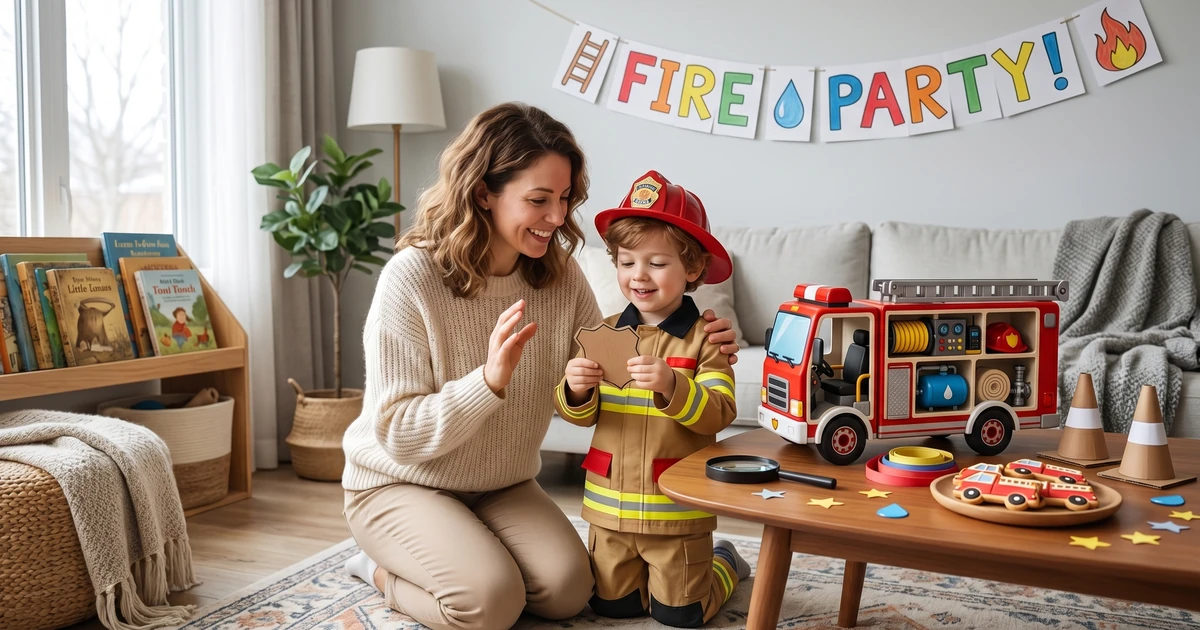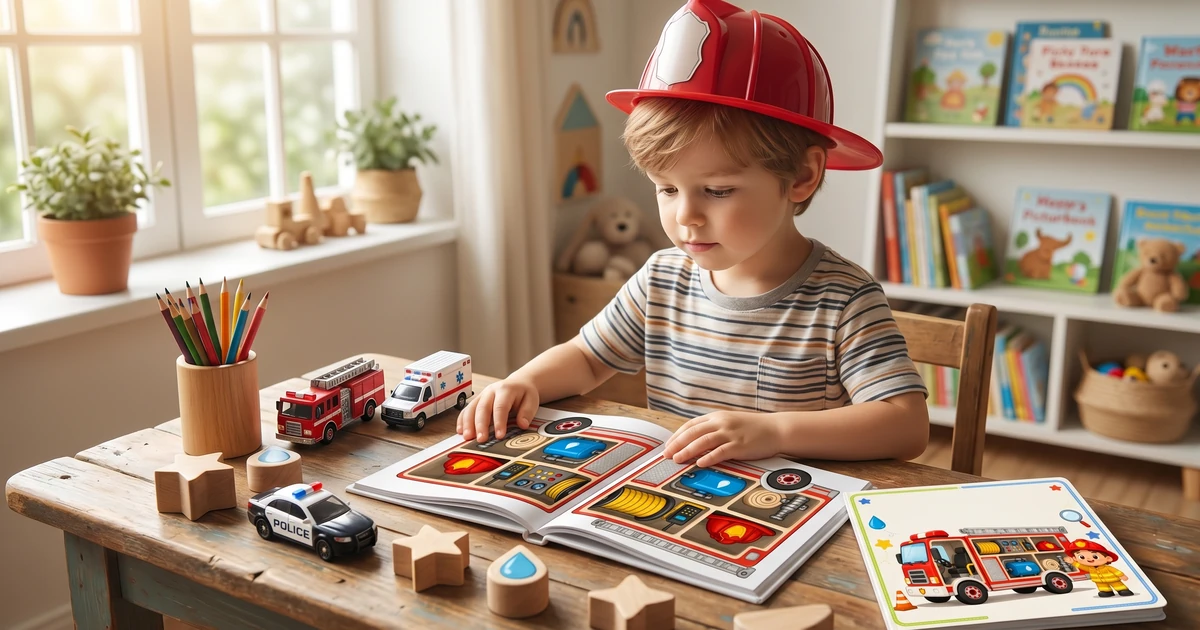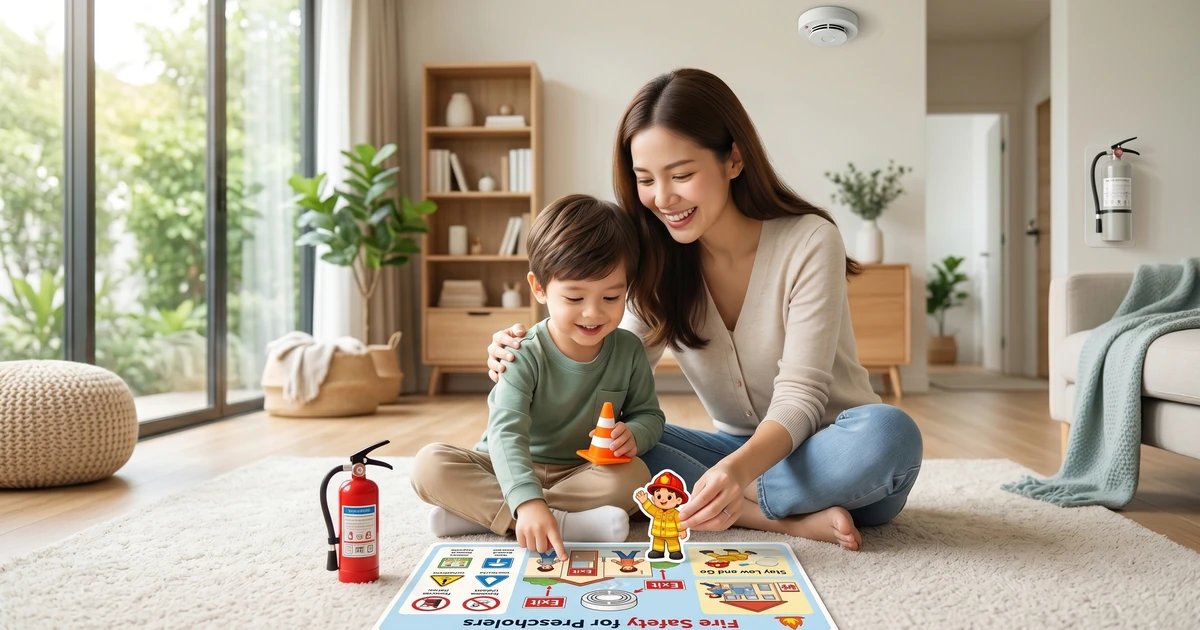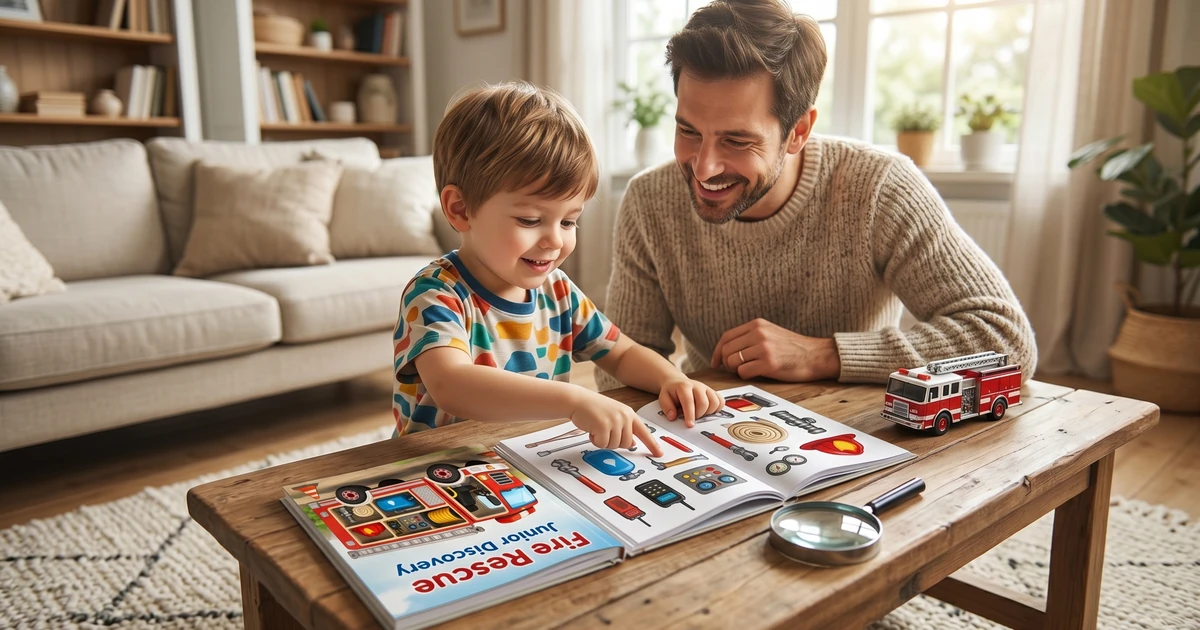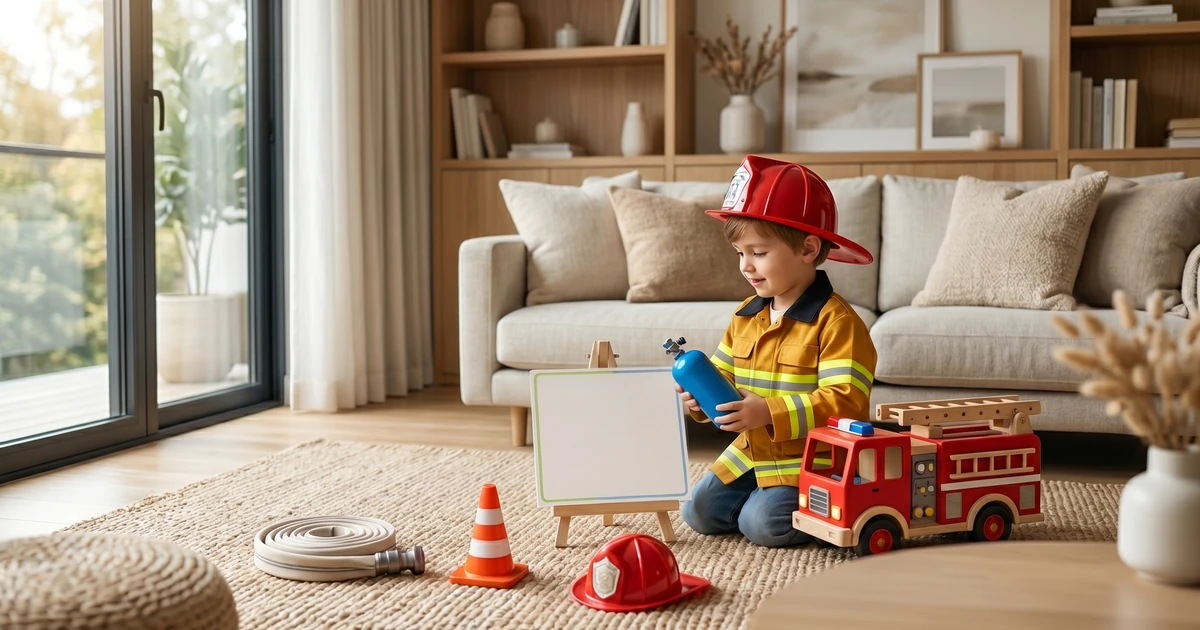

As a parent and educator, I’ve spent countless hours researching and curating early learning resources. Through conversations with preschool teachers, analyzing feedback from parents, and observing how children engage, I’ve developed a deep understanding of what makes an activity truly educational and fun. Fire trucks captivate young minds like few other themes, and harnessing that fascination is a powerful way to teach foundational skills. Preschool fire truck activities are more than just play; they are a vehicle for teaching safety, community roles, fine motor development, and STEM concepts. This comprehensive pillar page will explore why this theme works, the core skills it builds, and how to implement a wide range of effective activities.
GUND Official PAW Patrol Marshall in Signature Firefighter Uniform Plush Toy, Stuffed Animal for Ages 1 and Up, 6" (Styles May Vary) : Toys & Games
GUND Official PAW Patrol Marshall in Signature Firefighter Uniform Plush Toy, Stuffed Animal for Ages 1 and Up, 6" (Styles May Vary) : Toys & Games
Key Takeaways:
- Fire truck-themed activities naturally build fine motor skills, language development, and early STEM awareness through hands-on play.
- The most successful activities blend structured learning with open-ended creativity, moving beyond simple coloring pages.
- A successful theme unit integrates crafts, sensory play, gross motor activities, and simple safety lessons to address all developmental domains.
- Planning is key; having low-prep, high-engagement backup activities prevents frustration and keeps the learning fun.
- The goal is to foster a positive understanding of community helpers and safety procedures without creating fear.
Why Fire Truck Activities Are So Effective for Preschoolers
Fire trucks represent a potent combination of elements that perfectly align with a preschooler’s developmental stage. The bright red color, loud siren sounds, and heroic community role create a package of high-interest stimuli. From a learning perspective, this theme is a versatile anchor. It introduces emergent literacy through new vocabulary (hose, ladder, hydrant, siren), numeracy through counting ladders or wheels, and scientific concepts like friction (how fire poles work) and water flow. Most importantly, it provides a non-threatening, exciting context to discuss fire safety rules, such as “stop, drop, and roll” and knowing what a smoke alarm sounds like. This thematic approach allows learning to feel like an adventure, not a lesson, which dramatically increases engagement and retention.
The most enduring learning happens when a child is fully immersed in a theme they love.
Core Developmental Skills Built Through Fire Truck Play
Every high-quality preschool activity should target specific developmental domains. Fire truck play is uniquely positioned to hit several at once. Here’s a breakdown of the key skills nurtured:
Fine Motor Skills: Manipulating small toys, squeezing spray bottles for “water,” using safety scissors to cut out flame shapes, and peeling stickers for a badge all strengthen the small hand muscles crucial for writing. Gross Motor Skills: Simulating climbing a ladder, crawling under “smoke” (a blanket), or pulling a makeshift fire hose builds coordination and large muscle groups. Social-Emotional Learning: Role-playing as firefighters encourages teamwork, empathy, and understanding of community roles. It helps children process the concept of helpers and bravery. Cognitive & STEM Skills: Building a truck from blocks involves engineering and problem-solving. Simple experiments with water and ramps introduce basic physics. Sorting red objects or sequencing the steps of a firefighter’s day builds logic. Language Development: The theme expands vocabulary dramatically and encourages narrative play, where children articulate scenarios and dialogue.
“Thematic play, especially around community helpers like firefighters, allows children to explore complex social roles and emotions in a safe, controlled environment. It’s a cornerstone of socio-dramatic play, which is critical for early childhood development.” - National Association for the Education of Young Children (NAEYC)
How to Choose the Right Fire Truck Activity for Your Preschooler
Not all activities are created equal, and a child’s interest, skill level, and your available time are key factors. Use this guide to select the best starting point.
| Activity Type | Best For Developing | Prep Time | Mess Level | Ideal Age |
|---|---|---|---|---|
| Sensory Bin (e.g., red rice, water) | Exploration, Fine Motor | Medium | High | 2.5-4 years |
| Simple Craft (e.g., cardboard tube truck) | Creativity, Following Directions | Low | Medium | 3-5 years |
| Role-Play & Dress-Up | Social Skills, Language | Low | Low | 3-5 years |
| Printable Workbook Pages | Pre-Writing, Focus | None | Low | 4-5 years |
| Gross Motor Obstacle Course | Coordination, Listening | Medium | Low | 3-5 years |
Pro Tip: Always have a “Plan B” activity ready. If a detailed craft is causing frustration, pivot to a no-prep activity like pretending to be firefighters putting out “fires” (red construction paper circles) with beanbags.
Match the activity to your child’s current mood and stamina, not just their age.
A Step-by-Step Framework for a Fire Truck Theme Week
Implementing a short theme unit can provide structure and deepen learning. Here is a simple, flexible framework you can adapt.
Step 1: Spark Interest & Introduce Vocabulary
Begin by reading a high-quality picture book about firefighters. Point out key parts of the fire truck and introduce new words. Ask open-ended questions like, “What do you think that long ladder is for?” Our related article, How My Kid Became Obsessed with Firetrucks, explores this ignition phase in detail.
Step 2: Engage Through Hands-On Creation
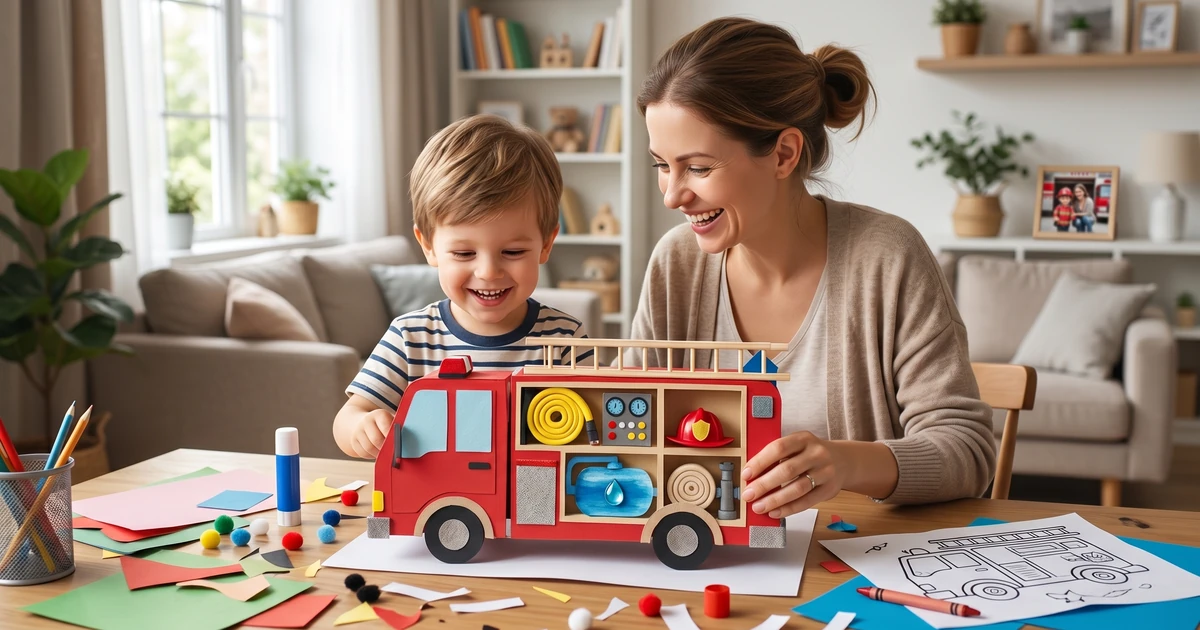
Choose one core craft or building activity. A classic is transforming a cardboard box into a fire truck. This builds ownership of the theme. For children who resist traditional crafts, see creative solutions in Why My Preschooler Hates Coloring Firetrucks and How I Fixed It.
Step 3: Expand with Sensory and Dramatic Play
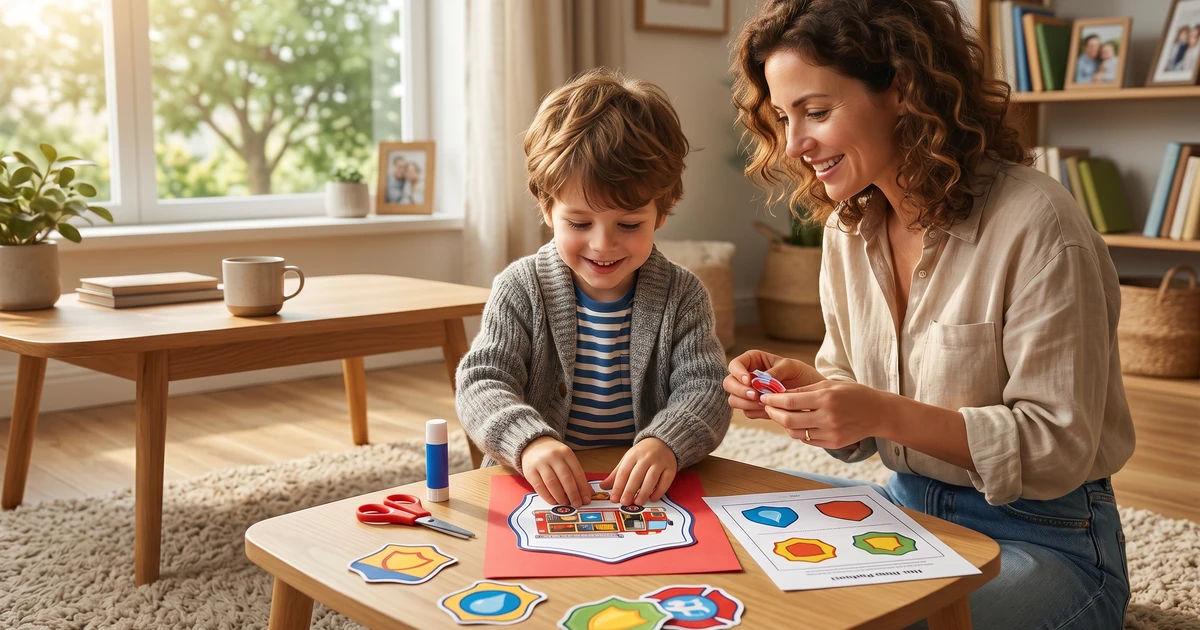
Set up a simple sensory station (e.g., a bin of dried black beans with small toy trucks) and provide props for dress-up. A homemade badge, like our Free Printable Firetruck Badge Template for Kids, adds authenticity to the role-play.
Step 4: Integrate Movement and Safety
Create a mini obstacle course in your living room. Incorporate a safety lesson naturally, like practicing “stop, drop, and roll” or identifying smoke alarms. For a full guide on this crucial topic, visit Fire Safety for Preschoolers: Simple Steps.
Step 5: Consolidate Learning with Quiet Activities
Finish the week with focused, quiet activities that reinforce concepts. Printable worksheets, puzzles, or matching games are perfect. Our comprehensive Fire Truck Activity Workbook: Ignite Your Child’s Learning is designed for this consolidation phase.
A thematic arc (from introduction to creation to application) helps cement new knowledge and vocabulary.
Top 5 Categories of Preschool Fire Truck Activities
To build a balanced learning experience, incorporate activities from different categories. Here are the five most effective types, based on feedback from hundreds of parents and educators.
- Arts & Crafts: These build fine motor skills and creativity. Examples include sponge-painting flames, constructing egg carton fire trucks, and tissue paper collage sirens.
- Sensory Play: Essential for exploration. Create a “fire” sensory bin with red/yellow water beads, or a “rescue” bin with rice, small figures, and tweezers for fine motor practice.
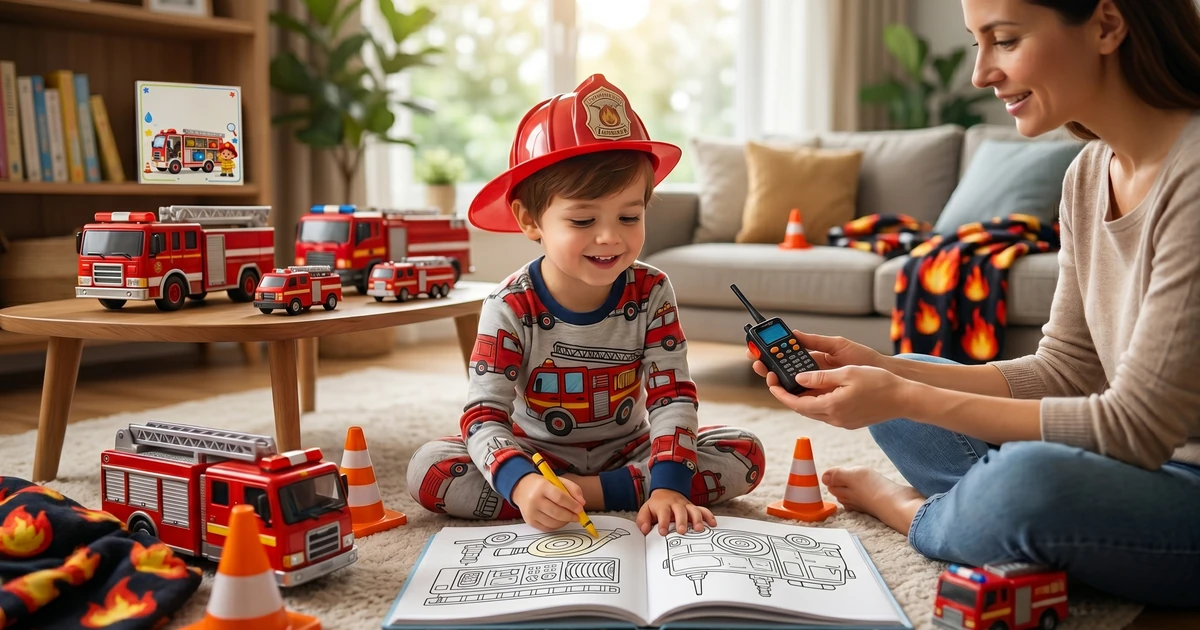
- Dramatic Play: The heart of preschool learning. Set up a station with boots, hats, and toy hoses. Use walkie-talkies (or paper towel tubes) for communication.
- Movement & Music: Perfect for burning energy. Freeze dance to siren sounds, crawl through a “smoke-filled” tunnel (a blanket over chairs), or have a “water bucket” relay race.
- Pre-Academic Printables: These support school readiness. Look for activities like tracing winding hose paths, counting firefighter hats, or letter-F dot painting. For a collection of screen-free ideas, explore Screen Free Activities for 3-Year-Olds: Fire Truck Edition.
Cost Breakdown: Building a Fire Truck Activity Kit
You do not need expensive toys to create a rich learning environment. Here’s how to build a versatile kit on any budget.
| Item | Budget ($0-10) | Standard ($10-25) | Notes & Alternatives |
|---|---|---|---|
| Firefighter Hat | DIY from paper | Plastic play hat | A red baseball cap works perfectly. |
| ”Hose” | Pool noodle segment | Fabric play hose | A length of old garden hose (cleaned) is great. |
| Sensory Base | Dry beans/rice | Colored rice/kinetic sand | Check thrift stores for bins. |
| Toy Vehicles | 1-2 dollar store trucks | Multi-pack of trucks | Borrow from a friend’s toy bin. |
| Craft Supplies | Recycled boxes, tape | Assorted construction paper | Save paper towel tubes and egg cartons. |
| Printable Resources | Free online pages | A themed workbook | Our Fire Truck Activity Workbook offers structured value. |
| Total Estimated Cost | $5 - $15 | $20 - $40 | Invest in reusable items like a good sensory table bin. |
Common Pitfalls and How to Avoid Them
Even with the best intentions, activities can fall flat. Based on common parental feedback, here are the main issues and how to sidestep them.
-
Pitfall 1: Overly Complex Crafts: A craft with ten steps will lead to frustration for both of you.
- Solution: Choose one or two-step processes. Instead of building a detailed truck, just paint a box red and add paper plates for wheels.
-
Pitfall 2: Ignoring Child-Led Play: Insisting on a “correct” way to play stifles creativity.
- Solution: Provide materials and a basic prompt (“Let’s build a fire station!”), then follow the child’s lead. If the toy fire truck is “driving” to the grocery store, go with it.
-
Pitfall 3: Creating Fear Around Fire Safety: Using scare tactics can backfire.
- Solution: Frame firefighters as helpful heroes and safety rules as smart, empowering tools. Focus on the helpers, not the danger.
-
Pitfall 4: Lack of Preparation: Nothing derails an activity faster than scrambling for supplies mid-craft.
- Solution: Use the weekend to prep a “fire truck week” bin with all your materials. For a full party plan that uses this principle, see Budget Fire Truck Theme Party For Kids At Home.
Success lies in flexibility, simplicity, and following the child’s imaginative lead.
Expanding the Theme: From Fire Trucks to Community Helpers
The fire truck theme is a perfect gateway to a broader, enriching unit on community helpers. This expansion helps children understand the interconnectedness of their world.
Once the firefighter role is familiar, you can naturally introduce other helpers:
-
Police Officers: Compare their vehicles (sirens, purpose) to fire trucks.
-
Mail Carriers: Discuss how they deliver important messages, just like firefighters respond to emergencies.
-
Doctors/Nurses: Link them to firefighters as people who help us stay safe and healthy.
This approach builds a more comprehensive worldview. To dive into this expanded unit, our Community Helpers Workbook: Early Childhood Learning provides a seamless next step in your educational journey.
A single engaging theme can be the spark for months of connected, meaningful learning.
Frequently Asked Questions (FAQ)
-
My preschooler gets scared by the sound of real sirens. Should I avoid fire truck activities? No, you should lean into them carefully. Role-play gives your child a sense of control. Let them be the one making the siren sound (which is often less jarring) and emphasize that the loud noise means helpers are coming. Avoid videos with very loud, sudden siren noises initially.
-
Are commercial fire truck activity books worth buying over free printables? It depends on your needs. A well-designed workbook, like our Fire Truck Activity Workbook, offers a coherent, progression-based curriculum that systematically builds skills. Free printables are excellent for supplementing or trying out the theme, but they often lack a developmental sequence and require you to source them individually.
-
What’s the biggest mistake parents make when setting up fire truck dramatic play? They provide too many specific props and dictate the script. The goal is to stimulate imagination, not replicate reality. Often, a single prop (like a length of rope for a hose) and a cardboard box for a truck will yield more creative, prolonged play than a full store-bought costume set.
-
When is a fire truck theme NOT the right choice for my child? If your child has recently experienced a traumatic event involving first responders or fire, it’s wise to pause and consult with a child development specialist. Also, if your child shows persistent, significant fear (beyond a startle at a loud noise) that doesn’t subside with gentle exposure, choose a different, calming theme.
-
How can I make these activities inclusive for a child with limited fine motor skills? Focus on the sensory and gross motor aspects. Use larger, easier-to-grip brushes for painting flames. Use playdough to build trucks instead of cutting and gluing. Adapt an obstacle course to their mobility level. The value is in the engagement and concept learning, not the perfection of the craft.
-
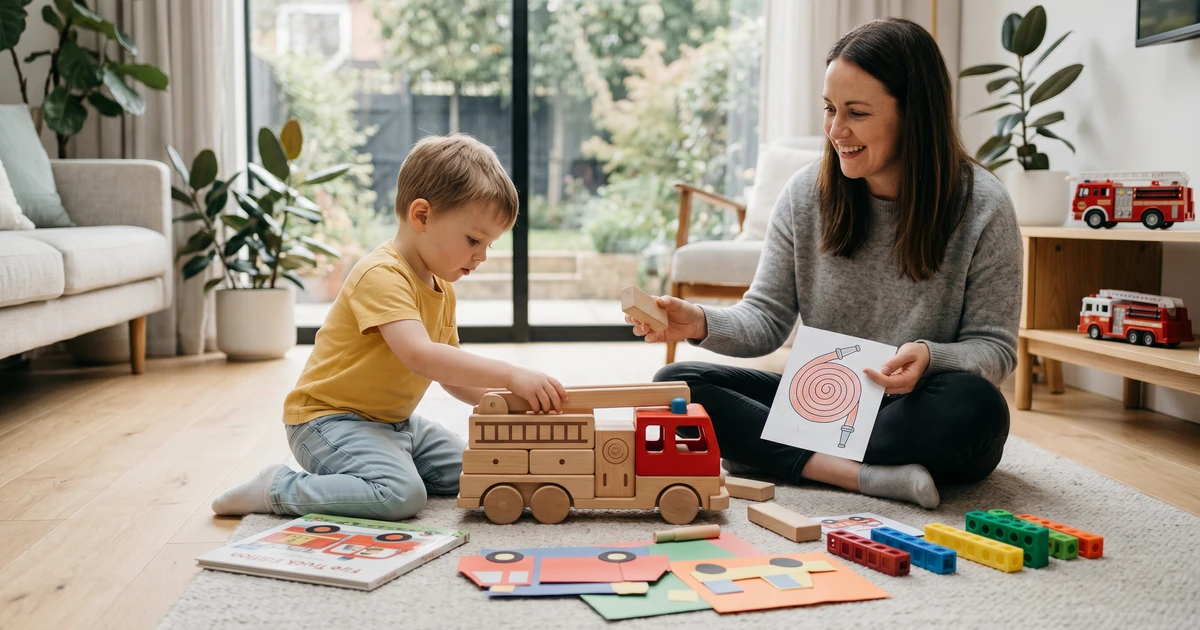
Can I really teach STEM with a preschool fire truck theme? Absolutely. Simple, guided play is foundational STEM. Ask, “How can we make our block tower fire station stronger?” (engineering). Use a ramp and toy trucks to see which slides faster (physics). Mix red and yellow paint to make orange “fire” (color theory/science). It’s about asking “what if” questions during play.
-
My 3-year-old only wants to play with the toy truck, not do any crafts. Is that okay? Yes, that is more than okay. It’s ideal. Deep, uninterrupted imaginative play is the gold standard. You can gently extend the play by asking questions (“Oh no, the fire is at the teddy bear’s house! How will you get there?”), but following their play-based lead is the most developmentally appropriate approach.
-
How do I clean up a messy sensory activity like red-colored rice? Prepare for the mess beforehand. Do sensory play on a large, washable mat or tray. Teach your child to use a small dustpan and brush to help clean spills, this is a practical life skill in itself. Store the sensory materials in a sealed bag or container; they can often be reused multiple times.