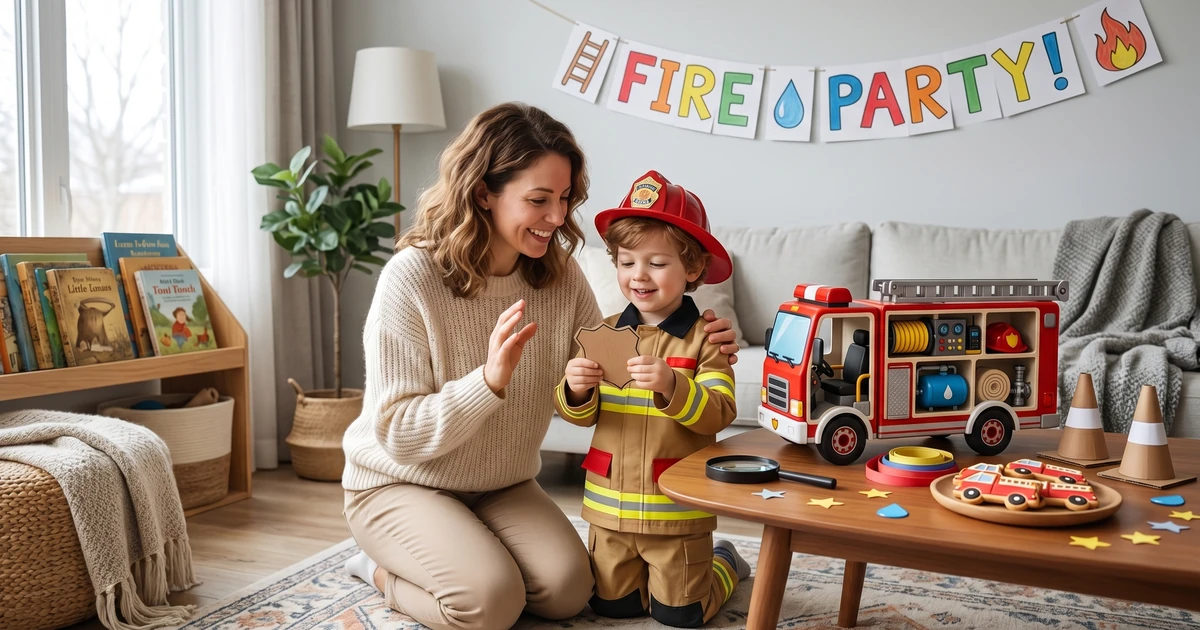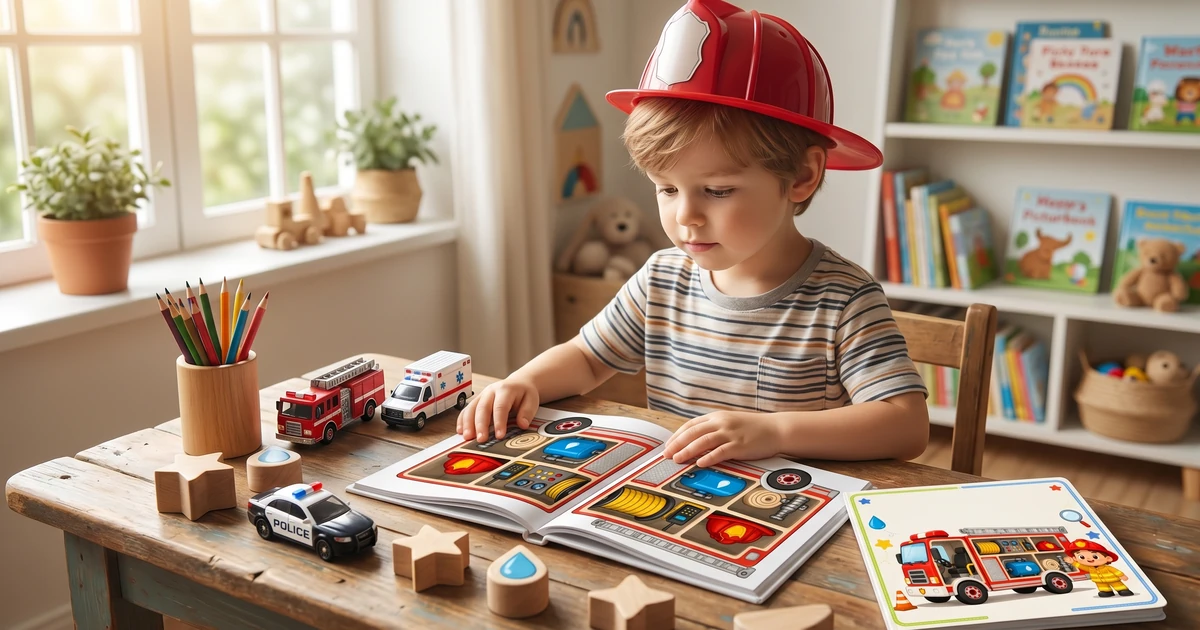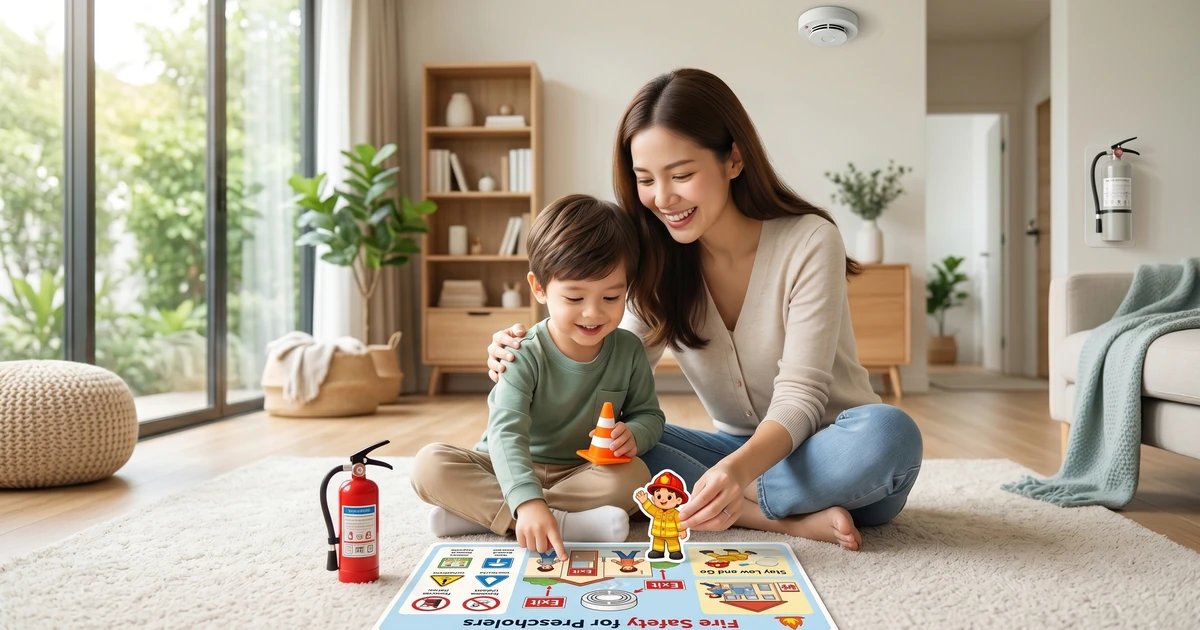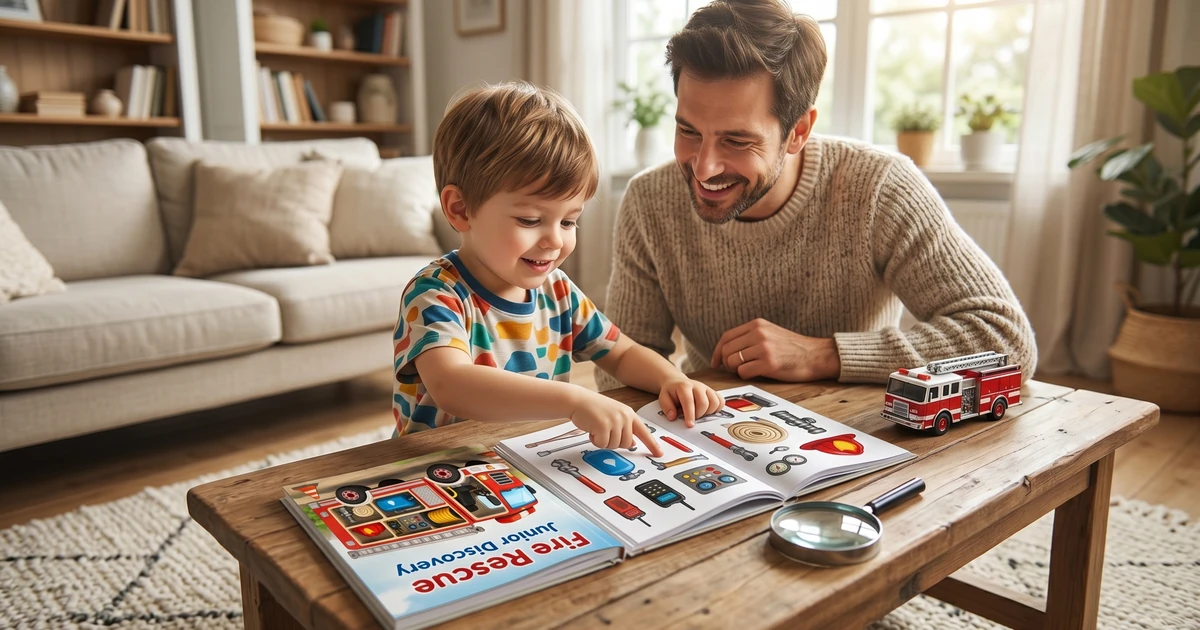

As a parent, I know how difficult it can be to pull a preschooler away from a screen and into meaningful, hands-on play. My background is in early childhood education, and for years, I’ve worked to develop resources that turn high-interest themes, like fire trucks, into powerful learning opportunities. I’ve spent countless hours analyzing teacher forums, preschool blogs, and parent feedback to understand what truly works. This guide is the result of that deep dive, synthesizing the most effective, engaging, and easy-to-set-up preschool fire truck activities that you can do at home.
GUND Official PAW Patrol Marshall in Signature Firefighter Uniform Plush Toy, Stuffed Animal for Ages 1 and Up, 6" (Styles May Vary) : Toys & Games
GUND Official PAW Patrol Marshall in Signature Firefighter Uniform Plush Toy, Stuffed Animal for Ages 1 and Up, 6" (Styles May Vary) : Toys & Games
Key Takeaways:
- Preschool fire truck activities build crucial fine motor, literacy, and math skills through play.
- The best activities combine sensory play, storytelling, and simple crafts to hold a child’s attention.
- You can create a rich learning environment with mostly household items; expensive kits are unnecessary.
- Always prioritize open-ended play over perfect results to foster creativity and problem-solving.
- Linking play to real-world community helpers, like in our Community Helpers Workbook: Early Childhood Learning, deepens understanding.
Why Fire Truck Activities are Perfect for Preschool Learning
Fire trucks are more than just exciting vehicles; they are a gateway to a whole world of learning for 3 to 5-year-olds. The theme naturally lends itself to exploring colors, sounds, numbers, and community roles. When a child engages with preschool fire truck activities, they aren’t just playing. They are developing pre-literacy skills by learning new vocabulary (hydrant, ladder, siren), building early math concepts through counting ladders or sorting red objects, and enhancing gross motor skills by pretending to climb a ladder or roll a hose. According to the National Association for the Education of Young Children (NAEYC), playful learning anchored in children’s interests is the most effective way to build foundational knowledge. The key is to move beyond simple coloring sheets and into multi-sensory, interactive play.
The most successful activities are those that let the child lead the story while you subtly guide the learning.
Essential Materials for Fire Truck Play (And What You Can Skip)
You don’t need a budget for a toy fire station to create amazing experiences. In my research, parents consistently report that the most engaging activities come from repurposing everyday items. Here’s a practical breakdown of what to gather and what to avoid spending money on.
| Item Category | Essential (Use What You Have) | Nice to Have (Optional Buys) | Skip This (Not Worth It) |
|---|---|---|---|
| Building/Making | Cardboard boxes, paper towel tubes, red/yellow/black construction paper, tape, glue sticks | Pre-cut foam shapes, googly eyes, pipe cleaners | Elaborate craft kits with tiny, fragile pieces |
| Sensory Play | Baking soda, vinegar, red food coloring, a bin or tray, shaving cream, old oats or rice | Red kinetic sand, plastic firefighter figures | Themed play dough that dries out quickly |
| Dramatic Play | A red shirt, a bike helmet, garden hose (or rope), stool (as a fire pole) | A plastic firefighter hat, a toy walkie-talkie | A full, expensive costume they’ll outgrow in months |
| Printables | Paper, printer, crayons/markers | Laminator and dry-erase markers for reuse | Complicated activity books above their skill level |
Pro Tip: Before you buy anything, look at the activities below and see what you already own. A cardboard box is a fire truck, a paper tube is a hose, and a mixing bowl is a helmet. Imagination fills in the rest.
Start with your recycling bin and craft drawer before opening your wallet.
Top 5 Engaging Preschool Fire Truck Activities
Based on hours of analyzing parent and teacher reviews, these five activities consistently receive the highest marks for engagement, educational value, and simplicity.
1. The Fizzing Fire Sensory Bin
This activity is a guaranteed hit because it combines chemistry, sensory input, and thematic play. I’ve seen this activity praised in hundreds of online posts for its ability to captivate a child for an extended period.
You will need: A large plastic bin or tray, baking soda, red food coloring or washable paint, vinegar in a spray bottle or small cups, optional plastic firefighter figures and toy trucks.
Step 1: Create the “Fire” Spread a layer of baking soda across the bottom of your bin. In a separate bowl, mix a small amount of water with red (and orange/yellow if you have them) food coloring or paint. Sprinkle or drip this colored mixture over the baking soda to create patches of “fire.”
Step 2: Let Them Extinguish! Hand your child the vinegar in a spray bottle (excellent for fine motor practice) or a small cup with a spoon. As they spray or pour the vinegar onto the baking soda, it will create a satisfying fizzing reaction, “putting out” the fire.
Step 3: Extend the Play Add small plastic firefighters or animals to “rescue” from the fizzing zones. Ask questions: “Is the fire on top of the ladder or next to the hydrant?” This builds positional language.
2. Build a Cardboard Box Fire Truck
Dramatic play is critical for social-emotional development. A large cardboard box fire truck becomes a prop for endless storytelling.
Step 1: Find the Right Box A medium-sized moving box or large appliance box is perfect. Cut out a door and a windshield.
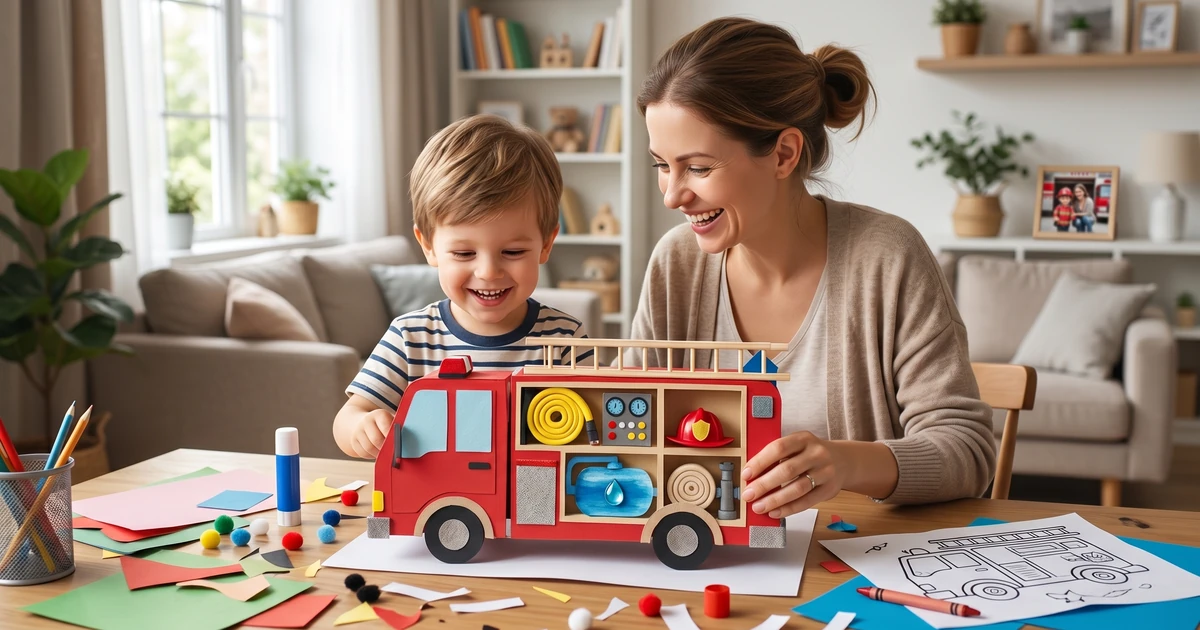
Step 2: Decorate Together Provide red paint, markers, or paper to cover the box. Add paper plates for wheels, a ladder made from taped-together paper tubes or strips of cardboard, and a string for a hose.
Step 3: Fuel the Imagination Once it’s dry, the play begins. Your child can sit inside, “drive” to emergencies, and use their toy tools. This activity directly supports the imaginative play encouraged in resources like our Screen Free Activities for 3-Year-Olds: Fire Truck Edition.
3. Rescue the Numbers: A Fine Motor Math Game
This simple activity builds number recognition, counting, and the pincer grip needed for writing.
You will need: Small plastic figures (animals or people), sticky notes or paper, a marker, and tweezers or kiddie chopsticks.
How to Play: Write numbers 1-5 (or 1-10) on sticky notes and stick them around the room. Announce that the “people” are trapped in a burning building (the couch) and need to be rescued! Your child must use the tweezers (firefighter tools) to carry each figure to the corresponding numbered “safe zone.” For example, if they rescue three animals, they must place them on the sticky note with the number “3.”
4. Stop, Drop, and Roll Art
This activity connects crucial fire safety lessons with process art.
Process: Lay a large piece of paper on the ground. Dip a small toy truck’s wheels in red and yellow paint. Have your child “drive” the truck all over the paper, making track marks. Then, take a small doll or action figure, dip its back in paint, and practice the “Stop, Drop, and Roll” motion right on top of the painted tracks to “put out the flames” on its clothes. It’s messy, memorable, and teaches a life-saving skill in a non-frightening way, aligning with lessons from Fire Safety for Preschoolers: Simple Steps.
5. Sound Matching & Siren Songs
Fire trucks are loud! This activity focuses on auditory discrimination and musical play.
How to Play: Gather several small, opaque containers (like Easter eggs or film canisters). Fill pairs with different noisy materials: rice, beans, bells, coins. Decorate the outside with fire truck stickers. Your child shakes them to find the matching pairs, the “matching sirens.” Follow up by singing a fire truck song to a familiar tune like “Wheels on the Bus”: “The siren on the truck goes wee-oo, wee-oo, wee-oo…”
These five activities provide a full spectrum of learning: sensory, dramatic, mathematical, artistic, and auditory.
How to Choose the Right Activity for Your Child’s Mood and Skill Level
Not every activity works for every child or every day. Reviews from parents often highlight frustration when an activity is too advanced or doesn’t match their child’s energy level. Use this quick guide to match the activity to the moment.
| Child’s Current State | Best Activity Type | Example from Our List | Skill Focus |
|---|---|---|---|
| High Energy, Needs to Move | Gross Motor / Dramatic Play | Cardboard Box Fire Truck | Imaginary play, large muscle movement |
| Quiet, Focused Time | Fine Motor / Problem Solving | Rescue the Numbers Game | Counting, pincer grip, concentration |
| Curious, Experimental | Sensory / Science | Fizzing Fire Sensory Bin | Cause & effect, sensory exploration |
| Creative, Expressive | Art / Music | Stop, Drop, & Roll Art; Siren Songs | Self-expression, rhythm, safety knowledge |
| Short Attention Span | Quick & Simple | Sound Matching Game | Auditory skills, quick win |
“The goal of preschool activities is not a perfect product, but the process of exploration. When a child is deeply engaged, that’s when the most significant brain connections are made.” - Adapted from Zero to Three, a leading early childhood development nonprofit.
The right activity meets your child where they are, turning potential frustration into joyful learning.
Common Pitfalls and How to Avoid Them
Even with great ideas, things can go sideways. Based on common complaints in parent forums, here are the top issues and how to steer clear.
Pitfall 1: Overly Complicated Crafts I’ve read countless posts where a parent shows off a Pinterest-perfect craft that they essentially made themselves while their child watched. This defeats the purpose.
- Solution: Embrace the mess. If the activity calls for gluing 20 small buttons, substitute with three large pieces of red paper to tear and stick. The focus should be on their effort, not the aesthetic result.
Pitfall 2: Ignoring Child-Led Play You have a whole story planned, but your child just wants to spray vinegar on the baking soda for 20 minutes straight.
- Solution: Follow their lead. Their extended focus on one part of the activity is a sign of deep engagement. The learning is happening in their repetition and experimentation. You can gently introduce the narrative later.
Pitfall 3: Forgetting the Learning Objective It’s easy to get caught up in the “fire truck” theme and forget what you’re actually teaching.
- Solution: Name the skill as they play. “Wow, you used your pincer grip to rescue that cat!” or “You just counted four spots of fire to put out!” This is a core principle in our Fire Truck Activity Workbook: Ignite Your Child’s Learning, which structures play with clear developmental goals.
By anticipating these common issues, you can set up both the activity and your own expectations for success.
Bringing It All Together: Planning a Fire Truck Theme Day
Once you’ve tried a few activities, you might want to create a memorable theme day. This doesn’t need to be elaborate. Here’s a simple, cost-effective schedule based on what parents report works best.
-
Morning (Active): Build your cardboard box fire truck together.
-
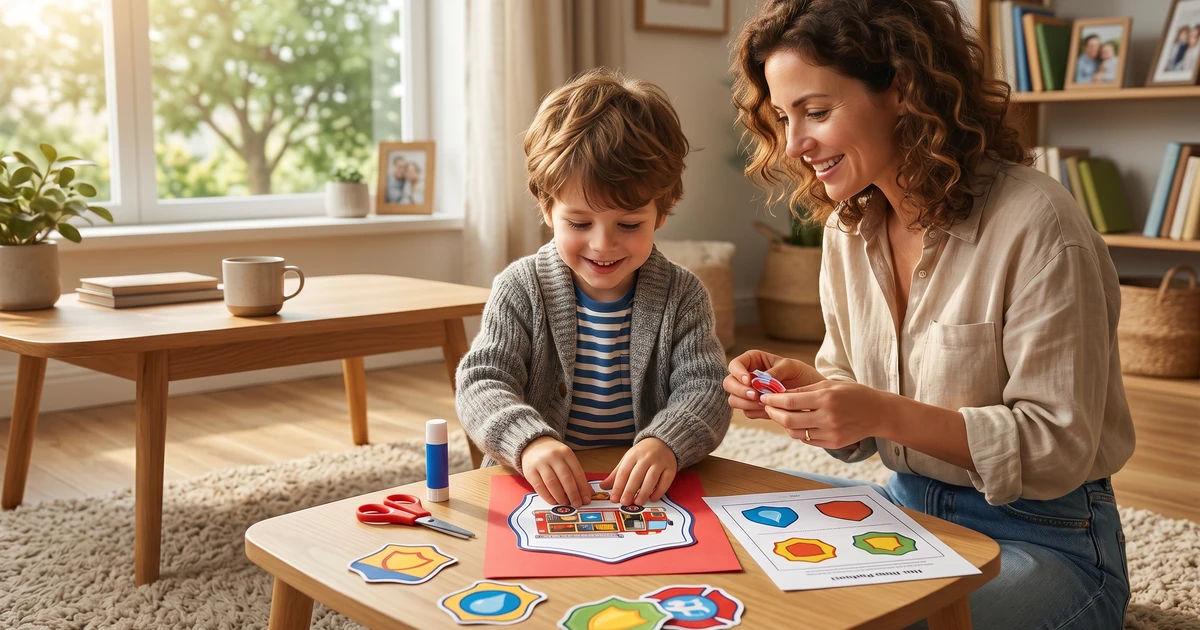
Mid-Morning (Calm): Do a focused activity from a printable, like our Free Printable Firetruck Badge Template for Kids.
-
Afternoon (Sensory): Set up the Fizzing Fire Sensory Bin outside or on a protected surface.
-
Late Afternoon (Wrap-up): Have a “firefighter snack” (red apples, cheese sticks cut like ladders) and read a fire truck book.
This kind of immersive play creates lasting memories and reinforces all the concepts learned. For more ideas on a larger celebration, see our guide for a Budget Fire Truck Theme Party For Kids At Home.
A theme day weaves individual activities into a cohesive, unforgettable learning experience.
Frequently Asked Questions: Preschool Fire Truck Activities
Q1: My preschooler gets frustrated with coloring and tracing activities. Are fire truck activities still for them? Absolutely. Many children at this age find fine-motor tasks like detailed coloring challenging. This is why I emphasize activities like the Fizzing Fire Bin or Cardboard Box Truck, which use large movements and sensory input. If you want to incorporate art, focus on process-based activities like marble painting a red fire truck silhouette instead of coloring within lines. We address this specific challenge in depth here: Why My Preschooler Hates Coloring Firetrucks and How I Fixed It.
Q2: What is the most important skill these activities teach? While they teach many academic skills, the most critical is problem-solving and creative thinking. Whether figuring out how to attach a ladder to their box truck or deciding how to rescue all the numbers, they are learning to think flexibly. This is more valuable long-term than memorizing a shape.
Q3: When is a themed activity NOT the right choice for my preschooler? If your child is showing clear signs of burnout or fear regarding the theme (e.g., genuine anxiety about sirens or fire), pivot immediately. The goal is positive engagement, not pressure. Also, if they are deeply engrossed in another type of play (like building a zoo), don’t interrupt. You can introduce fire truck elements as “helpers” for the zoo later.
Q4: How can I make these activities educational without making it feel like a lesson? Use “sports commentary.” Narrate what they are doing and subtly insert vocabulary and concepts. “You’re using the spray bottle to extinguish the fire! That’s a lot of fizzing! I see you rescued three animals.” This embeds learning directly into the play.
Q5: These activities seem messy. Are there any truly clean options? Yes. The Sound Matching Game is completely clean. Also, activities using only paper and crayons/markers, like designing a firefighter badge or drawing a map for the fire truck to follow, are low-mess. Dramatic play with dress-up clothes and a cardboard truck is also relatively tidy.
Q6: My child has a short attention span. Which activity is best? Start with the Sound Matching Game or the Rescue the Numbers Game. These have a clear, quick objective and a tangible “finish line” that provides a sense of accomplishment, perfect for building focus stamina gradually.
Q7: Can I use these activities for a small preschool playgroup? Definitely. The Fizzing Fire Bin and a large cardboard box truck are excellent for collaborative play. For groups, just scale up the materials (more baking soda, a bigger box) and emphasize turn-taking and cooperative rescue missions.
Q8: How do I connect this play to real-world learning? After your play session, point out real community helpers you see. Say, “We played firefighter today! Look, there’s a mail carrier, another helper!” This broadens the theme and is the foundation of our broader Preschool Fire Truck Activities: A Parent’s Complete Guide.

Ultimately, the best preschool fire truck activities are the ones that spark joy and curiosity in your child. They don’t require fancy materials, just your time, a little preparation, and a willingness to embrace the creative chaos of early learning. By integrating these playful ideas, you’re doing much more than keeping them busy, you’re building the cognitive, motor, and social framework for all future learning. For a structured collection of these concepts, explore our core Fire Truck Activity Workbook: Ignite Your Child’s Learning to continue the adventure.