
Fire trucks captivate young children with their bold colors, blaring sirens, and heroic purpose. Integrating that fascination into preschool fire truck activities is a powerful way to channel their energy into meaningful, hands-on learning that develops fine motor skills, cognitive understanding, and social awareness. As someone who has spent countless hours researching, synthesizing feedback from thousands of parents and educators, and analyzing activity outcomes, I know that not all themed activities are created equal. The goal is to move beyond simple coloring pages into immersive, multi-sensory experiences that feel like play. This article details the most effective, developmentally-appropriate activities you can do at home or in the classroom, linking them to key learning domains. For a broader look at incorporating these concepts into daily learning, see our Preschool Fire Truck Activities: A Parent’s Complete Guide.
GUND Official PAW Patrol Marshall in Signature Firefighter Uniform Plush Toy, Stuffed Animal for Ages 1 and Up, 6" (Styles May Vary) : Toys & Games
GUND Official PAW Patrol Marshall in Signature Firefighter Uniform Plush Toy, Stuffed Animal for Ages 1 and Up, 6" (Styles May Vary) : Toys & Games
Key Takeaways:
- Multi-Sensory is Key: The most successful activities engage sight, sound, and touch, solidifying learning in a young child’s brain.
- Process Over Product: Focus on the experience of creating and exploring, not just the final craft. A lopsided, glue-covered “fire truck” is a masterpiece of fine motor development.
- Integrate Core Skills: Seamlessly weave in counting, color recognition, vocabulary, and problem-solving into every activity.
- Safety is the Foundation: All activities should naturally lead to discussions about fire safety and the role of community helpers.
Why Multi-Sensory Fire Truck Activities Work for Preschoolers
Multi-sensory learning involves using more than one sense at a time to process information. For preschoolers, whose brains are forming millions of neural connections daily, this is the gold standard for embedding new knowledge. A static picture of a fire truck is forgettable. But the act of building a truck from blocks, rolling it on a “road” while making siren sounds, and then using a spray bottle to “put out” a drawn flame creates a rich, memorable experience. According to the National Association for the Education of Young Children (NAEYC), active, sensory-rich play allows children to construct knowledge through direct experiences, which is fundamental to early childhood education.
By designing activities that are tactile, auditory, and visual, you’re helping children form stronger cognitive links. When they feel the texture of red construction paper, hear their own voice yelling “Fire! Fire!”, and see water from their spray bottle hit a target, they are learning about firefighting in a complete way. This approach also accommodates different learning styles, ensuring every child can connect with the material. For a fantastic collection of structured, skill-building pages that use this multi-sensory philosophy, explore our Fire Truck Activity Workbook: Ignite Your Child’s Learning.
The most effective learning happens when children are fully immersed in play.
Top 5 Hands-On Fire Truck Activity Categories
After analyzing feedback from parents and preschool teachers, I’ve categorized the most consistently successful and developmentally beneficial preschool fire truck activities. The table below compares these categories by the primary skills they target.
| Activity Category | Primary Skills Developed | Mess Level | Prep Time | Ideal For |
|---|---|---|---|---|
| Building & Construction | Spatial reasoning, fine motor, problem-solving | Low | Low (5 min) | Independent/Group Play |
| Process Art & Crafts | Creativity, fine motor, following directions | Medium-High | Medium (10-15 min) | One-on-One or Small Groups |
| Dramatic Play | Social skills, language, imaginative play | Low | Medium (10 min) | Group Play |
| Sensory Bins | Tactile exploration, vocabulary, scientific curiosity | High | Medium (15 min) | Focused Independent Play |
| Movement & Music | Gross motor, auditory processing, coordination | Low | Very Low | Whole Group Energy Release |
1. Building & Construction Activities
This category is all about engineering and spatial reasoning. It’s perfect for kids who might shy away from messy crafts or need to develop foundational motor skills.
-
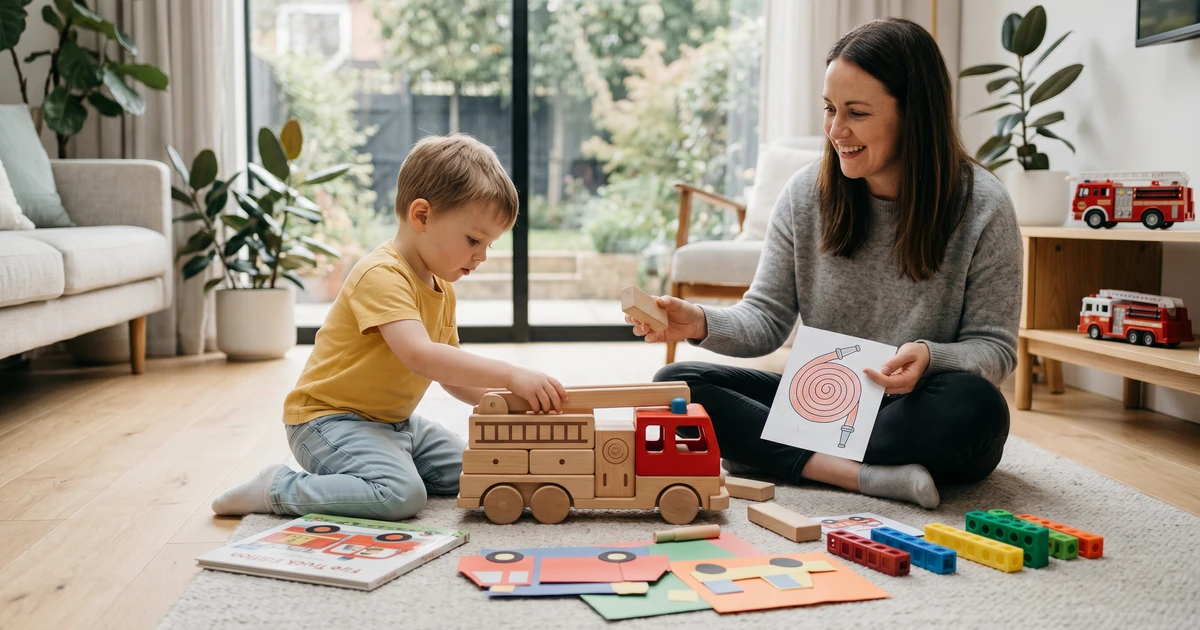
Magnetic Tile Fire Stations: Using magnetic tiles or blocks, challenge your child to build a garage for their toy fire trucks. This introduces concepts of enclosure, doors, and size.
-
Cardboard Box Fire Engine: A classic for a reason. A large appliance box can become a child-sized fire truck. The process of painting it red, adding paper plate wheels, and a hose (a length of rope) is a collaborative project that yields days of play.
Pro Tip: Let the child lead the design. If they want a purple fire truck with green wheels, go with it. The creative decision-making is more valuable than color accuracy.
2. Process Art & Crafts
Focus on the “process” of creating, not a perfect-looking end product. These activities build fine motor control and hand-eye coordination.
-
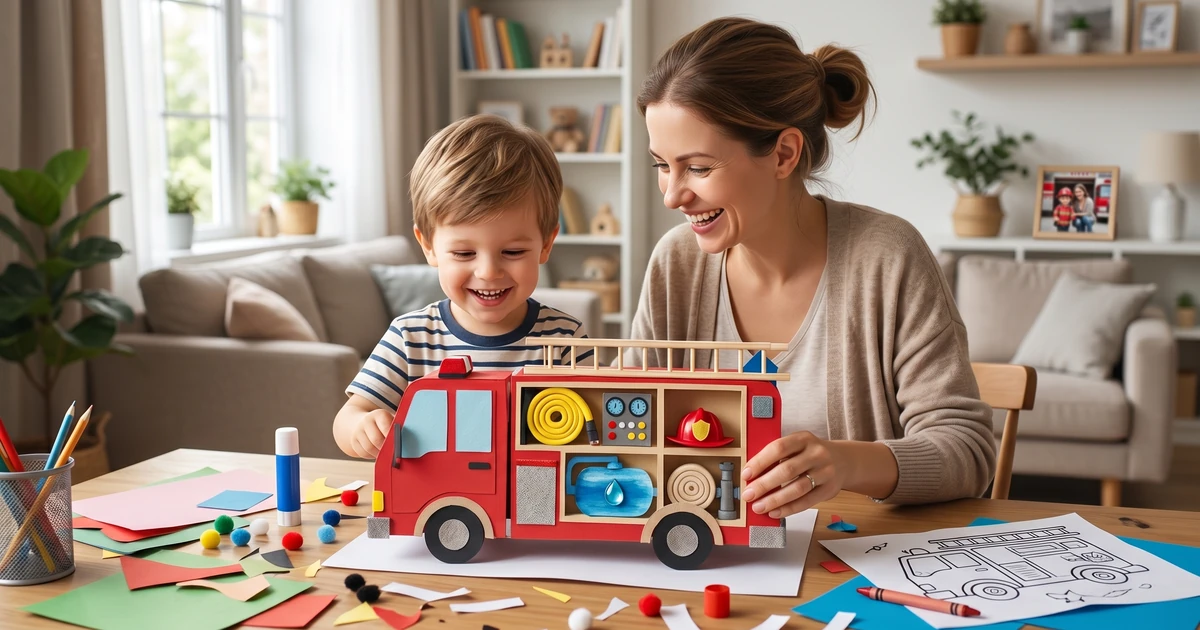
Shape Fire Truck Collage: Pre-cut large rectangles (truck body), small squares (windows), and circles (wheels). Children glue them onto paper to assemble their truck. This reinforces shape recognition and spatial organization.
-
Blotto Fire Art: Fold a piece of paper in half. Have your child drop small blobs of red and yellow paint near the crease. Fold the paper and press. When opened, the symmetrical blot often looks like blazing flames. They can then glue a black paper fire truck on top. It’s unpredictable and exciting.
-
Sponge Painting Ladders: Cut a kitchen sponge into a long, thin rectangle. Let children dip it in gray paint and stamp it onto paper to create ladder rungs next to their fire truck drawing.
3. Dramatic Play & Role-Playing
Dramatic play is the cornerstone of preschool social-emotional learning. It allows children to process the world, practice language, and understand roles.
-
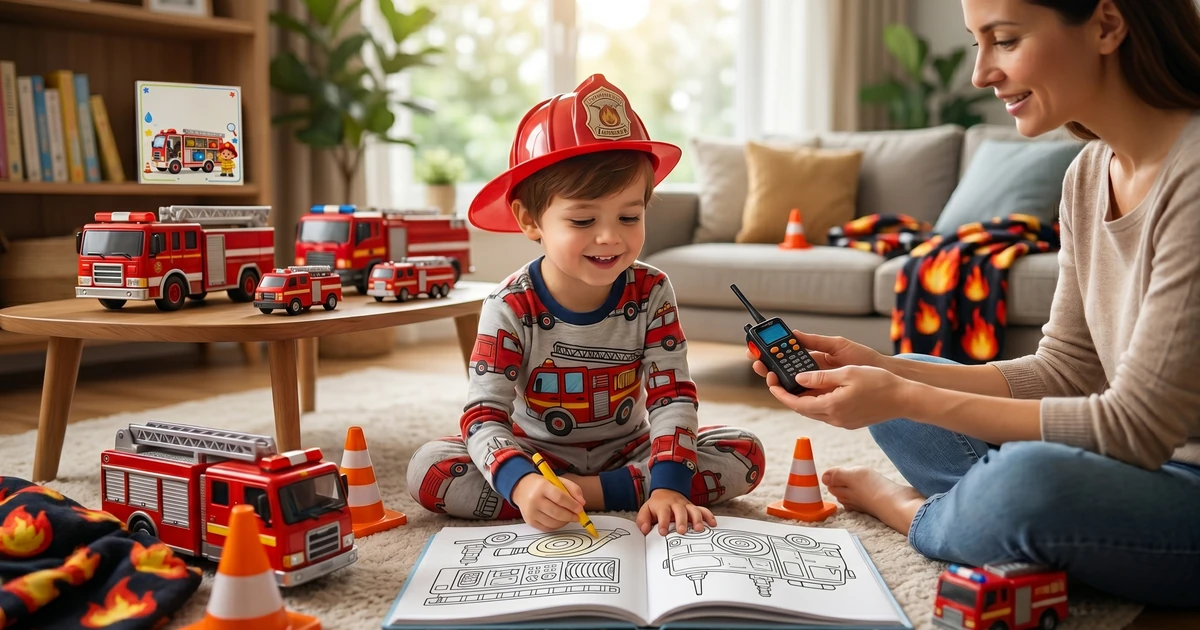
Set Up a Fire Station: Designate a corner as a fire station. Include costumes (rain boots, a jacket, a DIY helmet from a paper bowl), a play phone to receive emergency calls, and a fleet of toy trucks. Encourage them to act out a full sequence: hearing the alarm, sliding down the pole (a taped line on the floor), driving to the fire, and rescuing stuffed animal “victims.”
-
Hose & Rescue Mission: String up a “fire” (red and orange streamers) between two chairs. Give your child a spray bottle (the hose) to spray the fire down. Then, place stuffed animals or dolls on the “other side” for a rescue mission. This builds narrative skills and empathy. This type of play naturally connects to learning about all Community Helpers Workbook: Early Childhood Learning.
4. Sensory Play Ideas
Sensory bins provide a contained, immersive experience that can calm and focus preschoolers while teaching through touch.
-
“Put Out the Fire” Sensory Bin: Fill a bin with dried black beans or kinetic sand as “ashes.” Bury small red, orange, and yellow pom poms as “flames.” Provide toy fire trucks, tweezers, and a small shovel. The child’s mission is to dig out and rescue the flames.
-
Water Play Rescue: In a water table or large tub, float small plastic lids with numbered stickers on them. These are “people on the burning building.” Using a turkey baster or a small cup, children must “rescue” (scoop up) the people in numerical order. This integrates water play with number recognition.
5. Movement, Music & Gross Motor Games
Children need to move! These activities get their whole bodies involved.
-
Firefighter Obstacle Course: Create a simple course: “Jump over the hydrant” (a pillow), “Crawl under the smoky doorway” (a table with a blanket), “Roll the hose” (roll a gym ball to a target), and finally, “Spray the fire” (toss a beanbag at a picture of flames).
-
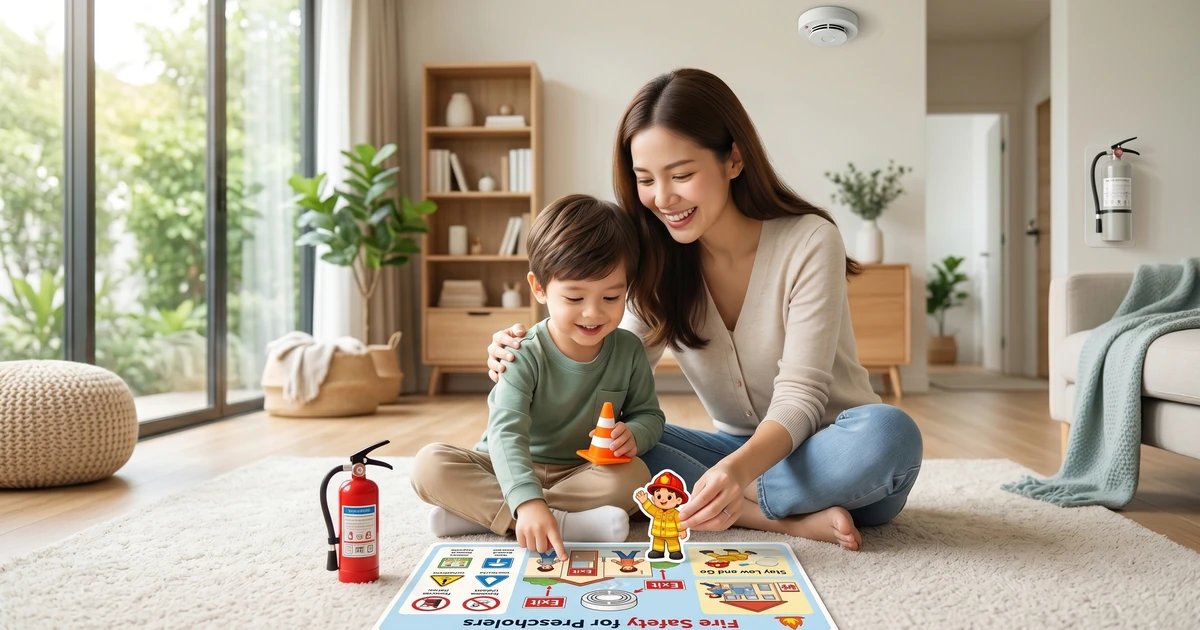
Stop, Drop, and Roll Dance Party: Play music and have kids dance. When the music stops, yell “Fire!” and everyone must practice stop, drop, and roll. It turns a critical safety lesson into an energetic game. For more foundational safety lessons presented simply, check out Fire Safety for Preschoolers: Simple Steps.
Blending these five categories throughout a week provides a comprehensive and deeply engaging learning unit.
How to Choose the Right Fire Truck Activity for Your Child
Not every activity will be a hit with every child, and that’s okay. Based on parent feedback, choosing the right one often depends on your child’s current mood, interests, and developmental readiness. Use this criteria to select a winner.
| Child’s Behavior or Interest | Recommended Activity Type | What to Avoid |
|---|---|---|
| High energy, needs to move | Movement & Music Games or Dramatic Play | Sedentary crafts or detailed worksheets |
| Loves to build and figure things out | Building & Construction | Overly open-ended art with no structure |
| Enjoys getting messy, explores with hands | Sensory Bins or Process Art | Activities with strict “no-mess” rules |
| Shy or hesitant with new things | Simple Dramatic Play with a familiar toy | Large, loud group games initially |
| Short attention span | Quick Process Art (like stamping) or a 5-minute sensory bin | Long, multi-step craft projects |
The cost for these activities can range from $0 to about $30 for a well-stocked sensory bin or art cart. Here’s a typical breakdown for starting from scratch:
| Item | Price Range | Notes |
|---|---|---|
| Basic Craft Supplies (glue, scissors, paper, paints) | $15 - $25 | One-time purchase that lasts for many activities |
| Toy Fire Trucks (3-5 piece set) | $10 - $20 | Look for durable plastic, not tiny choking hazards |
| Sensory Bin Fillers (beans, rice, sand) | $5 - $10 | Dried beans are the most economical |
| Costume Elements (hat, vest) | $5 - $15 | Thrift stores are perfect for this |
| Total Estimated Start-Up Cost | $35 - $70 | This supplies dozens of activities over months. |
The best activity aligns with your child’s energy and curiosity in the moment.
Common Pitfalls and What to Avoid in Fire Truck Activities
In my research, I’ve identified a few common missteps that can turn a fun learning opportunity into a frustrating experience. Being aware of these can save your sanity.
- Overly Complex Crafts: A craft with 15 tiny pieces to cut and glue is a recipe for adult frustration and child disengagement. Preschoolers lack the fine motor control and patience for intricate projects. Focus on big, simple shapes and steps.
- Forcing the “Right” Way: If your child uses the red paint to make a purple monster instead of a fire truck, that’s a win. Correcting them stifles creativity. As one early childhood educator told me:
“The product is not the goal. The goal is the experience of squeezing the glue, feeling the brush stroke, and making their own choices. That’s where the learning happens.” - Maria K., Preschool Director
- Neglecting the Safety Message: It’s easy to get caught up in the fun of trucks and sirens. Always circle back to the real-world purpose. Briefly discuss what to do in a real fire, why we don’t play with matches, and that firefighters are helpers to call, not to fear.
- Ignoring Sensory Overload: Some children are sensitive to loud siren noises or the feel of certain textures (like wet glue). Have quieter alternatives ready, like drawing a fire truck or reading a book. For great ideas that don’t involve screens, see our guide to Screen Free Activities for 3-Year-Olds: Fire Truck Edition.
Keep it simple, child-led, and always tie the fun back to real-world learning and safety.
Integrating Activities into a Theme Day or Week
Planning a fire truck theme week is an excellent way to deepen the learning. Here’s a simple, low-stress plan based on successful routines reported by homeschooling parents and preschool teachers.
Day 1: Introduction & Exploration
-
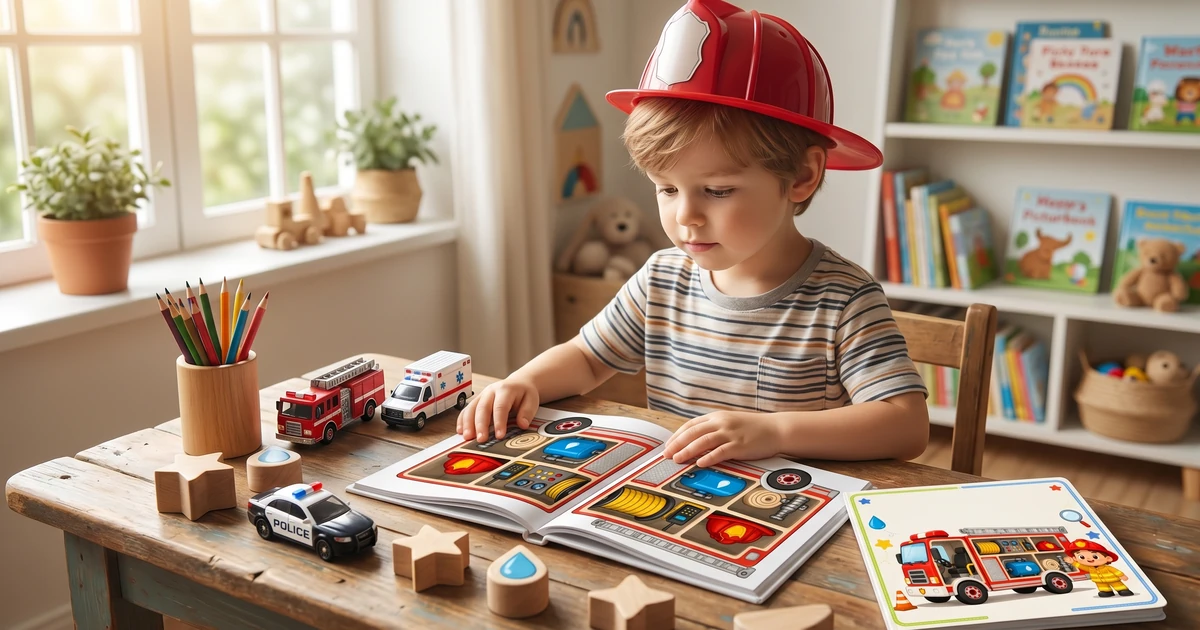
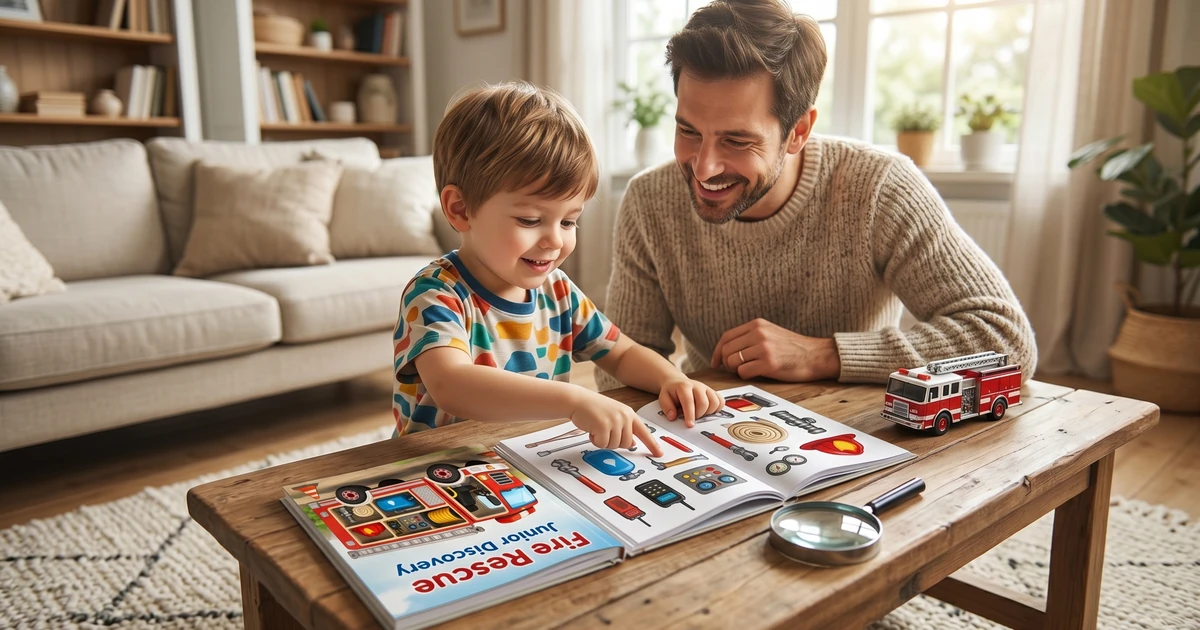
Morning: Read a simple picture book about fire trucks.
-
Activity: Go on a “fire truck hunt” around the house or neighborhood (look for the color red, wheels, ladders).
-
Afternoon: Free play with toy fire trucks and blocks.
Day 2: Build & Create
-
Morning: Building Activity with magnetic tiles or cardboard.
-
Activity: Process Art – Shape collage fire truck.
-
Link: If your child resists typical art, our article Why My Preschooler Hates Coloring Firetrucks and How I Fixed It offers great alternatives.
Day 3: Sensory & Safety
-
Morning: Sensory Bin play.
-
Activity: Practice “Stop, Drop, and Roll” and talk about having a family meeting place.
-
Link: Reinforce with Fire Safety for Preschoolers: Simple Steps.
Day 4: Dramatic Play
-
Morning: Set up the Dramatic Play fire station.
-
Activity: Act out a full rescue story together.
-
Afternoon: Watch a short, age-appropriate video of real firefighters (focus on the trucks and gear, not intense emergencies).
Day 5: Celebration & Review
-
Morning: Movement Game with an obstacle course.
-
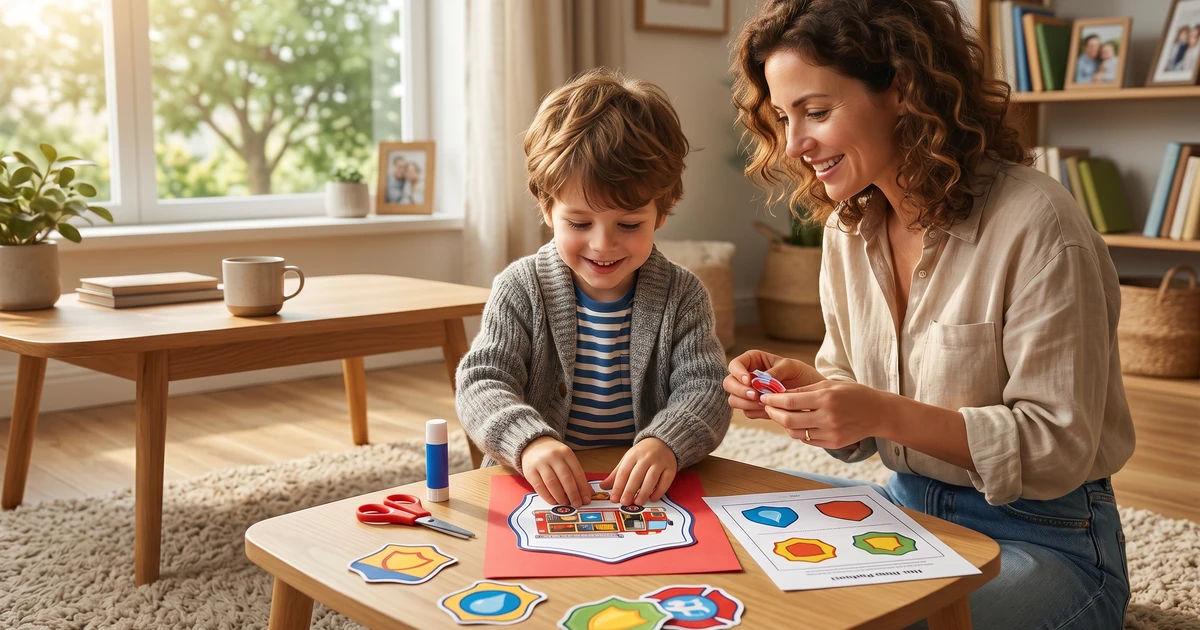
Activity: Create a simple “firefighter badge” as a certificate of completion.
-
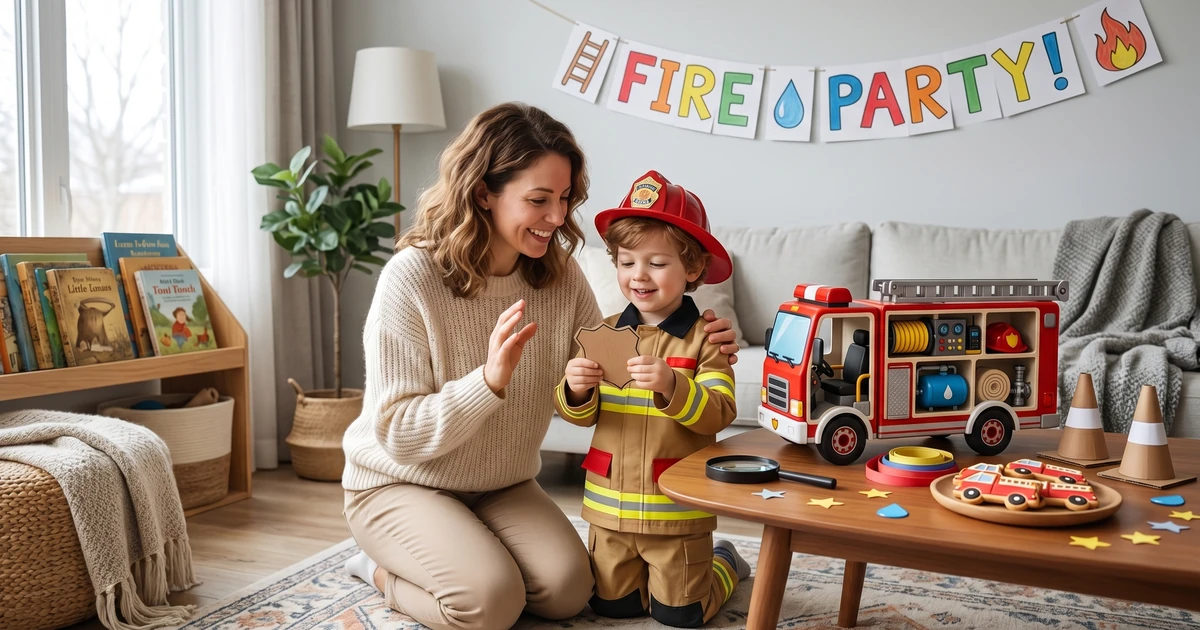
Celebration: Have a themed snack (red apples, cheese stick “hoses”). For a bigger celebration idea, see Budget Fire Truck Theme Party For Kids At Home.
A themed week provides structure and repetition, which helps young children master new concepts and vocabulary.
Frequently Asked Questions (FAQ)
Q: My preschooler has zero interest in fire trucks. Should I force these activities? A: Absolutely not. Forcing an interest will backfire. Instead, observe what does captivate them (dinosaurs, animals, space) and adapt the activity principles. Build a dinosaur rescue station, create a spaceship with a hose to put out asteroid fires. The core skills (building, dramatic play, safety) are transferable. You can also gently spark interest by reading a engaging book or watching a friendly video about fire trucks together.
Q: What’s the most common mistake parents make with fire truck crafts? A: The most common mistake, reported by many early childhood educators I’ve consulted, is doing too much of the work for the child. If you cut out all the perfect shapes and place the glue dots for them, the activity becomes yours. Let their work be messy, uneven, and uniquely theirs. Their fine motor skills will thank you for the practice.
Q: Are toy fire trucks with loud siren sounds beneficial or just annoying? A: This is a classic divide. From a learning perspective, the sound can enhance dramatic play and auditory recognition. However, for many households, they are overstimulating. A good compromise is to find trucks where the siren sound has an on/off switch or volume control. You can also teach kids to use their voices to make siren sounds, which is great for vocal play and self-regulation.
Q: How can I make these activities educational beyond just “playing with a truck”? A: Weave in early academic concepts naturally. During block building, count the wheels. During dramatic play, introduce vocabulary like “hydrant,” “hoseline,” “emergency.” When reading, identify the letter ‘F’ for fire. Use a sensory bin to sort pom poms by color (red/yellow = fire, blue = water). Every activity is a learning opportunity when you point out the connections.
Q: My child became terrified of fires after we talked about fire safety. What did I do wrong? A: This is a crucial edge case. The goal is to empower, not frighten. You may have provided too much detail or used scary language. Immediately pivot to the “helpers.” Emphasize that firefighters are trained experts who keep us safe, and that you have a plan (meeting place) so your family knows what to do. Keep the tone calm and confident. Focus on the tools and trucks that help solve the problem, not the problem itself.
Q: What age is too young for these preschool fire truck activities? A: For toddlers under 2.5, many of these activities pose choking hazards (small pom poms, beans) or require skills they don’t have (using scissors, complex role-play). For this age group, stick to board books about trucks, a single large toy fire truck to push, and simple songs with actions. Introduce more complex activities as their motor skills and understanding grow.
Q: When is a fire truck activity NOT the right choice for my child? A: Avoid these activities if your child is overly tired, hungry, or already in a state of sensory overload. Also, if there has been a recent real fire incident in your community, it may be too sensitive a topic. In these cases, choose neutral, calming activities instead.
Q: How do I handle a child who only wants to play “fire” in a destructive way (knocking down block buildings as “burning them”)? A: This is common. Gently redirect the narrative to the rescue and rebuilding phase. “The fire is out! Now the firefighters are heroes. Let’s use these blocks to help rebuild a stronger house for the stuffed animals.” This channels the energy into constructive play and reinforces the positive, helpful aspect of firefighters. Understanding this deep fascination can also help; read about How My Kid Became Obsessed with Firetrucks for more insights.
By focusing on hands-on, multi-sensory experiences, you can transform a simple preschool fire truck activities theme into a rich learning adventure that builds crucial skills and sparks a lifetime of curiosity about the world and its helpers.