
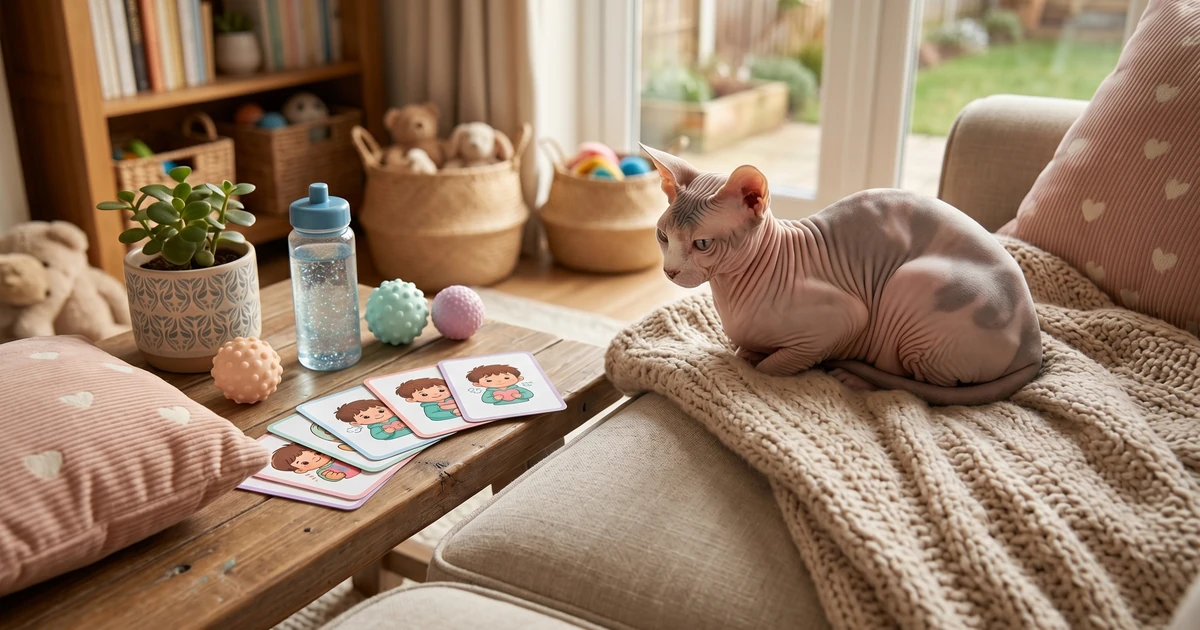
Non-Verbal Calm Down Communication Cards for Toddlers
Your toddler is screaming on the kitchen floor. You crouch down, make eye contact, and calmly say, "Can you tell me what's wrong?"
Your toddler is screaming on the kitchen floor. You crouch down, make eye contact, and calmly say, “Can you tell me what’s wrong?”

calm down communication cards toddler
Recommended products related to this guide.
They scream louder.
You already know this moment. The frustration isn’t just theirs. It’s yours too, because you’re doing everything the parenting books say and it’s simply not working. You’re not failing. Your toddler isn’t being difficult on purpose. The real problem is neurological, and once you understand it, calm down communication cards for toddlers start to make a whole lot more sense.
Key Takeaways:
- Toddlers lose access to language during emotional flooding, so verbal prompts often backfire
- Visual communication tools like calm down cards give kids a non-verbal way to express needs and choose coping strategies
- The most effective cards are simple, picture-based, and introduced before meltdowns happen
- You don’t need expensive materials, but consistency and repetition matter far more than the cards themselves
- Communication cards work best as part of a broader emotional regulation routine, not a one-time fix
!A toddler looking at colorful calm down communication cards laid out on a table
Why Toddlers Literally Cannot “Use Their Words” When Upset
This isn’t a discipline problem. It’s a brain development problem.
When a toddler reaches emotional overwhelm, the prefrontal cortex (the part responsible for language, logic, and decision-making) essentially goes offline. According to the American Academy of Pediatrics, the emotional regulation center of the brain isn’t fully developed until the mid-20s. Asking a toddler to verbalize complex feelings during a meltdown is like asking someone to solve algebra while their house is on fire.
“Young children experience emotions with their whole body before they can name them. Visual tools meet kids where their brain actually is, rather than where we wish it were.” - Child development researcher, Dr. Becky Bailey, founder of Conscious Discipline
The good news: toddlers can point, gesture, and scan visuals even when words are completely unavailable. That’s exactly the gap that calm down communication cards fill. They give a flooded brain something concrete to grab onto.
The key insight: visuals bypass the language barrier that meltdowns create.
What Calm Down Communication Cards Actually Are
Calm down communication cards are visual tools, typically printed cards or laminated sheets, that show pictures or simple icons representing feelings and calming strategies. A card might show a child taking deep breaths, hugging a stuffed animal, drinking water, or going to a quiet corner.
They serve two functions at once. First, they help toddlers name what they’re feeling (even if just by pointing to a sad face). Second, they offer a small menu of choices for what to do about it.
That second part is critical. Giving a toddler a sense of choice during dysregulation is one of the fastest ways to reduce the intensity of a meltdown. When a child feels agency, the stress response starts to soften.
| Card Type | Best For | Age Range | Format |
|---|---|---|---|
| Feelings identification cards | Naming emotions | 18 months - 3 years | Large picture icons |
| Calm down strategy cards | Choosing a coping action | 2 - 5 years | Illustrated action steps |
| Visual emotion thermometers | Gauging intensity | 3 - 6 years | Scale with colors |
| Pocket-sized choice cards | On-the-go use | 2 - 5 years | Laminated mini cards |
| Routine-based calm corner cards | Independent use at home | 3 - 6 years | Printed sets for a calm space |
How to Introduce Communication Cards Before the Next Meltdown
This is where most parents go wrong. They pull out the cards during a meltdown and wonder why their toddler throws them across the room.
Cards need to be practiced during calm, happy moments first. Think of it like a fire drill. You don’t learn evacuation routes while the building is burning.
Step 1: Choose 3-5 Simple Strategies
Start small. Overwhelming a toddler with 20 options defeats the purpose. Pick strategies your child already gravitates toward: maybe they like squeezing things, deep breaths, or going to their room with a toy. Build the card set around what’s already in their comfort zone.
Step 2: Introduce Cards During Play
Sit together on the floor, hold up a card, and narrate it. “This one shows taking a big belly breath. Can you show me how you do that?” Make it playful, not instructional. Toddlers learn through imitation and repetition, not lectures.
Step 3: Build a “Calm Spot”
A designated physical space, even just a small corner with a bean bag and a few sensory items, gives cards a home. When kids associate a place with calming down, the environment itself becomes a cue. The cards live there. Over time, going to that spot becomes automatic.
Step 4: Use the Cards Yourself
Point to the deep breath card and use it yourself when you’re frustrated. Say it out loud. “I’m feeling a little stressed right now. I’m going to try this one.” Toddlers are extraordinary imitators. Modeling is worth more than any instruction.
Step 5: Introduce During Low-Level Frustration
When your toddler is mildly annoyed (not full meltdown territory), gently offer the card set. “Looks like you’re feeling frustrated. Want to look at our choices?” This is where the real practice happens.
Pro Tip: Laminate the cards or keep them in a small binder ring so they survive toddler handling. A card that falls apart after two uses loses all its value fast.
What to Look for in Calm Down Cards for Toddlers
Not all card sets are created equal. After analyzing dozens of parent reviews and early childhood educator recommendations, here’s what consistently separates cards that get used from cards that collect dust.
| Feature | Why It Matters | What to Avoid |
|---|---|---|
| Simple, clear illustrations | Toddlers need instant recognition, no decoding | Overly complex or abstract images |
| Limited text or no text | Cards should work without reading | Dense word-heavy cards |
| Realistic but friendly faces | Easier to match emotions to real experiences | Cartoon faces that look nothing like real expressions |
| Durable material (laminated) | Toddlers are hard on materials | Thin paper that rips immediately |
| Age-appropriate strategies | Deep breathing and hugging a toy, not journaling | Adult strategies repackaged for kids |
| Portable format | Meltdowns happen everywhere | Large poster-only formats with no portable version |
“The most effective visual supports for young children are simple, consistent, and embedded into daily routines rather than saved for crisis moments.” - NAEYC (National Association for the Education of Young Children)
Bottom line: the best calm down communication cards are ones your toddler can actually understand at a glance, without any adult translation required.
Free vs. Paid Card Sets: What’s Worth Your Time
You can absolutely start for free. There are printable calm down card sets available online that work well for families wanting to test the concept before investing in anything.
| Option | Cost | Pros | Cons |
|---|---|---|---|
| Free printables | $0 + printing | Low risk, quick to access | Requires printing/laminating yourself |
| Digital download sets | $3 - $8 | More polished design, instant access | Still requires printing |
| Pre-printed physical sets | $10 - $25 | Ready to use, durable | Less customizable |
| DIY photo cards | $0 - $5 | Highly personalized with your child’s photos | Time-intensive to make |
| Therapy-grade sets | $25 - $60 | Evidence-based, often used by professionals | Expensive for home use |
For most families, a quality digital download set you print and laminate at home lands in the sweet spot: affordable, customizable, and durable enough to last. If you want to explore free options first, the Calm Down Choices Free Printable: Downloadable Visuals for Kids page has some solid starting points.
A Note on Consistency (This Part Is Boring But Critical)
I’ll be honest with you. The cards are not magic. I’ve seen parents buy beautifully designed card sets, use them twice, and then wonder why nothing changed.
Emotional regulation is a skill. Skills require repetition. The research on self-regulation development consistently shows that toddlers need to practice coping strategies 20 to 40 times in safe, calm settings before those strategies become accessible during actual stress.
That sounds like a lot. But spread across daily playtime over a few weeks, it’s just a few minutes a day. The families who report the biggest changes aren’t the ones with the fanciest materials. They’re the ones who made it a daily habit.
Frequently Asked Questions
At what age can toddlers start using calm down communication cards?
Most toddlers can begin engaging with simple picture-based cards around 18 to 24 months. At this age, they may not be able to choose a strategy independently, but they can point to feeling faces and imitate simple actions shown on cards. Full independent use typically develops between ages 3 and 4, with consistent adult support.
What if my toddler refuses to look at the cards during a meltdown?
That’s completely normal and doesn’t mean the cards aren’t working. During full emotional flooding, no tool will work in the moment. The goal of cards isn’t to stop a meltdown mid-stream. It’s to build a coping vocabulary over time so that the child has more tools available before reaching full dysregulation. Keep using them during calm times and don’t force them during peak distress.
How many calm down choices should be on the cards?
For toddlers under 3, start with 3 to 4 strategies maximum. Too many options creates decision fatigue, which actually increases frustration. As children grow and gain experience with the cards, you can expand the set to 6 to 8 options. The sweet spot for most preschool-aged children is 5 choices.
Do calm down cards work for kids with speech delays?
Yes, and they can be especially helpful. Children with speech delays often experience even more frustration from the gap between what they feel and what they can express. Picture-based communication tools reduce that gap significantly. If your child works with a speech-language pathologist, it’s worth asking them to incorporate the same card set into sessions for consistency.
Should I use the cards at preschool too?
Consistency between home and school makes a significant difference. If possible, send a copy of your home card set to your child’s teacher. Many preschool educators already use similar tools. For more on classroom implementation, the How to Teach Calm Down Choices to Preschool Students guide walks through exactly how teachers can integrate these tools into the school day.
Ready to Go Deeper?
Calm down communication cards are one piece of a much larger picture around emotional regulation in early childhood. The strategies that work best, how to set up an effective calm corner at home, what the research actually says about toddler self-regulation, and how to build these habits so they stick long-term are all covered in the full resource.
For everything in one place, read the The Complete Guide to Calm Down Choices: Strategies for Emotional Regulation. It covers the full framework, not just the cards.
And if you’re curious how the same principles apply as kids get older (or even for the adults in the house), the Calm Down Choices for Adult Anxiety: What Works Best guide is worth a read too.
You’re already asking the right questions. That matters more than any card set.
Recommended Resources & Workbooks
Pair this guide with our hands-on, ready-to-print learning resources.
 Digital Bundle
Learn to Read Program: Levels 1-3
170 sequenced phonics lessons across 199 pages, from first letter sounds to fluent long-vowel reading.
 Digital Learning Bundle
Preschool Learning Bundle
260+ printable worksheets for tracing, ABCs, numbers, shapes, sight words, and kindergarten prep.
 Digital Learning Bundle
Play-Based Learning Bundle for Ages 3-6
230+ play-based learning activities with pretend play, reading, early math, creative arts, and bonus flashcards.
Related Guides & Articles
Explore more of our detailed guides and activities.
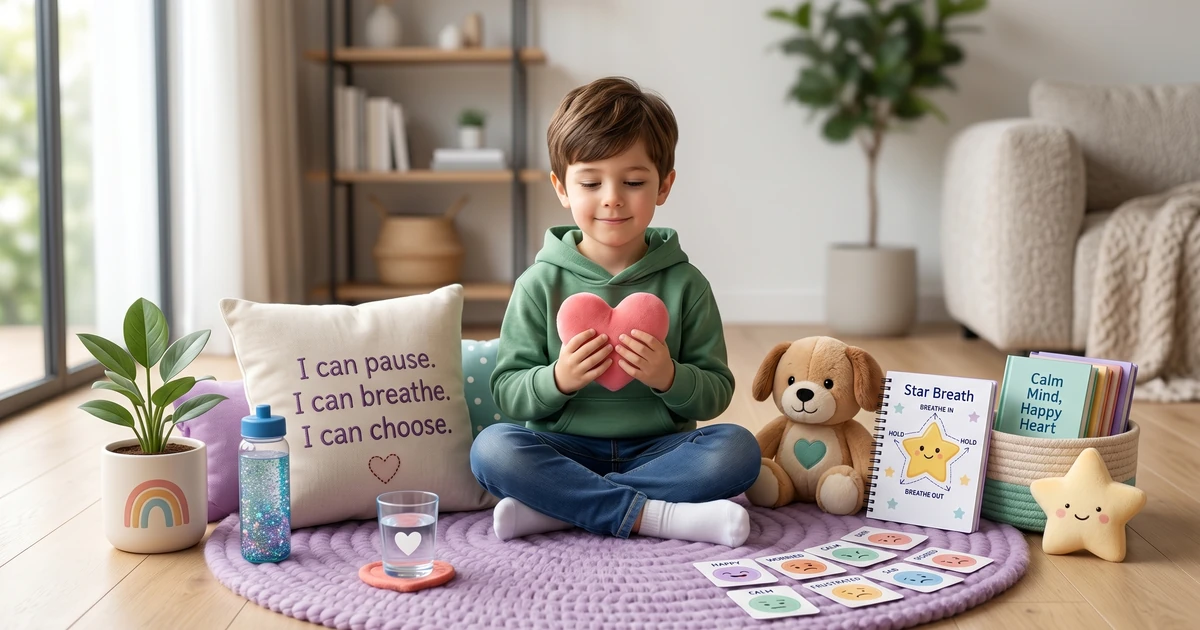
The Complete Guide to Calm Down Choices: Strategies for Kids
Every person, regardless of age, has moments when emotions feel too big to manage. Big feelings, meltdowns, anxiety spirals, and emotional overwhel...

Calm Down Choices for Adult Anxiety: What Works Best
Adults don't always get the same structured emotional support that children receive in schools and therapy programs. Yet the need for calm down cho...
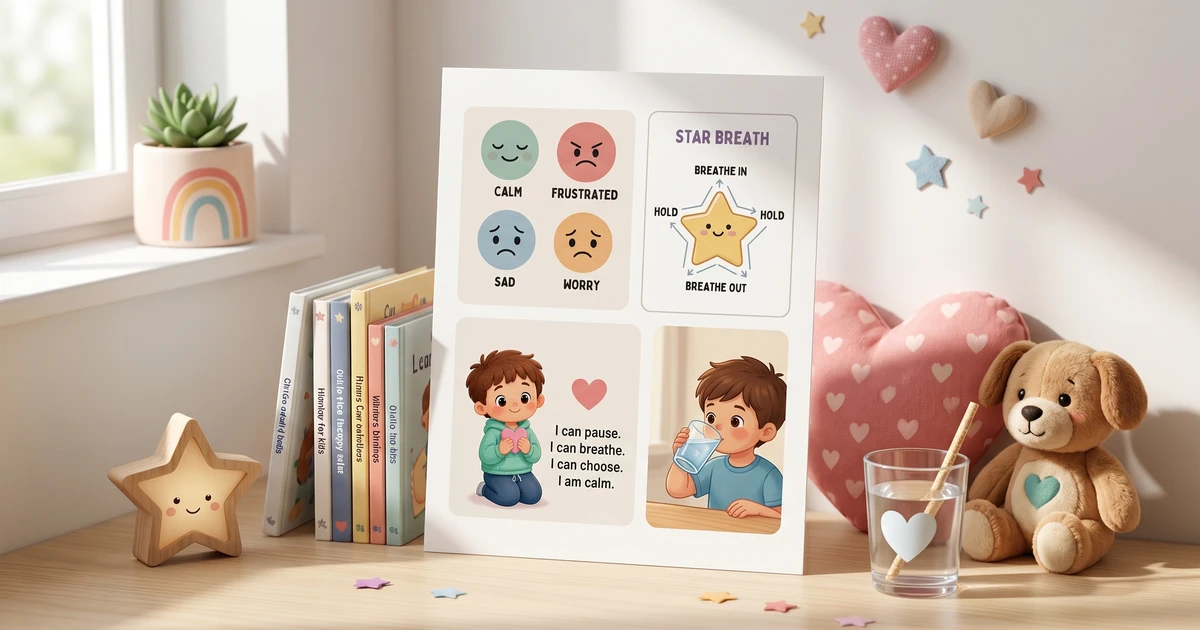
Calm Down Choices Free Printable: Downloadable Visuals for Kids
Finding a calm down choices free printable that actually works in the real world, whether you're a teacher with 25 kids in a classroom or a parent ...
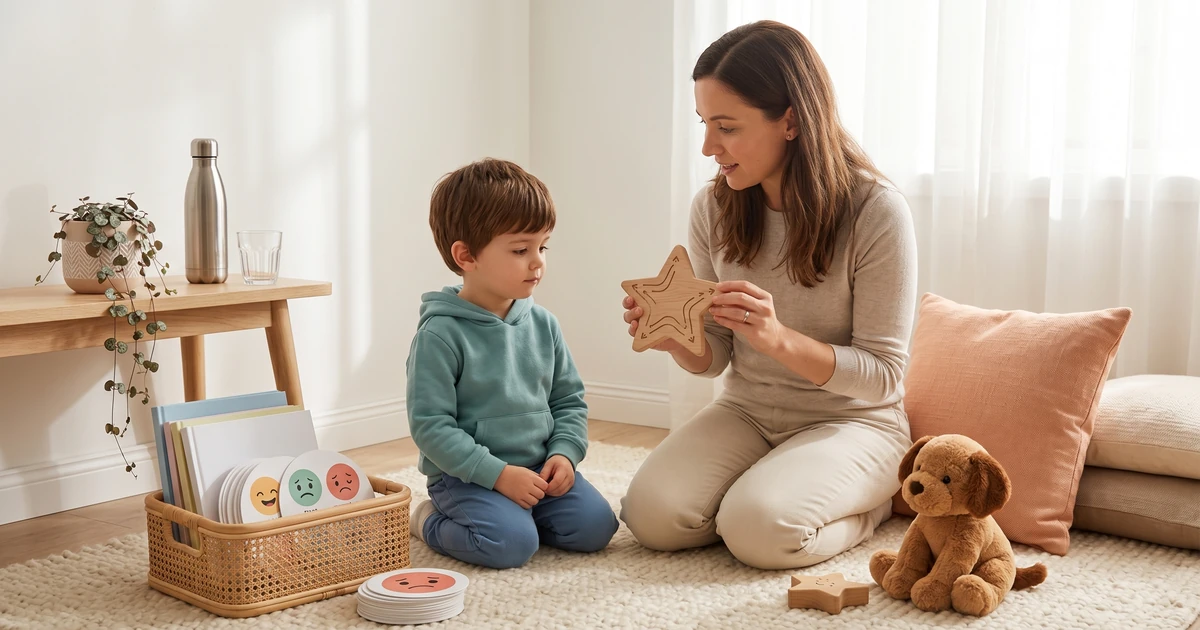
How to Teach Calm Down Choices to Preschool Students
Preschoolers are emotional volcanoes. One moment they're happily building a block tower, and the next they're on the floor, inconsolable because th...