
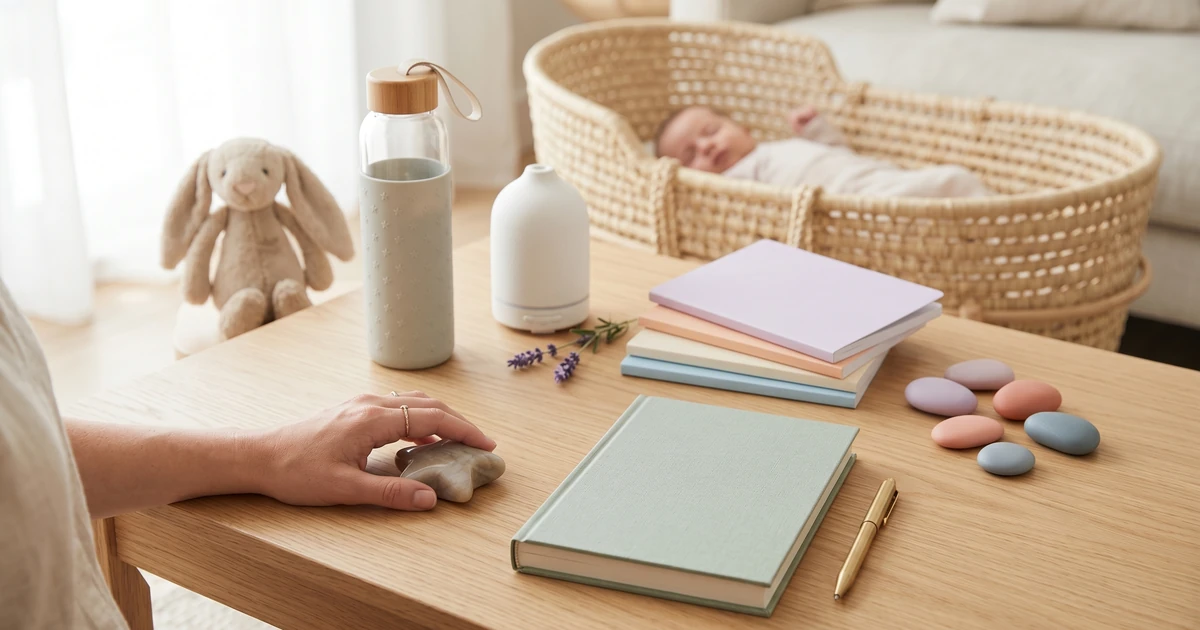
New Mom Overstimulation Kit: Tools to Stay Calm With a Baby
Nobody warns you about the 3am spiral. You've fed the baby, changed the baby, rocked the baby. The baby is finally asleep. And then your brain just... won'
!A soft, organized calm down kit basket with lavender sachets, a journal, earbuds, and a stress ball on a cozy blanket

calm down kit for new moms
Recommended products related to this guide.
Nobody warns you about the 3am spiral. You’ve fed the baby, changed the baby, rocked the baby. The baby is finally asleep. And then your brain just… won’t stop. Your chest feels tight. Your hands are shaky. You’re exhausted beyond anything you’ve ever felt before, and yet sleep won’t come.
That moment is exactly what a calm down kit for new moms is designed for.
This isn’t about self-care in the bubble-bath sense. It’s about having real, grab-it-right-now tools ready when your nervous system hits its limit, because postpartum stress doesn’t wait for a convenient time.
Key Takeaways:
- A calm down kit for new moms is a physical collection of sensory and grounding tools kept within reach for overwhelmed moments
- The best kits address the body first (sensory input, breathing) before the mind
- You can build an effective kit for under $30 using everyday items
- Different moments call for different tools: middle-of-the-night anxiety is different from daytime overstimulation
- Postpartum anxiety affects up to 20% of new mothers and is distinct from postpartum depression
Why New Moms Are So Prone to Overwhelm (It’s Not Weakness)
Postpartum stress is physiological, not personal. According to Postpartum Support International, postpartum anxiety affects up to 20% of new mothers, making it one of the most common perinatal complications, yet one of the most under-discussed.
Your cortisol levels are fluctuating. Your sleep is fragmented, which is actually more disruptive to the nervous system than getting fewer total hours. You’re hyper-alert to every sound your baby makes. Your identity is shifting in ways that take time to process. Add in a possible difficult birth, breastfeeding challenges, or a lack of local support, and overwhelm isn’t a character flaw. It’s a predictable biological response.
The problem is that most advice for new moms lands in one of two categories: either sweeping (“sleep when the baby sleeps”) or expensive (therapy, spa days, postpartum doulas). Both are valid, but neither helps you at 3am when you’re sitting on the bathroom floor trying to breathe.
That’s the gap a calm down kit fills.
“Sensory-based grounding tools work because they interrupt the stress response at the physiological level, before the cognitive brain can spiral further.” - Dr. Bessel van der Kolk, author of The Body Keeps the Score
A calm down kit works because it gives your hands something to do and your senses something concrete to focus on.
What Goes Into a Calm Down Kit for New Moms
The most effective kits I’ve researched have one thing in common: they’re built around the five senses, not around a Pinterest aesthetic. Here’s how to think about each category.
Sensory Tools (Touch and Smell)
These are your fastest-acting items. Touch and scent bypass the thinking brain and go straight to the nervous system.
-
A smooth worry stone or textured fidget ring (holds your hands and provides rhythmic input)
-
A lavender or chamomile roller or sachet (lavender has documented anxiolytic effects in clinical research)
-
A soft fabric swatch or small piece of velvet, something tactile and comforting
-
A cold gel eye mask stored in the fridge (cold activates the dive reflex and slows heart rate)
Pro Tip: The cold water or cold pack method is one of the fastest physiological ways to interrupt a panic response. Even splashing cold water on your face activates the vagus nerve and can slow your heart rate within 30 seconds.
Auditory Tools
Noise is often the thing pushing a new mom past her limit. Conversely, the right sound can bring her back.
-
Foam earplugs (when the baby is safely with a partner or sleeping and you need 10 minutes of quiet)
-
Wired earbuds with a short playlist of calming music or a guided breathing track
-
A list of two or three YouTube videos or podcast episodes you already know calm you down (write the names on a notecard so you don’t have to think)
Visual and Cognitive Anchors
When anxiety is running the show, your brain needs something simple and concrete to focus on.
-
A 4-7-8 breathing card (inhale 4 counts, hold 7, exhale 8) printed and laminated
-
A grounding prompt card listing the 5-4-3-2-1 method: 5 things you see, 4 you hear, 3 you can touch, 2 you smell, 1 you taste
-
A small photo of a moment that makes you feel safe or happy
Nourishment Items
Anxiety and low blood sugar feed each other. New moms often forget to eat.
-
A small sealed snack: a protein bar, a bag of almonds, or some dark chocolate
-
A herbal tea bag (chamomile, lemon balm, or passionflower) with a note to drink it slowly
-
A small water bottle, kept filled
Emotional Release Tools
Sometimes you need to get something out, not just calm down.
-
A small journal and pen (even writing three words counts)
-
A card with one or two permission statements written in your own handwriting (“I am allowed to feel overwhelmed. I am doing enough.”)
How to Build Your Kit for Under $30
One of the most common barriers I hear is “I don’t have time or money for this.” So here’s a realistic cost breakdown.
| Item | Price Range | Where to Get It |
|---|---|---|
| Worry stone or fidget ring | $3 - $8 | Amazon, local crystal shop |
| Lavender essential oil roller | $5 - $10 | Drugstore, Amazon |
| Foam earplugs (box of 10) | $3 - $5 | Any pharmacy |
| Cold gel eye mask | $4 - $8 | Amazon, Target |
| Small journal and pen | $3 - $6 | Dollar store, Target |
| Herbal tea sampler | $4 - $7 | Grocery store |
| Protein bar or nuts | $2 - $4 | Grocery store |
| Printed breathing/grounding card | $0 (print at home) | Free download |
| Small basket or pouch to hold it all | $3 - $8 | Dollar store |
| Total | $27 - $56 | Mix and match |
You don’t need everything at once. Start with five items and build from there.
Pro Tip: Keep a second, smaller version of your kit in your diaper bag or car. A single lavender roller, two earplugs, a protein bar, and a breathing card can fit in a sandwich bag. That’s enough.
When to Use Your Calm Down Kit (And How to Make it a Habit)
The biggest mistake people make is building a kit and then forgetting it exists. The kit only works if it’s accessible and if you remember to reach for it before you hit complete meltdown.
Here’s a simple framework for making it stick:
Step 1: Place the kit somewhere you actually go when stressed. For most new moms, this is the bathroom, the nursing chair, or the kitchen counter. Not a drawer. Not a closet shelf.
Step 2: Choose one “trigger signal” that cues you to use it. This could be: when the baby has been crying for more than 15 minutes and someone else can hold them, when your jaw is clenched, when you’ve checked your phone five times in two minutes. Pick one physical sensation or behavior that signals early overwhelm.
Step 3: Start with touch. Pick up the worry stone or the eye mask first. Don’t try to journal or do cognitive work right away. Ground the body before engaging the mind.
Step 4: Give yourself 8 minutes. Set a timer if it helps. Eight minutes of focused calming is enough to shift your cortisol response and return to a functional baseline.
Step 5: Restock it weekly. On Sunday nights or Monday mornings, spend two minutes checking that your snack is there, your roller still has oil, and your water bottle is full.
“Recovery isn’t about eliminating stress. It’s about shortening the recovery window.” - Dr. Andrew Huberman, neuroscientist, Stanford University
The goal of a calm down kit isn’t to prevent hard moments. It’s to make sure you have tools already in your hands when they arrive.
Choosing the Right Tools for Your Specific Triggers
Not every calm down kit looks the same, because not every mom’s overwhelm looks the same. Here’s a quick guide.
| If Your Main Trigger Is… | Prioritize These Tools |
|---|---|
| Sensory overload (noise, touch) | Earplugs, cold eye mask, soft fabric, quiet space |
| Intrusive anxious thoughts | Breathing card, grounding prompts, journal |
| Physical tension (tight chest, jaw, shoulders) | Cold pack, fidget stone, slow herbal tea |
| Loneliness or emotional exhaustion | Permission affirmation card, journal, calming music |
| Feeding or sleep-related stress | Snack, water, lavender scent, a comfort playlist |
| General overstimulation | All sensory tools, earplugs first |
Comparing DIY Kits vs. Pre-Made Calm Down Kits
Pre-made postpartum care kits have become more common, and they can be a genuinely useful starting point, especially as a gift. But they’re not all equal.
| Factor | DIY Kit | Pre-Made Kit |
|---|---|---|
| Cost | $15 - $30 | $30 - $80+ |
| Personalization | High (you choose what works for you) | Low to medium |
| Convenience | Takes 20-30 min to assemble | Ready immediately |
| Quality control | You choose trusted brands | Varies widely |
| Emotional investment | High (building it feels intentional) | Lower |
| Gift suitability | Lower (more effort for giver) | High |
My read on this, based on reviews from postpartum support communities: the best use of a pre-made kit is as a starting point or gift. You then swap out one or two items that don’t work for you and add what’s missing.
Frequently Asked Questions
Is a calm down kit the same as a postpartum self-care kit? Not exactly. A postpartum self-care kit is broader and often includes things like nipple cream, perineal spray, and recovery supplies. A calm down kit is specifically focused on emotional regulation tools for moments of acute stress or anxiety. Some items overlap, but the purpose is different. A calm down kit is for the nervous system specifically.
What if I don’t have time to use it? This is the most honest barrier. My answer: the minimum version of using your kit is picking up one item and holding it. That’s it. You don’t need 20 minutes. Holding a worry stone while you nurse, sipping herbal tea instead of scrolling, putting in one earplug for three minutes. Small inputs still shift the nervous system.
Should I talk to a doctor about postpartum anxiety before building a kit? A calm down kit is a complement to professional support, not a replacement. According to Postpartum Support International, if you’re experiencing persistent anxiety, racing thoughts, inability to sleep even when the baby sleeps, or intrusive thoughts, please reach out to a healthcare provider or their helpline (1-800-944-4773). A kit helps with daily stress regulation. Clinical support is for when symptoms are affecting your functioning.
Can my partner help set up this kit? Absolutely, and asking a partner to assemble it as a practical act of support is a great way to make them feel useful in a concrete way. Give them the list above and a $25 budget. Done.
What if I forget the kit exists when I’m actually stressed? This is extremely common. The solution is a physical cue, not willpower. Put a sticky note on the bathroom mirror that says “kit.” Put the basket on your nursing chair armrest. The visibility of the kit is part of the system.
Postpartum overwhelm is one of the least-discussed but most universal experiences new moms have. You’re not fragile for needing tools. You’re human, and you’re operating under conditions that would exhaust anyone.
A calm down kit is a small, practical investment in your own nervous system regulation, and it costs less than a single takeout order.
For a much deeper look at the full range of calm-down strategies that work for adults and why the research behind emotional regulation tools is more strong than most people realize, read the full guide here.
The Complete Guide to Calm Down Choices: Strategies for Emotional Regulation
You might also find these helpful as you build out your toolkit:
Recommended Resources & Workbooks
Pair this guide with our hands-on, ready-to-print learning resources.
 Digital Bundle
Learn to Read Program: Levels 1-3
170 sequenced phonics lessons across 199 pages, from first letter sounds to fluent long-vowel reading.
 Digital Learning Bundle
Preschool Learning Bundle
260+ printable worksheets for tracing, ABCs, numbers, shapes, sight words, and kindergarten prep.
 Digital Learning Bundle
Play-Based Learning Bundle for Ages 3-6
230+ play-based learning activities with pretend play, reading, early math, creative arts, and bonus flashcards.
Related Guides & Articles
Explore more of our detailed guides and activities.
The Complete Guide to Calm Down Choices: Strategies for Kids
Every person, regardless of age, has moments when emotions feel too big to manage. Big feelings, meltdowns, anxiety spirals, and emotional overwhel...
Calm Down Choices for Adult Anxiety: What Works Best
Adults don't always get the same structured emotional support that children receive in schools and therapy programs. Yet the need for calm down cho...
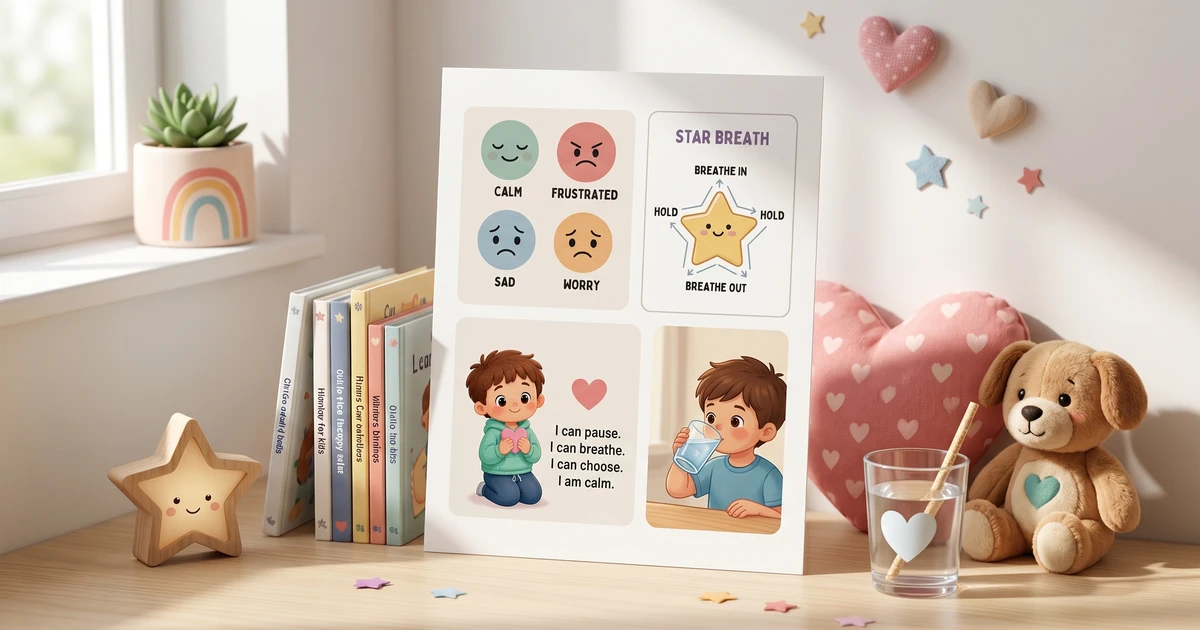
Calm Down Choices Free Printable: Downloadable Visuals for Kids
Finding a calm down choices free printable that actually works in the real world, whether you're a teacher with 25 kids in a classroom or a parent ...
How to Teach Calm Down Choices to Preschool Students
Preschoolers are emotional volcanoes. One moment they're happily building a block tower, and the next they're on the floor, inconsolable because th...