
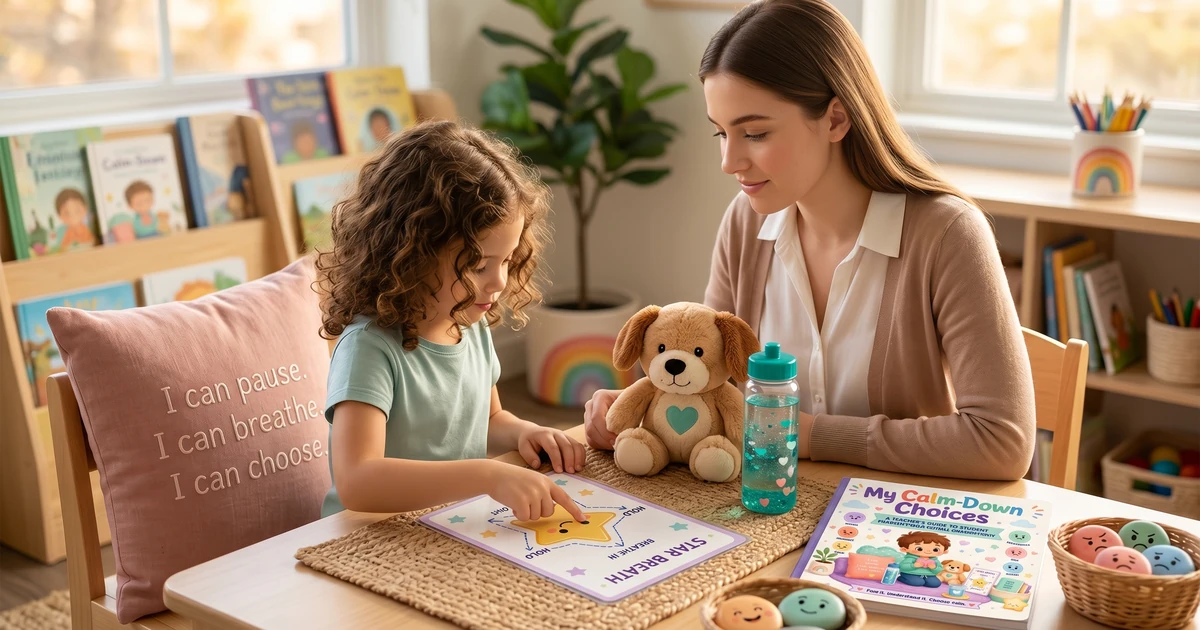
First Year Teacher’s Guide to Student Emotional Regulation
You're 20 minutes into a lesson when two students start arguing, a third is crying under the table, and someone just knocked over the entire supply cart. Y
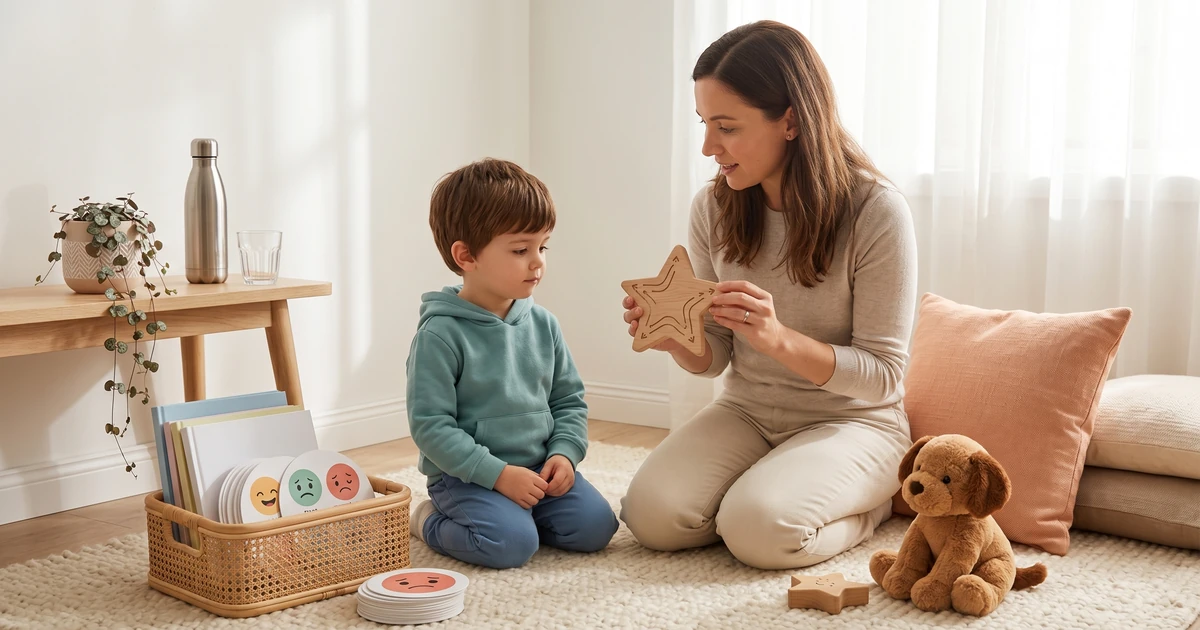
!A calm, organized classroom corner with visual aids and a teacher’s resource basket on a desk

emotional regulation resources for teachers
Recommended products related to this guide.
You’re 20 minutes into a lesson when two students start arguing, a third is crying under the table, and someone just knocked over the entire supply cart. You take a breath. Or you try to.
Teaching is one of the most emotionally demanding jobs that exists. You’re expected to co-regulate children who are dysregulated, while managing your own stress, while hitting your curriculum benchmarks, while filling out paperwork during your lunch break. It’s a lot. And most teacher training programs spend approximately zero time on what to do when you’re the one who needs to calm down.
That’s not a character flaw. It’s a systemic gap. And the good news is that there are practical emotional regulation resources for teachers that actually work inside a real classroom, not just in a wellness retreat brochure.
Key Takeaways:
- Teacher emotional regulation is not a luxury skill. It directly affects student outcomes and classroom climate.
- Co-regulation starts with the adult. If you’re dysregulated, students will mirror that energy.
- Visual tools, sensory anchors, and structured calm-down routines benefit both teachers and students.
- Free and low-cost resources exist and are genuinely useful, you don’t need a big budget.
- Building emotional regulation into your classroom systems reduces daily crisis moments over time.
Why Teacher Emotional Regulation Is a Classroom Management Issue
Emotional regulation is the ability to notice, understand, and manage your own emotional responses in healthy, adaptive ways. For teachers, this isn’t just about personal wellbeing. It’s a direct classroom management skill.
Research published by the Collaborative for Academic, Social, and Emotional Learning (CASEL) consistently shows that teacher social-emotional competence is one of the strongest predictors of student social-emotional outcomes. When teachers model calm, students learn calm. When teachers react from a dysregulated state, students escalate.
“Teachers who practice emotional regulation skills themselves are better able to implement SEL strategies effectively in their classrooms.” - CASEL Research Brief, 2021
The problem is that most teachers are running on empty. A 2023 RAND Corporation report found that 77% of teachers reported frequent job-related stress, significantly higher than other working adults. You can’t pour from an empty cup, as the saying goes, and you definitely can’t co-regulate a dysregulated 7-year-old when your own nervous system is screaming.
The first step is treating your own regulation as a professional priority, not an afterthought.
The 5 Types of Emotional Regulation Resources That Help Teachers Most
Not all resources are created equal. After spending time analyzing what actually resonates with educators in real classroom settings, I’ve found that the most effective tools fall into five categories.
1. Visual Anchor Tools (For You and Your Students)
Visual anchors are posted reminders, charts, or cue cards that help interrupt automatic stress responses before they escalate. For teachers, a small laminated card on your lanyard or desk with 3-4 grounding cues (“feet on the floor, slow breath, soft eyes”) can genuinely interrupt a stress spiral mid-lesson.
For students, calm-down choice charts posted at eye level give children a self-directed script when they feel overwhelmed. This reduces how often students come to you for emotional first aid, which in turn protects your own bandwidth.
Pro Tip: Place your own regulation cue somewhere only you can see it. The inside of your planner cover, the corner of your whiteboard, or the back of your classroom door work well. You don’t need students to know it’s for you.
2. Sensory Regulation Anchors
Your body reacts to stress before your brain catches up. Sensory tools work at the body level. Cold water on your wrists, a small textured object in your pocket, intentional slow exhales during a transition. These aren’t gimmicks. They’re backed by basic nervous system science.
For classrooms, a small “calm corner” stocked with sensory tools serves students and gives you a go-to redirection point rather than a confrontation.
3. Structured Breathing Protocols
Breathing techniques are free, silent, and can be used in front of 28 students without anyone knowing. The 4-7-8 breath (inhale 4 counts, hold 7, exhale 8) is one I see cited repeatedly by teachers in online forums as a go-to for in-the-moment reset.
Box breathing (4 counts in, hold 4, out 4, hold 4) is easier to teach to kids, which means you can use it with the whole class during transitions. When students do it with you, it normalizes the practice and regulates the room.
4. Classroom Routine Structures That Prevent Escalation
The best emotional regulation tool is a system that prevents the meltdown rather than manages it after the fact. Predictable routines lower ambient anxiety for everyone in the room, including you.
Morning meetings, visual schedules, clear transition warnings, and consistent calm-down protocols all reduce the number of regulation crises you face daily. This isn’t just SEL theory. Teachers who’ve implemented structured calm-down choice systems consistently report fewer behavioral interruptions within 4-6 weeks.
5. Personal Decompression Micro-Practices
Five minutes matters. A 5-minute decompression practice between classes (or even between lessons) resets your baseline. This could be a brief body scan, stepping outside your classroom door for three slow breaths, journaling two sentences, or having a “transition ritual” like making tea or reorganizing one thing on your desk.
The key is consistency, not duration. Two minutes every day beats 30 minutes once a week for nervous system regulation.
A Simple Comparison: Emotional Regulation Approaches for Teachers
| Approach | Time Required | Cost | Best For | Works During Class? |
|---|---|---|---|---|
| Breathing techniques | 1-3 minutes | Free | In-the-moment reset | Yes |
| Visual anchor cards | Seconds | Free-$5 | Triggering reminders | Yes |
| Calm corner setup | Initial setup 1 hr | $0-$30 | Student redirection + your bandwidth | Indirectly |
| Journaling | 5-10 min | Free | End-of-day processing | No |
| Body scan / mindfulness | 5-15 min | Free | Morning/prep time regulation | No |
| Structured SEL curriculum | Ongoing | Varies | Long-term classroom culture | Yes |
The most sustainable approach combines a quick in-class tool with a personal decompression practice outside of teaching hours.
Building a Calm-Down System That Works for the Whole Classroom
Here’s something I’ve noticed consistently: when teachers invest in calm-down resources for their students, they end up benefiting just as much. A well-designed classroom calm-down system reduces the number of times you have to intervene in emotional crises every day.
Step 1: Identify Your Three Biggest Escalation Triggers
Transitions, unstructured time, and certain personality combinations tend to be the most common. Write them down. Awareness is regulation step one.
Step 2: Map a Visual Calm-Down Menu for Students
A calm-down choices chart gives students agency and reduces their dependence on you for every emotional regulation moment. You can find free printable versions at Calm Down Choices Free Printable: Downloadable Visuals for Kids, which are a solid starting point before you invest in anything more elaborate.
Step 3: Establish a Designated Calm Space
This doesn’t need to be a Pinterest-perfect sensory corner. A chair, a small basket of tools, and a posted visual menu is enough. Label it clearly. Practice using it with students before it’s needed.
Step 4: Teach the Routine Explicitly
Kids don’t automatically know how to use calm-down tools. Spend 10-15 minutes teaching the routine directly, modeling it yourself, and role-playing. Revisit it after breaks.
Step 5: Review What’s Working Monthly
Take 5 minutes at the end of each month to note what tools students are actually using and which ones are collecting dust. Swap out what’s not working. This is a living system, not a one-time setup.
What to Look for in Emotional Regulation Resources for Teachers
| Criteria | Why It Matters |
|---|---|
| Easy to implement mid-lesson | You won’t use it if it requires pausing instruction |
| Evidence-based approach | Rooted in nervous system science or SEL research |
| Student-facing as well | Dual-purpose tools protect your time and energy |
| Visually clear | Works fast, no reading required in a stressful moment |
| Age-appropriate | A kindergarten calm-down menu looks different from a grade 5 one |
| Free or low cost | Sustainability matters. Budget-dependent tools disappear in lean years |
Resources Worth Bookmarking Right Now
There are genuinely good free resources out there. A few places to start:
-
CASEL’s educator tools at casel.org include research-backed SEL frameworks and classroom strategies
-
The Zones of Regulation framework is widely used in US and UK schools and has free introductory materials online
-
Calm-down choice printables can get your classroom system started without spending a dollar, the Calm Down Choices Free Printable: Downloadable Visuals for Kids page has downloadable visuals worth keeping on hand
For younger classrooms specifically, the strategies look a bit different. The guide on How to Teach Calm Down Choices to Preschool Students walks through age-appropriate approaches that prevent meltdowns rather than just respond to them.
And if you’re also dealing with your own anxiety outside of school hours (which, based on the data, is most teachers right now), the piece on Calm Down Choices for Adult Anxiety: What Works Best might be genuinely useful reading.
The Full Picture
I’ve only scratched the surface here. The strategies above will give you a solid foundation, but building a truly regulated classroom culture involves understanding the science behind co-regulation, structuring your physical environment intentionally, and having a toolkit of responses for different types of dysregulation.
For the complete breakdown of calm-down strategies, evidence-based methods, and classroom implementation guides, read the full article: The Complete Guide to Calm Down Choices: Strategies for Emotional Regulation
Frequently Asked Questions
Q: Can emotional regulation resources really make a difference if the school environment itself is stressful?
Yes, with an important caveat. No personal regulation tool fixes a toxic system. But in most classroom environments, having practical strategies does meaningfully reduce the number and intensity of stress responses you experience daily. Think of it as damage reduction while you advocate for bigger systemic change.
Q: I have 30 students and no aide. How am I supposed to use any of these tools in real time?
The tools that work best in high-demand solo classrooms are the ones that take seconds, not minutes. A breathing cue card, a visual calm-down menu for students to self-direct, and a personal anchor phrase you use internally during transitions are all zero-prep, zero-interruption options. The goal isn’t a perfect meditation practice mid-lesson. It’s small interventions that prevent full escalation.
Q: Do these emotional regulation strategies work for older students (middle and high school)?
Absolutely. The delivery changes, older students need tools that don’t feel childish, but the underlying nervous system principles are identical. A calm-down corner won’t land with a 9th grader, but breathing protocols framed around “focus and performance” often do. The visual tools and routine structures also translate, just with age-appropriate language and design.
Q: How long does it take to see a difference when implementing classroom calm-down systems?
Most teachers who’ve implemented structured calm-down routines report noticing a shift in classroom climate within 4-6 weeks. The first two weeks are usually rocky as students test the new system. By week four, the routine starts to become automatic for most kids, which is when your own daily stress load typically drops noticeably.
Q: Are there free emotional regulation resources specifically designed for teachers, not just students?
Yes. CASEL’s website has free practitioner tools. Many teacher-focused wellness programs (like those offered through school counselor networks) provide free workshops. And quite a few printable calm-down choice systems on educational resource sites are designed to work for both the teacher and the class simultaneously, which is the most efficient use of your currently available.
Written by Kubby for KubbyLab, practical resources for calmer classrooms.
Recommended Resources & Workbooks
Pair this guide with our hands-on, ready-to-print learning resources.
 Digital Bundle
Learn to Read Program: Levels 1-3
170 sequenced phonics lessons across 199 pages, from first letter sounds to fluent long-vowel reading.
 Digital Learning Bundle
Preschool Learning Bundle
260+ printable worksheets for tracing, ABCs, numbers, shapes, sight words, and kindergarten prep.
 Digital Learning Bundle
Play-Based Learning Bundle for Ages 3-6
230+ play-based learning activities with pretend play, reading, early math, creative arts, and bonus flashcards.
Related Guides & Articles
Explore more of our detailed guides and activities.
The Complete Guide to Calm Down Choices: Strategies for Kids
Every person, regardless of age, has moments when emotions feel too big to manage. Big feelings, meltdowns, anxiety spirals, and emotional overwhel...
Calm Down Choices for Adult Anxiety: What Works Best
Adults don't always get the same structured emotional support that children receive in schools and therapy programs. Yet the need for calm down cho...
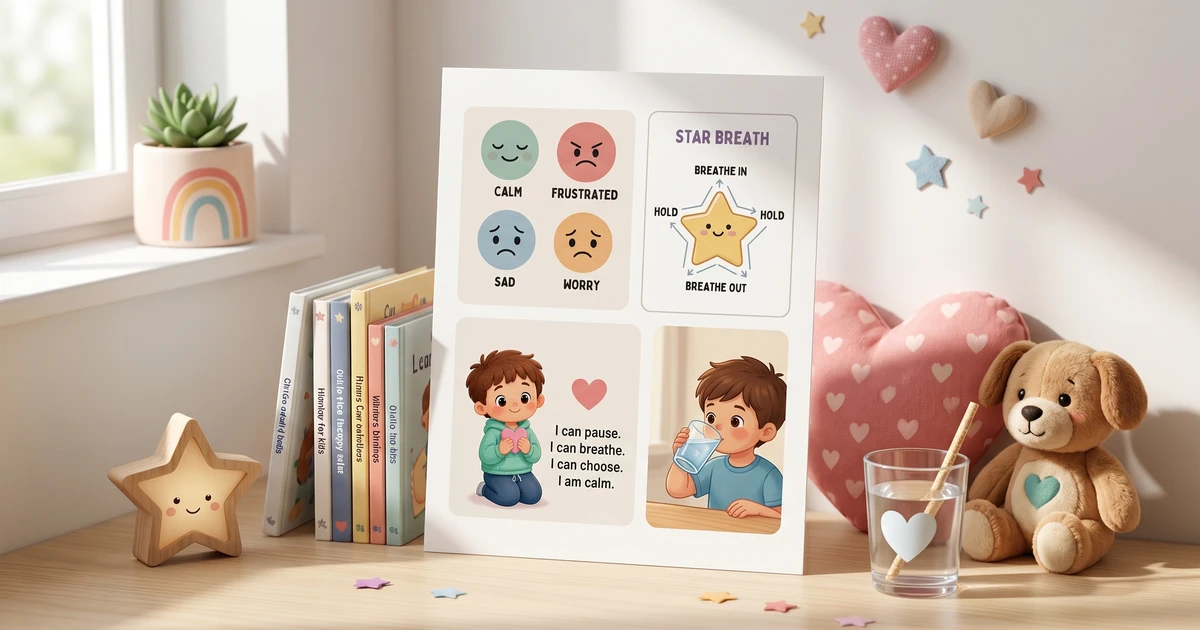
Calm Down Choices Free Printable: Downloadable Visuals for Kids
Finding a calm down choices free printable that actually works in the real world, whether you're a teacher with 25 kids in a classroom or a parent ...
How to Teach Calm Down Choices to Preschool Students
Preschoolers are emotional volcanoes. One moment they're happily building a block tower, and the next they're on the floor, inconsolable because th...