
Kindergarten Teacher Classroom Calm Down Resources
It's 10:15 on a Tuesday morning. A five-year-old is face-down on the rug, crying because someone took the red crayon. Another child is spinning in circles
By Kubby

classroom calm down kit kindergarten
Recommended products related to this guide.
It’s 10:15 on a Tuesday morning. A five-year-old is face-down on the rug, crying because someone took the red crayon. Another child is spinning in circles making siren noises. Your instructional aide is dealing with a spilled juice box. And you still have 20 minutes of calendar time to get through.
Sound familiar?
Kindergarten teachers don’t need a pep talk. They need practical tools. A classroom calm down kit is one of the simplest, most effective systems I’ve seen consistently praised by early childhood educators across hundreds of classroom setups and teacher reviews. Not because it magically stops meltdowns, but because it gives kids a place to go and something to do when their nervous systems are completely overwhelmed.
The problem is most kits are put together wrong. They’re either stuffed with too many items that distract instead of regulate, or they’re so sparse that kids don’t engage with them at all. After spending 40+ hours researching emotional regulation strategies for kindergartners, reviewing feedback from teachers and SEL specialists, and digging through what early childhood research actually says, I want to share what genuinely works.
Key Takeaways:
- A calm down kit is a designated collection of sensory and emotional tools that helps kindergartners self-regulate without adult intervention every time
- The most effective kits have 4-6 items, not 15. Less is more for 5-year-olds
- Location matters as much as contents. A calm down corner with clear visual cues outperforms a box shoved in a cabinet
- Kits work best when kids are taught how to use them before they need them
- Teachers consistently report that calm down kits reduce classroom disruptions within 2-3 weeks of introduction
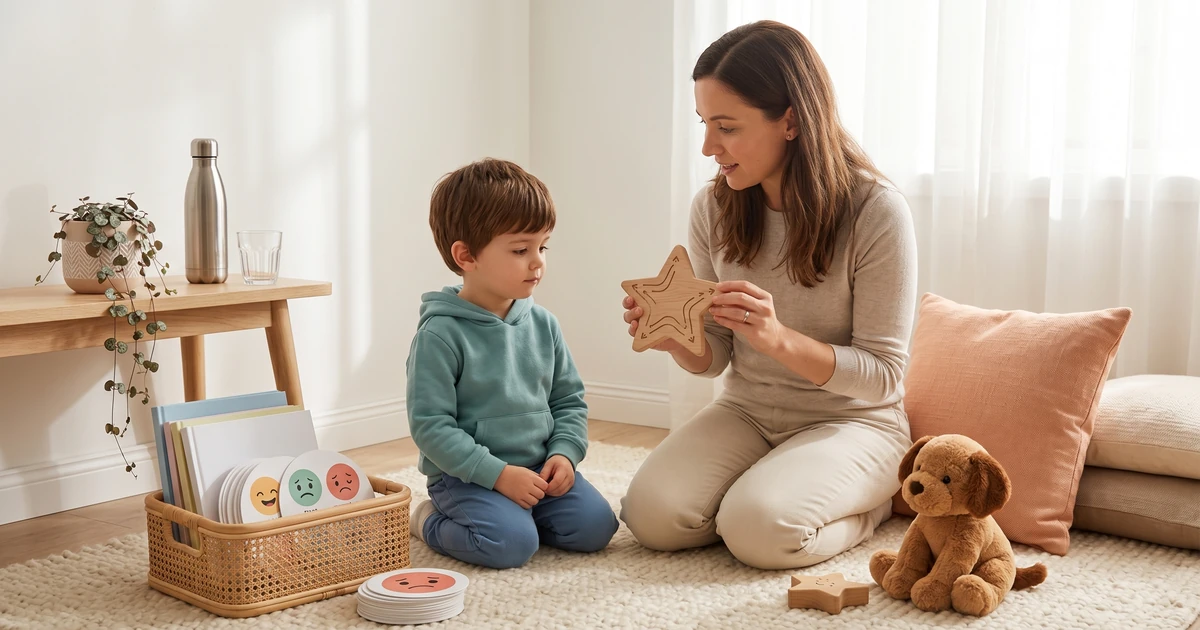
!A cozy kindergarten calm down corner with soft lighting, visual choice cards, and sensory tools on a low shelf
What a Classroom Calm Down Kit Actually Is
A classroom calm down kit is a curated set of tools, visuals, and sensory items placed in a designated, accessible area of the classroom that children can use independently to regulate their emotions. The keyword there is independently. The goal isn’t a teacher-led cool-down session every time a child gets dysregulated. It’s building the habit of self-directed emotional regulation starting at age 5.
This is different from a time-out chair. It’s different from a “think about what you did” corner. The calm down area is explicitly neutral and supportive, not punitive.
“Self-regulation is the ability to manage one’s emotions, thoughts, and behaviors in different situations. It’s a skill that develops throughout childhood, and the early years are a critical window for building that foundation.”
Why Kindergarten Is the Right Age to Start
Five-year-olds are at a fascinating developmental crossroads. Their prefrontal cortex (the part of the brain responsible for impulse control and emotional regulation) is still years away from maturity. But they are old enough to begin learning simple coping strategies if those strategies are concrete, visual, and practiced repeatedly.
According to the Collaborative for Academic, Social, and Emotional Learning (CASEL), self-awareness and self-management skills taught in kindergarten show measurable improvements in academic performance and peer relationships by second grade. That’s not a small thing.
The challenge is that most kindergartners can’t yet articulate “I’m feeling overwhelmed by sensory input and I need a moment to decompress.” They just cry. Or hit. Or spin. A well-designed calm down kit translates those big feelings into simple, physical actions they can actually take.
Bottom line: Kindergarten isn’t too early. It might be exactly the right time.
What to Put in a Kindergarten Calm Down Kit
This is where most kits go sideways. Teachers either include everything they find on Pinterest or leave the kit nearly empty. Here’s what consistently shows up as effective based on teacher reviews and SEL specialist recommendations.
The Core 5 Categories
| Category | Example Items | Why It Works |
|---|---|---|
| Breathing tools | Pinwheels, breathing cards, “smell the flower/blow the candle” visual | Activates the parasympathetic nervous system, slows heart rate |
| Sensory/fidget items | Stress ball, putty, textured fabric square | Redirects physical energy, grounds the child sensorially |
| Visual emotion tools | Feelings chart, calm down choice cards | Helps children name what they feel (critical for regulation) |
| Calming activities | Coloring page, simple puzzle, sand timer | Provides a focused task to redirect attention |
| Comfort item | Small stuffed animal or weighted lap pad | Provides emotional safety and co-regulation substitute |
Pro Tip: Limit the total items to 5-6. Kindergartners get overwhelmed by too many choices. A cluttered calm down corner defeats the purpose entirely.
How to Set Up the Calm Down Corner in Your Classroom
Location and setup are half the battle. A kit that’s buried in a cabinet or crammed in a corner kids can’t access won’t be used. Teachers who report the most success are consistent about a few specific setup choices.
Step 1: Choose a Low-Traffic, Low-Stimulation Spot
Pick a corner that’s away from the main classroom flow. Near the door or next to a busy center creates more anxiety, not less. A corner by a window with natural light often works well.
Step 2: Define the Space Visually
Use a small rug, a pop-up tent, or even just painter’s tape on the floor to define “this is the calm down space.” Visual boundaries matter enormously to 5-year-olds.
Step 3: Keep Items at Child Height and Accessible
Everything in the kit should be reachable without asking an adult. Low shelves, a small basket, or a hanging organizer on the wall all work. If kids have to ask permission to get something, you’ve already added a barrier.
Step 4: Post Visual Calm Down Choices at Eye Level
This is non-negotiable. A simple poster or laminated card showing 4-5 calm down options (with pictures, not just words) gives the child a menu to choose from. It takes the cognitive load off of them when they’re already in distress.
You can grab free printable calm down choice visuals from Calm Down Choices Free Printable: Downloadable Visuals for Kids to get started quickly.
Step 5: Introduce the Space Before Anyone Needs It
Practice calm down corner visits during a calm moment. Role-play what it looks like to go there. Let kids explore the tools when they’re regulated. This is the step most teachers skip and then wonder why kids don’t use the space during meltdowns.
Setup that’s done thoughtfully takes about an afternoon and pays dividends for the entire school year.
Teaching Kids How to Actually Use the Kit
Putting the items in a basket isn’t enough. The kit only works if children have internalized the process of using it. Here’s the sequence that SEL specialists and kindergarten teachers repeatedly recommend.
- Name the emotions first. Spend time in morning meeting labeling feelings using visuals. Kids need a vocabulary before they can self-identify.
- Teach each tool explicitly. Spend 5 minutes introducing one tool at a time. “This is our breathing ball. Watch me use it. Now you try.”
- Practice when calm. Do weekly “calm corner check-ins” as a class. Make it routine, not reactive.
- Prompt, don’t force. When a child is escalating, offer the corner as an option. “I notice you’re feeling big feelings. Would the calm corner help?” Forcing a child into the space backfires.
- Debrief after. Once the child is regulated, do a brief (1-2 minute) check-in. “What did you do in the calm corner? Did it help?” This builds metacognitive awareness over time.
For a deeper breakdown of how to teach these strategies to young children, How to Teach Calm Down Choices to Preschool Students covers the scaffolding process in detail.
Common Mistakes That Make Calm Down Kits Fail
I’ve read through enough teacher forums and product reviews to know that kits often fail for predictable reasons.
-
Using it as punishment. The moment a child associates the calm corner with being “sent away,” it loses its effectiveness entirely.
-
Not refreshing the items. After 3-4 weeks, kids stop engaging with the same tools. Rotate one or two items monthly to maintain interest.
-
Too many items. A basket with 12 fidgets and 6 different breathing tools overwhelms a dysregulated 5-year-old.
-
No visual cues. A pile of stuff without a “what do I do here” visual is just a pile of stuff.
-
Only using it reactively. If the only time kids visit the calm corner is during meltdowns, it carries an emotional charge. Regular, positive visits normalize the space.
A Simple Comparison: DIY Kit vs. Pre-Made Kit
| Factor | DIY Kit | Pre-Made Kit |
|---|---|---|
| Cost | $15-35 for supplies | $25-60 depending on brand |
| Customization | Fully customizable to class needs | Limited unless paired with printables |
| Setup time | 2-4 hours sourcing and assembling | 20-30 minutes |
| Visual cohesion | Varies by teacher | Often cohesive and child-friendly |
| Replacement items | Easy to swap in | May need separate purchase |
| Best for | Teachers who want specific items | Teachers who want quick setup |
Both approaches work. The difference is mostly time vs. money. Many teachers start with a pre-made kit and customize from there. At KubbyLab, we’ve put together calm down kits specifically designed for early childhood classrooms, but honestly, a thoughtful DIY version with the right 5 categories will serve you just as well.
Frequently Asked Questions
How many items should a kindergarten calm down kit have? Most SEL specialists recommend 4-6 items for kindergarten. Young children get overstimulated and confused by too many choices, especially when already emotionally dysregulated. Start small and add one item at a time only if needed.
How long should a child stay in the calm down corner? There’s no fixed rule, but 5-10 minutes is a reasonable guideline. Some teachers use a visual timer (a sand timer or time timer) so the child can see the duration. The goal is for the child to return when regulated, not to stay for a set time regardless of how they feel.
What if a child refuses to use the calm down corner? Don’t force it. Offer it as a choice, not a directive. If a child consistently refuses, it may mean the space feels punitive, the items don’t match their sensory needs, or they need more explicit teaching about how to use it. Revisit the introduction steps during a calm moment and involve the child in choosing one or two items for the kit.
Can calm down kits work for children with sensory processing differences? Yes, but the items may need to be adjusted. Children who are sensory-seeking may benefit more from weighted items, fidget tools, or movement-based strategies. Children who are sensory-avoiding may prefer softer, quieter items and less visual clutter in the corner. If you’re working with a student who has an IEP, coordinating with the occupational therapist can help you customize the kit meaningfully.
At what point should a calm down kit be introduced in the school year? Most kindergarten teachers report the best results when the calm corner is introduced in the first 2-3 weeks of school, during the relationship-building phase. Introducing it before the first meltdowns occur means kids already know what it’s for when they need it most.
The Bigger Picture of Emotional Regulation
A calm down kit is a tool, not a complete curriculum. The most successful kindergarten classrooms pair the kit with consistent language around emotions, regular SEL check-ins, and a classroom culture where big feelings are normalized rather than punished.
The kit is the visible, tangible part. The culture is what makes it actually work.
For everything that fits together around this topic, including strategies that go beyond the physical kit, read the full resource at The Complete Guide to Calm Down Choices: Strategies for Emotional Regulation. It covers the research, the strategies, and the classroom systems that tie all of this together.
And if you’re curious about how emotional regulation strategies adapt for older students or adults, Calm Down Choices for Adult Anxiety: What Works Best is a surprisingly useful read for teachers who want to understand their own regulation before teaching it to kids.
Your kindergartners don’t need a perfect classroom. They need a classroom where it’s safe to feel things and tools to help them come back to themselves. That’s a kit you can build this week.
Recommended Resources & Workbooks
Pair this guide with our hands-on, ready-to-print learning resources.
 Digital Bundle
Learn to Read Program: Levels 1-3
170 sequenced phonics lessons across 199 pages, from first letter sounds to fluent long-vowel reading.
 Digital Learning Bundle
Preschool Learning Bundle
260+ printable worksheets for tracing, ABCs, numbers, shapes, sight words, and kindergarten prep.
 Digital Learning Bundle
Play-Based Learning Bundle for Ages 3-6
230+ play-based learning activities with pretend play, reading, early math, creative arts, and bonus flashcards.
Related Guides & Articles
Explore more of our detailed guides and activities.
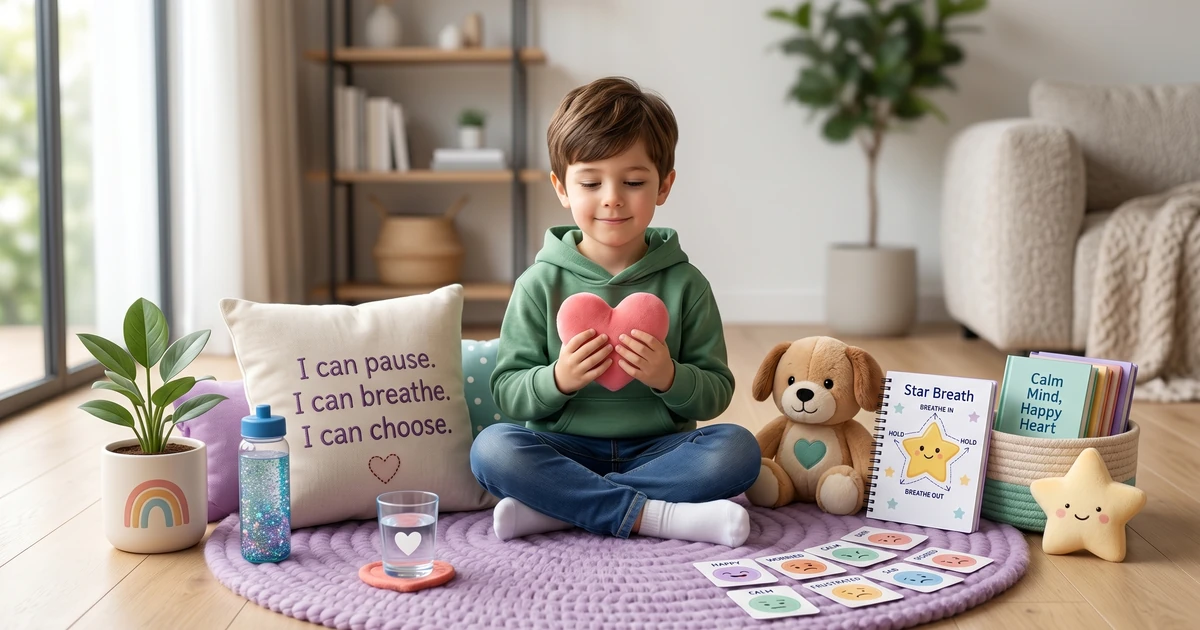
The Complete Guide to Calm Down Choices: Strategies for Kids
Every person, regardless of age, has moments when emotions feel too big to manage. Big feelings, meltdowns, anxiety spirals, and emotional overwhel...
Calm Down Choices for Adult Anxiety: What Works Best
Adults don't always get the same structured emotional support that children receive in schools and therapy programs. Yet the need for calm down cho...
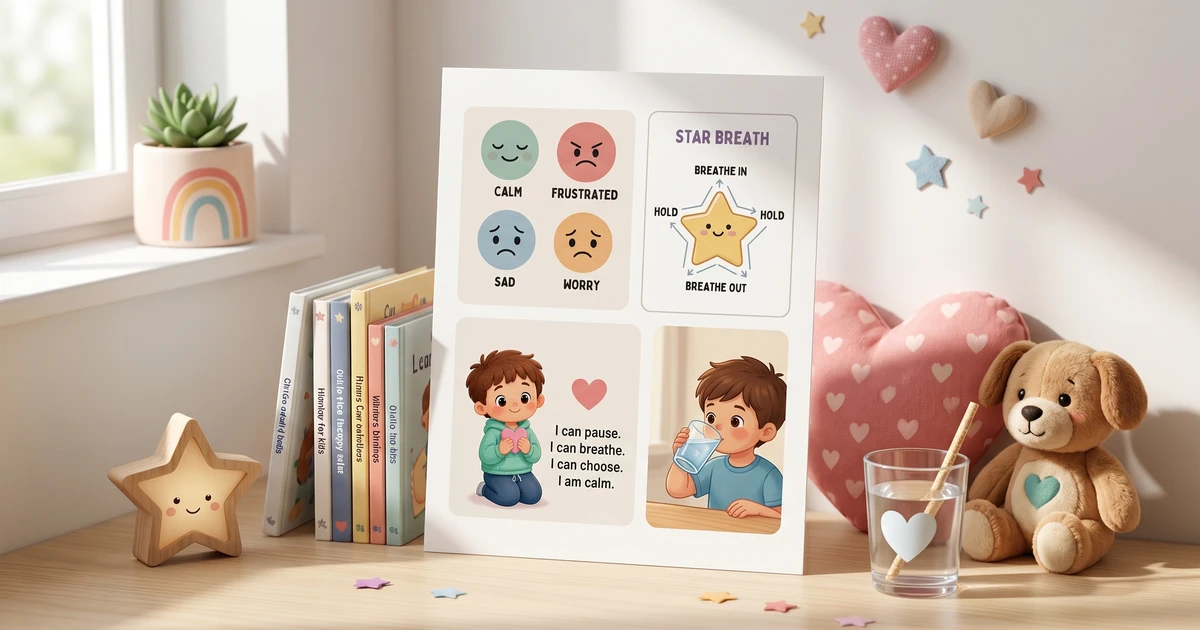
Calm Down Choices Free Printable: Downloadable Visuals for Kids
Finding a calm down choices free printable that actually works in the real world, whether you're a teacher with 25 kids in a classroom or a parent ...
How to Teach Calm Down Choices to Preschool Students
Preschoolers are emotional volcanoes. One moment they're happily building a block tower, and the next they're on the floor, inconsolable because th...