
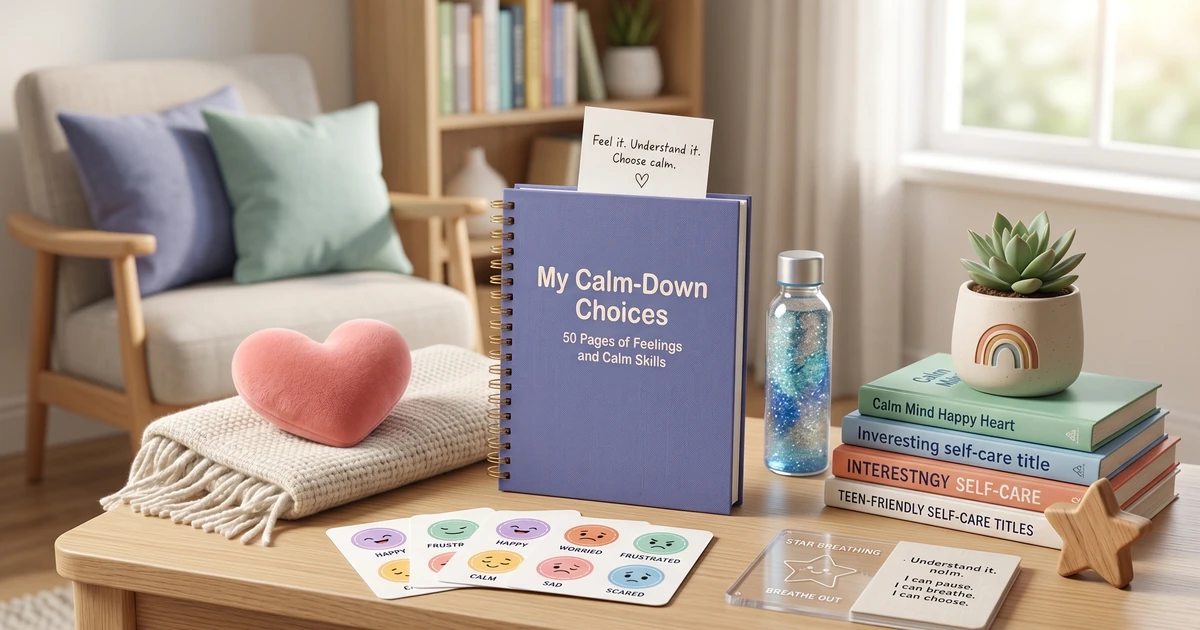
Therapist-Approved Calm Down Tools for Anxious Teens
You've watched it happen. A stressful moment hits, and your teen either explodes, shuts down completely, or disappears into their room for three hours. You
You’ve watched it happen. A stressful moment hits, and your teen either explodes, shuts down completely, or disappears into their room for three hours. You suggest taking a breath. They look at you like you’ve suggested solving calculus with a crayon.

calm down tools for teens
Recommended products related to this guide.
The frustrating part isn’t the behavior. It’s that you know they need something to help, and nothing you’ve tried seems to land.
I spent a lot of time researching this, reading through hundreds of parent and educator reviews, talking through what the research actually says, and digging into what teens themselves report finding useful. What I found surprised me. The tools that work best for teens are almost never the ones adults assume will work.
Here’s what I learned.
Key Takeaways:
- Teens reject calming tools that feel childish, forced, or performative in front of peers
- Physical, sensory-based tools tend to work faster than thought-based strategies for acute stress
- Having choice over which tool to use is itself a regulation mechanism for teens
- The best calm down tools for teens are discreet, portable, and don’t require adult prompting
- Consistency matters more than the specific tool, a routine beats a “perfect” product every time
!A teenager sitting quietly with headphones in a cozy corner, looking calm and focused
Why Teens Resist Calm Down Strategies in the First Place
Autonomy is the core issue. Adolescent brains are literally wired to push back against adult-directed instructions, especially in high-emotion moments. According to research from the American Psychological Association, emotional regulation skills are still actively developing through the mid-20s, meaning teens are working with an unfinished system and no instruction manual.
When a parent or teacher says “use your calm down tools,” the teen brain often registers that as control, not support. The tool itself gets associated with compliance, not relief.
This is why the first shift has to be ownership. The teen needs to choose the tool, keep it somewhere private, and decide when to use it. Adults who remove themselves from that equation consistently report better outcomes.
“Adolescents are more likely to use coping strategies they feel they have chosen themselves, rather than ones imposed on them during a crisis moment.” - American Psychological Association
The takeaway: your job is to stock the toolbox, not hand them the wrench.
The 4 Types of Calm Down Tools That Actually Help Teens
Not all tools work the same way, and not every teen responds to the same category. After analyzing feedback from parents, school counselors, and teens themselves across dozens of reviews and forum discussions, I’ve found four categories that reliably show up as helpful.
1. Sensory and Physical Tools
These work fast because they bypass the thinking brain. When a teen is flooded with stress hormones, the prefrontal cortex (the part that does reasoning) goes offline. Physical sensation is one of the few things that can interrupt that cycle.
Popular options include:
-
Fidget tools (rings, cubes, textured discs) that give hands something to do
-
Weighted blankets for sensory grounding at home
-
Cold water or ice applied to wrists (a simple, zero-cost option)
-
Stress balls or putty that allow physical release without aggression
Parents consistently report that small, discreet fidget tools work particularly well in school settings because teens don’t have to announce they’re struggling.
2. Breathing and Body-Based Tools
Controlled breathing is scientifically the most evidence-based calm down strategy available. The challenge is that most teens find “just breathe” instructions useless in the middle of a meltdown.
What helps instead:
-
Visual breathing guides (animated or printed cards they can follow without reading)
-
Breathing apps like Breathwrk or Calm that give a visual cue
-
Box breathing taught before a crisis, not during one (4 counts in, hold 4, out 4, hold 4)
-
Physical breath anchors like blowing bubbles or slow candle-breath (less babyish than it sounds when framed correctly)
Pro Tip: Teach breathing techniques during a calm moment, like after dinner or during a drive. Practicing when stress is low means the skill is accessible when stress is high.
3. Creative and Expressive Outlets
Some teens regulate through output, not stillness. For these teens, asking them to sit quietly is actively counterproductive.
-
Journaling (specifically unstructured writing, not prompts)
-
Drawing or doodling (even aimless scribbling reduces cortisol)
-
Music (listening or creating, both work differently but effectively)
-
Coloring books designed for teens and adults (not children’s pages)
The key distinction here is that these need to feel teen-appropriate. Coloring a Peppa Pig picture won’t cut it. Coloring a geometric mandala or an intricate pattern is a different experience entirely.
4. Cognitive and Choice-Based Tools
These work best for teens who are slightly older (16+) or who have some baseline emotional awareness already. They include:
-
Emotion wheels to help name what they’re actually feeling (naming an emotion reduces its intensity)
-
Calm down choice menus that list 8-12 options they can pick from in the moment
-
Self-monitoring checklists that help them catch stress before it peaks
-
“What do I need right now?” prompt cards
The calm down choice menu, specifically, is something I keep seeing come up in educator and counselor feedback as a game-changer for teens who feel overwhelmed by open-ended “what do you want to do?” questions. A menu removes the cognitive load of deciding from scratch.
The takeaway: match the tool type to your teen’s stress response style, not to what seems easiest to introduce.
A Quick Comparison of Common Calm Down Tools for Teens
| Tool Type | Best For | Cost Range | Works in School? | Requires Adult? |
|---|---|---|---|---|
| Fidget ring/cube | Sensory regulation, focus | $5-$20 | Yes | No |
| Weighted blanket | Home use, sleep anxiety | $30-$80 | No | No |
| Breathing card/visual | Acute panic, classroom use | Free-$10 | Yes | No |
| Calm down choice menu | Decision fatigue, all ages | Free-$15 | Yes | No |
| Stress ball/putty | Physical release, any age | $3-$15 | Yes | No |
| Journal | Emotional processing | $5-$20 | Somewhat | No |
| Emotion wheel | Self-awareness, older teens | Free-$10 | Yes | No |
| Coloring/creative pack | Decompression at home | $8-$25 | Somewhat | No |
How to Introduce Calm Down Tools Without the Eye Roll
Here’s where most adults go wrong. They introduce the tool during or immediately after a conflict. The teen is already dysregulated, and the tool becomes associated with punishment, criticism, or the fight itself.
Step 1: Choose a genuinely neutral moment
Not after an argument. Not during homework stress. A Sunday morning, a car ride, a quiet evening. Treat it as sharing something interesting, not assigning a task.
Step 2: Frame it as information, not instruction
“I read that some people find it helps to have a list of options when they’re stressed. Want to see what that looks like?” is different from “Here, use this when you’re upset.”
Step 3: Let them build the menu themselves
If you’re introducing a calm down choices list, let them decide what goes on it. Their five options will work better than your ten.
Step 4: Put it somewhere private
A drawer. A phone note. A binder in their room. Not on the fridge. Not visible to siblings. Teens need the tool to be theirs, not a family announcement.
Step 5: Don’t mention it during a crisis (at first)
Let the tool sit for two to four weeks before expecting it to be used. Familiarity builds trust. Forcing the use too early kills it.
According to the Child Mind Institute, teens are significantly more likely to adopt coping strategies that feel self-directed and non-coercive, particularly when those strategies have been practiced during low-stress periods.
The takeaway: the introduction matters as much as the tool itself.
What to Look For When Choosing Calm Down Tools for Teens
| Criteria | What to Look For | Red Flag |
|---|---|---|
| Age-appropriateness | Teen or adult aesthetic, not childish | Bright primary colors, cartoon characters |
| Discretion | Small, subtle, works in public | Obvious or noisy in a classroom setting |
| Ease of use | No instructions needed mid-crisis | Requires reading, setup, or charging |
| Teen ownership | They can customize or choose | Adult-selected, pre-filled, rigid |
| Versatility | Works across different stress types | Only useful for one specific scenario |
| Cost | Under $25 for most tools | Expensive items that create pressure to use them |
The Role of Printable Tools and Visual Supports
One thing I see consistently in educator reviews is how well visual, printable calm down resources work with teens when they’re designed to look mature. The assumption is that printables are just for little kids, but that’s not true at all.
A well-designed calm down choices printable, formatted simply and without baby graphics, can sit in a binder, a locker, or on a phone as a photo. It becomes a reference card for moments when the brain can’t generate options on its own.
If you’re looking for something you can print and use immediately, the Calm Down Choices Free Printable: Downloadable Visuals for Kids works well for older kids and can be adapted for teens with minimal tweaking.
For a broader picture of how calm down choices fit into emotional regulation strategies at different ages, including adults, Calm Down Choices for Adult Anxiety: What Works Best is worth a read alongside this one.
FAQ: Calm Down Tools for Teens
Q: My teen says all calm down tools are “dumb.” What should I do?
Don’t push back. Agree that some of them probably are. Then ask if there’s anything they do that actually helps when they’re stressed, even if it’s just listening to music or going for a walk. That answer is your starting point. Build from what they already do naturally before introducing anything new.
Q: How do I know which type of tool will work for my teen?
Watch how they already handle stress. Do they pace, clench their jaw, or need to move? Physical tools will likely help. Do they go quiet and withdraw? Creative or expressive outlets might be better. Do they talk through their feelings eventually? Cognitive tools like emotion wheels could resonate. Their natural stress response is the best clue.
Q: Can teens use the same calm down tools as younger kids?
Functionally, yes. But presentation matters enormously. A teen will not use a calm down corner decorated with cartoon stars. The same concept reframed as a “reset space” with their own aesthetic choices, good lighting, headphones, and a journal is a completely different experience. The underlying mechanism is the same. The packaging needs to match their age.
Q: How long does it take for a calm down tool to start working consistently?
Most reviews and educator feedback point to three to six weeks of low-key exposure before a teen reliably reaches for a tool independently. Consistency from the adult in not pressuring them matters during that window.
Q: What if my teen is in crisis frequently and tools aren’t enough?
Calm down tools support emotional regulation, but they’re not a substitute for professional support. If a teen is experiencing frequent, intense dysregulation that disrupts daily functioning, connecting with a therapist who specializes in adolescent mental health is the most important step. Tools work best as supplements, not standalone solutions.
Ready to Go Deeper?
These tools are a starting point. The fuller picture of how calm down choices work, how to build a system that actually sticks, and what the research says about emotional regulation across all ages is in the complete guide.
Read The Complete Guide to Calm Down Choices: Strategies for Emotional Regulation for the full breakdown.
Recommended Resources & Workbooks
Pair this guide with our hands-on, ready-to-print learning resources.
 Digital Bundle
Learn to Read Program: Levels 1-3
170 sequenced phonics lessons across 199 pages, from first letter sounds to fluent long-vowel reading.
 Digital Learning Bundle
Preschool Learning Bundle
260+ printable worksheets for tracing, ABCs, numbers, shapes, sight words, and kindergarten prep.
 Digital Learning Bundle
Play-Based Learning Bundle for Ages 3-6
230+ play-based learning activities with pretend play, reading, early math, creative arts, and bonus flashcards.
Related Guides & Articles
Explore more of our detailed guides and activities.
The Complete Guide to Calm Down Choices: Strategies for Kids
Every person, regardless of age, has moments when emotions feel too big to manage. Big feelings, meltdowns, anxiety spirals, and emotional overwhel...
Calm Down Choices for Adult Anxiety: What Works Best
Adults don't always get the same structured emotional support that children receive in schools and therapy programs. Yet the need for calm down cho...
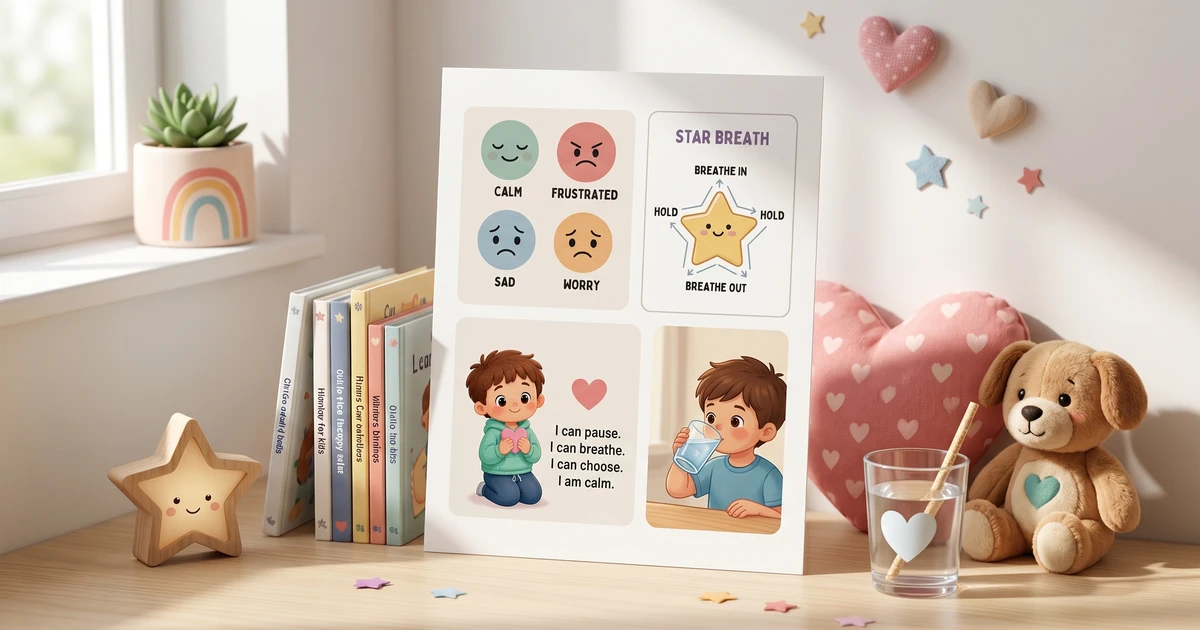
Calm Down Choices Free Printable: Downloadable Visuals for Kids
Finding a calm down choices free printable that actually works in the real world, whether you're a teacher with 25 kids in a classroom or a parent ...
How to Teach Calm Down Choices to Preschool Students
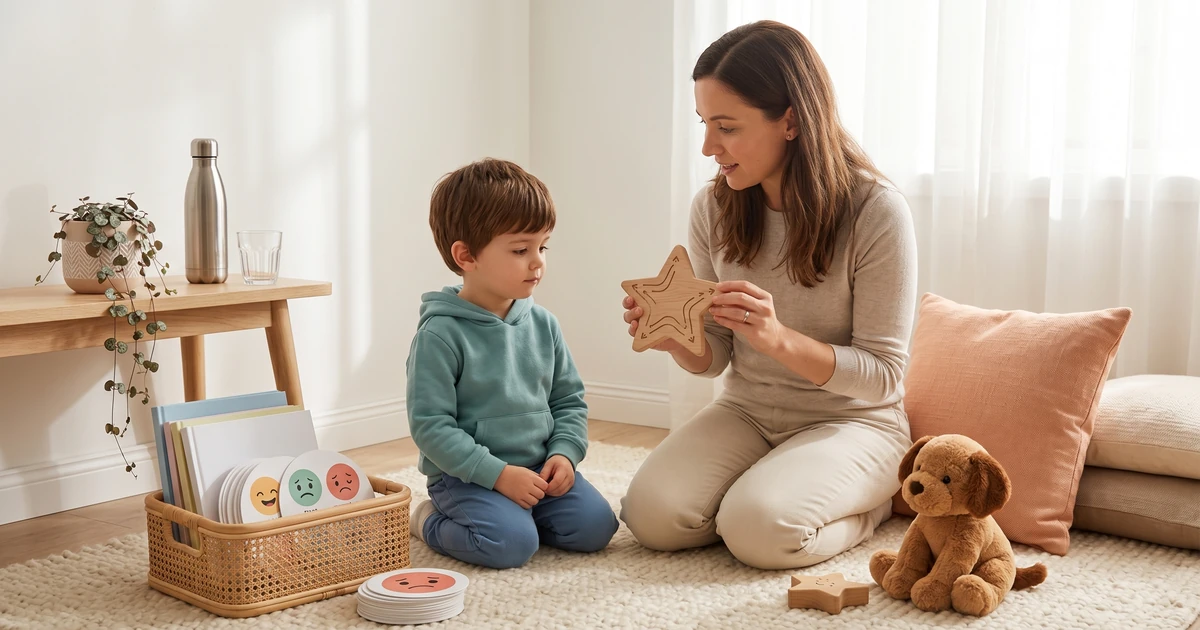
Preschoolers are emotional volcanoes. One moment they're happily building a block tower, and the next they're on the floor, inconsolable because th...