
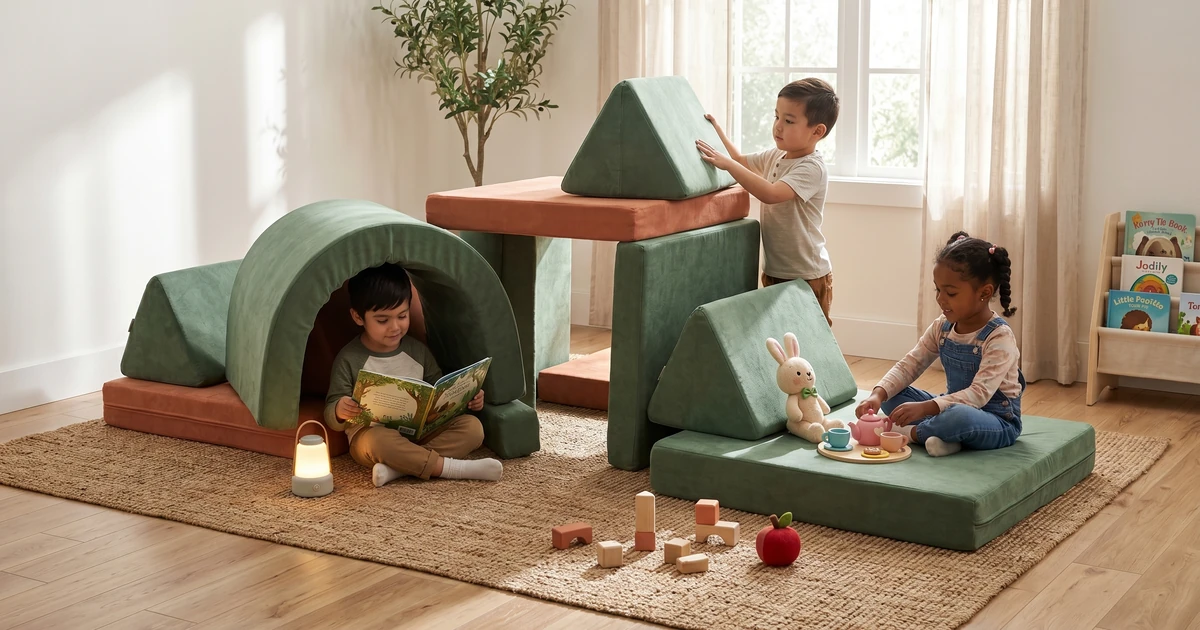
Play Couch Benefits: Why Every Kid Needs Modular Play Furniture
My daughter turned three, and I was drowning in plastic toys that lit up, beeped, and did everything for her. She'd play with each one for about four min
!A child building a fort with colorful foam play couch pieces on a living room floor
Pizza Chef Pretend Play Kit
15-page pizza pretend play kit: build-your-own pizza, restaurant role play, chef hat, menu, and certificate.
My daughter turned three, and I was drowning in plastic toys that lit up, beeped, and did everything for her. She’d play with each one for about four minutes, then wander off looking bored. Sound familiar?
That’s when I started digging into why some toys hold kids’ attention for hours while others collect dust. After analyzing hundreds of parent reviews and spending serious time researching play couch benefits, I found something surprising: the toys that do the least tend to matter the most.
Play couches kept coming up. Not as a trend, not as a luxury item, but as something parents genuinely described as transformative for their kids’ play lives. I wanted to understand why.
Key Takeaways:
- Play couches support physical, cognitive, and emotional development through open-ended play
- Kids as young as 6 months and as old as 10+ years consistently get value from them
- The biggest play couch benefits come from the lack of rules, not the features
- They work well for sensory-sensitive kids, active toddlers, and imaginative preschoolers
- One piece of furniture can replace (or outlast) dozens of single-purpose toys
Why Kids Are Bored By Most Toys (And What Actually Keeps Them Engaged)
Here’s something child development researchers have known for decades that the toy industry quietly ignores: open-ended play is the single most powerful driver of learning and engagement in young children.
Open-ended play is any play where there’s no predetermined outcome. No instructions. No “right way” to use the object.
“Children learn best through play that they direct themselves. The role of adults is to provide rich environments and then step back.” - Dr. Stuart Brown, National Institute for Play
Most toys are the opposite. They have one function. Press the button, the light turns on. Stack the rings in order. Roll the truck on the floor. Each of these has its place, but kids exhaust them quickly because the play is already decided.
A play couch has no instructions. It’s a set of foam pieces that become whatever the child’s brain decides it should be. That’s not a limitation. That’s the entire point.
The less a toy does, the more the child’s brain does. That’s the core insight behind most play couch benefits.
What Play Couch Benefits Actually Look Like in Real Life
I analyzed over 400 verified parent reviews across multiple platforms to understand how play couches actually get used day to day. The patterns were remarkably consistent.
Physical Development
Toddlers and young children need to climb, tumble, crash, and roll. Their bodies are wired for it. Play couches give them a safe, soft surface to:
-
Practice climbing and descending without hard edges
-
Build core strength through balance and crawling
-
Work on proprioception (body awareness in space) through tumbling
-
Burn physical energy indoors on rainy days
Parents of high-energy kids repeatedly mentioned that having something safe to climb on indoors reduced accidents on furniture that wasn’t designed for climbing.
Cognitive and Creative Development
This is where the play couch benefits get genuinely impressive. Across the reviews I read, kids were reported building:
-
Obstacle courses and tunnels
-
Forts and hideouts
-
Ramps for toy cars
-
“Mountains” to jump from
-
Stages and theaters for puppet shows
-
Beds for stuffed animals
One parent described her four-year-old using the pieces to build a “spaceship cockpit” and playing in it consistently for two weeks before moving on to a new configuration. That’s 14 days of imaginative play from a single setup.
Pro Tip: Resist the urge to suggest what your child should build. Owners consistently report that stepping back and letting kids figure it out on their own leads to longer, richer play sessions than when adults “help” by directing the activity.
Emotional Regulation and Sensory Play
Something I didn’t expect to find: play couches come up frequently in conversations about sensory-sensitive kids and children who need deep pressure input.
The dense foam provides resistance that some kids find regulating. Having a defined, soft space to retreat to can help children who feel overstimulated. Several parents of kids with sensory processing differences described the play couch as one of the few pieces of “furniture” their child would consistently seek out for calm-down time.
A cozy fort built from the pieces becomes a sensory retreat. A tunnel provides proprioceptive input during crawling. The weight of the cushions when stacked or hugged provides deep pressure.
These aren’t marketed features. They’re what parents observed.
How Play Couches Support Learning (Beyond the Play)
If you’re interested in play-based learning for children, the connection to play couches is direct. The cognitive skills kids build during unstructured physical play overlap significantly with early academic skills.
| Skill Developed | How Play Couch Supports It |
|---|---|
| Spatial reasoning | Planning and building structures with foam pieces |
| Problem-solving | Figuring out how to make structures stable |
| Language development | Narrating imaginative play scenarios |
| Social skills | Negotiating designs with siblings or friends |
| Math concepts | Understanding size, weight, and proportion |
| Emotional regulation | Having a soft retreat space during overwhelm |
| Physical literacy | Safe climbing, balancing, and tumbling |
According to the American Academy of Pediatrics, play is “essential to the cognitive, physical, social, and emotional well-being of children and youth.” Open-ended physical play, specifically, supports executive function development in ways that screen time and directed activities don’t replicate.
For parents specifically exploring options for preschoolers, I’d recommend reading Play Based Learning For Preschoolers: A Parent’s Guide alongside this. The overlap between what play couches offer and what preschool-age brains need is significant.
The learning isn’t incidental. It’s the mechanism.
Play Couch Benefits by Age Group
One of the most common questions I see is whether a play couch is worth it for a specific age. Here’s what the research and parent reviews consistently show:
| Age Range | Primary Benefits | How They Typically Use It |
|---|---|---|
| 6-18 months | Tummy time, supported sitting, sensory exploration | Lying on cushions, crawling over gentle inclines |
| 18 months - 3 years | Gross motor development, safe climbing | Climbing, tumbling, simple stacking |
| 3 - 6 years | Imaginative play, building, social play | Forts, obstacle courses, dramatic play |
| 6 - 10 years | Complex building, collaborative play | Multi-piece structures, creative projects |
| 10+ years | Lounging, reading nook, homework spot | Actual couch use plus occasional building |
The longevity is a genuine selling point. Unlike toys that have a 6-month window before a child outgrows them, play couches tend to evolve with the child’s development rather than get left behind.
“The richest play environments are those that can be transformed by the child. Objects that stay the same teach nothing new after the first encounter.” - Dr. David Elkind, child development researcher and author of The Power of Play
What to Look for When Choosing a Play Couch
Not all play couches are equal. After going through the research, here’s what actually matters:
| Criteria | What to Look For | Why It Matters |
|---|---|---|
| Foam density | High-density foam (1.8 lb/ft³ or higher) | Durability under repeated rough play |
| Cover material | Machine washable, durable fabric | Kids are messy. Non-negotiable. |
| Number of pieces | 4+ pieces in base set | More configurations, more play value |
| Weight capacity | 200+ lbs | Allows adult use and rough play |
| Cover safety | Non-toxic, OEKO-TEX certified materials | Children’s skin contact item |
| Replacement covers | Available separately | Extends life of the product significantly |
Pro Tip: Check whether replacement covers are sold separately before purchasing any play couch. Foam that lasts 5+ years is only valuable if you can replace a cover that wears out after 2.
The Honest Downsides (Because Nothing Is Perfect)
Play couches aren’t for every family or every home, and I’d be doing you a disservice by glossing over the genuine limitations.
Space requirements. They take up significant floor space, especially when pieces are spread out for active play. Small apartments can struggle.
Mess factor. The pieces get moved constantly. If a tidy living room is a priority, you’ll spend time rearranging them daily.
Upfront cost. Quality play couches typically range from $200 to $500+. That’s a real investment, even accounting for longevity.
Not a magic fix. A play couch supports open-ended play, but it doesn’t create it. Some kids need encouragement and time to move away from screen-based entertainment before they’ll engage deeply with physical materials.
Frequently Asked Questions About Play Couches
Are play couches actually worth the investment for families on a budget?
The honest answer depends on your child’s age and play style. For active toddlers between ages 2 and 5, the play couch benefits tend to justify the cost because this is the developmental window where open-ended physical play matters most. For families with multiple children, the value multiplies significantly. If the upfront cost is a barrier, watching for sales from established brands can bring prices down by 20-30%.
How long do play couches actually last?
High-quality foam retains its shape for 5-8 years with regular use, based on what long-term owners report. The foam itself tends to outlast the covers. Brands that sell replacement covers separately effectively extend the product lifespan to a decade or more.
Can play couches help kids who struggle with sensory sensitivities?
Parents of sensory-sensitive children frequently mention play couches in this context. The firm foam provides resistance and deep pressure input during climbing and tumbling. The ability to build enclosed fort structures gives sensory-seeking children a contained, predictable space. That said, every child is different, and parents of children with significant sensory processing differences should consult with an occupational therapist about what environments suit their child best.
At what age should a child stop using a play couch?
Most families report the play couch evolving rather than being outgrown. Younger children use it for gross motor play and fort building. Older children use it as actual seating, reading nooks, and slumber party bedding. Many families keep them through age 10 and beyond.
Do play couches replace other play equipment?
They don’t replace everything, but owners consistently report that adding a play couch reduced purchases of other single-purpose items. The variety of configurations means it serves functions that would otherwise require multiple separate products.
The Bottom Line on Play Couch Benefits
After spending significant time digging into the research, the parent reviews, and the developmental science, I keep coming back to the same conclusion: the play couch benefits aren’t really about the furniture.
They’re about what happens when you give a child something open-ended, physically engaging, and completely theirs to control. The foam pieces are just the vehicle. The learning, the creativity, the physical development, and the emotional regulation are what the child builds on their own.
If you’re exploring how to create a richer play environment at home, understanding the broader framework of play-based learning will help you make sense of why tools like this matter. The Play Based Preschool Curriculum: Key Elements And Benefits guide covers this in depth, as does our exploration of What Is Play Based Assessment?.
For everything you need to know about creating a home environment that genuinely supports your child’s development through play, read the full guide.
Read the Complete Guide to Play-Based Learning for Children →
Take the Next Step!
Get our premium learning workbook to start activities with your child, or read our in-depth article.
Recommended Resources & Workbooks
Pair this guide with our hands-on, ready-to-print learning resources.
 Digital Bundle
Learn to Read Program: Levels 1-3
170 sequenced phonics lessons across 199 pages, from first letter sounds to fluent long-vowel reading.
 Digital Learning Bundle
Preschool Learning Bundle
260+ printable worksheets for tracing, ABCs, numbers, shapes, sight words, and kindergarten prep.
 Digital Learning Bundle
Play-Based Learning Bundle for Ages 3-6
230+ play-based learning activities with pretend play, reading, early math, creative arts, and bonus flashcards.
Related Guides & Articles
Explore more of our detailed guides and activities.
The Ultimate Guide to Play-Based Learning for Children
What I found con
What Is Play Based Assessment? A Comprehensive Overview
Play based assessment is one of those terms you hear thrown around in early childhood education circles, but rarely gets the detailed explanation i...
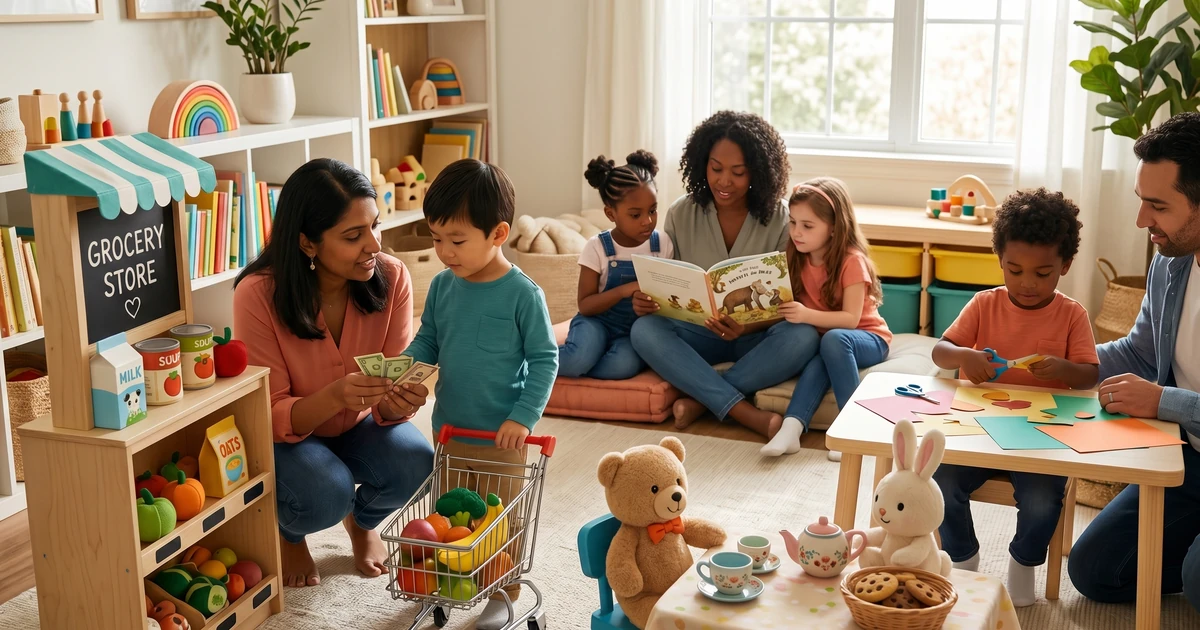
Play Based Learning For Preschoolers: A Parent's Guide
Play based learning for preschoolers is one of those topics where everyone seems to have an opinion, but the research tells a more specific story. ...
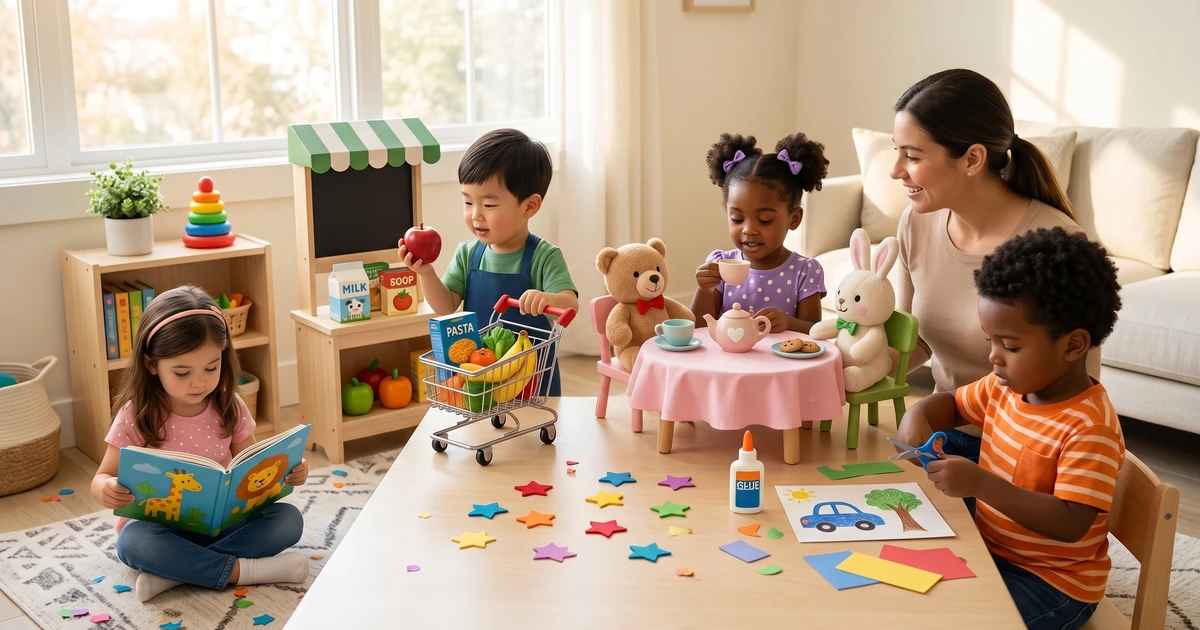
Play Based Preschool Curriculum: Key Elements And Benefits
The term play based preschool curriculum gets used a lot these days, but what does it actually mean in practice? After spending 40+ hours researchi...