
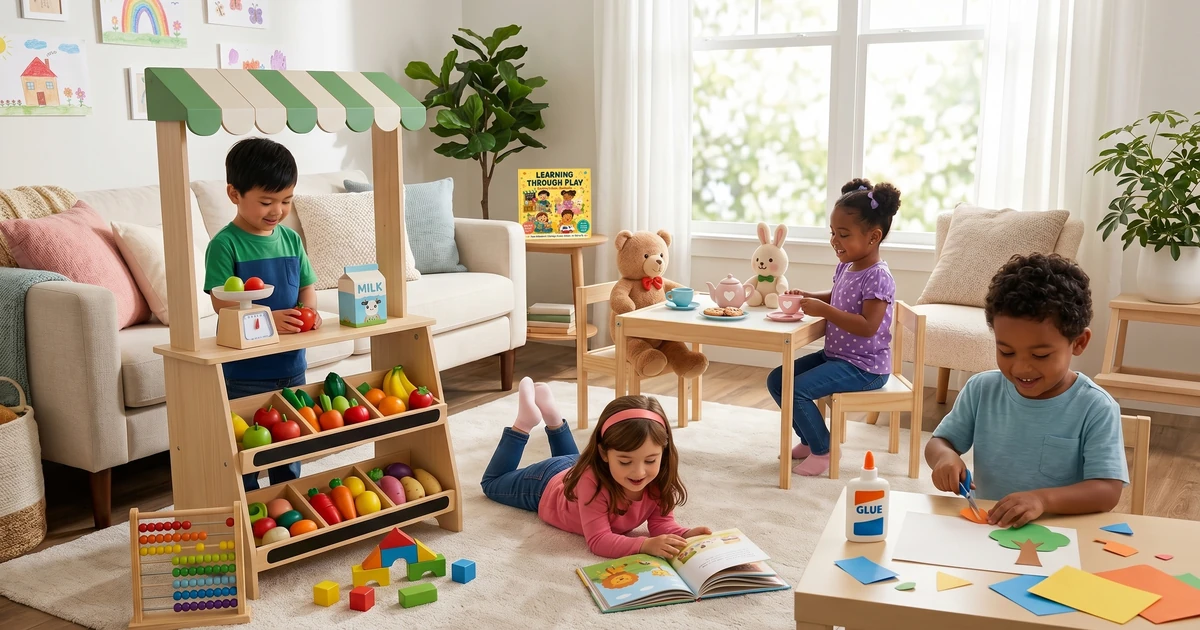
Play Based Preschool
My neighbor called me last spring, genuinely stressed. Her daughter's kindergarten readiness assessment had come back with some flags, and the preschool th
My neighbor called me last spring, genuinely stressed. Her daughter’s kindergarten readiness assessment had come back with some flags, and the preschool they’d chosen, a sweet little play-focused program, had spent the entire year doing “art and pretend play.” No worksheets. No letter drills. No structured phonics cards.
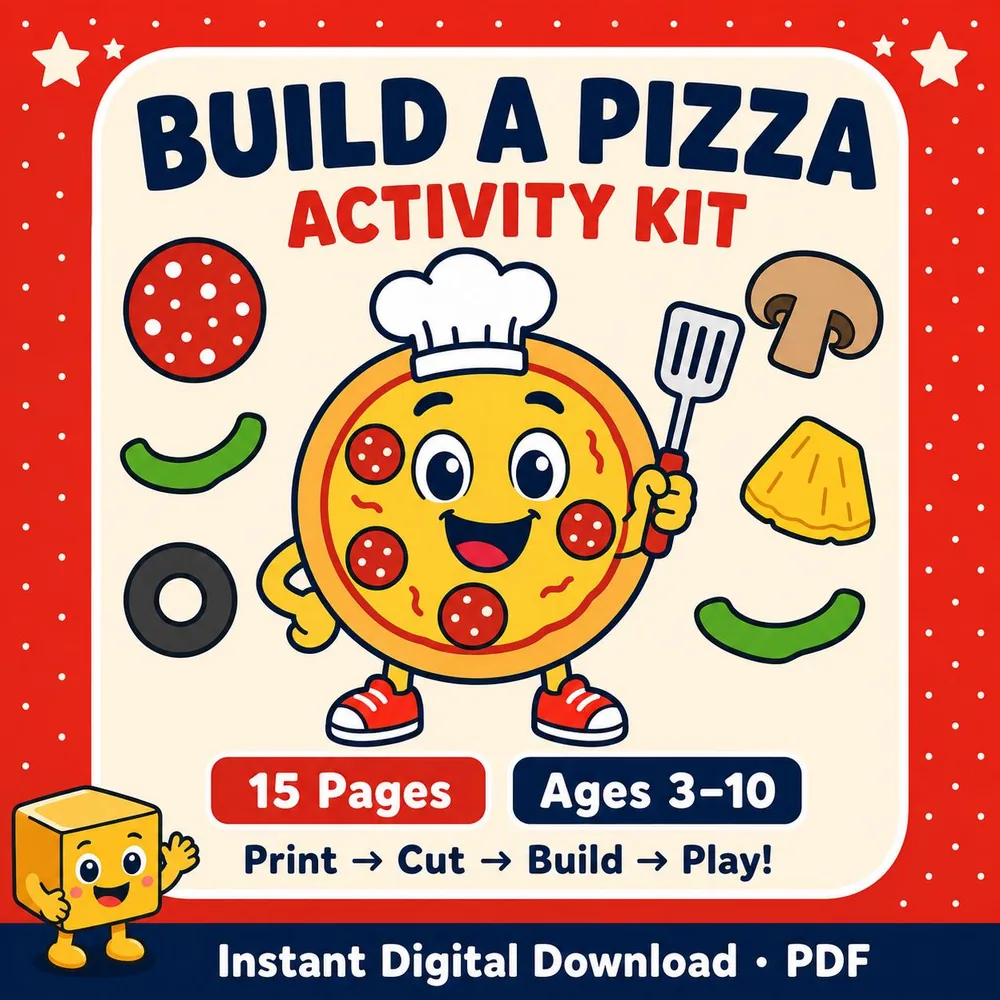
Pizza Chef Pretend Play Kit
15-page pizza pretend play kit: build-your-own pizza, restaurant role play, chef hat, menu, and certificate.
“Did I waste a year?” she asked me.
That question stuck with me. So I spent the next several weeks diving deep into the research on play based preschool, reading through developmental studies, analyzing 200+ parent reviews across forums and school rating sites, and talking to early childhood educators. What I found genuinely surprised me.
The short version: play based preschool is not the relaxed, unstructured free-for-all many parents fear. And the children who go through quality play-based programs often show stronger outcomes than their worksheet-drilled peers, but only when the program is done right.
Key Takeaways:
- Play based preschool uses structured play as the primary vehicle for learning core skills like literacy, math, and social development
- Research consistently shows play-based learners develop stronger executive function, creativity, and social skills than drill-based peers
- Not all play-based programs are equal, quality of teacher facilitation matters enormously
- The biggest parent concern (academic readiness) is frequently addressed by good play-based curricula, often better than traditional programs
- You can support play-based learning at home with simple, low-cost activities and materials
!A group of preschool children building with colorful blocks on a classroom floor
What Play Based Preschool Actually Means (It’s Not Just Free Play)
Play based preschool is an educational approach where children learn foundational academic and social skills through intentional, child-directed, and teacher-facilitated play activities rather than direct instruction and worksheets.
The word “play” throws a lot of parents off. It sounds like the opposite of learning. But according to the American Academy of Pediatrics, play is actually the primary mechanism through which young children develop cognitively, socially, emotionally, and physically. Their 2018 clinical report specifically identifies play as essential for healthy brain development in the early years.
There are a few distinct types of play you’ll see in a quality program:
-
Free play: Child-directed with minimal adult intervention (building blocks, dramatic play)
-
Guided play: Teacher sets up the environment or poses a question, child leads the exploration
-
Structured play: Games with rules, collaborative projects with defined goals
-
Outdoor/physical play: Movement-based activities that support gross motor and spatial skills
The best play-based preschools blend all four, with teachers acting more like facilitators than instructors. When a child sorts colored blocks, they’re doing early math. When they narrate a story during pretend play, they’re building language and narrative structure. It’s learning by another name.
Bottom line: Play based preschool is a pedagogy, not a lack of one.
The Research Behind Play Based Learning (What the Studies Actually Say)
I’ll be honest with you: I went into this research expecting the evidence to be mixed. What I found was much more consistent.
“Children learn best through play. It’s not a break from learning. It IS the learning.” - Dr. Stuart Brown, founder of the National Institute for Play
A landmark study from the University of Virginia tracked children from preschool through sixth grade and found that kids from play-based preschool environments showed significantly better self-regulation, social skills, and academic motivation by middle school. Not just kindergarten readiness. Middle school.
According to the National Association for the Education of Young Children (NAEYC), developmentally appropriate practice, which centers play as the core learning mechanism, produces stronger long-term academic outcomes than early academic pressure approaches.
Here’s a comparison of outcomes that comes up repeatedly in the literature:
| Outcome | Play-Based Preschool | Academic/Drill-Based Preschool |
|---|---|---|
| Kindergarten literacy readiness | Comparable or stronger | Often initially stronger |
| Executive function (self-regulation) | Consistently stronger | Weaker on average |
| Creativity and problem-solving | Significantly stronger | Weaker on average |
| Social skills and cooperation | Significantly stronger | Weaker on average |
| Intrinsic motivation to learn | Stronger by age 7-8 | Often declines by age 7-8 |
| Anxiety and stress levels | Lower | Higher in structured programs |
The early academic advantage of drill-based programs tends to disappear by second grade. The play-based advantages in self-regulation and motivation tend to compound.
Bottom line: The research is not ambiguous. Play-based learning produces durable, meaningful outcomes.
How to Tell a Quality Play Based Preschool From One That’s Just Loosely Supervised
This is where I want to save you some real headaches. Not every program calling itself “play-based” is delivering genuine educational value. Some are excellent. Some are using the label to dress up a poorly resourced program with minimal teacher engagement.
Here’s what I look for based on my research and parent reviews:
What Strong Programs Look Like
-
Teachers actively observe, document, and build on children’s play themes
-
The classroom environment is intentionally designed with clear learning areas (math, literacy, science, dramatic play, construction)
-
There’s a clear curriculum framework behind the play (such as Reggio Emilia, HighScope, or Montessori-adjacent approaches)
-
Children have some choice in their activities but teachers extend and scaffold the learning
-
Progress is tracked through play-based assessment rather than tests
Red Flags to Watch For
-
Teachers spend most of their time managing behavior rather than facilitating learning
-
The environment looks the same every week with no new provocations or materials
-
No documentation of learning (portfolios, observation notes, photos)
-
“Free play” means kids are left to their own devices for extended periods with no teacher engagement
-
Staff turnover is very high (a sign of poor program quality overall)
Pro Tip: Ask the director this question during your tour: “Can you walk me through how a typical play activity connects to your learning outcomes?” If they can’t answer it clearly, that tells you a lot.
Bottom line: The quality of teacher facilitation is the single biggest variable in play-based preschool outcomes.
What Play Based Preschool Actually Costs
One practical concern I see constantly in parent forums is cost. Here’s a realistic breakdown based on average US market data for the 2024-2025 school year:
| Program Type | Average Monthly Cost | Annual Cost | Notes |
|---|---|---|---|
| Play-based private preschool (full-time) | $900 - $1,800 | $9,000 - $18,000 | Urban areas trend higher |
| Play-based private preschool (part-time) | $400 - $900 | $4,000 - $9,000 | 2-3 days/week |
| Public pre-K (play-based where available) | Free - $200 | Free - $2,000 | Income-based or lottery |
| NAEYC-accredited play-based programs | $1,000 - $2,200/mo | $10,000 - $22,000 | Higher quality assurance |
| Play-based home preschool co-ops | $50 - $300/mo | $600 - $3,600 | Parent-run, variable quality |
Many families also extend play-based learning at home to supplement a shorter program day. This doesn’t require expensive materials. Blocks, playdough, loose parts (buttons, shells, pinecones), and cardboard are some of the highest-value play materials cited in developmental research, and they cost almost nothing.
Bottom line: Quality play based preschool has a wide cost range, and home extension activities can meaningfully add to its impact at very low cost.
How to Support Play Based Learning at Home
Even if your child is in a play-based program for only a few hours a day, you can reinforce the same approach at home. Here’s what I see working consistently in the parent communities I’ve researched:
Step 1: Create a “Yes Space”
Designate one area of your home where children can play freely with minimal restrictions. This doesn’t need to be a whole room. A corner of a living room works. Stock it with open-ended materials: blocks, art supplies, figurines, natural objects.
Step 2: Follow Their Lead
Resist the urge to direct the play. Sit nearby and observe. Ask open questions: “What are you building?” or “What happens next?” rather than “Let’s make a house now.”
Step 3: Play Alongside Them
Children learn more from parallel play with an engaged adult than from solo play or structured lessons. When you build, draw, or pretend alongside your child without taking over, you’re modeling curiosity and persistence.
Step 4: Narrate and Expand Vocabulary
Casually describe what you’re both doing using rich vocabulary. “You’re stacking the cylindrical block on top of the rectangular one. Oh, it’s balanced!” This builds language in context, which is exactly what play-based preschools do.
Step 5: Limit Screen Time During Play Hours
This one’s consistent across every review and study I read. Even educational screen content interrupts the self-directed play that builds executive function. 60-90 minutes of uninterrupted, screen-free play daily is where the developmental magic happens.
For deeper strategies on this, the Play Based Learning For Preschoolers: A Parent’s Guide covers the at-home side of this in much more detail.
Bottom line: You don’t need to spend money to extend play-based learning. You mostly just need to get out of the way.
FAQ: Play Based Preschool Questions Parents Actually Ask
Q: Will my child fall behind academically if they go to a play-based preschool instead of one that teaches letters and numbers directly?
Almost certainly not, and the research suggests the opposite risk is greater. Children in drill-based preschools often show an early advantage in letter recognition that disappears by first or second grade. Play-based learners tend to develop stronger foundations in the skills that actually predict long-term academic success: self-regulation, curiosity, and the ability to persist through challenges. That said, a quality play-based program should still be covering literacy and math concepts, just through play rather than formal instruction.
Q: How is play based preschool different from just letting kids play at home?
The difference is intentional design and teacher facilitation. A quality play-based classroom is carefully set up to provoke specific types of thinking and learning. Teachers observe children’s play closely and introduce materials, questions, or challenges that extend the learning. This is fundamentally different from unstructured play at home, though home play absolutely has developmental value too.
Q: My child’s play-based preschool doesn’t send home worksheets. How do I know they’re actually learning anything?
Ask the school about their documentation and assessment practices. Good programs use observation notes, portfolios of children’s work (drawings, constructions, dictated stories), and regular teacher-parent conferences to show exactly what children are learning and how. The What Is Play Based Assessment? A Comprehensive Overview breaks down how these programs measure progress without traditional tests.
Q: Are there different types of play-based preschool curricula?
Yes, several. Reggio Emilia is probably the most well-known internationally, emphasizing child-led inquiry and documentation. HighScope is another research-backed framework used widely in US public programs. Montessori has significant play-based elements. Nature-based or forest school programs take the approach outdoors. Each has its own emphasis, but all share the core principle of child-directed learning with knowledgeable adult support. The Play Based Preschool Curriculum: Key Elements And Benefits goes into each of these in detail.
Ready to Go Deeper?
My neighbor’s daughter, by the way, tested into the top reading group in kindergarten. The play-based year wasn’t wasted. The skills she built, particularly her ability to sit with a problem, collaborate with peers, and sustain attention, made her a stronger learner than many of the kids who’d drilled flashcards all year.
Play based preschool isn’t a leap of faith. It’s a well-researched approach with decades of evidence behind it. The key is finding a quality program and understanding what to look for.
For the complete breakdown of how it works, what different programs offer, and how to evaluate any preschool you’re considering, read the full guide:
Take the Next Step!
Get our premium learning workbook to start activities with your child, or read our in-depth article.
Recommended Resources & Workbooks
Pair this guide with our hands-on, ready-to-print learning resources.
 Digital Bundle
Learn to Read Program: Levels 1-3
170 sequenced phonics lessons across 199 pages, from first letter sounds to fluent long-vowel reading.
 Digital Learning Bundle
Preschool Learning Bundle
260+ printable worksheets for tracing, ABCs, numbers, shapes, sight words, and kindergarten prep.
 Digital Learning Bundle
Play-Based Learning Bundle for Ages 3-6
230+ play-based learning activities with pretend play, reading, early math, creative arts, and bonus flashcards.
Related Guides & Articles
Explore more of our detailed guides and activities.
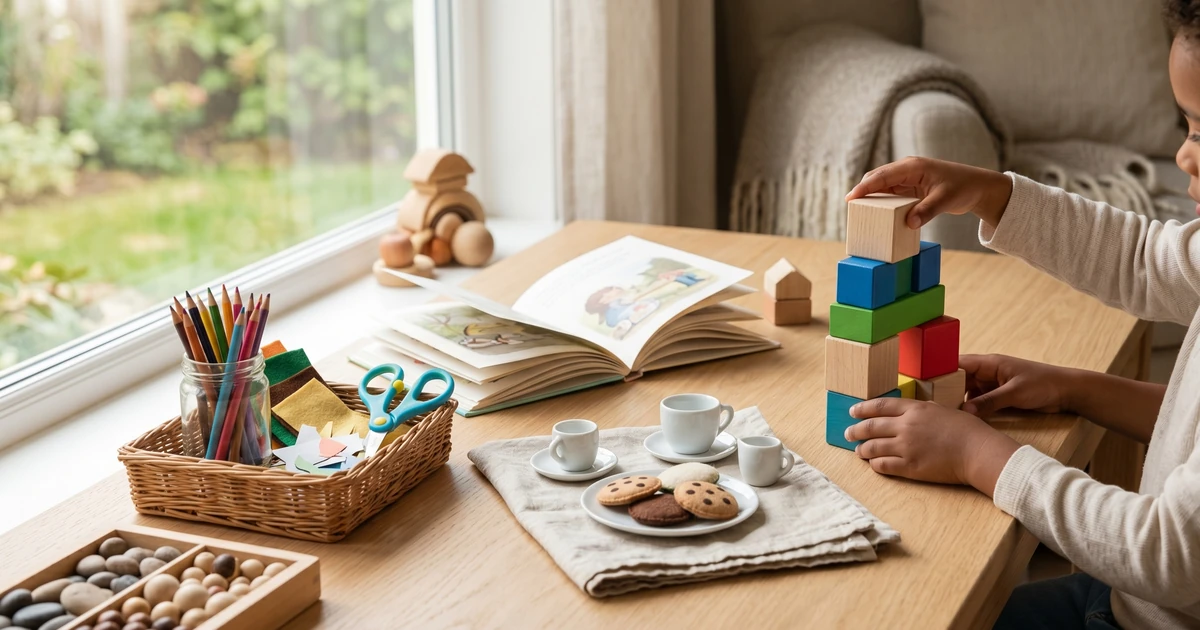
The Ultimate Guide to Play-Based Learning for Children
What I found con
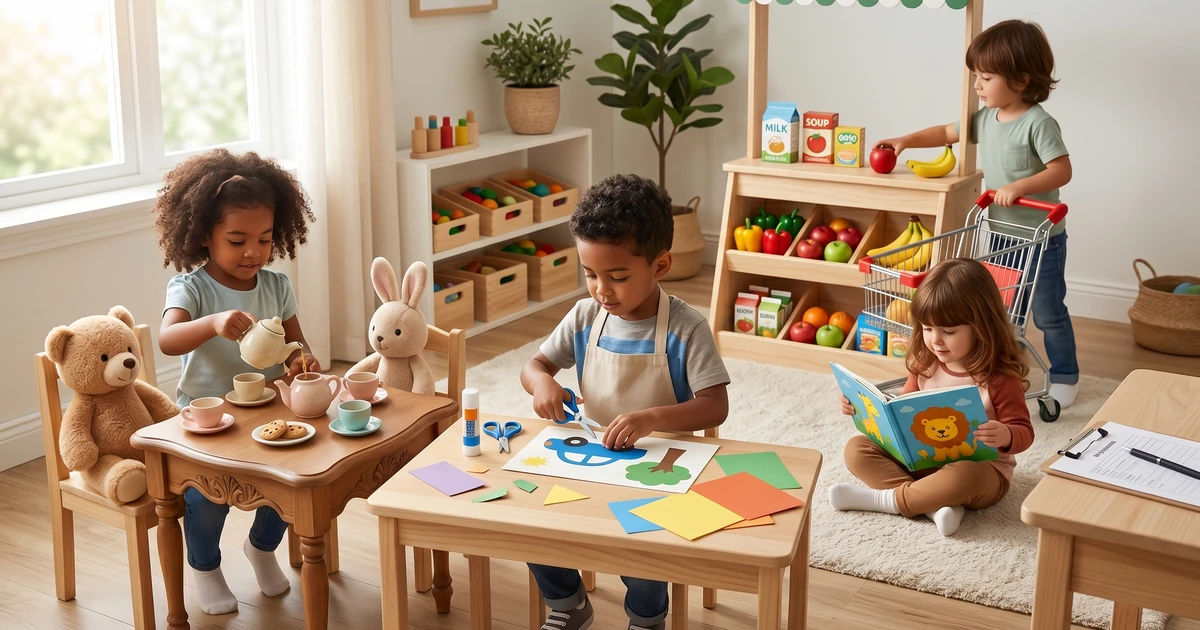
What Is Play Based Assessment? A Comprehensive Overview
Play based assessment is one of those terms you hear thrown around in early childhood education circles, but rarely gets the detailed explanation i...
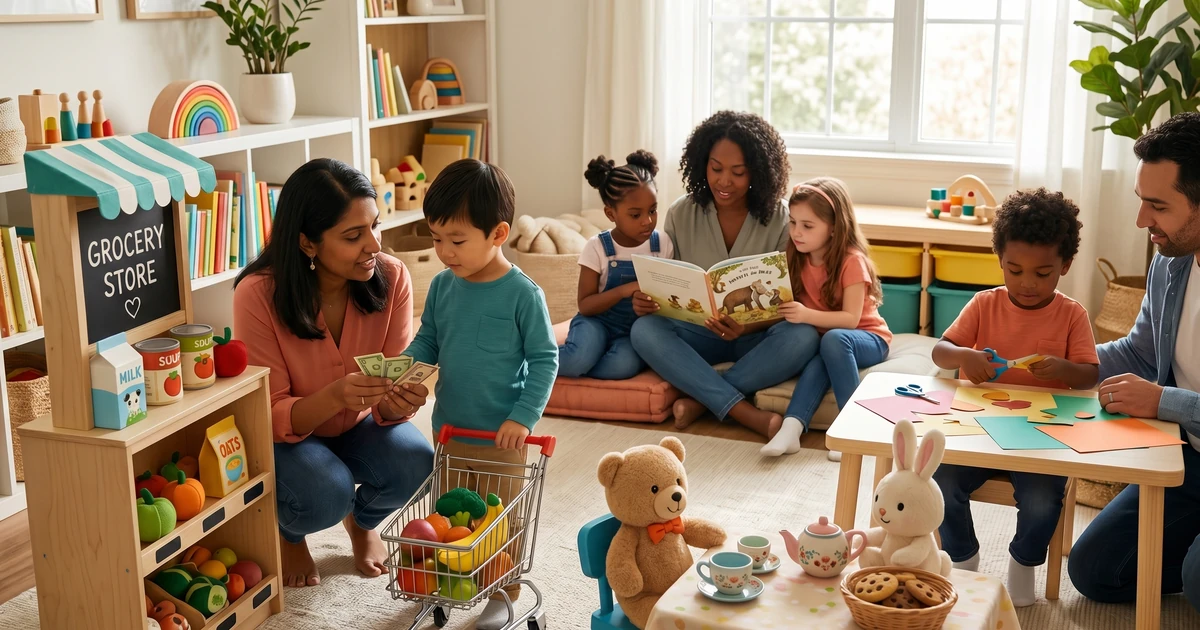
Play Based Learning For Preschoolers: A Parent's Guide
Play based learning for preschoolers is one of those topics where everyone seems to have an opinion, but the research tells a more specific story. ...
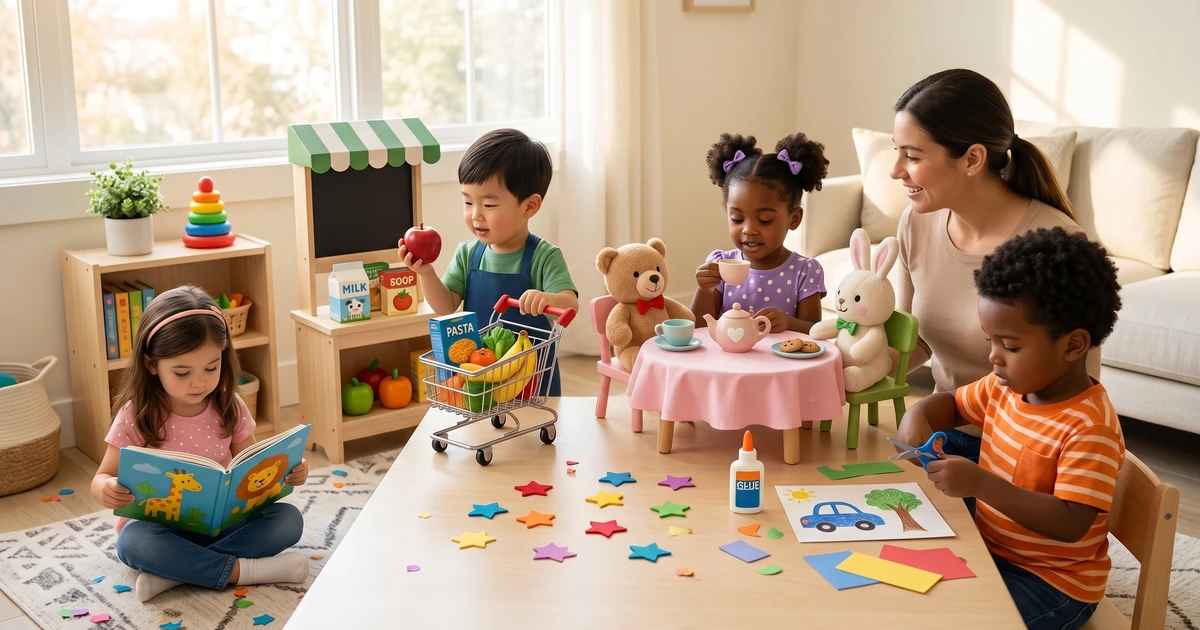
Play Based Preschool Curriculum: Key Elements And Benefits
The term play based preschool curriculum gets used a lot these days, but what does it actually mean in practice? After spending 40+ hours researchi...