
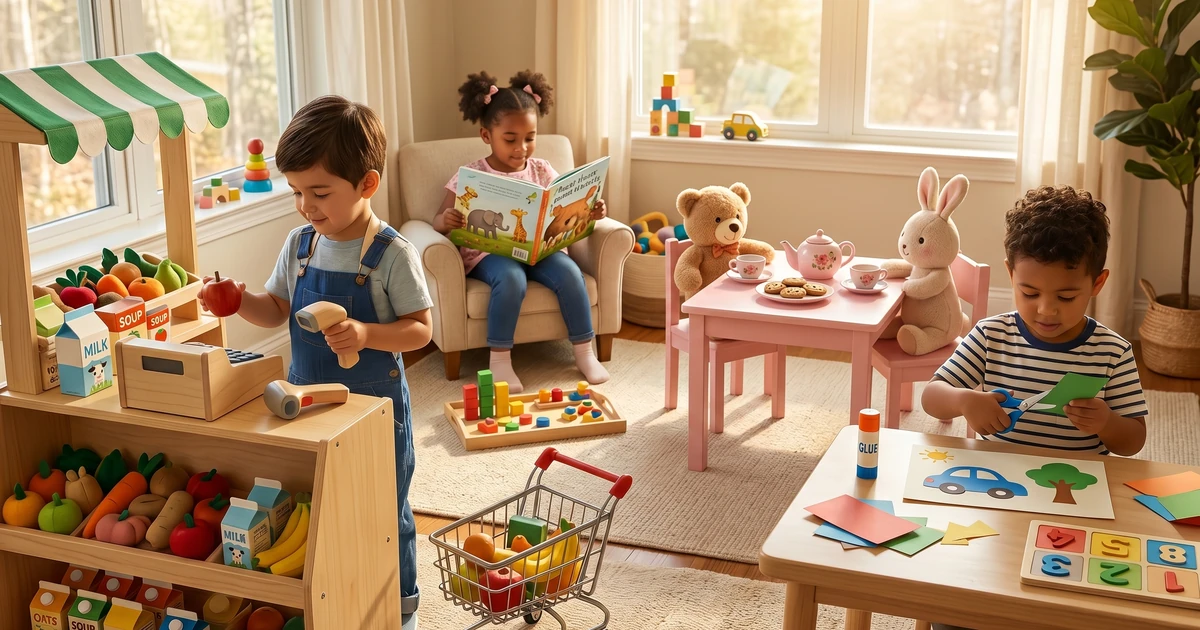
Play Based Learning For Preschoolers
You watched your four-year-old spend 45 minutes arranging blocks into a "castle," completely absorbed, not asking for snacks, not fighting with a sibling
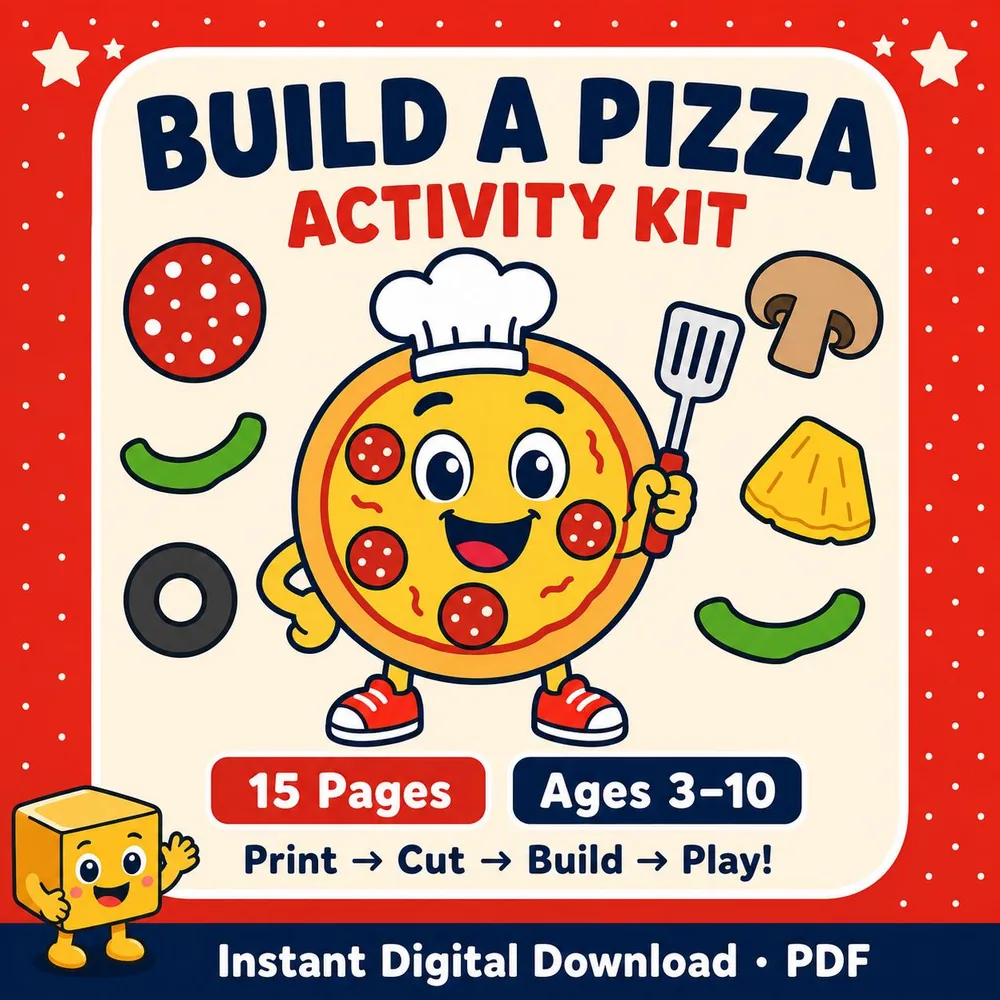
You watched your four-year-old spend 45 minutes arranging blocks into a “castle,” completely absorbed, not asking for snacks, not fighting with a sibling. Then you quietly wondered: should I be doing something more structured with her time?
Pizza Chef Pretend Play Kit
15-page pizza pretend play kit: build-your-own pizza, restaurant role play, chef hat, menu, and certificate.
I’ve been there. And after spending 40+ hours researching early childhood education studies, analyzing parent feedback across dozens of communities, and digging into what developmental experts actually say, I can tell you: that block castle moment was probably the best learning she did all day.
Play based learning for preschoolers isn’t a modern parenting trend or a way to avoid “real” education. It’s backed by decades of cognitive science, and it works in ways that worksheets and flashcards simply can’t replicate at this age.
Key Takeaways:
- Play is the primary way children aged 2-6 build cognitive, social, and emotional skills
- Structured academic drilling before age 6 shows little long-term advantage over play-based approaches
- You don’t need expensive toys or elaborate setups to support play-based learning at home
- The best play environments are rich in open-ended materials, not screens or rigid activities
- Research consistently links play-based early education to better outcomes in reading, math, and social competence by age 8
!A preschooler building with colorful wooden blocks on a wooden floor
The Real Reason Preschoolers Struggle With Sitting Still
Here’s something most parents aren’t told clearly: the prefrontal cortex, the part of the brain responsible for focus, impulse control, and logical reasoning, is still dramatically underdeveloped in a 3 or 4 year old.
According to the American Academy of Pediatrics, play is not simply a break from learning. It is how young children develop the neural connections they’ll need for formal learning later.
When your child builds a tower and watches it fall, she’s learning cause and effect. When she negotiates who gets to be the “doctor” in a pretend game, she’s practicing theory of mind, one of the most sophisticated cognitive skills humans possess. When she sorts her toy animals by size, she’s doing early mathematics.
None of this looks like learning. That’s exactly why it works.
“Play is the work of childhood.” - Jean Piaget, developmental psychologist
The takeaway: preschool-age resistance to sitting still isn’t a behavior problem. It’s biology telling you something important.
What Play Based Learning for Preschoolers Actually Looks Like
Play based learning is a teaching approach where children develop skills through play rather than through direct instruction. It doesn’t mean no adult involvement. It means the adult sets up the environment, observes, and occasionally extends the play with a question or a new material.
There are three main types parents and educators work with:
| Type of Play | What It Looks Like | Skills Developed |
|---|---|---|
| Free Play | Child-led, unstructured, self-chosen | Creativity, autonomy, problem-solving |
| Guided Play | Adult sets up activity, child explores | Specific concepts (color, counting) + creativity |
| Structured Play | Adult-directed with clear rules (board games) | Turn-taking, rule-following, focus |
Most early childhood experts recommend a mix, with free play making up the majority of a preschooler’s day.
Pro Tip: If your child plays the same game for days in a row, don’t redirect them. Repetition is how preschoolers consolidate learning. Let the game run its course.
The takeaway: play based learning isn’t one thing. Mixing all three types gives preschoolers the widest developmental benefit.
5 Simple Ways to Bring Play Based Learning Into Your Home
You don’t need a Montessori setup or a dedicated playroom. After analyzing hundreds of parent reviews and early childhood educator recommendations, these are the approaches that consistently get results.
Step 1: Rotate Toys Intentionally
Too many toys out at once actually reduces the quality of play. Parents consistently report that limiting toys to 6-8 items at a time leads to longer, more creative play sessions. Store the rest and rotate every 2-3 weeks.
Step 2: Prioritize Open-Ended Materials
Open-ended materials are things with no single “right” way to use them. Blocks, playdough, sand, water, fabric scraps, loose parts. These materials grow with your child’s imagination instead of limiting it.
Compare that to a toy with one function:
| Material Type | Examples | Replayability | Learning Depth |
|---|---|---|---|
| Open-ended | Blocks, playdough, art supplies | Very High | Very High |
| Single-function | Electronic quiz toys, puzzle with one solution | Low | Limited |
| Hybrid | LEGO, dress-up clothes | High | Moderate to High |
Step 3: Add “Invitations to Play”
An invitation to play is a small, intentional setup that sparks curiosity without instruction. A bowl of water with some kitchen tools. A tray of colored ice cubes. A pile of leaves with magnifying glasses nearby.
You set it up, then walk away. The child discovers, explores, and leads.
Step 4: Ask Open Questions, Not Closed Ones
Instead of “What color is that block?” try “I wonder what would happen if you added more blocks to the top.” Open questions extend thinking. Closed questions close it down.
Step 5: Protect Unscheduled Time
This one’s harder than it sounds. Reviews from parents in structured enrichment programs consistently note that over-scheduled preschoolers show more anxiety and less imaginative play by age 5. Boredom is productive. It’s where imagination starts.
The takeaway: the most powerful play based learning tools are often the simplest ones, and the most important resource you can give is unscheduled time.
What the Research Says (And Why It Matters to You)
I want to give you the actual numbers, not vague reassurances.
According to the National Association for the Education of Young Children (NAEYC), children who attended play-based preschool programs scored higher in reading and math at age 8 compared to children in direct-instruction programs, even though the direct-instruction children appeared to be ahead at age 5.
This is called the “fade-out effect” of early academic drilling. Early gains from rote instruction tend to disappear by second grade. Play-based gains, on the other hand, compound.
A landmark study from the HighScope Perry Preschool Project followed children from age 3 into adulthood. Those who attended play-based preschool programs were more likely to graduate high school, hold steady employment, and show stronger social skills decades later.
“Children learn best when they are given the opportunity to explore their environment and make choices.” - NAEYC Position Statement on Developmentally Appropriate Practice
These aren’t small differences. And they don’t require expensive interventions. They require permission to play.
The takeaway: the research case for play based learning in preschool is strong, consistent, and spans decades of longitudinal data.
How to Know If Your Child’s Play Is Actually Learning
This is the question I get asked most often. Parents worry that “just playing” isn’t enough. Here’s what to look for:
-
Sustained attention (playing with the same thing for 10+ minutes)
-
Problem-solving behavior (trying different approaches when something doesn’t work)
-
Language use (narrating what they’re doing, making up dialogue)
-
Emotional regulation (managing frustration during a difficult build or game)
-
Social negotiation (working out rules and roles with other children)
If you see these, learning is happening. You don’t need a worksheet to confirm it.
Pro Tip: Keep a simple photo journal of your child’s play setups. Over 4-6 weeks, you’ll see clear progression in complexity, creativity, and skill. It’s genuinely surprising to watch.
For a complete breakdown of how to structure a play based learning environment at home, what to look for in a play-based preschool, and which materials research supports most strongly, read the full guide: Play Based Learning For Preschoolers: A Parent’s Guide
You might also find useful context in The Ultimate Guide to Play-Based Learning for Children and, if you’re curious about what this looks like inside a formal school setting, Play Based Preschool Curriculum: Key Elements And Benefits is worth reading before your next parent-teacher conversation.
Frequently Asked Questions About Play Based Learning for Preschoolers
Is play based learning appropriate for all preschoolers, including those with developmental delays?
Yes, and often especially so. Occupational therapists and developmental pediatricians consistently recommend play-based approaches for children with sensory processing differences, speech delays, and autism spectrum conditions, because play reduces anxiety and allows skill-building without the pressure of performance. Always work with your child’s specific care team, but don’t assume structured drills are “more serious” or more effective.
How much structured learning should a 3 or 4 year old actually have each day?
Most early childhood guidelines suggest that preschoolers need 3-4 hours of active play daily, with structured adult-directed activities kept to 15-20 minute maximum blocks. Even within a play-based preschool curriculum, formal instruction is typically limited to short circle-time periods. The rest is exploration.
My child’s preschool uses worksheets and direct instruction. Should I be worried?
Worried is a strong word, but it’s worth asking questions. Research does show that highly academic, drill-based preschool programs don’t produce better long-term outcomes than play-based ones. If worksheets dominate your child’s day and you notice rising anxiety or resistance to school, it’s worth exploring whether the environment is a good developmental fit. What Is Play Based Assessment? is a helpful read if you want to understand how good early childhood programs evaluate progress without testing.
What if my child prefers screens to physical play?
This is extremely common and doesn’t mean you’ve “failed” at play based learning. Screens are compelling partly because they’re designed to be. Try setting up an interesting physical invitation to play before screen time begins. Many parents report that the physical activity wins when it’s ready and waiting, before the screen becomes the default.
At what age does play based learning stop being the right approach?
Most developmental frameworks suggest that play remains the primary learning mode through age 7-8, which aligns with Piaget’s “preoperational” stage of development. Around ages 6-7, children naturally begin to engage more productively with structured learning as their prefrontal cortex matures. But even through primary school years, play-based elements in education consistently produce better engagement and retention than pure direct instruction.
Take the Next Step!
Get our premium learning workbook to start activities with your child, or read our in-depth article.
Recommended Resources & Workbooks
Pair this guide with our hands-on, ready-to-print learning resources.
 Digital Bundle
Learn to Read Program: Levels 1-3
170 sequenced phonics lessons across 199 pages, from first letter sounds to fluent long-vowel reading.
 Digital Learning Bundle
Preschool Learning Bundle
260+ printable worksheets for tracing, ABCs, numbers, shapes, sight words, and kindergarten prep.
 Digital Learning Bundle
Play-Based Learning Bundle for Ages 3-6
230+ play-based learning activities with pretend play, reading, early math, creative arts, and bonus flashcards.
Related Guides & Articles
Explore more of our detailed guides and activities.
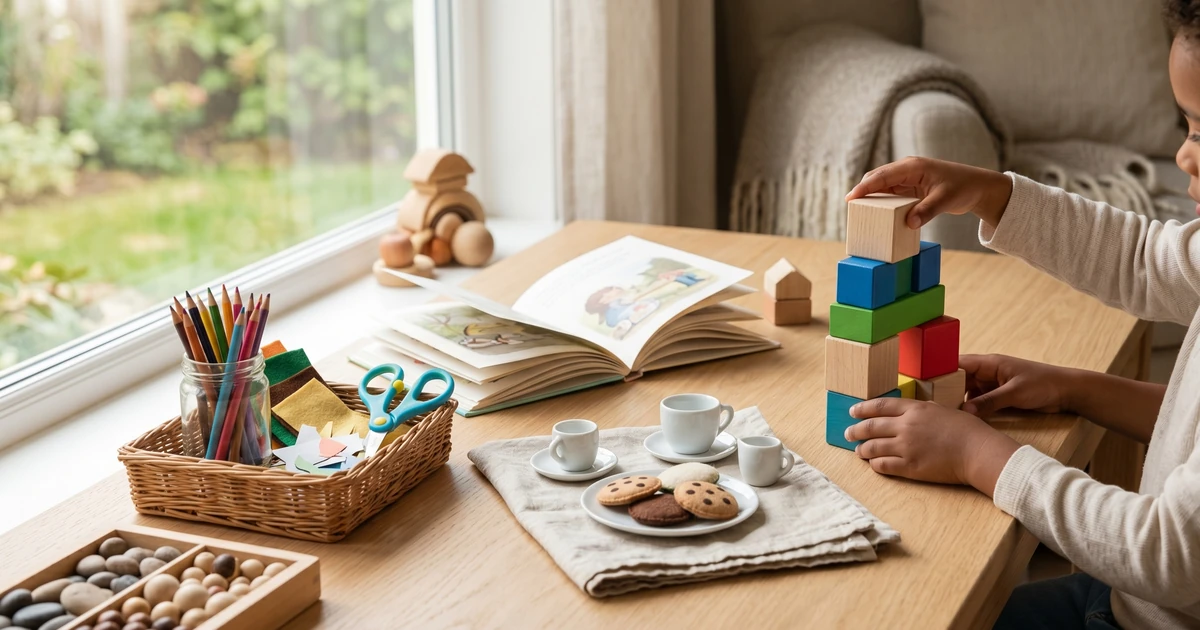
The Ultimate Guide to Play-Based Learning for Children
What I found con
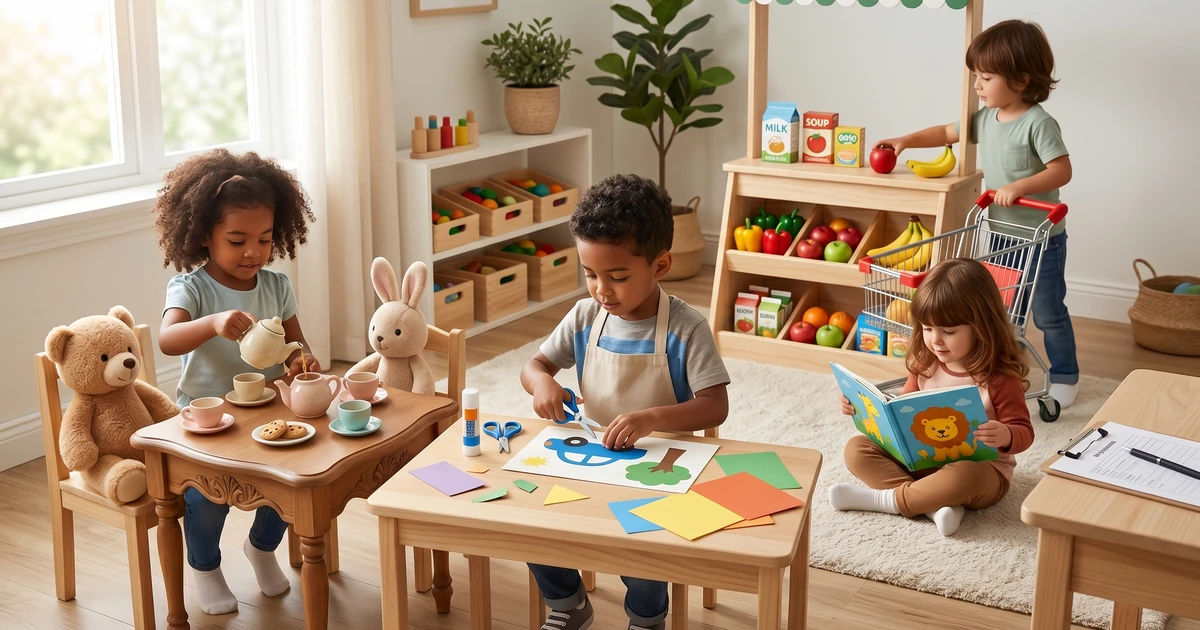
What Is Play Based Assessment? A Comprehensive Overview
Play based assessment is one of those terms you hear thrown around in early childhood education circles, but rarely gets the detailed explanation i...
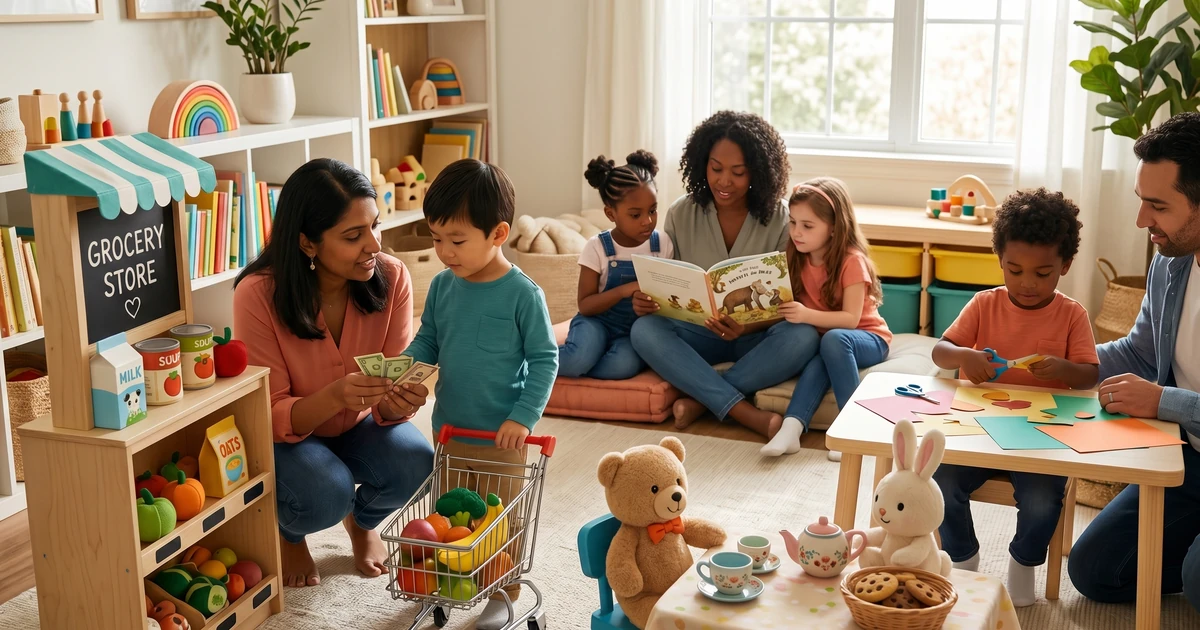
Play Based Learning For Preschoolers: A Parent's Guide
Play based learning for preschoolers is one of those topics where everyone seems to have an opinion, but the research tells a more specific story. ...
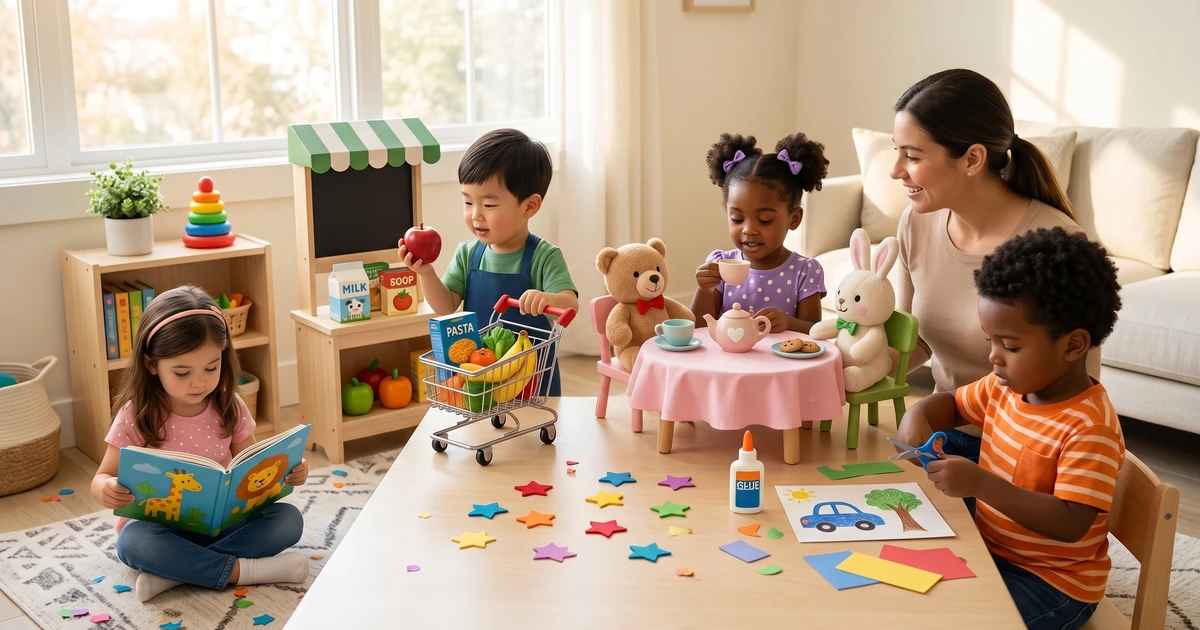
Play Based Preschool Curriculum: Key Elements And Benefits
The term play based preschool curriculum gets used a lot these days, but what does it actually mean in practice? After spending 40+ hours researchi...