
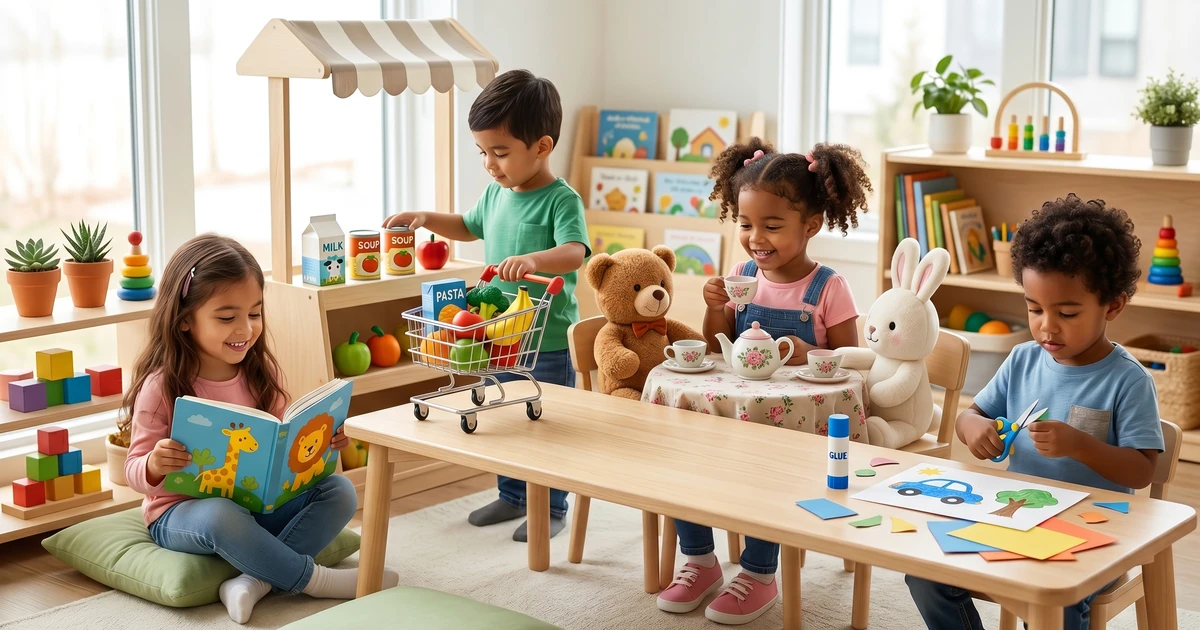
Play Based Daycare
You drop your child off at daycare. They seem fine. They come home tired. But somewhere in the back of your mind, a question lingers: Is anything meaningf

By Kubby
Dad & Me Activity Pack
50+ Father's Day activities for dad-and-child quality time: sports, pizza pretend play, math, drawing, cards, coupons, and a bonus busy book.
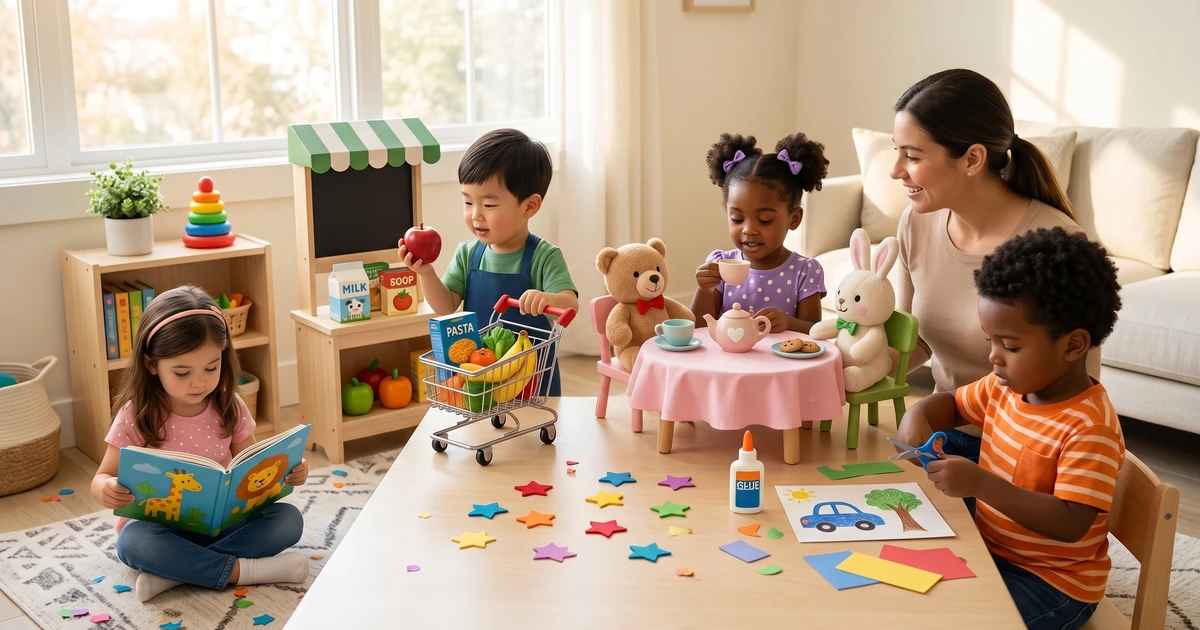
!Children engaged in imaginative play at a play-based daycare setting
You drop your child off at daycare. They seem fine. They come home tired. But somewhere in the back of your mind, a question lingers: Is anything meaningful actually happening there?
If you’ve been researching play based daycare options, you’re probably already sensing that not all daycare environments are created equal. Some are essentially supervised waiting rooms. Others are buzzing, intentional spaces where children are building cognitive skills, emotional resilience, and social confidence through something that looks deceptively simple: play.
The difference matters enormously, especially for children under 5, when the brain is developing faster than it ever will again.
Key Takeaways:
- Play based daycare is not “free for all” time. It’s structured around intentional, child-led exploration that builds real skills.
- Children in play-based environments show stronger language development, emotional regulation, and problem-solving by age 5.
- Not every daycare that uses the word “play” is genuinely play-based. There are specific things to look for.
- The right questions to ask during a daycare tour can reveal everything.
- Play-based learning works best when it’s reinforced at home, too.
What “Play Based Daycare” Actually Means (It’s Not What Most People Think)
Play based daycare is a childcare model where learning happens primarily through child-directed and guided play, rather than through direct instruction, worksheets, or rote memorization. But here’s where a lot of parents get confused: play-based does not mean unstructured chaos.
Think of it this way. A play-based daycare teacher doesn’t stand at a whiteboard and drill letter sounds. Instead, they set up a post office dramatic play corner where children naturally practice literacy, turn-taking, fine motor skills, and social negotiation. The learning is embedded in the experience.
“Play is the work of childhood.” - Jean Piaget, developmental psychologist
According to the American Academy of Pediatrics, play is so essential to healthy child development that it has been recognized as a fundamental right by the United Nations. The research is clear: children learn more deeply through play than through direct instruction during the early years.
The key distinction is between “free play” and “guided play.” Most quality play-based daycares use a mix of both.
| Type of Play | What It Looks Like | What Children Learn |
|---|---|---|
| Free play | Child chooses activity with no adult direction | Autonomy, creativity, self-regulation |
| Guided play | Teacher sets up environment or poses a question | Targeted skills within child’s own exploration |
| Structured play | Games with rules, group activities | Cooperation, following directions, social skills |
| Dramatic/pretend play | Role play, dress-up, storytelling | Language, empathy, narrative thinking |
Bold takeaway: A play-based daycare uses all four types intentionally, not randomly.
Why the First 5 Years Are the Window That Matters Most
I’ve spent a lot of time researching early childhood development, and the neuroscience consistently points to one uncomfortable truth: the window between birth and age 5 is neurologically irreplaceable.
During this period, the brain forms over 1 million new neural connections every single second. The experiences a child has during these years literally shape the architecture of the brain. Not metaphorically. Physically.
“Early experiences affect the development of brain architecture, which provides the foundation for all future learning, behavior, and health.” - Harvard Center on the Developing Child
What this means practically: a daycare that fills these hours with passive screen time, coloring-in-the-lines worksheets, or sitting quietly at tables is not just missing an opportunity. It’s potentially costing a child cognitive and emotional development that’s genuinely hard to recover later.
Play-based environments, by contrast, are designed to stimulate exactly the kinds of thinking that build that brain architecture. Problem-solving during block play. Language development through storytelling. Emotional regulation through navigating playground conflicts.
| Brain Skill | Play-Based Activity That Builds It |
|---|---|
| Executive function | Building and planning with blocks |
| Language and vocabulary | Dramatic play, book corners, storytelling |
| Emotional regulation | Navigating sharing and conflict in play |
| Math reasoning | Sorting, counting, spatial play |
| Social competence | Group games, cooperative building |
How to Tell If a Daycare Is Genuinely Play-Based (Or Just Using the Label)
Here’s something I wish more parents knew before touring daycares: the word “play-based” has become a marketing term. Lots of daycares use it on their websites. Not all of them mean the same thing.
After analyzing dozens of parent reviews and early childhood educator forums, I put together a list of the real signals to look for during a tour.
Step 1: Watch the environment, not the brochure. A genuinely play-based classroom looks a little messy. There are open-ended materials: wooden blocks, art supplies, sand or water tables, dress-up clothes, loose parts. If everything is perfectly tidy and color-coded, ask yourself: when do the children actually use this?
Step 2: Ask what the teachers do during play time. The answer you want: “We observe, ask open questions, and extend children’s thinking.” The answer that’s a red flag: “We let the kids play while we supervise.” Facilitation matters. Passive supervision is not play-based pedagogy.
Step 3: Ask about the daily schedule. A quality play-based daycare will have long, uninterrupted blocks of play (ideally 45 to 60 minutes minimum). If the schedule is broken into 15-minute activities, that’s not deep play. That’s busy work.
Step 4: Ask how they handle learning milestones. The answer you want: “We observe children during play and document their development.” Red flag: “We do monthly assessments with flashcards and drills.”
Step 5: Ask about outdoor time. Outdoor play is not a reward or a break. In a genuine play-based environment, outside time is learning time. Nature play, loose parts outdoors, and physical movement are all core to the model.
Pro Tip: Ask the director to show you a “learning story” or documentation panel. Play-based educators document children’s play to make the learning visible. If they look confused by the question, that tells you something important.
What Play-Based Daycare Typically Costs (And What Affects the Price)
One of the most common questions parents have is whether play-based daycares cost more than traditional ones. The honest answer: sometimes yes, sometimes no. It depends heavily on location, setting, and program type.
| Type of Program | Average Weekly Cost (US) | Notes |
|---|---|---|
| Home-based daycare (play-informed) | $150 to $300/week | More flexible, less formal |
| Center-based play-based daycare | $250 to $500/week | Trained staff, intentional environments |
| Montessori daycare | $300 to $600/week | Specific philosophy, often play-based adjacent |
| Reggio Emilia-inspired center | $350 to $650/week | Strong play-based philosophy, documentation-heavy |
| Head Start / subsidized programs | Free to low-cost | Income-based, play-based approaches vary |
Pro Tip: Cost doesn’t always equal quality. Some of the most genuinely play-based environments are small home daycares run by trained early childhood educators. Don’t dismiss them because they don’t have a fancy facility.
The biggest cost driver isn’t philosophy. It’s staff-to-child ratios and educator qualifications. A center with a 1:4 ratio and teachers with early childhood degrees will cost more than one with a 1:8 ratio and minimal training. For play-based learning to work, teachers need to be active facilitators, and that requires low ratios.
How to Extend Play-Based Learning at Home
Even the best daycare is only part of the picture. Children spend the majority of their waking hours at home, and the way you structure that time matters.
You don’t need to buy expensive toys or create an elaborate “learning environment.” In my research, the activities parents report having the most success with are almost always simple and low-cost.
-
Open-ended materials beat screen time every time. Cardboard boxes, playdough, water and cups, sand, and basic art supplies offer more developmental value than most plastic toys.
-
Pretend play is a parent’s secret weapon. When you play “restaurant” or “vet clinic” with your child for 20 minutes, you’re building vocabulary, narrative thinking, and emotional intelligence simultaneously.
-
Resist the urge to direct. Follow your child’s lead during play. Ask “What happens if…” instead of showing them how to do it.
-
Boredom is not a problem to solve. Children who are given unstructured time regularly develop stronger creativity and self-directed play skills.
-
Outdoor play counts. Digging in the garden, collecting leaves, jumping in puddles. These aren’t “breaks.” They’re learning.
For a full breakdown of how play-based learning works across different ages and settings, the Play Based Learning For Preschoolers: A Parent’s Guide is worth bookmarking.
FAQ: Play Based Daycare Questions Parents Actually Ask
Is play based daycare actually educational, or is it just fun? Play-based daycare is educational by design. Research consistently shows that children develop stronger language skills, problem-solving abilities, and emotional regulation in play-based settings compared to direct instruction models. The learning isn’t incidental. It’s intentional, even when it looks like “just playing.”
At what age should my child start a play-based daycare? Play-based environments are appropriate from infancy. For babies and toddlers, sensory play, movement, and responsive caregiving are the core. For children aged 2 to 5, the environment becomes more rich and complex, with dramatic play, collaborative building, and literacy-rich spaces. There’s no “too early” for a thoughtfully play-based setting.
How do I know if my child is making progress in a play-based daycare? Ask the teachers how they document learning. Quality play-based educators use “learning stories,” portfolios, and observation notes to track development. You shouldn’t need a report card or a test score. A good teacher can sit down with you and show you exactly what your child has been working on, in the context of their play.
What if my child just runs around and doesn’t engage with the activities? This is actually normal and developmentally appropriate, especially for children who are new to a setting or who are primarily physical learners. A skilled play-based educator will observe this, understand what the child is seeking, and gently create invitations that meet them where they are. “Running around” is also movement play, which builds proprioception, spatial awareness, and gross motor development.
Is play-based daycare right for children with developmental delays or special needs? Many children with developmental delays thrive in play-based environments precisely because learning is embedded in context rather than delivered through drills. Play reduces anxiety, builds social motivation, and allows children to work at their own pace. That said, the specific needs of your child should always be discussed with the daycare director and any therapists or specialists involved in your child’s care.
The Real Question Isn’t Whether Play-Based Is Better
It’s whether the specific daycare you’re considering is actually doing it well.
The label matters far less than the practice. A center can call itself play-based and still have children sitting at tables doing worksheets. A small home daycare with no fancy signage can be running one of the most developmentally rich environments in your neighborhood.
The key is knowing what to look for, what to ask, and what genuinely good early childhood practice looks like in action.
If you want to go deeper on how play-based learning works, what the research says, and how to evaluate programs with confidence, I put together a full breakdown in The Ultimate Guide to Play-Based Learning for Children.
And if you’re specifically thinking about curriculum and what your child should be experiencing at the preschool level, the Play Based Preschool Curriculum: Key Elements And Benefits covers exactly that.
Your child’s early years are too short to spend in a daycare that’s just keeping the lights on. The good news: genuinely excellent play-based options exist in almost every city. You just need to know how to find them.
Take the Next Step!
Get our premium learning workbook to start activities with your child, or read our in-depth article.
Recommended Resources & Workbooks
Pair this guide with our hands-on, ready-to-print learning resources.
 Digital Bundle
Learn to Read Program: Levels 1-3
170 sequenced phonics lessons across 199 pages, from first letter sounds to fluent long-vowel reading.
 Digital Learning Bundle
Preschool Learning Bundle
260+ printable worksheets for tracing, ABCs, numbers, shapes, sight words, and kindergarten prep.
 Digital Learning Bundle
Play-Based Learning Bundle for Ages 3-6
230+ play-based learning activities with pretend play, reading, early math, creative arts, and bonus flashcards.
Related Guides & Articles
Explore more of our detailed guides and activities.
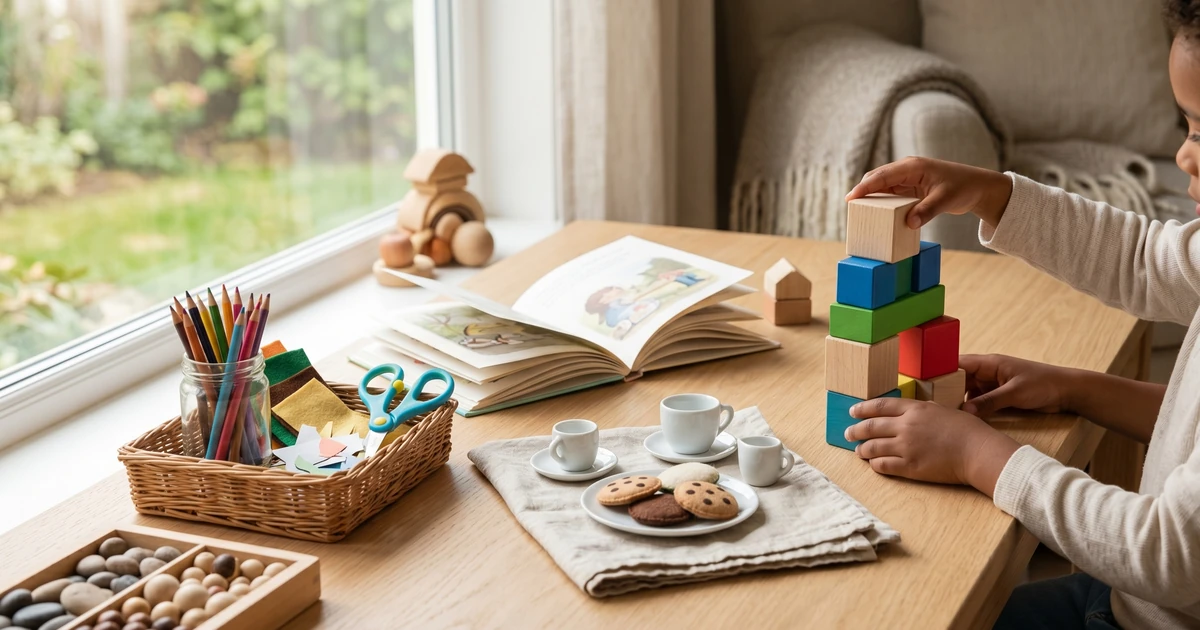
The Ultimate Guide to Play-Based Learning for Children
What I found con
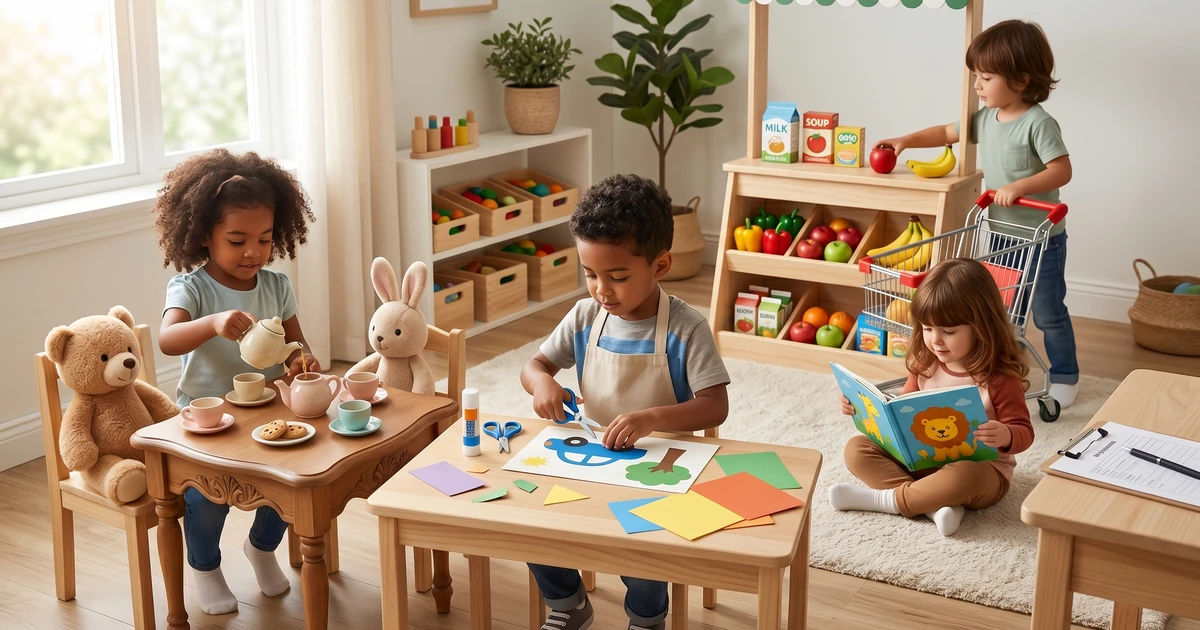
What Is Play Based Assessment? A Comprehensive Overview
Play based assessment is one of those terms you hear thrown around in early childhood education circles, but rarely gets the detailed explanation i...
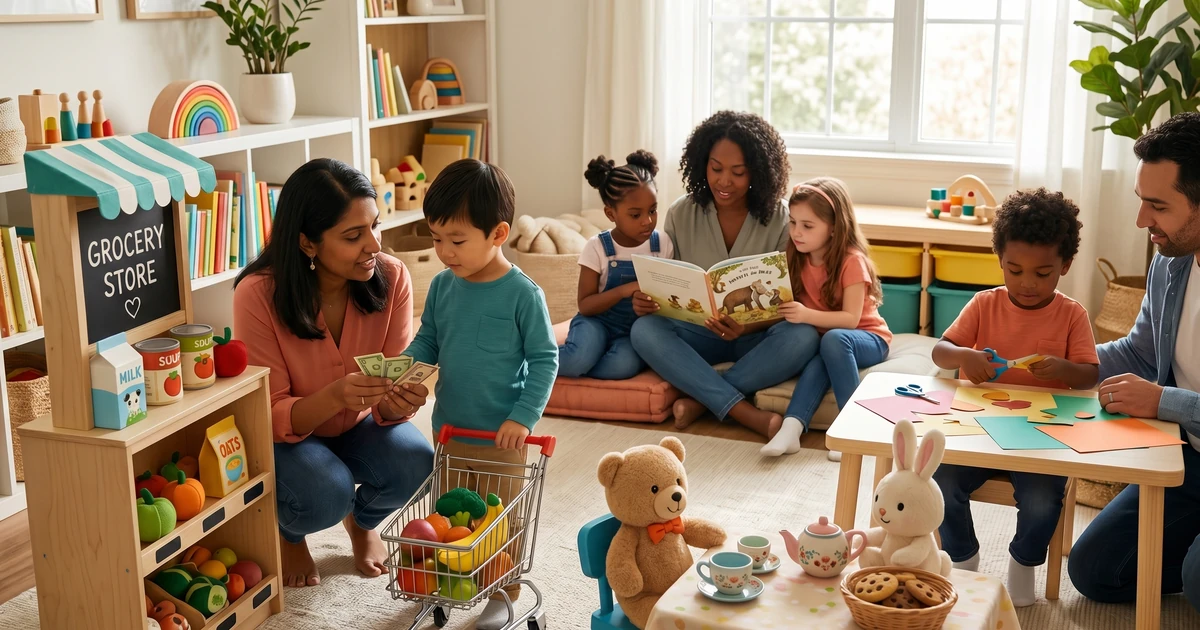
Play Based Learning For Preschoolers: A Parent's Guide
Play based learning for preschoolers is one of those topics where everyone seems to have an opinion, but the research tells a more specific story. ...
Play Based Preschool Curriculum: Key Elements And Benefits
The term play based preschool curriculum gets used a lot these days, but what does it actually mean in practice? After spending 40+ hours researchi...