
Indoor Active Play Ideas For Rainy Days With Kids
The rain is hammering the windows. Your kids have already watched two episodes of their favorite show, and you can see the restlessness building. They're b
!Children playing actively indoors on a rainy day, jumping and laughing in a living room
Pizza Chef Pretend Play Kit
15-page pizza pretend play kit: build-your-own pizza, restaurant role play, chef hat, menu, and certificate.
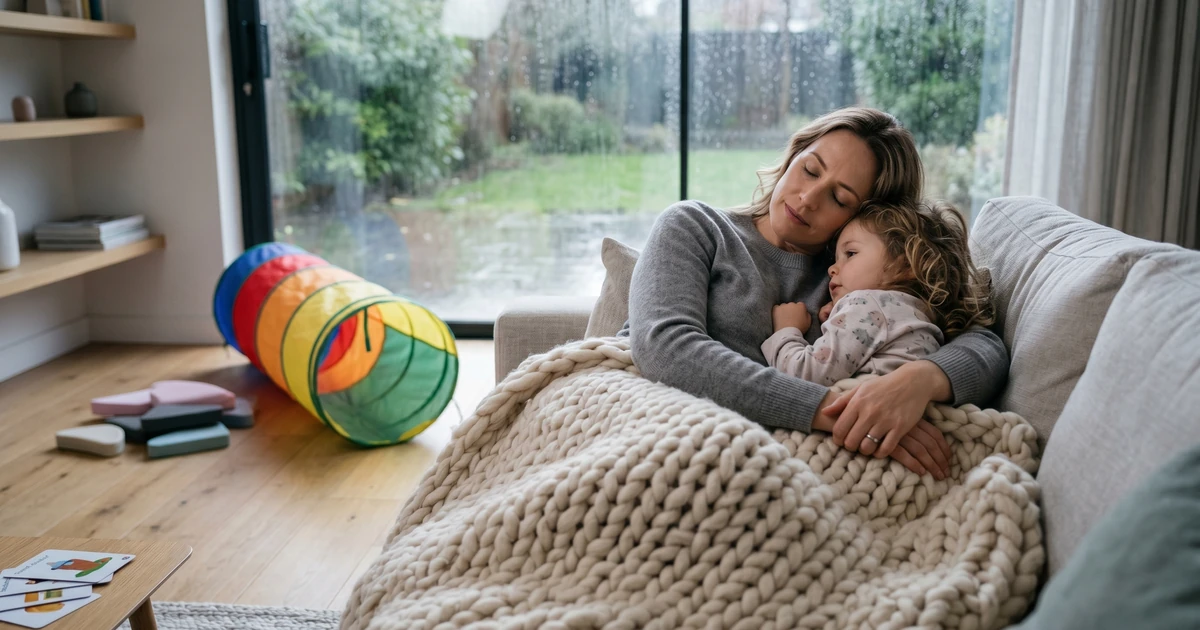
The rain is hammering the windows. Your kids have already watched two episodes of their favorite show, and you can see the restlessness building. They’re bouncing off the walls, literally, and the day has barely started.
I know that feeling. Rainy days with energetic kids inside can feel like a pressure cooker. You want them moving, learning, and genuinely having fun, but the park is off-limits and the backyard is a muddy swamp.
Here’s the good news: indoor active play for rainy days doesn’t require a massive playroom, expensive equipment, or hours of Pinterest prep. A little creativity and some understanding of how kids actually play goes a very long way.
Key Takeaways:
- Active indoor play doesn’t need much space or special equipment to work well
- The best rainy day activities combine movement with imagination or problem-solving
- Kids aged 2-8 need 3+ hours of physical activity daily, and indoor options can absolutely meet that need
- Simple setup ideas like obstacle courses and dance breaks are consistently the highest-rated by parents
- The goal is burning energy AND building skills, not just keeping kids busy
Why Indoor Active Play Matters More Than You Think
Active play is any physical activity that gets kids moving, raises their heart rate, and engages their bodies. It’s not just about tiring them out, although that’s a very welcome side effect.
According to the CDC’s Physical Activity Guidelines, children aged 3 to 5 should be physically active throughout the day, while children aged 6 to 17 need at least 60 minutes of moderate to vigorous activity daily. On a rainy day, indoor active play is how you hit that target without leaving the house.
Beyond the physical benefits, active movement supports cognitive development, emotional regulation, and social skills. Kids who get enough movement actually focus better, sleep better, and handle frustration more calmly. So when you set up a hallway obstacle course, you’re not just killing time. You’re genuinely investing in your child’s development.
“Physical activity is directly linked to brain development in young children. Movement isn’t a break from learning. It IS the learning.” - Dr. Wendy Suzuki, Neuroscientist, New York University
For a deeper look at how physical play connects to development, the American Academy of Pediatrics has excellent resources on the importance of unstructured active play at every age.
Bold takeaway: Active play is a developmental need, not a luxury.
The 5 Best Indoor Active Play Ideas for Rainy Days
After spending a significant amount of time analyzing parent reviews, parenting forums, and child development research, I’ve found that certain indoor activities consistently rise to the top. These work across ages, require minimal setup, and actually hold kids’ attention.
1. The Living Room Obstacle Course
This is the single most recommended rainy day activity I’ve come across across hundreds of parent reviews. The beauty is in the flexibility: couch cushions become stepping stones, dining chairs become tunnel frames draped with a blanket, and a strip of masking tape becomes a balance beam.
How to build a quick obstacle course:
- Clear a path through your main living space (hallway + living room works perfectly)
- Use couch cushions as stepping stones across the “lava”
- Drape a blanket over two chairs to create a crawl-through tunnel
- Lay masking tape in a straight or zigzag line for balance walking
- Add a small jump using a folded blanket as a target
- Time your child and let them beat their own record
Kids will run this same course 20 times and genuinely love every lap. Older siblings can design the course for younger ones, which adds a creativity and collaboration layer.
2. Dance Freeze and Movement Challenges
A Bluetooth speaker and a playlist is all you need. Dance freeze is endlessly replayable: music plays, kids dance freely, music stops, everyone freezes. Add themed challenges like “freeze like a robot,” “dance like you’re underwater,” or “move like a dinosaur” to keep it fresh.
For older kids, add a movement card game. Write actions on index cards (“10 star jumps,” “hop on one foot for 15 seconds,” “crab walk to the kitchen and back”) and pull cards between songs. After analyzing dozens of reviews for movement card sets, parents consistently report this format works well for 4-9 year olds because the randomness feels exciting rather than exercise-y.
3. Indoor Balloon Activities
A single pack of balloons opens up a surprising number of active games:
-
Balloon keep-up: Don’t let the balloon touch the floor
-
Balloon tennis: Use cardboard paper plate paddles
-
Balloon stomp relay: Tie a balloon to each ankle and try to pop the other person’s while protecting your own
-
Countdown challenge: How many times can you tap the balloon before the timer goes off
Balloon activities are particularly brilliant for small spaces because the slow, floaty movement of a balloon keeps things active without the collision risk of faster-moving balls. Parents of toddlers specifically highlight balloon keep-up as a 20-30 minute activity that requires zero setup.
Pro Tip: Use regular 11-inch latex balloons rather than mylar balloons. They’re slower, bouncier, and much more forgiving in small indoor spaces. Supervise closely with children under 3.
4. Yoga and Animal Movement Circuits
Kids’ yoga is consistently underrated as a rainy day activity. Not because it’s especially calming (it often isn’t, which is fine), but because the animal-themed poses give kids a physical challenge with a creative story attached.
Bear walk, frog jumps, cobra stretch, downward dog, and butterfly pose can all be strung together into an “animal journey” where kids travel through a jungle, cross a river, and climb a mountain. You can find free kids’ yoga sequences on YouTube, or simply call out poses yourself.
For preschool-aged children especially, this connects beautifully with the kind of movement-based learning I explore in Play Based Learning For Preschoolers: A Parent’s Guide.
5. Active Building Challenges
Physical play doesn’t have to be pure cardio. Active building challenges, where kids are moving, carrying, stacking, and problem-solving, hit a sweet spot between exercise and cognitive engagement.
Some favorites from parent communities:
-
Build the tallest block tower, then knock it down by rolling a ball
-
Construct a blanket fort with specific requirements (“it has to fit 3 people and have a window”)
-
Create a marble run from toilet rolls and tape it to the wall
-
Build a LEGO or cardboard brick obstacle for a toy car course
The physical engagement here is lighter than an obstacle course, but it keeps kids genuinely active and absorbed for much longer stretches, often 45-60 minutes for ages 5+.
Comparing Indoor Active Play Options by Age and Space
Not every idea works for every family. Here’s a practical breakdown:
| Activity | Best Age Range | Space Needed | Prep Time | Energy Level | Cost |
|---|---|---|---|---|---|
| Obstacle course | 3-10 years | Medium room or hallway | 10-15 min | High | $0 |
| Dance freeze | 2-8 years | Any space | 2 min | High | $0 |
| Balloon games | 2-8 years | Small-medium room | 5 min | Medium-High | Under $5 |
| Kids’ yoga | 3-10 years | Small space | 5 min | Medium | $0 |
| Active building | 4-12 years | Table or floor | 5 min | Low-Medium | $5-20 |
| Indoor ride-ons/scooters | 2-6 years | Hallway or large room | 0 min | High | $20-80 |
| Jump and bounce toys | 2-6 years | Small-medium room | 0 min | Very High | $20-150 |
Bold takeaway: The best activity depends on your space and your child’s age, not how elaborate the setup is.
How to Keep Rainy Day Play Going Longer
The biggest parenting challenge on a rainy day isn’t finding an idea. It’s keeping the momentum going when kids lose interest after 10 minutes.
A few strategies that reviews and parenting forums consistently highlight as effective:
Rotate, don’t exhaust. Set a timer for 20 minutes per activity. Switching before kids get bored keeps energy levels higher than running one activity until it collapses.
Add a story or mission. “We’re explorers trapped in a jungle” makes an obstacle course 3x more engaging than just an obstacle course. Narrative is the secret ingredient in almost every successful indoor play session.
Involve kids in the setup. When a 6-year-old helps design the obstacle course, they have ownership and want to run it more. Reviews of craft and play kits consistently note that kids engage longer with things they helped create.
Use novelty strategically. Save one new toy, game, or art supply specifically for rainy days. The “special occasion” framing makes even a simple activity feel exciting.
Pro Tip: Create a “Rainy Day Box” with a handful of activities, small toys, and games that only come out when it rains. The scarcity makes everything in the box feel more special. Rotate items seasonally so it stays fresh.
What to Look For in Indoor Active Play Equipment
If you’re looking to invest in something that makes rainy days easier long-term, here’s a quick criteria guide for choosing indoor play equipment:
| Criteria | What to Look For | Red Flags |
|---|---|---|
| Safety | ASTM or EN71 certified, no sharp edges | Vague safety claims, no certifications listed |
| Space efficiency | Foldable, stackable, or compact design | Bulky fixed structures for small homes |
| Age range | Covers 2-3 years of growth | Outgrown in under 12 months |
| Versatility | Multiple uses or modes | Single-use toys at high price points |
| Setup time | Under 5 minutes | Complex assembly with tools required |
| Durability | Weight-rated, solid materials | Lightweight plastic at high price points |
| Noise level | Soft materials, cushioned | Hard plastic or metal on hardwood floors |
One option I’ve seen come up repeatedly in parent reviews for toddler active play is a balance board or rocker, which takes up minimal space, requires zero setup, and gives kids a physical challenge they can self-regulate. It’s not the most exciting thing to unbox, but parents consistently report kids return to it daily for months. Products like this sit in the “one quiet but reliable solution” category rather than the novelty toy category.
For a complete breakdown of how play equipment fits into broader learning goals, The Ultimate Guide to Play-Based Learning for Children covers this in much more depth.
FAQ: Indoor Active Play for Rainy Days
How do I keep kids active indoors when I have a small apartment?
Small spaces actually work better than you’d think for active indoor play. Balloon games, yoga circuits, and dance freeze all work in a single room. The key is removing furniture hazards (push chairs against walls) and setting a clear “play zone.” Hallways are underused gems for rolling, crawling, and balance beam games using masking tape.
At what age can kids do independent indoor active play?
Most children can engage in self-directed active play starting around age 5-6, especially with activities they helped set up. Under age 5, most active play still benefits from an adult present to guide transitions and maintain safety. That said, even toddlers can self-direct balloon keep-up or simple jumping challenges for short stretches of 5-10 minutes.
How long should an indoor active play session last?
For toddlers (2-3 years), sessions of 15-20 minutes with breaks work best. For preschoolers (4-5 years), 20-30 minute sessions are ideal before switching to a different type of activity. School-age children (6+) can sustain 30-45 minute active sessions. Rotating between high-energy and moderate-energy activities throughout the day is more sustainable than one long intensive session.
Is screen-based movement (like dance videos or yoga apps) still beneficial?
Yes, with some caveats. Screen-led movement activities like GoNoodle, Cosmic Kids Yoga, or Just Dance are genuinely active and count toward daily movement goals. The benefit is that kids are still physically moving. The limitation is that screen-dependent play doesn’t build the same imaginative and self-directed play skills as unstructured active play. A mix of both is perfectly reasonable.
How do I handle the noise and mess of active indoor play?
Lay down foam play mats to reduce noise on hard floors. For jumping activities, carpeted rooms are dramatically quieter than wood or tile. Set clear “boundaries” before play starts (the ball stays in the living room, jumping only on the mat) so kids know the rules upfront rather than being corrected mid-play. Most active play messes are surface level and clean up in under 5 minutes.
Ready to Go Deeper?
Rainy days don’t have to mean screen marathons or stir-crazy kids. The ideas above are a starting point, but there’s so much more to understand about how active play connects to how children actually learn and develop.
For everything from structured play frameworks to age-specific activity guides, read The Ultimate Guide to Play-Based Learning for Children for the complete picture.
And if you’re specifically navigating play for younger children, Play Based Preschool Curriculum: Key Elements And Benefits is worth a read too.
The rain won’t last forever. But the habits you build around active, creative play? Those stick around much longer.
Take the Next Step!
Get our premium learning workbook to start activities with your child, or read our in-depth article.
Recommended Resources & Workbooks
Pair this guide with our hands-on, ready-to-print learning resources.
 Digital Bundle
Learn to Read Program: Levels 1-3
170 sequenced phonics lessons across 199 pages, from first letter sounds to fluent long-vowel reading.
 Digital Learning Bundle
Preschool Learning Bundle
260+ printable worksheets for tracing, ABCs, numbers, shapes, sight words, and kindergarten prep.
 Digital Learning Bundle
Play-Based Learning Bundle for Ages 3-6
230+ play-based learning activities with pretend play, reading, early math, creative arts, and bonus flashcards.
Related Guides & Articles
Explore more of our detailed guides and activities.
The Ultimate Guide to Play-Based Learning for Children
What I found con
What Is Play Based Assessment? A Comprehensive Overview
Play based assessment is one of those terms you hear thrown around in early childhood education circles, but rarely gets the detailed explanation i...
Play Based Learning For Preschoolers: A Parent's Guide
Play based learning for preschoolers is one of those topics where everyone seems to have an opinion, but the research tells a more specific story. ...
Play Based Preschool Curriculum: Key Elements And Benefits
The term play based preschool curriculum gets used a lot these days, but what does it actually mean in practice? After spending 40+ hours researchi...