
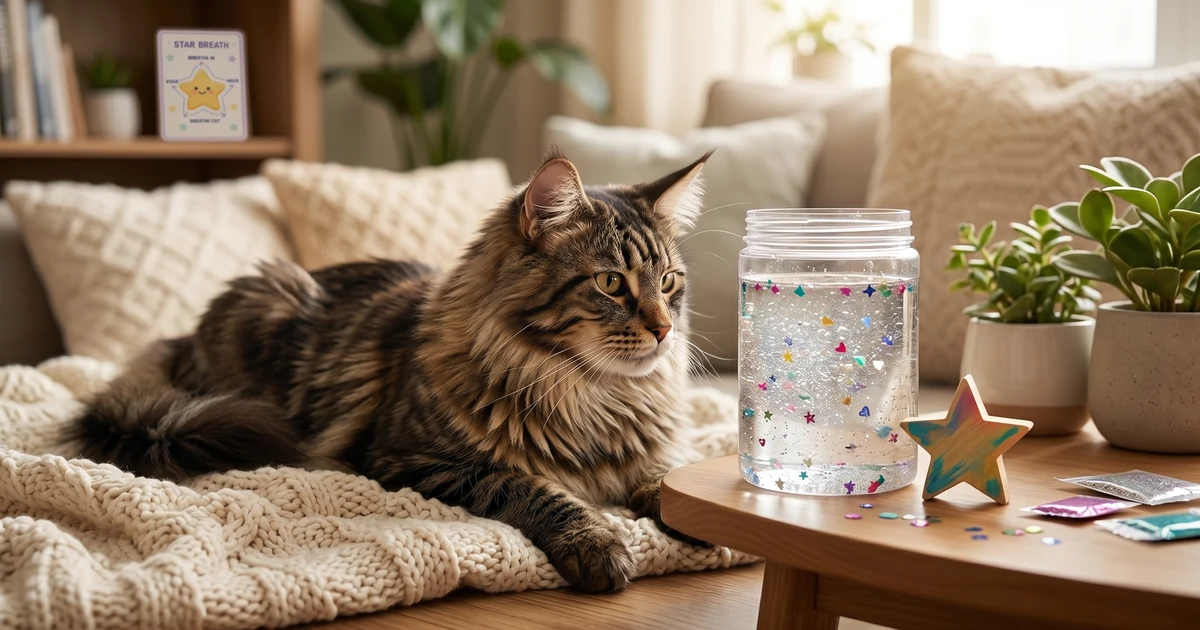
Calm Down Glitter Jar Craft for Anxious Preschoolers
There's a moment every parent, teacher, or caregiver knows well. The child is spinning out. Tears, shouting, maybe some floor-sitting. You try to reason wi
There’s a moment every parent, teacher, or caregiver knows well. The child is spinning out. Tears, shouting, maybe some floor-sitting. You try to reason with them and it makes everything worse. You offer a snack and they throw it. You say “calm down” and, well, you already know how that goes.

glitter jar calm down craft
Recommended products related to this guide.
A glitter jar calm down craft won’t fix every meltdown. But it gives a child something that reasoning and snacks can’t: a physical focus point that actually works with how their brain is wired in those moments.
I’ve spent time researching this craft from every angle, reading through hundreds of teacher reviews, parent forum threads, and child development resources. What I found surprised me. This isn’t just a cute Pinterest project. There’s real science behind why it works, and the way you make it matters more than most tutorials admit.
Key Takeaways:
- A glitter jar works by giving an overwhelmed child a visual anchor that slows breathing naturally
- The glitter settling time can be adjusted to match your child’s age and tolerance
- Cheap craft glitter doesn’t work as well as fine glitter glue for suspension time
- Making the jar WITH your child (not for them) dramatically increases how much they actually use it
- The jar is a tool, not a punishment, and how you introduce it changes everything
!A child holding a glitter calm-down jar up to the light, watching the glitter swirl and settle
What Actually Happens in the Brain During a Meltdown
Before we get to glitter and glue, it helps to understand why this craft works at all.
When a child is overwhelmed, their brain’s emotional center (the amygdala) essentially takes over. The rational, thinking part of the brain goes offline. This is why logic doesn’t help in the moment. You can’t talk someone out of a flood response.
“Children in the midst of emotional dysregulation need sensory and physical anchors before they can engage with language or reasoning. Visual tools that require gentle attention can help bridge the gap back to a regulated state.” - Dr. Stuart Shanker, self-regulation researcher and author of Self-Reg
A glitter jar works because watching it requires no words. It’s slow, predictable, and visually satisfying. The child’s breathing naturally begins to sync with the pace of the glitter falling. They’re not being told to calm down. Their body just starts to do it.
According to the American Academy of Pediatrics, giving children concrete, sensory tools for emotional regulation builds self-regulation skills over time, which is one of the strongest predictors of long-term wellbeing.
The glitter jar is, at its core, a self-regulation tool disguised as a craft project.
How to Make a Glitter Calm Down Jar That Actually Works
Most tutorials skip the details that matter. I’ve pulled together what consistently works based on educator feedback and parent reviews.
Step 1: Choose the Right Container
Your container options matter more than people realize. Here’s a quick comparison:
| Container Type | Pros | Cons | Best For |
|---|---|---|---|
| Mason jar (glass) | Beautiful, heavy, satisfying weight | Breakable, not safe for young kids | Ages 5+ with supervision |
| Plastic water bottle | Unbreakable, portable | Can look cheap, cap may leak | Toddlers, travel use |
| Voss water bottle | Clear, sturdy, great aesthetic | Costs more | Preschool/home use |
| Sensory bottle set | Purpose-built, often lockable lid | Requires purchase | Classrooms, consistent use |
For children under 4, always choose plastic. A sealed, superglued lid is non-negotiable. Parents consistently report that the moment a jar opens and glitter goes everywhere, it stops being a calming tool and becomes a cleanup disaster.
Step 2: Get the Right Glitter Mixture
This is where most homemade versions fall short. Regular craft glitter sinks in about 3 seconds. That’s not enough time for anyone to calm down.
The suspension time depends on three things: the viscosity of the liquid, the size of the glitter particles, and the ratio of glitter glue to water.
Pro Tip: Use warm distilled water (not tap water, which can cause cloudiness over time) and at least 2 tablespoons of clear glitter glue per 8 oz of liquid. Add fine craft glitter on top of the glitter glue base. The glue slows the sinking dramatically.
A good glitter jar should take 2 to 4 minutes for the glitter to fully settle. That’s long enough for breathing to slow and the brain to shift back toward calm.
Step 3: Pick Your Glitter Colors Intentionally
This sounds minor. It isn’t. Children who pick their own colors are significantly more likely to actually use the jar.
Some teachers use color psychology as a loose guide:
-
Blue and silver: associated with calm and water imagery
-
Purple and gold: feel magical and special, popular with kids who love fantasy
-
Rainbow mix: works well for children who respond to brightness and variety
-
Single color: easier to focus on, good for children who get overwhelmed by too much visual input
Let the child choose. Even a 3-year-old can point at a color. That small act of ownership changes the tool from “something adults made” to “my thing.”
Step 4: Seal It Properly
Reviews of homemade glitter jars reveal one consistent complaint: leaking. Hot glue the inside of the lid before screwing it on, then run another bead around the outside seam. Let it dry fully before handing it to a child.
For younger children, a second ring of plumber’s tape over the lid adds another layer of security.
A leaking jar becomes a stressor, not a calm-down tool, so sealing it right the first time is worth the extra five minutes.
Step 5: Introduce It Before It’s Needed
This is the step most people skip. Don’t pull out the glitter jar during a meltdown the first time. Introduce it during a calm, connected moment.
Sit with your child and shake it together. Say something like, “See how the glitter swirls around? When you’re feeling really big feelings, this can help your brain get quiet again.” Practice using it when there’s no stress. Build the association before the crisis.
“Regulation tools need to be practiced during calm states to be accessible during dysregulated ones. The brain learns through repetition, not just instruction.” - The Child Mind Institute
What to Do When the Jar Isn’t Enough
A glitter jar is one tool, not a complete strategy. Some children need movement first (jumping, shaking out their hands, squeezing something) before they can shift to a visual focus. Others respond better to music, deep pressure, or breathing exercises.
The best approach is a calm down menu, a small set of 3 to 5 options the child knows and has practiced. The glitter jar can be one of those options without needing to be the only one.
For a broader look at how to build that kind of toolkit, the Complete Guide to Calm Down Choices: Strategies for Emotional Regulation walks through the full system, including how to match strategies to different temperaments and situations.
How Much Does Making a Glitter Calm Down Jar Cost?
One of the best things about this craft is the price. Here’s a realistic cost breakdown:
| Item | Price Range | Notes |
|---|---|---|
| Clear plastic bottle or mason jar | $0 to $3 | Repurpose a water bottle for free |
| Clear glitter glue (2 oz) | $1 to $3 | Elmer’s brand works well |
| Fine craft glitter | $1 to $4 | Avoid chunky glitter |
| Distilled water | $1 | One gallon is enough for many jars |
| Superglue or hot glue | $2 to $5 | You probably already have this |
| Total | $5 to $16 | Less if you reuse supplies |
Making multiple jars for a classroom drops the per-jar cost to around $2 to $3 each. Several teachers I researched report ordering fine glitter in bulk and making class sets for under $30 total.
How to Choose a Pre-Made Option
Not everyone has time to DIY, and that’s completely fine. If you’re buying a ready-made calm down bottle, here’s what to look for:
| Feature | What to Look For |
|---|---|
| Suspension time | 2 to 4 minutes minimum |
| Seal quality | Lid should be permanently sealed or lockable |
| Container material | Shatterproof plastic for young children |
| Glitter density | Dense enough to be visually interesting, not cloudy |
| Size | Small enough for a child’s hands (around 8 oz) |
Pre-made options typically run between $8 and $25 depending on quality. The main advantage is consistency. Every jar in a classroom set behaves the same way, which matters for fairness.
Frequently Asked Questions About Glitter Calm Down Crafts
What age is a glitter calm down jar appropriate for?
Most children from age 2 onward can benefit from a glitter jar, though the container should always be plastic and sealed for toddlers. Older children (ages 6 and up) often appreciate being involved in the making process and may want a more elaborate design. The concept scales well because the visual fascination works across a wide age range.
How long should the glitter take to settle?
Aim for 2 to 4 minutes of settling time. Faster than that and there isn’t enough time for the calming effect to kick in. Slower than 4 minutes can frustrate younger children. You can adjust the time by increasing the amount of glitter glue (thicker liquid = slower settling) or switching to a finer glitter particle size.
My child won’t use the jar during meltdowns. What am I doing wrong?
Almost always, this comes down to introduction timing. If the jar was first used during a crisis, the child’s brain may associate it with stress rather than calm. Start over by using it playfully during a completely calm moment. Some children also need to try it multiple times before their nervous system learns to respond to it. Patience with the process matters more than the jar itself.
Can I use baby oil instead of water and glitter glue?
Some tutorials use baby oil for a different visual effect. It creates a slower, heavier swirl. The downside is that glitter doesn’t distribute as evenly, and the visual effect is cloudier. Water-based jars with glitter glue tend to produce cleaner, more satisfying results. Baby oil works better in sensory bottles designed for a different purpose.
Is a glitter jar a good tool for children with ADHD or sensory sensitivities?
It can be, but it varies by child. Children who are visually sensitive may find glitter overstimulating. In those cases, a jar with a single color and minimal glitter often works better than a sparkly rainbow version. For children with ADHD, pairing the visual focus of the jar with a breathing prompt (“take one breath for every time you see a big piece of glitter sink”) adds a second layer of engagement. The How to Teach Calm Down Choices to Preschool Students guide covers sensory adaptations in more detail.
Want the Full System?
A glitter jar calm down craft is a genuinely useful tool, and now you know how to make one that actually works. But it fits best inside a larger calm-down strategy.
For the complete picture, including printable calm-down menus, visual supports, age-specific strategies, and how to teach children to choose their own regulation tools, read the full guide:
The Complete Guide to Calm Down Choices: Strategies for Emotional Regulation
You might also find these helpful:
-
Calm Down Choices Free Printable: Downloadable Visuals for Kids for visual supports you can print and use today
-
How to Teach Calm Down Choices to Preschool Students for classroom-specific strategies
-
Calm Down Choices for Adult Anxiety: What Works Best because, honestly, adults need regulation tools too
Recommended Resources & Workbooks
Pair this guide with our hands-on, ready-to-print learning resources.
 Digital Bundle
Learn to Read Program: Levels 1-3
170 sequenced phonics lessons across 199 pages, from first letter sounds to fluent long-vowel reading.
 Digital Learning Bundle
Preschool Learning Bundle
260+ printable worksheets for tracing, ABCs, numbers, shapes, sight words, and kindergarten prep.
 Digital Learning Bundle
Play-Based Learning Bundle for Ages 3-6
230+ play-based learning activities with pretend play, reading, early math, creative arts, and bonus flashcards.
Related Guides & Articles
Explore more of our detailed guides and activities.
The Complete Guide to Calm Down Choices: Strategies for Kids
Every person, regardless of age, has moments when emotions feel too big to manage. Big feelings, meltdowns, anxiety spirals, and emotional overwhel...
Calm Down Choices for Adult Anxiety: What Works Best
Adults don't always get the same structured emotional support that children receive in schools and therapy programs. Yet the need for calm down cho...
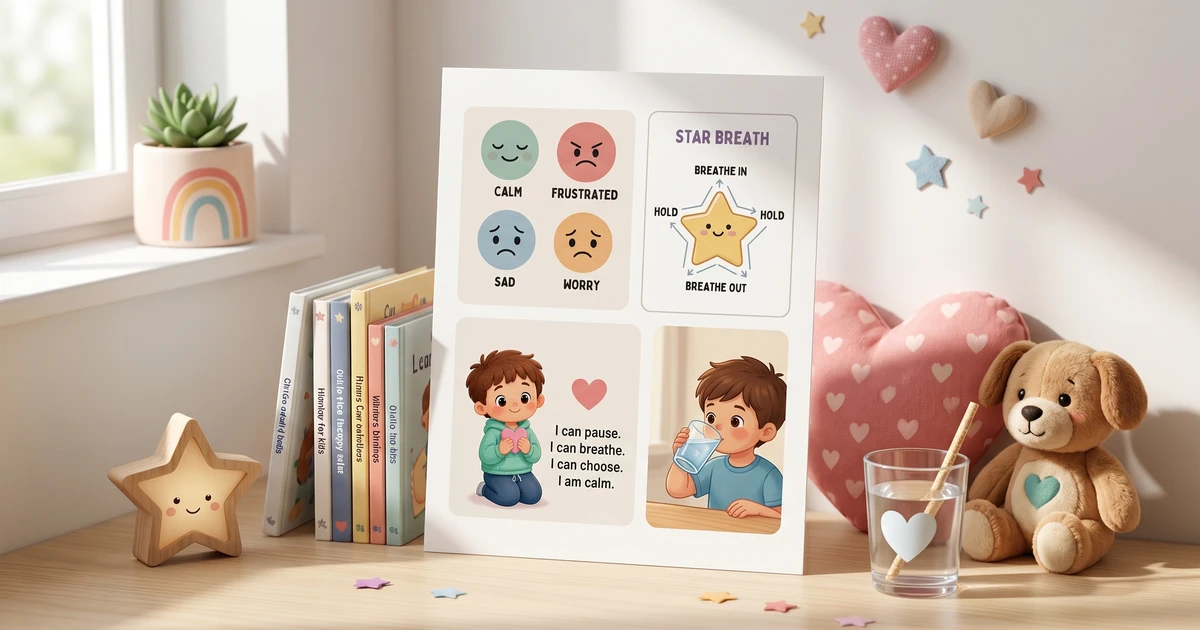
Calm Down Choices Free Printable: Downloadable Visuals for Kids
Finding a calm down choices free printable that actually works in the real world, whether you're a teacher with 25 kids in a classroom or a parent ...
How to Teach Calm Down Choices to Preschool Students
Preschoolers are emotional volcanoes. One moment they're happily building a block tower, and the next they're on the floor, inconsolable because th...