
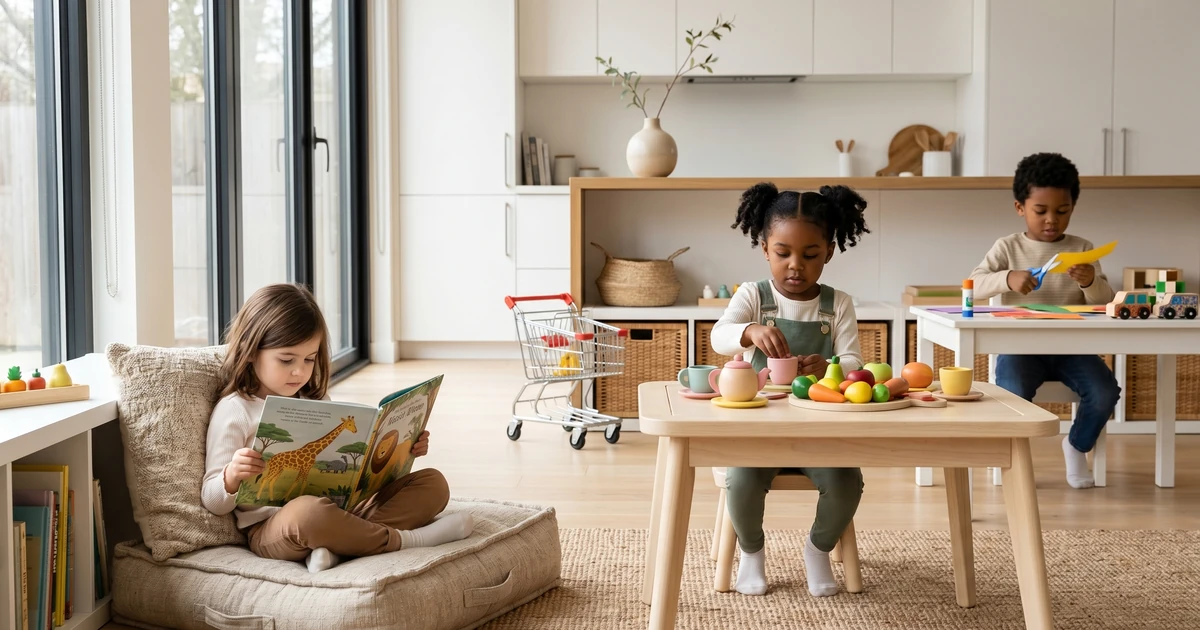
How To Encourage Independent Play At Home With Open Ended Toys
You've tidied the playroom. You've bought the toys. You've set everything up beautifully. And the moment you step away to answer an email or make a coffee
You’ve tidied the playroom. You’ve bought the toys. You’ve set everything up beautifully. And the moment you step away to answer an email or make a coffee, your child is right behind you, tugging at your sleeve.
Pizza Chef Pretend Play Kit
15-page pizza pretend play kit: build-your-own pizza, restaurant role play, chef hat, menu, and certificate.
Sound familiar?
If you’re trying to figure out how to encourage independent play at home, you’re not alone. This is one of the most common frustrations I hear from parents, and honestly, it’s one I’ve spent a lot of time researching. The good news: it’s not a behavior problem, and it’s not about buying more toys. It comes down to understanding what actually makes children feel safe enough to play on their own.
Key Takeaways:
- Independent play is a skill, not a personality trait. It can be taught gradually.
- The environment matters more than the toys. Clutter and too many choices overwhelm children.
- Children need a “full tank” of connection before they can confidently play alone.
- Structured transition routines help children shift from parent-led to self-directed play.
- Rotating toys and open-ended materials sustain attention far longer than flashy, single-purpose toys.
!A young child playing independently on the floor with wooden blocks and simple toys
Why Most Children Struggle With Independent Play
Independent play is defined as a child’s ability to initiate, sustain, and enjoy play without requiring adult direction or interaction. It sounds simple, but it runs counter to a child’s most primal instinct: staying close to a caregiver.
Young children, especially those under five, are wired for proximity. According to the American Academy of Pediatrics, self-directed play is a critical developmental milestone, but it emerges gradually as children build both confidence and cognitive staying power.
The problem isn’t that children don’t want to play. It’s that most modern home environments aren’t set up to support it. Too many toys, too much noise, and too little predictability all work against a child’s ability to settle into solo play.
“Children who spend time in self-directed play develop stronger executive function, creativity, and emotional regulation over time.” - American Academy of Pediatrics
The key insight: before a child can play independently, they need to feel secure. That security comes from connection, routine, and an environment that makes sense to them.
The “Full Tank” Principle: Connection Before Independence
One of the most useful frameworks I’ve come across in researching this topic is what child development specialists call “connection before separation.” The idea is straightforward. Children who receive focused, attentive parent time before being expected to play alone will disengage far more willingly.
This doesn’t mean hours. Even 10 to 15 minutes of fully present, child-led play, where you follow their lead with no phone and no half-attention, can fill a child’s connection tank enough that they’re genuinely ready to play alone.
Here’s what that looks like in practice:
- Get down to their level physically
- Let them choose the activity
- Narrate what they’re doing rather than directing it (“You’re building a really tall tower”)
- Resist the urge to teach or correct
- Give a gentle heads-up before you leave (“I’m going to make some tea. You keep building”)
Parents consistently report that this 10-minute investment dramatically reduces the clinginess that follows. It feels counterintuitive, but giving more connection leads to more independence, not less.
Pro Tip: Set a visual timer your child can see. When the sand runs out or the light turns off, they know “Mommy’s time” has ended. Predictability reduces protest.
How to Set Up a Space That Encourages Independent Play
The physical environment is doing more work than most parents realize. Cluttered, overstimulating spaces make independent play harder. Well-designed spaces make it almost automatic.
Here’s a comparison of what typically works versus what doesn’t:
| Environment Feature | Works Against Independent Play | Works For Independent Play |
|---|---|---|
| Toy quantity | 50+ toys visible at once | 5-8 toys accessible at a time |
| Toy type | Single-purpose, battery-operated | Open-ended (blocks, clay, figures) |
| Space | Shared family area with TV on | Defined child-sized zone with low shelves |
| Access | Toys stored in bins they can’t reach | Everything at child’s eye and hand level |
| Rotation | Same toys out all the time | Fresh selection swapped every 1-2 weeks |
| Noise | Background TV or music | Quiet or soft ambient sound |
The concept of toy rotation is genuinely one of the highest-impact changes you can make. When children see the same toys every day, familiarity breeds boredom. When a toy reappears after two weeks away, it’s exciting again. Owners of organized play spaces consistently report that their children play longer and more deeply after implementing even a basic rotation system.
“Fewer, better toys support deeper, more imaginative play. The research consistently shows that toy overload reduces play quality and attention span.” - LEGO Foundation Play Report
Bold takeaway: A decluttered, child-height play zone with rotating open-ended toys is worth more than any single toy purchase you’ll make.
Building Independent Play Gradually: A Step-by-Step Approach
Independent play isn’t something you switch on. It’s a capacity you build slowly, starting from where your child is right now.
Step 1: Start Ridiculously Small
If your child currently can’t play alone for 30 seconds, start there. Literally. Set a timer for 60 seconds, step just a foot away, and return before they call for you. Success at a small scale builds the neural pattern that “you leave and you come back.”
Step 2: Increase in Small Increments
Add 30 to 60 seconds every few days. Don’t jump from 2 minutes to 20. The progression matters because it’s building trust and tolerance, not just time.
Step 3: Create a “Play Invitation”
Before you step away, set up what’s sometimes called a play invitation: a simple, intentional arrangement of materials that sparks curiosity. A small tray with kinetic sand and a few figurines. A piece of paper with two blobs of paint and a brush. These setups remove the “I don’t know what to do” barrier.
Step 4: Stay Nearby, Then Gradually Increase Distance
Start by sitting in the same room working quietly. Then move to just outside the doorway. Then to the next room. Each stage teaches your child that distance doesn’t mean abandonment.
Step 5: Anchor It to a Consistent Daily Routine
Children thrive on predictability. When independent play happens at the same time each day (after breakfast, for instance), it stops being negotiated and starts being expected. It becomes part of the rhythm of the day.
Pro Tip: Name the routine out loud every time. “It’s independent play time. I’ll be in the kitchen.” Repetition makes it feel safe and known.
What Open-Ended Toys Actually Mean (and Why They Work)
The phrase “open-ended toys” gets thrown around a lot, but it’s worth being specific about what it means and why it matters for independent play.
An open-ended toy is one with no single correct outcome. Blocks can be a house, a road, a rocket, or a fence. Play dough can be anything. A set of wooden animals can star in an infinite number of stories. Single-purpose toys (the ones that light up, make sounds, or have only one function) entertain passively. Open-ended toys require the child to generate the content, which is exactly the skill independent play demands.
| Toy Type | Engagement Duration | Imagination Required | Replay Value | Independent Play Suitability |
|---|---|---|---|---|
| Battery-operated singing toy | 5-15 minutes | Very low | Low | Poor |
| Puzzle (fixed solution) | 10-20 minutes | Low | Medium | Medium |
| Wooden blocks | 20-60+ minutes | High | Very high | Excellent |
| Play dough with loose parts | 30-90+ minutes | Very high | Very high | Excellent |
| Dress-up clothes | 30-60+ minutes | High | High | Excellent |
| Small world figures + terrain | 45-90+ minutes | Very high | Very high | Excellent |
For children’s play storage and organization, KubbyLab offers modular storage solutions designed to keep open-ended materials accessible and organized at child height. It’s one practical piece of the environment puzzle, though the bigger work is always the habits and routines you build around the space.
For a deeper look at how play-based approaches support all areas of child development, the The Ultimate Guide to Play-Based Learning for Children covers the full picture in detail.
How Age Changes What Independent Play Looks Like
Independent play doesn’t look the same at 18 months as it does at 4 years. Knowing what’s developmentally realistic prevents a lot of unnecessary frustration.
| Age | Realistic Solo Play Duration | What It Looks Like |
|---|---|---|
| 12-18 months | 5-10 minutes | Mouthing, banging, simple exploration |
| 2 years | 10-15 minutes | Repetitive play, simple stacking, dumping |
| 3 years | 15-20 minutes | Pretend play beginnings, building, drawing |
| 4 years | 20-30 minutes | Elaborate pretend, structured building |
| 5+ years | 30-60 minutes | Complex narratives, multi-step projects |
If your 2-year-old only manages 8 minutes alone, that’s not a failure. That’s developmentally on target. Work with the reality of where your child is, not where you wish they were.
If you’re specifically thinking about your preschooler, Play Based Learning For Preschoolers: A Parent’s Guide breaks down exactly how play supports learning at this age and what kinds of play to encourage.
Frequently Asked Questions
My child is 3 and won’t play alone for even 5 minutes. Is something wrong?
Probably not. Some children are naturally more social and attachment-oriented than others, and this is entirely normal. The approach matters more than the timeline. Start with very short intervals (even 1 to 2 minutes), use play invitations, and build the connection tank before expecting solo play. Gradual, consistent practice over several weeks tends to produce real results.
Should I ever go back in if my child calls for me during independent play?
Yes, especially in the early stages. The goal isn’t to leave a child feeling abandoned. If they call and you don’t respond, it erodes trust. Instead, pop in briefly, reassure them you’re close, and then step away again. Over time, the need for check-ins decreases as trust builds.
Does screen time affect independent play?
Research suggests it can. Passive screen consumption, especially fast-paced content, can reduce a child’s tolerance for the slower pace of self-directed play. This doesn’t mean screens are the enemy, but reducing screen time directly before expected independent play periods tends to help children settle more easily.
What if my child just follows me everywhere, no matter what I try?
This is often a sign that the child’s need for connection isn’t fully met, or that they’re going through a developmental leap or period of stress. Rather than pushing harder for independence, lean into more connection first. Sometimes the way through is counterintuitively closer, before it becomes more separate.
How is independent play different from just leaving a child to entertain themselves?
The difference is intention and scaffolding. Simply leaving a child without preparation, environment setup, or gradual building of the skill often leads to frustration for both child and parent. Supported independent play involves actively building the conditions in which a child can thrive alone, not just hoping they’ll figure it out.
For the complete guide on how play-based environments support children’s development across every age and stage, read the full article here: The Ultimate Guide to Play-Based Learning for Children
And if you’re curious about how play connects to formal learning, Play Based Preschool Curriculum: Key Elements And Benefits and What Is Play Based Assessment? A Comprehensive Overview are worth exploring next.
Take the Next Step!
Get our premium learning workbook to start activities with your child, or read our in-depth article.
Recommended Resources & Workbooks
Pair this guide with our hands-on, ready-to-print learning resources.
 Digital Bundle
Learn to Read Program: Levels 1-3
170 sequenced phonics lessons across 199 pages, from first letter sounds to fluent long-vowel reading.
 Digital Learning Bundle
Preschool Learning Bundle
260+ printable worksheets for tracing, ABCs, numbers, shapes, sight words, and kindergarten prep.
 Digital Learning Bundle
Play-Based Learning Bundle for Ages 3-6
230+ play-based learning activities with pretend play, reading, early math, creative arts, and bonus flashcards.
Related Guides & Articles
Explore more of our detailed guides and activities.
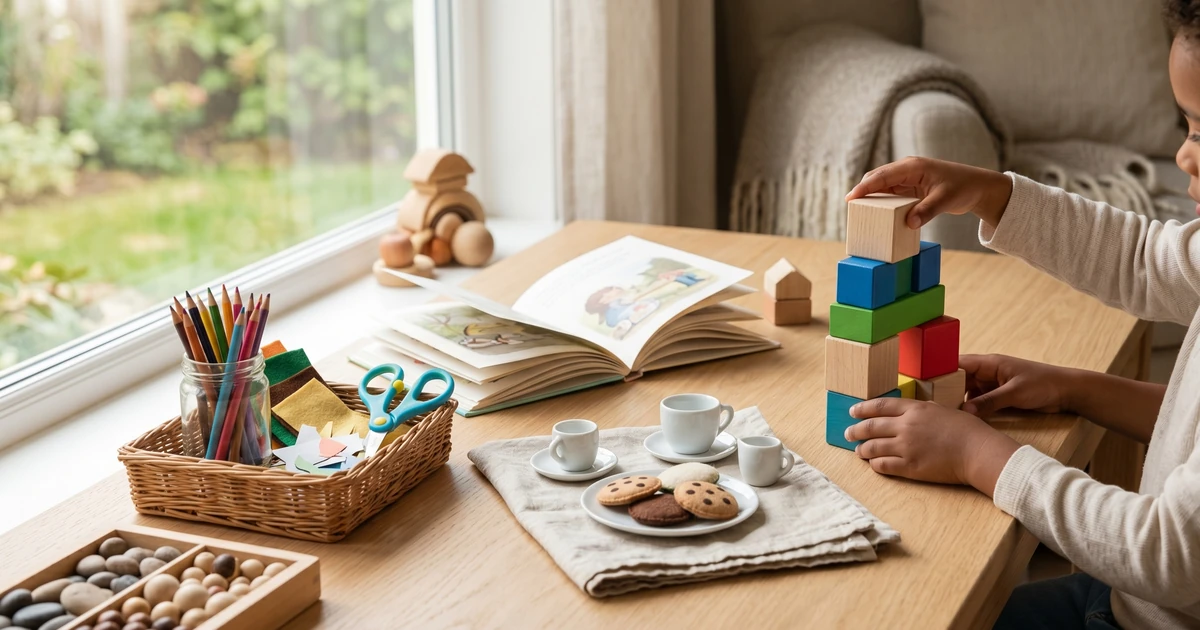
The Ultimate Guide to Play-Based Learning for Children
What I found con
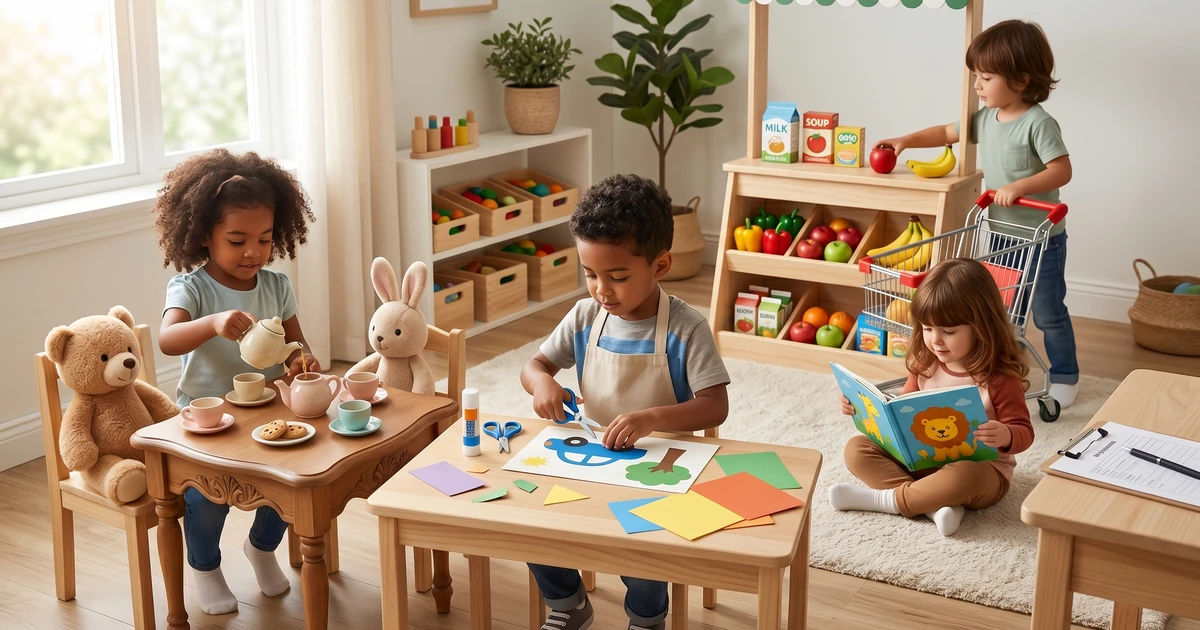
What Is Play Based Assessment? A Comprehensive Overview
Play based assessment is one of those terms you hear thrown around in early childhood education circles, but rarely gets the detailed explanation i...
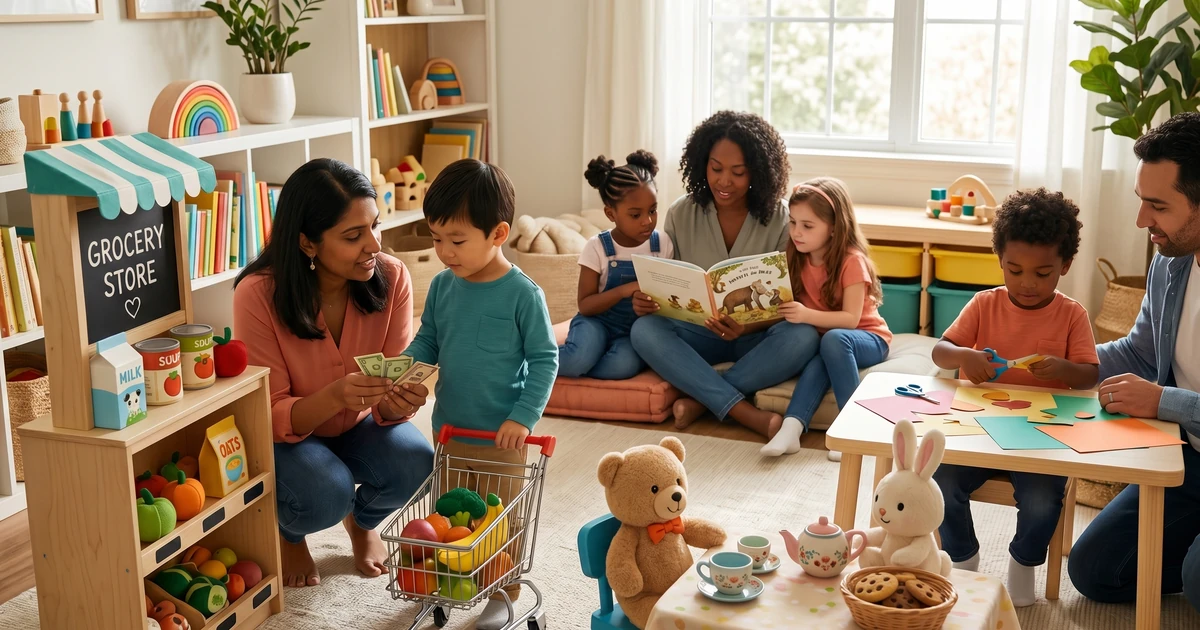
Play Based Learning For Preschoolers: A Parent's Guide
Play based learning for preschoolers is one of those topics where everyone seems to have an opinion, but the research tells a more specific story. ...
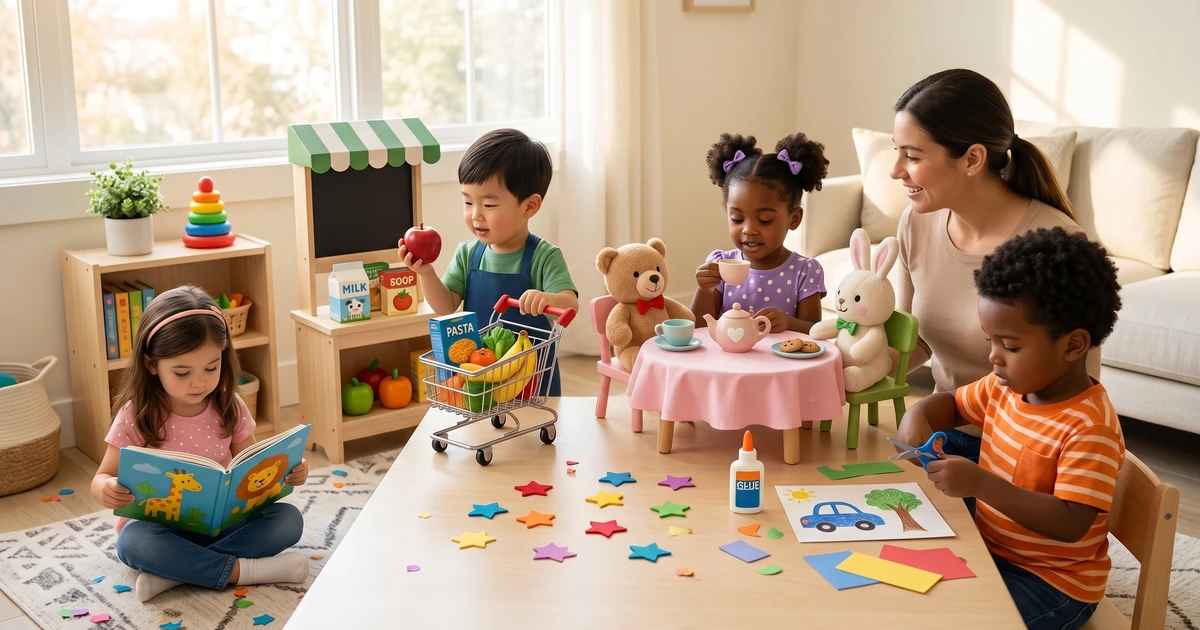
Play Based Preschool Curriculum: Key Elements And Benefits
The term play based preschool curriculum gets used a lot these days, but what does it actually mean in practice? After spending 40+ hours researchi...