
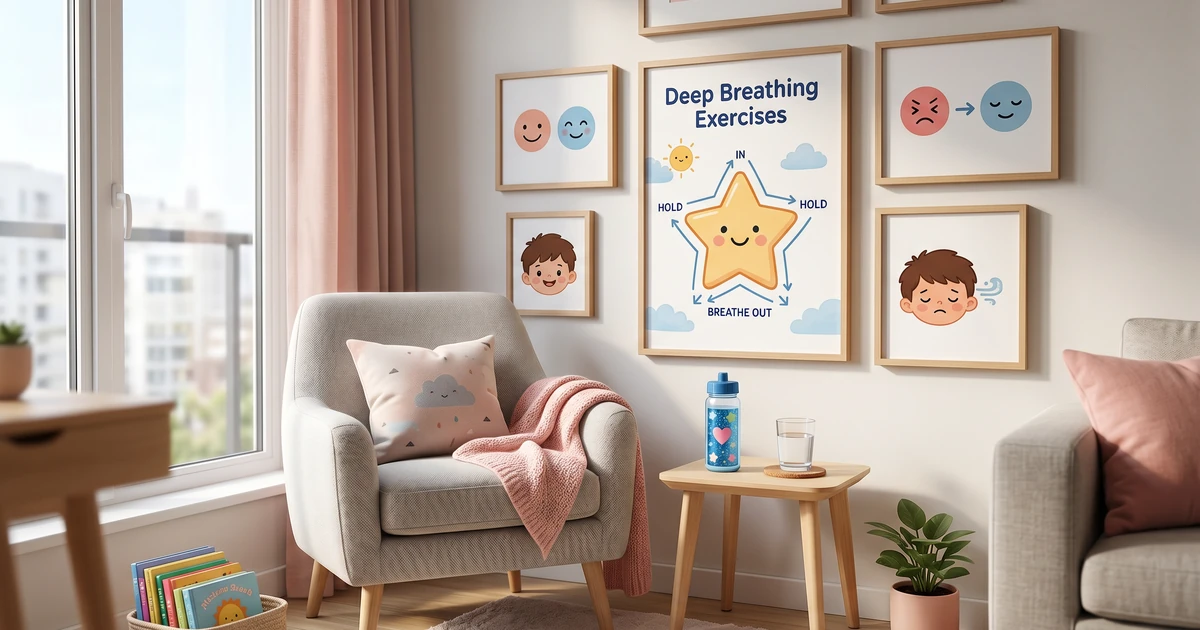
Deep Breathing Exercise Posters for Elementary Classrooms
It's 10:15 on a Tuesday morning. A student knocks over their pencil case, and suddenly the whole class is off-kilter. Another child is crying in the corner
It’s 10:15 on a Tuesday morning. A student knocks over their pencil case, and suddenly the whole class is off-kilter. Another child is crying in the corner. A third is pacing near the door. You’re trying to get through your math lesson, and the emotional temperature in the room has gone from 70 degrees to boiling in under three minutes.

deep breathing posters classroom
Recommended products related to this guide.
Sound familiar?
If you’ve ever stood in front of a classroom wondering how to help kids regulate their emotions before the meltdown fully arrives, you already know the problem. Most children don’t have automatic access to calming strategies. They need visual prompts, repeated modeling, and tools they can use independently, especially in the middle of a busy school day when you can’t stop and coach every single child one-on-one.
That’s exactly where deep breathing posters for the classroom come in. Not as decorations. Not as checkboxes on a social-emotional learning (SEL) checklist. But as genuine, functional tools that help kids remember what to do when their nervous system is in overdrive.
I’ve spent a significant amount of time researching classroom regulation tools, analyzing teacher feedback across hundreds of reviews, and studying what actually moves the needle for kids between ages 4 and 12. What I found might surprise you.
Key Takeaways:
- Deep breathing posters work best when paired with explicit teaching, not just display
- Visual design matters more than most teachers realize, cluttered posters get ignored
- Kids need 3-5 different breathing techniques available, not just one
- Placement is a strategy in itself; location determines whether kids actually use the poster
- A breathing poster is most effective as part of a broader calm-down choices system
!A colorful deep breathing poster displayed in a cozy classroom calm-down corner with soft lighting and a small rug
Why Deep Breathing Actually Works in the Classroom
Deep breathing is the intentional practice of slowing and deepening the breath to activate the parasympathetic nervous system. In plain terms: it tells the brain “we’re safe, slow down.”
This isn’t just feel-good advice. According to the American Psychological Association, controlled breathing techniques reduce cortisol levels and heart rate within minutes, making them one of the fastest self-regulation tools available to children and adults.
For kids, the challenge isn’t whether breathing works. It’s that they forget to do it when they’re dysregulated. That’s the entire purpose of a classroom poster: it acts as a visual interrupt, a reminder that shows up in their environment at the exact moment they need it most.
“Children cannot access calming strategies they haven’t practiced when they’re in a heightened emotional state. Repeated visual cues combined with explicit instruction are what bridge that gap.” - Dr. Stuart Shanker, self-regulation researcher and author of Self-Reg
The takeaway: deep breathing is neurologically sound, and visual reminders are what make it accessible for kids under stress.
What Makes a Deep Breathing Poster Actually Effective
Not all classroom posters are created equal. I’ve analyzed teacher reviews, SEL specialist recommendations, and classroom behavior research, and the same patterns come up again and again. Here’s what separates a poster that collects dust from one that kids actually walk over to and use.
1. Simple, Illustrated Breathing Techniques
Young children need pictures, not paragraphs. A poster that shows a child blowing out birthday candles communicates “slow exhale” instantly. One that says “Breathe in for 4 counts, hold for 7, exhale for 8” is going to lose a six-year-old by the second line.
The most-used techniques in elementary classrooms (based on teacher feedback) include:
-
Belly breathing (hands on stomach, feel it rise and fall)
-
Balloon breathing (arms wide on inhale, wrap around yourself on exhale)
-
Box breathing (4-4-4-4 pattern, usually for older students, grades 3+)
-
Flower and candle (smell the flower, blow out the candle)
-
Snake breath (long slow hissssss exhale)
A good poster includes at least 3 of these with clear visuals for each one.
2. Age-Appropriate Design
A poster designed for kindergarteners should look different from one designed for fourth graders. Bright primary colors, large cartoon characters, and simple words work for K-2. Older students (grades 3-6) tend to respond better to slightly more sophisticated visuals that don’t feel babyish.
Teachers consistently report in reviews that students disengage from materials that feel “too young” for them, even if the strategy itself is appropriate.
3. Readable from a Distance
This sounds obvious, but it matters enormously. A poster that requires a child to walk up and squint defeats the purpose. The font should be large, bold, and clear. The technique names should be readable from at least 6-8 feet away.
4. A Calm Color Palette (or Intentionally Energizing, Depending on Purpose)
Blues, greens, and soft purples are consistently associated with calm in color psychology research. If you’re placing the poster in a designated calm-down corner, those tones reinforce the environment. That said, some teachers use warmer, brighter posters as attention anchors during whole-class regulation moments, which is a valid approach too.
The takeaway: design is a functional decision, not just an aesthetic one.
How to Introduce Deep Breathing Posters (So Kids Actually Use Them)
Here’s where most teachers lose the value of a great poster: they hang it up and expect students to start using it. That’s not how it works.
Step 1: Teach Each Technique as a Whole Class
Before the poster goes up, practice every breathing technique on it together. Do it standing up, sitting down, lying on the floor. Make it fun. Do snake breath until someone giggles. That’s the point.
Step 2: Name the Techniques Consistently
Whatever names are on your poster, use those exact same words every time. “Let’s try balloon breathing” means something to a child if they’ve practiced it. Consistency between your language and the poster’s language is what makes the visual click.
Step 3: Reference the Poster During Calm Moments First
Don’t introduce the poster during a crisis. Walk over to it during morning meeting. Point to a technique and say, “Who remembers how to do this one?” Build the association between the poster and calm, accessible practice, not just emergencies.
Step 4: Give Students Permission to Use It Independently
This is huge. Children need explicit permission to leave their seat and go to the calm-down corner or point to the poster without asking. Build that into your classroom expectations. Otherwise, a dysregulated child won’t ask permission in the moment, so they won’t use it at all.
Step 5: Revisit and Practice Weekly
According to CASEL (Collaborative for Academic, Social, and Emotional Learning), SEL skills are built through consistent, repeated practice integrated into daily routines, not one-off lessons. A five-minute weekly revisit is more powerful than a 45-minute unit taught once.
The takeaway: the poster is a prop for a practiced skill, not a substitute for teaching it.
Where to Place Deep Breathing Posters in Your Classroom
Placement is a strategy. Here’s a quick comparison of the most common options:
| Placement | Best For | Considerations |
|---|---|---|
| Calm-down corner | Individual self-regulation | Students need permission to go there independently |
| Near the classroom door | Transitions in/out | Highly visible, catches kids when emotionally activated |
| Front of room / whiteboard area | Whole-class regulation | Easy to reference during lessons and morning meetings |
| At student eye level on a side wall | Independent use | Works well if students can see it from their seats |
| On a tabletop display stand | Small group / reading areas | Portable, flexible placement |
Most teachers who report the highest usage have the poster in two locations: one in the calm-down corner and one at the front of the room. That redundancy matters. A child who’s upset often can’t walk across the room, but they can glance up.
The takeaway: a poster no one can see from their seat is a poster no one will use.
Comparing Deep Breathing Poster Options: What to Look For
If you’re deciding between printable and pre-made options, here’s a practical breakdown:
| Feature | Printable Posters | Store-Bought Laminated | Digital Display |
|---|---|---|---|
| Cost | $0-$5 | $8-$20 | Included in subscription tools |
| Customization | High (can choose size, color) | Low | Medium |
| Durability | Low (needs laminating) | High | N/A |
| Age-appropriateness | Varies by designer | Varies by brand | Varies |
| Setup time | 10-30 minutes | Minimal | Requires device/screen |
| Best for | Budget-conscious, specific needs | Long-term classroom staple | Tech-forward classrooms |
Pro Tip: Print your posters at 18x24 inches if your school printer allows it, or use a local print shop. A poster that’s too small (letter-size) rarely gets seen from more than 3 feet away.
How Deep Breathing Posters Fit Into a Broader Calm-Down System
A breathing poster works best as one piece of a larger toolkit. On its own, it addresses the “how to calm down” question, but kids also benefit from understanding when to use it, what else they can do, and how to ask for help when breathing isn’t enough.
This is what a calm-down choices system provides. It gives students a menu of regulation strategies, breathing being one of the most accessible, alongside movement breaks, fidget tools, quiet space, and more. When kids have a range of options and can choose what works for their body, they take more ownership of the process.
I’ve put together a much deeper look at how all of this fits together. If you want to build a complete, research-backed regulation system for your classroom, the The Complete Guide to Calm Down Choices: Strategies for Emotional Regulation covers everything from setting up your calm-down corner to teaching kids to self-identify when they need a break.
You might also find these helpful:
-
Calm Down Choices Free Printable: Downloadable Visuals for Kids if you want ready-to-use visuals you can print today
-
How to Teach Calm Down Choices to Preschool Students if you’re working with younger learners who need even simpler approaches
-
Calm Down Choices for Adult Anxiety: What Works Best because, honestly, these strategies work for the adults in the room too
FAQ: Deep Breathing Posters in the Classroom
Q: At what age can children start using deep breathing posters independently?
Most children can begin recognizing and following simple illustrated breathing techniques by age 4-5, provided the visuals are clear and the techniques have been modeled repeatedly. Independent use (meaning a child chooses to use the poster without prompting) typically develops between ages 5 and 7, after consistent practice. Children with sensory processing differences or anxiety may benefit from additional one-on-one coaching before using the poster independently.
Q: How many breathing techniques should a classroom poster include?
Research and teacher feedback consistently point to 3-5 techniques as the sweet spot. Fewer than 3 limits options for kids who don’t connect with one particular method. More than 6 can feel overwhelming and makes the poster harder to read quickly. For PreK-K, 3 techniques with large, simple illustrations is ideal. For grades 2-5, 4-5 techniques with brief labels works well.
Q: My students ignore the calm-down corner entirely. What am I doing wrong?
This is one of the most common frustrations teachers report. Usually it comes down to three things. First, the corner hasn’t been explicitly taught and practiced during calm moments, so kids don’t think of it when they’re upset. Second, students may not feel they have genuine permission to go there without asking. Third, the space may not feel private or safe enough. Try doing a “tour” of the calm-down corner during morning meeting, let each student spend two minutes in it during a low-stakes moment, and clarify your expectations about when and how to use it.
Q: Should deep breathing posters include words, pictures, or both?
Both, almost always. Pictures carry the technique for non-readers and for children who are too dysregulated to read. Words reinforce the technique name and support literacy simultaneously. The hierarchy should be: picture first, big and clear, with the technique name in a simple, bold font. Avoid paragraphs of instructions on a regulation poster.
Q: How do I handle students who refuse to use the calm-down tools at all?
Refusal is usually either a “I don’t know how” problem or an “I don’t feel safe enough to try” problem. Go back to whole-class practice to normalize the tools. Make sure the calm-down area doesn’t feel like a punishment corner. Consider giving reluctant students a specific “job,” like being the class expert on one breathing technique. Choice and autonomy matter: children who feel like they’re being sent away are less likely to use the space than children who choose to go there.
For the complete system, strategies, and printable tools that go beyond the poster, read the full guide: The Complete Guide to Calm Down Choices: Strategies for Emotional Regulation
Recommended Resources & Workbooks
Pair this guide with our hands-on, ready-to-print learning resources.
 Digital Bundle
Learn to Read Program: Levels 1-3
170 sequenced phonics lessons across 199 pages, from first letter sounds to fluent long-vowel reading.
 Digital Learning Bundle
Preschool Learning Bundle
260+ printable worksheets for tracing, ABCs, numbers, shapes, sight words, and kindergarten prep.
 Digital Learning Bundle
Play-Based Learning Bundle for Ages 3-6
230+ play-based learning activities with pretend play, reading, early math, creative arts, and bonus flashcards.
Related Guides & Articles
Explore more of our detailed guides and activities.
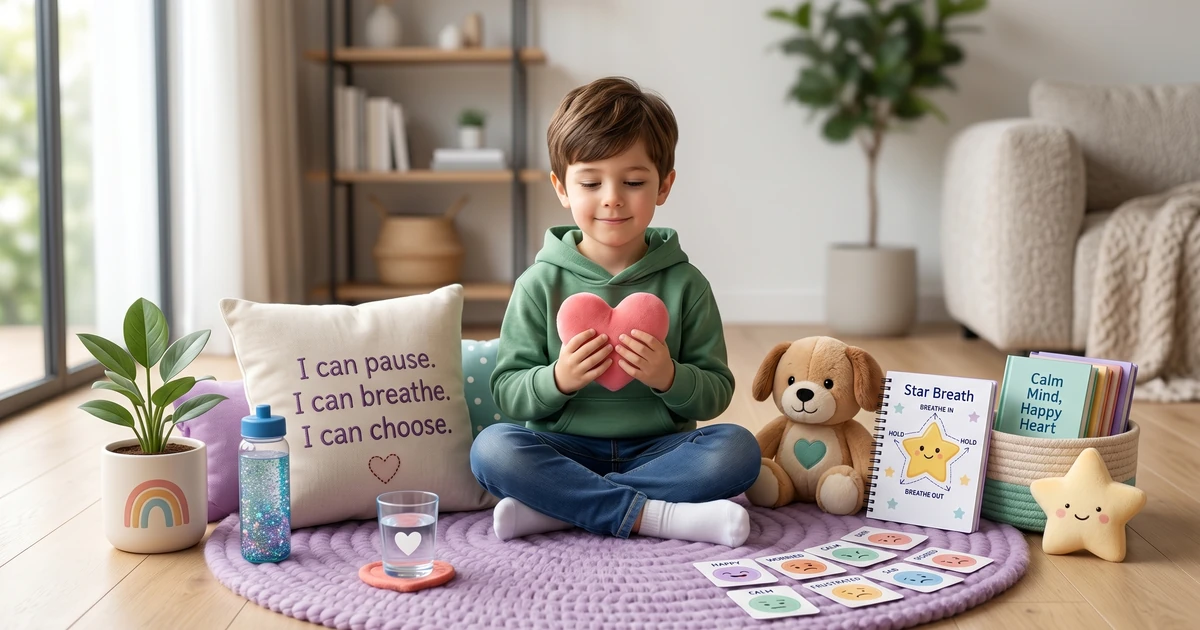
The Complete Guide to Calm Down Choices: Strategies for Kids
Every person, regardless of age, has moments when emotions feel too big to manage. Big feelings, meltdowns, anxiety spirals, and emotional overwhel...
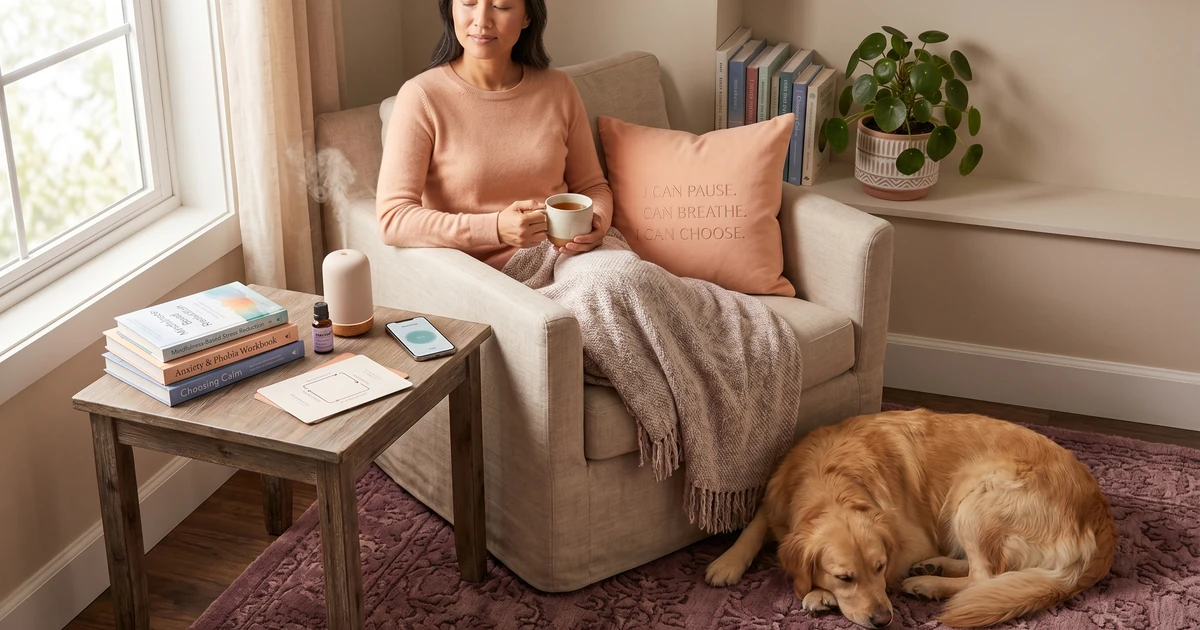
Calm Down Choices for Adult Anxiety: What Works Best
Adults don't always get the same structured emotional support that children receive in schools and therapy programs. Yet the need for calm down cho...
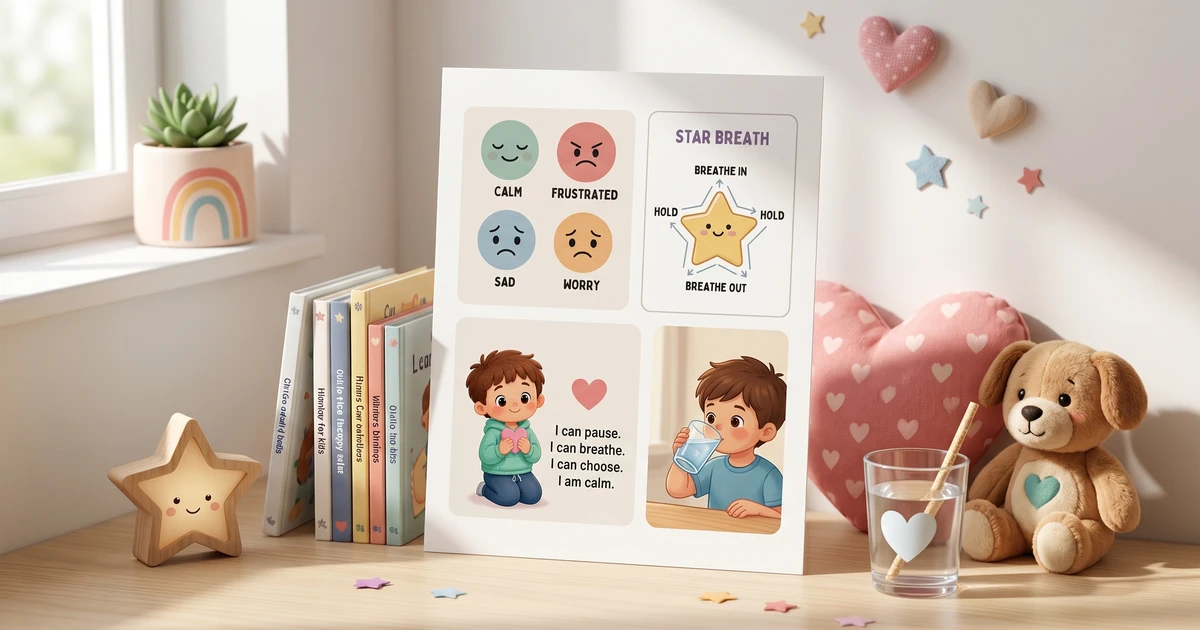
Calm Down Choices Free Printable: Downloadable Visuals for Kids
Finding a calm down choices free printable that actually works in the real world, whether you're a teacher with 25 kids in a classroom or a parent ...
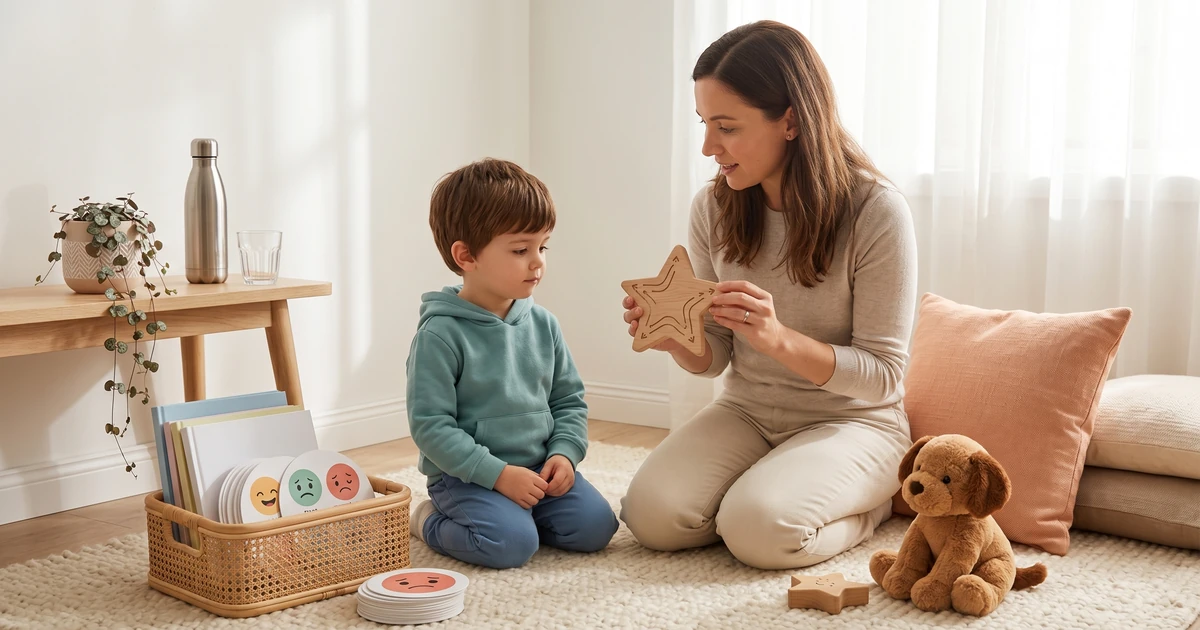
How to Teach Calm Down Choices to Preschool Students
Preschoolers are emotional volcanoes. One moment they're happily building a block tower, and the next they're on the floor, inconsolable because th...