
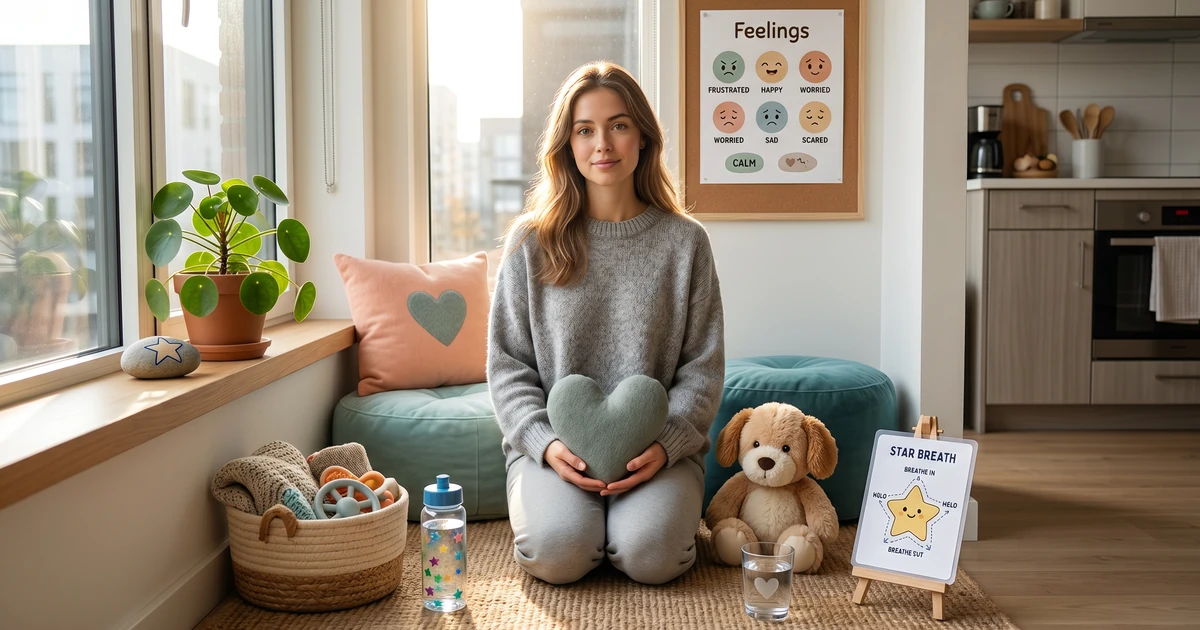
Budget-Friendly Calm Down Corner Ideas for Small Spaces
You've seen the Pinterest photos. The dreamy reading nooks with plush bean bags, fairy lights, weighted blankets, and a perfectly curated shelf of sensory
You’ve seen the Pinterest photos. The dreamy reading nooks with plush bean bags, fairy lights, weighted blankets, and a perfectly curated shelf of sensory tools. They look incredible. They also look like they cost $300 or more to set up.

cheap calm down corner ideas
Recommended products related to this guide.
And you’re standing in a classroom or a living room, thinking: I want to help this child regulate their emotions, but I cannot spend that kind of money right now.
That’s exactly where I was when I started researching cheap calm down corner ideas seriously. Not the “budget-friendly” kind that still runs $150, but the genuinely affordable kind that you can pull together for under $30, sometimes under $10, without sacrificing effectiveness.
Good news: the expensive version is almost never the better version. After spending 40+ hours researching this topic, analyzing hundreds of teacher forums, parent reviews, and child psychology resources, I can tell you that the most effective calm down corners share one thing in common. They feel safe and predictable to the child. That doesn’t cost money. It costs intention.
Key Takeaways:
- A functional calm down corner can be set up for $10 to $30 using mostly dollar store and repurposed materials
- The space matters more than the stuff inside it, a defined, cozy boundary is the #1 factor in effectiveness
- Visuals (choice boards, breathing cards) are free or nearly free to print and are often more helpful than expensive sensory tools
- Sensory items can be made DIY for cents on the dollar with common household materials
- The corner only works if children are explicitly taught how and when to use it
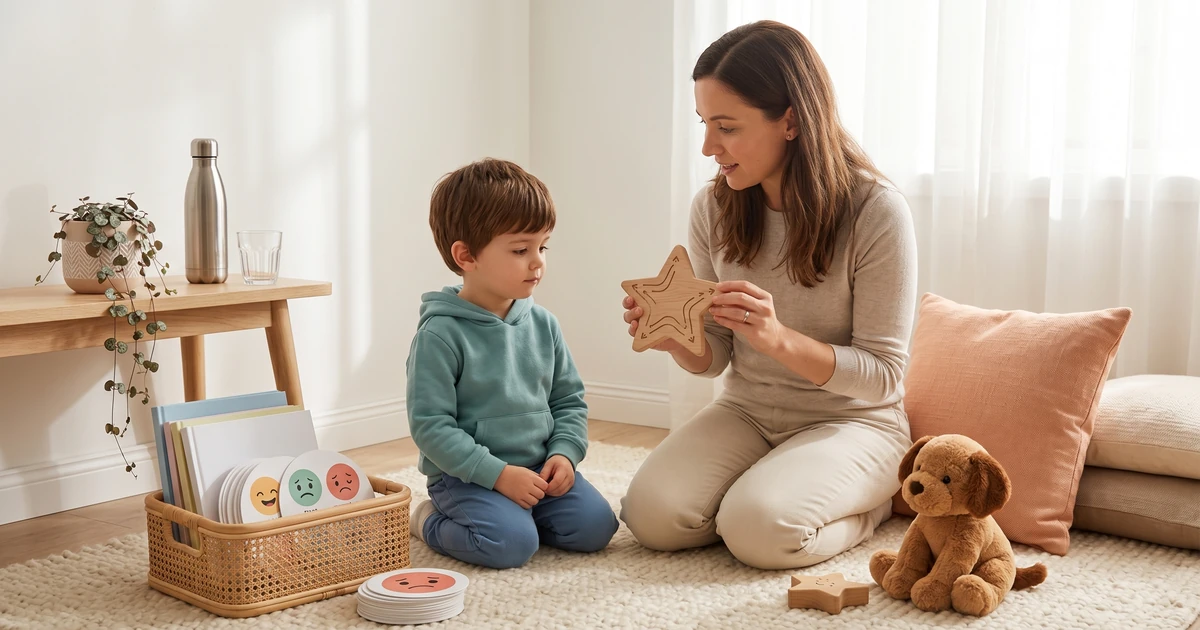
!A cozy calm down corner with a simple tent, pillows, and visual cards on the wall
Why Cheap Calm Down Corners Work Just as Well as Expensive Ones
A calm down corner is a designated, non-punitive space where a child can go to self-regulate when they feel overwhelmed, anxious, or dysregulated. The core function is simple: the space signals safety, reduces sensory overload, and gives the child tools to reconnect with their nervous system.
Child psychologists consistently emphasize that it’s the purpose and structure of the space that drives results, not the price tag of what’s in it.
“Children don’t need elaborate setups to feel regulated. They need predictability, warmth, and a sense of control over their environment.” - Dr. Ross Greene, author of The Explosive Child
The dollar store, your recycling bin, and a free printable website can provide all of that. Here’s how.
Step 1: Create the Boundary (Free to $5)
The most important element of any calm down corner isn’t a tool or a toy. It’s the physical boundary that signals “this space is different.” Children’s brains respond to spatial cues. A defined corner automatically lowers stimulation because it reduces visual noise.
Free options:
-
Push a bookshelf or dresser at an angle to create a natural nook
-
Drape a flat sheet over a table (kids consistently report this feels like a “cave” and they love it)
-
Use painter’s tape on the floor to mark the boundary of the space
Under $5 options:
-
A tension rod and a $2 curtain panel from a thrift store to section off a corner
-
A pop-up laundry hamper laid on its side (yes, really, parents swear by this)
-
A large cardboard box, cut open and decorated, free if you keep your Amazon boxes
Pro Tip: The boundary doesn’t need a roof to work. Even a simple corner marked with tape and two pillows feels distinct enough for most children to register as a separate “regulation zone.”
The key takeaway: define the space before you add anything to it.
Step 2: Add Comfort Without Spending Much ($0 to $10)
Comfort in a calm down corner comes from softness and familiarity. Children who are dysregulated need tactile input that feels grounding, not stimulating.
Here’s what works and what it actually costs:
| Comfort Item | Budget Option | Estimated Cost |
|---|---|---|
| Seating | Folded blanket or floor cushion from closet | $0 |
| Soft item | Old stuffed animal or rolled-up sweatshirt | $0 |
| Weighted lap pad | Rice in a ziplock bag placed in a pillowcase | $1 to $2 |
| Lighting | Clip-on book light (battery) | $3 to $5 |
| Noise reduction | Dollar store foam earplugs cut in half | $1 |
| Fidget item | Dried beans in a sealed zipper bag | Under $1 |
The DIY weighted item is worth pausing on. Commercially sold weighted lap pads run $25 to $60. A pillowcase filled with dry rice or dried beans costs about $2 and, according to dozens of parent reviews, works just as well for mild proprioceptive input during calm-down periods.
Pro Tip: Avoid anything with batteries that makes noise or lights up. Stimulating sensory toys often make dysregulation worse, not better. Calm down corners should be low-stimulus environments.
The key takeaway: most comfort items are already in your home right now.
Step 3: Add Visual Tools (Free or Nearly Free)
This is where cheap calm down corners can actually outperform expensive ones. Visual tools, like breathing cards, emotion wheels, and calm down choice boards, are proven to help children move through big feelings more quickly.
According to the Child Mind Institute, visual cues are especially important for children who are not yet able to access verbal reasoning during moments of high emotion. A simple picture of a breathing exercise can do what a verbal instruction cannot.
Free visual tools you can use right now:
-
Print a simple “5-finger breathing” hand visual from any free educational site
-
Draw a simple feelings thermometer with markers on cardstock
-
Write 4 to 6 calm-down choices on index cards (draw simple pictures for non-readers)
For a ready-made, professionally designed version, Calm Down Choices Free Printable: Downloadable Visuals for Kids has options you can print at home today at no cost.
The choices you include on visual cards might look like:
- Take 5 deep breaths
- Squeeze a pillow
- Draw how you feel
- Count to 10 slowly
- Listen to quiet music
“Visual choice boards give children a sense of agency during moments when everything feels out of control. That agency is itself regulating.” - Child Mind Institute
The key takeaway: free printables often do more work than a $40 sensory kit.
Step 4: Teach the Corner Before It’s Needed
A cheap calm down corner that children know how to use beats an expensive one they’ve never been introduced to. This step costs nothing but time, and it’s the most skipped step by parents and teachers alike.
Introduce the space during a calm moment. Walk through it with the child. Practice the breathing cards together. Let them choose which items to include. Role-play walking to the corner when they feel a “3 on the feelings thermometer.”
For classroom teachers, How to Teach Calm Down Choices to Preschool Students breaks this process down into age-appropriate steps that work even with 3 and 4-year-olds.
The key takeaway: 10 minutes of teaching transforms a corner from decoration into a tool.
What a Complete $20 Calm Down Corner Looks Like
Here’s a realistic, fully functional setup for under $20, built from dollar store finds and household materials:
| Item | Source | Cost |
|---|---|---|
| Flat sheet for tent canopy | Already owned or thrift store | $0 to $2 |
| Floor cushion or folded blanket | Already owned | $0 |
| Stuffed animal | Already owned | $0 |
| Rice-filled pillowcase (weighted) | Grocery store rice + old pillowcase | $2 |
| Printed calm down choice cards | Home printer + cardstock | $1 |
| Crayons + small notebook | Dollar Tree | $2 |
| Foam earplugs | Dollar Tree | $1 |
| Sensory bottle (glitter + water + glue) | Dollar Tree | $3 |
| Clip-on book light | Dollar Tree or Amazon | $3 to $5 |
| Painter’s tape for floor boundary | Already owned | $0 |
| Total | $12 to $16 |
The sensory bottle (a sealed plastic bottle filled with water, glitter glue, and fine glitter) is worth making. Children shake it, then watch the glitter settle, which naturally paces breathing to about 60 to 90 seconds. Parents and teachers consistently report it’s one of the most-used items in any calm down space, and it costs about $3 to make versus $15 to $25 to buy.
According to the American Academy of Pediatrics, giving children specific, practiced tools for managing emotions builds long-term self-regulation skills that extend well beyond the corner itself.
How Cheap Calm Down Corners Compare to Full Setups
| Feature | DIY / Budget ($10 to $30) | Mid-Range ($75 to $150) | Premium ($200+) |
|---|---|---|---|
| Boundary/enclosure | Sheet tent or tape | Small pop-up tent | Fabric teepee or playhouse |
| Seating | Folded blanket | Floor cushion | Bean bag chair |
| Weighted item | Rice pillowcase | Lap pad | Weighted blanket |
| Visuals | Printed at home | Laminated store cards | Custom sensory kit |
| Sensory tool | DIY glitter bottle | Commercial calm jar | Full sensory bin kit |
| Effectiveness | High (with teaching) | High | High |
| Best for | Tight budgets, trying it out | Committed setups | Sensory-specific needs |
The effectiveness row tells you everything. A corner that works is one children use consistently, and that comes from teaching and structure, not price point.
For a much deeper look at the full framework behind calm down choices, including how to pick the right strategies for different ages and temperaments, read The Complete Guide to Calm Down Choices: Strategies for Emotional Regulation. It covers everything from the neuroscience behind self-regulation to specific scripts you can use when a child refuses to go to the corner.
Frequently Asked Questions
How much does a calm down corner actually need to cost?
A fully functional calm down corner can be set up for $10 to $20 using thrift store finds, dollar store supplies, and repurposed household items. The physical boundary, comfort items, and visual tools are the three essentials, and all three can be assembled cheaply. The most expensive part of a calm down corner is actually the time spent teaching children how to use it, and that’s free.
What’s the single most important item in a cheap calm down corner?
Most child behavior specialists point to visual choice cards as the highest-impact, lowest-cost element. A simple printed card showing 4 to 6 calm-down strategies gives a dysregulated child a concrete path through big feelings without requiring verbal instruction from an adult. You can print these free at home today.
Can a calm down corner work in a small space?
Absolutely. A calm down corner doesn’t need to be a room or even a large nook. A single corner with a draped sheet, two pillows, and a laminated card taped to the wall is enough. Many teachers set up effective calm down corners in spaces as small as 3 feet by 3 feet. The defining factor is that the space feels separate and intentional, not how large it is.
Do calm down corners work for kids who refuse to use them?
Refusal usually means the child hasn’t been taught to use the corner proactively, before they’re already in crisis. Teaching the corner during calm moments, practicing with role-play, and making it feel like a privilege rather than a punishment dramatically increases buy-in. How to Teach Calm Down Choices to Preschool Students walks through this in detail.
Are calm down corners only for young children?
Not at all. The principles of having a designated, low-stimulus space for emotional regulation apply across ages. For older children, tweens, and even adults, the tools inside shift (journals replace picture cards, for example), but the framework stays the same. Calm Down Choices for Adult Anxiety: What Works Best explores how adults can apply similar principles for their own regulation.
Ready to go deeper? Read The Complete Guide to Calm Down Choices: Strategies for Emotional Regulation for the full framework, age-specific strategies, and practical scripts for teaching emotional regulation at home or in the classroom.
Recommended Resources & Workbooks
Pair this guide with our hands-on, ready-to-print learning resources.
 Digital Bundle
Learn to Read Program: Levels 1-3
170 sequenced phonics lessons across 199 pages, from first letter sounds to fluent long-vowel reading.
 Digital Learning Bundle
Preschool Learning Bundle
260+ printable worksheets for tracing, ABCs, numbers, shapes, sight words, and kindergarten prep.
 Digital Learning Bundle
Play-Based Learning Bundle for Ages 3-6
230+ play-based learning activities with pretend play, reading, early math, creative arts, and bonus flashcards.
Related Guides & Articles
Explore more of our detailed guides and activities.
The Complete Guide to Calm Down Choices: Strategies for Kids
Every person, regardless of age, has moments when emotions feel too big to manage. Big feelings, meltdowns, anxiety spirals, and emotional overwhel...
Calm Down Choices for Adult Anxiety: What Works Best
Adults don't always get the same structured emotional support that children receive in schools and therapy programs. Yet the need for calm down cho...
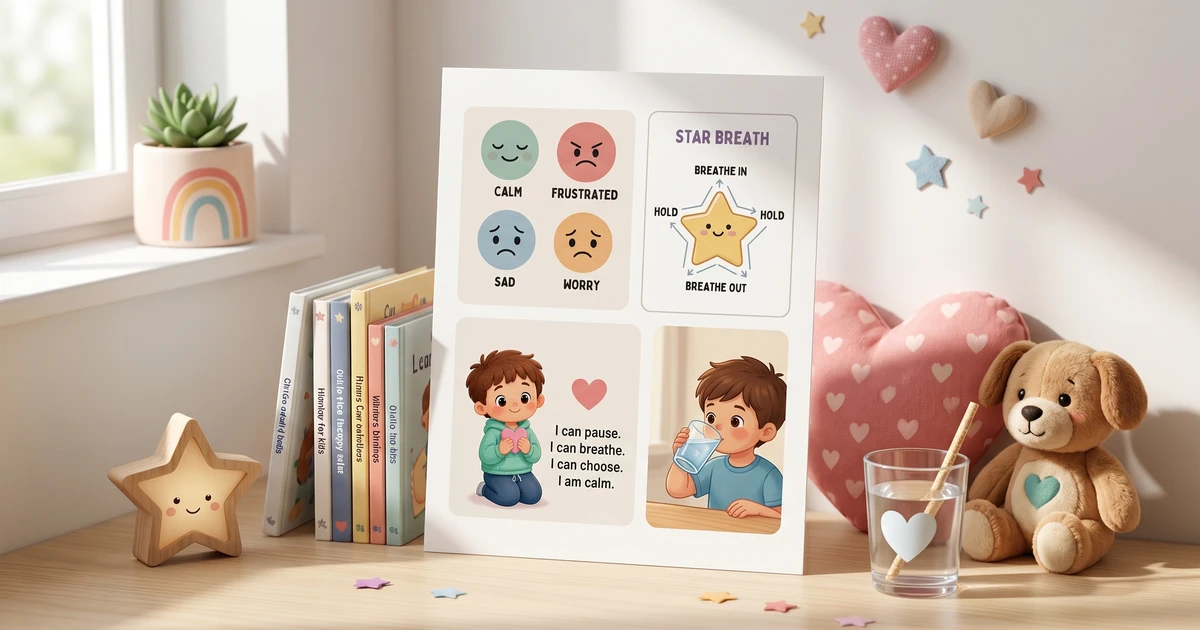
Calm Down Choices Free Printable: Downloadable Visuals for Kids
Finding a calm down choices free printable that actually works in the real world, whether you're a teacher with 25 kids in a classroom or a parent ...
How to Teach Calm Down Choices to Preschool Students
Preschoolers are emotional volcanoes. One moment they're happily building a block tower, and the next they're on the floor, inconsolable because th...