
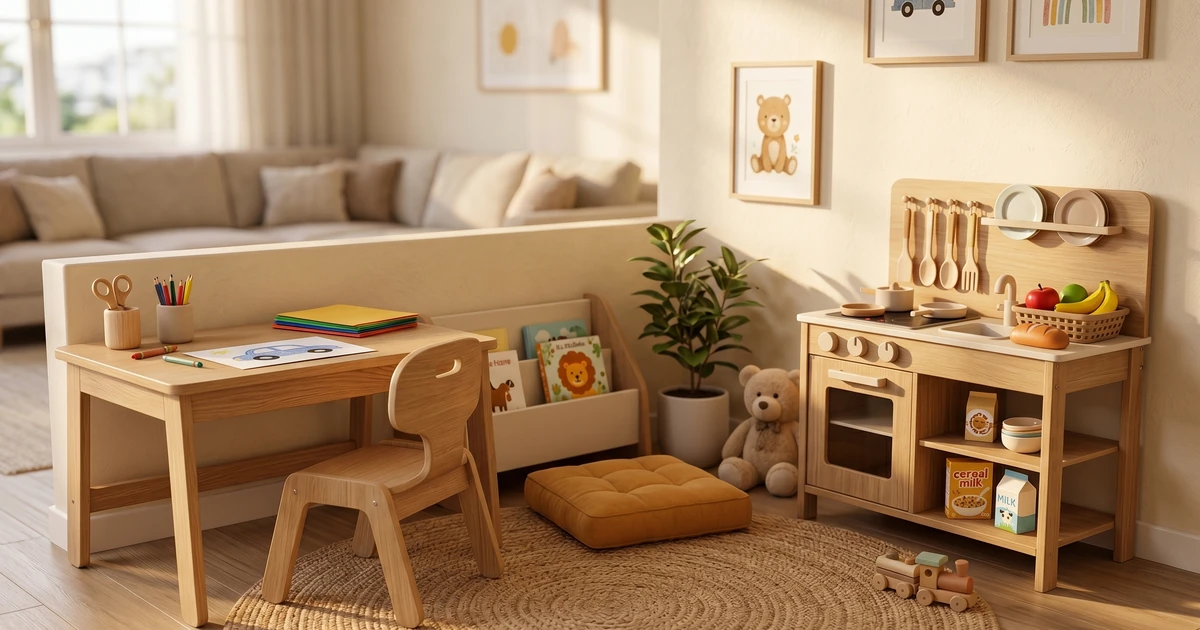
How To Choose The Best Play Furniture For Your Child's Age
You spent $200 on a play table. Your toddler ignored it completely and went straight for the cardboard box it came in

You spent $200 on a play table. Your toddler ignored it completely and went straight for the cardboard box it came in.
Dad & Me Activity Pack
50+ Father's Day activities for dad-and-child quality time: sports, pizza pretend play, math, drawing, cards, coupons, and a bonus busy book.
Or maybe you bought a gorgeous wooden kitchen set your four-year-old loved for three weeks, then abandoned the moment kindergarten started and their interests shifted overnight.
Sound familiar? You’re not doing anything wrong. The problem is almost never the quality of the furniture. It’s the fit. The right play furniture for a 2-year-old is almost useless to a 6-year-old, and vice versa. Getting this wrong doesn’t just waste money. It quietly undermines the kind of play that actually builds skills.
I spent 40+ hours researching child development research, analyzing hundreds of parent reviews, and mapping play furniture options to the developmental stages kids actually move through. Here’s what I found.
Key Takeaways:
- Play furniture that matches your child’s developmental stage gets used. Mismatched furniture collects dust.
- Toddlers (ages 1-3) need low, stable, sensory-rich surfaces. Tall or complex furniture frustrates them.
- Preschoolers (ages 3-5) thrive with furniture that supports pretend play and open-ended creativity.
- School-age kids (ages 5-8) need flexible, multi-use setups that adapt to changing interests.
- Spending more doesn’t guarantee better fit. A $40 table at the right stage beats a $300 set at the wrong one.
- Longevity matters: furniture that grows with your child (adjustable height, modular design) offers the best long-term value.
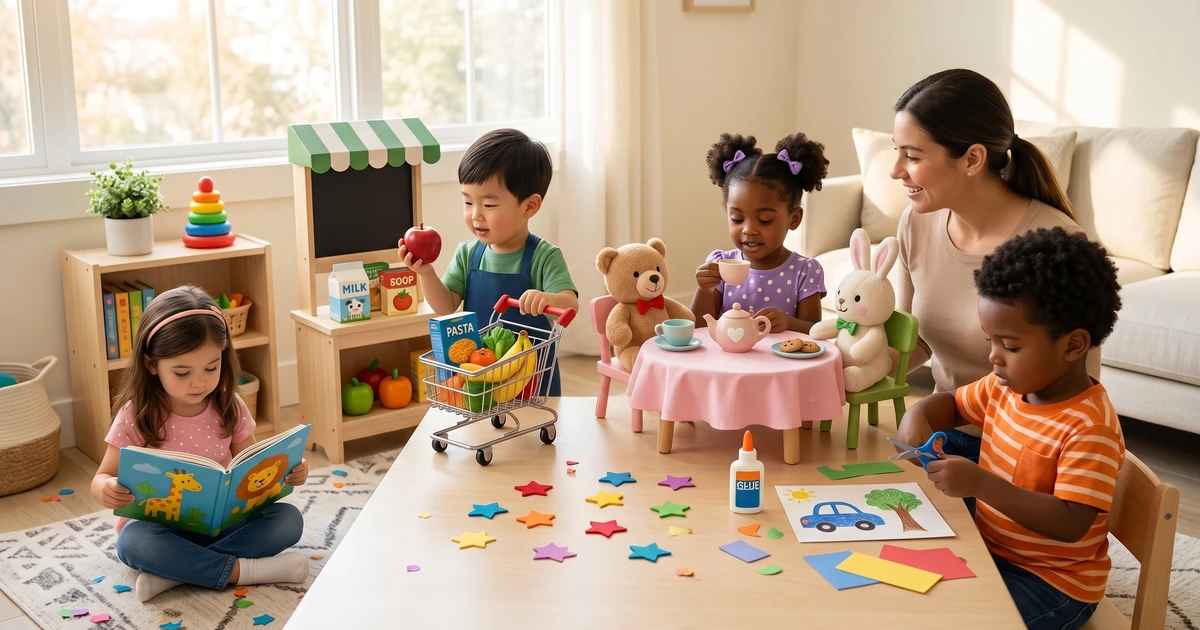
!A child playing at an age-appropriate wooden play table
Why “Age-Appropriate” Actually Matters More Than You Think
Age-appropriate play furniture refers to furniture sized, structured, and designed to match a child’s physical dimensions, motor skill level, and cognitive stage at a given age range.
This isn’t just about safety, though that matters too. It’s about play quality.
A toddler sitting at a table that’s too high can’t use their arms properly. A six-year-old hunched over a tiny play table gets frustrated and quits. Neither child is being difficult. The environment is just working against them.
“Children are more likely to engage in sustained, creative play when their physical environment matches their current developmental capabilities.” - Dr. Stuart Brown, founder of the National Institute for Play
According to the American Academy of Pediatrics, play is essential to healthy brain development, and the physical spaces children play in directly shape what kinds of play are possible. A sensory-rich, well-sized environment invites exploration. A cluttered, poorly fitted space invites nothing.
The furniture itself is a developmental tool, not just decoration.
Ages 1-3: What Toddlers Actually Need (And What to Avoid)
Toddlers are physically unstable, cognitively concrete, and sensory-driven. Everything they do is about touching, mouthing, climbing, pushing, and figuring out cause and effect.
Play furniture at this stage should:
-
Sit low to the ground (table height around 14-18 inches)
-
Have rounded edges and no pinch points
-
Be stable enough to withstand a 25-pound child leaning on it at full force
-
Support sensory play (water tables, sand tables, activity cubes)
-
Allow movement (things they can push, pull, climb safely)
What to avoid: furniture with lots of small compartments, drawers that require fine motor skills, or anything requiring a child to “stay in one spot” for long. Toddlers don’t do that.
| Furniture Type | Best For Toddlers? | Why |
|---|---|---|
| Sensory/water table | Yes | Supports tactile exploration |
| Low activity cube | Yes | Multiple stimulation in one piece |
| Standard play kitchen | Sometimes | Only if scaled to toddler height |
| Art easel (standard) | No | Too tall, requires too much stability |
| Building table (LEGO) | No | Small parts, cognitive mismatch |
| Soft climbing structure | Yes | Supports gross motor development |
Pro Tip: At this age, the best “furniture” is often the lowest-cost option. A $30 sensory bin table gets more daily use than a $180 wooden kitchen in the 12-24 month window. Save the investment pieces for ages 3 and up.
The single most important factor for toddler furniture: stability first, features second.
Ages 3-5: The Pretend Play Explosion
Something shifts around age 3. Kids stop just manipulating objects and start narrating entire worlds. Suddenly, a wooden kitchen isn’t just a toy. It’s a restaurant, a lab, a store, a hospital.
This is the stage where investing in quality play furniture pays off the most, because kids this age will use a well-chosen piece for 2-3 years straight.
The best play furniture for preschoolers supports:
- Pretend/dramatic play (kitchens, workbenches, market stands)
- Creative output (art tables, easels, light tables)
- Building and construction (properly scaled building tables with storage)
- Social play (furniture sized for 2+ children to use together)
What to Look For at This Stage
| Feature | Why It Matters |
|---|---|
| Table height 18-22 inches | Matches seated preschool posture |
| Open shelving at child height | Promotes independence and tidy-up habits |
| Multi-use surfaces | Supports switching between play types |
| Durable material (solid wood or HDPE) | This age is hard on furniture |
| Neutral/open-ended design | Doesn’t lock kids into one type of play |
The National Association for the Education of Young Children (NAEYC) consistently emphasizes that open-ended materials and spaces produce deeper, longer-lasting play than highly themed or single-purpose toys. This applies directly to furniture. A simple wooden table with open shelving will outlast and outperform a single-function themed set in most homes.
This is also the age where the connection between play furniture and learning becomes impossible to ignore. Play-based learning at the preschool stage isn’t a soft alternative to “real” education. It’s how preschoolers actually build language, problem-solving, and emotional regulation. I go much deeper on this in Play Based Learning For Preschoolers: A Parent’s Guide.
“The quality of the play environment, including furniture and materials, is one of the strongest predictors of play depth and duration in young children.” - NAEYC Position Statement on Developmentally Appropriate Practice
For ages 3-5, open-ended, durable, and correctly sized beats themed and elaborate every time.
Ages 5-8: Flexibility Becomes the Priority
By age five, most kids are in school. Their interests shift faster. One month it’s art, the next it’s Minecraft, the next it’s making slime, and then back to drawing. Play furniture at this stage needs to be flexible enough to serve a moving target.
Here’s what I’ve found consistently works at this stage:
-
Adjustable-height tables that can shift as the child grows (and as activities change)
-
Modular storage systems that can be reconfigured without buying new pieces
-
Art/craft stations with real surface area (kids this age are doing bigger projects)
-
Reading nooks with soft seating that doubles as a calm-down space
What stops working: highly themed furniture (they’ll outgrow the aesthetic within a year), very small-scale pieces they’ve physically grown out of, and single-use items with no flexibility.
Cost Comparison by Age Stage
| Age Stage | Budget Option | Mid-Range | Premium | Best Value Pick |
|---|---|---|---|---|
| 1-3 (Toddler) | $25-$50 sensory table | $80-$120 activity cube | $150-$250 wooden set | Budget/mid-range |
| 3-5 (Preschool) | $60-$90 basic table set | $120-$200 wooden kitchen | $250-$400 solid wood set | Mid-range |
| 5-8 (School-age) | $50-$80 adjustable desk | $100-$180 art station | $200-$350 modular setup | Mid to premium |
Pro Tip: At the 5-8 stage, consider furniture that can transition into a homework station by age 8-9. An adjustable art table today becomes a study desk in two years. That’s a much better investment than something that’s purely play-focused.
Flexibility and adjustability matter more than aesthetics at this stage.
How to Choose Play Furniture That Actually Gets Used
After analyzing what works across thousands of parent reviews, I’ve found the same five criteria come up repeatedly as predictors of whether furniture gets daily use or becomes an expensive storage unit.
What to Look For
| Criteria | Questions to Ask |
|---|---|
| Size fit | Is the table height within 2-4 inches of your child’s elbow height when seated? |
| Stability | Can it handle your child’s full body weight leaning on one corner? |
| Accessibility | Can your child reach and use it independently without help? |
| Open-endedness | Does it support more than one type of play? |
| Longevity | Will this still be usable in 2-3 years? |
One piece I’d point parents toward, especially for the 3-7 range, is the KubbyLab play furniture line. Owners consistently report that the open-ended, adaptable design means kids actually use it across multiple years rather than outgrowing it in one season. It’s not the only option, but it’s one worth knowing about when you’re comparing mid-to-premium pieces.
For a much deeper breakdown of how play furniture connects to curriculum and learning outcomes, Play Based Preschool Curriculum: Key Elements And Benefits is worth reading.
For the Full Guide, Read More
The overview above gives you the framework. But there’s a lot more to unpack: specific product comparisons, how to set up the physical environment for maximum play quality, and how to assess whether your current setup is actually working for your child.
Read the Complete Guide to Play-Based Learning for Children for the full breakdown.
Frequently Asked Questions
What is the best play furniture for a 2-year-old?
For children ages 1-3, the best play furniture is low to the ground (14-18 inch table height), extremely stable, and sensory-focused. Water tables, activity cubes, and soft climbing structures consistently get the most use at this age. Avoid furniture with small compartments or that requires fine motor control, since toddlers aren’t developmentally ready for those yet.
How do I know if my child’s play furniture is the right size?
A simple test: when your child sits at the table with their feet flat on the floor, their elbows should rest comfortably on the table surface without shrugging their shoulders. If they’re reaching up or hunching down, the furniture is the wrong height. Adjustable-height furniture solves this problem for fast-growing kids.
Is expensive play furniture worth it?
It depends on the age and stage. For toddlers (ages 1-3), budget options often perform just as well because the developmental needs are simple. For preschoolers (ages 3-5), mid-to-premium wooden furniture often justifies the cost because kids use it heavily for 2-3 years. For school-age kids, the priority shifts to flexibility and adjustability rather than price.
When should I replace my child’s play furniture?
The clearest signal is sustained disinterest. If furniture that used to get daily use is sitting untouched for more than 3-4 weeks, it’s worth asking whether your child has physically or developmentally outgrown it. Other signals: your child looks physically cramped using it, they keep abandoning it for the floor or other spaces, or they’ve stopped engaging in the type of play the furniture was designed to support.
Does play furniture actually affect learning outcomes?
Research strongly suggests yes. The physical environment shapes what play is possible, and play quality directly affects skill development. According to The Ultimate Guide to Play-Based Learning for Children, environmental design is one of the most actionable levers parents have. For more on how assessment connects to play environment, What Is Play Based Assessment? A Comprehensive Overview breaks this down clearly.
Take the Next Step!
Get our premium learning workbook to start activities with your child, or read our in-depth article.
Recommended Resources & Workbooks
Pair this guide with our hands-on, ready-to-print learning resources.
 Digital Bundle
Learn to Read Program: Levels 1-3
170 sequenced phonics lessons across 199 pages, from first letter sounds to fluent long-vowel reading.
 Digital Learning Bundle
Preschool Learning Bundle
260+ printable worksheets for tracing, ABCs, numbers, shapes, sight words, and kindergarten prep.
 Digital Learning Bundle
Play-Based Learning Bundle for Ages 3-6
230+ play-based learning activities with pretend play, reading, early math, creative arts, and bonus flashcards.
Related Guides & Articles
Explore more of our detailed guides and activities.
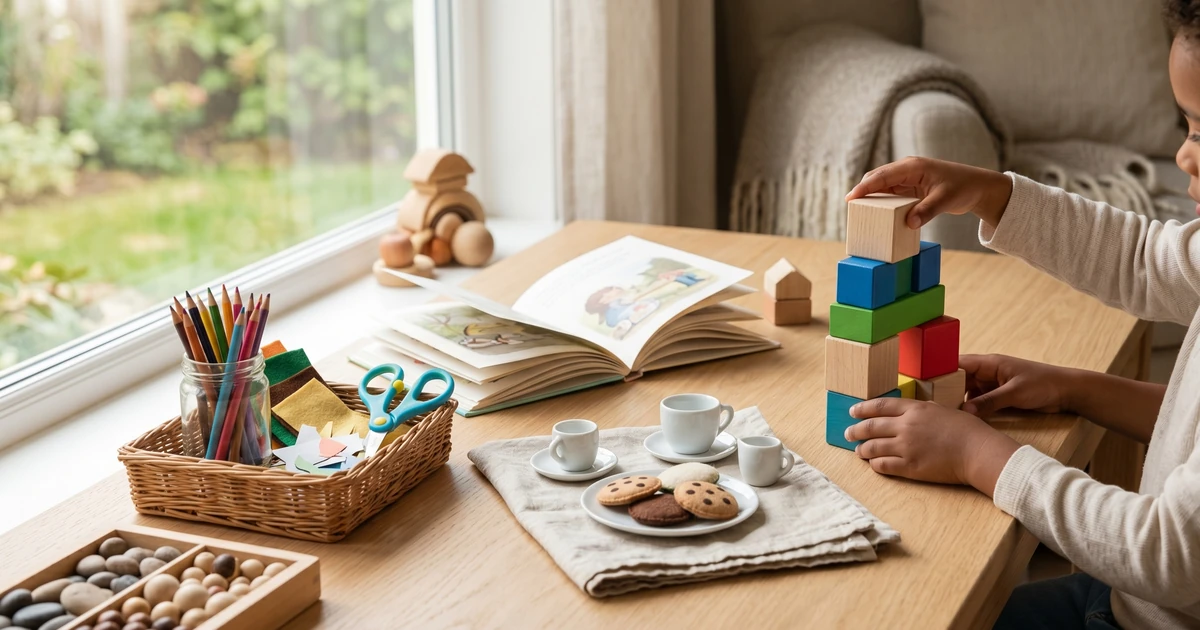
The Ultimate Guide to Play-Based Learning for Children
What I found con
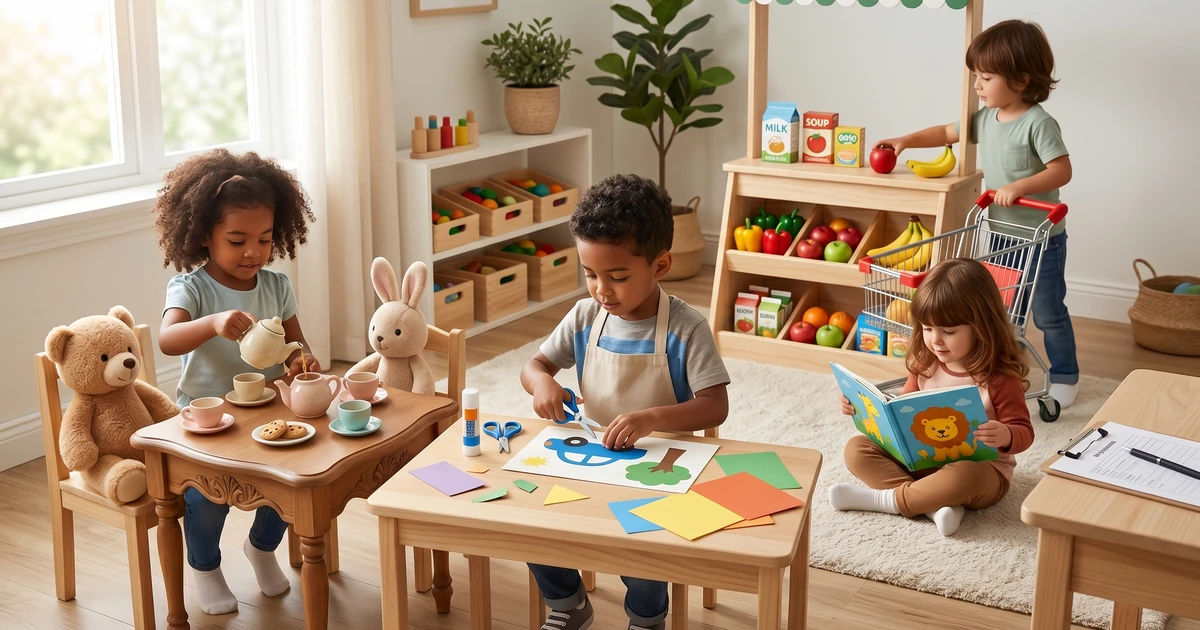
What Is Play Based Assessment? A Comprehensive Overview
Play based assessment is one of those terms you hear thrown around in early childhood education circles, but rarely gets the detailed explanation i...
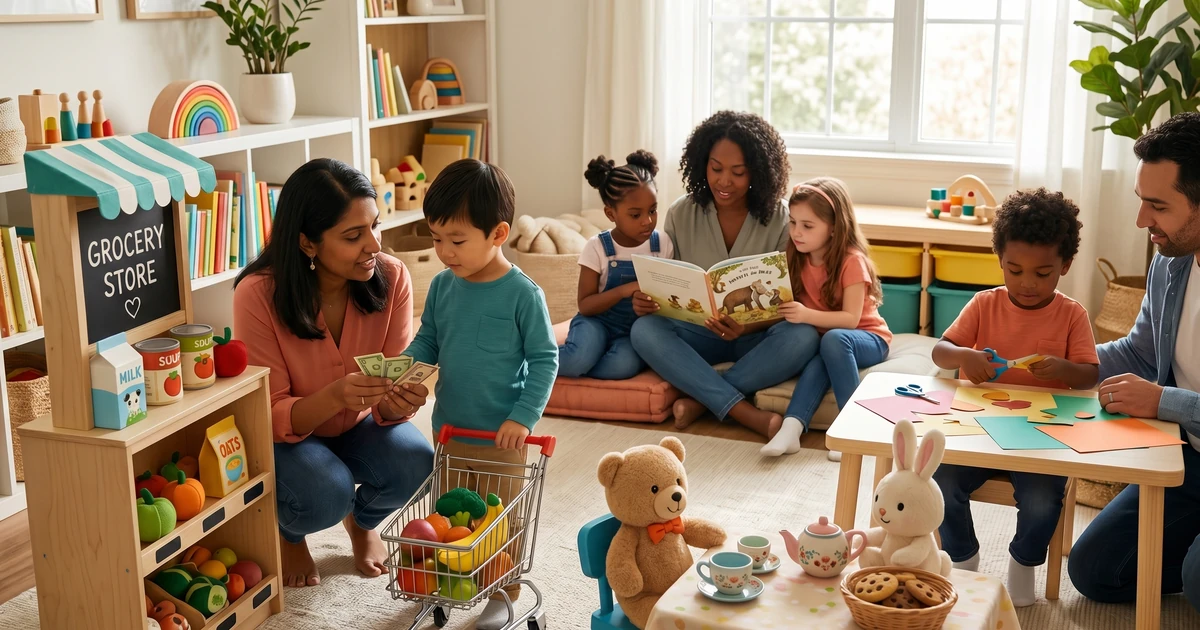
Play Based Learning For Preschoolers: A Parent's Guide
Play based learning for preschoolers is one of those topics where everyone seems to have an opinion, but the research tells a more specific story. ...
Play Based Preschool Curriculum: Key Elements And Benefits
The term play based preschool curriculum gets used a lot these days, but what does it actually mean in practice? After spending 40+ hours researchi...