
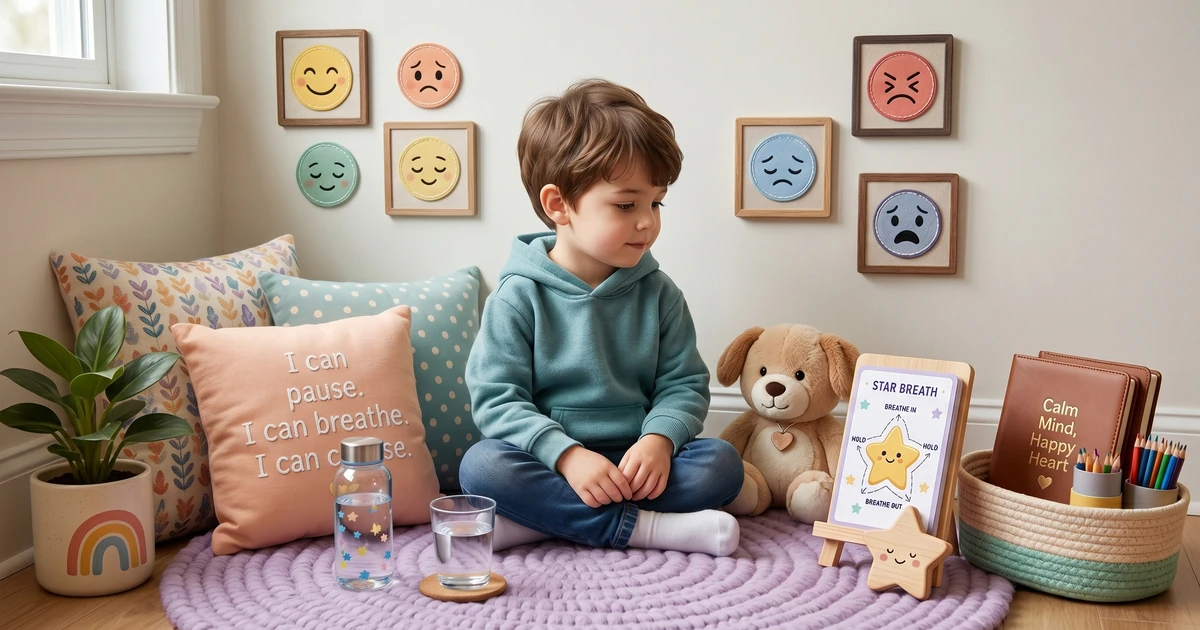
Calm Down Art Therapy Supplies for Emotional Kids
You've probably watched it happen. A child or maybe yourself hits a wall emotionally, and the usual "just take a breath" advice lands flat. The meltdown
By Kubby

art therapy calm down supplies
Recommended products related to this guide.
You’ve probably watched it happen. A child (or maybe yourself) hits a wall emotionally, and the usual “just take a breath” advice lands flat. The meltdown happens anyway. The frustration builds. And you’re left wondering if there’s something more tangible, more hands-on, that could actually help redirect that overwhelming feeling before it spirals.
Art therapy calm down supplies are exactly that: physical tools that give the nervous system something to do while emotions catch up with the body. They’re not magic. But when chosen thoughtfully and used consistently, they work in ways that words alone rarely can.
I’ve spent 40+ hours digging through the research, teacher forums, therapist recommendations, and hundreds of parent reviews to understand what supplies genuinely help, which ones collect dust, and how to build a calm-down kit that actually gets used.
Key Takeaways:
- Art-based calming tools work because they engage both hands and focus simultaneously, interrupting the stress response
- The best art therapy calm down supplies are low-pressure, open-ended, and easy to access during a dysregulated moment
- A calm-down kit doesn’t need to be expensive; $20-40 covers a solid starter set
- Consistency matters more than variety; too many options can overwhelm rather than calm
- These tools work for kids AND adults, though the format differs slightly
!A calm-down corner with art supplies, colored pencils, and a feelings journal on a small wooden table
Why Art Works When Words Don’t
When someone is in emotional distress, the prefrontal cortex (the part of the brain responsible for language, logic, and reasoning) essentially goes offline. Asking a dysregulated child to “use their words” is a bit like asking someone to parallel park during a car chase. The brain isn’t available for that task right now.
Art bypasses that roadblock entirely.
“Creative expression engages the right hemisphere of the brain and the sensory system simultaneously, which is exactly what helps regulate the nervous system during a stress response.” - The American Art Therapy Association
Drawing, coloring, squeezing clay, tearing paper: these are physical, sensory activities. They don’t require verbal articulation. They give the body something rhythmic and focused to do, which gradually brings the nervous system back to baseline.
This is why art therapy calm down supplies are increasingly showing up in school calm-down corners, therapy offices, and homes. They’re not a trend. They’re based on how the brain actually works under stress.
The bottom line: art tools give the body a job when the brain is temporarily out of service.
What Makes a Good Art Therapy Calm Down Supply?
Not every art supply belongs in a calm-down kit. A messy paint set that requires setup, cleanup, and instruction is more likely to escalate frustration than reduce it. The best calm-down art supplies share a few specific qualities.
| Quality | Why It Matters | Examples |
|---|---|---|
| Immediately accessible | No setup removes a barrier during dysregulation | Pre-sharpened colored pencils, crayons |
| Low-mess | Cleanup stress adds to dysregulation | Dry media, playdough, washable markers |
| Open-ended | No “right answer” reduces performance anxiety | Blank paper, sand trays, clay |
| Sensory-rich | Engages hands and touch to regulate the nervous system | Textured paper, kinetic sand, moldable wax |
| Portable | Can be used in multiple environments | Pencil case kit, travel-size supplies |
Pro Tip: The best calm-down art kit is one that requires zero adult setup. Pre-arrange supplies in a single container so a dysregulated child (or adult) can grab and go without asking for help.
The right supplies are boring to set up and interesting to use.
The Core Supplies Worth Having
After analyzing hundreds of reviews and cross-referencing recommendations from occupational therapists and licensed counselors, these are the categories that consistently deliver results.
1. Coloring Books and Mandalas
Repetitive, structured coloring is one of the most well-documented calming activities. The predictability of staying within lines gives the brain just enough structure to focus without demanding creative output.
According to research compiled by the American Psychological Association, structured coloring (particularly geometric patterns) reduces anxiety markers in both children and adults.
Mandala coloring books are especially effective because the circular, symmetrical patterns are visually satisfying and require gentle sustained attention without any decision-making about composition.
What owners consistently report: Even kids who resist sitting still will often spend 10-15 uninterrupted minutes coloring a mandala when they’re given the choice freely, without prompting.
2. Modeling Clay and Playdough
Tactile manipulation is one of the most direct ways to engage the parasympathetic nervous system. Squeezing, rolling, flattening, and pulling clay gives the hands a repetitive sensory task.
The key difference between therapeutic and regular playdough:
| Type | Scent | Texture | Best For |
|---|---|---|---|
| Scented playdough | Lavender, vanilla | Soft, pliable | Younger kids, sensory seekers |
| Theraputty | Unscented | Firm resistance | Hand strength + regulation |
| Air-dry clay | Neutral | Slightly grainy | Older kids, teens, adults |
| Kinetic sand | Neutral | Loose, moldable | Tactile calming, all ages |
3. Feelings Journals and Drawing Prompts
A blank page can feel overwhelming when emotions are high. Structured prompts work better. Something as simple as “draw what you’re feeling as a weather pattern” or “color in where you feel this in your body” gives the child a starting point without requiring verbal explanation.
Reviews from teachers and school counselors consistently note that prompted journals see far more use than blank sketchbooks in calm-down corners.
4. Watercolor Palettes (the small, dry kind)
Dry watercolor pans are one of the most underrated calm-down tools. They’re nearly zero-mess, require minimal setup (just a cup of water and a brush), and produce results that feel satisfying and beautiful almost immediately.
Watching colors bleed and blend is inherently calming. The process is slow, gentle, and unpredictable in a pleasant way.
What to avoid: Liquid watercolors in bottles, tube acrylics, or anything that requires significant setup. The friction of preparation kills the moment.
5. Textured Paper and Collage Materials
Tearing paper, sorting colors, arranging pieces: collage is one of the most therapeutic activities in formal art therapy settings precisely because it’s constructive rather than destructive, even when the urge is to rip something.
Keeping a small bin with pre-torn magazine pages, colored tissue paper, and a glue stick creates an instant collage station with zero prep.
“Collage allows clients to externalize internal states without requiring artistic skill. The act of selecting, arranging, and adhering has a beginning, middle, and end, which is inherently regulating.” - Common theme in art therapy practitioner literature
A complete calm-down art kit doesn’t need to cost more than $30-40 for a solid, sustainable setup.
Building a Calm-Down Art Kit: Step by Step
Step 1: Choose a Container
Pick something with a lid that closes easily. A clear pencil case, a small tackle box, or a fabric pouch all work. The visual accessibility matters: kids need to see the supplies, not dig through a drawer.
Step 2: Stock the Basics First
Start with three categories only:
-
Coloring (colored pencils or crayons, one small coloring book or printed pages)
-
Tactile (small playdough tub or theraputty)
-
Drawing (blank paper or a feelings journal with prompts)
Step 3: Add One Sensory Upgrade
Choose one item that’s specifically sensory: a scented marker set, a textured paper pad, or a small watercolor kit.
Step 4: Place It Strategically
The kit should live in the calm-down corner, not in a general art supply bin. Location signals purpose. Knowing where to go is part of what makes calm-down strategies work consistently.
Step 5: Introduce It During a Calm Moment
Dysregulation is not the time to introduce a new tool. Walk through the kit during a relaxed moment so the child knows what’s available before they need it.
A kit that’s introduced calmly gets used during storms.
How Much Does a Starter Art Therapy Calm Down Kit Cost?
| Item | Price Range | Notes |
|---|---|---|
| Colored pencils (24-count) | $5-10 | Pre-sharpened, quality brand recommended |
| Small coloring book (mandalas) | $4-8 | Or print free pages |
| Playdough (4-pack) | $5-8 | Standard packs work fine |
| Watercolor pan set | $6-12 | Small travel size preferred |
| Feelings journal with prompts | $8-14 | Or DIY with printed pages |
| Container/pouch | $3-8 | Clear preferred |
| Total | $31-60 | Most people start around $35 |
Pro Tip: You can build a genuinely effective kit for under $40 using basic supplies from any craft or dollar store. Price doesn’t determine effectiveness. Accessibility and consistency do.
Art Therapy Calm Down Supplies vs. Other Calming Tools
| Tool Type | Sensory Input | Best For | Age Range | Setup Required |
|---|---|---|---|---|
| Art therapy supplies | Visual + tactile | Emotional expression, focus | 3+ | Low |
| Fidget toys | Tactile only | Sensory seeking, ADHD | 4+ | None |
| Breathing cards | Visual + cognitive | Mild anxiety, self-awareness | 5+ | None |
| Weighted blankets | Proprioceptive | Overwhelm, sensory needs | 3+ | None |
| Sand/water play | Tactile + visual | Deep dysregulation | 2+ | Moderate |
| Music + movement | Auditory + movement | High energy dysregulation | All | Low |
Art therapy calm down supplies sit in a unique position because they’re the only category that also creates an artifact. The child ends up with something they made, which adds a layer of pride, completion, and identity that other tools don’t provide.
For a deeper look at building a complete calm-down strategy that combines art tools with other regulation approaches, the Complete Guide to Calm Down Choices: Strategies for Emotional Regulation covers everything in one place.
You might also find these useful:
-
Calm Down Choices Free Printable: Downloadable Visuals for Kids for coloring and feeling chart pages you can print today
-
How to Teach Calm Down Choices to Preschool Students if you’re setting up a classroom calm-down corner
-
Calm Down Choices for Adult Anxiety: What Works Best if this is for yourself, not a child
Frequently Asked Questions
Do art therapy calm down supplies actually work, or is it just distraction?
It’s a fair question. The short answer is: it’s both, and that’s okay. Distraction is a legitimate regulation strategy, particularly for children who aren’t yet developmentally ready for cognitive reframing. But art-based tools go a step further because they engage the sensory and motor systems, which directly influences the nervous system’s stress response. Distraction redirects attention. Art therapy redirects the body.
What’s the right age to start using art therapy supplies for calming?
Most children can start benefiting from simple art-based calming tools around age 3. At that age, crayons, playdough, and finger painting are all appropriate. By 5-6, structured coloring, stamping, and simple collage become accessible. Teens and adults respond particularly well to watercolors, journaling, and open-ended drawing. The format changes with age, but the underlying mechanism stays the same.
My child refuses to use the calm-down corner. How do I get them to try the art supplies?
Introduce the kit during a completely calm, playful moment, not during or after a meltdown. Let the child help stock it, choose the coloring book, pick the playdough scent. When they have ownership over the kit, they’re far more likely to reach for it independently. Also, try using it yourself nearby. Modeling is one of the most effective teaching tools, especially for younger children.
Can art therapy calm down supplies replace professional therapy?
No, and they’re not designed to. They’re practical, everyday tools for self-regulation, the kind of skills that sit alongside (and often support) therapeutic work. For children with significant anxiety, trauma, or sensory processing challenges, working with a licensed therapist or occupational therapist will always be more effective than any supply kit. Think of these tools as daily maintenance, not treatment.
How many supplies should a calm-down kit have?
Fewer than you think. Three to five items is ideal. Too many choices can overwhelm a dysregulated child, which defeats the purpose. Start minimal, observe what gets used, and only add something new when the current supply is being used consistently.
Ready to go deeper on building a complete emotional regulation toolkit? Read the Complete Guide to Calm Down Choices: Strategies for Emotional Regulation for the full picture.
Recommended Resources & Workbooks
Pair this guide with our hands-on, ready-to-print learning resources.
 Digital Bundle
Learn to Read Program: Levels 1-3
170 sequenced phonics lessons across 199 pages, from first letter sounds to fluent long-vowel reading.
 Digital Learning Bundle
Preschool Learning Bundle
260+ printable worksheets for tracing, ABCs, numbers, shapes, sight words, and kindergarten prep.
 Digital Learning Bundle
Play-Based Learning Bundle for Ages 3-6
230+ play-based learning activities with pretend play, reading, early math, creative arts, and bonus flashcards.
Related Guides & Articles
Explore more of our detailed guides and activities.
The Complete Guide to Calm Down Choices: Strategies for Kids
Every person, regardless of age, has moments when emotions feel too big to manage. Big feelings, meltdowns, anxiety spirals, and emotional overwhel...
Calm Down Choices for Adult Anxiety: What Works Best
Adults don't always get the same structured emotional support that children receive in schools and therapy programs. Yet the need for calm down cho...
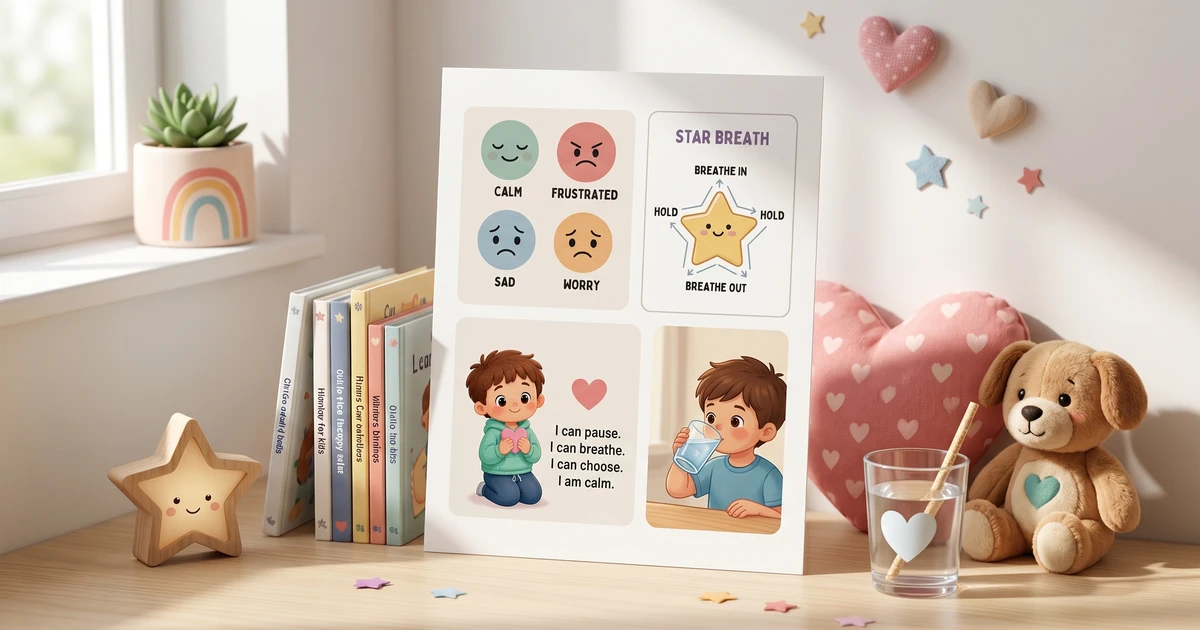
Calm Down Choices Free Printable: Downloadable Visuals for Kids
Finding a calm down choices free printable that actually works in the real world, whether you're a teacher with 25 kids in a classroom or a parent ...
How to Teach Calm Down Choices to Preschool Students
Preschoolers are emotional volcanoes. One moment they're happily building a block tower, and the next they're on the floor, inconsolable because th...