
Why 'educational' YouTube videos aren't teaching your child to read
Your 3-year-old can sing the entire alphabet song from memory. They recognize the "McDonald's M" on every drive-through you pass. They light up when their

Your 3-year-old can sing the entire alphabet song from memory. They recognize the “McDonald’s M” on every drive-through you pass. They light up when their favorite YouTube character points to the letter A and says “Apple!” And yet, when you sit down with a simple picture book and ask them to sound out a word, they stare at the page like it’s written in another language.
DISCOVERY ACTIVITY WORKBOOKPhonics Reading Lesson Guide Level 1
67 pages with 60 short phonics lessons covering all short vowels, V-C patterns, CVC words, and early sentences.
Sound familiar? You’re not alone, and you’re not doing anything wrong.
Millions of parents put genuine effort into their child’s early literacy by cueing up educational videos, only to realize months later that something isn’t clicking. The videos are colorful and engaging. The songs are catchy. The screen time feels productive. But actual reading progress? Minimal.
I spent a significant amount of time researching early childhood literacy development, analyzing what reading researchers and early childhood educators consistently say about screen-based learning, and digging through the real experiences of parents in preschool learning communities. What I found surprised me, and it changed how I think about preschool literacy entirely.
Key Takeaways:
- Educational YouTube teaches letter recognition, not the mechanics of reading
- Passive watching doesn’t build phonemic awareness the way hands-on practice does
- Children ages 3-5 need active, tactile engagement to wire reading skills into the brain
- Screen time can supplement learning but can’t replace guided, interactive practice
- Printable worksheets, read-alouds, and physical letter play fill the gaps that video leaves behind
!A preschooler sitting at a table doing letter tracing worksheets with crayons and a pencil
The Real Problem: What Educational YouTube Actually Teaches
Letter recognition is not the same as reading. That distinction is the key to understanding why your child can sing “now I know my ABCs” and still struggle to decode a three-letter word.
Most popular preschool YouTube channels, including the genuinely well-made ones, are excellent at one thing: association. They teach children to associate the shape of a letter with its name and sometimes its sound. That’s useful. But reading requires something much deeper called phonemic awareness, which is the ability to hear, identify, and manipulate individual sounds in spoken words.
According to the National Reading Panel, phonemic awareness and phonics instruction are two of the five essential components of reading. Both require active engagement, not passive consumption.
When your child watches a video, their brain is receiving information. But when they trace the letter B with their finger, blend the sounds “b-a-t” out loud while pointing to pictures, or sort picture cards by beginning sound, their brain is processing and encoding that information in a completely different way.
The gap isn’t the content of the videos. It’s the passivity of watching them.
Why Preschooler Brains Need Hands-On Practice
Children ages 3 to 5 are in a critical window for literacy development, but their brains learn differently from older children. They need multisensory input, meaning they learn best when they can see, hear, touch, and do simultaneously.
“Children who engage in active, hands-on literacy activities in preschool show significantly stronger reading outcomes in kindergarten than children who primarily receive passive instruction.” - American Academy of Pediatrics, Council on Communications and Media
This doesn’t mean screens have zero value. A well-designed video can introduce a new letter sound or model a phonics concept. But the video can’t watch your child’s face to see if they’re confused. It can’t slow down when they need repetition. It can’t ask them to try again when they blend “b” and “at” without connecting them.
That interactive, responsive loop is where real learning happens. And right now, no YouTube algorithm can replicate it.
What the Research Says About Screen Time and Early Literacy
I want to be fair here. Not all screen time is equal, and the research is detailed.
Interactive apps with immediate feedback (the kind where a child taps, drags, or speaks into the device) show better literacy outcomes than passive video watching. But even those apps consistently underperform compared to live, guided instruction or hands-on activities.
| Learning Method | Letter Recognition | Phonemic Awareness | Decoding Skills | Engagement Level |
|---|---|---|---|---|
| Educational YouTube (passive) | Moderate | Low | Very Low | High |
| Interactive literacy apps | Moderate | Moderate | Low-Moderate | High |
| Adult read-alouds with discussion | High | High | Moderate | High |
| Hands-on worksheets and activities | High | High | High | Moderate-High |
| Combination (adult + hands-on + digital) | Very High | Very High | High | Very High |
The takeaway here is consistent across sources: passive viewing helps the least with the skills that matter most for actual reading.
The best outcomes happen when screens play a supporting role, not the starring one.
4 Things That Actually Build Reading Skills in Preschoolers
Here’s the practical part. Based on what early literacy research consistently supports, these are the approaches that genuinely move the needle for 3 to 5 year olds.
1. Phonemic Awareness Games (No Materials Required)
Play “I Spy” with sounds instead of letters. Say, “I spy something that starts with the sound /s/.” Clap syllables in names. Ask your child to tell you words that rhyme with “cat.” These activities build the auditory foundation that decoding relies on.
2. Read Aloud With Intentional Pauses
Don’t just read to your child. Read with them. Point to words as you say them. Pause before a predictable rhyme and let them fill it in. Ask “what sound does this word start with?” These micro-interactions are doing serious literacy work.
3. Tactile Letter Practice
Tracing letters, building them with playdough, writing them in a tray of sand, or using pencil-on-paper practice all create muscle memory that reinforces letter formation and recognition at the same time. If you’re looking at where to start, Alphabet Tracing for 3 Year Old: 5 Mistakes Parents Make with Letter Practice breaks this down really clearly.
Pro Tip: Pair letter tracing with the sound, not just the name. While your child traces the letter “S,” say “sssss, like snake.” The sound connection is more useful for reading than the letter name alone.
4. Structured Print Activities That Build Skill Progressively
Random coloring pages don’t build reading skills. Structured activities that follow a logical skill sequence do. Think letter matching, beginning sound sorting, CVC word building, and sight word recognition, practiced in a consistent order so each new skill builds on the last.
This is where printable worksheets designed for preschool literacy can fill a real gap. They’re not flashy, but they put a pencil in a child’s hand, create focused practice time, and give parents a clear structure to follow. I’ve seen parents in early learning communities consistently report that 10 to 15 minutes of structured worksheet time a few times per week creates more visible progress than hours of educational video.
For a full breakdown of the specific skill areas that matter most at this age, Preschool Printables Bundle: The Only 5 Skill Areas Your 3-Year-Old Needs is worth reading before you buy anything.
How to Build a Balanced Preschool Literacy Routine
You don’t need to throw out YouTube. You need to reframe what it does.
Think of it like this: video = introduce, hands-on = practice, read-aloud = reinforce.
Step 1: Use Video to Introduce (5-10 minutes)
Let your child watch a short segment about a specific letter sound or phonics concept. Keep it focused, not a 45-minute playlist.
Step 2: Pause and Talk (2-3 minutes)
Ask two or three questions about what they just watched. “What sound did that letter make? Can you think of another word with that sound?” This activates their processing rather than letting the information slide by.
Step 3: Practice With Their Hands (10-15 minutes)
Trace the letter, complete a matching worksheet, or do a sound sorting activity. This is where the learning gets encoded. Structured printables work well here because they’re designed to target specific skills, not just keep a child busy.
Step 4: Read a Book Together (10-15 minutes)
Connect the day’s focus letter or sound to a book. Point out words on the page that contain it. This ties everything together in a real-world reading context.
“The single most important activity for building the knowledge required for eventual success in reading is reading aloud to children.” - Becoming a Nation of Readers, National Academy of Education
A 30 to 40 minute routine structured this way will do more for your child’s reading development than two hours of educational streaming.
What to Look for in Preschool Literacy Activities
Not all activities are equally useful. Here’s how I’d evaluate anything you’re considering adding to your child’s learning routine:
| Criteria | What to Look For | Red Flag |
|---|---|---|
| Skill targeting | Focuses on one skill at a time | Mixes too many concepts at once |
| Age appropriateness | Designed for ages 3-5 specifically | Generic “early childhood” with no age range |
| Progression | Skills build on each other logically | Random, disconnected activities |
| Engagement | Visually clear, not overwhelming | Too cluttered or text-heavy |
| Hands-on element | Requires writing, tracing, or cutting | Pure observation with no interaction |
| Adult involvement | Includes instructions for parents | Assumes children work fully independently |
For screen-free activities that tick these boxes without worksheets, 7 Screen-Free Preschool Learning Activities That Actually Keep Kids Engaged has some genuinely creative ideas that parents report their kids actually stick with.
The Bigger Picture: What Kindergarten Readiness Actually Requires
Here’s something that a lot of parents don’t realize until it’s almost too late: kindergarten teachers don’t just expect kids to know their ABCs. They expect children to demonstrate foundational literacy skills that take months to build, including phonemic awareness, understanding that print moves left to right, recognizing letter sounds (not just names), and beginning to blend simple sounds.
A child who has spent their preschool years watching educational videos but doing very little hands-on practice often arrives at kindergarten knowing more than they can demonstrate on paper. Their skills haven’t been practiced in the format that school requires.
The Kindergarten Readiness Worksheets: 8 Essential Preschool Skills to Practice guide breaks down exactly what skills matter most before that first day of school, including the ones that are most commonly underprepared.
Frequently Asked Questions
Q: My child watches educational YouTube every day. Have I been wasting their time?
Not at all. Educational videos build vocabulary, letter recognition, general knowledge, and a love of learning. The issue isn’t that they’re harmful, it’s that they’re incomplete on their own. Think of them as one tool in a larger toolkit, not the whole toolkit. Adding 15 to 20 minutes of hands-on literacy practice a few times per week will complement what your child has already absorbed from videos.
Q: At what age should my preschooler actually start learning to read?
Most children begin to decode simple words (phonics-based reading) between ages 5 and 6, but the foundations for reading, phonemic awareness, letter-sound knowledge, print awareness, and vocabulary, should be actively built from ages 3 onward. Preschool isn’t too early; it’s exactly the right time to build those foundations, even if formal reading instruction comes later.
Q: How much screen time is okay for a preschooler who’s also doing other learning activities?
According to the American Academy of Pediatrics, children ages 2 to 5 should have no more than one hour per day of high-quality programming. Within that hour, the type of content matters enormously. Co-viewing with a parent who discusses what’s on screen produces far better learning outcomes than solo watching, regardless of how educational the content is.
Q: My child isn’t interested in worksheets. How do I get them engaged?
Start with activities that feel like play. Tracing worksheets with chunky crayons, sticker-based matching activities, and cut-and-paste phonics exercises all feel more like crafts than schoolwork. Sitting alongside your child for the first few sessions, rather than handing them the page and walking away, also makes a significant difference. Most parents find that once a consistent routine is in place, children actually start asking for their “learning time.”
Q: Is it normal for a 4-year-old to not recognize any letters yet?
Yes, completely. Letter recognition typically develops between ages 3 and 5, and there’s wide variation within that range. If your child isn’t recognizing letters by age 5, it’s worth mentioning to your pediatrician, but most 3 and 4 year olds are exactly where they should be even if it doesn’t feel that way compared to other kids.
Ready to see what a structured, research-backed preschool literacy routine actually looks like in practice? The full guide covers every skill your child needs before kindergarten, along with specific activities and printable resources for each one.
Read the Complete Kindergarten Readiness Guide →
You May Also Like
Take the Next Step!
Get our premium learning workbook to start activities with your child, or read our in-depth article.
Recommended Resources & Workbooks
Pair this guide with our hands-on, ready-to-print learning resources.
 Digital Bundle
Learn to Read Program: Levels 1-3
170 sequenced phonics lessons across 199 pages, from first letter sounds to fluent long-vowel reading.
 Digital Learning Bundle
Preschool Learning Bundle
260+ printable worksheets for tracing, ABCs, numbers, shapes, sight words, and kindergarten prep.
 Digital Learning Bundle
Play-Based Learning Bundle for Ages 3-6
230+ play-based learning activities with pretend play, reading, early math, creative arts, and bonus flashcards.
Related Guides & Articles
Explore more of our detailed guides and activities.
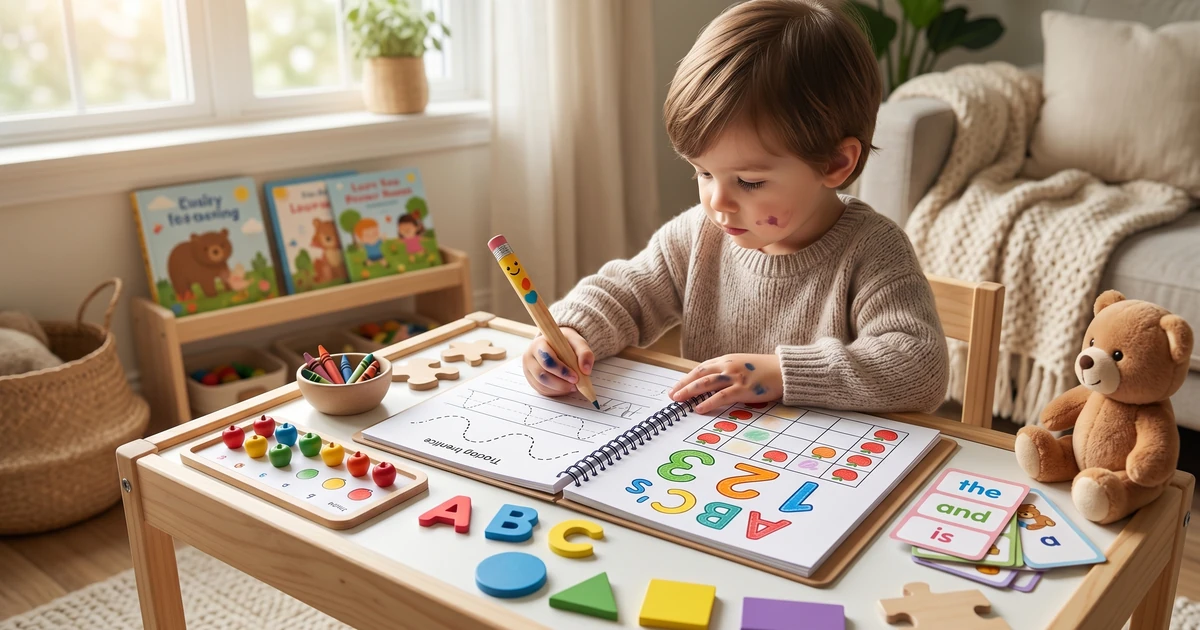
Kindergarten Readiness Worksheets: 8 Essential Preschool
Download kindergarten readiness worksheets covering writing, sounds, numbers, and more. Help your child build skills with printable sheets designed...
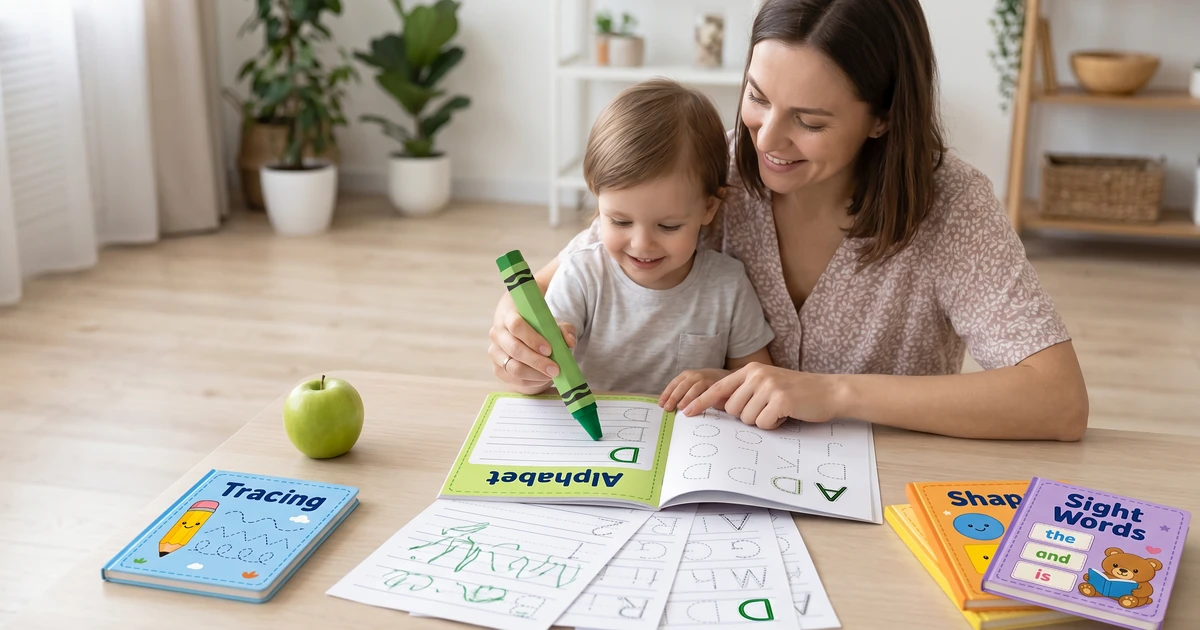
Alphabet Tracing for 3 Year Old: 5 Mistakes Parents Make
Alphabet tracing for 3 year olds is one of the most effective ways to build early literacy and fine motor skills at the same time. But here's what ...
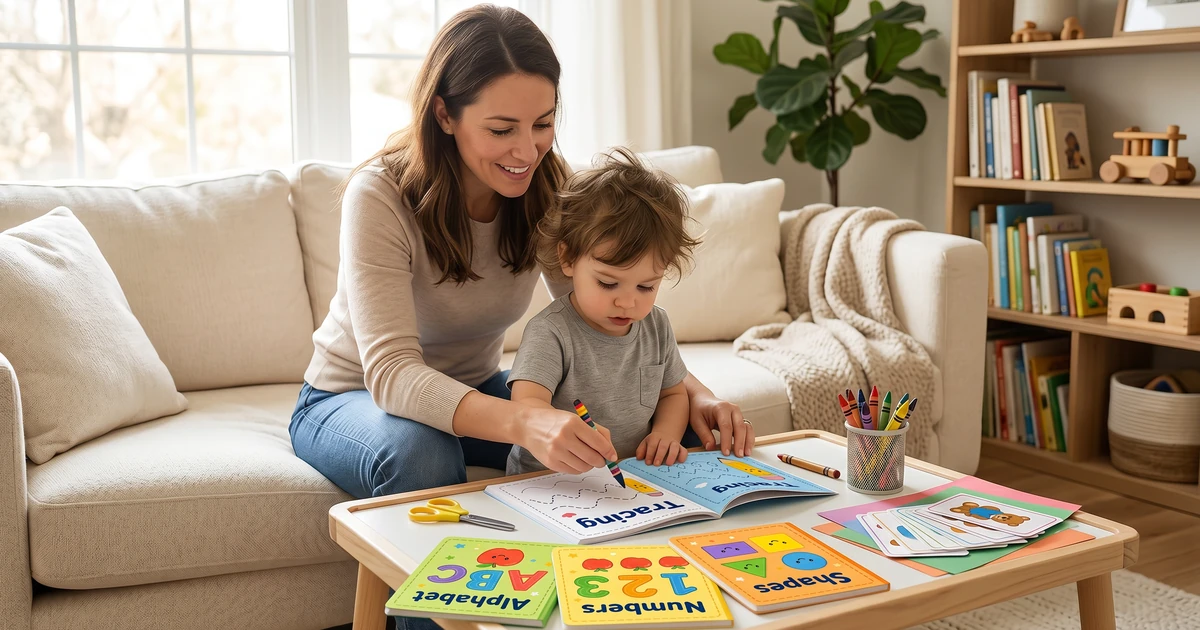
Preschool Printables Bundle: The Only 5 Skill Areas Your Child Needs
If you've been searching for a preschool printables bundle that covers more than just coloring pages, you're in the right place. I've spent 40+ hou...
7 Screen-Free Preschool Learning Activities That Actually
If you've been searching for screen-free preschool learning activities that hold a 3-to-5-year-old's attention for more than four minutes, you're i...