
My 3-year-old couldn't sit still for learning, here's what changed
My son used to last about 90 seconds at the table before he was off the chair, under the table, or running laps around the living room. Learning activities

My son used to last about 90 seconds at the table before he was off the chair, under the table, or running laps around the living room. Learning activities? Forget it. Anything that looked like “school work” got knocked off the table faster than I could set it up.
DISCOVERY ACTIVITY WORKBOOKPhonics Reading Lesson Guide Level 1
67 pages with 60 short phonics lessons covering all short vowels, V-C patterns, CVC words, and early sentences.
If that sounds familiar, you’re not alone. Hyperactive 3 year old learning activity struggles are one of the most common things parents search for, and honestly, most of the advice out there misses the point completely.
The problem isn’t your child. The problem is that most “learning activities” are designed for a calm, compliant kid sitting quietly at a desk. That child does not exist in your house. Or mine.
Here’s what actually works.
Key Takeaways:
- Hyperactive 3-year-olds learn best through movement, short bursts, and hands-on activities rather than seated desk work
- The “5-minute rule” keeps attention focused without power struggles
- Mixing physical movement INTO learning (not before it) dramatically improves retention
- Printable worksheets work best when they’re short, visual, and paired with a physical challenge
- Rotating activities every few days prevents boredom-driven chaos
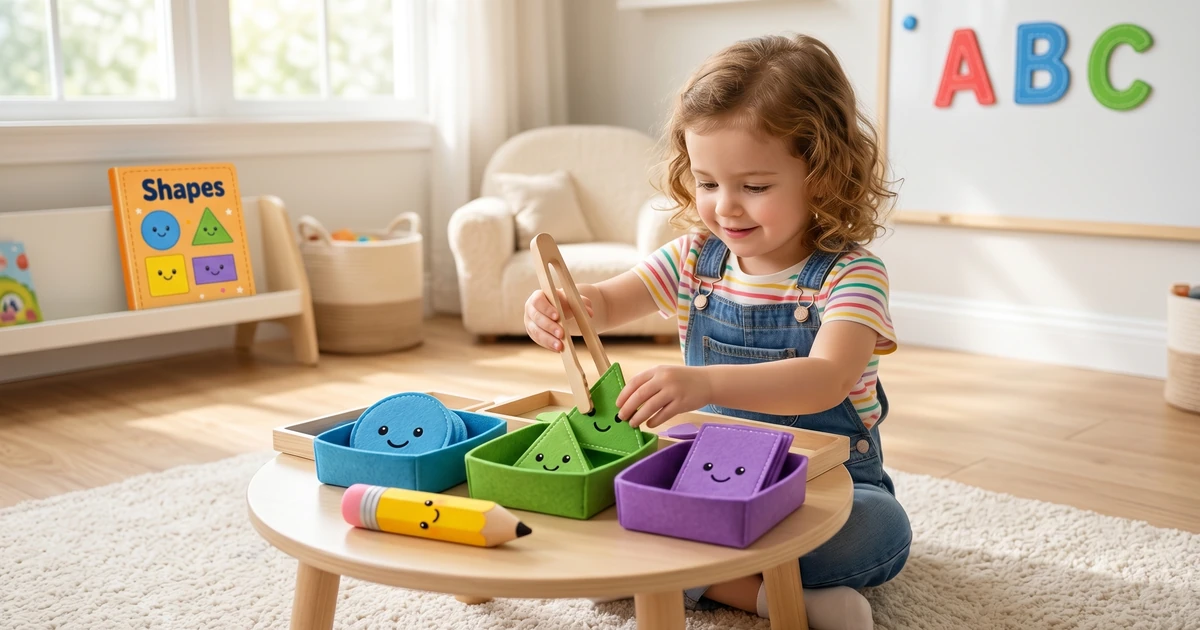
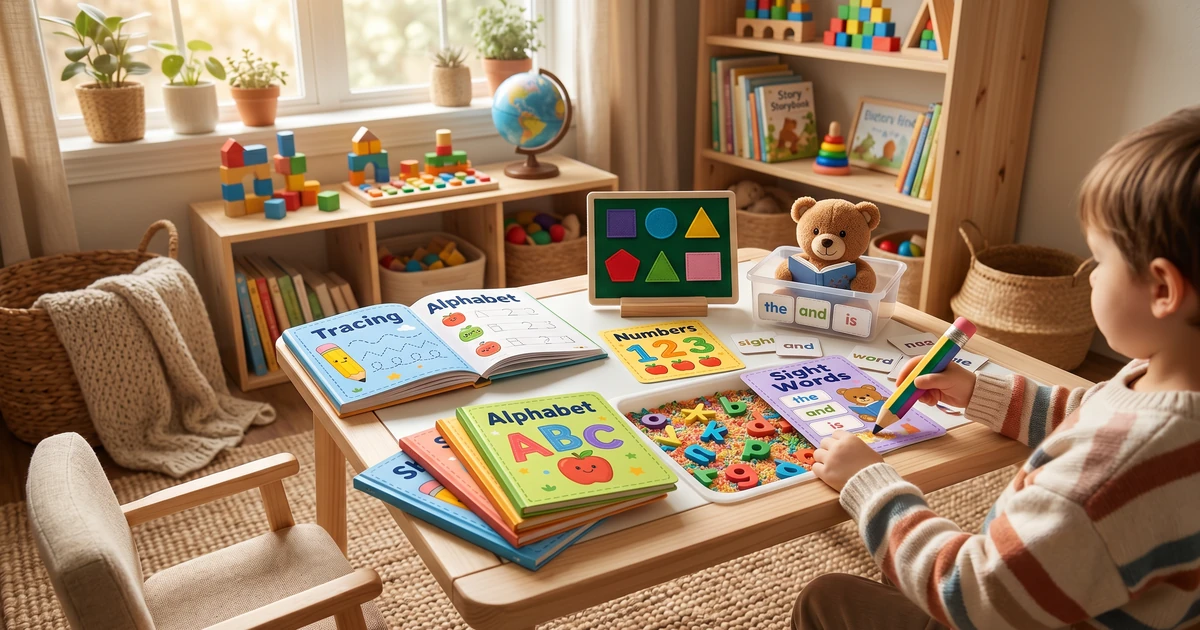
!A hyperactive 3-year-old happily doing a colorful hands-on learning activity at a low table
Why Hyperactive 3-Year-Olds Struggle With Typical Learning Activities
A hyperactive 3-year-old is not misbehaving. Developmentally, most 3-year-olds have an attention span of roughly 3 to 5 minutes per year of age, which means you’re working with a 9-to-15-minute window on a good day. For high-energy kids, that window is even shorter.
According to the American Academy of Pediatrics, play-based learning is the gold standard for early childhood development because it matches how young children’s brains are actually wired to absorb information. Sitting still and listening is a skill that most kids don’t fully develop until age 5 or 6.
So when your 3-year-old can’t sit through a worksheet, that’s biology, not defiance.
The shift that helped me most was stopping the fight against their energy and starting to use it instead.
“Children learn best when their whole body is involved. Movement activates the brain in ways that sitting simply cannot replicate at this age.” - Dr. Stuart Brown, National Institute for Play
The 5-Minute Rule That Changed Everything
Here’s the single biggest thing I changed: I stopped trying to do 20-minute learning sessions.
Instead, I switched to 5-minute micro-activities done 3 to 4 times throughout the day. Same total learning time. Completely different result.
The structure looks like this:
- Set a visible timer (a sand timer works better than a phone timer because kids can see it counting down)
- Name the activity clearly: “We’re doing letter tracing for 5 minutes.”
- Do it together for the first minute, then let them continue
- Stop at the timer even if they want to keep going. This builds positive associations.
- Celebrate the finish, not the perfection
Short sessions mean no meltdowns from overstimulation. And ending before they’re bored keeps them asking to do it again tomorrow.
Pro Tip: Ending the activity when they’re still enjoying it is more powerful than pushing through until they shut down. Leave them wanting more.
The 5-minute rule works because it matches the child’s actual capacity, not the parent’s wishful thinking.
How to Mix Movement INTO Learning (Not Just Before It)
Most advice says “let them run around first, then do learning.” That helps a little. But what works significantly better is weaving movement into the learning itself.
Here are specific examples I’ve tested and seen work consistently with high-energy toddlers:
Movement-Paired Learning Activities
| Learning Goal | Seated Version (Low Success) | Movement Version (High Success) |
|---|---|---|
| Letter recognition | Worksheet at table | Jump on the letter you hear |
| Counting | Writing numbers | Hop on one foot while counting |
| Shape identification | Coloring shapes | Find shapes around the room |
| Color sorting | Coloring by number | Sort colored blocks into bins |
| Fine motor skills | Pencil tracing | Playdough letter formation |
You don’t have to throw out worksheets entirely. But pairing a short worksheet with a physical challenge before or after makes a real difference. For example: do 5 jumps for every letter they trace correctly. Silly? Yes. Effective? Absolutely.
For ideas on keeping this up without screens, 7 Screen-Free Preschool Learning Activities That Actually Keep Kids Engaged is worth reading alongside this.
What Types of Activities Actually Hold a Hyperactive 3-Year-Old’s Attention
Not all activities are equal for high-energy kids. After going through dozens of options and reading through what parents consistently report in parenting forums and review threads, certain activity types rise to the top every time.
High-Engagement Activity Types (Ranked by Reported Success)
- Sensory play with a learning goal (kinetic sand with number molds, water beads for color sorting)
- Sticker-based worksheets (the physical act of placing stickers is grounding and satisfying)
- Cut-and-paste activities (scissors work is genuinely absorbing for most 3-year-olds)
- Dot marker pages (big, satisfying, low-frustration)
- Matching games (short, competitive with themselves, clear finish line)
- Tracing pages with thick lines (easier to succeed at, less frustration-driven abandonment)
The common thread? They all have a clear, tactile reward built in. The child can see and feel progress in real time.
Thin-line worksheets, long text instructions, and open-ended “draw anything” prompts tend to fail quickly with hyperactive kids because there’s no clear anchor keeping their attention.
“Structured choice, where a child picks between two acceptable options, dramatically reduces resistance to learning activities in toddlers.” - Zero to Three, Child Development Resource
Pro Tip: Always offer a choice between two activities, not an open menu. “Do you want to do the dot marker page or the sticker matching game?” gives autonomy without overwhelming decision fatigue.
Giving kids a sense of control over how they learn reduces resistance dramatically.
Building a Weekly Rotation That Prevents Boredom Chaos
One thing parents consistently overlook is novelty. A hyperactive 3-year-old who loved a worksheet Monday will be completely done with it by Wednesday. The activity didn’t get harder. It got boring.
The fix is a simple rotation system.
Sample Weekly Learning Rotation for a Hyperactive 3-Year-Old
| Day | Morning (5 min) | Afternoon (5 min) |
|---|---|---|
| Monday | Letter tracing + stickers | Shape sorting game |
| Tuesday | Dot marker numbers | Playdough counting |
| Wednesday | Cut and paste matching | Color identification hunt |
| Thursday | Alphabet recognition game | Fine motor threading |
| Friday | Free choice from the week | Celebrate what they learned |
Keep 8 to 10 activities in your rotation and cycle through them. When something loses its novelty, rotate it out for a few weeks before bringing it back.
For the skills you actually want to cover by kindergarten, Preschool Printables Bundle: The Only 5 Skill Areas Your 3-Year-Old Needs breaks it down clearly and practically.
How Printable Worksheets Can Actually Work for High-Energy Kids
I know what you’re thinking. Worksheets and hyperactive toddlers don’t mix. And you’re right, if you’re using the wrong kind.
The worksheets that do work for high-energy 3-year-olds share a few specific features:
| Feature | Why It Works for Hyperactive Kids |
|---|---|
| Large, bold lines | Less frustration, faster visible progress |
| Single skill per page | No cognitive overload |
| Bright, engaging visuals | Holds attention through the task |
| Short completion time (under 5 min) | Matches attention window |
| Clear “done” moment | Satisfying finish, no ambiguity |
KubbyLab’s Preschool Learning Bundle is one option I’d point parents toward specifically because the worksheets are designed with this in mind. Over 260 printables covering letters, numbers, shapes, colors, and fine motor skills, all with that short, visual, single-skill format. You can print them on demand, which means you’re always rotating fresh pages without having to create anything yourself.
But honestly, whether you use that bundle or build your own collection, the format matters more than the source.
For the full breakdown of what skills to prioritize and how to sequence them, the Kindergarten Readiness Worksheets: 8 Essential Preschool Skills to Practice guide covers it in much more depth.
How Much Does a Preschool Learning Setup Cost?
Parents often assume you need to spend a lot to set up effective learning activities at home. You really don’t.
| Item | Price Range | Notes |
|---|---|---|
| Printable worksheet bundle | $8 to $20 | One-time cost, print unlimited times |
| Dot markers | $10 to $15 | Last months with one pack |
| Sand timer (set of 3) | $8 to $12 | Visual timers work better than phones |
| Playdough (homemade) | $0 to $3 | Flour, salt, water, food coloring |
| Sticker sheets (bulk) | $5 to $10 | Huge engagement boost for low cost |
| Total | $31 to $60 | Full setup, no subscription needed |
You don’t need flashcards, apps, subscriptions, or expensive kits. The basics work best for this age group.
Read the Full Guide
Everything above is a solid starting point. But if you want the complete picture of what to teach, when to teach it, and exactly how to structure learning time for a high-energy preschooler, the full guide is where it all comes together.
Kindergarten Readiness Worksheets: 8 Essential Preschool Skills to Practice covers the 8 core skills your child needs before kindergarten, with specific activity ideas for each one, a progression timeline, and honest advice on what actually matters versus what looks impressive on Instagram but does nothing for real learning.
Also worth bookmarking: Alphabet Tracing for 3 Year Old: 5 Mistakes Parents Make with Letter Practice if letter recognition is a current struggle in your house.
Frequently Asked Questions
Is my 3-year-old hyperactive or just… 3?
Most 3-year-olds are high-energy by nature. True hyperactivity as a clinical concern (often associated with ADHD) is rarely diagnosed before age 4 to 5, and even then requires professional evaluation. If your child can focus for short periods on things they love (a favorite show, a toy they like), their attention system is likely working fine. It just needs to be met with appropriately short, engaging activities. Talk to your pediatrician if you have ongoing concerns.
How long should a 3-year-old learning session be?
Developmental guidance generally suggests 3 to 5 minutes per year of age as a baseline. For a 3-year-old, that’s 9 to 15 minutes maximum, and for high-energy kids, aim for the lower end. Multiple short sessions (3 to 4 per day) are more effective than one long session.
My 3-year-old refuses all learning activities. Where do I start?
Start with pure play, not worksheets. Introduce learning through games they already love. If they love cars, count the cars. If they love stickers, use sticker placement to practice colors or shapes. The goal is to attach learning to something that already has a positive emotional association. Once that connection is made, structured activities become easier to introduce.
Do printable worksheets actually help 3-year-olds learn?
They can, when chosen carefully. Short, visual, single-skill worksheets with large lines and clear completion markers work well for this age. Long worksheets, multi-step instructions, and thin tracing lines tend to cause frustration and shutdown. The format matters as much as the content.
How do I keep a hyperactive 3-year-old from destroying the activity setup?
Keep materials minimal. One pencil, one page, one task. More materials on the table means more things to throw, scatter, or chew. Set up in a low-distraction area (away from toys if possible), use a small child-height table so they feel comfortable, and sit with them for at least the first minute to anchor the activity before stepping back.
You May Also Like
Take the Next Step!
Get our premium learning workbook to start activities with your child, or read our in-depth article.
Recommended Resources & Workbooks
Pair this guide with our hands-on, ready-to-print learning resources.
 Digital Bundle
Learn to Read Program: Levels 1-3
170 sequenced phonics lessons across 199 pages, from first letter sounds to fluent long-vowel reading.
 Digital Learning Bundle
Preschool Learning Bundle
260+ printable worksheets for tracing, ABCs, numbers, shapes, sight words, and kindergarten prep.
 Digital Learning Bundle
Play-Based Learning Bundle for Ages 3-6
230+ play-based learning activities with pretend play, reading, early math, creative arts, and bonus flashcards.
Related Guides & Articles
Explore more of our detailed guides and activities.
Kindergarten Readiness Worksheets: 8 Essential Preschool
Download kindergarten readiness worksheets covering writing, sounds, numbers, and more. Help your child build skills with printable sheets designed...
Alphabet Tracing for 3 Year Old: 5 Mistakes Parents Make
Alphabet tracing for 3 year olds is one of the most effective ways to build early literacy and fine motor skills at the same time. But here's what ...
Preschool Printables Bundle: The Only 5 Skill Areas Your Child Needs
If you've been searching for a preschool printables bundle that covers more than just coloring pages, you're in the right place. I've spent 40+ hou...
7 Screen-Free Preschool Learning Activities That Actually
If you've been searching for screen-free preschool learning activities that hold a 3-to-5-year-old's attention for more than four minutes, you're i...