

Why your 4-year-old refuses to practice writing and the no-tears fix
You put the worksheet on the table. Your child looks at it, looks at you, and either bursts into tears, folds their arms, or simply walks away to play with

You put the worksheet on the table. Your child looks at it, looks at you, and either bursts into tears, folds their arms, or simply walks away to play with their toys. Sound familiar?
DISCOVERY ACTIVITY WORKBOOKPhonics Reading Lesson Guide Level 1
67 pages with 60 short phonics lessons covering all short vowels, V-C patterns, CVC words, and early sentences.
If your 4 year old refuses writing practice, you are absolutely not alone. This is one of the most common frustrations I hear from parents of preschoolers, and honestly, it makes a lot of sense once you understand what’s actually happening developmentally. The refusal isn’t defiance. It usually isn’t laziness either. There are real, specific reasons it happens, and once you know them, fixing it becomes a lot more straightforward.
I spent a significant amount of time researching this topic, digging through child development studies, occupational therapist advice, and hundreds of parent experiences in forums and review threads. What I found surprised me, and I want to share it with you before you spend another afternoon in a battle of wills over a pencil.
Key Takeaways:
- A 4-year-old refusing writing practice is almost always a developmental or sensory signal, not a behavior problem
- Fine motor muscles in preschoolers are still actively developing and tire quickly
- Pressure, timing, and worksheet design all affect whether a child engages or shuts down
- Short, playful, low-stakes practice works dramatically better than formal “sit and write” sessions
- The goal at age 4 is building hand strength and pencil comfort, not perfect letters
!A 4-year-old looking frustrated at a writing worksheet on a table
Why Fine Motor Skills Make Writing Feel Impossible at Age 4
Fine motor development is the gradual strengthening and coordination of the small muscles in the hands, fingers, and wrists. At age 4, those muscles are still very much a work in progress.
According to the American Academy of Pediatrics, most children between ages 3 and 5 are still developing the hand-eye coordination and grip strength needed to control a pencil with any comfort. Asking a child to trace letters or copy shapes before those muscles are ready feels physically difficult, like asking an adult to do pull-ups on day one of a gym membership.
When your child’s hand cramps after 30 seconds on a worksheet, they’re not being dramatic. Their hand genuinely hurts. And their brain has already learned: worksheets equal pain and frustration. No wonder they refuse.
Here’s what that looks like in practice:
-
Grip tightens awkwardly around the pencil
-
Lines come out shaky or they press too hard
-
The child gets visibly frustrated after just a few strokes
-
They ask to stop, complain their hand hurts, or simply give up
The fix starts with building hand strength through play before putting a pencil in their hand.
The Pressure Problem: How “Practice Time” Becomes a Power Struggle
There’s a pattern I see over and over in parent accounts: a well-meaning adult sits down with a child and a worksheet, and the second the child senses expectation, their whole body tenses up.
“When children perceive an activity as a test or obligation, the brain’s stress response can interfere with the very neural pathways needed for fine motor learning.” - Dr. Claire McCarthy, Harvard Health Publishing
At age 4, children are wired to learn through play. The moment writing practice becomes “a thing we have to do,” it stops being something they can engage with freely. The refusal isn’t about the writing itself. It’s about the pressure attached to it.
A few specific triggers that parents consistently report:
- Being sat down at a table specifically for “practice”
- Being corrected frequently during the activity
- Worksheets that look like “school work” (plain, formal, repetitive)
- Doing it at the wrong time of day (after childcare, when they’re tired)
- Comparing their work to siblings or other children
Removing the performance pressure, even slightly, often removes the refusal entirely.
What Actually Works: Making Writing Practice Feel Like Play
This is where the research gets genuinely useful. Occupational therapists and early childhood educators consistently point to the same principle: pre-writing activities build the skills children need without the friction of a formal worksheet.
Here’s a comparison of approaches and how children typically respond:
| Approach | Child’s Perception | Engagement Level | Skill Building |
|---|---|---|---|
| Formal worksheet at a table | ”This is school/work” | Low to resistant | Moderate (if they complete it) |
| Tracing with colorful visuals | ”This looks interesting” | Moderate | Good |
| Drawing mazes and paths | ”This is a game” | High | Very good |
| Play-doh and finger tracing | ”This is fun” | Very high | Excellent (builds grip strength) |
| Dot-to-dot activities | ”I’m solving something” | High | Good |
| Drawing characters they love | ”I chose this” | Very high | Good |
Pro Tip: Occupational therapists often recommend “heavy work” activities before writing practice. Things like pushing a cart, carrying books, or kneading dough activate the proprioceptive system and help children regulate, making them far more ready to hold a pencil.
The format of the practice material matters enormously too. Worksheets with large, colorful, theme-based designs (animals, characters, familiar shapes) perform much better with this age group than plain repetitive line work.
One practical shift: replace 15 minutes of formal practice with 3 minutes of playful tracing built into another activity they already enjoy.
Timing and Routine: When You Ask Matters as Much as How
I found this overlooked in most parenting articles, but parents in forums bring it up constantly. The time of day you attempt writing practice has a massive effect on whether it goes well or ends in tears.
A 4-year-old’s window of focus and willingness is narrow. Here’s how the day typically breaks down:
| Time of Day | Energy & Focus Level | Good for Writing Practice? |
|---|---|---|
| Right after waking | Groggy, slow to engage | No |
| Mid-morning (9-11am) | Peak alertness | Yes, ideal |
| Right after lunch | Drowsy, low focus | No |
| Mid-afternoon | Second wind possible | Sometimes |
| After preschool/daycare | Depleted, emotionally raw | Rarely |
| After dinner | Tired, needs wind-down | No |
According to Zero to Three, preschoolers have limited executive function capacity and tire from cognitive effort much faster than school-age children. A 4-year-old who just spent four hours at preschool has genuinely used up much of their focus budget for the day.
If writing practice consistently goes badly, try moving it to mid-morning on a home day and watch the difference.
How to Choose Worksheets a 4-Year-Old Will Actually Use
Not all worksheets are created equal for this age group. After reviewing dozens of options and reading what parents report back, there are clear patterns in what works.
| What to Look For | Why It Matters |
|---|---|
| Large, thick tracing lines | Easier for developing motor control |
| Visual themes (animals, stories) | Gives context and interest |
| Short tasks (1 skill per page) | Prevents overwhelm and fatigue |
| Dotted or guided starting points | Reduces guesswork and frustration |
| Mix of drawing and tracing | Keeps engagement varied |
| Colorable elements | Adds reward and personalization |
| Age-appropriate difficulty steps | Gradual progression builds confidence |
One resource I’ve come across that does this well is the KubbyLab Preschool Learning Bundle, which includes 260+ printable worksheets specifically designed for ages 3-5. The worksheets use thick guided lines, playful visuals, and short focused tasks, exactly the format that tends to work with reluctant writers. It’s one of several good options worth considering if you want ready-made materials that don’t feel like formal schoolwork.
For a broader look at what pre-writing skills actually matter at this age, the Kindergarten Readiness Worksheets: 8 Essential Preschool Skills to Practice guide breaks down every skill area clearly.
Step-by-Step: How to Restart Writing Practice Without the Meltdown
If things have already gone sideways and your child now associates worksheets with stress, here’s how to reset gradually.
Step 1: Take a Full Break
Stop all formal writing for 3 to 5 days. Let the association cool down.
Step 2: Start With Hand Strengthening Play
Spend a few days doing Play-doh, tearing paper, using tongs to pick up small objects, or squeezing sponges. This builds the muscles they need without any pencil pressure.
Step 3: Reintroduce Drawing, Not Writing
Ask them to draw a picture, not trace letters. Drawing is lower stakes and uses the same muscles.
Step 4: Introduce One Short, Visually Appealing Worksheet
Choose something with a character or theme they like. Sit next to them casually, not formally across a table. Keep it to 2 to 3 minutes maximum.
Step 5: End Before They Want To
This is counterintuitive, but stopping while they’re still engaged builds positive association. Always end on a success.
Step 6: Build Frequency Gradually
Go from 2 to 3 minutes daily for a week, then extend only when they’re asking for more.
Rebuilding the positive association takes about two weeks of consistent low-pressure exposure.
For a deeper look at keeping preschoolers engaged without screens or formal sit-down sessions, I’d recommend reading 7 Screen-Free Preschool Learning Activities That Actually Keep Kids Engaged. It covers a lot of the play-based approaches that complement writing readiness really well.
You might also find Alphabet Tracing for 3 Year Old: 5 Mistakes Parents Make with Letter Practice useful, since many of those mistakes apply at age 4 too.
For the Full Guide, Read This Next
Everything I’ve covered here is really the surface of a much bigger picture of what preschool readiness actually involves and how to build it in a way that feels natural for your child.
The Kindergarten Readiness Worksheets: 8 Essential Preschool Skills to Practice covers all eight foundational skill areas, including writing, phonics, number sense, and self-regulation, with specific activity ideas for each. If your child is 4 and you’re thinking about what they actually need before school, that’s the place to go next.
Frequently Asked Questions
Is it normal for a 4-year-old to refuse to write? Yes, completely. Most 4-year-olds are still developing the fine motor strength and coordination needed for comfortable pencil use. Refusal is usually a signal that the activity feels too hard, too pressured, or is happening at the wrong time, not that there’s something wrong with your child.
At what age should a child be able to write their name? Most children can write their first name with some legibility between ages 4 and 5, though there’s a wide normal range. Some children do it confidently at 4, others aren’t ready until closer to 6. The goal at age 4 is pencil comfort and basic stroke control, not accurate letter formation.
What if my 4-year-old has no interest in any writing activities at all? Start much further back with pre-writing. Finger painting, drawing in sand, tracing large shapes with their whole arm, and fine motor play with manipulatives all build the same foundational skills without a pencil. Interest in letters and writing typically follows naturally as hand strength and confidence develop.
How long should writing practice be for a 4-year-old? Keep it to 3 to 5 minutes maximum per session for most 4-year-olds. Short daily exposure builds skill far more effectively than long infrequent sessions. If they’re asking to continue, that’s a good sign, but stopping on a positive note is always better than pushing until they get frustrated.
Could my child have an underlying issue if they strongly resist writing? Persistent, strong resistance combined with very poor grip, extreme fatigue after brief writing, or avoidance of all fine motor activities can sometimes point to developmental delays or sensory processing differences. If you’re concerned, a referral to a pediatric occupational therapist is worth asking your pediatrician about. Most of the time, though, refusal at age 4 is a typical developmental response.
You May Also Like
Take the Next Step!
Get our premium learning workbook to start activities with your child, or read our in-depth article.
Recommended Resources & Workbooks
Pair this guide with our hands-on, ready-to-print learning resources.
 Digital Bundle
Learn to Read Program: Levels 1-3
170 sequenced phonics lessons across 199 pages, from first letter sounds to fluent long-vowel reading.
 Digital Learning Bundle
Preschool Learning Bundle
260+ printable worksheets for tracing, ABCs, numbers, shapes, sight words, and kindergarten prep.
 Digital Learning Bundle
Play-Based Learning Bundle for Ages 3-6
230+ play-based learning activities with pretend play, reading, early math, creative arts, and bonus flashcards.
Related Guides & Articles
Explore more of our detailed guides and activities.
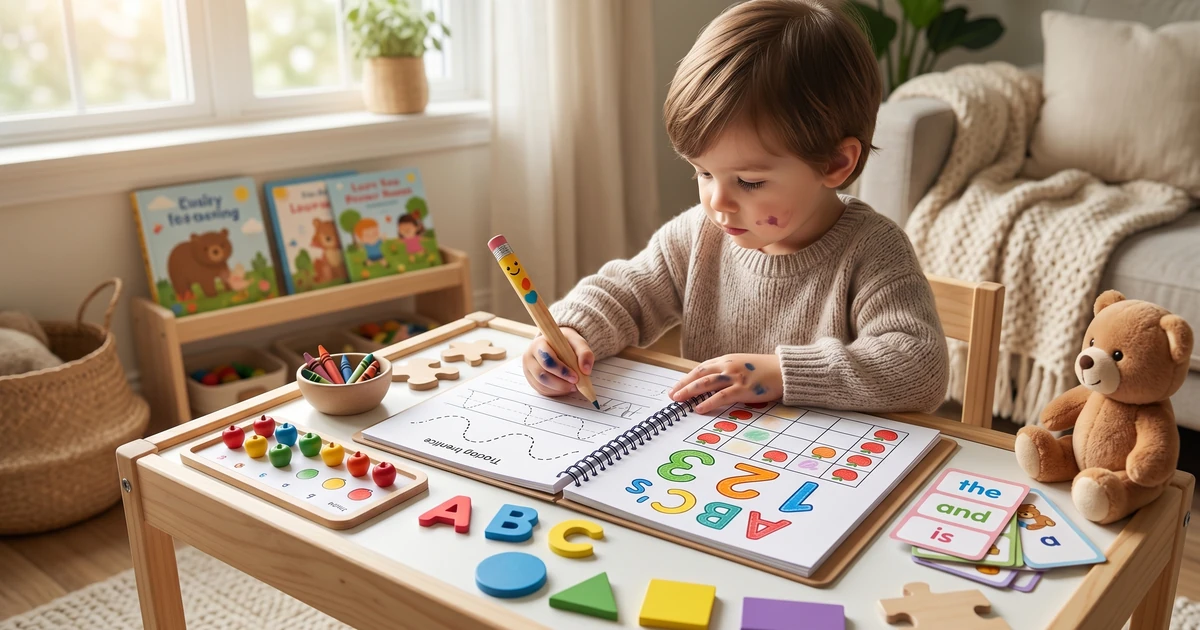
Kindergarten Readiness Worksheets: 8 Essential Preschool
Download kindergarten readiness worksheets covering writing, sounds, numbers, and more. Help your child build skills with printable sheets designed...
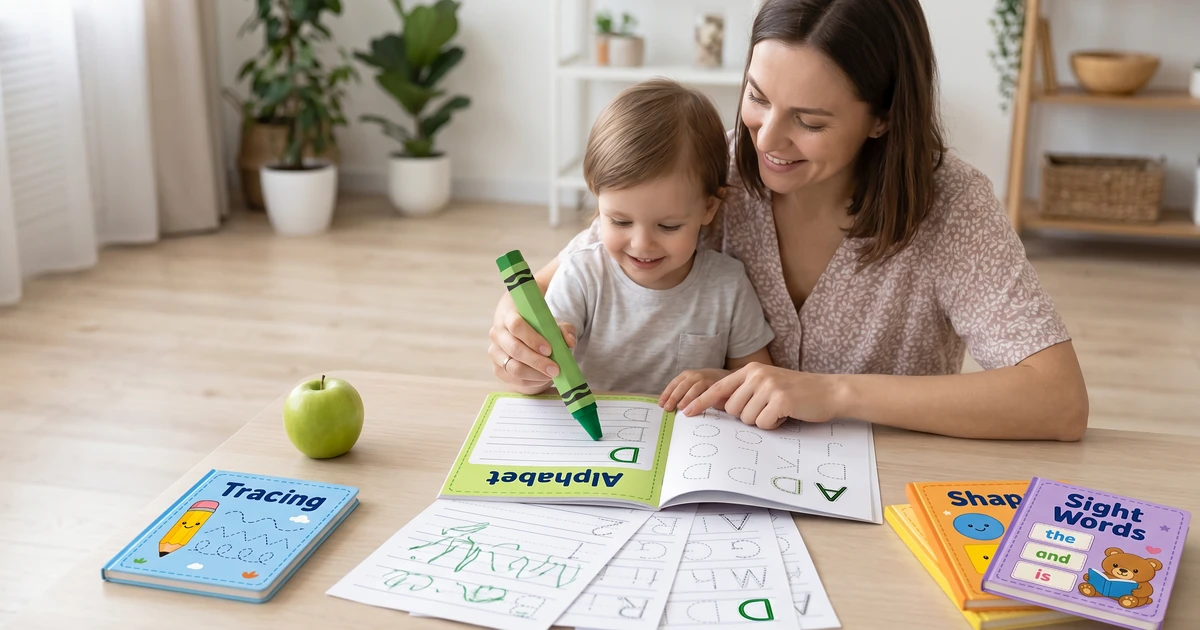
Alphabet Tracing for 3 Year Old: 5 Mistakes Parents Make
Alphabet tracing for 3 year olds is one of the most effective ways to build early literacy and fine motor skills at the same time. But here's what ...
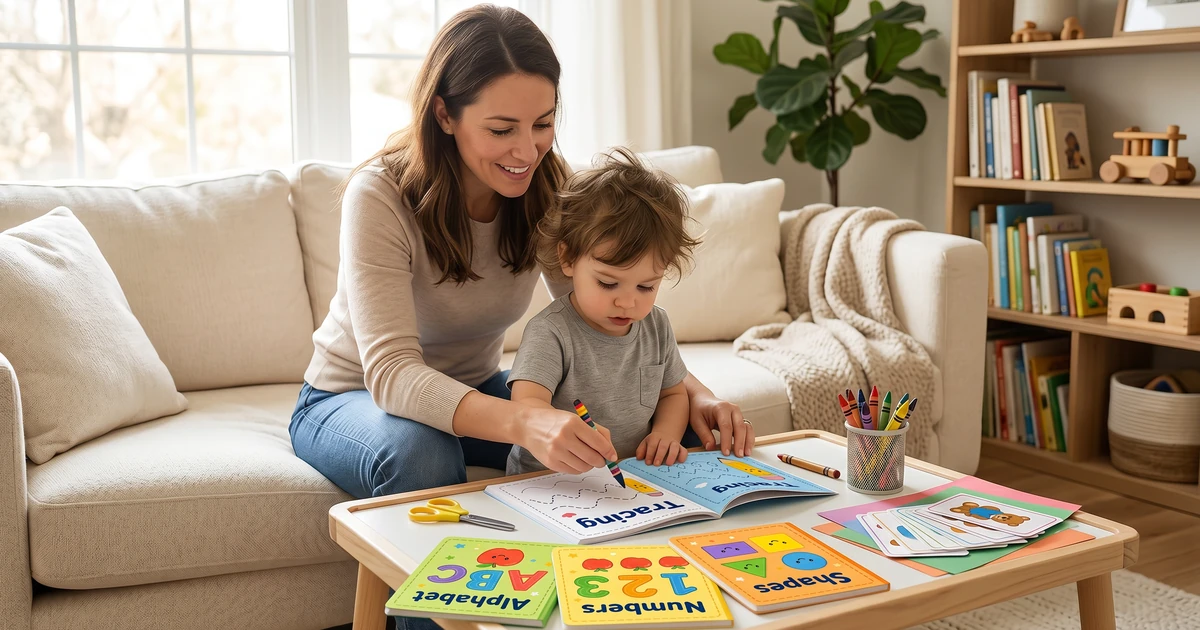
Preschool Printables Bundle: The Only 5 Skill Areas Your Child Needs
If you've been searching for a preschool printables bundle that covers more than just coloring pages, you're in the right place. I've spent 40+ hou...
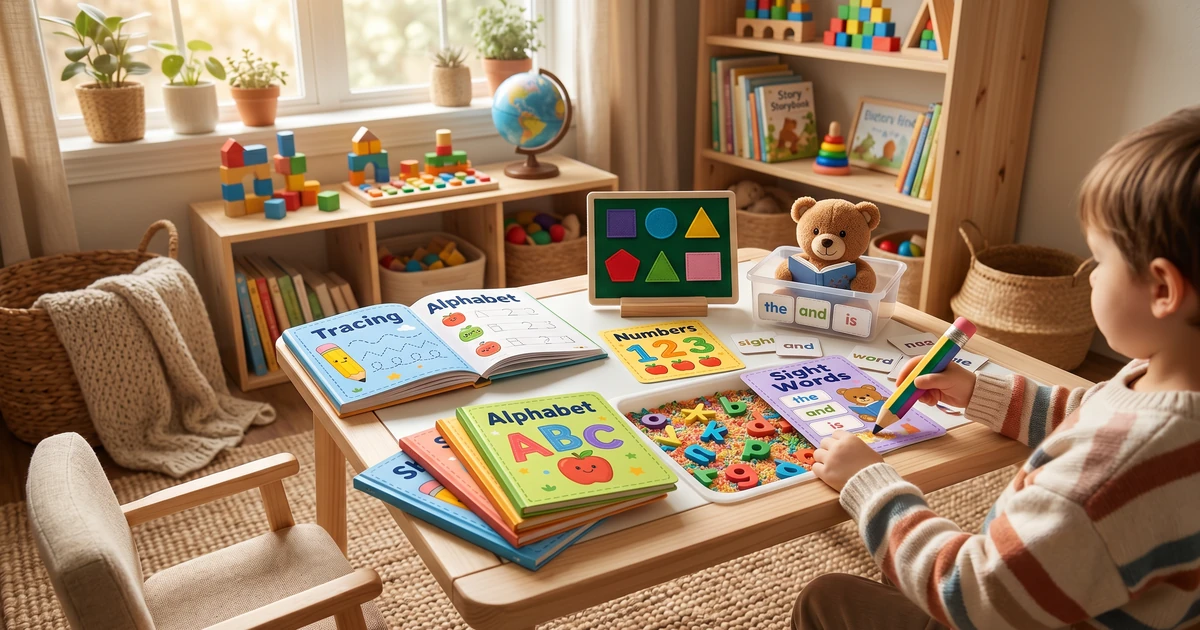
7 Screen-Free Preschool Learning Activities That Actually
If you've been searching for screen-free preschool learning activities that hold a 3-to-5-year-old's attention for more than four minutes, you're i...