
The 5-minute morning binder that stops the TV habit cold
You set out the activity. You had a plan. And then your three-year-old melted down before you even uncapped the marker

You set out the activity. You had a plan. And then your three-year-old melted down before you even uncapped the marker.
DISCOVERY ACTIVITY WORKBOOKPhonics Reading Lesson Guide Level 1
67 pages with 60 short phonics lessons covering all short vowels, V-C patterns, CVC words, and early sentences.
Morning learning with preschoolers sounds beautiful in theory. In practice, it often looks like a power struggle before 9am, a pile of half-finished worksheets, and a parent wondering if they’re doing something wrong.
You’re not doing anything wrong. The routine itself is the problem.
Most preschool learning setups ask too much from little brains first thing in the morning. Long sessions, too many choices, too much novelty. A 5 minute morning binder preschool routine flips that completely. It’s short, predictable, and structured in a way that matches how preschoolers actually learn. I’ve spent a significant amount of time researching what works for ages 3-5, and the pattern that shows up again and again is this: consistency beats duration, every single time.
Key Takeaways:
- Preschoolers learn better in short, repeated bursts than long sit-down sessions
- A 5-minute morning binder works because it’s predictable and low-pressure
- The best binders cover 3-5 core skill areas rotating across the week
- You don’t need expensive materials, a simple printed set and a binder is enough
- Morning is the best time because attention and compliance peak early in the day
- Screen-free, hands-on practice builds the skills kids need for kindergarten readiness
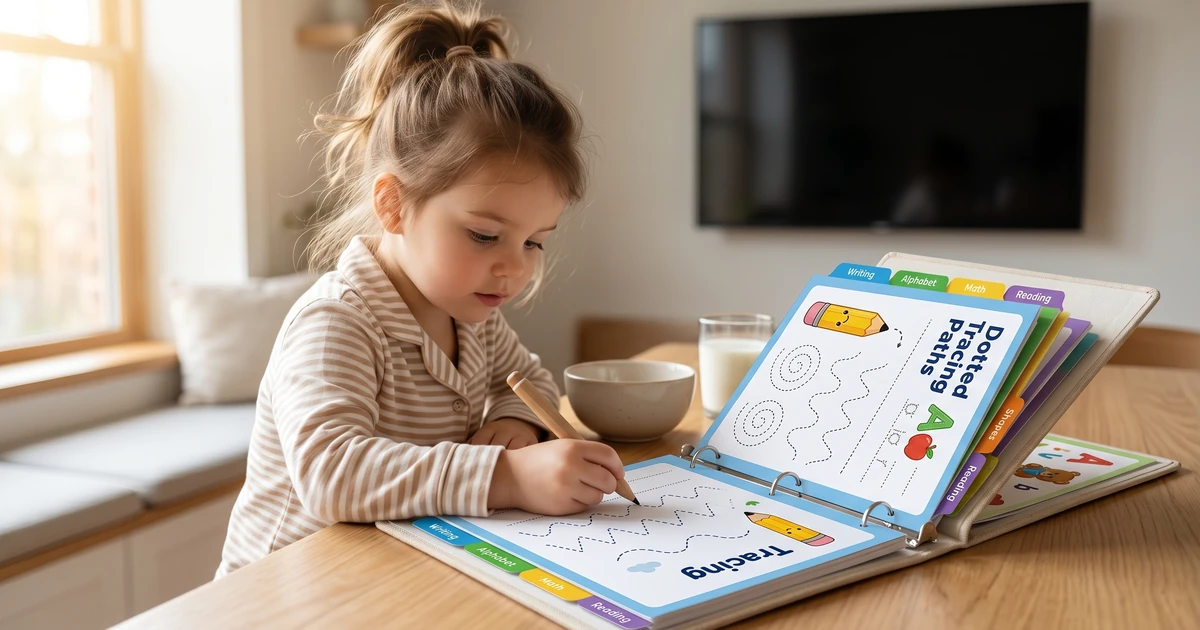
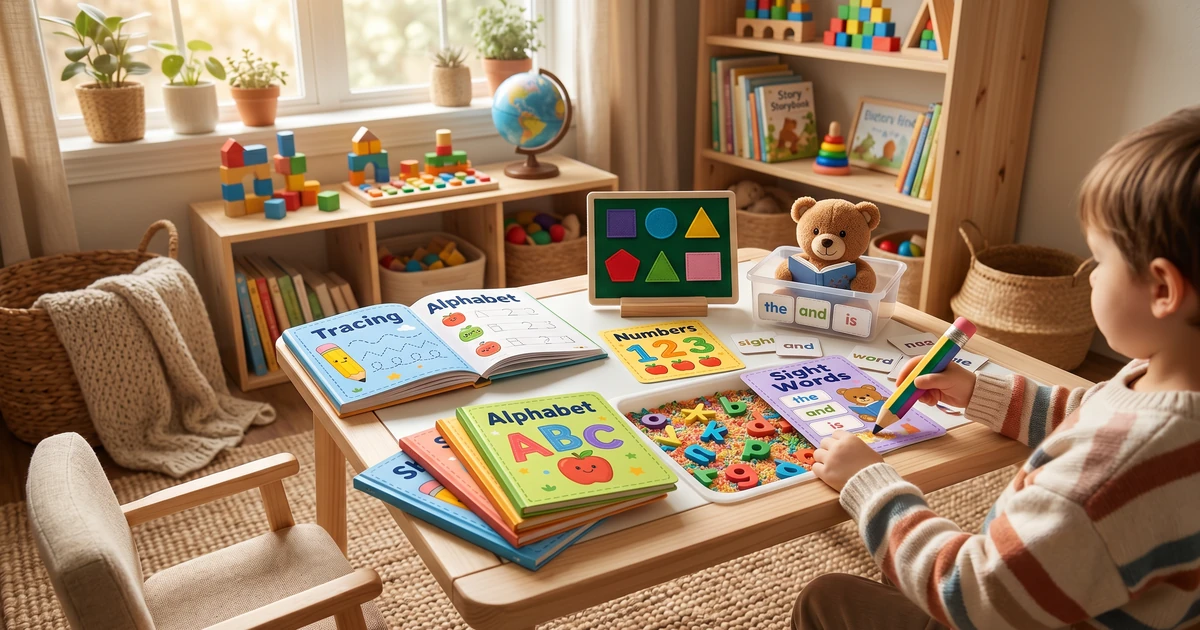
!A young child sitting at a table working in a colorful preschool morning binder with crayons and pencils nearby
Why Mornings Are the Best Time for Preschool Learning
Research consistently supports what most parents discover by accident: preschoolers are sharpest in the morning. Their working memory is fresher, emotional regulation is easier before fatigue sets in, and the transition from sleep to activity is smoother when there’s a predictable routine.
According to the American Academy of Pediatrics, structured daily routines reduce anxiety in young children and support cognitive development by creating a safe, predictable environment for learning.
The problem isn’t the morning. The problem is how most learning activities are designed. When you hand a preschooler an open-ended task or a 20-page workbook, they don’t feel invited to learn. They feel overwhelmed. A 5-minute morning binder sidesteps that completely because the child knows exactly what’s coming, how long it will last, and what success looks like.
The morning window matters more than the total time you spend.
What a 5 Minute Morning Binder Preschool Routine Actually Looks Like
A morning binder is a simple three-ring binder filled with laminated or printed activity pages your child works through in a set sequence each day. The “5 minute” part isn’t a suggestion, it’s the design goal. Every page should be completable in under 60-90 seconds by a preschool-aged child.
Here’s a realistic daily structure:
Step 1: Sit Down Together (30 seconds)
Place the binder on the table before your child sits down. No hunting for materials, no setup. It’s already there. This cue alone reduces resistance dramatically.
Step 2: Open to Today’s Page (10 seconds)
Use a tab or paper clip so the child can find their spot independently. Self-sufficiency feels good at age 3. It builds buy-in.
Step 3: Complete the Activity (3-4 minutes)
One page, one focused task. This might be tracing letters, matching numbers, coloring a shape, or identifying beginning sounds. No more than one concept per session.
Step 4: Celebrate and Close (30 seconds)
A sticker, a stamp, or a simple “great job” closes the loop. Preschoolers are motivated by completion. Make it feel finished.
That’s it. Four steps, five minutes, done before breakfast is cleared.
Pro Tip: Keep the binder in the same spot every day. Physical consistency reinforces mental consistency. Kids who know exactly where their binder lives start reaching for it on their own within 1-2 weeks.
The 5 Core Skills a Morning Binder Should Cover
Not all morning binder content is equally useful. Based on what kindergarten teachers consistently report as gap areas for incoming students, a solid preschool morning binder should rotate through these five skill areas:
| Skill Area | What to Practice | Kindergarten Connection |
|---|---|---|
| Letter Recognition | Tracing uppercase and lowercase letters | Reading readiness, phonics |
| Number Sense | Counting, matching quantities, number tracing | Math foundations |
| Fine Motor Skills | Cutting lines, tracing paths, dot-to-dot | Writing grip and control |
| Shapes and Colors | Identifying, sorting, coloring by attribute | Geometry, pattern recognition |
| Phonological Awareness | Beginning sounds, rhymes, syllable clapping | Early literacy |
You don’t need to hit all five every morning. Rotating through two or three per week is more effective than rushing through all of them daily. The repetition across weeks is what cements the skill.
For a deeper breakdown of which skills matter most before kindergarten, read Kindergarten Readiness Worksheets: 8 Essential Preschool Skills to Practice.
Covering fewer skills more often beats covering everything once.
What to Put in a 5 Minute Morning Binder (and What to Leave Out)
This is where most homeschool and preschool binders go wrong. Parents pack them with great content, but the binder becomes overwhelming. Here’s a practical guide for what works at this age range.
What to Include
-
Tracing pages (letters, numbers, shapes, simple lines)
-
Matching activities (number to quantity, uppercase to lowercase)
-
Color-by-code pages (simple, limited color choices)
-
Beginning sound activities (picture to letter match)
-
Simple mazes (wide paths, low frustration)
What to Leave Out
-
Multi-step instructions (preschoolers can’t hold more than 1-2 steps in working memory)
-
Tiny writing spaces (fine motor skills are still developing, lines need to be wide)
-
Open-ended creative tasks (save these for free play time, not structured morning work)
-
Reading-heavy pages (keep it visual and tactile)
“Children ages 3 to 5 learn best through play-based, hands-on activities that are brief, joyful, and developmentally appropriate.” - National Association for the Education of Young Children (NAEYC)
For ideas that complement your morning binder with screen-free activities, check out 7 Screen-Free Preschool Learning Activities That Actually Keep Kids Engaged.
Every page in your binder should be completable without help from you.
How to Build the Routine So It Actually Sticks
The most beautifully designed binder in the world won’t work if the routine isn’t consistent. Here’s what I consistently see working in family after family based on the feedback and reviews I’ve researched:
Attach It to an Existing Habit
“Morning binder” works best after breakfast and before screen time (if your family has screen time). Never position it as something that replaces fun. Position it as the door to fun. “After your binder, we can watch your show” is a much easier sell than “sit down and do your worksheets.”
Start Shorter Than You Think You Need To
For the first week, do just two pages. Even if your child wants more, stop. You’re building the habit, not testing their limits. The goal in week one is: binder goes on the table, child sits down, child completes two pages, child feels good. That’s a win.
Keep the Content Fresh Enough to Prevent Boredom
Laminated pages you use with a dry-erase marker can feel stale after 2-3 weeks. Rotating in new printed pages monthly keeps the engagement up. A full printable set with enough variety (think 100+ pages covering multiple skill areas) gives you that rotation without constant prep work.
KubbyLab’s Preschool Learning Bundle at kubbylab.com is one option that gives you 260+ printable worksheets across all five core skill areas, worth considering if you want months of morning binder content without rebuilding from scratch each week. But you can absolutely build your own set from free resources too. The structure matters more than the source.
For a curated look at which skill areas matter most, read Preschool Printables Bundle: The Only 5 Skill Areas Your 3-Year-Old Needs.
How to Handle Resistance Without a Power Struggle
Even the best routine hits rough mornings. Here’s a quick comparison of common responses to resistance and how they play out:
| Response to Resistance | Short-Term Result | Long-Term Effect |
|---|---|---|
| Force/insist the child finishes | Child complies, resentful | Binder becomes a source of dread |
| Skip the binder entirely | Conflict avoided | Routine loses consistency |
| Shorten the session to 1-2 pages | Low resistance | Habit stays intact |
| Let the child choose which page | Child feels control | Engagement improves |
| Take a 5-minute break and retry | Mood improves | Successful completion more likely |
On hard mornings, doing one page is infinitely better than doing zero. Protect the habit, not the content quota.
Pro Tip: Let your child put a sticker on the calendar every day they complete their binder. Visible streaks are surprisingly motivating for preschoolers, and it gives them ownership of their own progress.
The Letter Practice Mistake That Slows Everything Down
One of the most common places morning binders stall out is letter tracing. Parents start with the alphabet in order (A, B, C…) and stick with it rigidly. But according to most literacy development research, teaching letters in isolation and in alphabetical order is one of the least effective approaches.
For a detailed look at what actually works (and what to avoid), read Alphabet Tracing for 3 Year Old: 5 Mistakes Parents Make with Letter Practice.
The short version: start with letters in your child’s name. They’re already motivated to recognize them, and that emotional connection accelerates learning faster than any structured sequence.
FAQ: 5 Minute Morning Binder for Preschool
Q: My preschooler won’t sit still for even 5 minutes. What do I do?
Start with 2 minutes. Seriously. One page, a sticker, done. Build from there over 2-3 weeks. The issue usually isn’t attention span, it’s that the activity hasn’t become a familiar habit yet. Novelty triggers avoidance in young children. Familiarity invites engagement.
Q: What age is a morning binder appropriate for?
Most children are ready for a simple morning binder routine somewhere between ages 3 and 4, though readiness varies. If your child can hold a crayon, follow a one-step instruction, and sit for a short picture book, they’re probably ready. You don’t need to wait for a specific birthday.
Q: Do I need to be with my child the entire time?
Not necessarily. The goal is to design the pages so your child can work mostly independently. You should be nearby for the first few weeks while the routine is being established. After that, many families find their preschooler happily completes the binder while a parent makes coffee nearby.
Q: How many pages should a morning binder have?
For a daily 5-minute session, aim for 1-3 pages per day. A well-stocked binder has 60-100+ pages available so you can rotate content over several months without repeating the same page too quickly. More variety keeps engagement high.
Q: Do I need to laminate everything?
Not at all. Laminating and using dry-erase markers is great for reusability, but simply printing fresh pages each week works just as well. Many families do a combination: laminate the high-repeat pages (number lines, alphabet charts) and print fresh pages for activities with more variety.
For the complete guide to building a kindergarten-ready routine with the right printables and skill progression, read the full article:
Kindergarten Readiness Worksheets: 8 Essential Preschool Skills to Practice
You May Also Like
Take the Next Step!
Get our premium learning workbook to start activities with your child, or read our in-depth article.
Recommended Resources & Workbooks
Pair this guide with our hands-on, ready-to-print learning resources.
 Digital Bundle
Learn to Read Program: Levels 1-3
170 sequenced phonics lessons across 199 pages, from first letter sounds to fluent long-vowel reading.
 Digital Learning Bundle
Preschool Learning Bundle
260+ printable worksheets for tracing, ABCs, numbers, shapes, sight words, and kindergarten prep.
 Digital Learning Bundle
Play-Based Learning Bundle for Ages 3-6
230+ play-based learning activities with pretend play, reading, early math, creative arts, and bonus flashcards.
Related Guides & Articles
Explore more of our detailed guides and activities.
Kindergarten Readiness Worksheets: 8 Essential Preschool
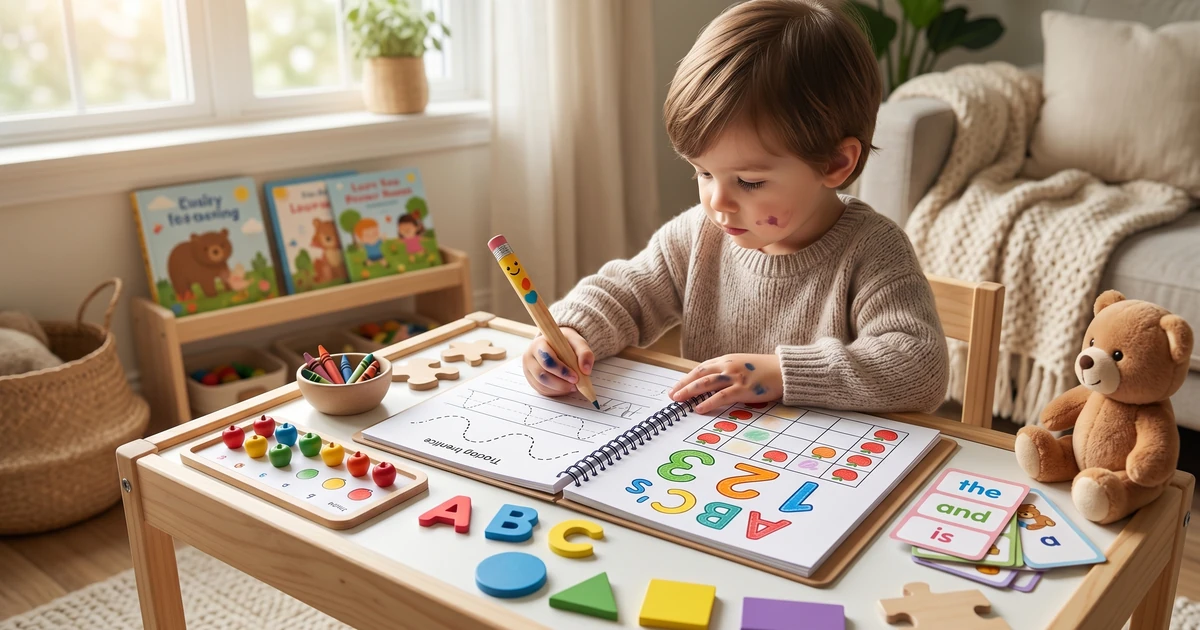
Download kindergarten readiness worksheets covering writing, sounds, numbers, and more. Help your child build skills with printable sheets designed...
Alphabet Tracing for 3 Year Old: 5 Mistakes Parents Make
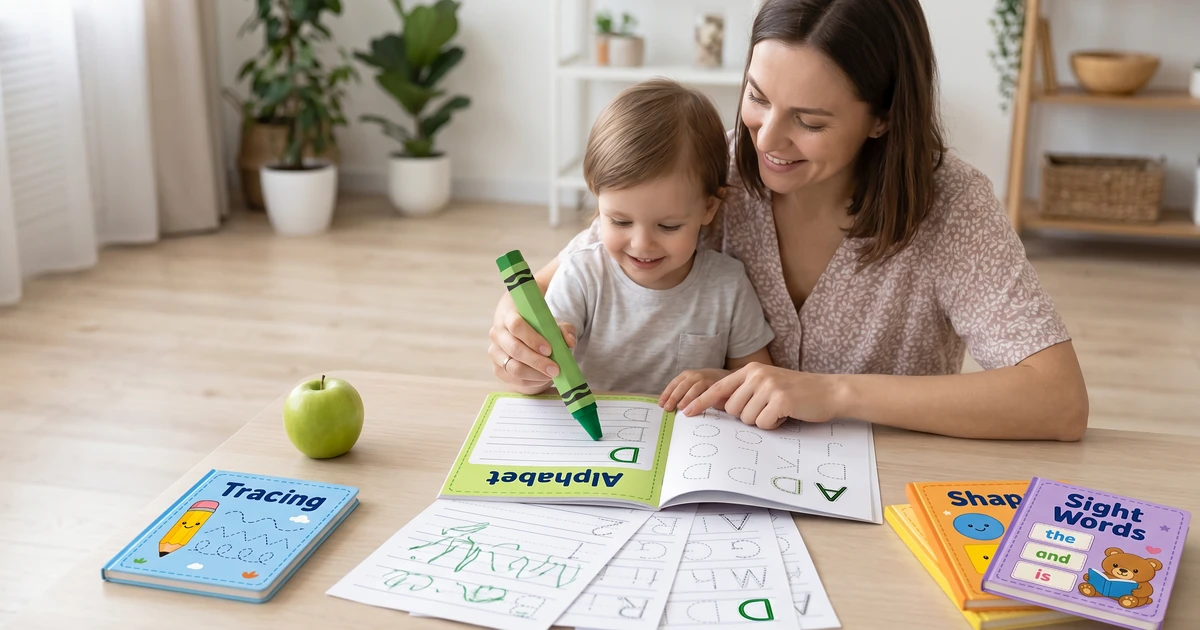
Alphabet tracing for 3 year olds is one of the most effective ways to build early literacy and fine motor skills at the same time. But here's what ...
Preschool Printables Bundle: The Only 5 Skill Areas Your Child Needs
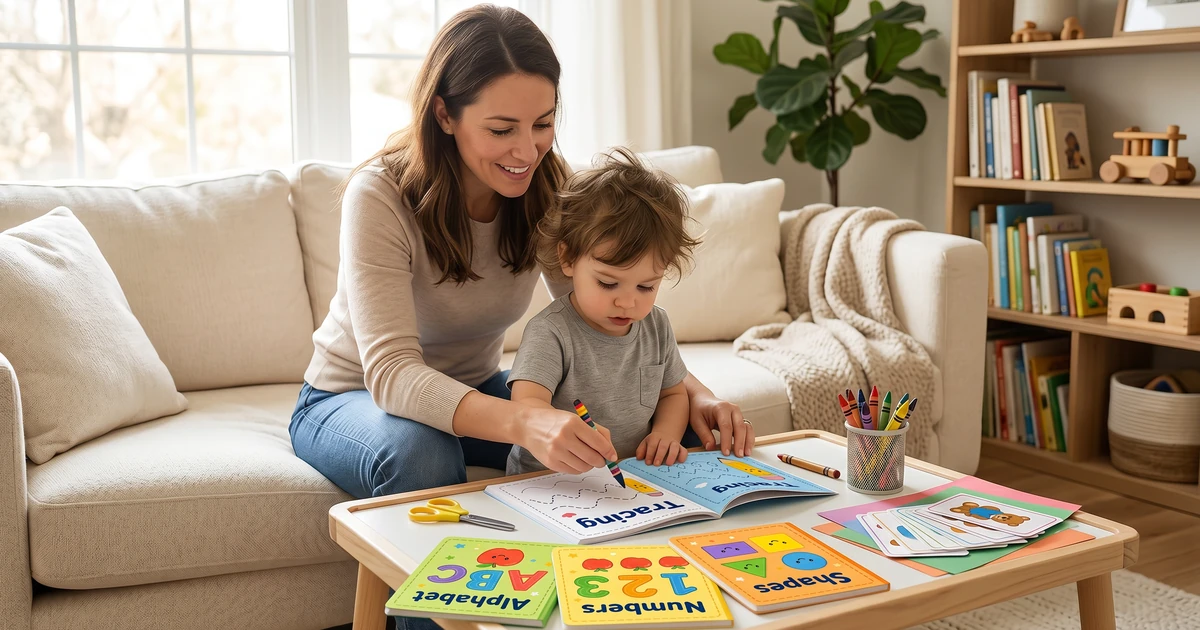
If you've been searching for a preschool printables bundle that covers more than just coloring pages, you're in the right place. I've spent 40+ hou...
7 Screen-Free Preschool Learning Activities That Actually
If you've been searching for screen-free preschool learning activities that hold a 3-to-5-year-old's attention for more than four minutes, you're i...