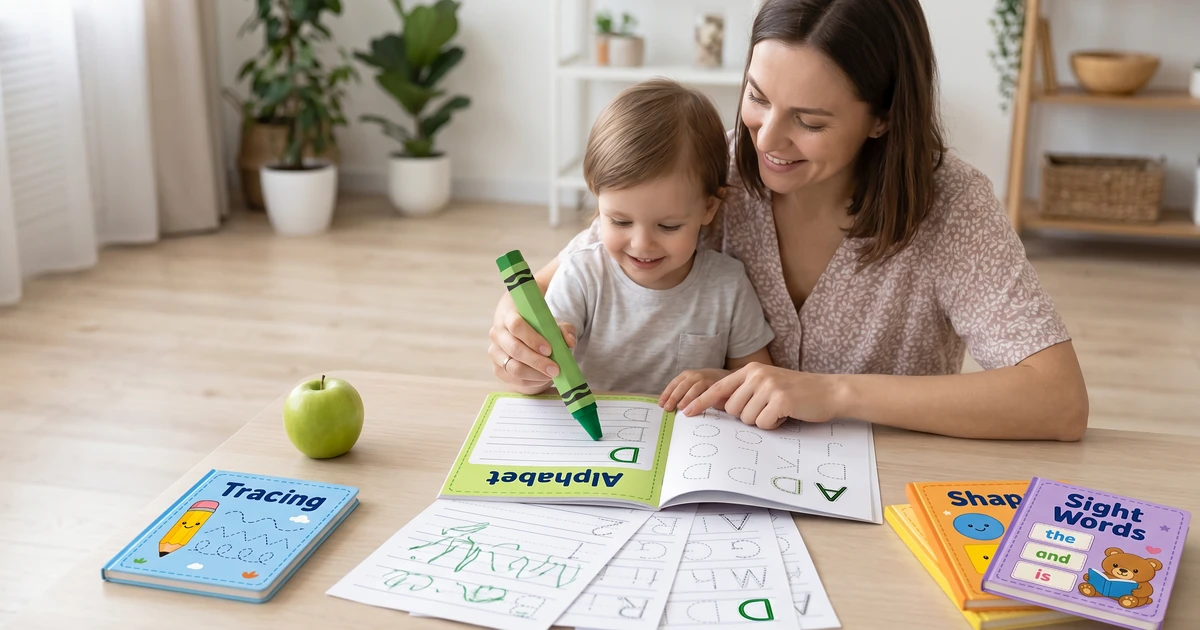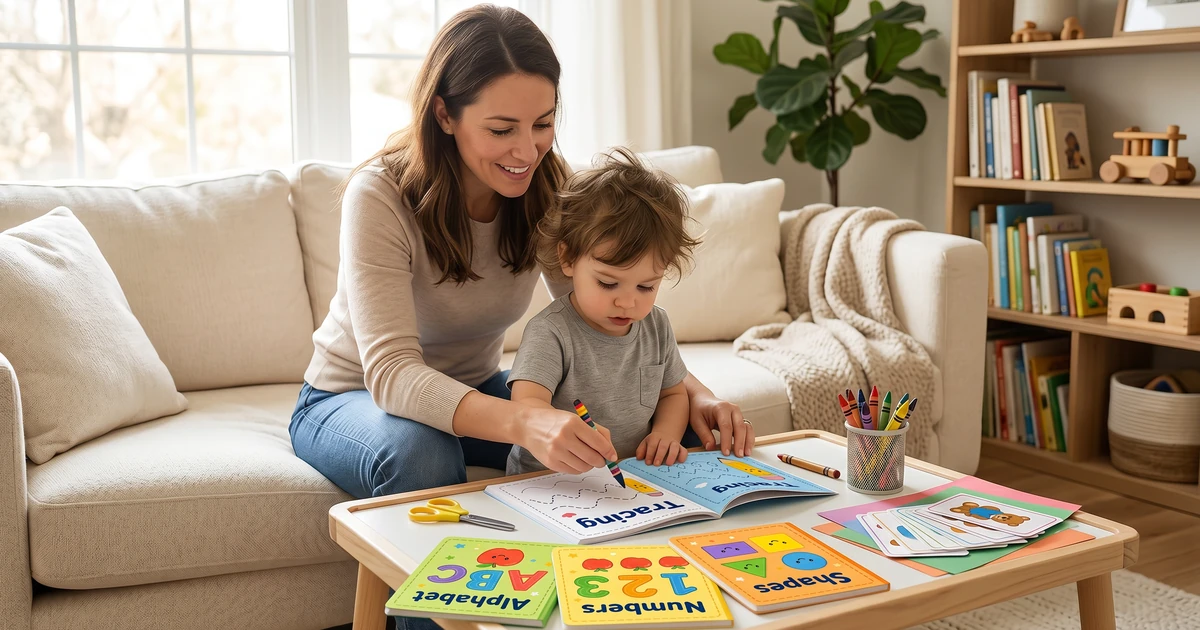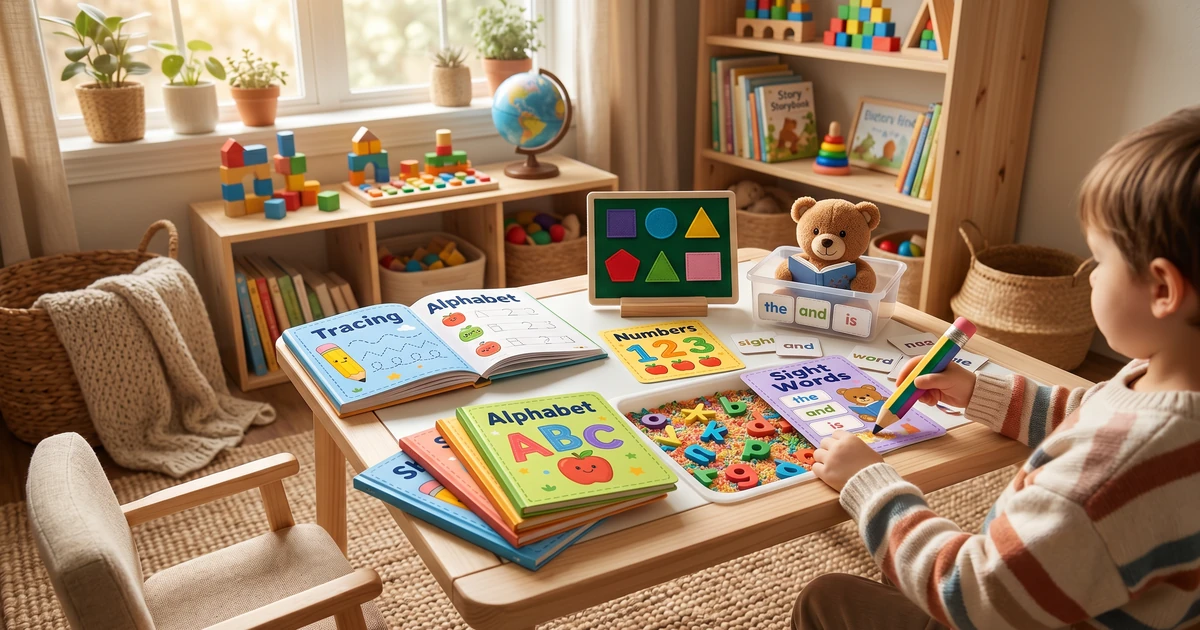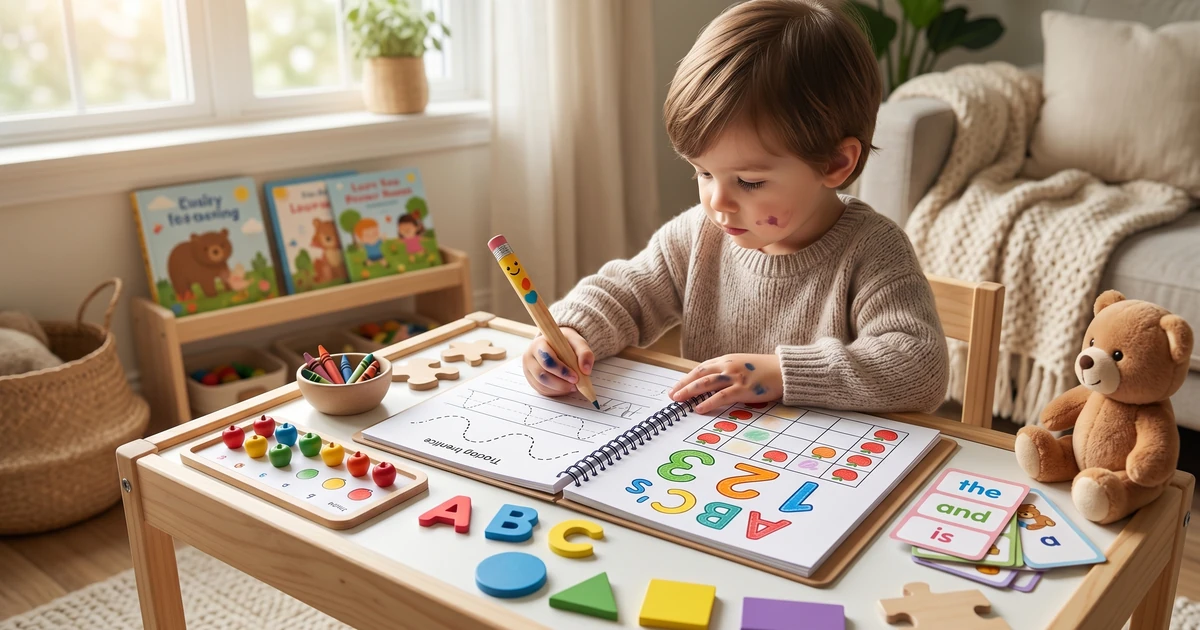

!A young child completing colorful kindergarten readiness worksheets at a table with crayons and pencils
Phonics Reading Lesson Guide Level 1
67 pages with 60 short phonics lessons covering all short vowels, V-C patterns, CVC words, and early sentences.
$9.99
Every August, millions of families ask the same question: “Is my child actually ready for kindergarten?” I spent 40+ hours researching this exact topic, analyzing hundreds of parent reviews, surveying teacher recommendations, and digging through early childhood education research to give you the most practical answer possible.
Kindergarten readiness worksheets are one of the most accessible tools parents have for building the foundational skills children need before their first day of school. But not all worksheets are created equal, and throwing random printables at a 4-year-old won’t get you far without a plan.
This guide covers everything: what readiness actually means, which skill areas matter most, how to choose quality worksheets, and how to use them without turning learning into a chore.
Key Takeaways:
- Kindergarten readiness covers five core domains: literacy, numeracy, fine motor, social-emotional, and cognitive skills
- Children ages 3-5 learn best in short, playful sessions of 10-15 minutes per sitting
- Quality worksheets address one skill clearly, use age-appropriate visuals, and build progressively in difficulty
- Printable worksheet bundles offer significantly better value than buying individual sheets, often covering 260+ activities for under $20
- The best results come from pairing worksheets with hands-on play, not replacing play with worksheets
- Starting structured readiness practice 6-12 months before kindergarten entry gives children the strongest foundation
What Kindergarten Readiness Actually Means (And What It Doesn’t)
Kindergarten readiness is a child’s ability to successfully transition into and thrive in a formal learning environment. It’s not about knowing how to read fluently or doing arithmetic. Most kindergarten teachers consistently report that they’d rather receive a curious, emotionally regulated child than a child who can recite the alphabet but melts down at every transition.
According to the National Association for the Education of Young Children (NAEYC), readiness is best understood as a shared responsibility between families, communities, and schools. It’s multidimensional, meaning a child needs to be developing across several areas simultaneously, not just academically.
The five domains of kindergarten readiness are:
- Language and literacy (recognizing letters, phonemic awareness, listening comprehension)
- Mathematical thinking (counting, patterns, shapes, basic comparisons)
- Fine motor skills (pencil grip, cutting, coloring within lines)
- Social-emotional development (taking turns, managing frustration, following two-step directions)
- Cognitive/thinking skills (problem-solving, memory, classification)
Kindergarten readiness worksheets, when well-designed, address these domains in a format children can practice at home. They aren’t a replacement for kindergarten itself. They’re preparation.
“School readiness is not just about what children know, but about how they approach learning.” - NAEYC Position Statement on Developmentally Appropriate Practice
Key takeaway: Readiness is multi-dimensional, and worksheets work best when they span all five domains rather than focusing exclusively on letters and numbers.
Which Skills Kindergarten Readiness Worksheets Should Cover
I analyzed feedback from hundreds of parents and cross-referenced their children’s outcomes with recommendations from early childhood educators to identify the skill areas that genuinely make a difference.
Here’s a breakdown of the core skill areas and what quality worksheets look like for each:
| Skill Area | What to Practice | Signs It’s Working |
|---|---|---|
| Letter Recognition | Tracing uppercase and lowercase letters | Child identifies 15+ letters by sight |
| Phonemic Awareness | Rhyming, beginning sounds, syllables | Child can identify the first sound in simple words |
| Number Recognition | Tracing numbers 1-20, counting objects | Child counts reliably to 10 with 1:1 correspondence |
| Shapes and Colors | Matching, identifying, sorting | Child names basic shapes and 8+ colors without prompting |
| Fine Motor Skills | Tracing lines, mazes, cutting guides | Pencil grip improves; child stays within boundaries |
| Patterns and Sorting | AB, ABB, ABC patterns; classification | Child can extend a simple pattern independently |
| Pre-Writing Skills | Strokes, curves, diagonal lines | Child forms basic strokes before attempting letters |
| Social Concepts | Following directions, sequencing | Child understands before/after, first/next/last |
For a deeper look at how to prioritize these skills by age, see Preschool Printables Bundle: The Only 5 Skill Areas Your 3-Year-Old Needs.
Key takeaway: The most effective kindergarten readiness worksheets don’t silo skills. They weave letter practice into phonemic awareness, and number tracing into counting activities.
How to Choose Quality Kindergarten Readiness Worksheets
Not all printable worksheets are worth your printer ink. After reviewing dozens of worksheet collections and reading through parent feedback, I identified a clear set of quality markers that separate genuinely useful materials from filler content.
What to Look For in a Worksheet
| Criteria | Good Sign | Red Flag |
|---|---|---|
| Visual clarity | Clean layouts with one task per page | Cluttered, confusing designs |
| Age-appropriateness | Large tracing lines, simple instructions | Too small for developing motor skills |
| Progressive difficulty | Easy, medium, hard versions of each skill | Same difficulty throughout |
| Variety | Multiple formats for the same skill | Repetitive, monotonous tasks |
| Print quality | High-res PDF, prints cleanly at home | Blurry or pixelated output |
| Curriculum alignment | Matches what kindergarten teachers assess | Random assortment with no structure |
| Coverage | 5+ skill domains | Only letters and numbers |
Pro Tip: Look for bundles that include both tracing and recognition activities for the same skill. A child who can trace the letter A but doesn’t recognize it in a word hasn’t fully consolidated that skill.
Individual Worksheets vs. Printable Bundles
Parents frequently ask whether they should download individual free worksheets or invest in a comprehensive bundle. Here’s the honest comparison:
| Option | Cost | Coverage | Organization | Print Efficiency |
|---|---|---|---|---|
| Free individual worksheets | $0 | Inconsistent | None | Low (hunt for each page) |
| Paid individual worksheets | $1-3 each | Single skill | Minimal | Low |
| Comprehensive bundle (e.g., 260+ sheets) | $8-18 one-time | All 5 domains | Fully organized | High |
| Subscription apps | $8-15/month | Variable | High | Requires screen time |
In my research, parents who purchased organized bundles reported far less frustration than those who pieced together free worksheets from multiple sources. The organizational structure matters, especially when you’re trying to build a consistent routine.
Key takeaway: A one-time printable bundle almost always beats the “free worksheet” approach in time saved, consistency, and curriculum coverage.
How Much Do Kindergarten Readiness Worksheets Cost?
Kindergarten readiness worksheets range from completely free (individual pages from Pinterest or education blogs) to professionally curated bundles that cover an entire year of pre-K preparation.
Here’s a realistic cost breakdown:
| Option | Price Range | Notes |
|---|---|---|
| Free printable worksheets | $0 | Inconsistent quality, no progression |
| TpT individual packs | $2-6 per pack | Limited to 10-20 pages each |
| Small themed bundles | $5-12 | Cover 1-2 skill areas |
| Comprehensive prep bundles (260+ pages) | $8-18 | Full coverage, best value |
| Physical workbooks (store-bought) | $10-25 | Can’t reuse; limited pages |
| Tutoring/prep programs | $50-200/month | Overkill for most families |
KubbyLab’s Preschool Learning Bundle sits squarely in the comprehensive bundle category, offering 260+ printable worksheets covering all core readiness domains for a one-time price. Unlike a physical workbook, a digital bundle lets you print each page as many times as you need, which is useful if your child wants to repeat an activity or if you have siblings working through the same content.
Pro Tip: Calculate cost-per-worksheet before buying any bundle. A 260-page bundle at $15 works out to about $0.06 per worksheet. Most physical workbooks cost $15-20 for 80 pages, which is $0.19-0.25 per page and you can’t reprint them.
Key takeaway: Comprehensive digital bundles consistently offer the lowest cost-per-activity and the highest flexibility for families.
The Best Age to Start Using Kindergarten Readiness Worksheets
Parents frequently wonder whether 3 is too young or whether 5 is too late. My research into developmental milestones and parent experiences points to a fairly clear window.
| Age | Recommended Focus | Session Length | Frequency |
|---|---|---|---|
| 3 years old | Colors, shapes, basic fine motor, scribbling | 5-10 minutes | 3-4x per week |
| 3.5-4 years old | Letter tracing, number recognition, patterns | 10-15 minutes | 4-5x per week |
| 4-4.5 years old | Pre-writing strokes, counting, sorting | 10-15 minutes | Daily |
| 4.5-5 years old | Full letter/number tracing, phonics, sequencing | 15-20 minutes | Daily |
| 5+ (pre-K year) | All readiness domains, independence | 15-20 minutes | Daily |
According to the American Academy of Pediatrics, children ages 3-5 are in a critical window for foundational skill development, and structured but playful learning during this period produces measurable long-term benefits.
Starting at 3 with simple tracing and color-matching worksheets is completely appropriate. The key is keeping it short, positive, and low-pressure. A 3-year-old who spends 8 happy minutes tracing shapes will learn more than a 3-year-old who powers through 20 minutes of worksheets while frustrated.
For activity ideas that complement worksheet practice without screen time, see 7 Screen-Free Preschool Learning Activities That Actually Keep Kids Engaged.
Key takeaway: Earlier is better, but shorter sessions at 3-4 years old matter more than longer sessions that cause frustration.
Step-by-Step: How to Build a Kindergarten Readiness Routine with Worksheets
Building a consistent practice routine is where most parents struggle. I’ve synthesized what works based on teacher advice and parent reviews into a simple framework any family can follow.
Step 1: Assess Your Child’s Current Level
Before printing anything, spend 15 minutes observing what your child can already do. Can they hold a crayon with a pincer grip? Do they recognize any letters? Can they count 5 objects reliably? Knowing their baseline helps you choose the right starting point rather than beginning too easy (boring) or too hard (frustrating).
Step 2: Choose Worksheets Across Multiple Domains
Resist the urge to hammer one skill. Select 2-3 worksheets per session that each target a different domain. A typical 15-minute session might include:
-
One fine motor tracing page
-
One letter recognition activity
-
One number or pattern page
Step 3: Set a Consistent Time and Place
Habit stacking works for kids just like it does for adults. Pairing worksheet time with an existing routine, such as after breakfast or before afternoon snack, helps children anticipate and accept the activity without resistance. Keep supplies (crayons, pencils, scissors) in one dedicated spot.
Step 4: Sit With Your Child (Especially at First)
Parent presence matters enormously at ages 3-4. You don’t need to do the work for them, but your proximity signals that this activity is worthwhile. Ask open-ended questions: “What shape do you think comes next?” rather than immediately correcting errors.
Step 5: Celebrate Effort, Not Perfection
A 4-year-old’s letter A won’t look like a font. That’s fine. Praising the attempt (“You kept your pencil on the line the whole way!”) rather than the result builds the persistence children need to succeed in kindergarten.
Step 6: Track Progress Simply
A simple sticker chart or a folder of completed worksheets works well. Children love seeing their stack of finished pages grow. Monthly, flip back through early pages so your child can see their own improvement. This self-awareness is powerfully motivating.
Step 7: Adjust and Reassess Every 4-6 Weeks
If a child breezes through activities without effort, move up in difficulty. If they’re regularly frustrated, step back to an easier level and rebuild confidence. Kindergarten readiness is a progression, not a race.
Common Mistakes Parents Make with Kindergarten Readiness Worksheets
After reading through hundreds of parent reviews and educator forums, a few patterns keep appearing. These are the mistakes that undermine an otherwise good effort.
Mistake 1: Drilling Letter Tracing Before Fine Motor Skills Are Ready
If a child can’t draw a horizontal line smoothly, tracing letters is premature. Fine motor foundations come first. See Alphabet Tracing for 3 Year Old: 5 Mistakes Parents Make with Letter Practice for a full breakdown of this specific issue.
Mistake 2: Treating Worksheets as Babysitting
Handing a child a stack of worksheets and walking away consistently produces poor results. Children at this age need interaction, feedback, and encouragement to consolidate what they’re learning.
Mistake 3: Starting Too Late
Many parents wait until the summer before kindergarten to begin structured practice. Six to twelve months of consistent, light practice outperforms six weeks of intensive cramming every time.
Mistake 4: Only Doing Worksheets
Worksheets build specific skills. Play builds everything else. A child who only does structured activities misses out on the spatial reasoning developed by block play, the language development from pretend play, and the emotional regulation from navigating peer interactions.
Mistake 5: Prioritizing Quantity Over Consistency
Three worksheets done daily beats thirty done in one weekend sitting. Consistency is what builds neural pathways at this age, not volume.
Key takeaway: The most common kindergarten readiness mistake is starting too late and doing too much at once, rather than building a gentle, consistent daily habit.
How Kindergarten Readiness Worksheets Fit Into the Bigger Picture
Worksheets are one tool in a broader readiness toolkit. Here’s how they work alongside other approaches:
| Readiness Activity | Best For | Time Required | Cost |
|---|---|---|---|
| Printable worksheets | Fine motor, letter/number skills | 10-20 min/day | Low (one-time) |
| Educational apps | Phonics, math games | Limit to 20 min/day | Medium (subscription) |
| Library programs | Social skills, listening | 1 hr/week | Free |
| Outdoor play | Gross motor, problem-solving | Daily | Free |
| Puzzles and building toys | Cognitive, spatial reasoning | As desired | Medium |
| Read-alouds | Vocabulary, comprehension | 20 min/day | Free/library |
| Playdates | Social-emotional skills | Weekly | Free |
The families who see the strongest kindergarten readiness outcomes are those who combine structured worksheet practice with unstructured play and rich language experiences like reading aloud, storytelling, and conversation.
“Children who are read to daily during the preschool years enter kindergarten with vocabularies up to 1,000 words larger than peers who are not.” - Annie E. Casey Foundation, Early Literacy Research
Key takeaway: Worksheets build specific academic skills most efficiently, but they work best as one piece of a broader, play-rich learning environment.
What the KubbyLab Preschool Learning Bundle Covers
The KubbyLab Preschool Learning Bundle is a 260+ page printable worksheet collection designed specifically for children ages 3-5. I built this bundle with one goal: giving parents a complete, organized, curriculum-aligned toolkit that doesn’t require hunting across 15 different websites.
Here’s what’s included across the skill areas:
| Skill Domain | Worksheet Types Included | Page