
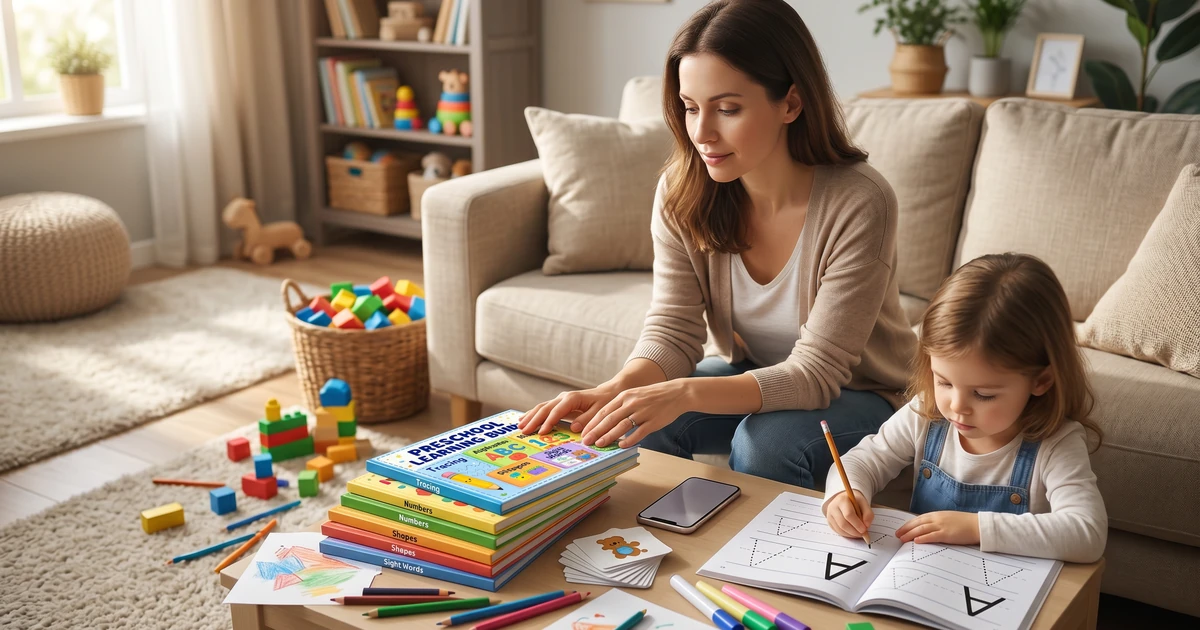
I wasted $200 on preschool apps before I realized this worked
My daughter's iPad looked like a preschool app store exploded on it. ABC Mouse. Khan Academy Kids. Starfall. Homer. Endless Alphabet. Five subscriptions ru

!A child doing printable worksheets at a kitchen table with crayons and a pencil
DISCOVERY ACTIVITY WORKBOOKPhonics Reading Lesson Guide Level 1
67 pages with 60 short phonics lessons covering all short vowels, V-C patterns, CVC words, and early sentences.
My daughter’s iPad looked like a preschool app store exploded on it. ABC Mouse. Khan Academy Kids. Starfall. Homer. Endless Alphabet. Five subscriptions running simultaneously, plus a handful of one-time purchases I barely remembered buying.
At the end of the year, I added it up. $340. For a four-year-old.
And the worst part? When I sat down and honestly assessed what she’d actually learned, I couldn’t point to much. She’d gotten very good at tapping colorful buttons and asking for more screen time. But her pencil grip was shaky, she couldn’t write a single letter without a screen prompt, and she melted down the moment I asked her to sit with paper and a crayon.
If you’ve landed here, I’m guessing you’re somewhere on that same journey. Maybe you’re mid-subscription and wondering if it’s worth it. Maybe you’ve already canceled everything and you’re looking for what actually works instead. Either way, I want to share what I learned after spending 40+ hours researching preschool learning approaches, reading through hundreds of parent reviews, and completely rethinking how my daughter prepares for kindergarten.
Key Takeaways:
- Most preschool app subscriptions cost $60-$130/year each, and kids often plateau after the first few months
- Screen-based learning doesn’t build the fine motor skills kindergarten teachers actually assess
- Printable worksheets cost a fraction of app subscriptions and build pencil grip, letter formation, and focus simultaneously
- The best preschool prep combines hands-on paper activities with limited, intentional screen time
- You don’t need expensive curriculum sets, a well-designed printable bundle covers everything ages 3-5 need
Why Preschool Apps Feel Worth It (But Often Aren’t)
The marketing on these apps is genuinely excellent. Bright colors, adaptive learning algorithms, animated characters your kid will beg to spend time with. They promise “personalized learning paths” and “research-backed curricula.” And honestly, some of the content is educationally sound.
The problem isn’t the content. The problem is the medium.
“Children ages 2-5 learn significantly better from hands-on, three-dimensional experiences than from two-dimensional screen interactions. Screen time displaces the physical manipulation and real-world problem-solving that builds foundational cognitive skills.” - American Academy of Pediatrics
When a child traces a letter on a screen, they’re practicing a tap-and-drag gesture. When they trace the same letter on paper with a pencil, they’re building hand strength, developing the precise motor control needed for writing, and learning to manage pressure and direction without instant digital feedback correcting them.
Kindergarten teachers don’t care whether your child can navigate an app menu. They care whether your child can hold a pencil correctly, sit focused for 10-15 minutes, follow multi-step instructions, and produce work on paper.
Apps train kids to consume. Paper trains kids to produce.
How Much Are Preschool Apps Actually Costing You?
Let me lay this out clearly, because I wish someone had put it in front of me before I started clicking “subscribe.”
| App | Annual Cost | Free Tier? | Key Limitation |
|---|---|---|---|
| ABCmouse | $59.99/year | 30-day trial only | Heavy on passive watching; limited writing practice |
| Homer Learning | $99.99/year | Limited free content | Mostly phonics; weak on math and fine motor |
| Khan Academy Kids | Free | Yes, fully free | No pencil-grip or handwriting component |
| Starfall | $35/year | Basic free version | Mostly reading; no pre-writing skills |
| Endless Alphabet | $11.99 one-time | No | Vocabulary only; very narrow scope |
| Preschool Prep Co. DVDs | $15-25 per DVD | No | Passive viewing; zero interaction |
| Printable Worksheet Bundle | $15-30 one-time | No subscription | Requires adult engagement (actually a feature) |
The average parent I’ve spoken to runs 2-3 app subscriptions simultaneously. That’s $120-$260 per year, recurring, on top of any one-time purchases. A comprehensive printable bundle covers the same skill areas for a one-time cost, with no renewal, no password to remember, and no algorithm deciding what your child sees next.
The math on printables isn’t even close.
What Preschool Skills Actually Matter Before Kindergarten
Before spending another dollar, it helps to know what kindergarten teachers are actually looking for. I dug into curriculum standards from several US states and the National Association for the Education of Young Children (NAEYC) to pull together the real checklist.
The five core skill areas that come up consistently:
- Pre-writing and fine motor skills: holding a pencil, tracing shapes and lines, cutting with scissors
- Letter recognition and early phonics, identifying uppercase and lowercase letters, beginning sounds
- Number sense and early math: counting to 20, recognizing numerals, basic patterns and sorting
- Shapes and spatial reasoning: naming 2D shapes, matching, spatial vocabulary
- Attention and task completion, sitting to finish an activity, following 2-3 step directions
Notice what’s on that list. Not “navigating an app interface.” Not “tapping the correct bubble before the timer runs out.”
Apps can reinforce #2 and #3 in a passive way. But fine motor skills (#1) and attention (#5) are actively undermined by screen-based learning, because tablets require almost no physical effort and provide constant stimulation that makes sustained focus harder, not easier.
For a deeper breakdown of these skills and how to practice them at home, the Kindergarten Readiness Worksheets: 8 Essential Preschool Skills to Practice guide covers each one with specific activities.
The Smarter Alternative: What Actually Works at Ages 3-5
After researching this extensively and talking to parents who’ve made the switch, the pattern that works looks like this:
Step 1: Cut subscriptions down to one (or zero)
Khan Academy Kids is free and genuinely solid for supplementary screen time. If you want one paid app, Homer has reasonable phonics content. But you don’t need five. Pick one if you want any, and cap daily screen time at 20-30 minutes of intentional use, not open-ended play.
Step 2: Introduce 15 minutes of daily paper time
This doesn’t have to be formal or stressful. Sit down at the kitchen table together. Put on music. Use a printed worksheet as a starting point and let it lead into conversation. Parents consistently report that the transition from “app kid” to “paper kid” takes about two weeks of gentle consistency before kids stop resisting.
Step 3: Stock the right materials
You don’t need much:
-
Triangular grip pencils (easier for small hands)
-
A set of thick crayons
-
A sharpener
-
Printed worksheets across the five skill areas above
Pro Tip: Print worksheets on cardstock instead of regular paper. It’s more satisfying to write on, holds up better to erasing, and feels more “official” to a preschooler. A ream of cardstock costs about $12 and lasts months.
Step 4: Follow the child’s interest, not the app’s algorithm
One thing apps get subtly wrong is that they decide what your child works on next. A printed worksheet set lets you (and your child) choose. Obsessed with dinosaurs this week? Print the tracing pages and count dinosaur stickers instead of apples. The skill is the same; the engagement goes up.
Step 5: Track progress visibly
Kids at this age are deeply motivated by visible progress. A simple sticker chart on the fridge, or a completed-worksheet folder they can flip through, gives them a concrete sense of achievement that no app badge can match.
For specific activity ideas that don’t involve screens at all, check out 7 Screen-Free Preschool Learning Activities That Actually Keep Kids Engaged.
What to Look For in a Printable Preschool Bundle
Not all printable bundles are created equally. I’ve looked through a lot of them, and the quality range is enormous. Here’s how to evaluate before you buy:
| Criteria | What Good Looks Like | Red Flag |
|---|---|---|
| Skill coverage | All 5 core areas (writing, letters, math, shapes, attention tasks) | Only covers one area (e.g., just letters) |
| Age range | Differentiated for 3-year-olds vs. 4-5 year olds | One difficulty level for all ages 3-5 |
| Page count | 200+ pages (enough variety to avoid repetition fatigue) | Under 50 pages |
| Visual design | Clean, uncluttered, large print | Busy backgrounds that compete with the task |
| File format | Printable PDF, instant download | Physical shipping only (slow, more expensive) |
| Price | $15-$30 one-time | Monthly subscription model for a static resource |
| Print-friendliness | Designed for home printers, black-and-white friendly | Requires color printing on every page |
The Preschool Printables Bundle: The Only 5 Skill Areas Your 3-Year-Old Needs article goes deeper on exactly what a comprehensive bundle should include and how to use it effectively across the week.
Pro Tip: Before buying any bundle, download the free sample pages if they’re offered. Check that the line weights are dark enough to print clearly on a home inkjet, and that the instructions on each page are readable by a non-teacher parent.
A Note on Letter Tracing Specifically
Letter tracing deserves its own mention because it’s one of the most misused preschool activities, app or paper. A lot of parents (and a lot of apps) start 3-year-olds on letter tracing too early, or do it in the wrong sequence, which actually creates habits that are hard to undo.
The right sequence matters: gross motor first (arm movements, large shapes), then fine motor (smaller shapes, lines), then pre-letter strokes, then actual letters. Jumping straight to alphabet tracing with a child who hasn’t developed basic pencil control yet creates frustration on both sides.
Alphabet Tracing for 3 Year Old: 5 Mistakes Parents Make with Letter Practice covers this in detail, including the specific errors that make letter practice backfire.
Frequently Asked Questions
Are preschool apps completely worthless?
No, they’re not worthless. Some have genuinely good educational content, and Khan Academy Kids in particular is a well-designed free resource. The problem is treating apps as a primary learning tool rather than a supplement. Passive screen time doesn’t build fine motor skills, pencil grip, or the ability to focus on paper-based tasks, all of which are directly assessed in kindergarten. Used for 20-30 minutes as a supplement to hands-on activities, some apps add value. Used as the main learning method, they tend to create dependence on screen stimulation and gaps in physical skill development.
My child refuses to sit with paper activities. How do I make the transition?
This is extremely common after heavy app use, because apps are engineered to be more stimulating than paper. Parents consistently report that the most effective approach is starting with very short sessions (5 minutes, not 15), sitting with the child rather than handing off the worksheet, and choosing topics the child already loves. Don’t frame it as “learning.” Frame it as “let’s draw some dinosaurs together” and happen to pull out a tracing page. The resistance usually fades within 2 weeks of consistent, low-pressure sessions.
How many worksheets does a preschooler actually need?
For a typical school year running September through May (about 36 weeks), and assuming 3-4 worksheets per week, you’d use roughly 100-150 pages. A 200+ page bundle gives you enough variety that you’re not repeating the same pages, plus room to focus on areas your child needs more practice in. Buying a large bundle once is more economical than buying individual packs repeatedly.
Do printable worksheets work for 3-year-olds, or are they too young?
Three-year-olds can absolutely use worksheets if the content is age-appropriate. Look for pages designed specifically for younger preschoolers: bigger lines, simpler shapes, shorter tasks, and more drawing-based activities than writing-based. A well-designed bundle will differentiate between 3-year-old and 4-5 year old content. Starting early with low-pressure, short sessions builds positive associations with paper-based learning that pay off significantly by the time kindergarten arrives.
What if my child attends preschool already? Do they still need at-home practice?
Most preschool programs (especially part-day programs) provide far less structured skill practice than parents assume. Teachers are managing groups of 15-20 children, and the ratio of individual attention is low. Fifteen minutes of focused one-on-one practice at home, three or four days a week, consistently outperforms what a child gets in a group preschool setting. It’s not about replacing preschool; it’s about reinforcing it.
Ready to Stop Subscribing and Start Progressing?
The subscription treadmill is easy to stay on because canceling feels like giving up. But spending less and getting better results isn’t giving up. It’s just smarter.
A good printable bundle, a set of pencils, and 15 minutes a day will do more for your child’s kindergarten readiness than five simultaneous app subscriptions.
For everything you need to know about building a complete at-home preschool practice with printables, including which skills to prioritize by age, how to structure your week, and what a genuinely comprehensive bundle includes, read the full guide:
Kindergarten Readiness Worksheets: 8 Essential Preschool Skills to Practice →
You May Also Like
Take the Next Step!
Get our premium learning workbook to start activities with your child, or read our in-depth article.
Recommended Resources & Workbooks
Pair this guide with our hands-on, ready-to-print learning resources.
 Digital Bundle
Learn to Read Program: Levels 1-3
170 sequenced phonics lessons across 199 pages, from first letter sounds to fluent long-vowel reading.
 Digital Learning Bundle
Preschool Learning Bundle
260+ printable worksheets for tracing, ABCs, numbers, shapes, sight words, and kindergarten prep.
 Digital Learning Bundle
Play-Based Learning Bundle for Ages 3-6
230+ play-based learning activities with pretend play, reading, early math, creative arts, and bonus flashcards.
Related Guides & Articles
Explore more of our detailed guides and activities.
Kindergarten Readiness Worksheets: 8 Essential Preschool
Download kindergarten readiness worksheets covering writing, sounds, numbers, and more. Help your child build skills with printable sheets designed...
Alphabet Tracing for 3 Year Old: 5 Mistakes Parents Make
Alphabet tracing for 3 year olds is one of the most effective ways to build early literacy and fine motor skills at the same time. But here's what ...
Preschool Printables Bundle: The Only 5 Skill Areas Your Child Needs
If you've been searching for a preschool printables bundle that covers more than just coloring pages, you're in the right place. I've spent 40+ hou...
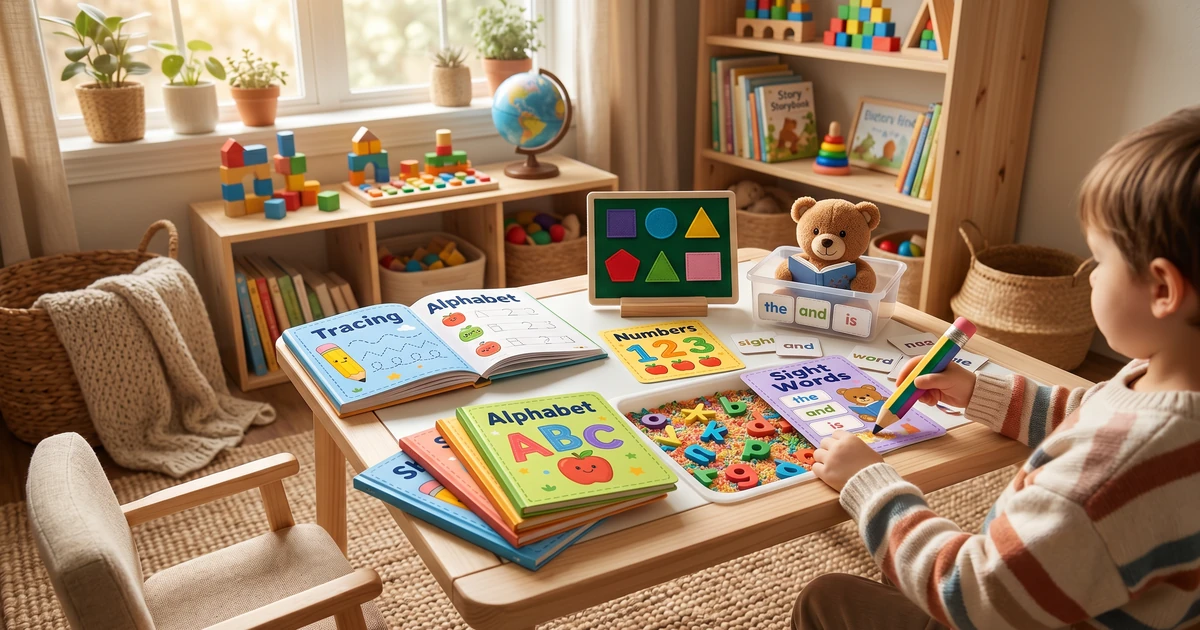
7 Screen-Free Preschool Learning Activities That Actually
If you've been searching for screen-free preschool learning activities that hold a 3-to-5-year-old's attention for more than four minutes, you're i...