
Screen-free airport activity bag that saved our 4-hour flight
You've booked the flights. You've packed the snacks. You've mentally rehearsed the gate, the boarding, the seatbelt buckle. And then it hits you: you're ab

You’ve booked the flights. You’ve packed the snacks. You’ve mentally rehearsed the gate, the boarding, the seatbelt buckle. And then it hits you: you’re about to spend 3+ hours in a confined metal tube with a 4-year-old who has the attention span of a goldfish and the energy of a small tornado.
DISCOVERY ACTIVITY WORKBOOKPhonics Reading Lesson Guide Level 1
67 pages with 60 short phonics lessons covering all short vowels, V-C patterns, CVC words, and early sentences.
Reaching for the tablet feels like the obvious answer. But maybe you’ve noticed what I’ve noticed: after 20 minutes of screen time, the meltdown that follows is somehow worse than if you’d never handed it over at all. The transition back to reality is brutal. And on a plane, there’s nowhere to go.
A well-packed screen-free airport activity bag for preschoolers isn’t just a nice idea. It’s honestly one of the best things I’ve researched and put together for traveling families. Done right, it keeps a 3 to 5-year-old genuinely engaged for hours, without a single notification or YouTube autoplay.
Here’s exactly how to build one.
Key Takeaways:
- A screen-free airport activity bag works best when it contains 5-8 varied activity types, not just toys
- Printable activity sheets are one of the highest-value items you can pack (lightweight, cheap, endlessly varied)
- Novelty matters more than expense: new-to-them items keep preschoolers engaged 3x longer than familiar ones
- Rotate items during the trip rather than dumping everything out at once
- The bag itself should be the child’s own backpack, giving them ownership and excitement
- Prep takes about 30 minutes but saves hours of stress at the gate and in the air
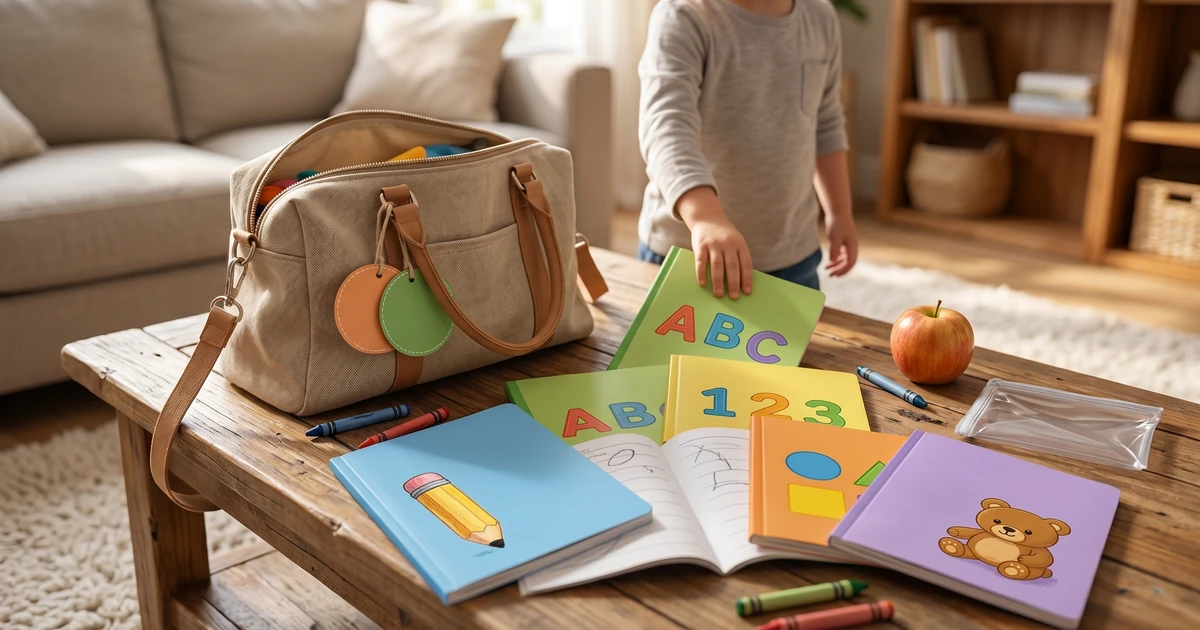
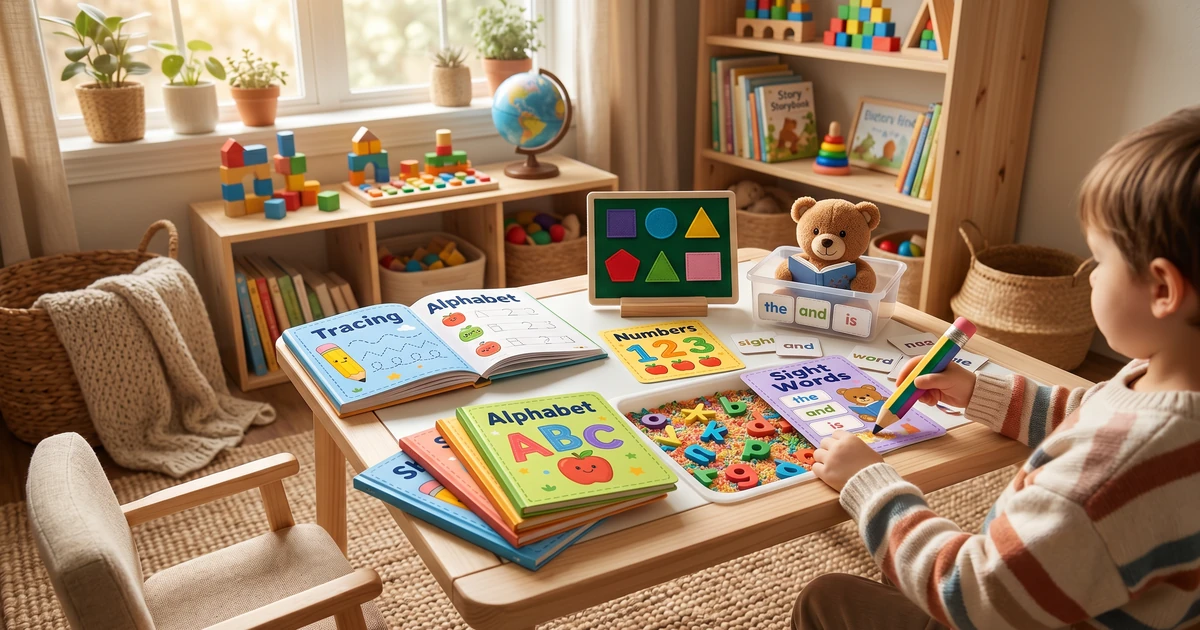
!A colorful preschool activity bag with printable worksheets, crayons, stickers and small toys laid out on a white surface
Why Tablets Actually Make Long Travel Days Harder for Preschoolers
Before getting into what to pack, it helps to understand why screens tend to backfire with this age group specifically.
“Young children ages 2-5 have difficulty self-regulating after screen exposure, particularly when the screen is removed abruptly. The transition triggers frustration responses that can be more intense than those seen before screen use began.” - American Academy of Pediatrics
Preschoolers are still developing the prefrontal cortex functions that help manage transitions. A screen delivers fast dopamine. When it’s gone, the world feels boring by comparison, including the snacks, the window, the activity bag you lovingly packed.
Starting screen-free from the moment you leave the house means you never create that contrast problem. The activity bag is the entertainment, and kids adapt to it surprisingly fast when there’s nothing competing with it.
The key insight: remove the comparison, and the “boring” options become interesting.
What Goes Inside: The 5-Category System
After analyzing dozens of parent reviews and travel forums, the activity bags that actually work tend to cover five categories. Think of it as a formula rather than a random grab from the toy bin.
| Category | Example Items | Why It Works |
|---|---|---|
| Fine Motor | Lacing cards, stickers, pipe cleaners | Keeps hands busy, develops concentration |
| Drawing and Tracing | Printable worksheets, blank paper, crayons | Portable, mess-free, educational |
| Puzzle and Logic | Mini jigsaw (12-24 pieces), felt board | Builds focus, quiet and contained |
| Sensory and Tactile | Mini playdough pod, textured stickers | Calms anxious or overstimulated kids |
| Pretend and Story | 3-4 small figurines, mini storybook | Encourages imaginative independent play |
You don’t need one item per category. You need coverage across all five. A bag that’s 80% drawing materials and nothing else will run dry fast.
Aim for 8-12 individual items total, pulling from at least 4 of these 5 categories.
The Printable Worksheet Advantage (Seriously Underrated)
If I had to pick one item category that consistently gets underestimated, it’s printable activity sheets. Parents skip them because they feel too “school-like” for vacation. But preschoolers don’t think of them that way at all. To a 3 or 4-year-old, a colorful maze or a dot-to-dot is just a game.
Here’s what makes printables uniquely good for travel:
- They’re completely flat and lightweight (zero luggage weight)
- You can print 30 pages for under $1 in ink
- Variety is built in: tracing, coloring, matching, mazes, counting
- No cleanup, no parts to lose, no batteries
- Each sheet is “new,” which resets attention naturally
Pro Tip: Print double-sided to save space, and hole-punch the corner of each sheet. Thread a binder ring through to make a little activity booklet your child can flip through. It feels special, and they’re less likely to lose individual sheets under the seat.
For preschool travel specifically, the most useful skill areas to cover in printables are:
-
Alphabet tracing and letter recognition
-
Simple number matching and counting (1-10)
-
Shape and color identification
-
Mazes and connect-the-dot activities
-
Spot the difference and visual matching
The KubbyLab Preschool Learning Bundle covers all five of these areas across 260+ printable worksheets designed for ages 3-5, which makes it a practical one-stop source for filling out an activity bag without hunting for 12 different free downloads. But there are free options too: many libraries offer printable activity pages, and sites like PBS Kids have downloadable coloring sheets.
For a deeper look at which skill areas matter most for this age group, the Preschool Printables Bundle: The Only 5 Skill Areas Your 3-Year-Old Needs article breaks it down with specific examples.
How to Pack the Bag So It Lasts the Whole Trip
The single biggest mistake I see in travel bag advice: dumping everything in and letting the kid rifle through it at once. Within 20 minutes, the novelty is gone.
Here’s the system that works instead:
Step 1: Divide Activities Into Three Rounds
Pack the bag in three distinct groups. Round 1 is for the airport wait. Round 2 is for takeoff through cruising altitude. Round 3 is the reserve for the descent and any delays. Keep Rounds 2 and 3 in a separate zip pouch inside the bag so the child can’t access them early.
Step 2: Start With the Highest-Engagement Items
Round 1 should include the most novel item in the bag, usually something new they haven’t seen before. Sticker books, a new mini puzzle, or a fresh set of worksheets work well here.
Step 3: Introduce the Next Round Before They’re Bored
Don’t wait for the meltdown. Transition to Round 2 while they’re still engaged but starting to wind down. “Okay, I have a special new thing in here” works as a verbal cue.
Step 4: Save One “Emergency” Item
Pack one item that stays hidden until you genuinely need it. A brand-new small toy, a special snack, or a sealed activity set. This is your ace card for turbulence, long taxi waits, or a delayed gate.
Pro Tip: Wrap one item in tissue paper. The “unwrapping” experience alone buys you 5-10 minutes of excitement.
What to Skip (Even Though It Seems Like a Good Idea)
Not everything small and colorful belongs in a travel activity bag. After reading through hundreds of parent reviews and travel community posts, these are the items that consistently disappoint:
-
Kinetic sand or slime: Absolute airport security nightmare, and it ends up on the seat-back tray.
-
Games with 20+ tiny pieces: You will lose half of them before you board.
-
Coloring books over 50 pages: Too bulky and kids only use 3 pages anyway. Print individual sheets instead.
-
Busy boards with locks and latches: Great at home, but the clicking sounds will frustrate nearby passengers.
-
Audio books or sound toys without headphones: Bring headphones if you bring anything sound-based, always.
Cost Breakdown: Building the Bag on a Budget
You don’t need to spend $50 on a perfectly curated travel kit. Here’s a realistic breakdown:
| Item | Price Range | Notes |
|---|---|---|
| Child’s small backpack | $8-$15 | Target, Amazon, dollar stores |
| Crayons (travel pack of 8) | $1-$3 | Crayola triangle crayons are great for small hands |
| Printable worksheets (printed at home) | $0.50-$2 | Just ink costs if you own a bundle |
| Sticker book | $3-$6 | Dollar Tree often has these |
| Mini puzzle (12-24 pieces) | $4-$8 | Look in dollar bins at craft stores |
| Playdough 2-pack | $2-$4 | Keep the lid closed between uses |
| 3-4 small figurines | $3-$8 | Animals, dinosaurs, whatever they’re into |
| Mini lacing cards | $3-$6 | Melissa and Doug makes a good travel version |
| Total | $25-$52 | Most families land around $30-35 |
According to the National Association for the Education of Young Children (NAEYC), unstructured play with physical materials supports language development and problem-solving in ways that passive screen consumption doesn’t replicate, which is a solid reminder that this $30 bag is doing real developmental work, not just babysitting.
Building on Screen-Free Learning Beyond the Airport
One trip is a great start. But if you’re already invested in screen-free activity time with your preschooler, travel is just one context where it pays off. The same printable worksheets that work on a plane work at a restaurant, a waiting room, or a long car ride.
For building out a broader screen-free learning practice at home, 7 Screen-Free Preschool Learning Activities That Actually Keep Kids Engaged covers activity formats that work consistently for ages 3-5.
And if you’re thinking about kindergarten readiness alongside the travel stuff, Kindergarten Readiness Worksheets: 8 Essential Preschool Skills to Practice is worth bookmarking for when you get back home.
Frequently Asked Questions
How many activities should I pack for a 3-hour flight with a preschooler?
Aim for 8-12 individual items covering at least 4 activity types. For a 3-hour flight, plan for roughly one “new” item or activity every 20-25 minutes. That math works out to about 8-9 transitions, which is why variety matters more than quantity. A single coloring book won’t stretch across a full flight, but a mix of stickers, worksheets, figurines, and a puzzle will.
What age is a screen-free activity bag appropriate for?
The sweet spot is ages 3-6. Younger than 3, children need more hands-on adult involvement and can’t manage small pieces safely. Older than 6, kids often do well with chapter books, card games, or longer-form activities. For ages 3-5 specifically, the variety-based bag approach works best. For more on what preschoolers can realistically handle skill-wise, see Alphabet Tracing for 3 Year Old: 5 Mistakes Parents Make with Letter Practice.
My child always wants the tablet the moment I give them the activity bag. What do I do?
Don’t bring the tablet into sight at all, even in your own bag. For preschoolers, “out of sight” genuinely means “out of mind” more than it does for older kids. If the tablet is never introduced as an option for the trip, most children accept the activity bag within 10-15 minutes without a fight. The hardest part is holding the line for the first few trips. After that, the activity bag becomes the expected travel routine and there’s much less resistance.
Can printable worksheets really keep a preschooler busy for that long?
Yes, with the right variety. A single worksheet takes 3-8 minutes for a preschooler. If you bring 15-20 sheets covering different skills (tracing, coloring, mazes, matching), that’s 45 minutes to 2+ hours of content. The key is mixing skill levels: some easy sheets they can breeze through confidently, some slightly challenging ones that require focus. The mix prevents both boredom and frustration.
What’s the best way to organize the activity bag so nothing gets lost?
Use small zip pouches or resealable bags inside the main bag to group items by round or category. Label each pouch with a sticker (star for Round 1, heart for Round 2, etc.) so your child can feel involved. Keep crayons in a separate pencil case rather than loose. Worksheets travel best in a small clipboard or inside a file folder to keep them flat and prevent crumpling under the seat.
For a full breakdown of the printable activities that work best across all five preschool skill areas, including exactly which worksheet types to print for travel, read the complete guide: Preschool Printables Bundle: The Only 5 Skill Areas Your 3-Year-Old Needs.
You May Also Like
Take the Next Step!
Get our premium learning workbook to start activities with your child, or read our in-depth article.
Recommended Resources & Workbooks
Pair this guide with our hands-on, ready-to-print learning resources.
 Digital Bundle
Learn to Read Program: Levels 1-3
170 sequenced phonics lessons across 199 pages, from first letter sounds to fluent long-vowel reading.
 Digital Learning Bundle
Preschool Learning Bundle
260+ printable worksheets for tracing, ABCs, numbers, shapes, sight words, and kindergarten prep.
 Digital Learning Bundle
Play-Based Learning Bundle for Ages 3-6
230+ play-based learning activities with pretend play, reading, early math, creative arts, and bonus flashcards.
Related Guides & Articles
Explore more of our detailed guides and activities.
Kindergarten Readiness Worksheets: 8 Essential Preschool
Download kindergarten readiness worksheets covering writing, sounds, numbers, and more. Help your child build skills with printable sheets designed...
Alphabet Tracing for 3 Year Old: 5 Mistakes Parents Make
Alphabet tracing for 3 year olds is one of the most effective ways to build early literacy and fine motor skills at the same time. But here's what ...
Preschool Printables Bundle: The Only 5 Skill Areas Your Child Needs
If you've been searching for a preschool printables bundle that covers more than just coloring pages, you're in the right place. I've spent 40+ hou...
7 Screen-Free Preschool Learning Activities That Actually
If you've been searching for screen-free preschool learning activities that hold a 3-to-5-year-old's attention for more than four minutes, you're i...