
The 3-page test that shows if your preschooler is ready for letters
You're watching your three or four-year-old scribble on everything in sight, and somewhere in the back of your mind, a question keeps surfacing: Should th

You’re watching your three or four-year-old scribble on everything in sight, and somewhere in the back of your mind, a question keeps surfacing: Should they be learning letters by now?
DISCOVERY ACTIVITY WORKBOOKPhonics Reading Lesson Guide Level 1
67 pages with 60 short phonics lessons covering all short vowels, V-C patterns, CVC words, and early sentences.
Maybe your neighbor’s kid is already writing their name. Maybe your child’s preschool teacher mentioned “letter readiness” at the last parent meeting and you nodded along, not entirely sure what that meant. Or maybe you’re just the kind of parent who wants to feel confident (not anxious) about where your child stands.
That feeling is incredibly common. And the good news? There’s a simple, low-pressure way to find out exactly where your preschooler is, without turning your living room into a testing center.
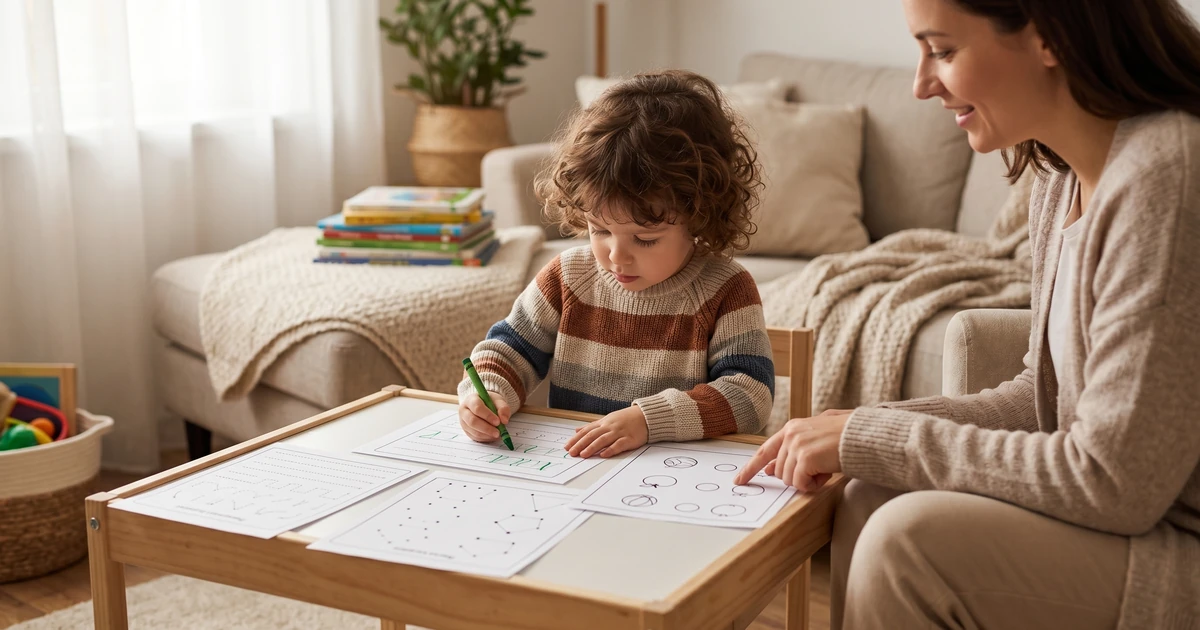
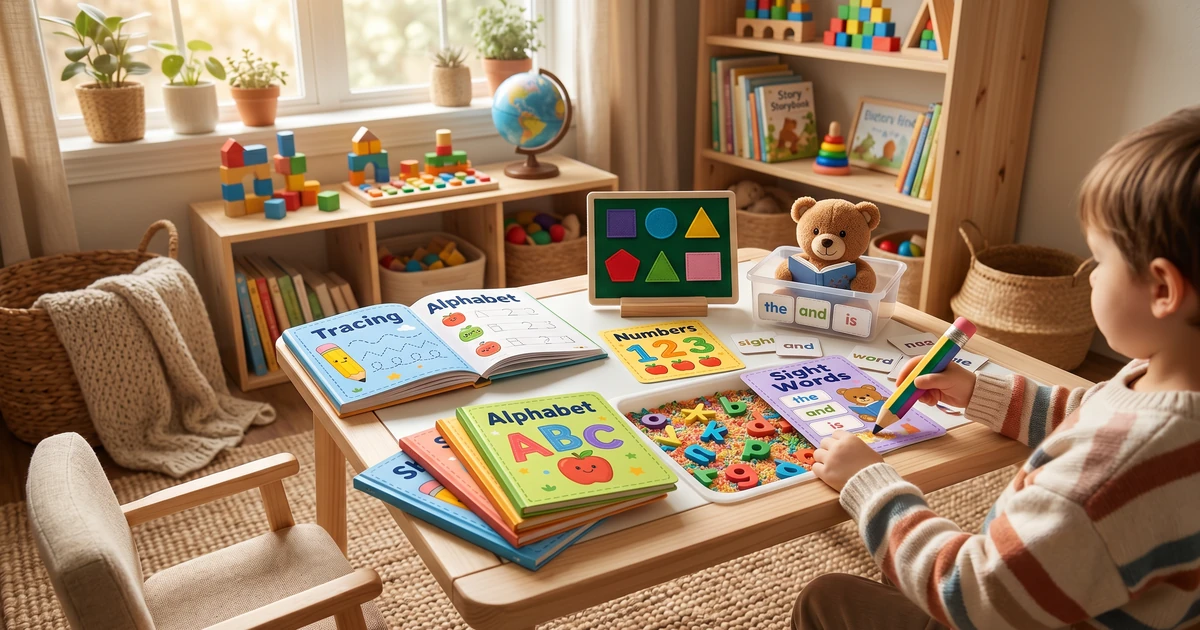
!A preschooler sitting at a table working on a letter activity printable
Key Takeaways:
- Letter readiness isn’t about age alone, it’s about a specific set of skills that develop at different rates in every child
- A preschooler letter readiness test printable can reveal skill gaps in under 15 minutes, without pressure or formal testing
- Most children show letter readiness somewhere between ages 3.5 and 5, but the range is wide and normal
- Fine motor skills, phonological awareness, and visual tracking all feed into letter readiness before a single letter is ever taught
- You don’t need expensive programs to assess or support your child, targeted printables work just as well
What “Letter Readiness” Actually Means (Most Parents Get This Wrong)
Letter readiness is the collection of foundational skills a child needs before formal letter instruction becomes truly effective. It’s not simply “can they say the ABCs.” It’s a broader picture.
A child might recite the alphabet perfectly at age three and still not be ready to write or read letters, because the underlying skills aren’t there yet. Those underlying skills include:
-
Phonological awareness, the ability to hear and play with individual sounds in words
-
Visual discrimination, the ability to notice differences between shapes (which is how kids distinguish “b” from “d”)
-
Fine motor control, the hand and finger strength needed to hold a pencil and form shapes
-
Print concepts: understanding that print carries meaning, that we read left to right, that letters are different from pictures
-
Symbol recognition, connecting a visual shape to a sound or name
When even one of these is underdeveloped, pushing formal letter instruction tends to backfire. The child gets frustrated, the parent gets worried, and what should be exciting starts to feel like a struggle.
“Literacy development is a process, not an event. Children who are pushed into formal reading instruction before they’re developmentally ready often develop negative attitudes toward reading that can persist.” - National Association for the Education of Young Children (NAEYC)
The single most useful thing you can do right now is find out which of these skills your child has and which ones need more time.
Why a Simple Printable Assessment Works Better Than Guessing
I’ve spent a lot of time looking at how parents and preschool teachers approach letter readiness, and the most common mistake I see is relying on gut feeling alone. Either “she seems ready, let’s start” or “he’s not there yet, let’s wait”, with no real data behind either decision.
A preschooler letter readiness test printable gives you something concrete. In about 10 to 15 minutes, sitting at the kitchen table with your child, you can actually see:
-
Which letter sounds they recognize by ear
-
Whether they can match uppercase and lowercase pairs
-
How they handle a pencil and trace basic shapes
-
Whether they understand left-to-right directionality
-
Which specific skill areas need support before letter instruction begins
This isn’t a pass/fail exam. It’s a snapshot. And once you have that snapshot, you stop guessing and start helping in the right places.
How to Use a Letter Readiness Printable Without Stressing Your Child Out
The biggest concern I hear from parents is: “What if they fail?” Here’s what I want you to know, there’s no failing a readiness assessment at this age. There’s only information.
Here’s a low-pressure way to sit down with the printable:
Step 1: Pick the Right Time
Do it when your child is rested, fed, and in a good mood. Not right before nap, not right after a long car ride. First thing after breakfast on a weekend morning is often ideal. Keep it to 10 to 15 minutes maximum.
Step 2: Frame It as Play, Not a Test
Say something like: “I have some fun papers for us to look at together. Let’s see what we can do!” Never use the word “test.” Never say “let’s see how smart you are.” Just make it feel like a normal activity.
Step 3: Observe, Don’t Prompt
When you’re working through the assessment pages, resist the urge to help. If your child doesn’t know an answer, just say “that’s okay, skip it” and move on. What you’re looking for is what they can do independently.
Step 4: Note What You See
Keep a simple notepad beside you. Jot down which sections felt easy, which caused hesitation, and which ones your child had no idea how to approach. You don’t need to score anything formally.
Step 5: Use the Results to Plan, Not to Worry
Once you’re done, you’ll have a clear picture of where to focus your at-home practice. Is it letter sounds? Shape recognition? Pencil grip? Each gap has a simple fix, and knowing the gap is the whole point.
Pro Tip: Run the same assessment again in 6 to 8 weeks after targeted practice. The progress you’ll see is genuinely motivating, for you and for your child.
What a Good Letter Readiness Assessment Should Cover
Not all readiness printables are equal. Some just show pictures of letters and ask kids to name them, which only captures one small piece of the puzzle. A thorough assessment should cover multiple skill domains.
Here’s what I look for when evaluating any preschooler letter readiness test printable:
| Skill Area | What It Measures | What to Look For in a Printable |
|---|---|---|
| Letter recognition | Can they identify letters by name? | Both uppercase and lowercase, mixed order |
| Letter-sound correspondence | Do they connect sounds to letters? | Picture-to-letter matching tasks |
| Visual discrimination | Can they spot differences in shapes? | ”Which one is different?” style tasks |
| Fine motor readiness | Can they control a pencil? | Tracing lines, curves, and shapes |
| Print directionality | Do they understand left-to-right? | Tracking tasks, word boundary awareness |
| Phonological awareness | Can they hear individual sounds? | Rhyming, beginning sound identification |
“Early literacy skills that predict later reading success include phonological awareness, print knowledge, and oral language development, all of which can be observed in preschool-age children.” - International Literacy Association
A strong printable touches all six of these areas, not just letter naming.
The Skill Gap Most Parents Miss Completely
Fine motor control is the silent readiness factor almost no one talks about in the context of letter learning.
Your child might know every letter of the alphabet by sound and sight. But if their hand strength and pencil grip aren’t there, writing those letters will feel physically exhausting and discouraging. I’ve seen this pattern repeatedly: a child who’s bright and verbally advanced, but who grips a pencil so tightly their hand cramps within minutes, or whose lines waver so much that letter shapes come out unrecognizable.
This isn’t a learning problem. It’s a development problem. And it’s completely fixable with the right practice.
Simple activities that build fine motor skills alongside letter practice:
- Playdough squishing and rolling (builds hand strength)
- Tearing paper into small pieces along lines (builds pincer grip)
- Threading beads or pasta onto string (builds finger coordination)
- Tracing dotted lines with a finger before using a pencil
- Cutting along curved lines with child-safe scissors
For more on how to layer these skills into your at-home routine, the Alphabet Tracing for 3 Year Old: 5 Mistakes Parents Make with Letter Practice guide goes deep on exactly this issue.
How Letter Readiness Fits Into the Bigger Picture of School Prep
Letter readiness is just one piece of kindergarten preparation. When I look at the full range of skills teachers expect children to arrive with, letters and sounds usually sit alongside:
-
Number sense (counting, quantity, patterns)
-
Self-regulation (waiting, following directions, managing frustration)
-
Social skills (sharing, taking turns, asking for help)
-
Scissors and pencil control
-
Listening comprehension
If your child has gaps in letter readiness, that doesn’t mean they’re behind in everything. And if they’re flying through letter concepts, they may still need work in other areas.
| Skill Category | Average Age of Readiness | Signs of Readiness |
|---|---|---|
| Letter recognition | 3.5 to 4.5 years | Names most uppercase letters |
| Letter-sound matching | 4 to 5 years | Connects sounds to common letters |
| Beginning writing | 4 to 5 years | Copies simple shapes and letters |
| Phonological awareness | 4 to 5 years | Rhymes words, hears first sounds |
| Print concepts | 3.5 to 5 years | Knows books have print, not just pictures |
The Kindergarten Readiness Worksheets: 8 Essential Preschool Skills to Practice article maps out all eight skill areas and where letter work fits relative to the full picture.
FAQ: Preschooler Letter Readiness
Q: My child is four and doesn’t recognize any letters. Should I be worried?
Not necessarily. While many four-year-olds recognize some letters (especially the ones in their own name), full letter recognition typically develops between ages 4 and 5.5. If your child has no interest in print at all by age five, it may be worth a conversation with your pediatrician, but for most four-year-olds, it’s simply a matter of readiness timing.
Q: What’s the difference between letter readiness and reading readiness?
Letter readiness refers specifically to the skills needed to learn letters: recognizing them, naming them, connecting them to sounds, and eventually writing them. Reading readiness is a broader concept that includes all of that plus vocabulary, comprehension, and oral language development. Letter readiness is one milestone on the longer road to reading.
Q: How often should I practice letters with my preschooler?
Short and frequent beats long and occasional every time. Five to ten minutes of focused letter-related activity three or four times per week is more effective than a 30-minute session once a week. Kids this age learn through repetition and play, not sustained focus.
Q: Can a printable really tell me if my child is ready, or do I need a professional assessment?
A printable assessment is a useful home screening tool, not a clinical evaluation. For most families, it gives enough information to guide at-home practice. If you have ongoing concerns about your child’s development, speech, or motor skills, a developmental pediatrician or early childhood specialist is the right next step.
Q: My child passed the readiness assessment. Now what?
Then you start! Begin with the letters in their name, since those already feel personally meaningful. Keep sessions short, playful, and low-pressure. Look into structured letter practice that builds from recognition to tracing to beginning sounds. The Preschool Printables Bundle: The Only 5 Skill Areas Your 3-Year-Old Needs is a good resource for mapping out what to work on next.
Ready to See Where Your Child Actually Stands?
A letter readiness assessment takes less time than your morning coffee. It tells you exactly which skills to work on and which ones to leave alone for now. That’s the kind of clarity that turns parenting anxiety into confident, targeted action.
KubbyLab’s preschool letter readiness printable is part of a broader set of kindergarten prep tools designed specifically for ages 3 to 5. It covers all six skill areas in a gentle, child-friendly format that feels like play, not school.
But before you print anything, I’d recommend reading the full guide first. It walks through every skill area in detail, shows you what to look for in your child’s responses, and gives you a simple action plan based on your results.
Read the complete guide: Kindergarten Readiness Worksheets: 8 Essential Preschool Skills to Practice
And if you’re looking for screen-free ways to keep practicing between sessions, 7 Screen-Free Preschool Learning Activities That Actually Keep Kids Engaged has some genuinely fun ideas that don’t feel like homework for anyone.
You May Also Like
Take the Next Step!
Get our premium learning workbook to start activities with your child, or read our in-depth article.
Recommended Resources & Workbooks
Pair this guide with our hands-on, ready-to-print learning resources.
 Digital Bundle
Learn to Read Program: Levels 1-3
170 sequenced phonics lessons across 199 pages, from first letter sounds to fluent long-vowel reading.
 Digital Learning Bundle
Preschool Learning Bundle
260+ printable worksheets for tracing, ABCs, numbers, shapes, sight words, and kindergarten prep.
 Digital Learning Bundle
Play-Based Learning Bundle for Ages 3-6
230+ play-based learning activities with pretend play, reading, early math, creative arts, and bonus flashcards.
Related Guides & Articles
Explore more of our detailed guides and activities.
Kindergarten Readiness Worksheets: 8 Essential Preschool
Download kindergarten readiness worksheets covering writing, sounds, numbers, and more. Help your child build skills with printable sheets designed...
Alphabet Tracing for 3 Year Old: 5 Mistakes Parents Make
Alphabet tracing for 3 year olds is one of the most effective ways to build early literacy and fine motor skills at the same time. But here's what ...
Preschool Printables Bundle: The Only 5 Skill Areas Your Child Needs
If you've been searching for a preschool printables bundle that covers more than just coloring pages, you're in the right place. I've spent 40+ hou...
7 Screen-Free Preschool Learning Activities That Actually
If you've been searching for screen-free preschool learning activities that hold a 3-to-5-year-old's attention for more than four minutes, you're i...