
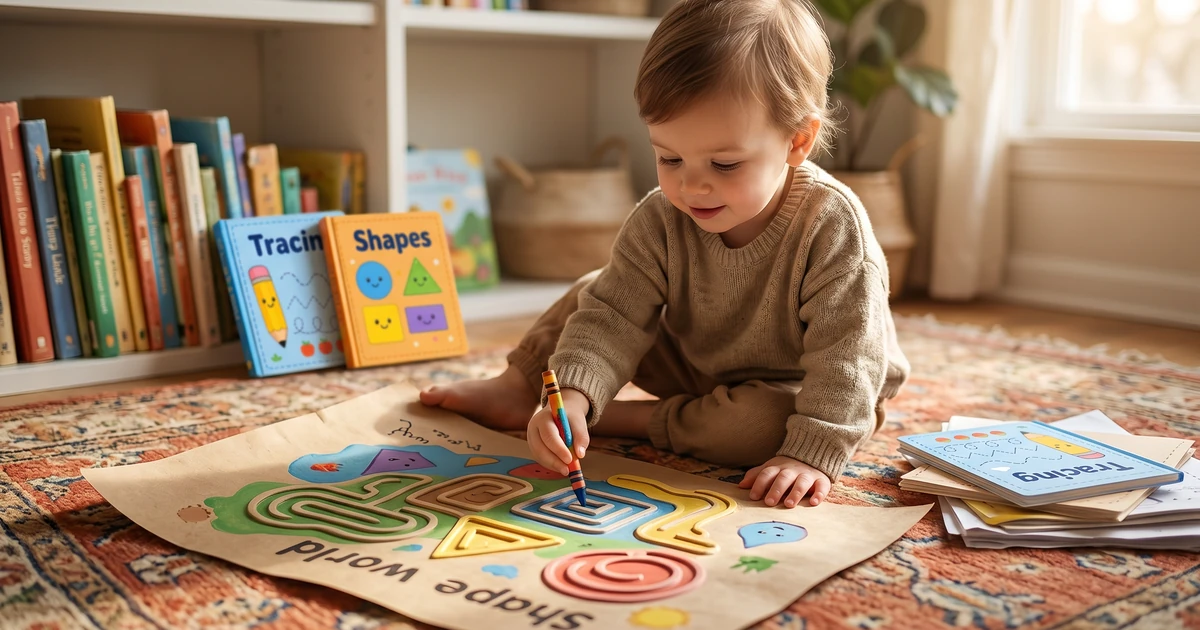
My child was bored with tracing sheets until I changed one thing
There's a specific kind of frustration that happens when you've bought a stack of tracing worksheets, sat your preschooler down with their best crayons, an

There’s a specific kind of frustration that happens when you’ve bought a stack of tracing worksheets, sat your preschooler down with their best crayons, and watched them lose interest in under 90 seconds.
DISCOVERY ACTIVITY WORKBOOKPhonics Reading Lesson Guide Level 1
67 pages with 60 short phonics lessons covering all short vowels, V-C patterns, CVC words, and early sentences.
You thought tracing sheets were the answer. They’re structured. They’re educational. Every parenting blog recommends them. So why is your child flipping the page, rolling off the chair, or asking to watch TV before they’ve traced a single line?
You’re not alone. And honestly? The problem usually isn’t your child’s attention span.
Key Takeaways:
- Most tracing boredom comes from sheets that are too difficult, too repetitive, or too abstract for the child’s age
- Short, varied sessions (8-10 minutes) outperform long, single-skill drills for preschoolers
- Mixing tracing types (shapes, letters, numbers, pictures) keeps engagement much higher than letter-only practice
- A structured, progressive sequence matters more than volume of sheets
- Free play tracing (no pressure, no correction) dramatically increases willingness to sit down the next time
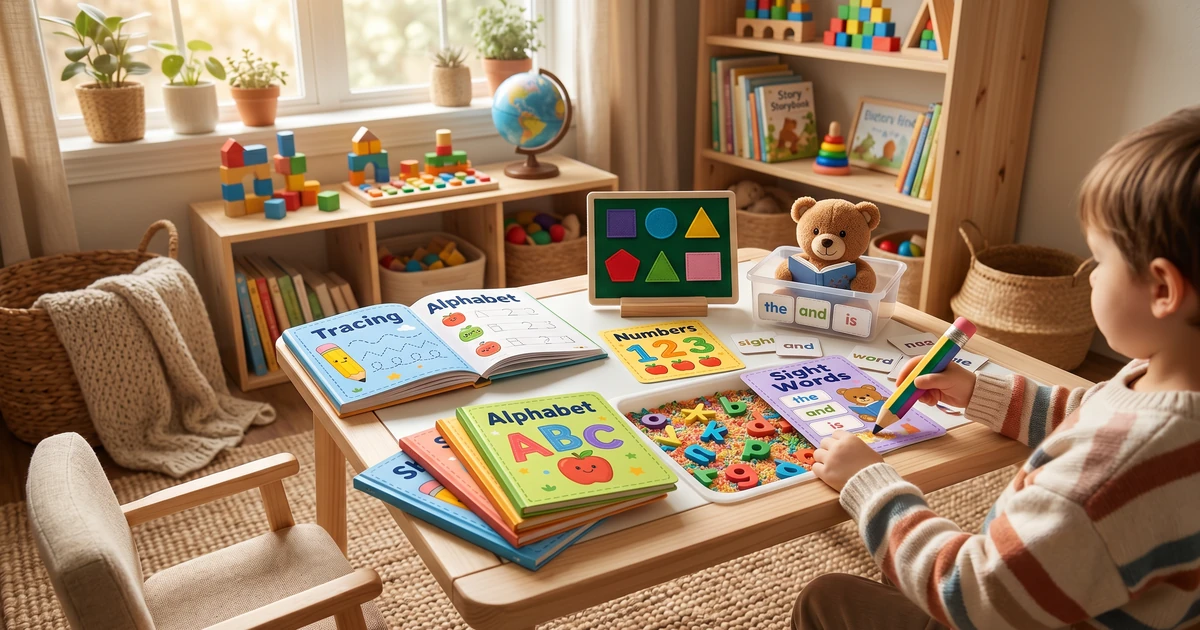
!A young child happily tracing shapes and letters at a table
Why Tracing Sheets Bore Preschoolers (And It’s Not What You Think)
Tracing boredom is one of the most common complaints I see from parents in preschool learning communities. After spending time reading through hundreds of parent reviews and early childhood education forums, the pattern becomes obvious pretty quickly.
The issue is almost never that a child “doesn’t want to learn.” It’s almost always one of three structural problems with the worksheets themselves.
Problem 1: The lines are too thin and too long. Most generic tracing sheets are designed for adult aesthetics, not for small hands. A 3-year-old’s fine motor control is still developing. When the guiding path is narrow, they fail repeatedly, get frustrated, and quit.
Problem 2: The content is meaningless to them. Tracing the letter “A” seven times in a row has no story, no character, no context. For a 4-year-old whose brain is wired for narrative, that’s genuinely boring. Not defiant. Just boring.
Problem 3: The difficulty doesn’t match the child’s current stage. According to the American Academy of Pediatrics, fine motor skill development in preschoolers follows a specific sequence. Jumping ahead (or staying too far behind) kills motivation fast.
“Children learn best when challenges are just slightly above their current ability level. Too easy creates boredom. Too hard creates anxiety.” - Lev Vygotsky’s Zone of Proximal Development, widely cited in early childhood education research
Bold takeaway: The worksheet is usually the problem, not the child.
How to Actually Make Tracing Fun for a 3 to 5 Year Old
These are the five adjustments that consistently show up in parent success stories. None of them require buying anything new.
Step 1: Start With Shapes, Not Letters
Before letters make sense, shapes need to feel automatic. Circles, squares, triangles and zigzags build the muscle memory that letters later depend on. Parents who start with pure shape tracing for 2-3 weeks before introducing letters report dramatically less resistance when letters appear.
Curves and diagonals are the hardest strokes for small hands. Circles first, then triangles, then letters that use those same strokes (like “O”, “C”, “S”).
Step 2: Keep Sessions to 8-10 Minutes Maximum
I can’t stress this enough. Eight minutes of engaged tracing beats 30 minutes of battles, every single time. Preschoolers have working memory windows of roughly 5-15 minutes for focused tasks, depending on age and individual temperament.
Set a timer. Make it visible (a sand timer works beautifully for this age). When it rings, it’s over. Full stop. This creates anticipation for next time instead of dread.
Step 3: Mix Tracing Types Within One Session
A session that includes one shape sheet, one letter sheet, and one picture-based tracing sheet (like tracing a dinosaur outline) holds attention far longer than three letter sheets in a row.
Variety within a session is more effective than variety across sessions. The brain of a 4-year-old doesn’t save up engagement for tomorrow.
Step 4: Let Them Choose One Sheet Per Session
Choice is enormous at this age. Offering two or three sheet options and letting the child pick one gives them a sense of control that dramatically reduces resistance. You’re still directing the learning. They just feel like they aren’t being forced.
Step 5: Celebrate the Attempt, Not the Result
Tracing neatness is largely irrelevant before age 5. What you’re building is the habit and the positive association with sitting down to practice. If you correct wiggly lines, you’re training them to avoid the activity. Instead, say “you traced the whole letter!” and move on.
Pro Tip: Place a small dot at the starting point of every tracing path. Without a clear starting point, children often begin from an awkward angle and give up when it looks “wrong.”
Comparing Types of Tracing Sheets: What Works at Each Age
Not all tracing content is created equal. Here’s a breakdown I put together based on developmental research and what parents actually report working:
| Tracing Type | Best Age | Why It Works | Watch Out For |
|---|---|---|---|
| Thick curved lines (mazes, waves) | 2.5-3 years | Builds basic pencil control | Lines that are too thin or close together |
| Shape tracing (circles, squares) | 3-3.5 years | Foundational strokes for all letters | Skipping this stage to rush to letters |
| Picture tracing (animals, objects) | 3-4 years | Narrative context keeps kids engaged | Too much detail in the outline |
| Number tracing (1-10) | 3.5-4 years | Shorter strokes, quicker wins | Starting with 8 or 9 (hardest strokes) |
| Uppercase letter tracing | 4-4.5 years | Higher contrast, easier to see | All-caps only with no variety |
| Lowercase letter tracing | 4.5-5 years | Essential for reading readiness | Introducing before uppercase is solid |
| Word tracing (name, simple words) | 5+ years | Meaningful personal content | Pressure to be “neat” too early |
Bold takeaway: Matching the tracing type to your child’s exact developmental stage makes the single biggest difference in engagement.
What a Good Tracing Sequence Actually Looks Like
One thing that surprises parents is that a random pile of tracing sheets rarely works as well as a sequenced progression. When I looked at what consistently keeps preschoolers engaged over weeks (not just one afternoon), the answer is almost always structure.
A good 4-6 week tracing sequence looks something like this:
- Week 1-2: Straight lines, curved lines, basic shapes. Focus purely on pencil grip and directional control.
- Week 3: Simple picture tracing with context (animals, vehicles, familiar objects). Keeps motivation high while reinforcing hand control.
- Week 4: Numbers 1-5, mixed with shape review. Short stroke practice.
- Week 5: Uppercase letters A-M, grouped by stroke similarity (not alphabetically).
- Week 6: Uppercase letters N-Z, plus name tracing. First meaningful word connection.
The key word here is progression. Each week builds on the last. Children can feel themselves getting better, and that feeling is what keeps them coming back.
For more on how tracing fits into a complete readiness picture, the Kindergarten Readiness Worksheets: 8 Essential Preschool Skills to Practice breaks down all the skill areas your child needs before starting school.
How Much Do Printable Tracing Resources Cost?
Cost is a fair question, especially since parents often buy multiple sets before finding one that actually works.
| Resource Type | Price Range | What You Get | Limitation |
|---|---|---|---|
| Free printables (online) | $0 | Random individual sheets | No sequence, inconsistent quality, no progression |
| Single-topic paid packs | $3-$8 | One skill area (letters only, etc.) | Need to buy multiple packs for variety |
| Comprehensive printable bundles | $8-$20 | 100-260+ sheets across skill areas | Requires a printer |
| Subscription workbook apps | $8-$15/month | Digital tracing, no printing | Screen time, no physical motor practice |
| Physical workbooks (store-bought) | $6-$14 | Fixed sequence, one copy | Can’t reprint, child marks permanent pages |
The sweet spot for most families is a comprehensive printable bundle that covers multiple skill areas. You print what you need, reprint sheets your child wants to repeat, and skip ahead or go back based on where your child actually is.
KubbyLab’s Preschool Printables Bundle is one option in that category, covering 260+ worksheets across the 5 core skill areas, designed specifically for ages 3-5. It’s worth reading that full breakdown before you decide what format fits your family’s setup.
Pro Tip: Print tracing sheets at 110-120% scale for younger children (ages 3-3.5). The larger paths are significantly easier for small hands and dramatically reduce frustration.
Common Tracing Mistakes Worth Avoiding
A few things I see come up repeatedly that parents wish someone had told them earlier:
-
Skipping the pencil grip conversation. A child using a fist grip won’t benefit much from tracing practice. Spend a week on the tripod grip first.
-
Printing on glossy paper. Standard printer paper is better for crayons and pencils. Glossy paper causes slipping and smearing.
-
Correcting while they’re working. Wait until after. Interrupting mid-trace breaks focus and creates anxiety.
-
Doing tracing right before a screen activity. The anticipation of the screen makes everything before it feel like a delay. Schedule tracing at a neutral time.
For more specific letter practice guidance, Alphabet Tracing for 3 Year Old: 5 Mistakes Parents Make with Letter Practice goes deep on exactly what derails early letter tracing and how to fix it.
Frequently Asked Questions
Why does my child refuse to do tracing sheets even though they love drawing?
Drawing and tracing use different brain processes. Drawing is self-directed and creative. Tracing is constrained and evaluative. Children who love drawing freely sometimes resist tracing because it removes their control. Starting with picture-based tracing (where they trace fun outlines) bridges this gap because it feels more like art and less like a test.
At what age should a child be able to trace letters?
Most children develop the fine motor control to trace uppercase letters between ages 4 and 4.5. Lowercase letters typically come 6-12 months later. Pushing letter tracing before age 3.5 is generally counterproductive. Shape and line tracing before age 3.5 builds the exact muscle control that letter tracing later requires. The American Academy of Pediatrics developmental milestones are a helpful reference if you’re unsure about your child’s readiness.
How many tracing sheets should a child do per day?
For ages 3-4, one to two sheets per session is enough. For ages 4-5, two to four sheets is a reasonable target. More than that in a single sitting tends to decrease quality and increase resistance. Two short sessions on different days is better than one long session on one day.
My child traces but holds the pencil wrong. Does it matter?
Yes, but it’s fixable early. The tripod grip (thumb, index, and middle finger) is the target. A simple trick: have them pinch the pencil near the tip with their thumb and index finger, then let it rest on their middle finger. “Pinch and rest” is how most occupational therapists teach it. Don’t force correction mid-task though. Address grip at the start of each session briefly, then let them work.
For a full breakdown of how tracing fits into your child’s overall school readiness, and what other skills matter just as much, read the complete guide:
Kindergarten Readiness Worksheets: 8 Essential Preschool Skills to Practice →
And if you’re looking for activities that work away from the table entirely, 7 Screen-Free Preschool Learning Activities That Actually Keep Kids Engaged has practical ideas that complement tracing practice without adding more seat time.
You May Also Like
Take the Next Step!
Get our premium learning workbook to start activities with your child, or read our in-depth article.
Recommended Resources & Workbooks
Pair this guide with our hands-on, ready-to-print learning resources.
 Digital Bundle
Learn to Read Program: Levels 1-3
170 sequenced phonics lessons across 199 pages, from first letter sounds to fluent long-vowel reading.
 Digital Learning Bundle
Preschool Learning Bundle
260+ printable worksheets for tracing, ABCs, numbers, shapes, sight words, and kindergarten prep.
 Digital Learning Bundle
Play-Based Learning Bundle for Ages 3-6
230+ play-based learning activities with pretend play, reading, early math, creative arts, and bonus flashcards.
Related Guides & Articles
Explore more of our detailed guides and activities.
Kindergarten Readiness Worksheets: 8 Essential Preschool
Download kindergarten readiness worksheets covering writing, sounds, numbers, and more. Help your child build skills with printable sheets designed...
Alphabet Tracing for 3 Year Old: 5 Mistakes Parents Make
Alphabet tracing for 3 year olds is one of the most effective ways to build early literacy and fine motor skills at the same time. But here's what ...
Preschool Printables Bundle: The Only 5 Skill Areas Your Child Needs
If you've been searching for a preschool printables bundle that covers more than just coloring pages, you're in the right place. I've spent 40+ hou...
7 Screen-Free Preschool Learning Activities That Actually
If you've been searching for screen-free preschool learning activities that hold a 3-to-5-year-old's attention for more than four minutes, you're i...