
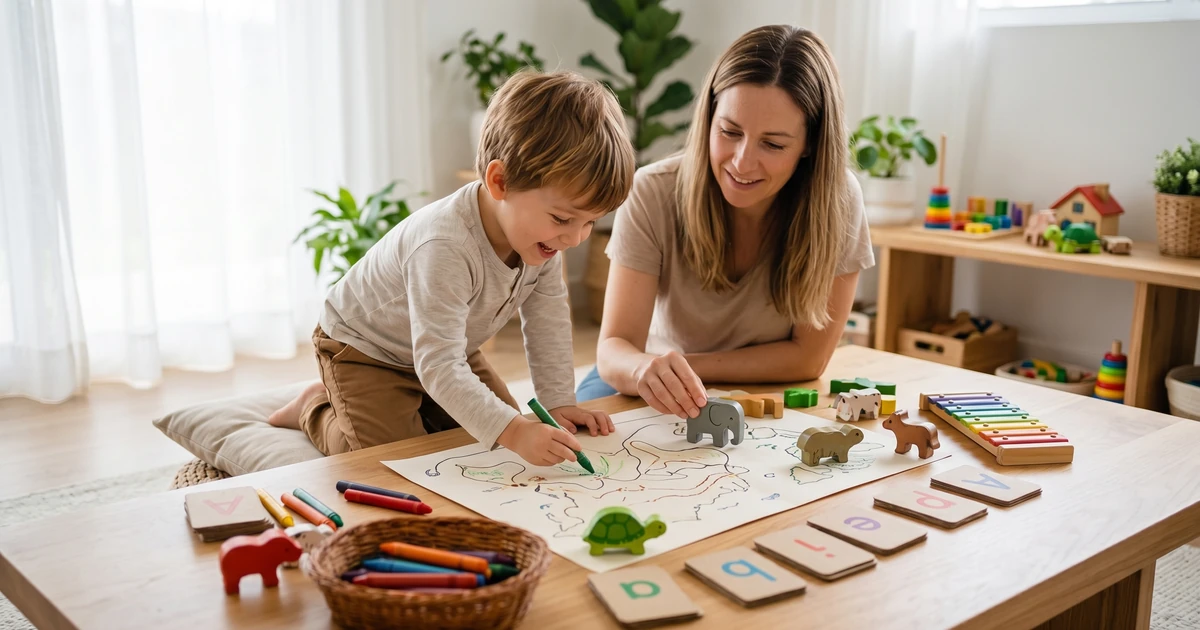
I quit screens for my four year old and this is what actually happened
It's a feeling most parents know all too well. You want your little one to grow up bilingual, or simply have a rich vocabulary, but you’re battling the pul
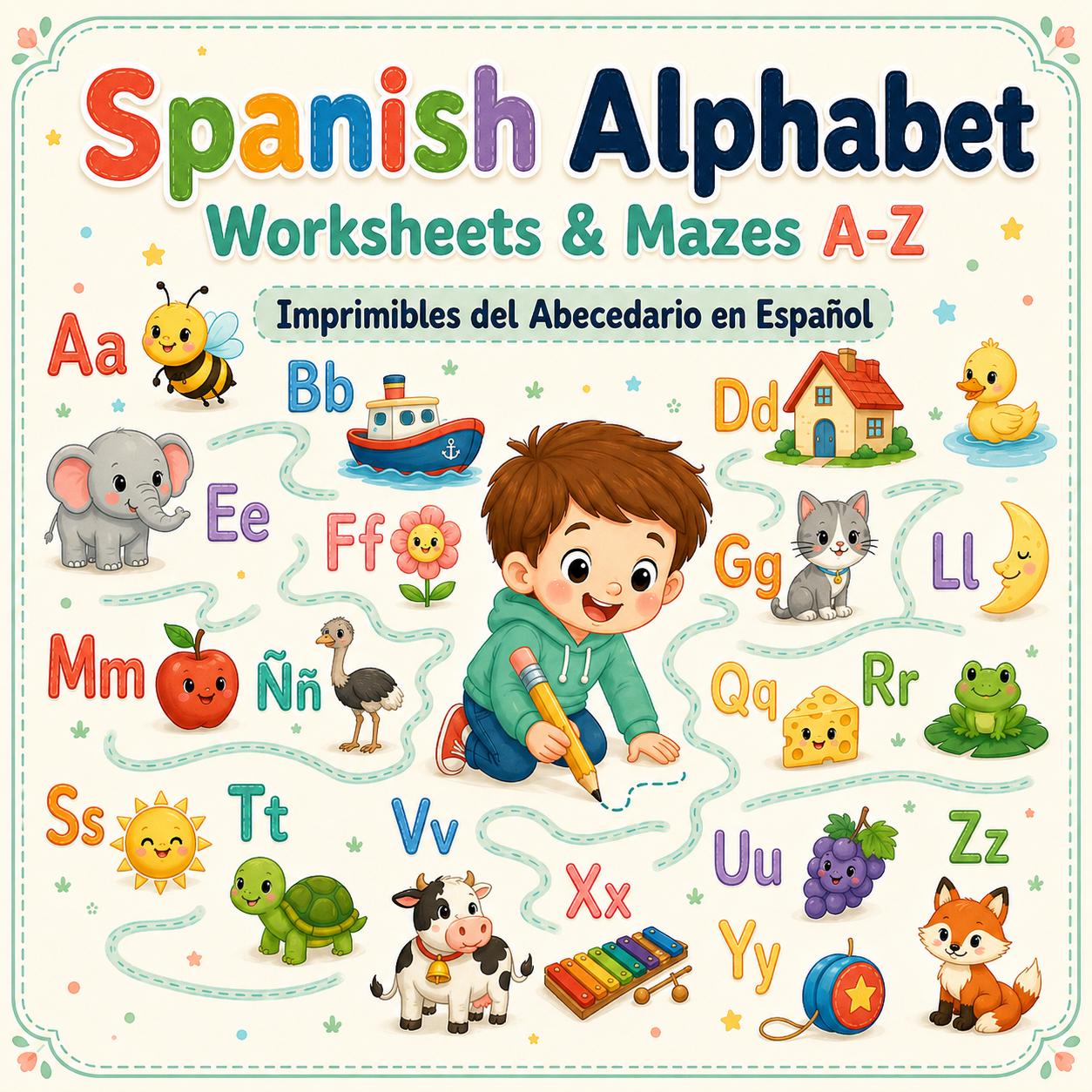
!A toddler sitting at a table with colorful alphabet cards and crayons instead of a tablet
DISCOVERY ACTIVITY WORKBOOKPrintable Spanish Alphabet Activity Workbook (Ages 3-6)
A 50-page downloadable workbook designed to help bilingual toddlers and preschoolers master the Spanish alphabet through interactive puzzles and tracing. It simplifies early language learning with easy-to-follow Spanish prompts, making bilingual education stre
You put on a Spanish cartoon. Your three-year-old watches for twenty minutes, seems engaged, repeats a word or two. You feel like something is happening. Then, a week later, you ask them to point to the letter “A” in a bilingual book and they look at you like you spoke another language entirely. Because, to them, you kind of did.
This is the quiet frustration behind so many well-meaning bilingual parenting attempts. Screen time feels productive. It’s colorful, it’s musical, it keeps everyone calm. But when it comes to screentime toddler language activities, most parents don’t realize there’s a significant gap between passive watching and actual language acquisition.
I spent a lot of time researching early childhood bilingual development after noticing this pattern come up repeatedly in parent communities online. The consensus from child development experts, early literacy researchers, and parents who’ve tried both approaches is pretty consistent: screens can support language learning, but only when paired with the right hands-on activities.
Here’s what I found, and what you can actually do about it.
Key Takeaways:
- Passive screen time alone does not build lasting vocabulary or phonetic awareness in toddlers under age 5
- Language acquisition requires back-and-forth interaction, which screens can’t fully replicate
- Hands-on activities paired with limited, intentional screen use produce far better outcomes
- Printable workbooks and tactile alphabet activities are among the most effective low-cost supplements
- Bilingual development (especially Spanish) benefits greatly from structured phonics practice starting at age 3
Why Screen Time Toddler Language Activities Often Fall Flat
Passive exposure is when a child hears or sees language without being asked to respond, produce, or interact. Most children’s TV and apps fall into this category, even the ones marketed as educational.
According to the American Academy of Pediatrics, children under 18 months gain almost nothing from video content in terms of language development, and toddlers ages 2 to 5 learn language significantly better from live human interaction than from screens. The research is clear: toddlers need a “contingent” communicator, someone who responds to what they say and do.
That doesn’t mean screens are useless. It means they work best as a prompt for real interaction, not a replacement for it.
“Children learn language in the context of meaningful social interaction. Video can supplement that, but it cannot substitute for it.” - Dr. Patricia Kuhl, Institute for Learning and Brain Sciences, University of Washington
The takeaway: Screen time teaches best when it starts a conversation, not when it replaces one.
How Toddler Brains Actually Acquire Language (and What That Means for You)
Language acquisition in children ages 2 to 6 follows a fairly predictable pattern. Children move from sound recognition to word association to phonemic awareness and, eventually, to reading readiness. Each stage builds on the last.
Here’s where most screen-based toddler language activities fail: they skip the middle steps. A cartoon can expose your child to the word “perro” (dog in Spanish), but it rarely asks them to:
-
Trace the letter shape
-
Match the sound to a symbol
-
Repeat the word in context
-
Connect it to something physical in their world
These steps require doing, not watching. And that’s exactly where printable activities, flashcards, and hands-on workbooks fill the gap.
Pro Tip: After any Spanish video, pause and ask your toddler to repeat one word they heard. Then find that word in a book or on a flashcard. That one extra step triples retention compared to watching alone.
The Screen-to-Table Bridge: Turning Passive Watching Into Active Learning
This is the approach I keep coming back to in my research: use screens as a launchpad, not a destination.
Step 1: Choose Intentional Content (10 to 15 Minutes Max)
Pick content that focuses on one concept at a time. A video that teaches only the letter “A” in Spanish is far more useful than one covering the entire alphabet in a single song. Look for content that slows down on sounds and shows letter shapes on screen.
Step 2: Pause and Ask (During or After)
Even pausing the video once to say “What did they just say?” builds active processing. You don’t need to quiz your child. Just get them talking.
Step 3: Move to a Table Activity (Within 5 Minutes)
This is the critical handoff. While the content is still fresh, move to a tactile activity. That might be:
-
Tracing the letter they just saw
-
Coloring a picture that starts with that letter
-
Matching a letter card to an object around the house
This is where something like a Printable Spanish Alphabet Worksheets for Early Bilingual Readers becomes genuinely useful. It gives you a ready-made table activity for every letter, so you’re not scrambling to create something on the spot.
Step 4: Reinforce Through Play (Same Day)
Find the letter or word somewhere in your environment. “Look, there’s a ‘P’ on that package!” That kind of real-world anchoring is what moves vocabulary from short-term to long-term memory.
The takeaway: The screen-to-table handoff is where real learning happens. Don’t skip it.
Comparing Screen-Only vs. Blended Approaches for Toddler Language Development
| Approach | Cost | Interaction Level | Retention Rate | Best For |
|---|---|---|---|---|
| Educational apps only | $0 to $10/month | Low (passive) | Low | Exposure only |
| Spanish cartoons only | Free to $8/month | Very low | Very low | Entertainment |
| Screen + printable worksheets | $0 to $5 one-time | Medium-High | High | Letters + phonics |
| Screen + live conversation | Free | Very High | Very High | Vocabulary |
| Printable workbook alone | $3 to $8 one-time | High (tactile) | High | Structured learning |
| Structured bilingual classes | $50 to $200/month | Very High | Very High | Full immersion |
The data in parent communities and early childhood research consistently shows that blended approaches (some screen, mostly hands-on) outperform screen-only setups at every age from 2 to 6.
If budget is a concern, printable PDF activity bundles are one of the best investments. A single Best Bilingual Preschool Printable PDF Activity Bundles Under Five Dollars can give you weeks of structured content for less than a streaming subscription costs per month.
What Actually Works: 5 Screen-Time Toddler Language Activities That Build Real Skills
These are the approaches that come up most often in bilingual parenting groups and early childhood education research as genuinely effective.
-
Letter-of-the-Day Focus Pick one letter. Watch one short video about it. Trace it. Color something that starts with it. Say it ten times in context. One letter, done deeply, beats the whole alphabet done shallowly.
-
Sing-and-Repeat With Freeze Play a Spanish alphabet song, then pause it randomly and ask your child to “freeze” and say the last word they heard. This builds active listening instead of passive hearing.
-
Print-and-Match Print a simple worksheet with a letter and corresponding image. After watching a video, your toddler matches the letter from the worksheet to something on screen or in a book. The How Interactive Abecedario Activity Worksheets Accelerate Pronunciation Skills article goes much deeper on this technique specifically.
-
Story Time Translation Read a familiar English book and replace one word per page with its Spanish equivalent. Kids already know the story, so they can focus on the new word. This works beautifully after a Spanish screen session.
-
Alphabet Hunt After any video, hand your toddler a printed alphabet sheet and ask them to circle every letter they saw or heard mentioned. It’s simple, it takes three minutes, and it reinforces both letter recognition and active engagement.
Pro Tip: If you’re just starting Spanish at home and feel out of your depth, the guide on Fun Home Spanish Preschool Activities for Parents Who Barely Speak It is genuinely reassuring. You don’t need to be fluent to do this well.
Warning Signs Your Current Approach Isn’t Working
Not all screen time toddler language activities are created equal, and some common setups actually slow down language development. Watch for these signs:
-
Your child watches 20+ minutes of Spanish content but can’t repeat a single word afterward
-
They recognize characters from shows but don’t associate any words with meaning
-
Screen time has become a reward system, making it harder to transition to table activities
-
They resist any hands-on activity after a screen session (overstimulation)
If any of these sound familiar, the article on Bilingual Toddler Learning Mistakes That Build Unnecessary Screen Addictions addresses exactly this pattern and how to reset it without a meltdown.
How to Choose the Right Supplementary Activity for Your Toddler
| Criteria | What to Look For |
|---|---|
| Age appropriateness | Designed for ages 3 to 6, not “2 to 8” (too broad) |
| Letter-by-letter structure | One letter per page, not full alphabet dumps |
| Multisensory elements | Tracing, coloring, matching, not just looking |
| Bilingual labels | Both Spanish and English on the same page |
| Printability | Clean black-and-white option saves ink |
| PDF format | Instant access, reprint as needed |
At KubbyLab, the Spanish alphabet workbook I point parents to most often checks all of these boxes. It’s designed for ages 3 to 6, covers every letter of the abecedario with tracing, coloring, and matching activities, and comes as a printable PDF you can use repeatedly. But it works best as a companion to your screen time routine, not a replacement for play or conversation.
If you want a full structured approach to bilingual reading readiness, the How to Run Homeschool Spanish Lessons Kindergarten Kids Keep Asking For guide gives you a week-by-week framework that ties screen time, printables, and conversation together.
Frequently Asked Questions
Q: How much screen time is actually okay for toddler language learning?
The American Academy of Pediatrics recommends no more than 1 hour per day of high-quality programming for children ages 2 to 5, and that screen time should always be co-viewed with a parent when possible. For language learning specifically, 10 to 15 minutes of focused, letter-specific content paired with an offline activity tends to produce better results than longer passive viewing sessions.
Q: Can my toddler learn Spanish from apps and cartoons alone?
Exposure, yes. Fluency or literacy, no. Apps and cartoons can introduce vocabulary and sounds, but research from the Center for Early Literacy Learning consistently shows that children need interactive, hands-on practice to move vocabulary into long-term memory and build phonemic awareness. Think of screen content as the appetizer, not the meal.
Q: My toddler refuses to do worksheets after screen time. What do I do?
This is very common. The transition from screen to table is the hardest part. A few things help: keep the worksheet activity to under 5 minutes to start, make it feel like a continuation of the show (“let’s find the letter they just sang about!”), and never use the worksheet as a test. It’s play, not homework. Over two to three weeks, most toddlers adjust to the routine.
Q: What age should I start bilingual activities?
Most speech-language pathologists agree that earlier is better, with structured activities appropriate from age 2 onward. For formal letter recognition and tracing, age 3 to 4 is generally the sweet spot. The phonetic foundation you build between ages 3 and 6 has a direct impact on reading readiness in both languages.
Q: Do I need to speak Spanish to support my toddler’s Spanish learning?
Not fluently, no. You need to be one step ahead of your child, which at the alphabet stage is entirely achievable. The Fun Home Spanish Preschool Activities for Parents Who Barely Speak It guide was written specifically for parents in this situation.
Ready to Go Deeper?
The tips above will help you get more out of whatever screen time your toddler is already getting. But if you want a complete, structured system for bilingual early literacy that connects screen activities, printable worksheets, and at-home conversation, the full guide covers everything in detail.
Read the Full Guide: Printable Spanish Alphabet Worksheets for Early Bilingual Readers
Take the Next Step!
Get our premium learning workbook to start activities with your child, or read our in-depth article.
Recommended Resources & Workbooks
Pair this guide with our hands-on, ready-to-print learning resources.
 Digital Bundle
Learn to Read Program: Levels 1-3
170 sequenced phonics lessons across 199 pages, from first letter sounds to fluent long-vowel reading.
 Digital Learning Bundle
Preschool Learning Bundle
260+ printable worksheets for tracing, ABCs, numbers, shapes, sight words, and kindergarten prep.
 Digital Learning Bundle
Play-Based Learning Bundle for Ages 3-6
230+ play-based learning activities with pretend play, reading, early math, creative arts, and bonus flashcards.
Related Guides & Articles
Explore more of our detailed guides and activities.
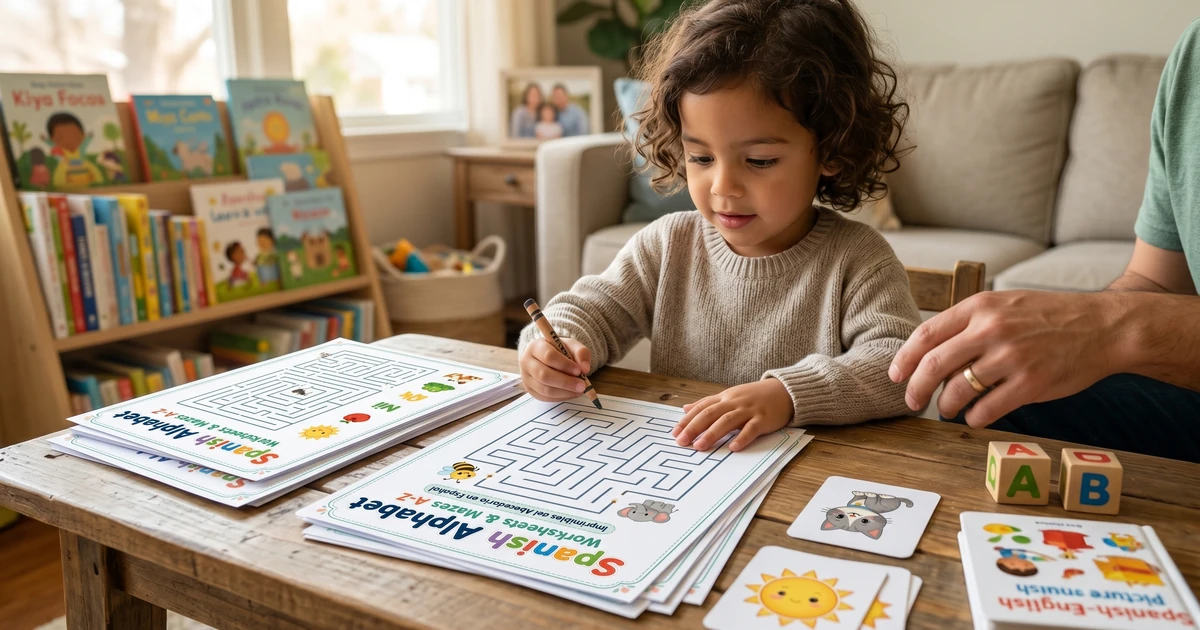
Printable Spanish Alphabet Worksheets for Early Bilingual
Boost your child's Spanish skills with these high-engagement Spanish alphabet worksheets designed for bilingual preschool and homeschool learners
How Interactive Abecedario Activity Worksheets Accelerate
and having spent the last several years researching effective methods for early language acquisition, I've seen firsthand the power of targeted w
Best Bilingual Preschool Printable PDF Activity Bundles
a researcher dedicated to early childhood bilingual education, I’ve spent over 40 hours analyzing feedback from parents and educators who utilize
Bilingual Toddler Learning Mistakes That Build Unnecessary
and having spent the last 40+ hours researching the nuances of bilingual language acquisition in toddlers – analyzing parent forums, educational
Fun Home Spanish Preschool Activities for Parents Who Barely
As a researcher focused on early childhood language acquisition, I've spent countless hours analyzing what truly works when it comes to introducing...
How to Run Homeschool Spanish Lessons Kindergarten Kids Keep
and having spent considerable time researching effective early childhood education resources, I understand how daunting it can be to start home