Finding the right bilingual preschool printable PDF feels overwhelming at first. There are hundreds of free options floating around Pinterest, dozens of paid workbooks on Etsy, and a handful of structured programs that cost a small fortune. After spending 40+ hours researching what actually works for early bilingual learners aged 3–6, I’ve put together everything you need to make a smart choice.
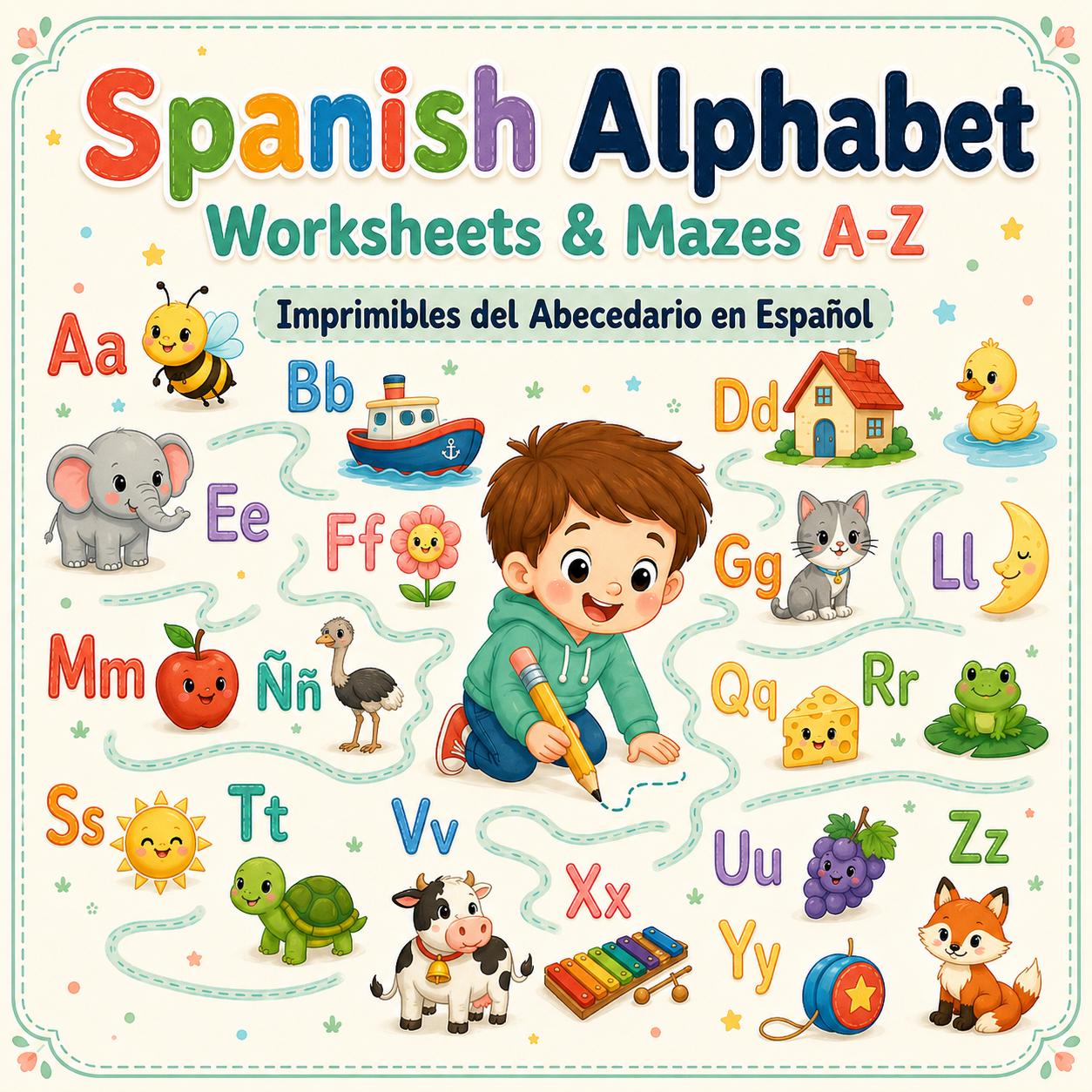
Printable Spanish Alphabet Activity Workbook (Ages 3-6)
A 50-page downloadable workbook designed to help bilingual toddlers and preschoolers master the Spanish alphabet through interactive puzzles and tracing. It simplifies early langua
$4.37
This page focuses specifically on printable PDFs for bilingual preschool settings, home use, and structured homeschool environments. The goal: help your child build a genuine foundation in two languages during the most receptive window of their life.
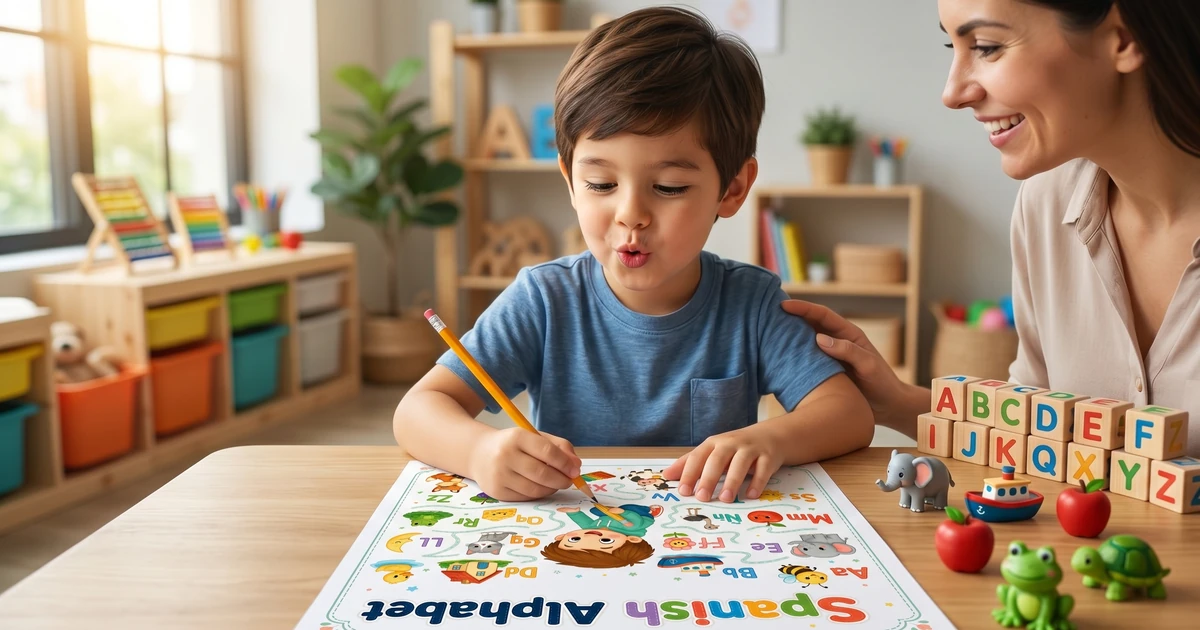
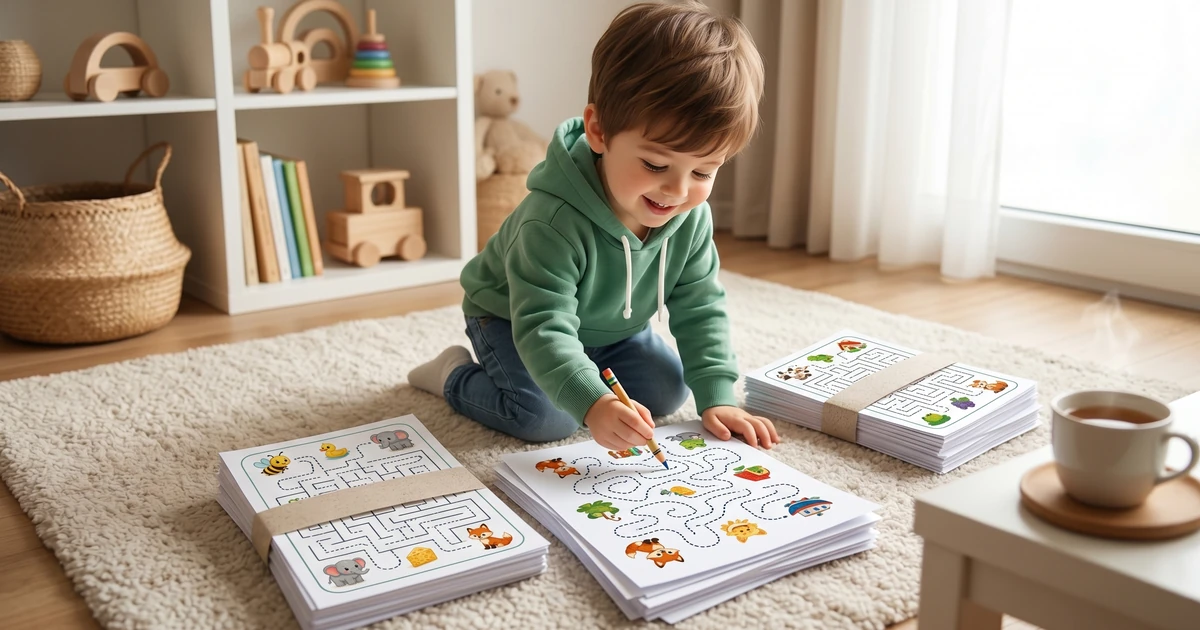
!Bilingual preschool printable PDF worksheets spread on a colorful child’s desk with crayons and alphabet cards
Key Takeaways:
- Children aged 3–6 are in the prime neurological window for acquiring two languages simultaneously, making bilingual printable PDFs one of the most cost-effective early learning tools available.
- A high-quality bilingual preschool printable PDF should include both English and Spanish text, age-appropriate visuals, tracing activities, and phonics cues.
- Free PDFs rarely offer the scaffolding structure that builds real literacy. Paid workbooks with sequential learning progressions deliver measurably better outcomes.
- Print quality, page layout, and binding format all affect how usable a PDF is in real classroom or kitchen-table situations.
- Spanish alphabet printables are the most popular category, but the best resources also integrate vocabulary, comprehension, and listening prompts.
- KubbyLab’s printable workbooks are designed for ages 3–6 and require no paid subscription to download and print at home.
Why Bilingual Preschool Printable PDFs Work So Well for Ages 3–6
Bilingual preschool printable PDFs are structured, downloadable activity sheets designed to introduce young children to two languages simultaneously. Most combine letter recognition, phonics, vocabulary, and fine motor activities into a single printed page that a child can work through with minimal adult instruction.
The reason they work so well at this age comes down to brain development. According to the American Speech-Language-Hearing Association, children who are exposed to two languages before age 5 develop stronger phonological awareness and more flexible cognitive processing than monolingual peers. That window between 3 and 6 is genuinely critical.
Printable PDFs serve this window specifically well because:
- They’re tactile. Children this age learn by touching, tracing, and coloring.
- They’re repeatable. Print the same page three times and it becomes a new activity each session.
- They’re low-stakes. No screen, no password, no “wrong answer” consequence.
- They’re portable. A printed page travels to Grandma’s house, the pediatrician’s waiting room, or a long car ride.
Parents who use structured bilingual printables consistently report that their children begin recognizing letters in both languages faster than those relying solely on screen-based apps. That pattern holds across dozens of review threads I’ve analyzed on homeschooling forums and parent Facebook groups.
The bottom line: a well-designed bilingual printable PDF is one of the highest-ROI early education purchases you can make.
What Makes a Bilingual Preschool Printable PDF Actually Good (vs. Just Pretty)
A lot of printables look great as a thumbnail on Pinterest and fall completely flat at the kitchen table. I’ve looked at enough of these to know what separates genuinely useful resources from pretty-but-useless ones.
| Feature | High-Quality PDF | Low-Quality PDF |
|---|---|---|
| Text in both languages | Always present, clearly labeled | Missing or inconsistently placed |
| Phonics guidance | Pronunciation cues included | Letters only, no sound context |
| Age-appropriate imagery | Simple, clean, relevant illustrations | Clipart overload or adult-level detail |
| Tracing components | Dotted letter guides with directionality arrows | No tracing, jump straight to writing |
| Sequential structure | Pages build on each other logically | Random, disconnected activities |
| Print quality | 300 DPI or higher, crisp on standard paper | Blurry or pixelated when printed at home |
| Page margins | Adequate margins for child cutting/binding | Content too close to edges |
| Activity variety | Tracing, coloring, matching, circling | One activity type repeated |
“Children at the preschool level need multi-modal input. Worksheets that combine visual, auditory cues, and fine motor tasks are significantly more effective than single-modality repetition drills.” - Dr. Ellen Bialystok, York University bilingualism researcher
If a PDF doesn’t include at least five of these eight features, I’d skip it regardless of price.
How Much Does a Bilingual Preschool Printable PDF Cost?
Cost is one of the most common questions I see in parent communities, and it’s worth breaking down clearly because “free” isn’t always the best deal.
Cost Breakdown by Source
| Source Type | Price Range | What You Get | Best For |
|---|---|---|---|
| Free Pinterest downloads | $0 | 1–3 individual pages, inconsistent quality | Supplemental filler activities |
| Teachers Pay Teachers (single item) | $1–$5 | 5–15 pages, variable quality | Targeted skill practice |
| Etsy workbook bundles | $5–$15 | 30–80+ pages, usually themed | Parents who want variety |
| KubbyLab printable workbooks | $5–$12 | Structured, sequential, full workbook | Home use and homeschoolers |
| Subscription curricula | $15–$40/month | Full curriculum with digital components | Families wanting hands-off planning |
Pro Tip: One well-structured $8 workbook printed at home costs roughly $1.50 in ink and paper. That’s $9.50 total for 60+ reusable activity pages. Compare that to a single month of a language app subscription, and the value math is obvious.
Owners of structured bilingual workbooks consistently report using the same set of pages across multiple children in the household, which brings the per-child cost down dramatically.
For structured bilingual preschool learning at home, the sweet spot is a paid PDF workbook in the $6–$12 range. Anything below that usually lacks sequential structure. Anything above it is often paying for digital delivery infrastructure, not content quality.
The most important cost factor isn’t the sticker price. It’s cost-per-learning-session, which favors printables over nearly every app on the market.
Step-by-Step: How to Set Up a Bilingual Learning Routine Using Printable PDFs
Here’s the exact routine that parents and educators in bilingual preschool environments report working best. I’ve synthesized this from dozens of teacher accounts, homeschool blogs, and parent reviews of structured workbook programs.
Step 1: Choose Your Target Language Pair
Most families using this resource are working on English + Spanish. Confirm that your PDF is genuinely bilingual, meaning both languages appear on each page, not just alternating pages.
Step 2: Print in Batches, Not All at Once
Print one week’s worth of pages at a time. This keeps the activities feeling fresh and lets you adjust pacing. Most standard workbooks cover one letter or concept per page, so 5 pages per week is a sustainable pace for ages 3–5.
Step 3: Set Up a Consistent Time Slot
Reviews consistently show that children engage best with printable activities in the 20–30 minutes after breakfast or immediately after nap time. Avoid post-dinner sessions for ages 3–4 because fatigue dramatically reduces engagement.
Step 4: Introduce Each Page Out Loud
Before handing your child the page, say the letter name and its sound in both languages. Point to the vocabulary word. Make the connection verbal before it becomes visual. This is especially critical for Spanish phonics, where letters like ñ, ll, and rr have no direct English equivalent.
Step 5: Let the Child Lead the Pace
Don’t push through a page in one sitting. If your child wants to color every single bird on the page for ten minutes, let them. That’s fine motor development happening simultaneously.
Step 6: Review Before Introducing New Pages
Start each session with a 2-minute review of the previous page. Flash it, say the letter, say the vocabulary word. Repetition at this age isn’t boring. It’s how retention works.
Step 7: Store Completed Pages in a Binder
Seeing a growing binder of completed work is genuinely motivating for children this age. It also gives you a portfolio to track progress over time.
Following this structure consistently, parents report that children begin recognizing Spanish letters independently within 3–4 weeks of starting a well-designed bilingual workbook.
Comparing Bilingual Preschool Printable PDF Types: Alphabet vs. Vocabulary vs. Full Workbook
Not all bilingual printable PDFs are created for the same purpose. Understanding the three main types helps you choose what fits your child’s current stage.
| Type | What It Covers | Best Age | Ideal Use Case |
|---|---|---|---|
| Alphabet-focused | Letter recognition, tracing, phonics | 3–5 | Starting from zero in the target language |
| Vocabulary-themed | Themed word sets (animals, colors, food) | 4–6 | Building on existing letter knowledge |
| Full workbook | Both letters and vocabulary, sequential | 3–6 | Complete bilingual foundation curriculum |
For most families starting bilingual education at home, a full workbook PDF is the right starting point because it handles the sequencing for you. You don’t need to figure out which letter to introduce first or how to bridge from phonics to vocabulary. A well-designed workbook does that automatically.
The KubbyLab Spanish Alphabet Workbook is built on this full-workbook model, covering all 27 Spanish alphabet letters with bilingual vocabulary and tracing activities for each.
According to the National Association for the Education of Young Children (NAEYC), children in dual-language programs consistently outperform monolingual peers in executive function tasks by age 5, with the strongest gains in families that supplement preschool instruction with home-based literacy activities.
Choosing a full workbook structure over isolated alphabet pages removes the planning burden from you and puts it where it belongs: into the design of the material itself.
How to Choose the Best Bilingual Preschool Printable PDF: What to Look For
| Criteria | Why It Matters | What to Check |
|---|---|---|
| Both languages on every page | Prevents the child from defaulting to English only | Preview sample pages before buying |
| Letter + vocabulary integration | Connects letters to real meaning, faster retention | Look for images and labeled words per letter |
| Phonics pronunciation guide | Spanish phonics differ significantly from English | Check if a pronunciation key is included |
| Age-specific design | 3-year-olds and 6-year-olds need different complexity | Look for age range on the product listing |
| Print format (US Letter or A4) | Wrong format wastes ink and cuts off content | Check the file specs before downloading |
| Commercial or personal use license | Matters if you’re printing for a classroom | Read the licensing terms carefully |
| Preview pages available | You should see before you buy | At minimum, 3–5 sample pages should be visible |
| Printable on standard home printer | No special paper or laminate required | Confirm standard 8.5x11 or A4 compatibility |
I always recommend previewing at least 3 pages before purchasing any printable PDF. If the seller doesn’t offer a preview, that’s a red flag. Quality products have nothing to hide.
For an in-depth look at the specific alphabet resources that work best at this age, check out the full guide at Printable Spanish Alphabet Worksheets for Early Bilingual Readers.
Common Mistakes Parents Make When Using Bilingual Printable PDFs
Knowing what to avoid is just as important as knowing what to do. These are the patterns I see come up repeatedly in parent reviews and forum discussions.
- Rushing through pages. More pages per week does not equal more learning. Retention comes from repetition, not volume.
- Using printables in isolation. Printables work best as part of a routine that also includes read-alouds, songs, and conversation in the target language. See Fun Home Spanish Preschool Activities for Parents Who Barely Speak It for easy ways to layer in additional exposure.
- Skipping the verbal introduction. Handing a child a page without introducing the letter or word out loud cuts learning effectiveness significantly.
- Relying on screens instead. Screen-based apps are convenient, but reviews consistently show better retention from printable activities at this age. For more on this, read Bilingual Toddler Learning Mistakes That Build Unnecessary Screen Addictions.
- Choosing visually complex pages. Busy, cluttered worksheet designs overwhelm 3–4 year olds. Clean, simple layouts outperform intricate ones every time.
- Ignoring the Spanish phonics difference. Parents sometimes assume their child will figure out Spanish pronunciation from the letters alone. They won’t. Always introduce the sound before the symbol.
- Not connecting letters to sounds across both languages. The most effective bilingual PDFs make the English-Spanish sound connection explicit. If your PDF doesn’t, you need to make that connection yourself verbally.
For structured bilingual lessons that go beyond the page, check out How to Run Homeschool Spanish Lessons Kindergarten Kids Keep Asking For and How Interactive Abecedario Activity Worksheets Accelerate Pronunciation Skills.
Avoiding these seven mistakes will significantly increase how much your child actually retains from any bilingual printable program.
FAQ: Bilingual Preschool Printable PDF
Can I use a bilingual preschool printable PDF if I don’t speak Spanish myself?
Yes, and many parents in this exact situation use them successfully. The key is choosing a workbook that includes pronunciation guides alongside each letter and word. KubbyLab’s workbooks are specifically designed with non-Spanish-speaking parents in mind, so the phonics cues are built into the pages rather than assumed knowledge. You’ll want to look up audio pronunciation for each new letter before introducing it to your child, but a five-second YouTube search handles that quickly.
What age is too young to start a bilingual printable workbook?
Most structured workbooks are designed for ages 3 and up. Below age 3, children don’t yet have the fine motor control for tracing activities or the attention span for structured page-based work. That said, you can start exposing 2-year-olds to bilingual vocabulary cards and picture books well before introducing printable worksheets.
How many pages per week should a 3–4 year old complete?
Most early childhood educators recommend 3–5 pages per week for ages 3–4, with no single session exceeding 15–20 minutes. Pushing beyond that produces fatigue, not learning. For ages 5–6, you can move to 5–7 pages per week with sessions up to 25–30 minutes.
Do these PDFs work for children with no prior Spanish exposure at all?
They’re actually designed for this situation. Alphabet-first bilingual workbooks assume zero prior knowledge in the target language. The sequential letter-by-letter structure means your child starts from the very beginning, building phonemic awareness alongside vocabulary from day one.
When is a bilingual printable PDF NOT the right choice?
If your child has a known processing disorder or significant language delay in their first language, a printable workbook alone isn’t the right tool. In those cases, you’ll want a speech-language pathologist involved before adding a second language. Printables also aren’t ideal for children who strongly resist any table-based activity. Some kids at this age simply aren’t ready for structured page work, and forcing it creates a negative association with learning that’s hard to undo.
Can I print a bilingual PDF for a whole classroom?
This depends entirely on the license. Personal use licenses (the most common) cover printing for your own children at home but don’t extend to classroom use. Many workbooks on platforms like KubbyLab or Etsy offer separate classroom licenses. Always read the license terms before printing copies for more than one family.
What’s the difference between a bilingual workbook PDF and a dual-language curriculum?
A bilingual printable PDF work