

spanish alphabet worksheets: Simple How-To Guide
A simple walkthrough that helps beginners get value from Printable Spanish Alphabet Activity Workbook Ages 3-6 quickly
By Kubby | KubbyLab
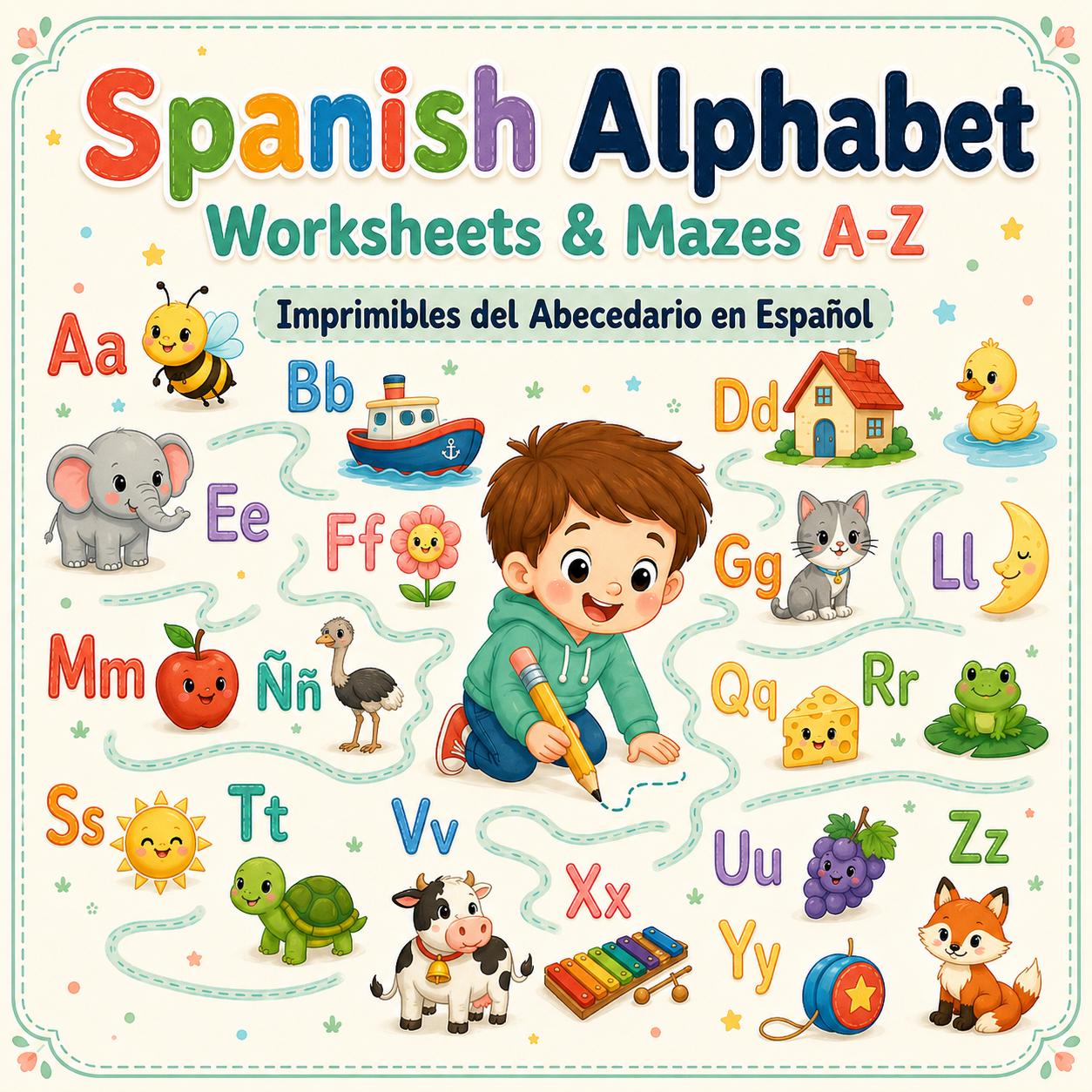
DISCOVERY ACTIVITY WORKBOOKPrintable Spanish Alphabet Activity Workbook (Ages 3-6)
A 50-page downloadable workbook designed to help bilingual toddlers and preschoolers master the Spanish alphabet through interactive puzzles and tracing. It simplifies early language learning with easy-to-follow Spanish prompts, making bilingual education stre
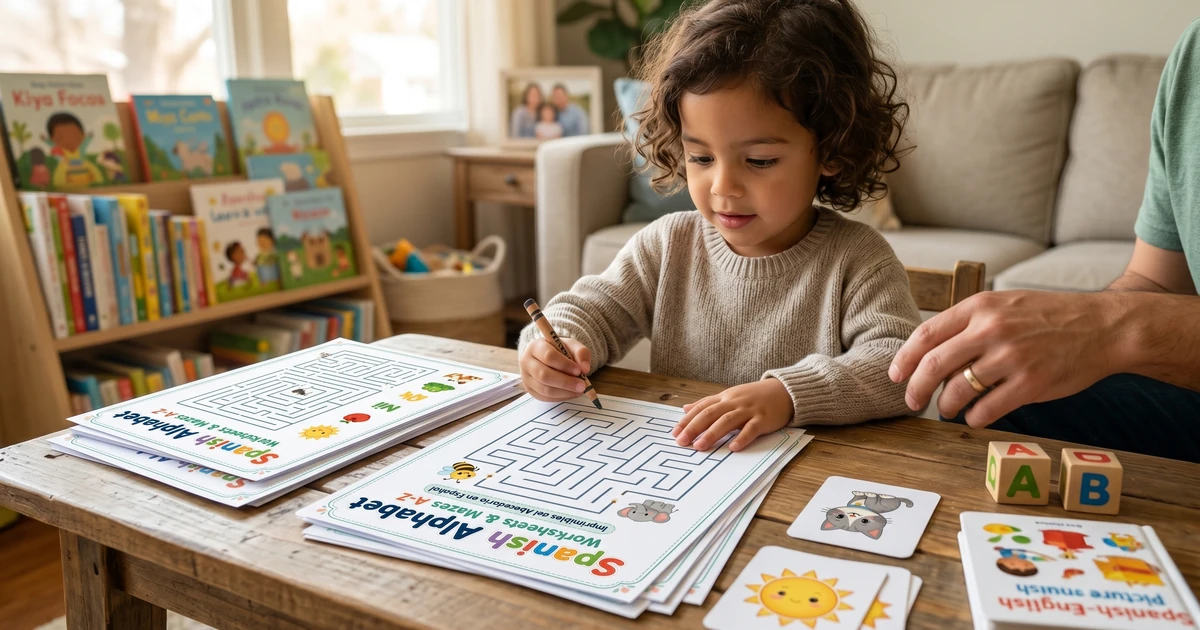
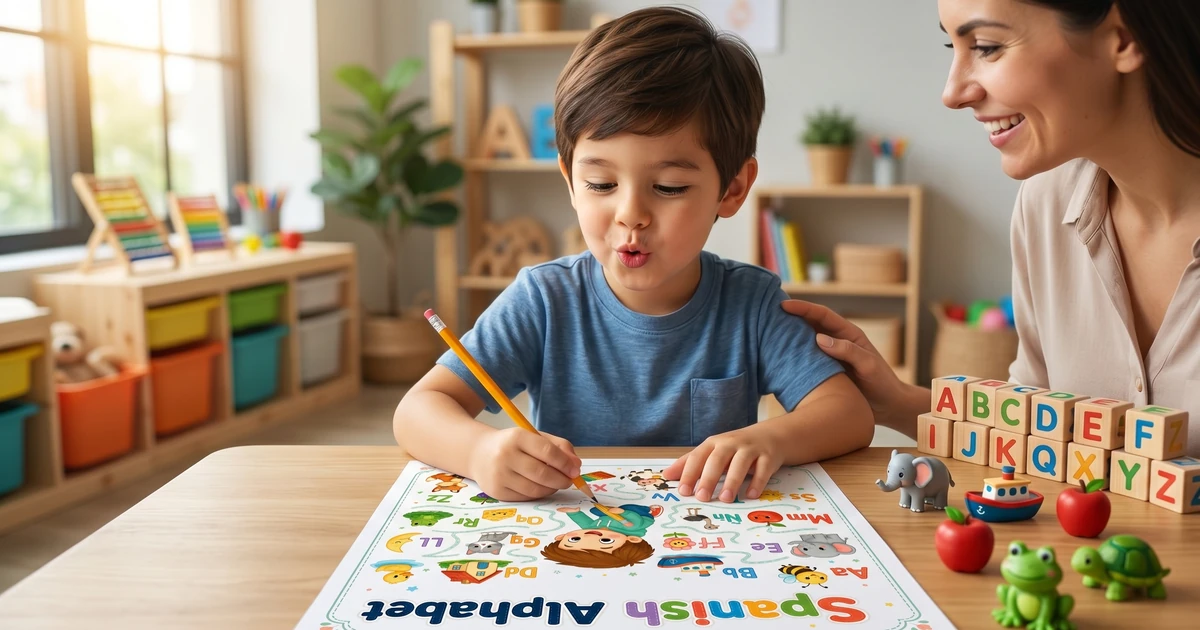
!A young child tracing Spanish alphabet letters on a colorful printable worksheet at a wooden table
You printed the pages. You sat down with your toddler. You pointed to the letter “A” and said “A de árbol” with your best attempt at a Spanish accent. And then… your child flipped the page upside down, drew a scribble across the whole thing, and asked for a snack.
Sound familiar?
You’re not doing it wrong. You’re just missing a few things that make the difference between a Spanish alphabet activity workbook becoming a daily favorite and becoming a crumpled pile under the couch cushions.
I’ve spent a lot of time analyzing what actually works for bilingual early learners, digging into parent reviews, educator feedback, and child development research. What I found is that most parents have the right materials but the wrong setup. A printable Spanish alphabet activity workbook is genuinely one of the most effective tools for ages 3-6, but only when you know how to sequence it, pace it, and make it feel like play.
Key Takeaways:
- Start with 1-2 letters per week, not the full alphabet in one go
- Pair tracing activities with real-world objects to build memory anchors
- Short 5-10 minute sessions beat long, exhausting ones every time
- You don’t need to speak fluent Spanish to guide your child through this
- Printable workbooks work best as part of a simple, low-pressure routine
Why Most Spanish Alphabet Activities for Kids Stall Out by Week Two
The most common pattern I see in parent feedback: huge excitement in week one, followed by frustration, refusal, and the workbook pages being “lost.” It’s almost never the child’s fault.
The problem is usually pacing. Parents understandably want to make progress, so they push through multiple letters in a single sitting. But for a 3-5 year old, the brain is still building the basic framework for any alphabet, let alone a second one. According to the American Speech-Language-Hearing Association, bilingual language development follows a natural, non-linear path, and children need repeated exposure in relaxed contexts rather than intensive drills.
Slow is fast here. One or two letters a week, done consistently, builds more durable language memory than five letters done chaotically.
The first fix: cut your session time in half and double your consistency.
How to Set Up Your Printable Spanish Alphabet Workbook Routine
Step 1: Choose a Consistent Time and Place
Routine is the secret ingredient most guides skip. Your child’s brain starts to associate a specific chair, a specific time of day, and a specific ritual with “learning Spanish.” That association reduces friction dramatically.
Morning works best for most 3-6 year olds because their attention window is wider and they haven’t hit their daily stimulation limit yet. Set up a small, dedicated spot. Same spot every time.
Step 2: Print in Batches, Not All at Once
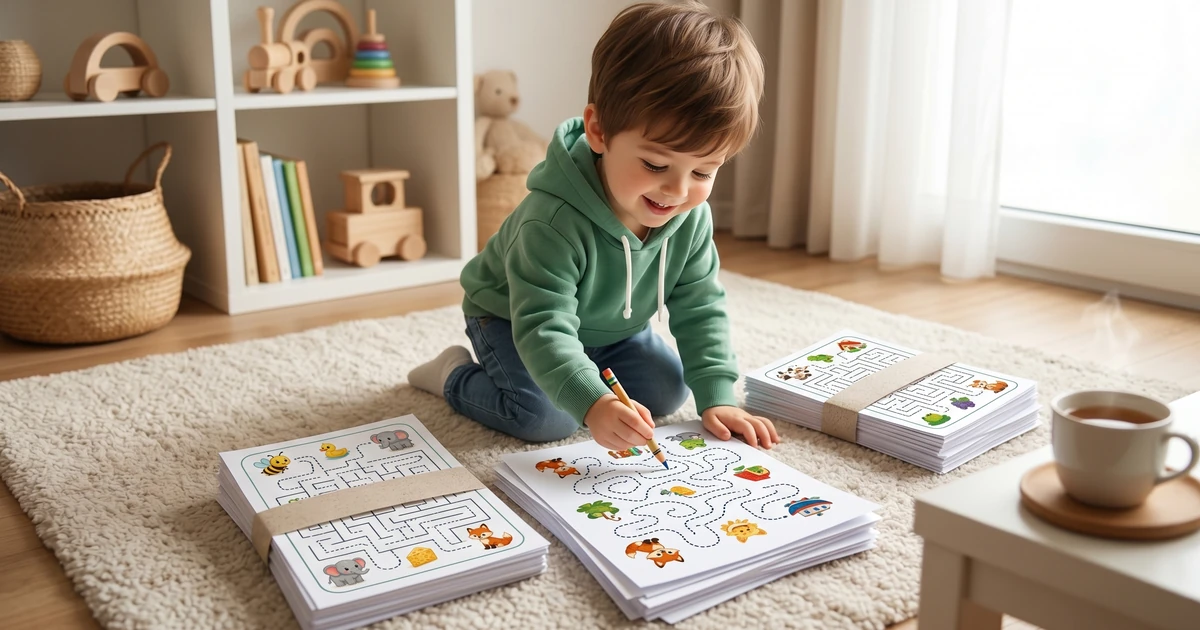
Don’t print the entire workbook on day one. Print 4-6 pages at a time. This keeps things feeling fresh and prevents the overwhelming visual of a thick packet.
Pro Tip: Print pages at 90% scale so they fit inside a small binder or clipboard. Children this age feel much more “official” and engaged when they have their own little learning folder to flip through.
Step 3: Introduce Each Letter With a Real Object
Before your child touches the page, hold up something from around the house that starts with that Spanish letter. “A de árbol” works better when you’re holding a small plastic tree from a toy set. “B de boca” lands when you’re pointing at your mouth and making silly faces.
This is called concrete-to-abstract learning, and it’s one of the most well-supported strategies in early childhood education. The National Association for the Education of Young Children (NAEYC) specifically highlights object-based vocabulary anchoring as a key approach for dual-language learners.
Step 4: Let Them Trace, Then Draw Freely
Most printable Spanish alphabet activity workbooks include tracing lines. Use them, but don’t make tracing the only goal. After they trace, give them a blank section (or the back of the page) to draw the letter however they want. Big, wobbly, in crayon or finger paint. The motor memory matters more than the neatness right now.
Step 5: End With a Sound Game, Not a Quiz
The biggest mistake is ending a session with “What letter is this?” It feels like a test. Instead, play a sound game. “Can you find something in the room that starts with the ‘S’ sound?” That’s not a quiz. That’s a treasure hunt. And treasure hunts always end well.
Build the routine, then let the routine do the work for you.
What a Good Spanish Alphabet Activity Workbook Actually Includes
Not all printable workbooks are built the same. Here’s a quick comparison of what features matter for the 3-6 age range versus what’s just filler:
| Feature | Worth Having | Skip It |
|---|---|---|
| Letter tracing guides | Yes, essential for motor development | Pages with tiny trace lines (too frustrating for small hands) |
| Picture-letter matching | Yes, builds visual vocabulary | Abstract pattern matching (developmentally too advanced) |
| Coloring activities | Yes, keeps engagement high | Complex coloring scenes with many details |
| Writing practice lines | Yes, for ages 5-6 specifically | Lined paper format for ages 3-4 (too restrictive) |
| Spanish pronunciation guides | Yes, huge help for non-Spanish-speaking parents | Pages in Spanish only with no phonetic support |
| Alphabet song references | Helpful for auditory learners | Not essential if you use audio separately |
The workbook I point parents toward most often at KubbyLab includes letter tracing, picture-letter matching, and a simple phonetic guide on each page. You can see the full breakdown in the Printable Spanish Alphabet Worksheets for Early Bilingual Readers guide.
Choose a workbook built for the child’s developmental stage, not just the subject matter.
How to Handle the “I Don’t Want To” Days
Every parent hits this. Your child has zero interest in the workbook today. Here’s what actually helps, based on consistent feedback from parents who’ve been through this:
- Don’t force it. A single forced session can set back weeks of positive association. Announce it’s optional today. They’ll often choose it anyway.
- Lower the bar dramatically. “Just do one letter” removes the perceived mountain. One letter done happily beats five letters done miserably.
- Use a sticker chart. Not for performance, but for showing up. One sticker per session, regardless of how much they completed. The visual progress is motivating for this age group.
- Change the format. If the worksheet isn’t working today, trace letters in a tray of rice. Write them on a fogged-up window. Use sidewalk chalk. The alphabet is the goal, not the specific page.
“Children learn language best when they feel safe, engaged, and in control of the experience. Pressure and correction undermine acquisition.” - Adapted from early bilingual research frameworks, NAEYC
For parents who are newer to Spanish themselves, the guide on Fun Home Spanish Preschool Activities for Parents Who Barely Speak It is genuinely reassuring. You don’t need fluency to lead this.
Pairing Your Workbook With the Right Sounds and Songs
A printable Spanish alphabet activity workbook is a visual and tactile tool. It works best when paired with auditory input. The Spanish alphabet has some significant pronunciation differences from English, and for young children, hearing the letter sounds repeatedly is what makes the written symbol stick.
| Letter | Spanish Sound | Quick Parent Tip |
|---|---|---|
| J | Like English “H” (fuerte) | Say “ha-ha-ha” before the letter name |
| Ñ | ”NY” sound | Think “canyon” without the “ca” |
| LL | Like English “Y” | Think “yellow” starting sound |
| RR | Rolled/trilled R | Hum the motor sound, it usually gets giggles |
| H | Silent in Spanish | ”This letter is sneaky, it’s quiet!” |
YouTube has several free Spanish alphabet songs for kids that pair well with worksheet sessions. Play one before you sit down. It takes 2 minutes and primes the ear before the eye.
For deeper work on pronunciation specifically, the piece on How Interactive Abecedario Activity Worksheets Accelerate Pronunciation Skills goes into much more detail.
Pair every visual activity with a sound, and the learning sticks faster.
How Much Should You Spend on Bilingual Preschool Printables?
This comes up a lot. Parents wonder if spending more means better quality. From what I’ve seen, the sweet spot for printable Spanish alphabet activity workbooks is actually quite affordable.
| Resource Type | Typical Cost | Best For |
|---|---|---|
| Free printables (Pinterest, TPT free) | $0 | Trying a format before committing |
| Single printable workbooks (PDF) | $2-$5 | Best value, usually 30-60 pages |
| Bundled activity packs | $5-$12 | Families doing longer-term bilingual study |
| Subscription platforms | $10-$15/month | High-volume needs, classroom use |
| Physical printed workbooks | $12-$20 | Parents who prefer no-prep, no-print |
A well-designed PDF workbook in the $3-$5 range typically delivers the same or better content than a $15 physical book, and you can reprint pages as many times as you need. For a roundup of the best options in that budget range, Best Bilingual Preschool Printable PDF Activity Bundles Under Five Dollars covers exactly that.
You don’t need to spend much. You need to spend on the right format for your child.
One Thing I’d Tell Every Parent Starting This Journey
Skip the screen replacement trap. I see it constantly in parent communities: a child resists the worksheet, so the parent switches to an alphabet app, then another app, then a YouTube series, and suddenly “Spanish learning” means 45 minutes of passive screen time.
The research on this is pretty clear, and the full breakdown is in Bilingual Toddler Learning Mistakes That Build Unnecessary Screen Addictions. Screens have a role, but they work alongside print activities, not instead of them.
A physical (or printed) workbook keeps the hands busy, reduces the dopamine cycling that screens create, and builds writing readiness at the same time as language exposure. That’s three things happening at once.
Pro Tip: If your child resists the paper workbook, try laminating a few pages. Suddenly it’s “the special one” and they can write on it with a dry-erase marker and erase it themselves. Ownership changes everything with this age group.
For the Complete Guide to Spanish Alphabet Worksheets
This page covers the setup, pacing, and daily use of your printable Spanish alphabet activity workbook. But there’s a lot more ground to cover, including how to choose the right worksheets for your child’s current level, how to sequence letters for bilingual learners specifically, and what homeschool families are doing differently that gets results faster.
Read the full guide here: Printable Spanish Alphabet Worksheets for Early Bilingual Readers
And if you’re structuring actual lesson time around this, How to Run Homeschool Spanish Lessons Kindergarten Kids Keep Asking For is worth bookmarking too.
Frequently Asked Questions
At what age should my child start a Spanish alphabet workbook?
Most children are ready for structured letter tracing activities between ages 4 and 5, but the visual and auditory components of a Spanish alphabet workbook (picture matching, coloring, listening to letter sounds) can start as early as age 3. The key is keeping sessions short (5 minutes at age 3, up to 10-15 minutes at age 5-6) and treating it as play rather than schoolwork.
Do I need to speak Spanish to use a printable Spanish alphabet workbook with my child?
No. A well-designed workbook includes phonetic pronunciation guides on each page so you can say the letter sounds correctly even without Spanish background. YouTube Spanish alphabet songs for kids also fill this gap easily. Your consistency and enthusiasm matter far more than your fluency level.
How many letters should my child learn per week?
For ages 3-4, one letter per week is ideal. For ages 5-6, one to two letters per week works well. Rushing through the alphabet creates surface-level familiarity without real retention. Slow, repeated exposure with real-world object connections builds the kind of memory that lasts.
What’s the difference between a Spanish alphabet workbook and regular Spanish worksheets?
A Spanish alphabet workbook is specifically structured around the 27-letter Spanish alphabet (including Ñ) and focuses on letter recognition, sound-to-letter matching, and early writing. Regular Spanish worksheets often cover vocabulary, grammar, or conversation. For ages 3-6, the alphabet workbook comes first. It’s the foundation everything else builds on.
My child already knows the English alphabet. Will that help or confuse them?
It helps more than it confuses. Children who already know the English alphabet have a head start because 23 of the 27 Spanish letters share the same visual form. The sounds are different, but the shapes are familiar. The new letters (Ñ, and the digraphs CH, LL, RR) become the fun “special” ones to learn.
Kubby writes about early childhood learning tools and bilingual education resources at KubbyLab. All recommendations are based on research synthesis and verified parent and educator feedback.
Take the Next Step!
Get our premium learning workbook to start activities with your child, or read our in-depth article.
Recommended Resources & Workbooks
Pair this guide with our hands-on, ready-to-print learning resources.
 Digital Bundle
Learn to Read Program: Levels 1-3
170 sequenced phonics lessons across 199 pages, from first letter sounds to fluent long-vowel reading.
 Digital Learning Bundle
Preschool Learning Bundle
260+ printable worksheets for tracing, ABCs, numbers, shapes, sight words, and kindergarten prep.
 Digital Learning Bundle
Play-Based Learning Bundle for Ages 3-6
230+ play-based learning activities with pretend play, reading, early math, creative arts, and bonus flashcards.
Related Guides & Articles
Explore more of our detailed guides and activities.
Printable Spanish Alphabet Worksheets for Early Bilingual
Boost your child's Spanish skills with these high-engagement Spanish alphabet worksheets designed for bilingual preschool and homeschool learners
How Interactive Abecedario Activity Worksheets Accelerate
and having spent the last several years researching effective methods for early language acquisition, I've seen firsthand the power of targeted w
Best Bilingual Preschool Printable PDF Activity Bundles
a researcher dedicated to early childhood bilingual education, I’ve spent over 40 hours analyzing feedback from parents and educators who utilize
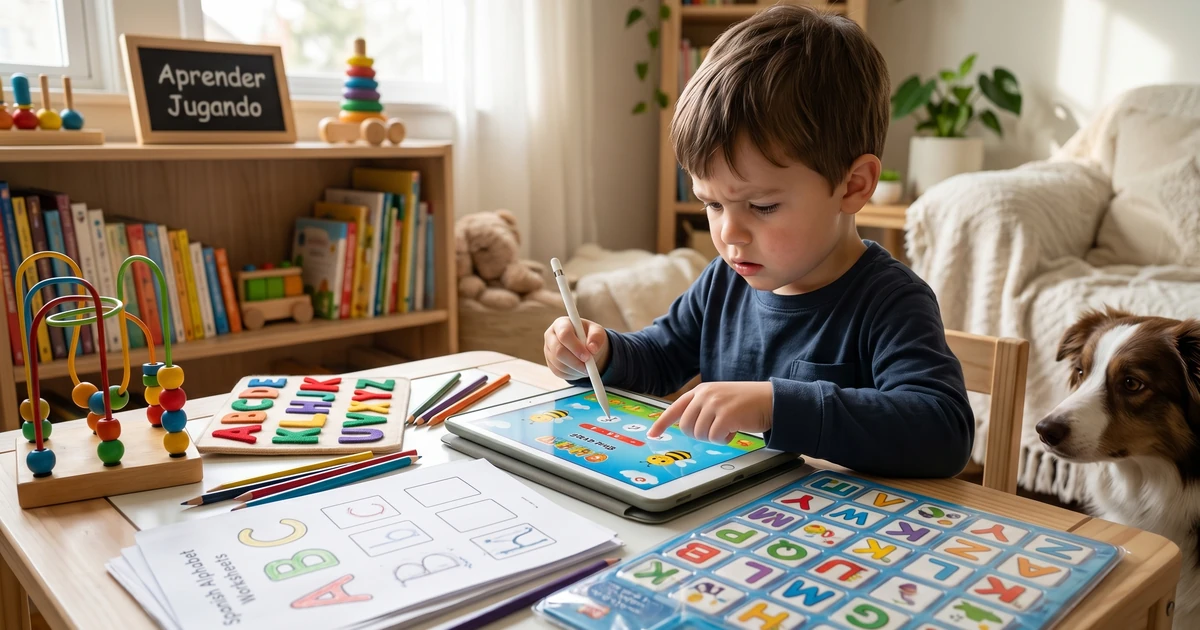
Bilingual Toddler Learning Mistakes That Build Unnecessary
and having spent the last 40+ hours researching the nuances of bilingual language acquisition in toddlers – analyzing parent forums, educational
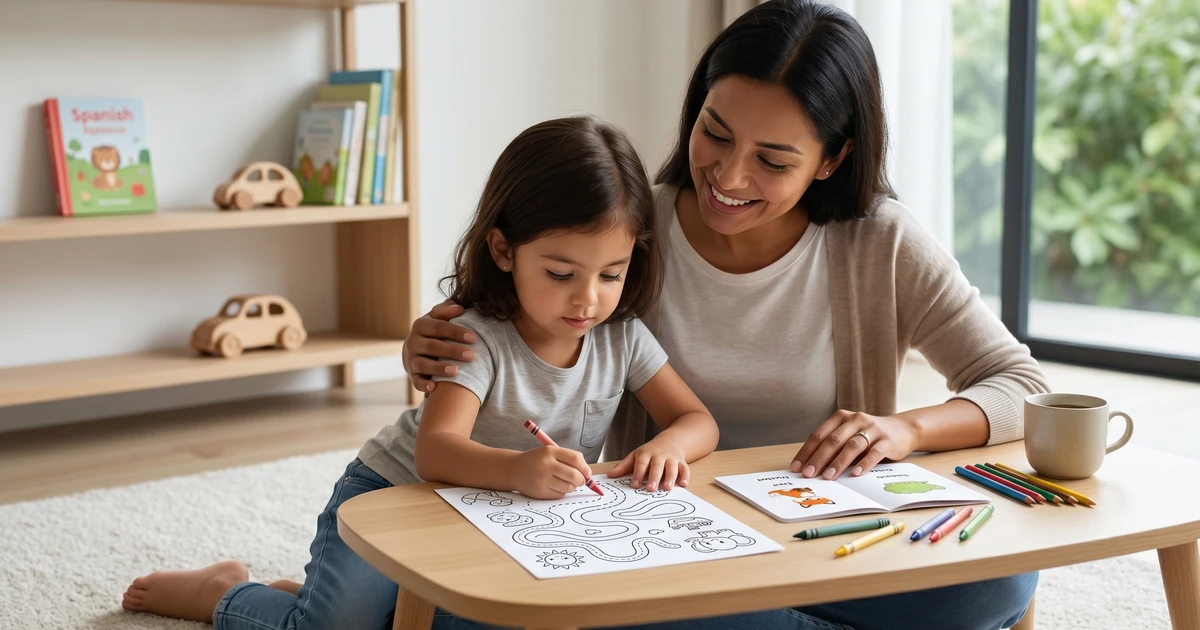
Fun Home Spanish Preschool Activities for Parents Who Barely
As a researcher focused on early childhood language acquisition, I've spent countless hours analyzing what truly works when it comes to introducing...
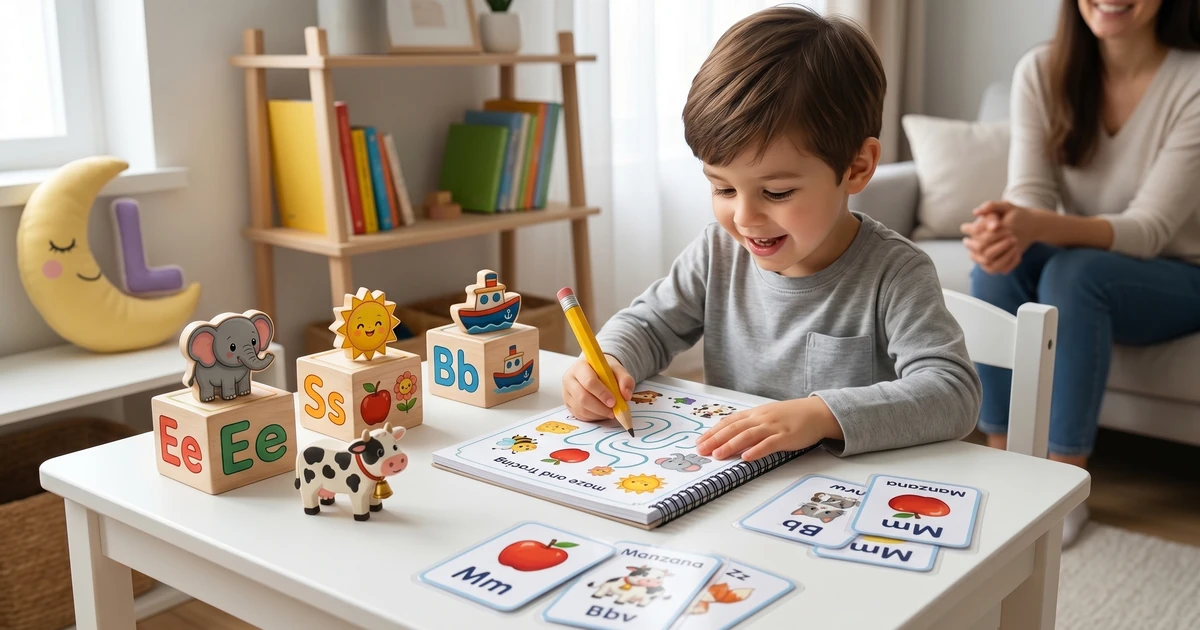
How to Run Homeschool Spanish Lessons Kindergarten Kids Keep
and having spent considerable time researching effective early childhood education resources, I understand how daunting it can be to start home