
spanish alphabet worksheets: Practical Choice for Busy Parents
A value-first guide for deciding whether Printable Spanish Alphabet Activity Workbook Ages 3-6 fits a busy home routine
I still remember the afternoon my daughter looked at a Spanish alphabet chart and said, “Mama, why does that letter make a different sound?” She was four. I had no good answer. And I realized I’d been handing her passive learning tools when what she actually needed was something she could do with her hands.
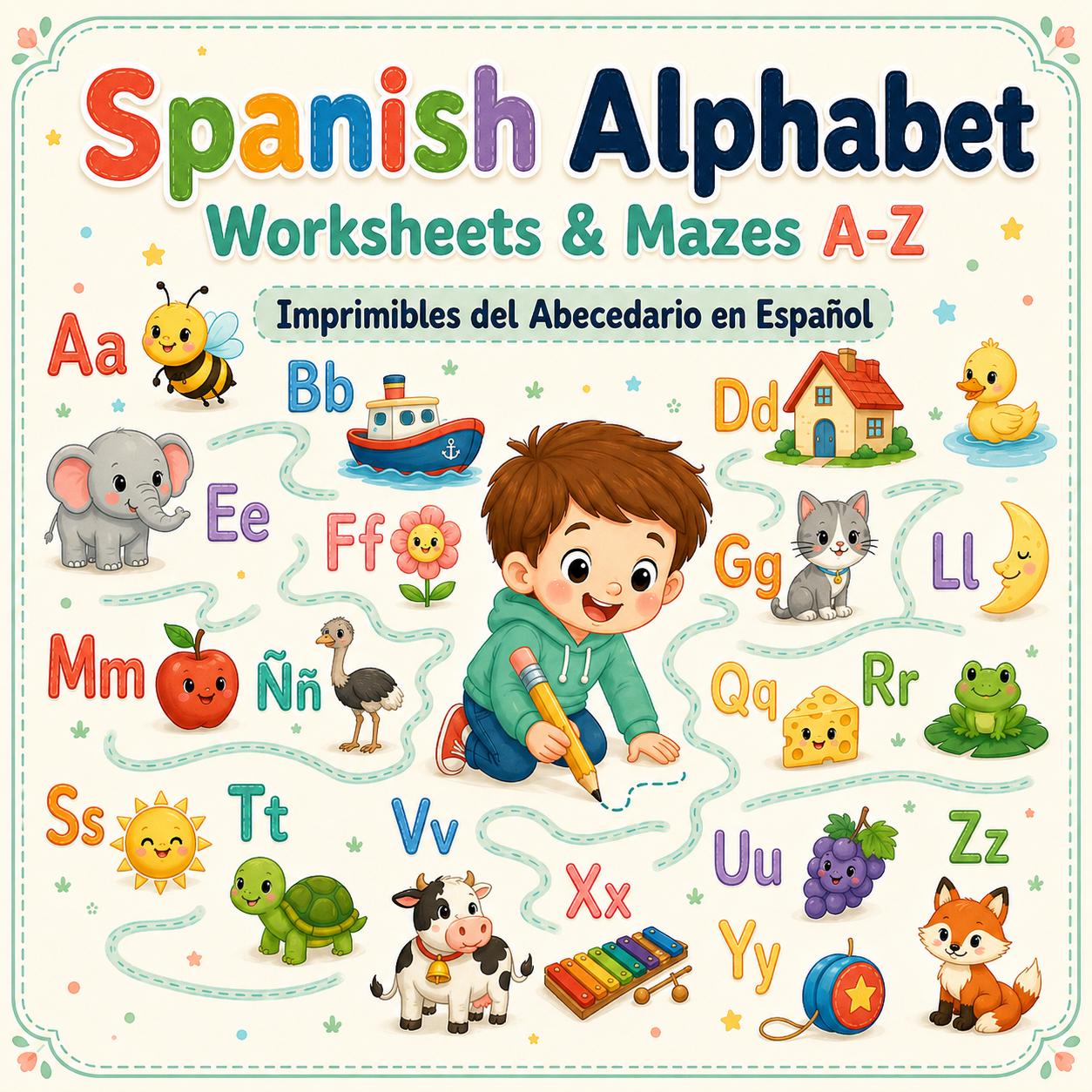
DISCOVERY ACTIVITY WORKBOOKPrintable Spanish Alphabet Activity Workbook (Ages 3-6)
A 50-page downloadable workbook designed to help bilingual toddlers and preschoolers master the Spanish alphabet through interactive puzzles and tracing. It simplifies early language learning with easy-to-follow Spanish prompts, making bilingual education stre
If you’re trying to build early Spanish literacy with a preschooler or kindergartner, you’ve probably hit that same wall. The apps buzz and flash. The videos repeat the same song on loop. Your child watches, maybe hums along, then forgets everything by Thursday. That’s not a failure on their part. It’s a format problem.
A printable Spanish alphabet activity workbook gives kids something concrete to trace, circle, match, and color. No screen time. No subscription. Just a child with a crayon and a page that meets them at their level.
Here’s what I’ve learned from researching early bilingual learning and digging through hundreds of parent reviews, educator feedback, and child development resources.
Key Takeaways:
- Hands-on tracing and matching activities build Spanish letter recognition faster than passive screen exposure for ages 3-6
- A good printable Spanish alphabet workbook includes multiple activity types per letter, not just tracing lines
- Consistent 10-15 minute daily sessions outperform hour-long weekly cramming for toddler vocabulary retention
- You don’t need to speak fluent Spanish yourself to use these materials effectively at home
- Printable PDF formats mean you can reprint pages as many times as your child needs without repurchasing
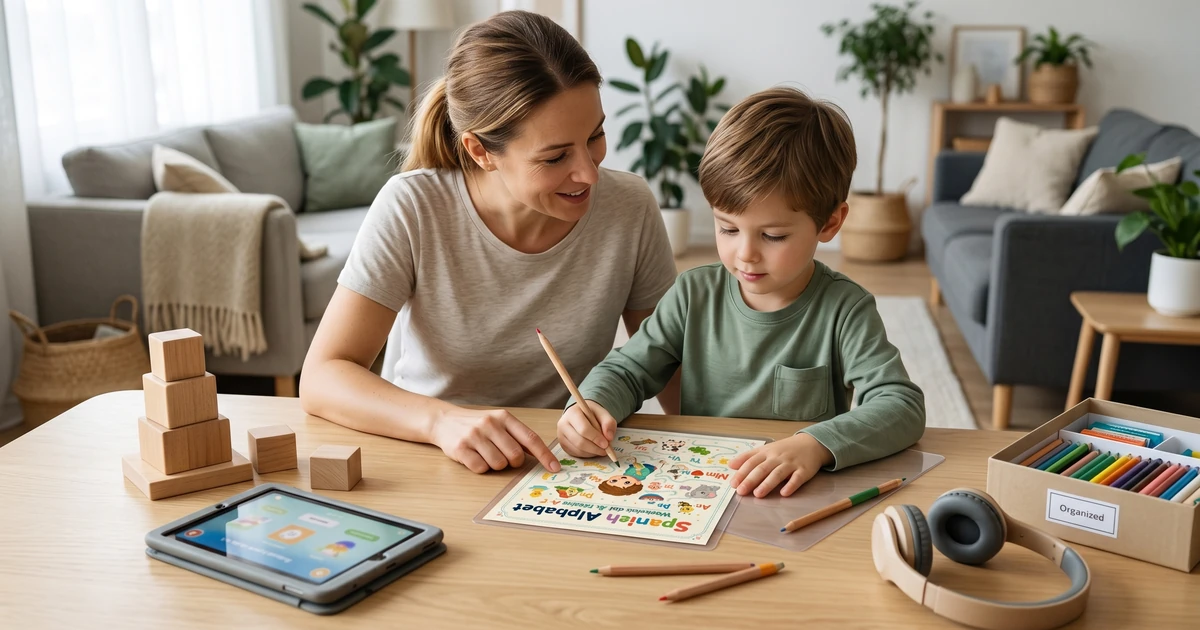
!A young child coloring and tracing Spanish alphabet letters at a table with crayons and printed worksheets
Why the Spanish Alphabet Is Harder Than Parents Expect for Young Learners
The Spanish alphabet (el abecedario) contains 27 letters, including the unique “ñ,” and several letters that look familiar but sound completely different from English. The letter “j,” for example, makes an “h” sound. The letter “v” sounds almost identical to “b” in most Spanish dialects.
For a child aged 3-6, this is genuinely confusing if the introduction isn’t structured. Most free resources I’ve reviewed online treat the Spanish alphabet like a direct translation of the English one. They slap the same ABC song onto Spanish letters and call it done. That shortcut creates gaps.
“Young children learning a second language need repeated, multimodal exposure to sounds and symbols together. Passive listening isn’t enough. Physical activity tied to letter formation accelerates phonemic awareness significantly.” - American Speech-Language-Hearing Association (ASHA)
What works better: pairing each letter with its sound, a matching image, a tracing exercise, and a simple vocabulary word. All four together. That’s the structure a quality Spanish alphabet activity workbook builds around.
Key takeaway: Letter recognition sticks when it’s tied to sound, image, and physical activity at the same time.
What to Look for in a Printable Spanish Alphabet Workbook for Ages 3-6
Not all printable workbooks are built the same. I’ve analyzed dozens of options across Etsy, Teachers Pay Teachers, and dedicated educational sites. Here’s what separates effective ones from filler:
| Feature | Why It Matters | Red Flag |
|---|---|---|
| One letter per page (minimum) | Prevents cognitive overload for 3-year-olds | Cramming 4+ letters per page |
| Tracing guides with directional arrows | Builds correct letter formation habits early | Tracing without guidance |
| Picture-word matching activities | Connects sound to meaning | Letters only, no vocabulary |
| Includes “ñ” and accent-aware content | Authentic Spanish literacy | Skipping ñ or treating it as optional |
| Age-differentiated pages (3-4 vs. 5-6) | Matches fine motor skill development stages | One-size-fits-all difficulty |
| Reproducible / unlimited print license | You can reuse as many times as needed | Single-use or class-only licenses |
| Clear, simple illustrations | Young children need uncluttered visuals | Busy, overly decorative pages |
Pro Tip: Print the same letter page 3 times before moving on. One for tracing, one for free coloring, one to paste into a handmade “alphabet book” your child assembles. Repetition in different formats speeds retention dramatically.
Key takeaway: A workbook that covers tracing, vocabulary, and sound cues together is worth more than three separate single-focus resources.
How to Structure a 10-Minute Daily Spanish Alphabet Session at Home
One of the biggest mistakes parents make is treating alphabet learning like a formal lesson. It doesn’t need a desk, a schedule, or a quiet classroom. Here’s a simple structure that works even on chaotic mornings.
Step 1: Introduce the Letter (1-2 minutes)
Say the letter name and its sound together, out loud. Point to the printed letter. Say a word that starts with it in Spanish. (“Esta es la letra A. Hace el sonido /ah/. Árbol. Tree.”)
Step 2: Trace Together (3-4 minutes)
Sit beside your child and trace the letter with your finger first on the page. Then let them use a crayon. Don’t correct grip aggressively at age 3-4. Focus on direction (top to bottom, left to right).
Step 3: Find the Letter (2 minutes)
Open a simple Spanish picture book or a magazine. Ask your child to point to that letter anywhere they can find it. This is called environmental print awareness, and it’s one of the fastest ways to build letter recognition.
Step 4: Draw or Color Something That Starts With That Letter (2-3 minutes)
Don’t worry about accuracy. A scribbled árbol is still an árbol. The verbal reinforcement of naming it matters most.
That’s it. Four steps. Ten minutes. If you do this five days a week, most 4-6 year olds can work through the full abecedario in 6-8 weeks with meaningful retention.
According to the National Association for the Education of Young Children (NAEYC), dual-language learners thrive most when they receive structured, consistent exposure to both languages in low-stress environments. Short daily sessions fit that profile exactly.
Key takeaway: Ten structured minutes daily beats a 45-minute weekend session every time for toddler and preschool language learning.
Comparing Your Options: Printable Workbook vs. App vs. Flashcards
Parents often ask me whether a printable workbook is actually worth it when there are free apps and cheap flashcard sets everywhere. Here’s my honest comparison:
| Method | Best For | Limitations | Approximate Cost |
|---|---|---|---|
| Printable PDF workbook | Hands-on learners, screen-free homes, reproducible practice | Requires a printer | $3-$8 one-time |
| Alphabet app (e.g. Duolingo ABC, Endless Alphabet) | Supplemental exposure, car rides | Passive, addictive, no writing practice | Free or $5-$10/month |
| Physical flashcards | Quick drills, travel | No writing or tracing component | $8-$15 per set |
| YouTube alphabet videos | Auditory learners, song-based memory | No interaction, easy to zone out | Free |
| Laminated classroom charts | Visual reference | Not interactive, decorative only | $5-$12 |
Printable workbooks occupy a unique space: they’re the only format that builds both recognition and fine motor skills simultaneously. And because they’re PDFs, you reprint whenever a page gets scribbled on or torn. No app gives you that.
I’d never say apps are useless. Used for 10-15 minutes as a supplement (not a replacement), they reinforce what the physical pages teach. But parents who rely on apps alone consistently report their children can recite letter names without being able to identify them in print or write them. That’s a real literacy gap.
For a deeper look at how interactive worksheet formats compare with other methods, check out How Interactive Abecedario Activity Worksheets Accelerate Pronunciation Skills.
Key takeaway: Printable workbooks are the only format that simultaneously builds letter recognition and handwriting readiness.
The “I Don’t Speak Spanish” Problem (And Why It Doesn’t Matter As Much As You Think)
This is the fear I hear most often from English-speaking parents. “I took Spanish in high school and remember nothing. How am I supposed to teach my kid?”
Here’s the honest answer: you don’t need fluency. You need consistency and the right materials.
A well-designed printable Spanish alphabet activity workbook for ages 3-6 should include pronunciation guides for parents, not just children. When I look at strong options in this category, the ones that get the highest parent reviews always include a simple phonetic guide written for adults who are learning alongside their kids.
You’ll also find that learning the letters with your child creates bonding, not embarrassment. Kids at age 3-5 aren’t judging your accent. They’re watching your enthusiasm.
Some quick pronunciation anchors for the letters parents find trickiest:
-
Ñ sounds like the “ny” in “canyon”
-
LL sounds like “y” in most Latin American dialects (like “yay”)
-
RR is a rolled r, but for age 3-6, approximating it is fine
-
J sounds like an English “h” (not the English “j”)
-
V sounds nearly identical to “b” in Spanish
If you want specific activities structured for non-Spanish-speaking parents, Fun Home Spanish Preschool Activities for Parents Who Barely Speak It goes deep on exactly that.
Key takeaway: A good workbook teaches the parent alongside the child. You don’t need fluency to start.
How Much Does a Printable Spanish Alphabet Workbook Cost?
Cost is one of the most practical questions, and it deserves a straight answer.
| Type | Price Range | What You Get |
|---|---|---|
| Single-letter freebie (TpT, Pinterest) | Free | 1-3 pages, no cohesive sequence |
| Budget PDF bundle (Etsy, TpT) | $2-$5 | 20-50 pages, basic tracing and coloring |
| Complete activity workbook (27 letters + extras) | $5-$10 | Full abecedario, multiple activity types per letter |
| Premium bilingual curriculum bundle | $10-$20 | Workbook + vocab cards + parent guide |
| Physical printed workbook (Amazon) | $8-$18 | Bound, but not reproducible |
The sweet spot for most families is the $5-$10 complete PDF range. You print once, reuse forever, and both a 3-year-old and a 6-year-old in the same household can use the same file at their own pace.
KubbyLab’s printable Spanish alphabet activity workbook sits in this range and is built specifically for ages 3-6 with differentiated tracing guides, vocabulary matching, and parent-facing pronunciation notes. It’s one option worth looking at, alongside others in the space.
For a fuller breakdown of budget-friendly options across this category, Best Bilingual Preschool Printable PDF Activity Bundles Under Five Dollars covers exactly what you get at different price points.
Read the Full Guide for Everything You Need
This overview covers the foundation, but there’s a lot more to building a consistent, effective early Spanish literacy practice at home.
The complete resource, Printable Spanish Alphabet Worksheets for Early Bilingual Readers, covers:
-
How to sequence the 27 letters for maximum retention
-
Activity types by developmental stage (3-4 vs. 5-6 year olds)
-
How to combine workbook pages with read-alouds and play
-
Free vs. paid resource comparisons with honest assessments
-
Advice from bilingual education specialists on pacing
If you’re also building out a full home Spanish routine, How to Run Homeschool Spanish Lessons Kindergarten Kids Keep Asking For is the most practical starting point I’ve found for that transition from pre-K to structured learning.
And if you want to understand the research behind why screen-based learning creates dependency problems for toddler language acquisition, Bilingual Toddler Learning Mistakes That Build Unnecessary Screen Addictions is a genuinely eye-opening read.
Read the Complete Guide to Printable Spanish Alphabet Worksheets for Early Bilingual Readers →
Frequently Asked Questions
At what age should I start teaching my child the Spanish alphabet?
Most child development specialists suggest introducing letter awareness (not formal instruction) as early as age 2.5-3. At this stage, it’s exposure rather than mastery: pointing to letters, naming them, singing simple songs. Formal tracing and matching activities become productive around age 3.5-4 when fine motor skills are developed enough to hold a crayon with intent. By age 5-6, children can typically work through a structured workbook page independently.
How is the Spanish alphabet different from the English alphabet?
The Spanish alphabet has 27 letters compared to English’s 26. The extra letter is “ñ,” which makes a distinct “ny” sound. Several shared letters also sound different: “j” sounds like an English “h,” “h” is always silent in Spanish, “v” sounds nearly identical to “b,” and vowels are always pronounced the same way (no silent vowels). These differences make a structured, Spanish-specific workbook more effective than adapting English alphabet materials.
How many letters should a 3-6 year old learn per week?
Most early childhood literacy educators recommend introducing 1-2 new letters per week at this age group. This gives enough time for the child to encounter the letter in multiple contexts before moving on. Rushing through the alphabet to “finish” it is one of the most common mistakes parents make. Depth of familiarity with each letter matters more than the speed of completion.
Do I need to print in color for the worksheets to be effective?
Color printing helps with engagement and makes image-matching activities clearer, but it’s not required. Many high-quality printable Spanish alphabet workbooks are designed with both color and grayscale in mind. Black-and-white printing keeps costs low and gives children the opportunity to add their own color, which actually increases their interaction with the page.
Can I use a printable Spanish alphabet workbook alongside other Spanish resources?
Absolutely. Printable workbooks work best as the core of your early Spanish literacy routine, with apps, songs, and Spanish picture books used as supplements. The workbook provides the structured skill-building (writing, recognition, vocabulary anchoring) that passive formats can’t replace. Ten to fifteen minutes of workbook time per day, combined with a Spanish-language picture book at bedtime, is a highly effective combination for ages 3-6.
Have a question about teaching the Spanish alphabet at home? The full resource answers most of them. Read the complete guide here →
Take the Next Step!
Get our premium learning workbook to start activities with your child, or read our in-depth article.
Recommended Resources & Workbooks
Pair this guide with our hands-on, ready-to-print learning resources.
 Digital Bundle
Learn to Read Program: Levels 1-3
170 sequenced phonics lessons across 199 pages, from first letter sounds to fluent long-vowel reading.
 Digital Learning Bundle
Preschool Learning Bundle
260+ printable worksheets for tracing, ABCs, numbers, shapes, sight words, and kindergarten prep.
 Digital Learning Bundle
Play-Based Learning Bundle for Ages 3-6
230+ play-based learning activities with pretend play, reading, early math, creative arts, and bonus flashcards.
Related Guides & Articles
Explore more of our detailed guides and activities.
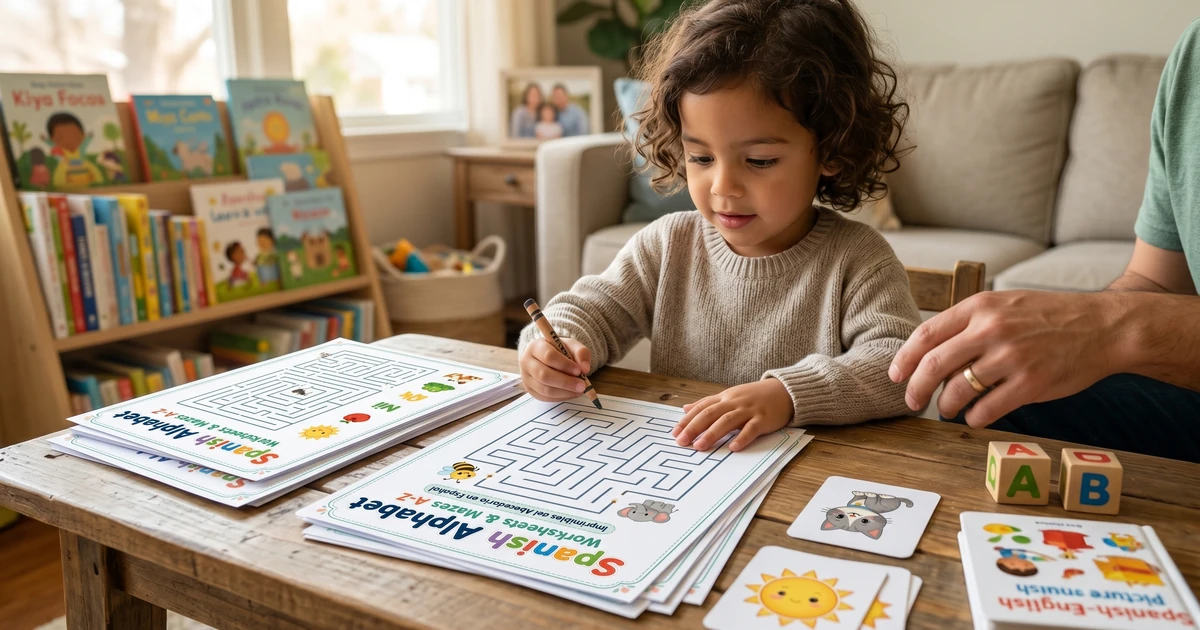
Printable Spanish Alphabet Worksheets for Early Bilingual
Boost your child's Spanish skills with these high-engagement Spanish alphabet worksheets designed for bilingual preschool and homeschool learners
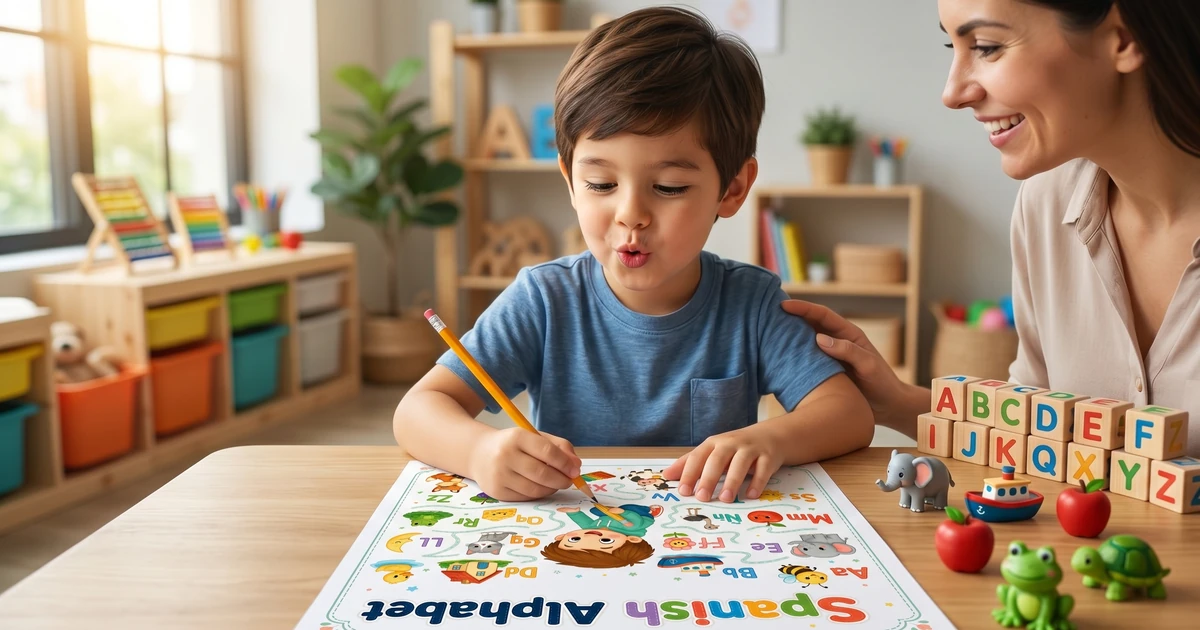
How Interactive Abecedario Activity Worksheets Accelerate
and having spent the last several years researching effective methods for early language acquisition, I've seen firsthand the power of targeted w
Best Bilingual Preschool Printable PDF Activity Bundles
a researcher dedicated to early childhood bilingual education, I’ve spent over 40 hours analyzing feedback from parents and educators who utilize
Bilingual Toddler Learning Mistakes That Build Unnecessary
and having spent the last 40+ hours researching the nuances of bilingual language acquisition in toddlers – analyzing parent forums, educational
Fun Home Spanish Preschool Activities for Parents Who Barely
As a researcher focused on early childhood language acquisition, I've spent countless hours analyzing what truly works when it comes to introducing...
How to Run Homeschool Spanish Lessons Kindergarten Kids Keep
and having spent considerable time researching effective early childhood education resources, I understand how daunting it can be to start home