
spanish alphabet worksheets: No-Stress Starter Guide
A low-pressure angle for people who want help but dislike complicated setup. overwhelmed beginners who need a calm starting point
You sat down with your 4-year-old, full of enthusiasm, ready to introduce a few Spanish letters. Ten minutes later, they were under the table, the crayons were on the floor, and you were quietly Googling “is it too early to hire a tutor?”
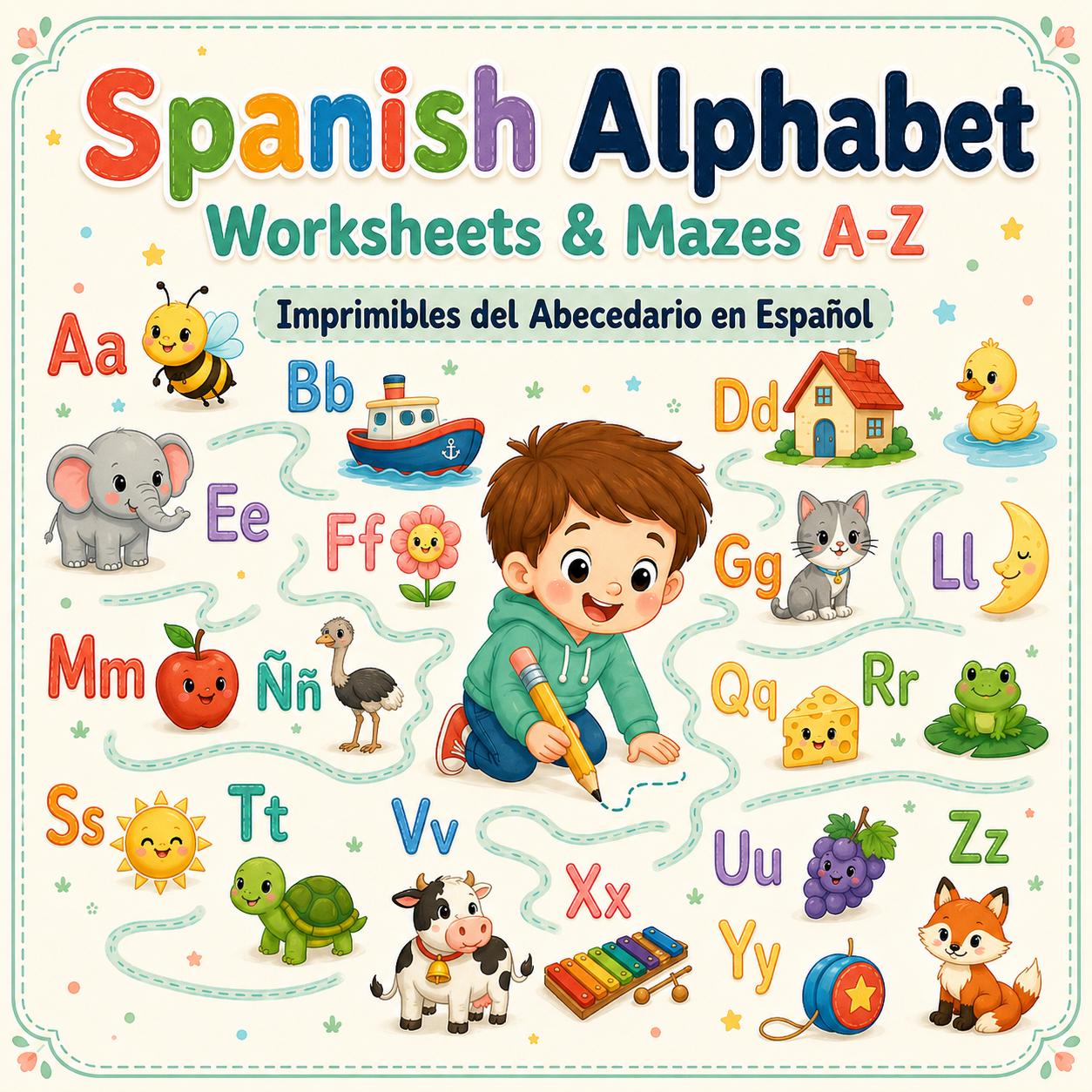
DISCOVERY ACTIVITY WORKBOOKPrintable Spanish Alphabet Activity Workbook (Ages 3-6)
A 50-page downloadable workbook designed to help bilingual toddlers and preschoolers master the Spanish alphabet through interactive puzzles and tracing. It simplifies early language learning with easy-to-follow Spanish prompts, making bilingual education stre
Sound familiar?
Teaching little ones a second language is one of the most meaningful things you can do for their future. But between nap schedules, snack negotiations, and the general chaos of life with a preschooler, finding the right approach can feel genuinely exhausting. Most parents I hear from aren’t looking for a full bilingual curriculum. They just want something simple, something that works, and something that doesn’t require a teaching degree to pull off.
That’s exactly what this page is about.
Key Takeaways:
- Children ages 3-6 absorb language fastest through play, not formal instruction
- Short, 5-10 minute daily sessions outperform longer weekly ones for retention
- A printable Spanish alphabet activity workbook removes prep work entirely, giving you a ready-to-go tool at home
- Tracing, coloring, and matching activities build both literacy AND fine motor skills simultaneously
- You don’t need to speak fluent Spanish yourself to guide early alphabet learning
!A young child coloring Spanish alphabet worksheets at a kitchen table
Why the Spanish Alphabet Feels Harder Than It Actually Is
The Spanish alphabet (called the abecedario) has 27 letters, just one more than English. Most sounds overlap significantly. Yet parents consistently report that starting feels overwhelming, mostly because they’re comparing it to how they were taught languages in middle school, with textbooks, conjugation drills, and awkward classroom moments.
Young children don’t learn that way. They learn through repetition wrapped in fun. The research backs this up hard.
“Children under age 6 are in a critical window for phonological awareness. Exposure to a second language’s sounds during this period can produce near-native pronunciation that simply isn’t achievable later.” - American Speech-Language-Hearing Association
The gap between “this feels hard” and “this is actually working” usually comes down to one thing: format. Flashcards bore most 3-year-olds within 90 seconds. Screens can work, but parents in the bilingual toddler learning space consistently report that heavy screen time creates dependency without building the hand-brain connection that reading later requires.
Printable activity pages hit a different part of the brain. Tracing a letter, coloring a matching picture, connecting a sound to an image. These are multi-sensory hits that stick.
The difficulty isn’t the Spanish alphabet. It’s finding the right format for a 4-year-old’s attention span.
What Actually Works for Ages 3-6 (Based on Developmental Research)
I’ve spent a lot of time reading through early childhood language acquisition studies, and the pattern is remarkably consistent. Here’s what the evidence actually supports for this age group.
Keep sessions short and frequent
Five to ten minutes daily beats 45 minutes on Saturday. At ages 3-6, working memory is still developing. Long sessions don’t build more knowledge. They build resistance. Aim for a short, predictable routine, same time each day if possible, even just before lunch or after a morning snack.
Pair every letter with a concrete image
Abstract symbols mean nothing to a 3-year-old. But “A is for avestruz” (ostrich) with a bright picture next to the letter? That’s a hook the brain can grab. The best printable Spanish alphabet materials always include vocabulary illustrations alongside the letters, not just the letter alone.
Let them trace before they write
Tracing is not a shortcut. It’s developmentally appropriate scaffolding. According to Understood.org, fine motor skills in most children aren’t developed enough for confident freehand letter writing until around age 5-6. Tracing builds the muscle memory and confidence first.
Use consistent vocabulary anchors
Pick one Spanish word per letter and stick with it for at least a week. Switching between “A for avión” and “A for araña” in the same week confuses young learners. Consistency is more important than variety at this stage.
Celebrate effort, not accuracy
A wobbly traced “B” is a win. If a child associates Spanish practice with praise and positive feeling, they’ll keep coming back. If they associate it with correction, they’ll start avoiding it. This sounds obvious, but it’s the single most common mistake I see parents mention in forums and reviews.
Short, image-rich, consistent practice is the formula. Everything else is secondary.
The Honest Comparison: Printables vs. Apps vs. Flashcards
Parents trying to teach early Spanish at home usually rotate through a few tools before finding what clicks. Here’s a straightforward look at how the main options compare.
| Method | Best For | Limitations | Cost Range |
|---|---|---|---|
| Spanish learning apps | Independent screen time | Passive absorption, no writing skills | Free to $15/month |
| Physical flashcards | Quick vocabulary drills | Low engagement, easy to lose | $10-$25 per set |
| YouTube channels | Listening and songs | No hands-on component | Free (ads present) |
| Printable activity workbooks | Guided daily practice, fine motor | Requires printing | $3-$12 one-time |
| Hired tutor or class | Structured immersive learning | Expensive, scheduling challenges | $30-$80/session |
Printables aren’t perfect for every situation. If you travel constantly or your child resists sitting at a table entirely, a different approach might suit you better. But for home-based, parent-guided practice with kids ages 3-6, a printable Spanish alphabet activity workbook offers something the other formats don’t: a structured sequence that removes the “what do I do today?” decision fatigue completely.
Pro Tip: Print 5-10 pages at a time and keep them in a simple folder or clipboard. Making it feel like their own “workbook” increases buy-in dramatically, especially for kids ages 4 and up.
Each method has its place, but printables are the only format that combines structured learning with hands-on skill building at a low one-time cost.
A Simple 4-Week Starter Framework (No Experience Needed)
You don’t need a lesson plan background to run this. Here’s a four-week framework I’ve seen work consistently for parents starting from zero.
Week 1: Letters A-G (Focus on recognition)
Introduce one letter every day or two. Trace it, color the illustration, say the letter name and the example word aloud together. Keep it to 8-10 minutes. Don’t test. Just expose.
Week 2: Letters H-N (Add sound practice)
By week two, start adding simple phonics. Say the letter’s sound (not just its name) and have your child repeat. Spanish phonics are more consistent than English, which actually makes this easier. The letter B always makes the same sound in Spanish. No “sometimes it’s silent” surprises.
Week 3: Letters O-Z (Build vocabulary connections)
Use the vocabulary word from each page in a sentence during the day. “Look, a pájaro!” (bird) when you see a bird outside. This bridges the worksheet to real life, which is where retention happens.
Week 4: Review and celebration
Go back through the earlier pages. Let your child show off what they remember. Make it a celebration, not a test. This positive association with “finishing” builds the habit loop for continued learning.
“Spaced repetition, returning to previously learned material after a gap, is one of the most evidence-backed methods for long-term retention in early learners.” - Cognitive Science Society, Annual Review of Learning
A simple four-week structure gives young learners a sense of progress without overwhelming them or you.
What to Look for in a Quality Spanish Alphabet Printable
Not all printables are built the same. Here’s what separates a genuinely useful resource from one that’ll sit in a drawer after one session.
| Feature | Why It Matters | What to Avoid |
|---|---|---|
| Age-appropriate letter sizing | Tracing lines need to be large enough for small hands | Tiny, cramped worksheets designed for older kids |
| Clear, simple illustrations | Visual anchors support word-letter connection | Cluttered or confusing images |
| Consistent vocabulary per letter | Prevents confusion in early learners | Multiple words per letter in introductory pages |
| Tracing + coloring combo | Engages both literacy and fine motor skills | Letters only, no interactive element |
| PDF instant download | Ready to print immediately, no waiting | Subscription-only platforms with paywalls |
| Covers all 27 Spanish letters | Complete abecedario coverage | Workbooks that skip ñ or ch blends |
A good Spanish alphabet activity workbook for ages 3-6 should feel like it was designed specifically for that developmental window. Not watered-down elementary school material, and not oversimplified baby content either.
At KubbyLab, the printable Spanish alphabet workbook for ages 3-6 is built around exactly these criteria. It covers all 27 letters of the abecedario, uses large tracing lines, pairs every letter with a single clear Spanish vocabulary illustration, and downloads instantly as a PDF. You can check it out as one option worth considering, but the framework above works with any quality printable you find.
The right printable feels immediately usable, not like something that needs additional prep or explanation.
A Note on Bilingual Learning at Home (You Don’t Have to Be Fluent)
One thing I want to say clearly: you do not need to speak Spanish to introduce the Spanish alphabet to your 3-6 year old. Many parents who’ve had the most success with home-based bilingual learning have described themselves as “barely conversational.”
What matters is:
-
Pronouncing the letter names and example words consistently (a quick YouTube pronunciation check takes 2 minutes)
-
Showing up daily, even briefly
-
Keeping the energy positive and low-pressure
The goal at this age isn’t fluency. It’s phonological familiarity and positive association with the language. That foundation makes everything that comes later, in school, through media, through travel, dramatically easier to build on.
For parents who want to go deeper on structuring home sessions, how to run homeschool Spanish lessons kindergarten kids actually enjoy is worth reading next.
Frequently Asked Questions
At what age should I start teaching my child the Spanish alphabet?
Most early childhood language specialists suggest that any time between ages 2 and 6 is developmentally ideal for introducing a second language’s alphabet. Ages 3-4 are a particularly strong window because children have enough attention span for short structured activities but are still in the peak period for phonological acquisition. Starting with recognition (seeing and hearing letters) before writing is the right sequence for this age.
My child isn’t interested in sitting down for worksheets. What should I do?
This is extremely common, especially with children under 4. A few things help: keep sessions to 5 minutes maximum, offer a choice (“Do you want to do the A page or the B page today?”), and add a small reward like a sticker after each completed page. For genuinely resistant kids, pairing the worksheet with a song (there are many Spanish alphabet songs on YouTube) for the first 2 minutes often provides enough of a hook to transition into the activity.
Does learning the Spanish alphabet interfere with English literacy development?
No. Decades of bilingual education research show that learning two alphabets simultaneously does not cause confusion in typically developing children. In fact, bilingual learners often demonstrate stronger overall phonological awareness. According to the American Speech-Language-Hearing Association, any temporary mixing of languages is a normal phase, not a problem to correct.
How many letters should I introduce per week?
For ages 3-4, aim for 2-3 new letters per week with frequent review of previous ones. For ages 5-6, you can move slightly faster, up to 4-5 letters per week, while still spending time reinforcing earlier ones. The key is returning to previous letters rather than always moving forward. Spaced review is what builds real retention.
Are printable workbooks better than apps for this age group?
Both have value, but they serve different functions. Apps are better for passive listening and song-based exposure. Printable workbooks build fine motor skills, letter recognition, and focused attention simultaneously. For the 3-6 age window specifically, hands-on activities have a developmental advantage because they engage the kinesthetic learning pathways that screen-based tools largely bypass. Using both in combination is a reasonable approach for most families.
Ready to Go Deeper?
The framework here gives you a solid starting point. But if you want the complete picture, including a full breakdown of the best printable Spanish alphabet resources, how to structure a week-by-week bilingual learning routine, and which specific activities work best at each developmental stage between ages 3 and 6, the full guide covers all of it.
Read the Complete Guide: Printable Spanish Alphabet Worksheets for Early Bilingual Readers
You can also explore:
-
Best Bilingual Preschool Printable PDF Activity Bundles Under Five Dollars
-
How Interactive Abecedario Activity Worksheets Accelerate Pronunciation Skills
-
Fun Home Spanish Preschool Activities for Parents Who Barely Speak It
Your child’s bilingual foundation doesn’t need to be complicated. It just needs to start.
Take the Next Step!
Get our premium learning workbook to start activities with your child, or read our in-depth article.
Recommended Resources & Workbooks
Pair this guide with our hands-on, ready-to-print learning resources.
 Digital Bundle
Learn to Read Program: Levels 1-3
170 sequenced phonics lessons across 199 pages, from first letter sounds to fluent long-vowel reading.
 Digital Learning Bundle
Preschool Learning Bundle
260+ printable worksheets for tracing, ABCs, numbers, shapes, sight words, and kindergarten prep.
 Digital Learning Bundle
Play-Based Learning Bundle for Ages 3-6
230+ play-based learning activities with pretend play, reading, early math, creative arts, and bonus flashcards.
Related Guides & Articles
Explore more of our detailed guides and activities.
Printable Spanish Alphabet Worksheets for Early Bilingual
Boost your child's Spanish skills with these high-engagement Spanish alphabet worksheets designed for bilingual preschool and homeschool learners
How Interactive Abecedario Activity Worksheets Accelerate
and having spent the last several years researching effective methods for early language acquisition, I've seen firsthand the power of targeted w
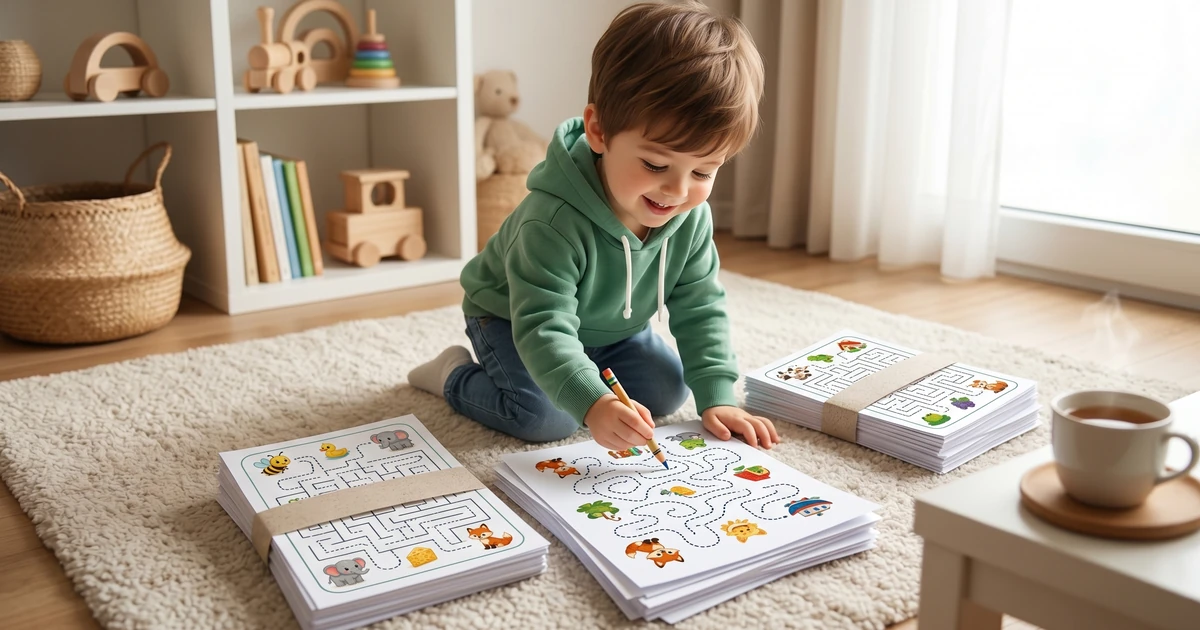
Best Bilingual Preschool Printable PDF Activity Bundles
a researcher dedicated to early childhood bilingual education, I’ve spent over 40 hours analyzing feedback from parents and educators who utilize
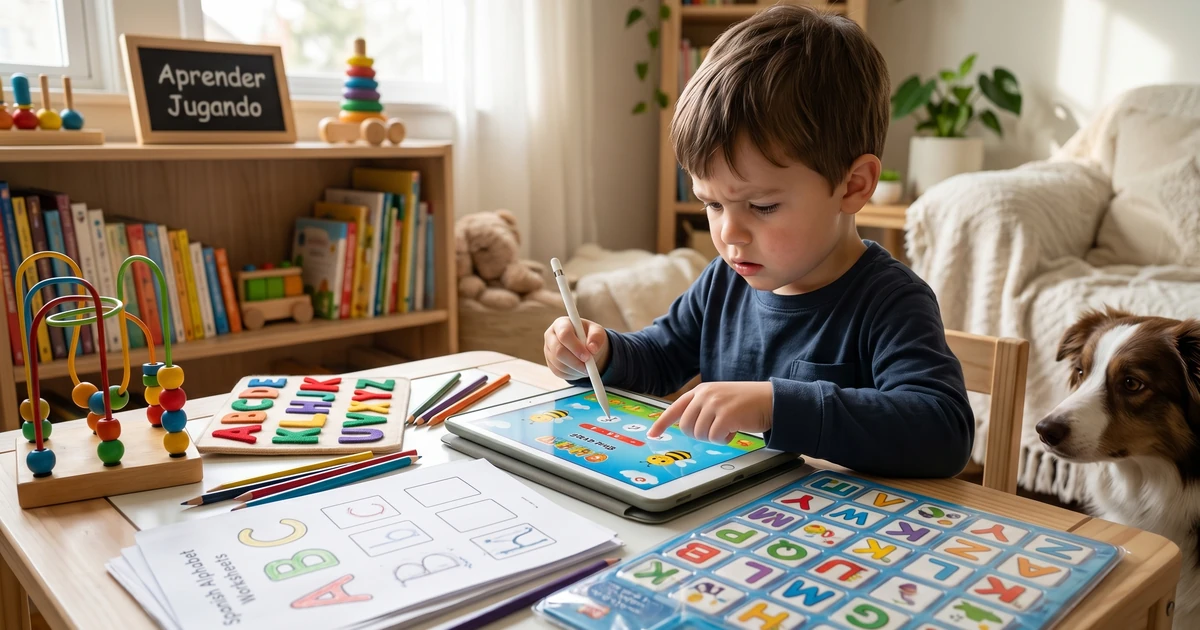
Bilingual Toddler Learning Mistakes That Build Unnecessary
and having spent the last 40+ hours researching the nuances of bilingual language acquisition in toddlers – analyzing parent forums, educational
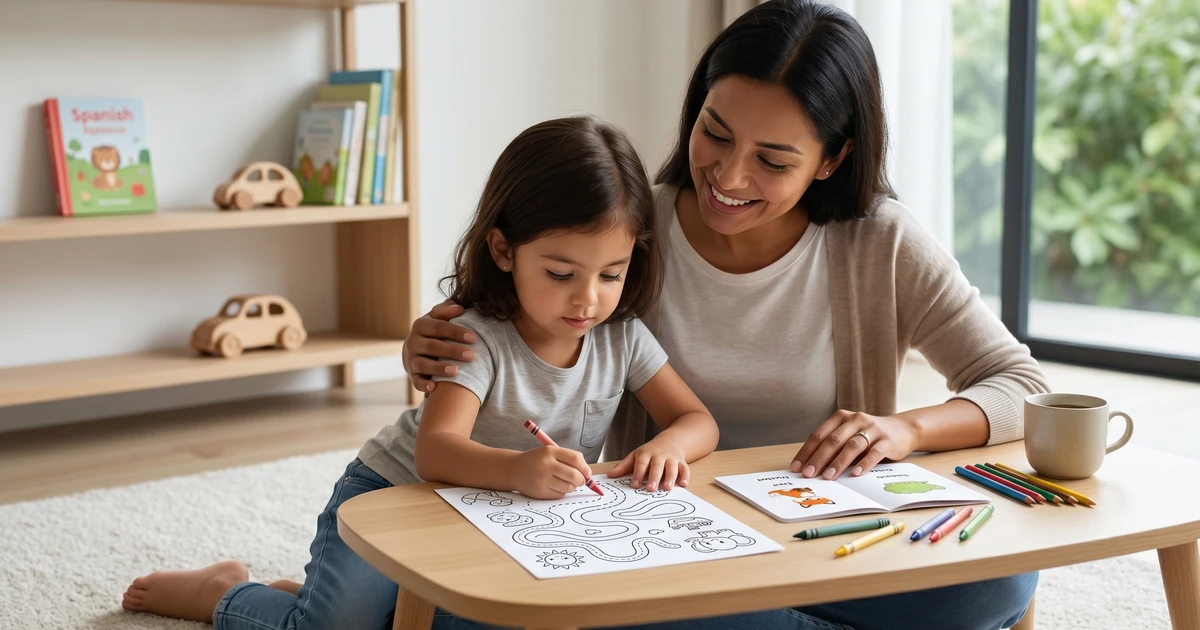
Fun Home Spanish Preschool Activities for Parents Who Barely
As a researcher focused on early childhood language acquisition, I've spent countless hours analyzing what truly works when it comes to introducing...
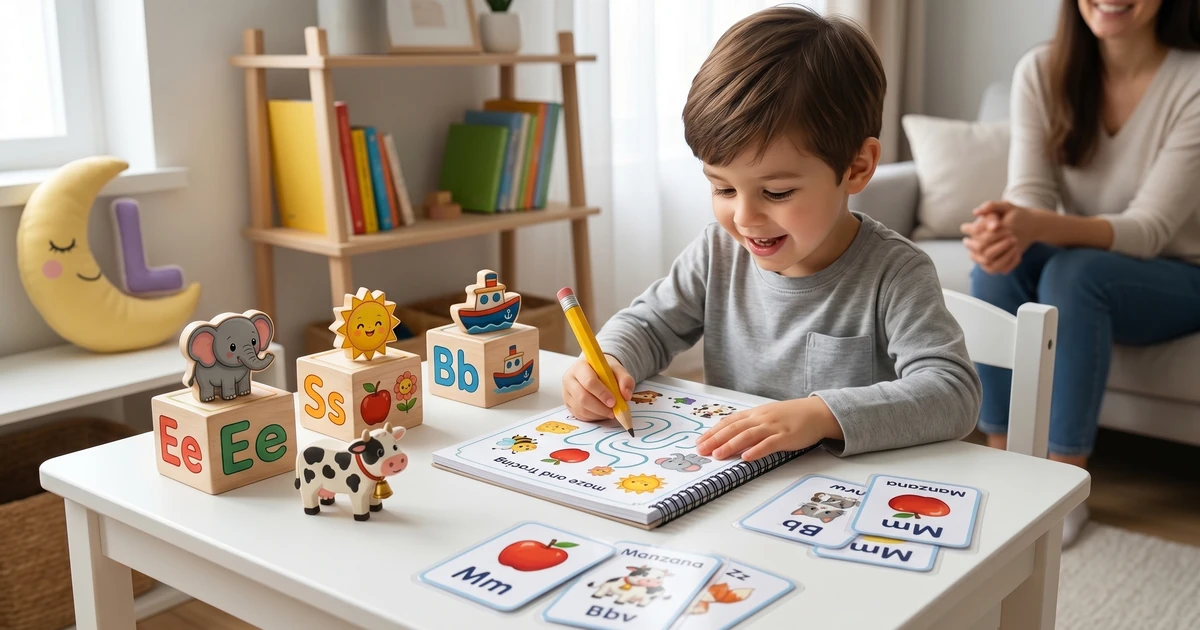
How to Run Homeschool Spanish Lessons Kindergarten Kids Keep
and having spent considerable time researching effective early childhood education resources, I understand how daunting it can be to start home