
The printing prep trap that leaves homeschool parents completely
It's a common struggle! As a learning designer with a background in early childhood education, I’ve spent the last several years researching how families s
You planned to teach your kindergartner Spanish this year. You had good intentions. Maybe you even downloaded a few apps or bookmarked some YouTube videos.
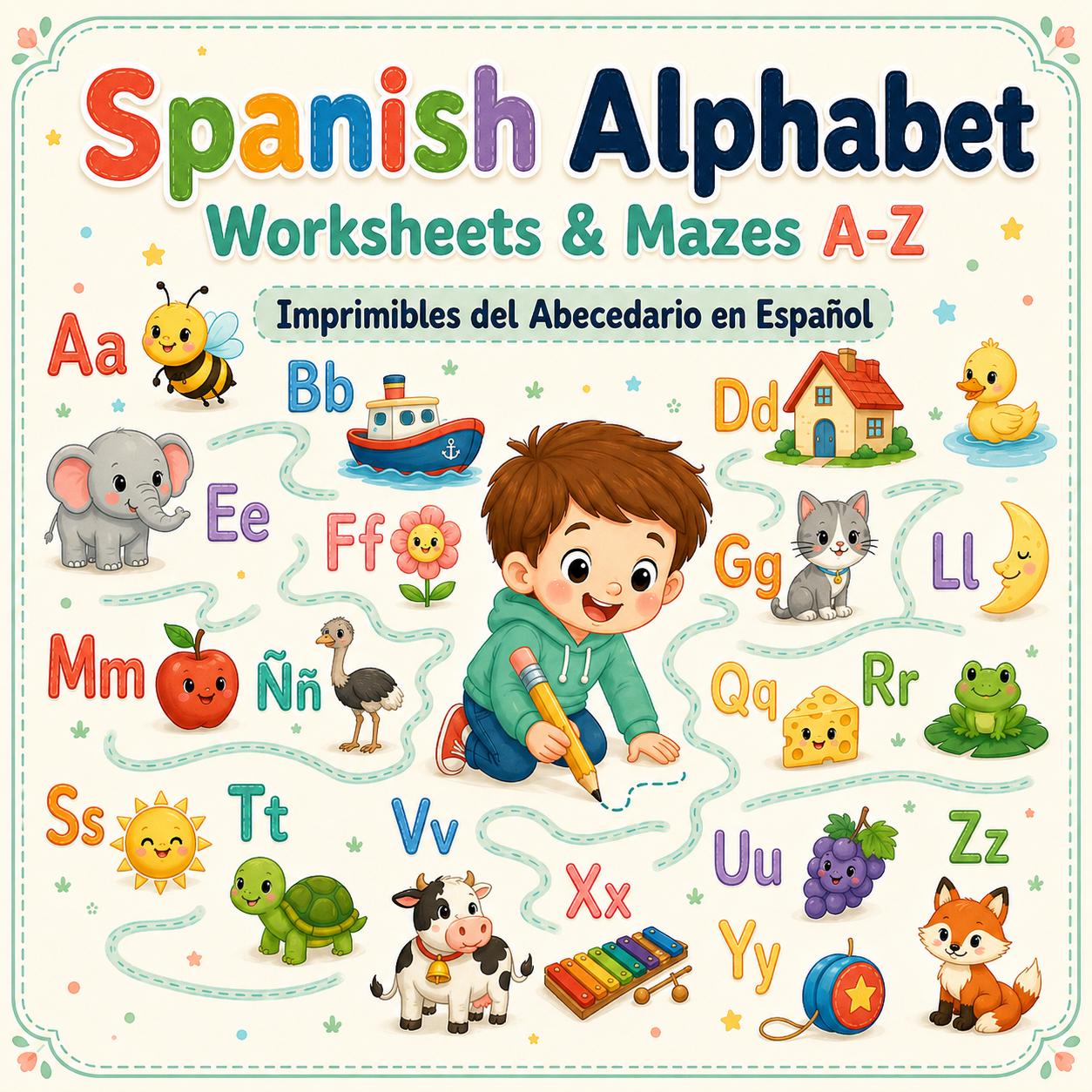
DISCOVERY ACTIVITY WORKBOOKPrintable Spanish Alphabet Activity Workbook (Ages 3-6)
A 50-page downloadable workbook designed to help bilingual toddlers and preschoolers master the Spanish alphabet through interactive puzzles and tracing. It simplifies early language learning with easy-to-follow Spanish prompts, making bilingual education stre
Then real life happened. Your five-year-old sat through exactly four minutes of a cartoon before wandering off to play with LEGOs. The app rewarded them with confetti animations for tapping random letters. And you stood there wondering: is any of this actually sticking?
You’re not alone. Homeschool Spanish lessons for kindergarten trip up a lot of parents, not because they’re lazy or uninformed, but because most of the advice out there isn’t built for how little kids actually learn language. It’s built for older students, classroom settings, or kids who are already immersed in a Spanish-speaking environment.
This guide is for the rest of us.
Key Takeaways:
- Kindergartners learn Spanish best through short, multisensory activities (under 15 minutes)
- The Spanish alphabet is the single best starting anchor for early bilingual learners
- Printable worksheets outperform apps for focus, retention, and screen-free learning
- You don’t need to be fluent in Spanish to run effective homeschool lessons
- Consistency 3-4 times per week beats long, infrequent sessions every time
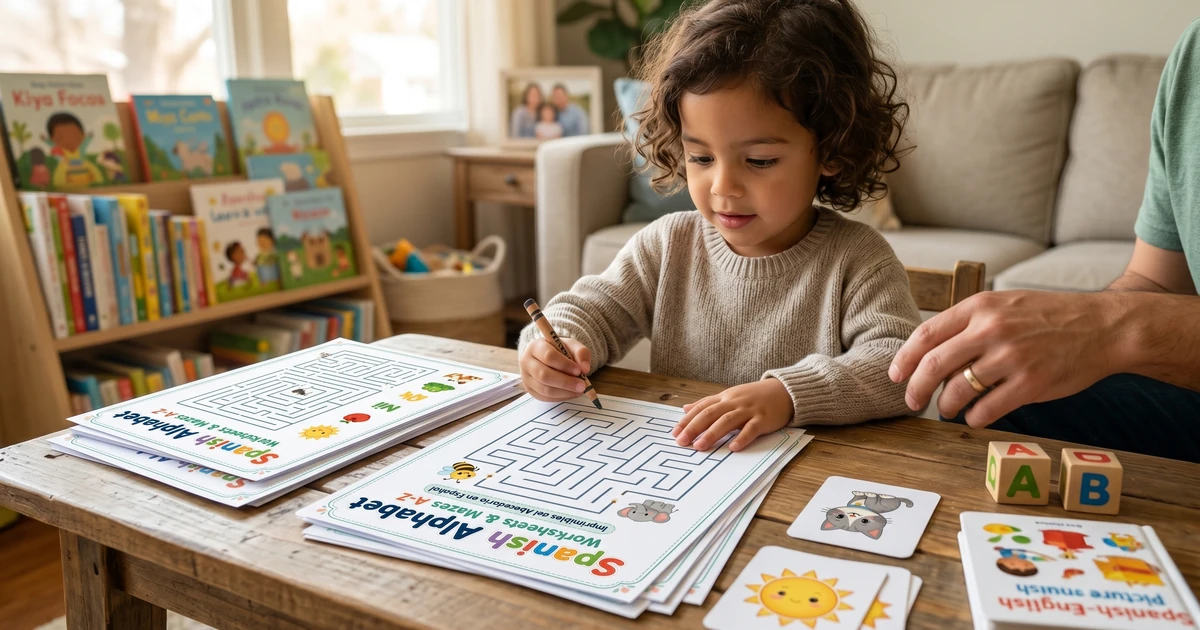
!A kindergartner tracing Spanish alphabet letters on a printable worksheet at a kitchen table
The Real Reason Kindergarten Spanish Lessons Fall Flat
Most homeschool Spanish lessons for kindergarten fail for one specific reason: they treat a five-year-old like a tiny adult learner.
Adult language programs focus on grammar rules, vocabulary drills, and translation. Kindergartners don’t work that way. Their brains are wired for pattern recognition, repetition, and physical engagement. They need to see, say, touch, and do, often in the same 10-minute window.
“Children ages 3-6 are in a critical window for phonological acquisition. Exposure to a second language during this period activates the same neural pathways used for their first language, making retention significantly stronger.” - American Speech-Language-Hearing Association (ASHA)
The fix isn’t finding better content. It’s restructuring how you deliver the content. Short bursts. Physical activity. Repetition disguised as play.
The lesson isn’t too hard. The format is wrong.
How Much Time Should You Actually Spend on This?
This is the question I hear most from homeschool parents, and the honest answer surprises people: 10 to 15 minutes per session, 3 to 4 times per week.
That’s it.
Research from early childhood language acquisition consistently shows that frequency matters far more than duration at this age. A child who hears and practices Spanish for 12 minutes on Monday, Wednesday, and Friday retains more than a child who sits through a 45-minute “Spanish class” once a week.
| Session Length | Frequency | Weekly Total | Effectiveness for Ages 3-6 |
|---|---|---|---|
| 10-15 min | 4x per week | 40-60 min | High (optimal range) |
| 20-30 min | 2x per week | 40-60 min | Moderate |
| 45-60 min | 1x per week | 45-60 min | Low (attention fatigue) |
| 5-8 min | Daily | 35-56 min | High (works well as supplement) |
Keep sessions short, keep them consistent, and your child will surprise you.
Start With the Abecedario, Not Random Vocabulary
I spent a lot of time looking at how successful bilingual homeschool families structure their early Spanish curriculum, and one pattern shows up constantly: they anchor everything to the abecedario (the Spanish alphabet) first.
This makes sense once you understand why. Spanish is a highly phonetic language. Unlike English, where letter sounds shift constantly depending on context, Spanish letters are almost always pronounced the same way. If a child knows the sound of each letter, they can decode words they’ve never seen before.
Starting with random vocabulary (“apple = manzana, cat = gato”) might feel productive, but it skips the decoding layer entirely. Kids memorize isolated words without building the tools to read or recognize new ones.
Pro Tip: Introduce 2-3 letters per week using the same format every time: see the letter, say the letter sound, trace the letter, find a picture that starts with that letter. Repetition of the process builds confidence faster than variety.
For a deeper breakdown of how to sequence this, the How Interactive Abecedario Activity Worksheets Accelerate Pronunciation Skills guide walks through the phonics logic in detail.
Building on the alphabet first gives every other lesson a foundation to stick to.
Why Printable Worksheets Beat Apps for This Age Group
I know the apps are tempting. They’re colorful, they play music, and your child will happily tap at a screen for 20 minutes without complaint. But here’s what I consistently find when I look at parent reviews and early childhood educator feedback: apps create engagement, not retention.
The tactile act of holding a pencil, tracing a letter, and coloring a picture activates different memory pathways than passive screen interaction. It also builds fine motor skills simultaneously, which is directly relevant to kindergarten readiness.
| Learning Tool | Attention Span | Retention | Motor Skills | Screen Time | Cost |
|---|---|---|---|---|---|
| Spanish learning apps | High (passive) | Low-moderate | None | Yes | $0-$10/month |
| YouTube Spanish videos | Moderate | Low | None | Yes | Free |
| Printable worksheets | Moderate (active) | High | Yes | No | $3-$8 one-time |
| Physical flashcards | Moderate | Moderate | Minimal | No | $5-$15 |
| Homeschool curriculum kits | High | High | Yes | No | $40-$150+ |
Printable PDF activity bundles sit in a sweet spot: low cost, no subscription, no screen time, and they’re reusable if you print multiple copies. For budget-conscious homeschool families, the Best Bilingual Preschool Printable PDF Activity Bundles Under Five Dollars breakdown is worth bookmarking.
“Screen-based learning tools in early childhood are most effective when they complement, not replace, hands-on activities. Physical writing and drawing activities remain the gold standard for letter recognition at ages 4-6.” - National Association for the Education of Young Children (NAEYC)
For kindergartners especially, the pencil beats the touchscreen.
What to Include in a Simple Weekly Spanish Lesson Plan
You don’t need a degree in education or fluency in Spanish to run this. I’ve looked at hundreds of homeschool parent reviews and community posts, and the families who stick with it longest all share one habit: a repeatable weekly structure.
Here’s a simple framework that works for ages 4-6:
Step 1: Letter of the Week Introduction (Monday, 10 minutes)
Introduce 1-2 new Spanish letters. Say the letter name, say its sound, show a picture word that starts with it. Use a worksheet with tracing lines so the child physically writes it immediately.
Step 2: Pronunciation Practice (Wednesday, 10-12 minutes)
Revisit Monday’s letters using a different activity format, coloring a picture, matching uppercase to lowercase, or a simple word search. Repetition through variety keeps it fresh without introducing new cognitive load.
Step 3: Review and Play (Friday, 10-15 minutes)
Pull out flashcards or play a simple game using the letters learned so far. “Find the letter that makes the sound /m/” or “Point to the letter that starts this word.” Keep it light and praise-heavy.
Step 4: Monthly Review (Last session of the month, 15 minutes)
Go back through all letters covered that month. Use a simple matching or fill-in activity. This spaced repetition is what moves vocabulary from short-term to long-term memory.
Pro Tip: Write the week’s letter on a sticky note and put it on the fridge. Casually point to it during meals or snack time. These micro-exposures outside of “lesson time” dramatically increase retention without adding any formal study time.
For parents who don’t speak Spanish themselves, the Fun Home Spanish Preschool Activities for Parents Who Barely Speak It guide has specific scripts and pronunciation guides so you’re never guessing.
A repeatable structure removes the friction that makes homeschool parents quit.
Common Mistakes That Slow Down Progress
After going through a lot of feedback from homeschool communities and early childhood language forums, a few patterns stand out as consistent stumbling blocks.
- Introducing too many new words at once. Two to three new items per session is the ceiling for this age group. More than that and nothing sticks.
- Skipping review sessions. New content feels productive, but retention lives in the review. If you never go back, you never build.
- Relying entirely on screen tools. Apps work as supplements. They struggle as the main curriculum.
- Dropping lessons when life gets busy. Two 10-minute sessions per week is still better than nothing. Protect those minimum sessions.
- Expecting visible fluency too quickly. At this age, you’re building a foundation. Fluency shows up later, but only if the foundation is laid now.
The Bilingual Toddler Learning Mistakes That Build Unnecessary Screen Addictions article goes deeper on the screen dependency issue specifically, which is worth a read if your child is already very screen-reliant.
Knowing what to avoid saves more time than finding the perfect curriculum.
How to Choose a Printable Spanish Alphabet Workbook
Not all printables are created equal. Here’s what to look for when you’re evaluating a workbook for kindergarten Spanish lessons:
| Feature | Why It Matters | What to Look For |
|---|---|---|
| Age-appropriate font size | Prevents eye strain and frustration | Large, clear letter sizing |
| Tracing lines included | Builds motor skills and letter memory | Dotted or guided tracing paths |
| Picture associations | Connects sound to meaning | One clear image per letter |
| Both uppercase and lowercase | Full alphabet literacy | Both cases on the same page |
| Phonics focus | Builds decoding skills, not just memorization | Letter sound emphasis in instructions |
| Print quality (PDF) | Allows reprinting for practice | High-resolution, clean design |
| Covers full abecedario | Ensures complete foundation | All 27 Spanish letters included |
KubbyLab’s Printable Spanish Alphabet Worksheets for Early Bilingual Readers covers all of these criteria and is designed specifically for the 3-6 age range, so the pacing and visual complexity are calibrated for kindergartners rather than adapted from older-student materials.
Frequently Asked Questions About Homeschool Spanish Lessons for Kindergarten
Can I teach my kindergartner Spanish if I don’t speak it myself? Yes, absolutely. The key is to stay one step ahead of your child, which at this age means knowing letter sounds and basic vocabulary. Free pronunciation guides, YouTube phonics videos, and printable workbooks with phonetic notes make this very manageable. You don’t need fluency to build a strong early foundation.
How long before my kindergartner starts speaking Spanish? Most children who receive consistent, structured input 3-4 times per week begin producing simple Spanish words within 8-12 weeks. Full sentences typically emerge between 6 and 18 months of consistent practice, depending on exposure outside of formal lessons. Don’t rush production. Comprehension always builds before speaking.
Is the Spanish alphabet the right place to start, or should I start with vocabulary? For reading and long-term language development, start with the alphabet. Spanish is phonetically consistent, which means a child who knows letter sounds can decode new words independently. Starting with vocabulary alone creates a memorization ceiling. The alphabet removes that ceiling.
What’s the difference between Spanish and English alphabet lessons for this age? The core approach is similar, but Spanish has 27 letters (including “ñ”), some letters sound different than in English (like “j” and “ll”), and vowel sounds are fixed and consistent. This actually makes Spanish easier for early readers than English, once kids understand the phonics rules. Many bilingual families find their children read Spanish before English for this reason.
How do I keep my kindergartner engaged when they lose interest mid-lesson? Stop the lesson. Seriously. If a child is disengaged, continuing doesn’t help. Instead, close the worksheet and come back in 30 minutes or try the same content in a different format (say, flashcards instead of writing). Forced sessions create negative associations with the language that take months to undo.
The Full Picture
Homeschool Spanish lessons for kindergarten work when you match the method to the developmental stage. Short sessions, alphabet-first sequencing, physical activities, printable worksheets over passive apps, and a consistent weekly structure are the real ingredients.
You don’t need the most expensive curriculum. You don’t need to speak fluent Spanish. You need a clear plan and materials built for how five-year-olds actually learn.
For the complete lesson structure, printable recommendations, and a week-by-week sequence plan, read the full guide here:
How to Run Homeschool Spanish Lessons Kindergarten Kids Keep Asking For
Take the Next Step!
Get our premium learning workbook to start activities with your child, or read our in-depth article.
Recommended Resources & Workbooks
Pair this guide with our hands-on, ready-to-print learning resources.
 Digital Bundle
Learn to Read Program: Levels 1-3
170 sequenced phonics lessons across 199 pages, from first letter sounds to fluent long-vowel reading.
 Digital Learning Bundle
Preschool Learning Bundle
260+ printable worksheets for tracing, ABCs, numbers, shapes, sight words, and kindergarten prep.
 Digital Learning Bundle
Play-Based Learning Bundle for Ages 3-6
230+ play-based learning activities with pretend play, reading, early math, creative arts, and bonus flashcards.
Related Guides & Articles
Explore more of our detailed guides and activities.
Printable Spanish Alphabet Worksheets for Early Bilingual
Boost your child's Spanish skills with these high-engagement Spanish alphabet worksheets designed for bilingual preschool and homeschool learners
How Interactive Abecedario Activity Worksheets Accelerate
and having spent the last several years researching effective methods for early language acquisition, I've seen firsthand the power of targeted w
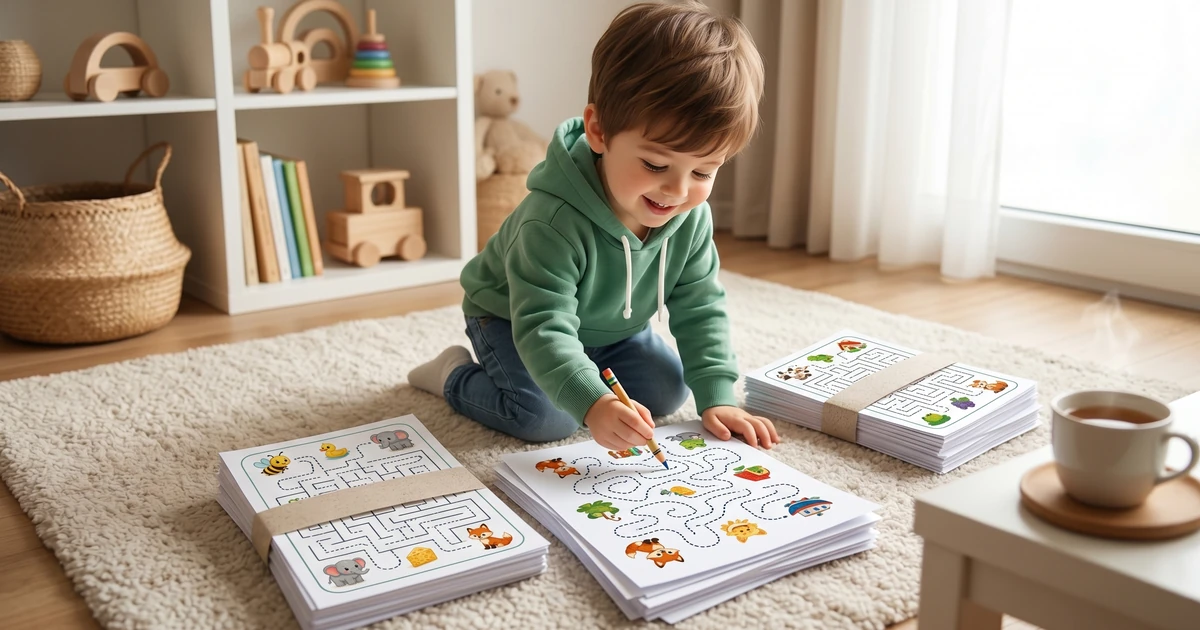
Best Bilingual Preschool Printable PDF Activity Bundles
a researcher dedicated to early childhood bilingual education, I’ve spent over 40 hours analyzing feedback from parents and educators who utilize
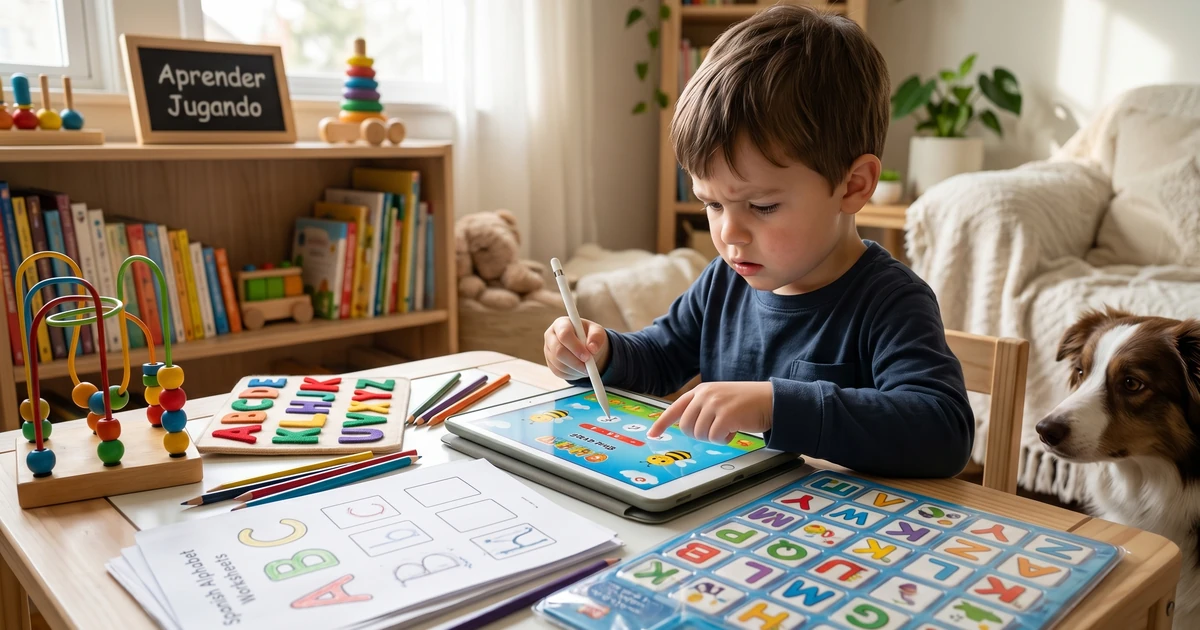
Bilingual Toddler Learning Mistakes That Build Unnecessary
and having spent the last 40+ hours researching the nuances of bilingual language acquisition in toddlers – analyzing parent forums, educational
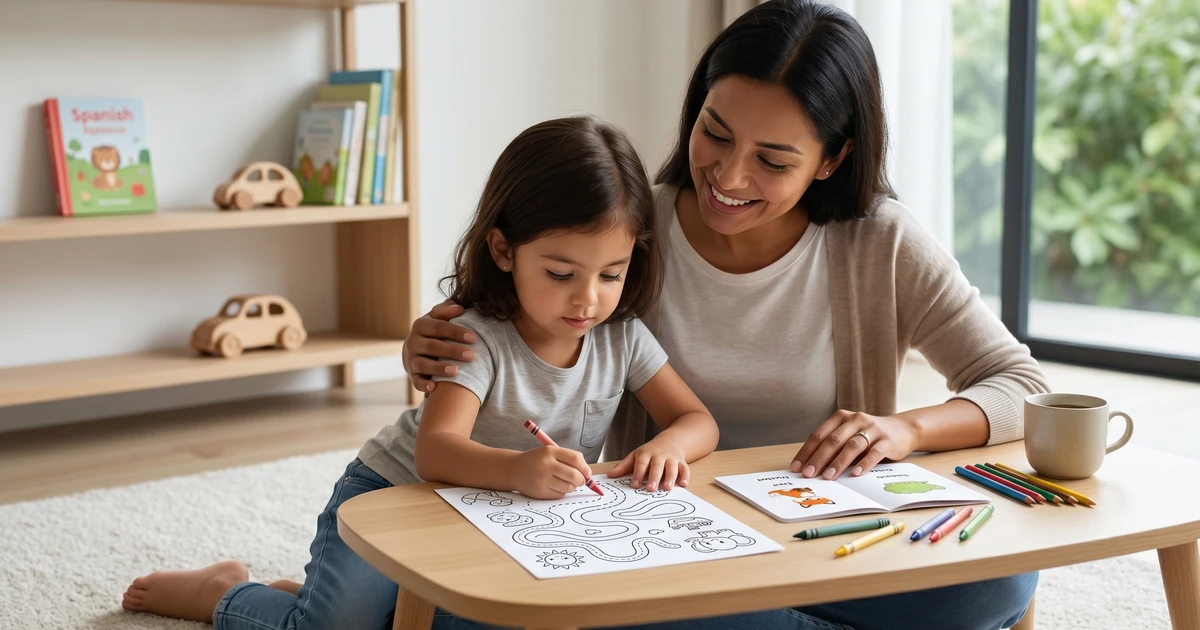
Fun Home Spanish Preschool Activities for Parents Who Barely
As a researcher focused on early childhood language acquisition, I've spent countless hours analyzing what truly works when it comes to introducing...
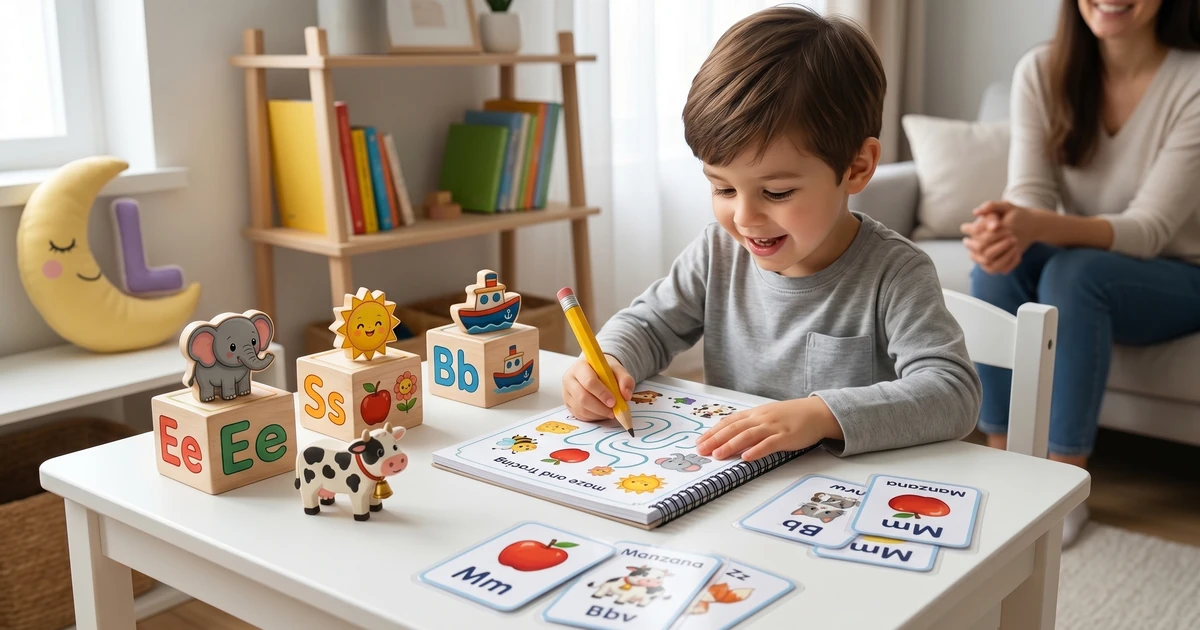
How to Run Homeschool Spanish Lessons Kindergarten Kids Keep
and having spent considerable time researching effective early childhood education resources, I understand how daunting it can be to start home