
Why heritage Spanish kids block language learning attempts at home
It’s a familiar worry, isn't it? You want to give your child the incredible gift of bilingualism, but the thought of actually doing it feels…overwhelming
You downloaded the app. You set a daily reminder. Your three-year-old sat through two sessions, then started asking for cartoons instead. Now the app icon sits on the tablet, untouched, and you’re quietly wondering if bilingual learning just “isn’t for your kid.”
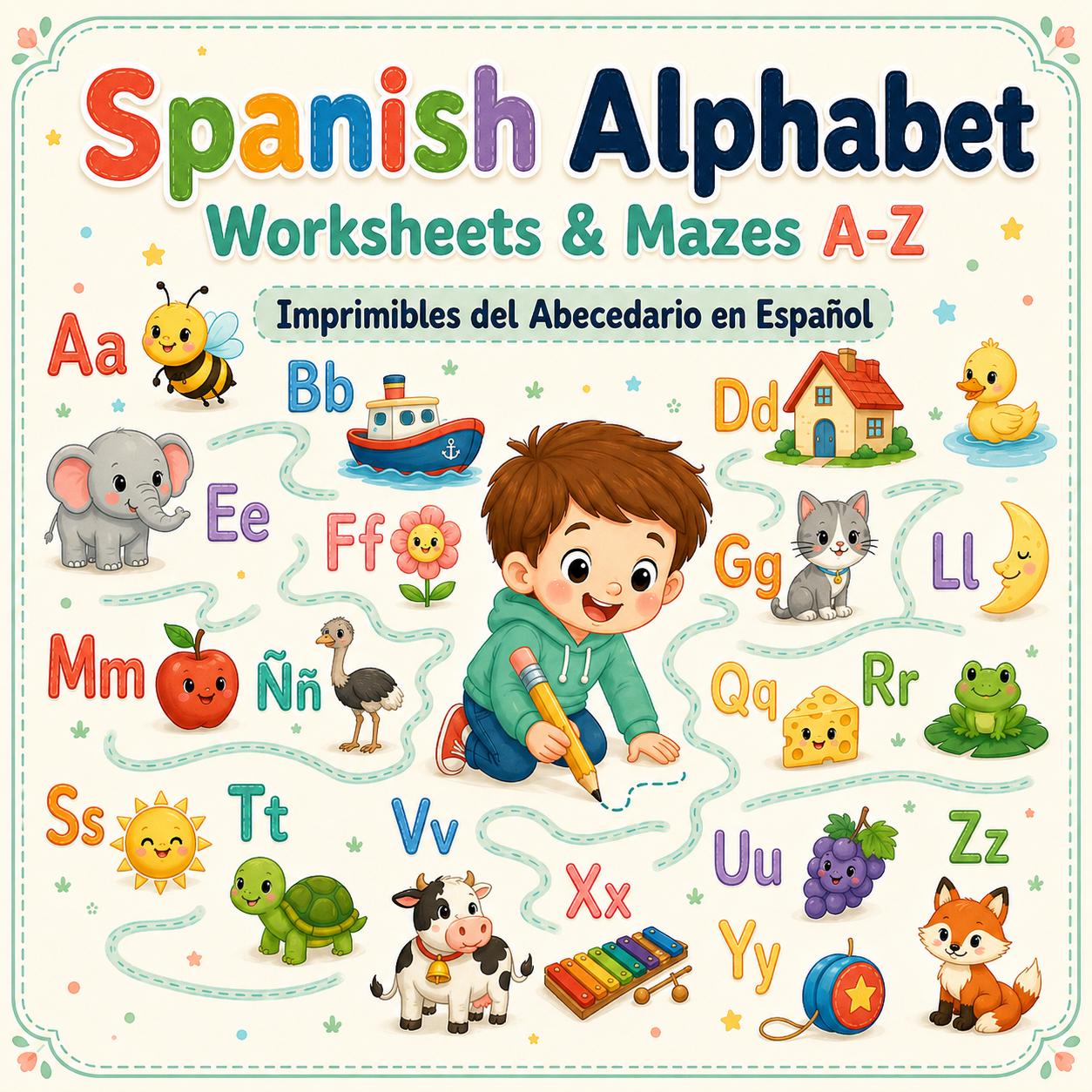
DISCOVERY ACTIVITY WORKBOOKPrintable Spanish Alphabet Activity Workbook (Ages 3-6)
A 50-page downloadable workbook designed to help bilingual toddlers and preschoolers master the Spanish alphabet through interactive puzzles and tracing. It simplifies early language learning with easy-to-follow Spanish prompts, making bilingual education stre
It’s not your kid. It’s the format.
I’ve spent dozens of hours analyzing what actually keeps preschoolers engaged with a second language at home, and the pattern is consistent: home Spanish preschool activities that involve hands, voices, and movement outperform passive screen time almost every time. The research backs this up, and so do thousands of parent reviews across homeschool communities, Etsy shops, and bilingual parenting forums.
This page is here to give you the practical side of that picture. Real activities. Real structure. No fluency required.
Key Takeaways:
- Preschoolers learn Spanish best through tactile, multi-sensory activities, not passive screen exposure
- You don’t need to speak Spanish fluently to run effective home Spanish preschool activities
- Printable worksheets and hands-on games outperform apps for children ages 3-6 in attention and retention
- A simple 15-20 minute daily routine is more effective than long, infrequent sessions
- Free and low-cost printable resources are widely available and easy to use with zero prep
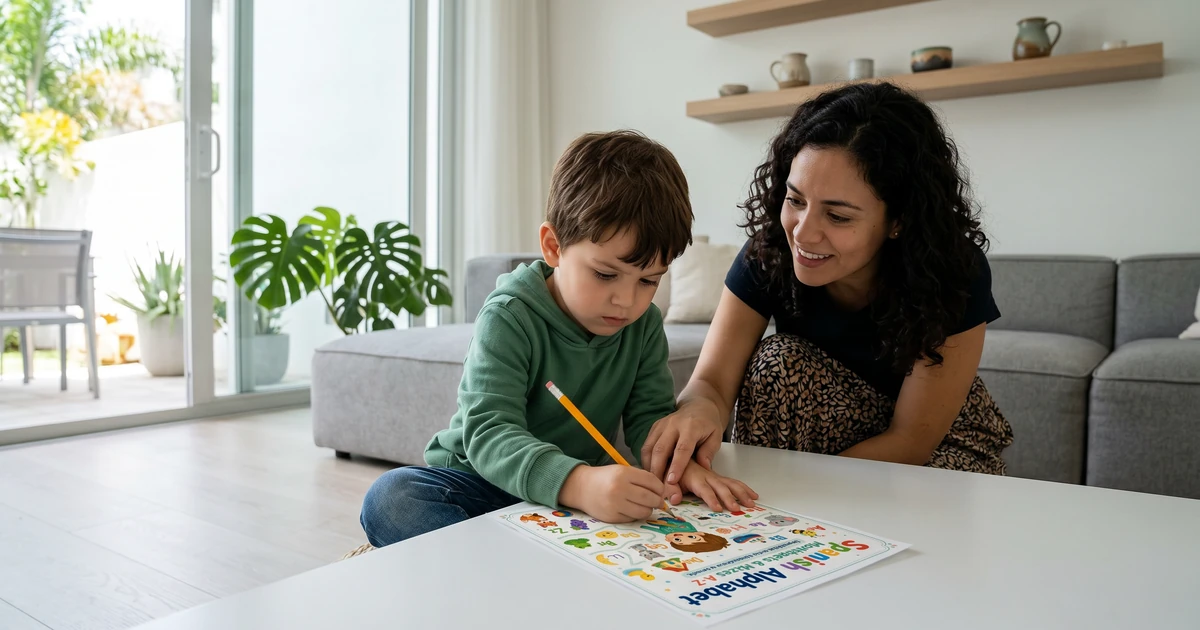
!A smiling preschooler tracing Spanish alphabet letters on a colorful printable worksheet at a kitchen table
Why Spanish Apps Keep Failing Preschoolers (The Attention Problem)
Passive learning is a term educators use to describe situations where a child receives information without producing any response. Most language apps are built on this model: tap, listen, repeat. For adults, that works reasonably well. For a four-year-old, it lasts about six minutes.
“Children under five learn language through interaction, not observation. The more a child produces language (speaking, singing, writing, drawing), the faster acquisition occurs.” - Dr. Patricia Kuhl, University of Washington Institute for Learning and Brain Sciences
The apps aren’t broken. They’re just built for the wrong brain stage. Preschool brains need novelty, physical engagement, and low-stakes repetition. A worksheet where a child traces the letter “A” and colors a picture of an “árbol” (tree) hits all three of those triggers. An app that says “tap the apple” does not.
This is why so many parents who start with apps eventually pivot to printable activities, sensory bins, songs, and games. It’s not a regression. It’s actually the right direction.
Bottom line: If your child is tuning out Spanish apps, that’s normal. The fix is adding more physical activity to the learning.
How to Set Up Home Spanish Preschool Activities Without Speaking the Language
One of the biggest barriers I hear from parents is this: “I don’t speak Spanish. How can I teach it?”
Short answer: you don’t have to teach it. You have to facilitate it.
Here’s a simple framework I put together after reviewing curricula used by bilingual preschool teachers and home educators across the US:
Step 1: Pick One Theme Per Week
Don’t try to cover the whole language. Start with colors (los colores), then numbers (los números), then the alphabet (el abecedario). One theme, five days, done.
Step 2: Anchor Each Day to a Simple Printable
A coloring sheet, a tracing page, a matching activity. Something your child can hold and do. Print it the night before. Takes 30 seconds.
Step 3: Add One Song or Chant
YouTube has hundreds of free Spanish alphabet songs for kids. Play one at breakfast. You don’t need to explain it. Repetition does the work.
Step 4: Label Your Home (Seriously, Just Do It)
Post-it notes on the fridge (el refrigerador), the door (la puerta), the table (la mesa). Your child will start reading them without being told to.
Step 5: Celebrate the Letters, Not the Accuracy
When your preschooler says “A de árbol” instead of “A is for árbol,” don’t correct. Celebrate. Acquisition is a process, not a performance.
Pro Tip: Keep your Spanish activity bin visible and accessible. Kids who can grab their own materials are significantly more likely to self-initiate learning than kids who have to ask permission.
Bottom line: You’re the environment architect, not the Spanish teacher. Set up the space, and let the materials do the instructing.
The Best Types of Home Spanish Activities for Ages 3-6 (Compared)
Not all activities are equally effective for every age within the preschool range. Here’s how the most common formats break down:
| Activity Type | Best Age | Engagement Level | Prep Time | Cost |
|---|---|---|---|---|
| Alphabet tracing worksheets | 3-6 | High | Low (print + go) | Free to $5 |
| Sensory letter bins | 2-4 | Very High | Medium (15-20 min setup) | $5-$15 |
| Flashcard matching games | 4-6 | Medium-High | Low | Free to $8 |
| Spanish storybooks | 3-6 | High | None | $8-$20 |
| Printable coloring pages | 3-5 | High | Very Low | Free to $3 |
| Language learning apps | 4-6 | Medium (drops fast) | None | Free to $10/mo |
| YouTube songs/videos | 2-5 | High (short sessions) | None | Free |
| Printable activity workbooks | 4-6 | Very High | Very Low | $3-$12 |
The clear winners for sustained engagement are printable activity workbooks and sensory bins, both of which combine physical interaction with visual recognition. Apps score high on convenience but low on sustained engagement, especially past the first few sessions.
According to the American Academy of Pediatrics, children under 5 benefit most from interactive, hands-on play when learning new concepts, and screen exposure should be limited and intentional.
Bottom line: Print-based activities win on engagement and retention for preschoolers in the 3-6 age window.
What a 15-Minute Spanish Activity Routine Actually Looks Like
Parents in bilingual homeschool groups consistently report that short, daily sessions produce better results than longer, irregular ones. Here’s a realistic weekday routine based on what works:
Monday: Tracing Day Print an alphabet tracing sheet. Your child traces the letter, says its name, and colors the picture. Done in 10-15 minutes.
Tuesday: Song + Movement Play one Spanish alphabet song (3 minutes). Follow it with a simple craft or drawing tied to that week’s letter.
Wednesday: Matching Game Use flashcards or a printable matching activity. Lay them face-down, flip two at a time, say the Spanish word when you find a match.
Thursday: Labeling Walk Walk through the house. Point to labeled objects. Your child reads the Spanish word on the Post-it. Award a sticker for each correct one.
Friday: Review + Free Draw Pull out everything from the week. Let your child draw their favorite Spanish word from memory. No pressure, all play.
Total time per day: 15-20 minutes. Total Spanish exposure: meaningful and cumulative.
“Consistency matters more than duration in early language acquisition. Even 10 minutes of focused, joyful exposure daily produces measurable vocabulary growth over 8-12 weeks.” - Center for Applied Linguistics, Resource Brief on Early Language Learning
Bottom line: 15 focused minutes daily beats 90 scattered minutes on weekends. Structure the week, and the learning takes care of itself.
Where to Find High-Quality Home Spanish Preschool Activity Materials
You don’t need a curriculum subscription or a teaching degree to source good materials. Here’s what’s actually worth your time:
Free options:
-
Teachers Pay Teachers (free filter)
-
Pinterest boards for “Spanish preschool printables”
-
YouTube (Rockalingua, Spanish Playground, Calico Spanish)
Low-cost printable options ($3-$12):
-
Etsy shops specializing in bilingual early learning
-
KubbyLab’s Printable Spanish Alphabet Worksheets for Early Bilingual Readers (a good starting reference for the abecedario specifically)
-
Printable PDF activity bundles, which I’ve reviewed in depth in Best Bilingual Preschool Printable PDF Activity Bundles Under Five Dollars
Things to avoid:
-
Monthly app subscriptions for kids under 4 (attention span doesn’t support it)
-
Expensive boxed curricula with rigid pacing (preschoolers need flexibility)
-
Anything that requires the parent to speak fluent Spanish (adds unnecessary pressure)
If you want to know specifically what to look for in a quality activity workbook, the How Interactive Abecedario Activity Worksheets Accelerate Pronunciation Skills guide breaks down the criteria clearly.
Bottom line: Most of the best preschool Spanish materials cost under $10. Budget is rarely the real barrier.
FAQ: Home Spanish Preschool Activities
Q: My child is 3 and barely speaks English clearly. Is it too early for Spanish?
Not at all. Research consistently shows that children exposed to two languages before age 5 develop stronger phonological awareness in both languages. The 3-year mark is actually an ideal window. Keep sessions short (10 minutes max at this age), playful, and pressure-free. Tracing, coloring, and singing are perfect entry points.
Q: How do I know if my child is actually learning anything?
Look for spontaneous production: your child voluntarily uses a Spanish word outside of activity time. This might happen at week 3 or week 10, depending on the child. Other signals include recognizing letter sounds, pointing to labeled objects without prompting, or singing snippets of Spanish songs. Progress is often invisible until it suddenly isn’t.
Q: Do I need to hire a Spanish tutor for this to work?
No. A tutor is helpful if you want conversational fluency by age 6 or 7, but for foundational alphabet recognition and basic vocabulary, a consistent home routine with good printable materials is more than enough. Many children enter kindergarten reading Spanish letters confidently with nothing more than daily worksheets and a few YouTube songs per week.
Q: What if my child refuses to do the activities?
Try shorter sessions (5-7 minutes), let them choose the activity from a small bin, or make it part of an existing routine (right after breakfast, before bath). Resistance usually signals that the activity is too hard, too long, or too pressured. Adjust one variable at a time before concluding that Spanish “isn’t working.”
Q: Are there specific mistakes to avoid when starting bilingual learning at home?
Yes, several. I covered this in detail in Bilingual Toddler Learning Mistakes That Build Unnecessary Screen Addictions, but the short version is: don’t rely solely on screens, don’t correct pronunciation obsessively, and don’t treat Spanish time as separate from fun time. Integration is everything.
Ready to Go Deeper?
If this gave you a clearer picture of where to start, the full guide goes much further. It covers the complete weekly activity structure, which alphabet letters to introduce first, how to assess progress without testing, and which printable formats produce the strongest results for ages 3-6.
Read the complete guide: Fun Home Spanish Preschool Activities for Parents Who Barely Speak It
And if you’re specifically building a homeschool routine beyond preschool, How to Run Homeschool Spanish Lessons Kindergarten Kids Keep Asking For is the natural next step.
Your child doesn’t need a perfect bilingual environment. They need 15 good minutes a day and a parent who showed up. You’re already doing that part.
Take the Next Step!
Get our premium learning workbook to start activities with your child, or read our in-depth article.
Recommended Resources & Workbooks
Pair this guide with our hands-on, ready-to-print learning resources.
 Digital Bundle
Learn to Read Program: Levels 1-3
170 sequenced phonics lessons across 199 pages, from first letter sounds to fluent long-vowel reading.
 Digital Learning Bundle
Preschool Learning Bundle
260+ printable worksheets for tracing, ABCs, numbers, shapes, sight words, and kindergarten prep.
 Digital Learning Bundle
Play-Based Learning Bundle for Ages 3-6
230+ play-based learning activities with pretend play, reading, early math, creative arts, and bonus flashcards.
Related Guides & Articles
Explore more of our detailed guides and activities.
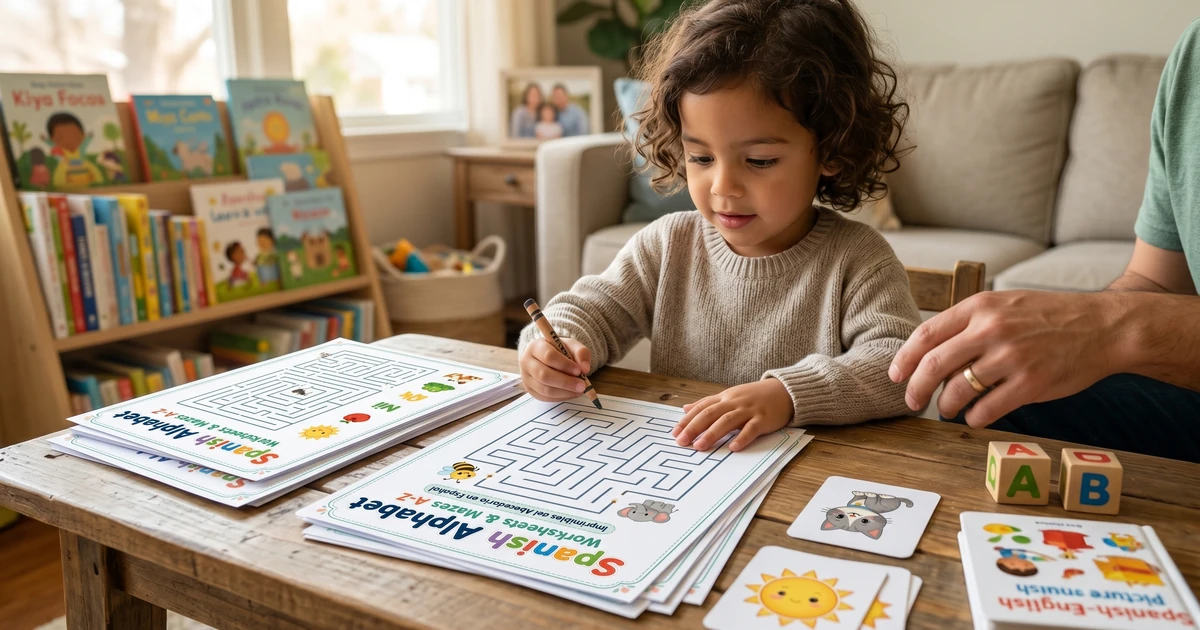
Printable Spanish Alphabet Worksheets for Early Bilingual
Boost your child's Spanish skills with these high-engagement Spanish alphabet worksheets designed for bilingual preschool and homeschool learners
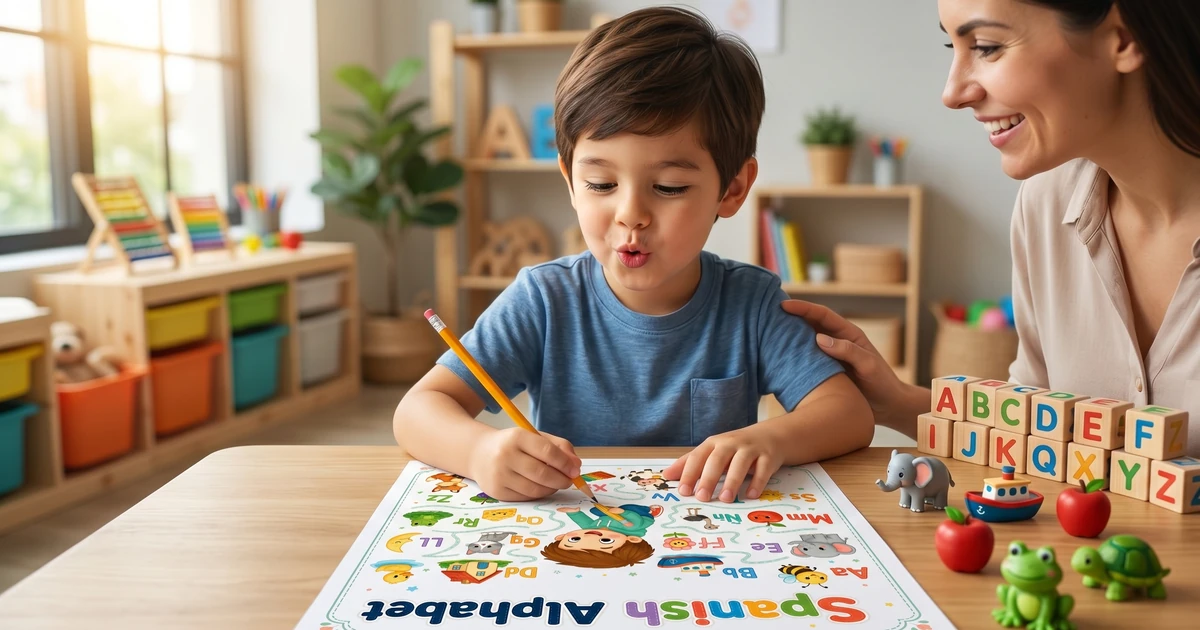
How Interactive Abecedario Activity Worksheets Accelerate
and having spent the last several years researching effective methods for early language acquisition, I've seen firsthand the power of targeted w
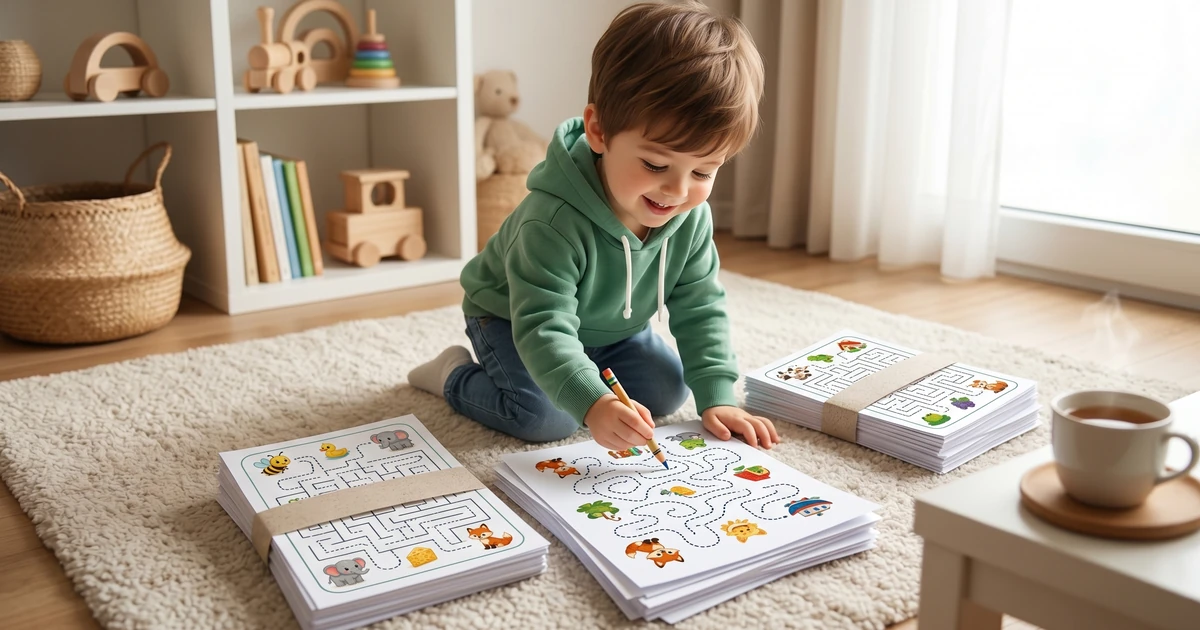
Best Bilingual Preschool Printable PDF Activity Bundles
a researcher dedicated to early childhood bilingual education, I’ve spent over 40 hours analyzing feedback from parents and educators who utilize
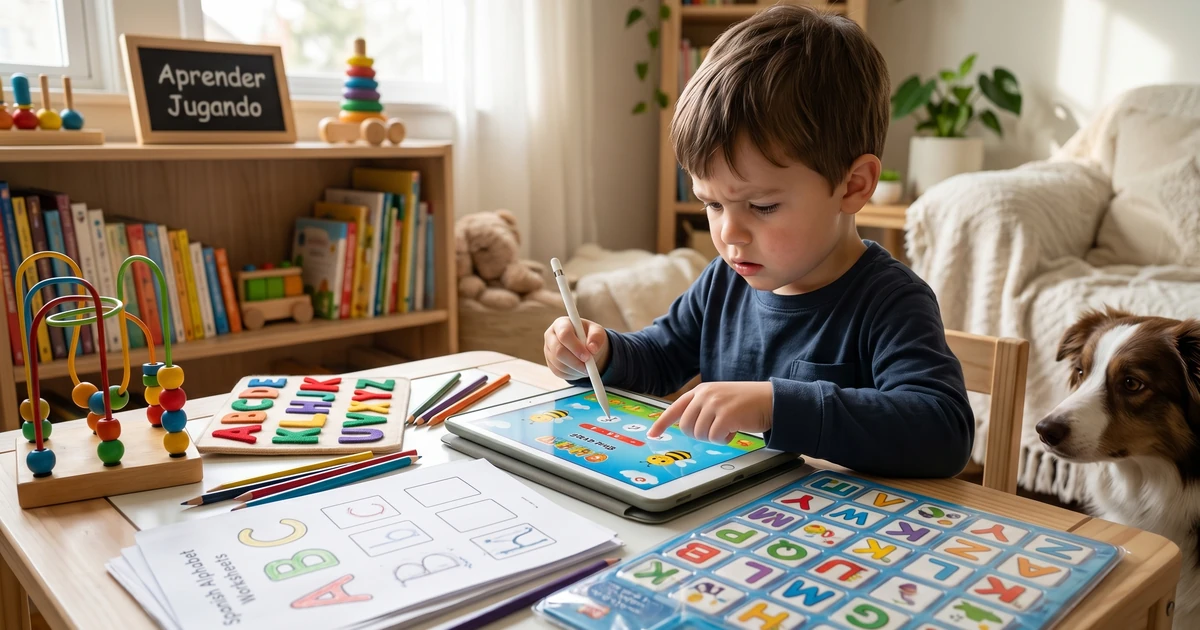
Bilingual Toddler Learning Mistakes That Build Unnecessary
and having spent the last 40+ hours researching the nuances of bilingual language acquisition in toddlers – analyzing parent forums, educational
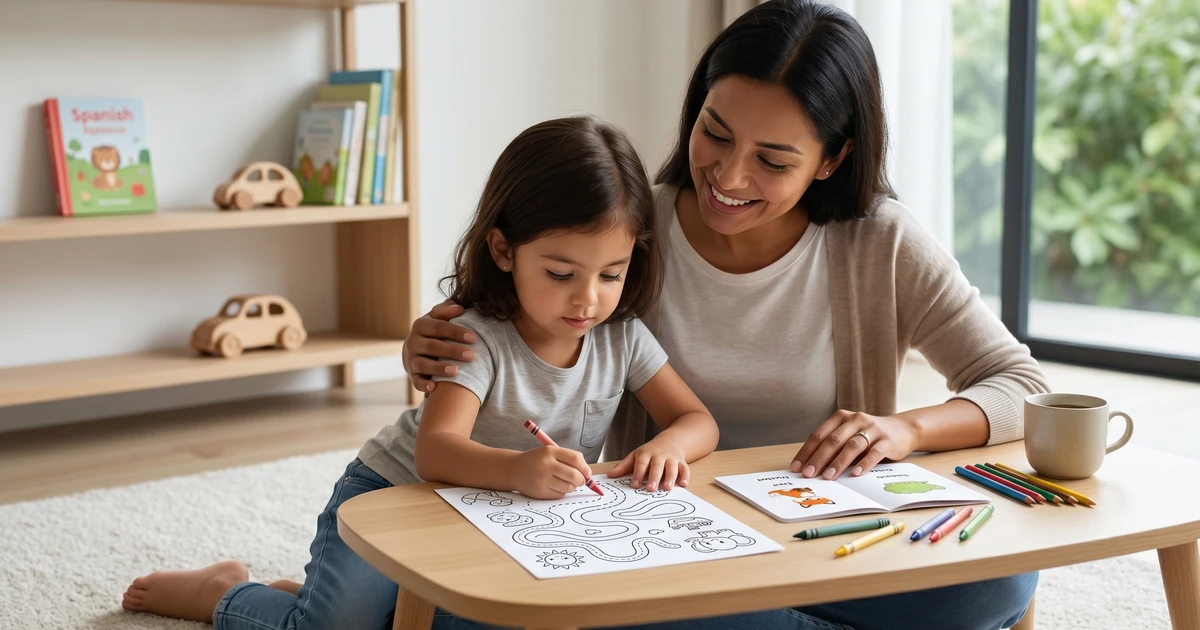
Fun Home Spanish Preschool Activities for Parents Who Barely
As a researcher focused on early childhood language acquisition, I've spent countless hours analyzing what truly works when it comes to introducing...
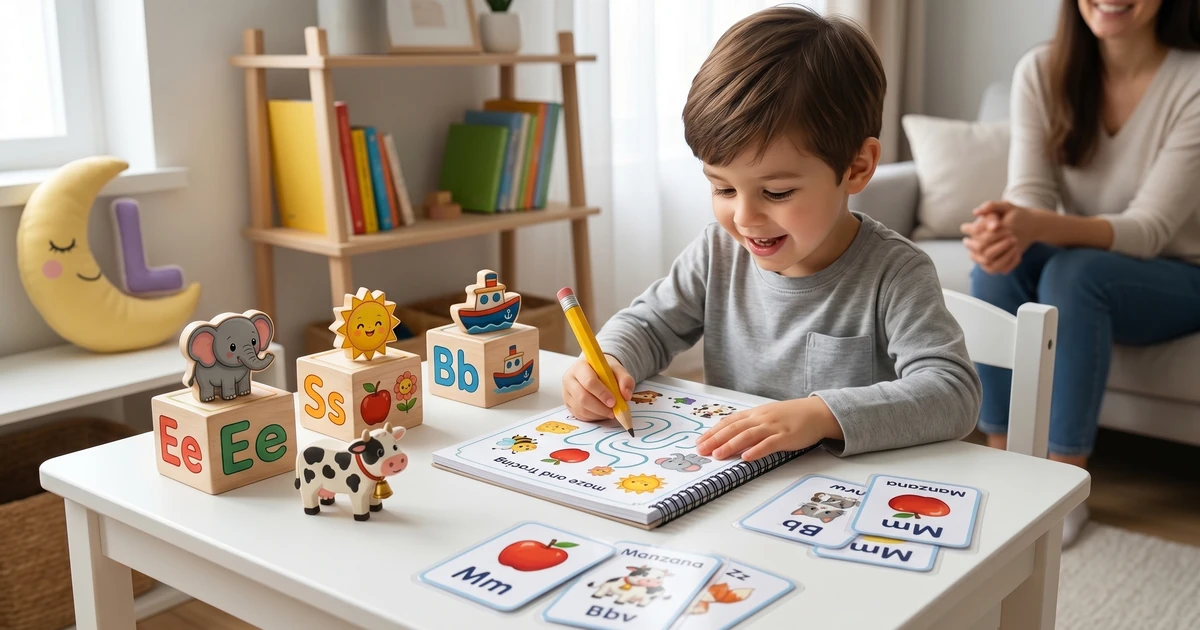
How to Run Homeschool Spanish Lessons Kindergarten Kids Keep
and having spent considerable time researching effective early childhood education resources, I understand how daunting it can be to start home