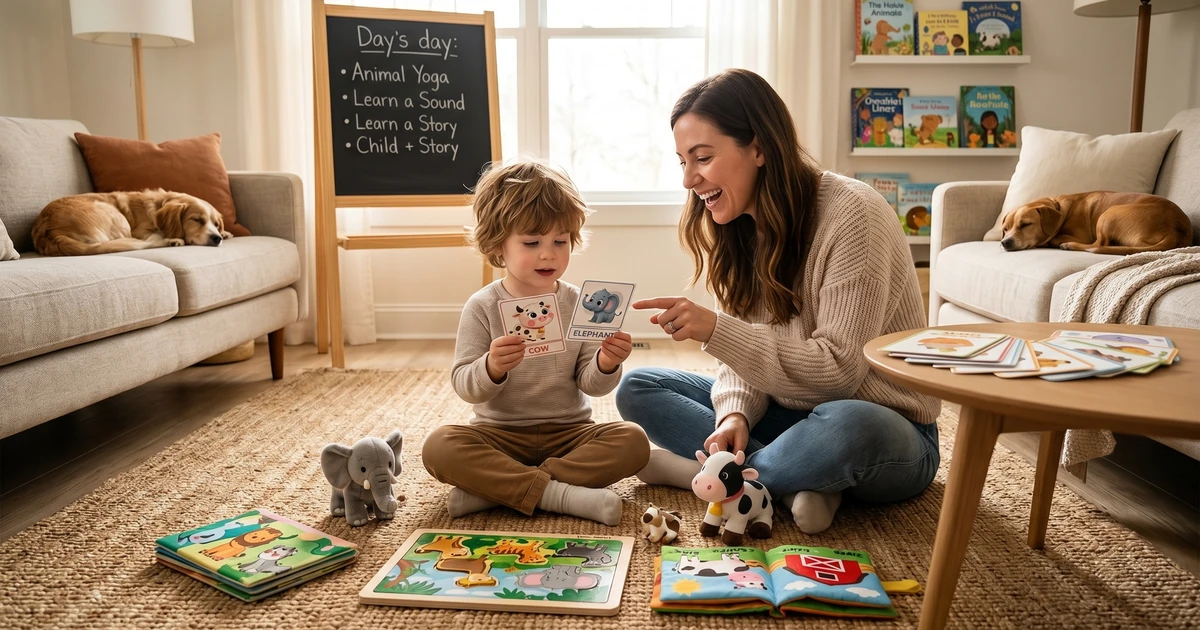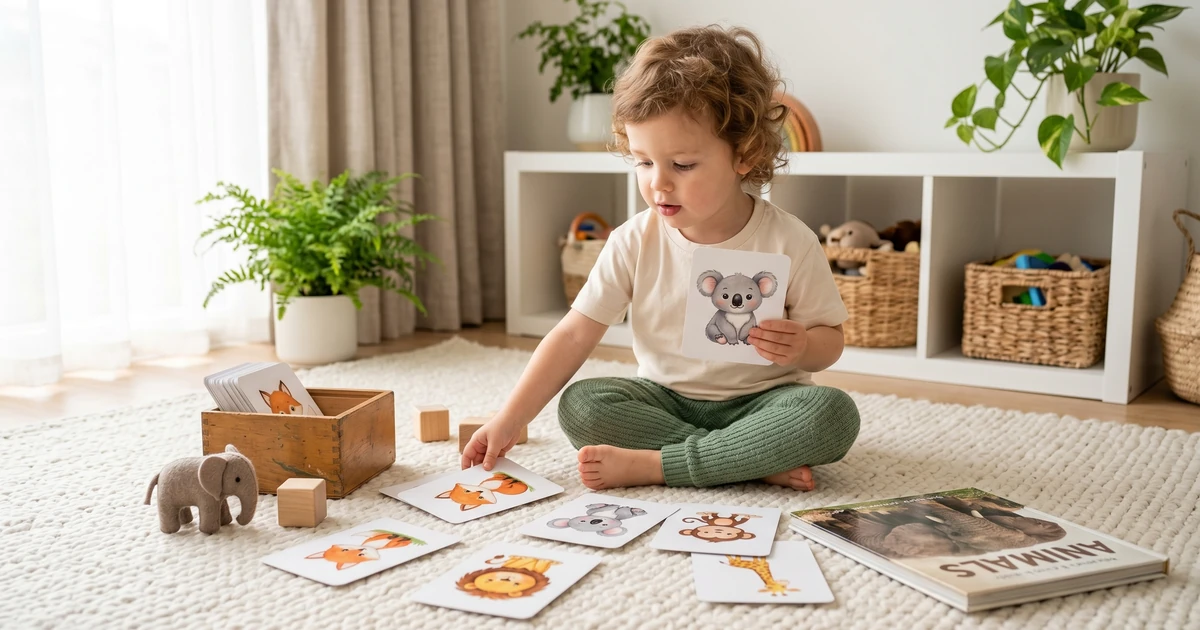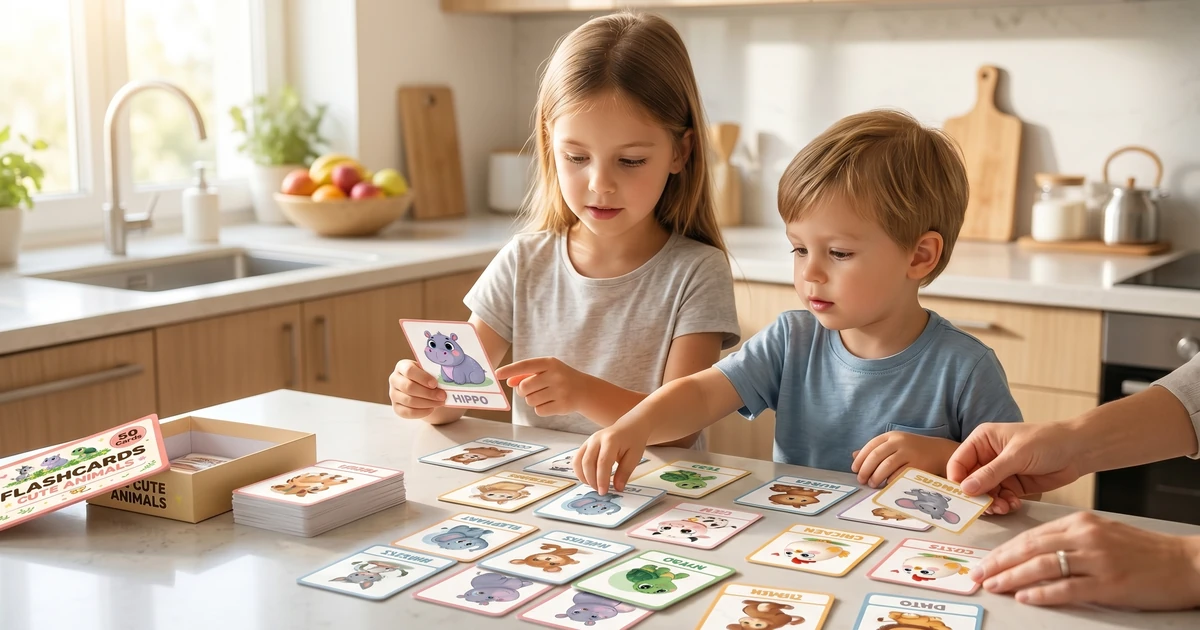
Teaching your child about animals is a rewarding experience that can spark their curiosity and build a strong foundation for learning. When I first started exploring educational tools for young children, animals flashcards stood out for their simplicity and effectiveness. In my experience as an educator and parent who has synthesized countless hours of research and customer feedback, I’ve found that teaching animals flashcards at home can be incredibly engaging and beneficial. It’s not just about memorizing names; it’s about fostering connection, developing language skills, and nurturing a love for the natural world.
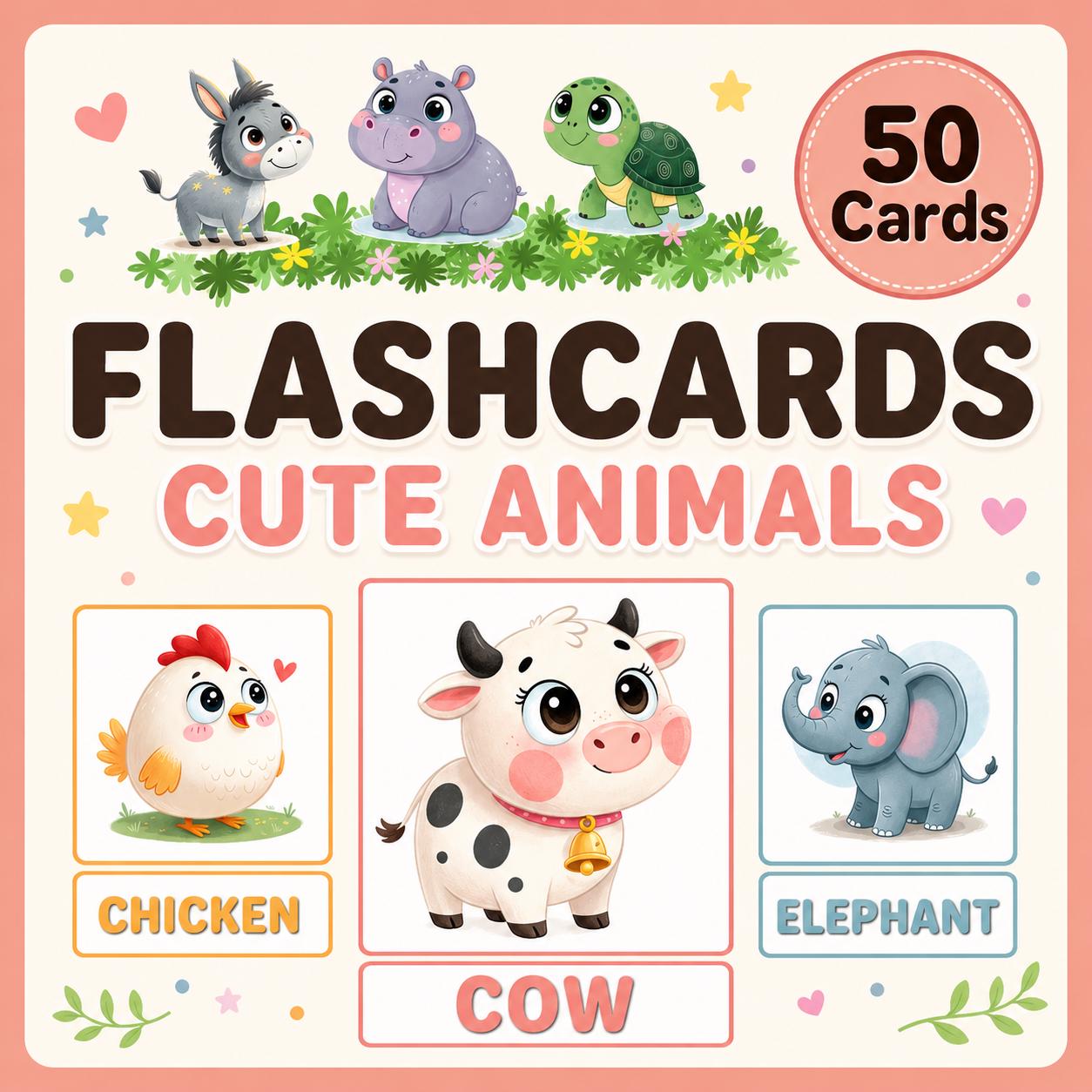
Animals Flashcards for Kids: 50 Cards
50 printable animal flashcards with cute illustrations: builds vocabulary, memory, and visual recognition.
Key Takeaways:
- Animals flashcards are a versatile tool for teaching early concepts like animal names, sounds, and habitats.
- Success hinges on making learning fun, interactive, and tailored to your child’s developmental stage.
- Consistency, repetition, and positive reinforcement are crucial for effective learning.
- Adapting methods as your child grows ensures continued engagement and learning.
- Integrating flashcards with other activities creates a rich, multi-sensory learning experience.
This guide dives deep into the practical strategies you can use to teach children animals using flashcards right in your own home. We’ll explore age-appropriate techniques, tips for keeping engagement high, and how to make this learning process a joyous part of your family’s routine. As you explore into the world of educational resources, remember that the ultimate goal is to make learning enjoyable and impactful for your child. For a broader understanding of various flashcard sets and their benefits, you can explore our comprehensive hub on Animals Flashcards for Kids (50 Cards) Educational Hub.
Why Use Animals Flashcards for Teaching Kids?
Animals flashcards are more than just pretty pictures; they’re powerful educational tools that can significantly impact a child’s early development. They offer a direct visual representation of concepts, making them easier for young minds to grasp. My research, which includes analyzing feedback from thousands of parents and educators, consistently highlights several key benefits.
Firstly, visual recognition is a cornerstone of early learning. Flashcards provide clear, distinct images that help children associate a visual cue with a word. This is fundamental for building vocabulary. For instance, seeing a vibrant image of a lion and hearing the word “lion” helps cement that connection more effectively than just hearing the word in isolation.
Secondly, animal flashcards excel at teaching animal sounds and characteristics. Once a child recognizes an animal, you can move on to the fun part: making the animal’s sound! This auditory reinforcement aids memory and makes the learning process more interactive and memorable. Asking “What sound does a cow make?” and showing the cow card makes the question tangible.
Thirdly, they are incredibly versatile. You can use them for simple identification, matching games, memory games, and even early lessons on habitats or diets. This adaptability means flashcards can grow with your child, providing new learning opportunities as they develop.
Finally, flashcards are excellent for developing early language skills. They provide a structured way to introduce new vocabulary, practice enunciation, and encourage sentence formation as children get older.
Based on customer reviews and educational research, I’ve identified that flashcards are particularly effective for children aged 1-5, with their benefits extending even further with creative use.
What to Look For in Animals Flashcards:
| Feature | Description | Importance for Learning |
|---|---|---|
| Clear Imagery | High-quality, uncluttered, realistic or stylized (age-appropriate) images of animals. | Aids in accurate identification and reduces confusion. |
| Durable Material | Thick cardstock, laminated, or made of sturdy material to withstand handling by young children. | Prevents damage, making them long-lasting for repeated use. |
| Large Print | Animal names clearly printed in a legible font size. | Supports early word recognition and association with images. |
| Accurate Names | Correct and easily pronounceable names for each animal. | Essential for correct vocabulary acquisition. |
| Informative Backs | Some cards include a fun fact, habitat, or sound on the reverse side, offering deeper learning opportunities. | Enhances engagement and provides additional educational content. |
| Variety of Animals | A good selection covering common domestic, farm, wild, and exotic animals to provide a broad overview of the animal kingdom. | Expands knowledge and exposes children to diverse species. |
Pro Tip: Look for flashcards that are specifically designed for toddlers and preschoolers. These often feature brighter colors, simpler designs, and rounded edges for safety, making them more appealing and suitable for younger hands.
The value of these cards is immense, proving that simple tools can yield significant learning outcomes.
Age-Appropriate Strategies for Teaching Animals Flashcards
The way you introduce and use animals flashcards should evolve with your child’s age and developmental stage. What works for a 1-year-old won’t necessarily engage a 4-year-old. My approach is always to start simple and gradually introduce more complex activities.
For Toddlers (Ages 1-2)
At this stage, the focus is on simple recognition and building vocabulary.
- Introduction: Hold up a card and clearly say the animal’s name. “This is a dog.” Show excitement!
- Sound Association: After they recognize the name, make the animal’s sound. “Woof woof! A dog goes ‘woof woof!’”
- Point and Name: Place a few cards down and ask your child to point to a specific animal. “Where is the cat?”
- Repetition: Repeat these steps frequently throughout the day, but keep sessions short (2-5 minutes) to avoid overwhelming them.
Pro Tip: Toddlers learn best through play and repetition. Don’t worry about perfection; the goal is exposure and positive interaction.
For toddlers, the primary goal is simply exposure and building a basic vocabulary.
For Preschoolers (Ages 3-4)
Preschoolers can handle more complex games and are developing better comprehension and language skills.
- Name That Animal: Show the card and let them name the animal. If they don’t know, provide the name and prompt them to repeat it.
- Animal Sounds: Ask them to make the sound of the animal on the card.
- Matching Games: Lay out a few cards. Have a duplicate set and ask them to match the cards. This is also a precursor to the Memory game.
- “What’s Missing?” Game: Lay out 3-5 cards, then ask your child to close their eyes while you remove one. They have to guess which animal is missing.
- Simple Questions: Ask basic questions related to the animal. “What does a cow eat?” “Where does a fish live?” (You can use the back of the card if it has habitat info, or just expand on your knowledge).
For a deeper dive into activities suited for this age group, check out my guide on Best Animal Flashcard Activities for Ages 3-5.
Pro Tip: For preschoolers, introduce movement and actions. Have them hop like a bunny or flap their arms like a bird when you show the corresponding card.
Preschoolers can engage with more complex games and are ready to build upon basic recognition.
For Early Elementary (Ages 5+)
Children in this age group can handle more advanced vocabulary, categories, and even reading.
- Reading Practice: Have them read the name of the animal on the card.
- Categorization: Ask them to sort cards into categories like “farm animals,” “wild animals,” “pets,” or “animals that fly.”
- Storytelling: Use the flashcards to create simple stories. “Once upon a time, a brave lion met a funny monkey in the jungle…”
- Facts and Information: If your cards have facts on the back, read them aloud and discuss them. You can also use this as a prompt to research the animal further online or at the library.
- Memory Game (Concentration): A classic for a reason! This game sharpens memory and visual recall.
Pro Tip: Encourage your child to describe the animal on the card using descriptive words. “What color is the elephant? Is it big or small? What does its trunk do?”
Older children benefit from activities that challenge their critical thinking and literacy skills.
Making Animals Flashcard Learning Engaging and Fun
The key to successful learning with flashcards, especially at home, is to keep it enjoyable. If it feels like a chore, children will quickly lose interest. My extensive research into early childhood education methods consistently shows that play-based learning yields the best results.
Incorporate Play and Games
As outlined above, turning flashcard sessions into games is paramount. Beyond matching and memory games, consider:
-
Scavenger Hunt: Hide flashcards around a room and have your child find them. As they find each one, have them name the animal.
-
Puzzles: For younger children, leave the cards unassembled if they are designed with puzzle-like edges, or use them as inspiration for building with blocks.
-
Role-Playing: Use the flashcards as prompts for imaginative play. If you have a dog card, pretend to be dogs!
Use Different Modalities
Don’t just stick to showing cards. Engage multiple senses:
-
Sounds: Play animal sounds from a speaker or app and have your child hold up the correct flashcard.
-
Movement: Act out the animals. This is especially effective for younger children and helps them connect physical action with the animal.
-
Touch: If your child is very young, you might use textured animal figures and have them match a flashcard to the figure.
-
Books: Pair flashcards with library books about animals. Point to the animal in the book when you see it on a card.
Keep Sessions Short and Sweet
Children, especially toddlers and preschoolers, have short attention spans. Aim for multiple short sessions (5-10 minutes) throughout the day rather than one long one. This keeps interest levels high and prevents frustration.
Positive Reinforcement
Always use praise and encouragement. Celebrate when they get an answer right, and gently guide them when they are incorrect. Avoid making them feel pressured or embarrassed. A simple “Great job!” or a high-five can go a long way.
Consistency is Key
Regularity is more important than duration. Try to incorporate flashcards into your daily routine. This could be after breakfast, before bedtime, or during a quiet play period. This predictability helps children understand what to expect and can make learning feel like a natural part of their day.
Integrate with Real-World Experiences
-
Zoo/Farm Visits: Before or after a trip to the zoo or a local farm, use the flashcards to prepare your child or reinforce what they’ve seen. “Remember we saw a giraffe at the zoo? Here’s a giraffe card!”
-
Nature Walks: Point out animals in your backyard or neighborhood and connect them to the flashcards.
The goal is to create a positive association with learning that your child will carry with them.
What to Do When Kids Aren’t Engaging with Flashcards
Even with the best intentions, there will be times when your child seems uninterested in flashcards. From my analysis of how children learn best, I’ve found that forcing the issue is counterproductive. Instead, it’s about adapting and exploring different approaches.
Pro Tip: If your child is resistant, take a break for a few days or even a week. Reintroduce them later in a different context or with a new set of cards. Sometimes, a simple change can rekindle their interest.
Here are some common scenarios and what to consider:
-
Child is too young: If your child is under 12 months, they might not be developmentally ready for focused flashcard learning. Focus on sensory play and simple naming of objects. You can reintroduce flashcards in a few months.
-
Boredom: If the same routine is becoming monotonous, the child might be bored. Introduce new games, use different voice inflections, or incorporate movement.
-
Distraction: Ensure the learning environment is calm with minimal distractions. Turn off the TV, put away toys that compete for attention, and find a quiet space.
-
Difficulty: If the cards are too challenging, it can lead to frustration. Simplify the task. For example, if they can’t name individual animals, just focus on naming sounds.
-
Not interested in the specific cards: Perhaps the imagery isn’t appealing, or the animals themselves don’t capture their imagination. Look for flashcards with different art styles or a more diverse range of animals. For instance, if farm animals aren’t inspiring them, try focusing on jungle animals or ocean creatures.
-
Too much pressure: If the child feels pressure to perform, they will likely disengage. Shift the focus from “performance” to “play” and exploration.
When Animals Flashcards Aren’t the Right Fit (Yet):
It’s crucial to recognize when flashcards might not be the best tool for your child at a particular moment.
-
Very young infants (under 6-8 months): Their visual tracking and comprehension are still developing. High-contrast toys and simple object naming are more appropriate.
-
Children with specific sensory processing challenges: Some children might find the flat, repetitive nature of traditional flashcards overwhelming or unstimulating. In such cases, incorporating textured materials or 3D animal figures that they can interact with might be far more beneficial.
-
Children who are actively resisting focused learning activities: If your child is showing a strong aversion to sitting down for any structured activity, pushing flashcards will likely backfire. It’s better to focus on other forms of learning, like singing animal songs, reading animal books, or engaging in free-play with animal toys, and try flashcards again later.
-
When the goal is deep conceptual understanding (initially): While flashcards introduce names, they don’t inherently teach the nuances of animal behavior, habitats, or life cycles on their own. Relying solely on flashcards for these deeper concepts without supplementing with books, videos, or real-world experiences would be insufficient for a child’s comprehensive understanding.
Understanding your child’s current needs and developmental stage is key to choosing appropriate learning methods.
Expanding Learning Beyond Animals Flashcards
While animals flashcards are excellent, they are just one piece of the educational puzzle. To foster a well-rounded understanding and love for animals, it’s beneficial to integrate them with other learning activities.
Books and Stories
Reading books about animals is one of the most effective ways to build on the foundation flashcards provide. Books offer context, narrative, and detailed information about animal lives, habitats, and behaviors that flashcards can’t convey alone. For example, after learning the “elephant” card, reading a story about elephants helps a child understand their social structures and needs.
Educational Videos and Apps
There are numerous high-quality educational videos and apps available that bring animals to life. Seeing animals in their natural habitats or in high-quality documentaries can be incredibly engaging and informative. Many apps also incorporate interactive games that reinforce what children learn from flashcards.
Pro Tip: When using videos or apps, watch them with your child. This allows you to pause, ask questions, and connect the on-screen content back to the flashcards or books you’ve used.
Animal Toys and Figures
Realistic animal figures can turn flashcard learning into tactile play. Children can act out scenarios, create habitats with blocks or other toys, and physically manipulate the animals they’ve learned about. Matching a toy animal to its flashcard is a fantastic way to reinforce recognition.
Music and Songs
Many children’s songs feature animals and their sounds. Singing these songs together can be a fun way to practice animal names and sounds. Songs can also introduce concepts like animal movement or habitats in a catchy, memorable way. For instance, songs about farm animals can easily be paired with farm animal flashcards.
Real-World Experiences
If possible, visits to zoos, aquariums, petting zoos, or even local parks can provide invaluable real-world context. Seeing animals live offers a much deeper understanding than any card or video can provide. Discussing what you see and relating it back to the flashcards reinforces learning in a powerful way.
Combining flashcards with diverse learning methods creates a rich, multi-sensory educational experience.
Frequently Asked Questions About Teaching Animals Flashcards to Kids
Here are some common questions I receive from parents regarding the use of animals flashcards:
-
Q1: At what age should I start using Animals Flashcards? My research suggests that you can begin introducing animals flashcards as early as 12 months, focusing on simple recognition and sounds. For more complex games and learning, ages 3-5 are ideal. However, the specific flashcards and activities should always be adjusted to the child’s individual developmental stage.
-
Q2: How many flashcards should I use in one session? For toddlers (1-2 years), start with just 3-5 cards and keep sessions to 2-5 minutes. For preschoolers, you can gradually increase to 10-15 cards within a 5-10 minute session, depending on their engagement. The key is short, frequent sessions rather than one long, overwhelming one.
-
Q3: My child can name the animals, but they don’t remember them a day later. What can I do? This is common, as repetition is key for memory retention. Try using the cards daily, even for just a few minutes. Incorporate games like “What’s Missing?” or the Memory game, as they actively test recall. Pairing flashcards with songs, books, and toy animals can also create stronger memory links.
-
**Q4: When is it NOT a good time to use animals flashcards