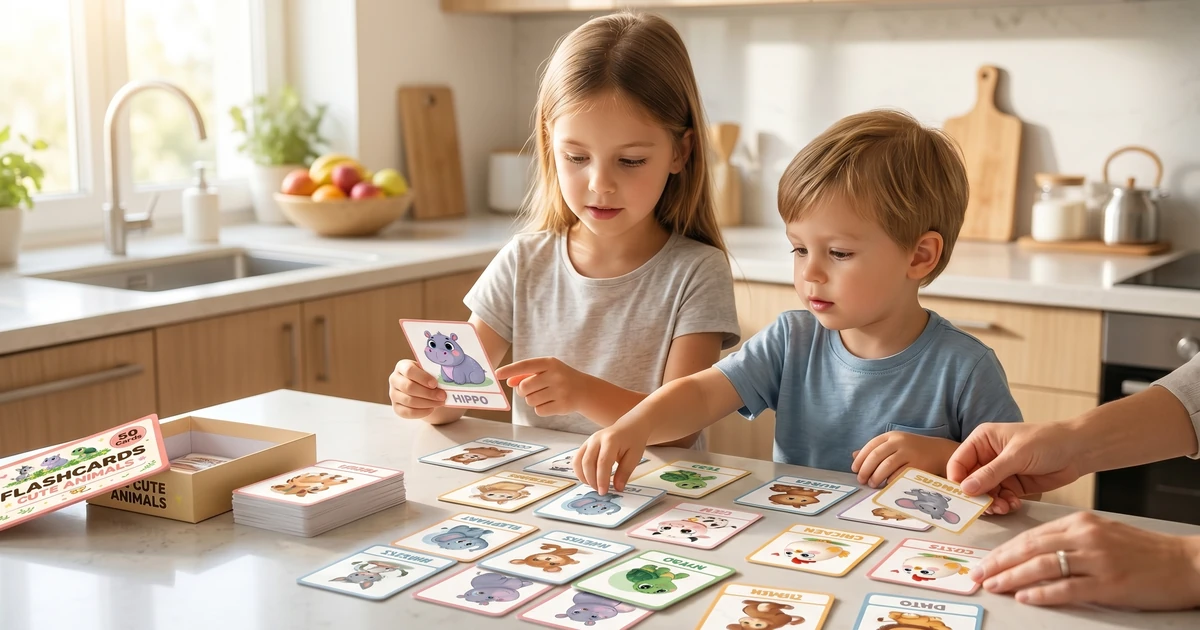
As a researcher passionate about early childhood education, I’ve spent countless hours exploring the best ways to engage young minds. One area that consistently sparks joy and curiosity is the animal kingdom. When I discovered the incredible potential of using “Did you know?” animal flashcards, I knew I had to share it with you. These aren’t just pretty pictures; they’re gateways to amazing discoveries for little ones.
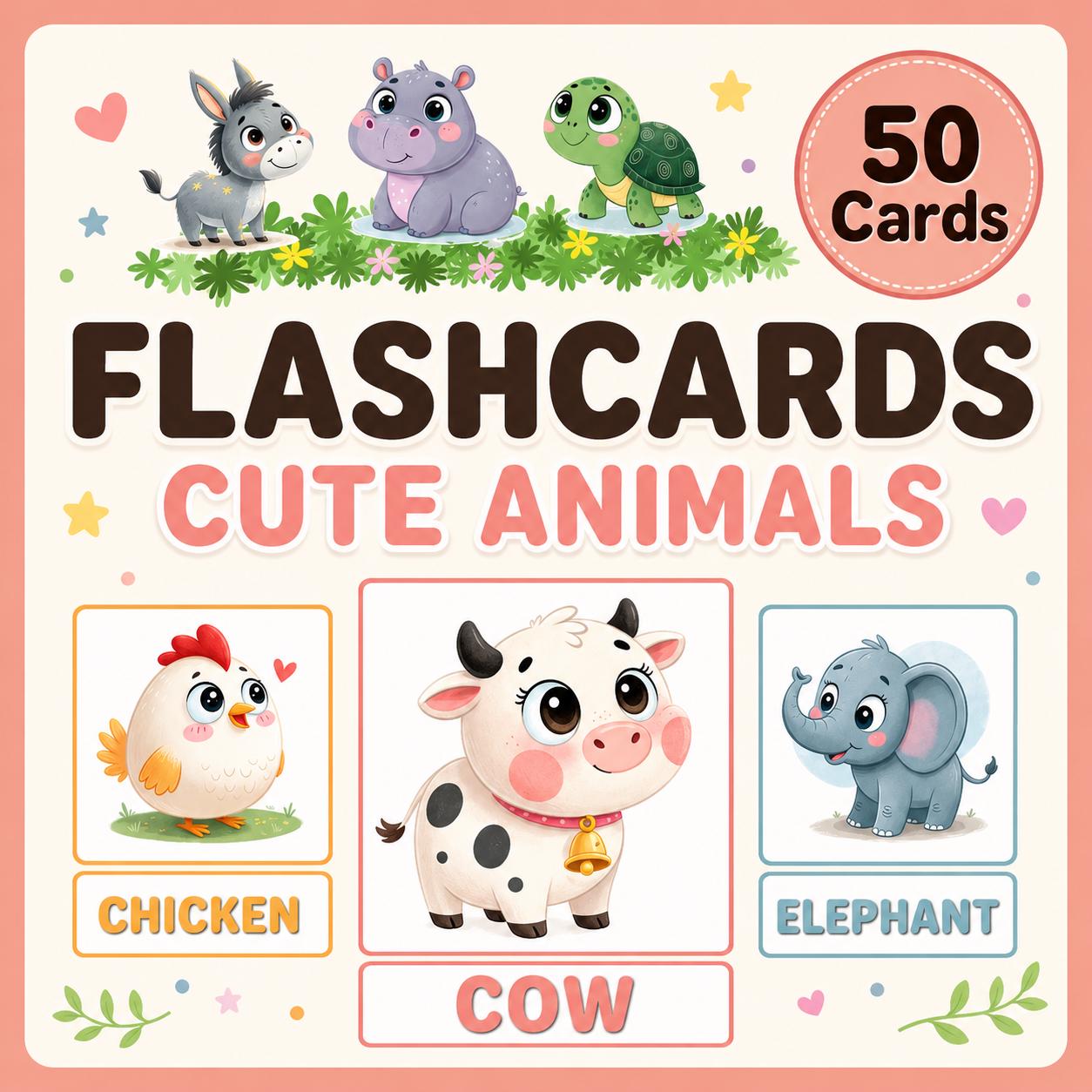
Animals Flashcards for Kids: 50 Cards
50 printable animal flashcards with cute illustrations: builds vocabulary, memory, and visual recognition.
Key Takeaways:
- “Did you know?” animal flashcards combine visual learning with astonishing facts to captivate young children.
- They are incredibly versatile, supporting language development, memory, and critical thinking skills.
- When choosing flashcards, look for clear images, age-appropriate facts, and durable materials.
- Integrating these cards into games and activities makes learning an enjoyable adventure.
- They serve as a fantastic introduction to broader topics like habitats, conservation, and animal behavior.
My goal with KubbyLab is to create resources that are both educational and fun, and these fact-filled animal flashcards achieve just that. They go beyond simple identification, offering bite-sized pieces of fascinating trivia that children find utterly delightful. Imagine your child’s eyes lighting up as they learn that a giraffe’s tongue can be as long as an arm, or that a group of owls is called a parliament!
The Magic of “Did You Know?” Animal Facts for Kids
The “Did you know?” format is uniquely powerful for engaging children. It taps into their natural sense of wonder and desire to uncover secrets. When presented on animal flashcards, this format transforms passive observation into active learning. Instead of just recognizing a lion, a child learns a surprising fact that makes the lion instantly more interesting.
For instance, a standard card might show a picture of a penguin. A “Did you know?” penguin card, however, might reveal: “Did you know? Penguins can’t fly, but they’re excellent swimmers!” This simple addition adds a layer of depth and intrigue. It prompts questions and encourages deeper thinking about why penguins are different from other birds.
Pro Tip: Always present the “Did you know?” fact with enthusiasm. Your excitement will be contagious and make the learning experience even more memorable for your child.
These facts are often “aha!” moments for kids, solidifying the information in their minds far more effectively than rote memorization. The element of surprise is a powerful learning tool, making the animal and its trait unforgettable. From the strength of an ant to the speed of a cheetah, these facts are designed to amaze.
How “Did You Know?” Animal Flashcards Boost Learning
The impact of these flashcards extends across several critical developmental areas for young children. They are more than just a way to learn animal names; they are multi-faceted educational tools.
Language and Vocabulary Development
Each fact on your Animals Flashcards for Kids (50 Cards) Educational Hub is a new vocabulary word or concept. Words like “nocturnal,” “migrate,” “venomous,” or “blubber” are introduced in a context that makes them understandable. Children learn not just the animal’s name but also descriptive words about its characteristics and behaviors. This expands their active and passive vocabulary significantly.
Memory and Recall Skills
The memorable nature of surprising facts makes them excellent for practicing memory skills. Children love to retell these fun tidbits to friends and family, which is a natural form of recall practice. You can play memory games by having them recall the fact associated with a specific animal, strengthening their cognitive abilities.
Critical Thinking and Curiosity
“Did you know?” facts often challenge common assumptions or present unique perspectives. A child might wonder why a particular animal has a certain ability or trait. This sparks curiosity and encourages them to ask “why?” and “how?” questions, the very foundation of critical thinking. For example, learning that a frog’s tongue is sticky and shoots out might lead to discussions about biology and physics in a very simple way.
Understanding Animal Diversity and Habitats
These facts often highlight the incredible diversity of the animal kingdom and introduce concepts about different environments. Learning that a camel stores fat in its hump to survive in the desert, or that a polar bear has black skin under its white fur to absorb heat, begins to build an understanding of adaptation and habitats. This can be a fantastic springboard for further learning about ecosystems.
Pro Tip: When introducing a fact, ask your child what they think about it. “Why do you think a rhino’s horn is so strong?” or “What would it be like to live underwater like a fish?” This encourages them to process the information.
What to Look For in “Did You Know?” Animal Flashcards
As I’ve researched and analyzed countless educational resources, I’ve learned that not all flashcards are created equal. For “Did you know?” animal flashcards, there are specific features that make them truly effective and enjoyable for children.
Clear and Engaging Illustrations
The images should be bright, clear, and anatomically accurate (within reason for a child’s understanding). Avoid overly cartoonish designs that might misrepresent the animal. High-quality, appealing illustrations hold a child’s attention much better.
Age-Appropriate and Fascinating Facts
This is crucial. The facts need to be genuinely interesting and presented in simple language. They should be facts that kids will find surprising and memorable, not overly scientific or complex. For example, “Did you know? A rhinoceros weighs as much as a small car” is more engaging for a 4-year-old than a detailed explanation of its digestive system.
Durability and Safety
Children, especially younger ones, can be rough with their toys and learning materials. Look for flashcards made from thick, durable cardstock. Rounded corners are a must for safety, preventing paper cuts. Lamination can add extra durability, making them wipeable and resistant to spills. The material should be non-toxic.
Comparison: Types of Animal Fact Flashcards
There are various approaches to presenting animal facts on flashcards. Here’s a quick comparison of common styles:
| Feature | ”Did You Know?” Full Fact Cards | Simple Fact Identifier Cards | Multi-Fact Cards (Advanced) |
|---|---|---|---|
| Primary Focus | Intriguing, surprising trivia | Basic identifying characteristics | Multiple facts and details for older children |
| Engagement Level | High (curiosity-driven) | Moderate (recognition-driven) | Moderate to High (information-driven) |
| Age Suitability | Primarily ages 3-7 | Primarily ages 2-5 | Primarily ages 5-9 |
| Example Fact | ”Did you know? An octopus has three hearts!" | "This is a Lion. It has a mane." | "The Blue Whale is the largest animal on Earth. It eats krill.” |
| Learning Style | Encourages wonder, storytelling, and recall of unique details | Focuses on identification and basic descriptive language | Builds on identification, introduces comparative data |
| KubbyLab Offering | Our Animals Flashcards for Kids: 50 Cards feature this style prominently. | Generally too basic for our comprehensive approach. | While some cards may have secondary facts, our core is “Did You Know?” |
Size and Readability
The cards should be a comfortable size for little hands to hold and manipulate. The text for the “Did you know?” fact should be large and clear enough for parents to read aloud easily and for older children to attempt reading themselves.
My goal with the Animals Flashcards for Kids (50 Cards) Educational Hub at KubbyLab was to hit all these sweet spots, creating cards that are not only educational but also truly enjoyable for both children and the adults guiding them.
How to Make “Did You Know?” Animal Flashcards Engaging
Simply showing a child a deck of cards might work for a while, but to truly maximize their learning potential, I recommend integrating them into playful activities. This is where the magic truly happens.
Step 1: The Big Reveal
Hold up a card and read the “Did you know?” fact with excitement. Pause after reading it. Let the fact sink in. Ask your child, “Wow, isn’t that amazing?” or “What do you think about that?” Encourage them to express their surprise or ask questions.
Step 2: Animal Sounds and Movements
After sharing a fact, encourage your child to make the animal’s sound or mimic its movement. If they learned that a cheetah is the fastest land animal, have them imagine running fast like a cheetah. If they learned a bat sleeps upside down, have them try to hang (safely, of course!) or pretend to.
Step 3: Storytelling Time
Use the facts as prompts for imaginative stories. “Once upon a time, there was a tiny mouse who was afraid of the dark. But then, he learned that bats sleep during the day and are awake at night! That made him feel a little braver…” This type of imaginative play is fantastic for narrative skills.
Step 4: Memory Match Games
You can create matching sets of the same flashcard. Turn them all face down and have your child flip two at a time to find a match. Once they find a match, they get to read the “Did you know?” fact aloud. This is a fun way to reinforce learning and practice memory. For a variation, you can have one set with just the animal picture and another with the picture and the fact, requiring them to match the animal to its specific piece of trivia. This is a great way to practice how to teach animals flashcards to kids at home.
Step 5: Sorting and Categorizing
Once your child is familiar with several cards, try sorting them. You can sort by habitat (e.g., jungle animals, ocean animals), by type (e.g., mammals, birds, reptiles), or by characteristics mentioned in the facts (e.g., animals that fly, animals that swim, animals that have sharp teeth). This introduces early classification skills.
Pro Tip: Connect the facts to your child’s own experiences or things they see around them. If you see a bird outside, relate it to facts about bird hibernation or migration. If you have a pet dog, compare its sleep habits to a fox’s nocturnal nature.
Fun Activities Using “Did You Know?” Animal Flashcards
Beyond simple games, you can create more involved learning experiences. Here are a few ideas that really bring the facts to life.
Create an Animal Fact Book
Have your child draw each animal and write or dictate the “Did you know?” fact underneath. This creates a personalized book that they’ll be proud of and refer back to often. It’s a wonderful way to reinforce both visual and textual learning.
Habitat Dioramas
Choose a few animals and their corresponding facts. Then, gather craft supplies and have your child create a simple diorama of their habitats. For example, if you have a polar bear card (“Did you know? Polar bears have black skin under their white fur to absorb heat”) and a penguin card (“Did you know? Penguins live in the Southern Hemisphere, mostly in Antarctica”), you can create an icy environment.
Animal Charades or Pictionary
One person acts out or draws an animal based on a “Did you know?” fact. For example, if the fact is “A flamingo gets its pink color from the food it eats,” the person might try to act out eating a lot of colorful food. The others guess the animal. This is fantastic for non-verbal communication and deductive reasoning. My research on Best Animal Flashcard Activities for Ages 3-5 highlights how effective these creative approaches are.
Virtual Safaris and Documentaries
After learning about an animal from a flashcard, watch a short documentary clip or go on a virtual safari online (many zoos and nature parks offer these). Seeing the animal in its natural (or simulated) environment and observing the behavior mentioned in the fact is incredibly impactful. For example, if you learned a giraffe eats leaves from tall trees, watching a video of it doing so makes the fact tangible.
Cost Breakdown: Educational Flashcards
When investing in educational tools like animal flashcards, understanding the value proposition is important. Prices can vary based on quantity, material quality, and design.
| Item | Price Range | Notes |
|---|---|---|
| Basic Animal Flashcards | $10 - $25 | Typically 20-50 cards, sturdy cardstock, basic animal names/images. |
| ”Did You Know?” Style Cards | $15 - $35 | 40-60 cards, engaging facts, often laminated, higher quality printing. |
| Themed/Specialty Sets | $20 - $45 | May include specific animal groups (e.g., farm, ocean), unique facts. |
| Digital/Printable Sets | $5 - $15 | Downloadable files, requires printing and cutting at home. |
| KubbyLab Animals Flashcards | $29.99 | 50 high-quality, durable, laminated cards with captivating “Did You Know?” facts. |
When AREN’T “Did You Know?” Animal Flashcards the Right Choice?
While I’m a huge proponent of these flashcards, it’s important to be realistic. They aren’t a perfect fit for every child or every learning situation. Understanding their limitations can save you time and frustration.
One key consideration is age and developmental stage. For very young babies (under 18 months), the facts might be too abstract. They are better served by simpler, sturdy picture books or larger, high-contrast images. While the cards themselves can be introduced, the “Did you know?” element might be lost until they have a firmer grasp of language.
Another situation where they might not be ideal is if a child is overwhelmed by too much information. Some children, especially those who are highly sensitive, can become anxious or disengaged if presented with too many complex facts or abstract concepts at once. In such cases, starting with simpler identification or very basic facts is a better approach.
Key Consideration: If your child is easily overstimulated by busy visuals or complex information, start with a smaller set of cards or focus on fewer facts per session.
Finally, if the quality of the facts or images is poor, the cards will likely fall flat. Facts that are inaccurate, too difficult to understand, or simply not interesting won’t capture a child’s imagination. Likewise, blurry or poorly designed images can be off-putting. Always opt for well-researched and clearly presented information.
Frequently Asked Questions About “Did You Know?” Animal Flashcards
Here are some common questions I encounter from parents and educators looking to use these engaging learning tools.
Q1: How many “Did you know?” facts can a toddler realistically learn from flashcards? A: Toddlers have short attention spans. Focus on 1-3 facts per learning session. Repetition through play is more effective than overwhelming them. The goal is to build a positive association with learning, not to drill them.
Q2: Can I use these flashcards for older children, like age 8 or 9? A: Absolutely! While the base facts are designed for younger children (ages 3-7), older kids can still benefit. Use the cards as a jumping-off point for deeper research, creative writing prompts, or to quiz each other. You can even expand on the facts with more complex information.
Q3: What’s the best way to introduce a “Did you know?” fact if my child isn’t interested in animals? A: Connect animals to things they are interested in. If they love vehicles, compare the speed of a cheetah to a race car. If they love superheroes, discuss the amazing “powers” animals have, like a chameleon’s camouflage or a bombardier beetle’s spray. Frame the facts in relatable terms.
Q4: How durable are most “Did you know?” animal flashcards? A: Cardstock quality varies greatly. The best options use thick, durable cardstock, often with a laminated finish. This makes them resistant to tearing, chewing, and spills, which are common in households with young children. Cheaper, thin cardstock will wear out very quickly.
Q5: When is it NOT a good idea to use “Did you know?” animal flashcards? A: Avoid them if your child is easily overwhelmed by sensory input or complex information. If a child is showing signs of frustration or disinterest, it’s better to take a break or switch to a different activity. For situations where detailed scientific accuracy is paramount from the start, specialized encyclopedias might be a better primary resource.
Q6: My child chews on everything. Are there safe options for toddlers? A: Look for flashcards with rounded, smooth edges and consider those made from thicker, non-toxic materials. Even better are options with a smooth, wipeable laminated surface, which can be more hygienic. Always supervise very young children during play to ensure their safety.
By incorporating these “Did you know?” animal flashcards into your child’s learning routine, you’re not just teaching them about animals; you’re fostering a lifelong love of discovery, curiosity, and learning. It’s an investment in their development that pays dividends in wonder and knowledge. Explore the amazing world of animals with excitement, one fascinating fact at a time!