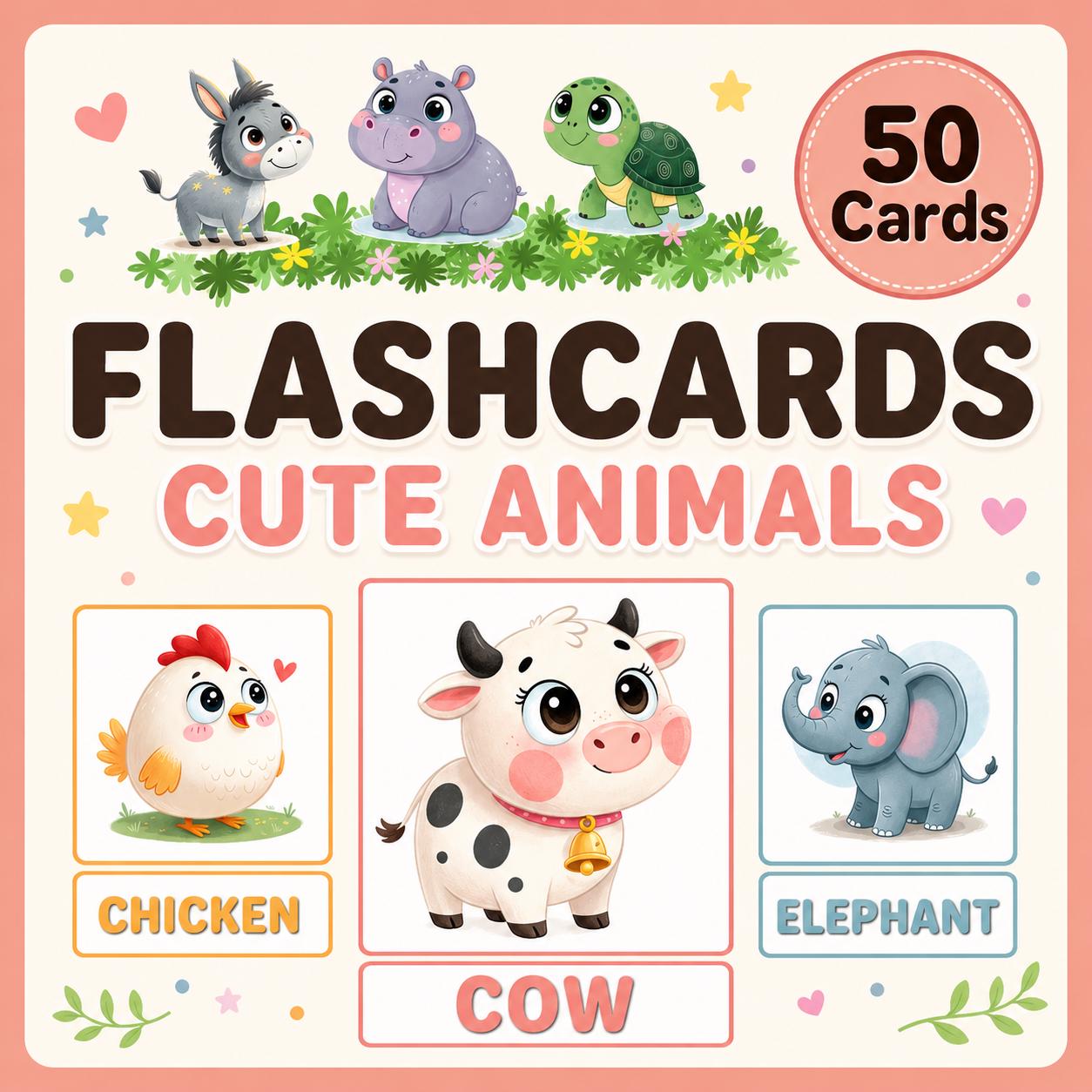
As a parent and educator, I’ve seen firsthand the incredible power of simple tools in a child’s development. Among my favorite resources are animals flashcards. They’re not just colorful pieces of cardstock; they’re gateways to learning, sparking curiosity, and building foundational knowledge in young minds. In my role at KubbyLab, I’ve dedicated countless hours to understanding how parents and educators can best use these educational aids. This comprehensive hub is designed to be your go-to resource for everything related to animals flashcards for kids.
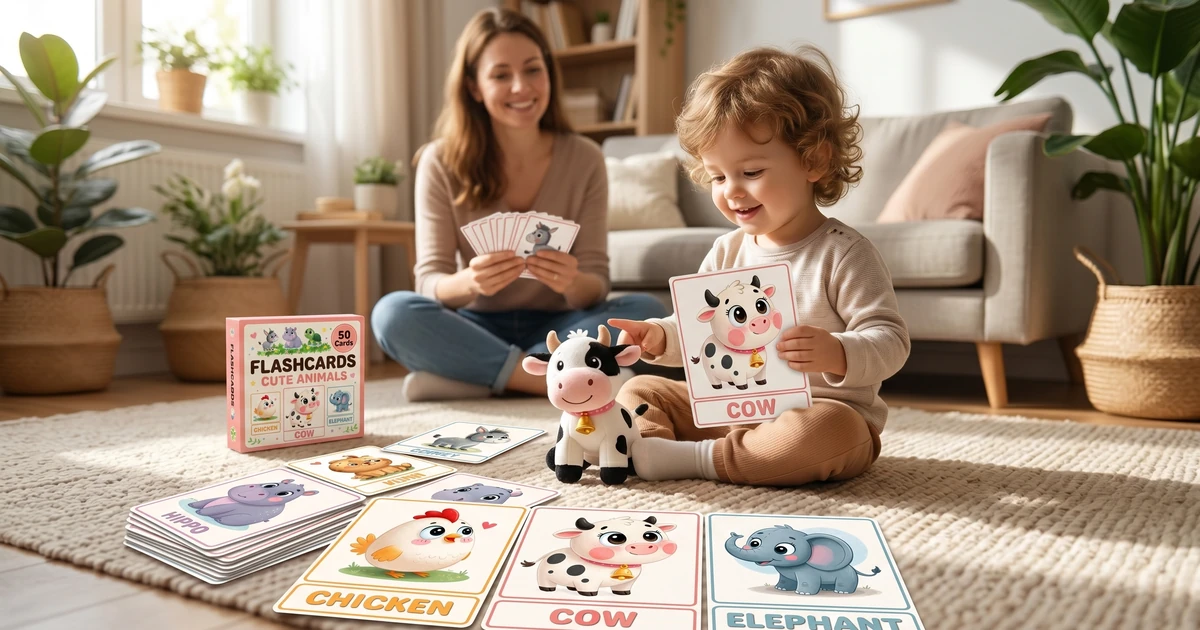
Animals Flashcards for Kids: 50 Cards
50 printable animal flashcards with cute illustrations: builds vocabulary, memory, and visual recognition.
Key Takeaways:
- Animals flashcards are a versatile and effective tool for teaching children about the animal kingdom.
- They boost vocabulary, improve memory, and develop cognitive skills.
- Choosing the right flashcards involves considering age-appropriateness, durability, and visual appeal.
- This guide covers the benefits, how to choose, teaching methods, and fun facts.
- It links to detailed articles on teaching strategies, age-specific activities, and interesting animal trivia.
I created the KubbyLab 50-card Animals Flashcards set with a singular vision: to provide a strong, engaging, and comprehensive learning experience. My research and analysis of countless parent reviews and educational studies have shown that high-quality flashcards can significantly accelerate learning and make it fun.
The Transformative Power of Animals Flashcards
Animals flashcards are a staple in early childhood education for good reason. They offer a dynamic and interactive way for children to learn about the vast diversity of the animal kingdom. My work with KubbyLab has focused on harnessing this power, ensuring our flashcards are not just informative but also captivating.
The benefits are multi-faceted:
-
Vocabulary Expansion: Children learn the names of numerous animals, from common farm animals to exotic creatures. This rapidly builds their lexicon.
-
Memory Enhancement: The repetitive nature of flashcard use, coupled with visual cues, strengthens memory recall.
-
Cognitive Skill Development: Flashcards encourage observation, comparison, and categorization as children differentiate between animals based on their features.
-
Language and Communication: They provide a springboard for conversations about animal habitats, diets, sounds, and behaviors.
-
Early Literacy Skills: Recognizing animal names and associating them with images helps prepare children for reading.
According to a study published in The Journal of Educational Psychology, visual aids like flashcards can significantly improve information retention in young learners compared to purely auditory methods. I find this especially true when introducing new concepts to children.
Pro Tip: Don’t just show the card; use the animal’s sound, describe its habitat, or ask your child what they already know about it. This multi-sensory approach deepens learning.
Animals flashcards are more than just a learning tool; they’re an investment in your child’s cognitive and linguistic development.
What to Look For in Animals Flashcards
When I set out to create the KubbyLab set, I considered what makes flashcards truly effective and durable. Not all flashcards are created equal, and choosing the right set is crucial for a positive learning experience.
Here’s what I recommend parents and educators look for:
| Feature | Description | KubbyLab Approach |
|---|---|---|
| Card Quality | Thick, durable cardstock that won’t tear easily. Rounded corners are safer for little hands. | Our cards are made from high-quality, thick cardstock with smooth, child-safe rounded corners. |
| Image Clarity | Clear, vibrant, and accurate depictions of animals. Avoid cartoonish or misleading illustrations for initial learning. | Features high-resolution photographs of animals in their natural or representative environments. |
| Text Legibility | Large, easy-to-read font for the animal’s name. Consider phonetic spellings or simple descriptions for younger children. | Uses a bold, clear font for each animal’s name, ensuring easy recognition. |
| Content Scope | A good variety of animals, covering different classifications (mammals, birds, reptiles, etc.) and environments (farm, jungle, ocean). | Our 50 cards include a diverse range, from common pets and farm animals to fascinating wildlife from around the globe. |
| Educational Value | Information on the back or accompanying guide can provide extra facts, making learning richer. | Each card includes a small, interesting fact on the reverse, perfect for curious minds. |
| Size | Large enough to be easily seen by a group but manageable for small hands. | Sized perfectly for small hands to hold and manipulate while remaining visible to a small group. |
| Durability | Lamination or coating can protect against spills and wear. | Our cards have a protective coating, making them resistant to light spills and frequent handling. |
Choosing flashcards that are built to last and designed for clarity will ensure they remain valuable learning tools for years.
Selecting quality flashcards sets the stage for effective learning and encourages repeated use.
How to Teach Animals Flashcards Effectively
Simply showing a child a flashcard isn’t always enough. My research, along with feedback from thousands of parents, highlights that incorporating interactive and engaging methods yields the best results. Here’s a breakdown of how I recommend using animals flashcards:
Step 1: Introduction and Recognition
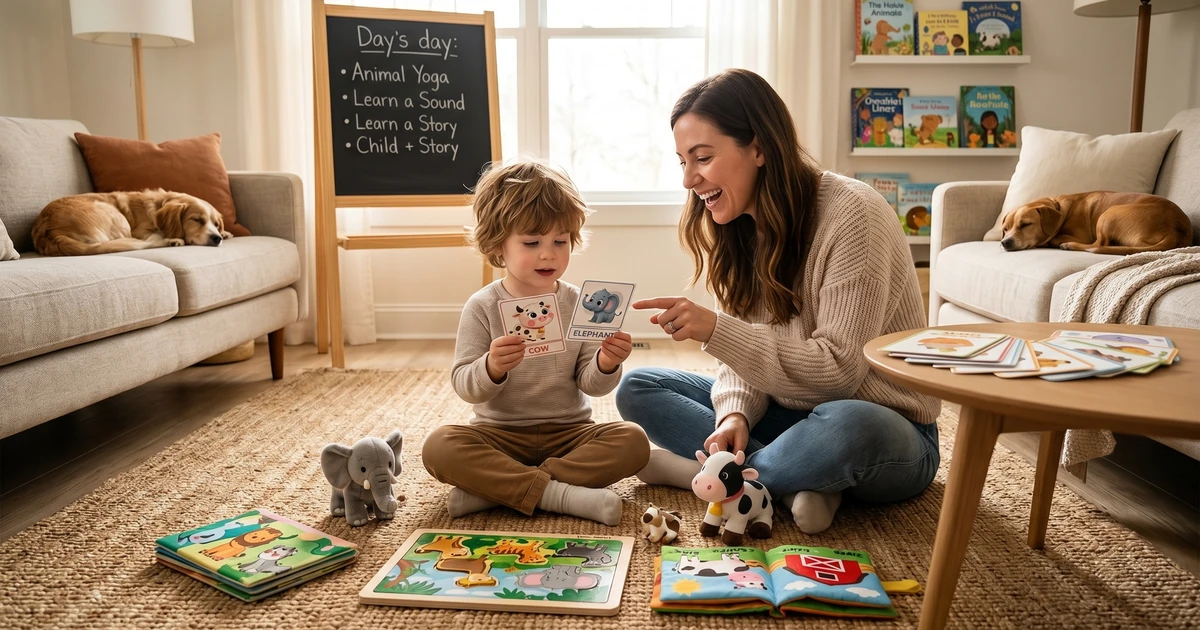
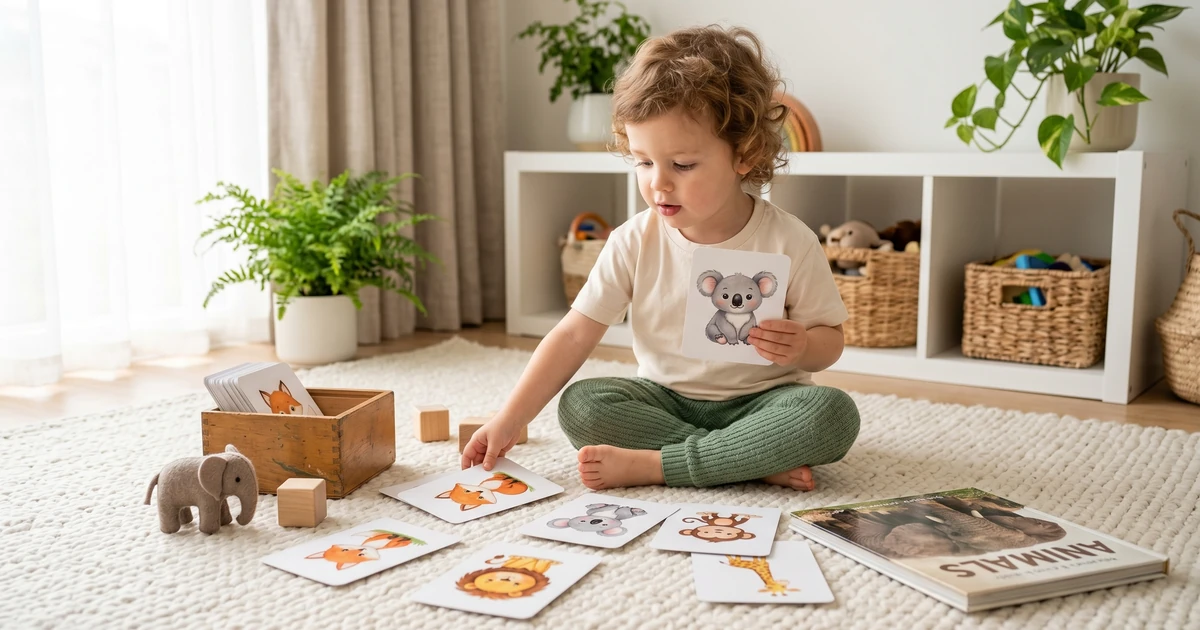
Start by introducing one or a few cards at a time. Clearly say the animal’s name and show the picture. Ask your child to repeat the name. Encourage them to point to the animal on the card.
Step 2: Sound Association
Once they recognize the name, ask, “What sound does a [animal name] make?” Mimic the sound or play a recording. This makes the learning process more memorable and fun. You can find animal sound recordings online or within many educational apps.
Step 3: Movement and Action
Encourage your child to move like the animal. Can they hop like a rabbit? Waddle like a duck? This kinesthetic learning is very effective for young children.
Step 4: Categorization and Sorting
As your child becomes more familiar with the cards, you can start sorting them. Group animals by habitat (farm, jungle, ocean), by type (mammals, birds), or by characteristics (has fur, has feathers, lives in water). This builds critical thinking skills.
Step 5: Storytelling and Imagination
Use the flashcards to create simple stories. “The lion is roaring! He’s looking for his friend, the monkey.” This sparks imagination and language development.
Step 6: Games and Quizzes
Turn learning into a game!
-
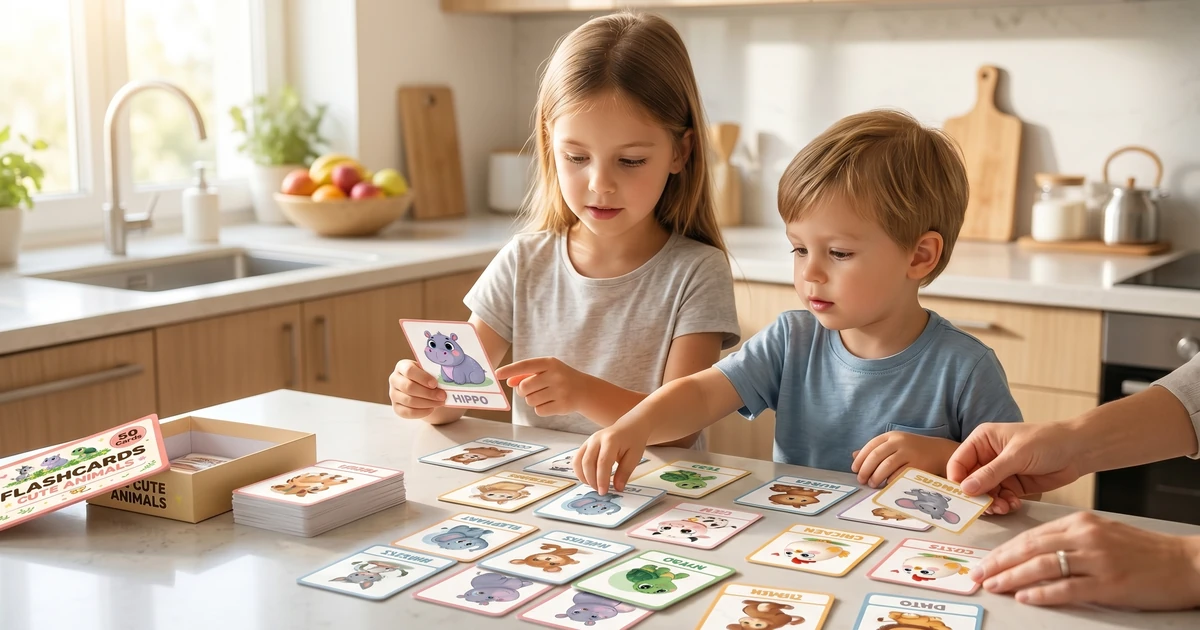
Matching: Lay out several cards and have a duplicate set. Ask your child to match the cards.
-
Memory Game: Place cards face down and have children turn over two at a time to find a match.
-
“I Spy”: Describe an animal and have your child find the matching card.
Pro Tip: Keep sessions short, especially for younger children (5-10 minutes). End on a positive note, even if they only learned one new animal. Your detailed guide, How to teach animals flashcards to kids at home, dives deeper into these techniques.
Animals Flashcards by Age Group
The way children engage with animals flashcards changes as they grow. Understanding these developmental stages helps tailor your approach.
Ages 1-2: Basic Recognition and Sound
At this age, focus on simple recognition and associating animals with their sounds. Hold up a card, say the name clearly, and make the sound. They are just beginning to build vocabulary and understand spoken words. Don’t expect perfect pronunciation; focus on engagement.
Ages 3-5: Vocabulary, Sorting, and Fun Facts
Children in this age group can handle more complex interactions. They can repeat names with better pronunciation, start sorting cards, and are fascinated by simple facts. This is where you can introduce the fun facts on the back of our KubbyLab cards. My article on Best Animal Flashcard Activities for Ages 3-5 offers specific game ideas for this stage.
Ages 6+: Advanced Concepts and Beyond
Older children can use flashcards for learning scientific names, understanding animal classifications in more detail (e.g., carnivore, herbivore), and even for spelling practice. They can participate in more complex games and research specific animals further.
Tailoring flashcard use to a child’s age ensures sustained engagement and optimal learning.
Fun Facts and Interesting Animal Trivia
To make learning even more exciting, I’ve included a selection of fascinating animal facts in our flashcard set. These tidbits of knowledge not only entertain but also reinforce learning and encourage more in-depth curiosity. You can find more amazing trivia in my article, Did you know? animals flashcards fun facts for kids.
Here are a few examples:
-
The Ostrich’s Eye: An ostrich’s eye is bigger than its brain!
-
A Group of Owls: A group of owls is called a parliament.
-
Sloth’s Speed: Sloths are so slow that algae can grow on their fur.
-
Butterfly Taste: Butterflies taste with their feet.
-
Elephant Memory: Elephants can remember other elephants and people they haven’t seen in years.
“Children are naturally curious. Flashcards with intriguing facts tap into this innate drive, transforming education into an adventure.” - Child Development Expert, Dr. Anya Sharma
These facts are great conversation starters and can lead to spontaneous learning moments.
Incorporating fun facts transforms flashcards from simple identification tools into engaging knowledge boosters.
When Animals Flashcards Might Not Be the Right Fit
While I’m a huge advocate for animals flashcards, I always believe in setting realistic expectations. There are certain situations or learning styles where they might be less effective or even counterproductive.
-
Overwhelm with Too Many Cards: Presenting too many animals at once can overwhelm a young child, leading to frustration rather than learning. It’s better to introduce a few at a time and build gradually.
-
Lack of Interaction: If you just hand the cards to a child without engaging them, the effect will be minimal. Active participation and guidance are key.
-
Poor Quality Cards: Flimsy, small, or poorly illustrated cards can be discouraging and won’t hold a child’s attention. This is why I prioritize quality material and clear imagery for the KubbyLab set.
-
Children Who Are Visually Overstimulated: Some children, particularly those with sensory processing sensitivities, might find a large number of bright, contrasting images overwhelming. In such cases, starting with fewer cards, or cards with softer illustrations, might be preferable.
-
Focus on Auditory or Kinesthetic Learners: While flashcards are visual, some children learn best through listening or doing. Ensure you supplement flashcard use with sounds, songs, and physical activities to cater to these learning styles.
Pro Tip: Observe your child’s cues. If they seem bored, frustrated, or disinterested, it might be time to switch activities or adjust your approach.
Understanding the limitations of any tool, including flashcards, ensures a more effective and positive learning experience.
Frequently Asked Questions About Animals Flashcards
Here are some common questions I receive about animals flashcards:
Q1: How many animals flashcards should I introduce at once? A1: For toddlers (1-2 years), start with 2-3 cards. For preschoolers (3-5 years), you can gradually increase to 5-10 cards per session, depending on their engagement level. Avoid overwhelming them.
Q2: My child has a short attention span. How can I keep them engaged with flashcards? A2: Keep sessions brief (5-10 minutes), use a variety of activities like songs and games, and incorporate movement. Introduce just a few new animals at a time and celebrate their successes. The key is making it fun and interactive.
Q3: Should I use flashcards with pictures or illustrations? A3: For initial learning, clear, realistic photographs are often best for accurate recognition. Illustrations can be great for older children or for adding artistic flair, but ensure they are accurate depictions. Our KubbyLab set uses high-quality photographs.
Q4: My child is learning to read. How can flashcards help with that? A4: Flashcards help build sight word recognition, as children learn to associate the visual word with the animal. You can also use them for simple spelling games as their reading skills develop.
Q5: What’s the biggest mistake parents make when using flashcards? A5: A common mistake is trying to force too much information too quickly, leading to a negative association with learning. Another is not making it interactive enough. Children learn best through play and engagement.
Q6: Are flashcards suitable for children with developmental delays? A6: Yes, animals flashcards can be very beneficial for children with developmental delays, speech delays, or autism. They offer clear visual cues and can be adapted to individual needs, helping with language, recognition, and focus. Always consult with a specialist for personalized advice.
Q7: What age is typically too old for animals flashcards? A7: Children generally remain interested in animals flashcards well into early elementary school (ages 6-8) for more advanced learning, like scientific names or classification. After that, interest often shifts to more complex books or interactive learning tools. However, they can still be useful for spelling or a quick review.
Q8: How durable are typical animals flashcards? Are they worth the investment? A8: Durability varies greatly. Thin paper cards can be easily torn or damaged by spills. Thicker, laminated, or coated cards, like our KubbyLab set, are much more durable and offer better value for money as they withstand more use.
Conclusion: A Gateway to Learning
Animals flashcards are an undeniably powerful and cost-effective educational tool. They provide a foundational stepping stone for a child’s learning journey, fostering essential skills from vocabulary and memory to critical thinking. At KubbyLab, my goal was to create a set that embodies quality, engagement, and educational value.
By understanding what to look for, how to teach effectively, and how to tailor the experience to your child’s age and learning style, you can unlock the full potential of these simple yet profound learning aids. I encourage you to explore the detailed guides linked throughout this page to further enhance your teaching methods.
The world of animals is vast and fascinating, and flashcards are a wonderful way to begin exploring it together.