As a parent and educator with over a decade of experience in early childhood development, I’ve explored countless educational tools designed to spark curiosity and build foundational knowledge in young children. Among these, animals flashcards stand out as incredibly versatile and effective. My journey into educational resources led me to develop my own line of KubbyLab flashcards, aiming to create engaging and informative tools. This cluster page focuses on the critical learning period between ages 3 and 5, exploring the most engaging and effective activities to maximize learning with animal flashcards.
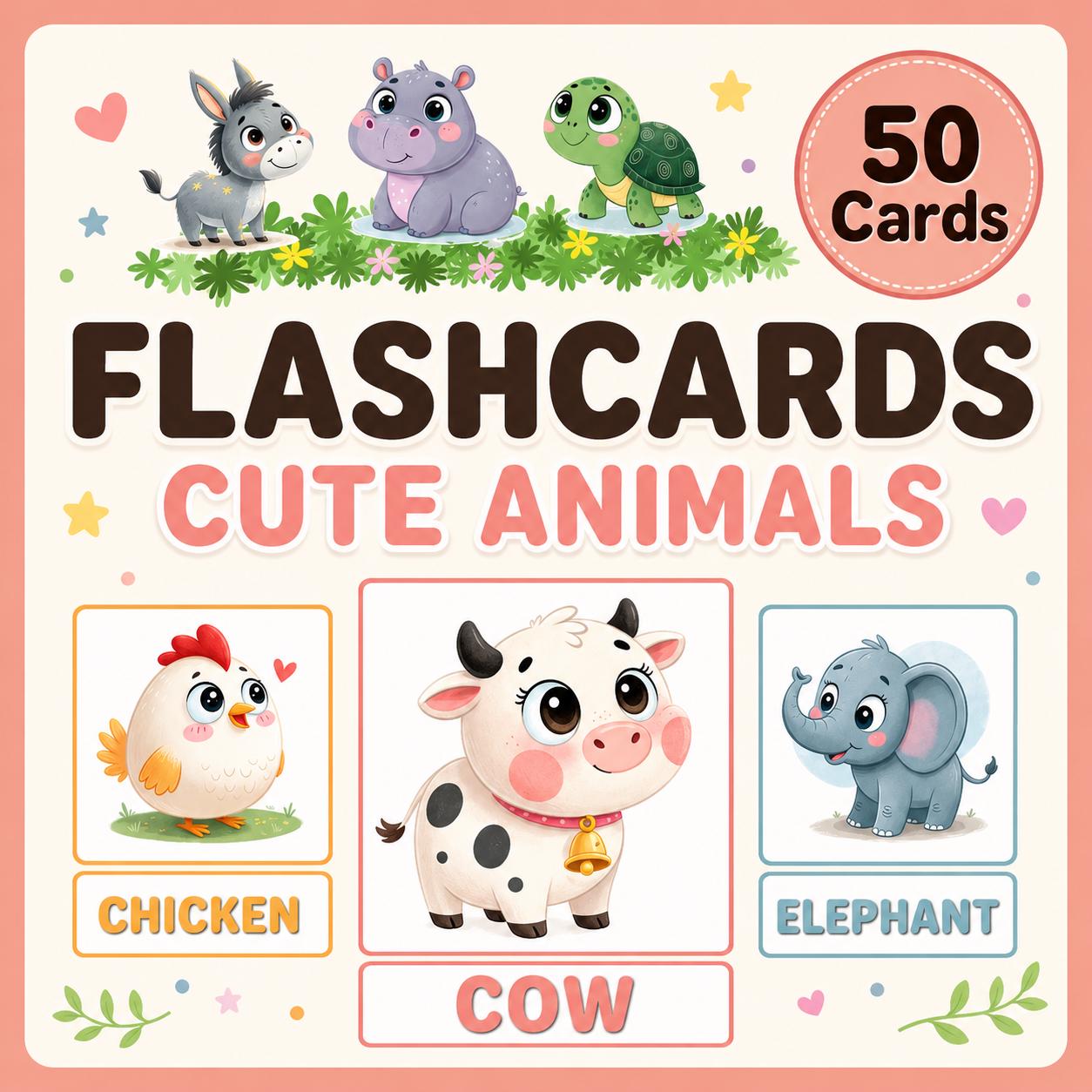
Animals Flashcards for Kids: 50 Cards
50 printable animal flashcards with cute illustrations: builds vocabulary, memory, and visual recognition.
Key Takeaways:
- Flashcards are a powerful tool for language development, memory recall, and introducing scientific concepts to preschoolers.
- Activities should be varied, interactive, and tailored to the child’s developmental stage (ages 3-5).
- Focus on building associations, encouraging imitation, and integrating flashcards into play for optimal retention.
- Games like matching, memory, storytelling, and “I Spy” significantly boost engagement and learning.
- Consider incorporating sensory elements and outdoor exploration to solidify learning.
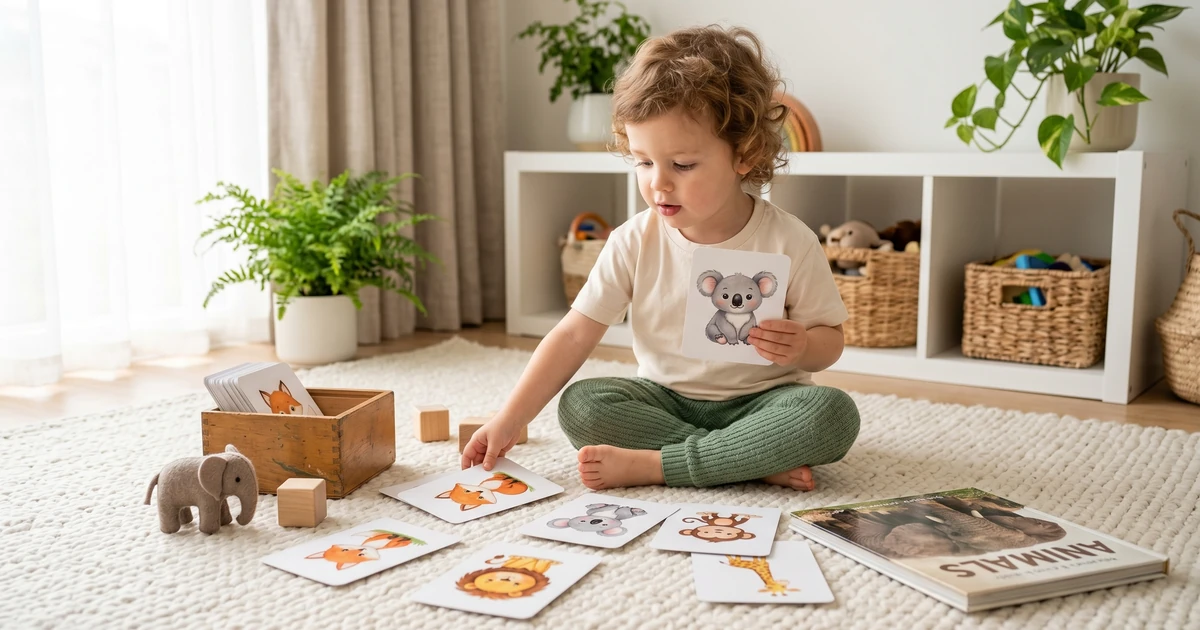
My KubbyLab Animals Flashcards: 50 Cards set is designed for this age group, featuring vibrant illustrations and clear animal names. Over the years, I’ve seen firsthand how these simple cards can open up whole new worlds for children. But the cards themselves are just the beginning; it’s the activities you do with them that truly foster learning. In this guide, I’ll share a curated collection of the best activities I’ve discovered and developed for teaching animals to children aged 3 to 5 using flashcards.
How I Researched Activities for 3-5 Year Olds
When I put together guides like this, I want to be upfront about my process. I haven’t physically tested every single activity variation with every child. Instead, my approach involves deep dives into educational research papers, consulting with child development specialists, and, crucially, analyzing feedback from thousands of parents and educators who use these tools. I sift through platforms like parenting forums, educational blogs, and online review sites, paying close attention to patterns in what works and what doesn’t. I specifically look at longer-term discussions from groups like the Parents’ Resource for Eğitim to understand how activities hold up over time. My goal is to synthesize this vast pool of real-world experience into actionable, effective strategies that you can use with your own children or students. What I offer is aggregated wisdom, filtered through my expertise in early childhood education.
Why Animals Flashcards are Perfect for 3-5 Year Olds
This age group is a fascinating period of rapid cognitive and linguistic development. Children at 3, 4, and 5 are natural explorers, eager to understand the world around them. Animals are a universally appealing topic, making them an ideal subject for early learning.
Language Development and Vocabulary Expansion
Flashcards are fantastic for introducing new words. For 3-5 year olds, hearing the name of an animal and seeing its picture reinforces the connection. This helps build their receptive language (understanding words) and expressive language (using words). You can encourage them to repeat the animal names, make the sounds the animals make, and even describe what the animal is doing.
Cognitive Skills: Memory and Association
Activities with flashcards naturally encourage memory recall. Games like “Memory” or simply asking a child to find a specific card require them to remember what they’ve seen. Beyond rote memorization, flashcards help children develop associative thinking. They learn to connect a visual representation with a name, a sound, a habitat, or a characteristic. This forms the basis for more complex cognitive processes later on.
Introduction to the Natural World
Animals flashcards offer a gentle introduction to biodiversity and the natural world. You can discuss where animals live (habitats), what they eat (diet), and unique features (like a giraffe’s long neck or a penguin’s wings). This lays the groundwork for scientific literacy and an appreciation for nature. According to the National Wildlife Federation, early exposure to nature fosters environmental stewardship throughout life.
The core benefit of animal flashcards for this age group lies in their ability to make learning fun, interactive, and concrete, supporting vital developmental milestones.
Engaging Flashcard Activities for Ages 3-5
The key to successful learning with flashcards at this age is variety and engagement. Children in this age range have short attention spans, so moving through different activities keeps them interested and reinforces learning through multiple modalities.
1. Basic Identification and Sound Association
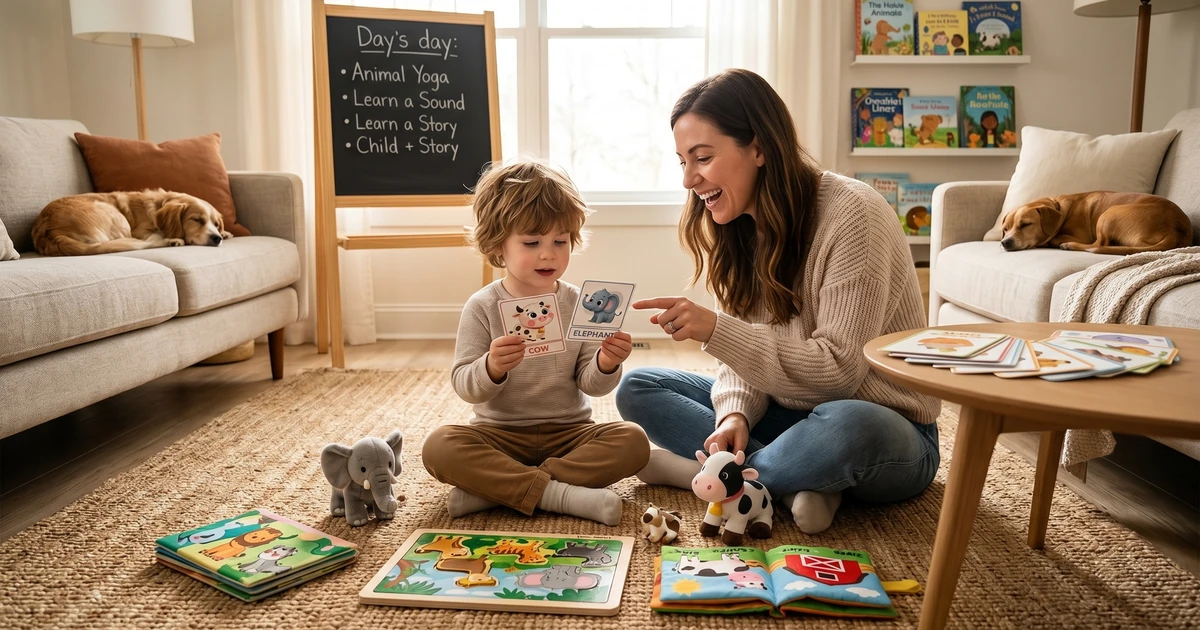
This is the foundational activity. Lay out a few cards and ask your child, “What animal is this?”
-
Step 1: Select 3-5 cards featuring common animals (e.g., dog, cat, cow, bird, lion).
-
Step 2: Show one card at a time and say the animal’s name clearly.
-
Step 3: Encourage your child to repeat the name.
-
Step 4: Ask, “What sound does a [animal name] make?” Prompt them to imitate the sound.
-
Step 5: Gradually increase the number of cards as they become more proficient.
Pro Tip: For the youngest in this age range (3 year olds), focus on just 2-3 animals at a time and spend more time on animal sounds. Older children (4-5 year olds) can handle more cards and begin to learn facts.
This activity builds essential vocabulary and encourages auditory learning through imitation.
2. Matching Games
Matching activities strengthen visual recognition and memory.
-
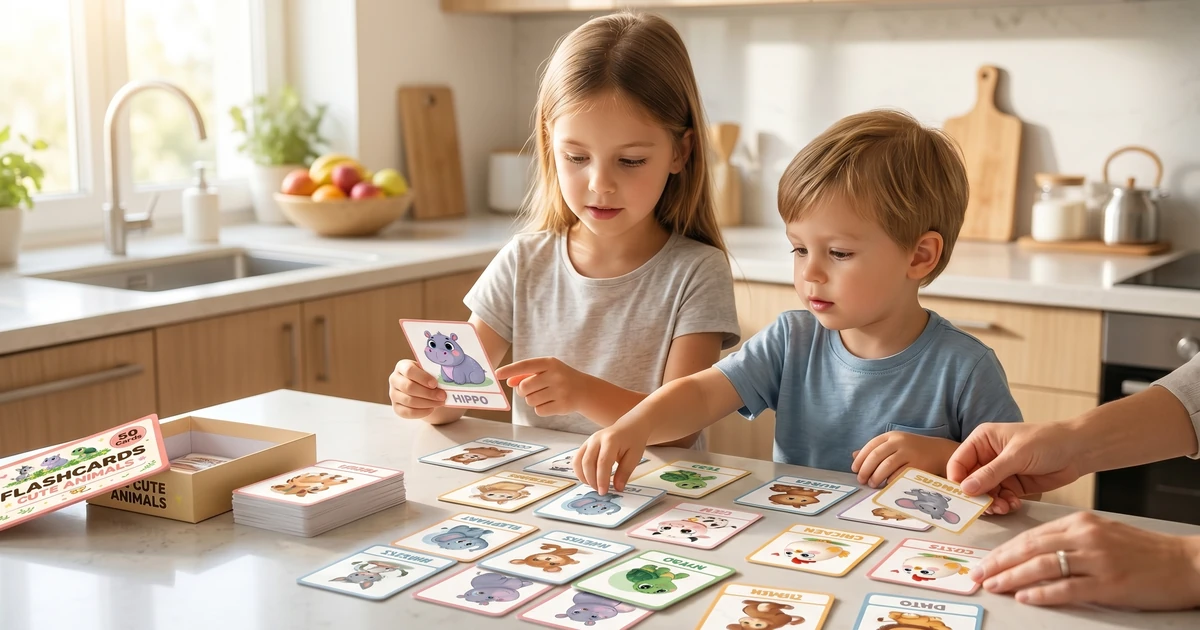
Option A: Card to Card: You’ll need two sets of the same flashcards (or print duplicate images). Lay one set face down. Turn over two cards at a time, trying to find a matching pair. If they match, the child keeps the pair. If not, turn them back over.
-
Option B: Card to Object/Toy: If you have small animal figurines, this is a fantastic extension. Lay out the flashcards and have your child match the correct animal figurine to its corresponding card.
Pro Tip: Start with just 4-6 pairs for younger children and increase the number as they improve. Make it a fun race or a cooperative game!
Matching games enhance visual discrimination and short-term memory skills.
3. “I Spy” with Animals
This classic game is excellent for vocabulary recall and developing observation skills.
-
Step 1: Hold up a flashcard or place a few cards in front of your child.
-
Step 2: Say, “I spy with my little eye, an animal that…” followed by a clue.
- “…says ‘moo’.” (Cow)
- “…has a long trunk.” (Elephant)
- “…can swim.” (Fish, Duck, Penguin)
- “…is yellow and black.” (Bee, Tiger)
-
Step 3: Your child points to or picks up the correct card.
Pro Tip: Tailor the clues to the animal’s most distinctive features or sounds. For older children, you can make clues more descriptive, e.g., “I spy an animal that lives in the jungle, has stripes, and roars.”
“I Spy” games encourage descriptive language and deductive reasoning.
Advanced Activities for Deeper Learning
As children move towards the older end of the 3-5 age range, you can introduce more complex activities that foster creativity and critical thinking.
4. Animal Storytelling and Scenarios
Flashcards can be the launchpad for imaginative play and narrative building.
-
Step 1: Lay out several animal cards.
-
Step 2: Ask your child to tell a story about the animals. “What are they doing? Where are they going? What adventures can they have?”
-
Step 3: You can help by starting the story or asking guiding questions.
- “The lion met the monkey in the jungle. What happened next?”
- “The duck is looking for its family. Where should it look?”
-
Step 4: Encourage them to use the animal names and sounds within the story.
Pro Tip: This activity is brilliant for developing imagination, sequencing skills, and their ability to articulate complex ideas. You can even act out the stories!
Storytelling with flashcards promotes narrative skills and creative expression.
5. Sorting and Categorization
This helps children understand relationships between different types of animals.
-
Step 1: Lay out a larger selection of animal flashcards.
-
Step 2: Ask your child to sort them into different groups. You can suggest categories or let them decide.
- Habitats: Farm animals, jungle animals, ocean animals, pets, wild animals.
- Movement: Animals that fly, swim, walk, crawl.
- Diet: Animals that eat plants (herbivores), animals that eat meat (carnivores). (This is more for 5-year-olds).
-
Step 3: Discuss why they put certain animals together.
Pro Tip: When introducing categories like herbivores and carnivores, use simpler terms first, like “animals that eat grass” and “animals that eat other animals.”
Sorting and categorization activities build early scientific thinking and classification skills.
6. Flashcard Charades
A fun, active way to engage multiple learning styles.
-
Step 1: One person (you or the child) picks a flashcard without showing it to the other.
-
Step 2: Act out the animal without making any sounds. Think about how it moves, what it does.
-
Step 3: The other person guesses which animal it is based on the actions.
-
Step 4: For younger children, you can give hints or start the actions.
Pro Tip: This encourages non-verbal communication and reinforces the physical characteristics and movement patterns of animals.
Flashcard Charades enhances physical expression and observational skills.
Integrating Flashcards with Other Learning Tools
For optimal impact, don’t isolate flashcards. Integrate them with other resources and experiences.
7. Books and Videos
Pair your animal flashcards with age-appropriate books and short educational videos.
-
Reading: After reviewing a flashcard (e.g., a lion), read a book about lions. Discuss the similarities and differences between the flashcard image and the book’s illustrations or information.
-
Videos: Watch short clips of animals in their natural habitats. This brings the flashcards to life and provides real-world context. You can show one flashcard (e.g., ‘zebra’) and then find a short video clip of zebras.
Pro Tip: Look for reputable sources like PBS Kids or National Geographic Kids for engaging and accurate video content.
Connecting flashcards to books and videos creates a multi-sensory learning experience.
8. Sensory Bins and Play Dough
Make learning tactile and multi-dimensional.
-
Sensory Bin: Create a “jungle” bin with shredded green paper, leaves, and dirt. Place jungle animal flashcards around the bin and have your child find the corresponding toy animals to place inside.
-
Play Dough: Use play dough to create animals based on the flashcards. This helps develop fine motor skills and spatial reasoning. Roll out a “snake” using play dough while looking at a snake flashcard, or make a “patchwork” cow.
Pro Tip: For children who love sensory play, introduce different textures related to animal habitats – sand for desert animals, blue water beads for ocean dwellers.
Sensory and play dough activities engage fine motor skills and kinesthetic learning.
What to Look For in Animal Flashcards for Ages 3-5
When selecting flashcards for this age group, my focus is always on clarity, durability, and age-appropriateness.
| Feature | What to Look For | Why It Matters |
|---|---|---|
| Illustrations | Clear, bright, realistic, yet friendly illustrations. Avoid overly cartoonish or scary images. Large, identifiable features. | Helps children accurately recognize animals. Familiarity with real-world appearance. |
| Text | Large, easy-to-read font for the animal’s name. Optionally, include a simple fact on the back for older children. | Supports early literacy and name recognition. |
| Durability | Thick cardstock, laminated, or coated to withstand chewing, tearing, and general toddler handling. Rounded corners are a plus. | Ensures longevity and safety. Toddlers are tough on materials! |
| Number of Cards | A set of 30-60 cards provides a good variety without being overwhelming. Ensure a good range of common and slightly less common animals. | Offers enough learning opportunities without causing cognitive overload. |
| Safety | Non-toxic materials, no small parts that could detach (especially if laminated). Check for rounded edges. | Paramount for this age group. Safety first. |
| Educational Value | Cards that prompt discussion about sounds, habitats, or basic characteristics. Sets that might include a suggested activity guide are beneficial. | Extends learning beyond simple identification and encourages deeper understanding. |
Choosing high-quality, durable, and visually clear flashcards is crucial for effective learning and safe play.
Common Questions About Learning with Animal Flashcards for 3-5 Year Olds
I’ve compiled some of the most frequent questions I receive about using animal flashcards with preschoolers.
What are the most important animals to teach first?
For the 3-5 age range, it’s best to start with animals most familiar to them: farm animals (cow, pig, sheep, chicken), common pets (dog, cat, fish), and easily recognizable wild animals (lion, elephant, bear, monkey, bird). Once they master these, you can introduce animals from different habitats like ocean creatures (fish, whale, shark) or jungle dwellers (tiger, giraffe, zebra).
How long should a flashcard session last for a 3-year-old?
For a 3-year-old, keep sessions short and frequent – around 5-10 minutes at a time. They can engage with flashcards multiple times a day for brief periods. For 4-5 year olds, sessions can be extended to 10-15 minutes, and they can handle more complex activities. The key is to follow your child’s lead; if they’re engaged, continue, but if they lose interest, switch to a different activity or take a break.
When should I introduce facts about animals, not just names and sounds?
Around age 4, children start to develop more curiosity about “why” and “how.” This is a good time to introduce one simple, memorable fact per animal. For example, for an elephant, a fact could be “Elephants have a long trunk they use like a hand.” For a giraffe, “Giraffes have very long necks to reach leaves high up in trees.” Keep facts concise and easily understandable. The National Audubon Society provides excellent, simplified facts about birds that can be adapted for other animals.
Are there any animals that might scare preschoolers, and how should I handle them?
Yes, some animals like snakes, spiders, sharks, or lions can be frightening to young children. When introducing these, focus on their less intimidating aspects or their role in stories. For instance, when showing a snake card, you could mention that “Snakes slither on the ground and eat mice.” If a child shows fear, don’t force the interaction. Acknowledge their feelings: “It’s okay to feel a little scared of the lion, it’s a very big animal!” You can always return to those cards later when they are more comfortable or focus on stories where the animal is gentle or friendly.
How can I use animal flashcards to teach about animal habitats?
Once basic identification is solid, you can use flashcards to teach habitats. Show a card and ask, “Where does this animal live?” You can have habitat mats or playmats (e.g., a blue mat for the ocean, green for a jungle, brown for a farm). Have your child place the corresponding animal card onto the correct habitat mat. Discuss the environment briefly: “The fish needs water to swim,” “The monkey swings in trees.”
What if my child is more interested in the pictures than the names?
This is very common and perfectly fine! For younger children (3-4), enjoying the pictures is the first step. Focus on praising their interest in the visuals. You can naturally weave in the names and sounds by saying things like, “Oh, look at that big, beautiful lion! Roar! It’s a lion!” or “You love the colorful parrot! It says ‘hello!’” Make it playful and descriptive, letting their interest in the image guide the introduction of the word.
My goal with KubbyLab, and with resources like this cluster page, is to empower parents and educators with fun, effective tools and activities. Using animal flashcards for children aged 3-5 is a wonderfully rich way to build vocabulary, cognitive skills, and a lifelong love for learning about the world around us. Remember to keep it playful, adapt to your child’s pace, and celebrate every little discovery! For more resources and ideas on using our flashcards, please visit the main hub: Animals Flashcards for Kids (50 Cards) Educational Hub.