
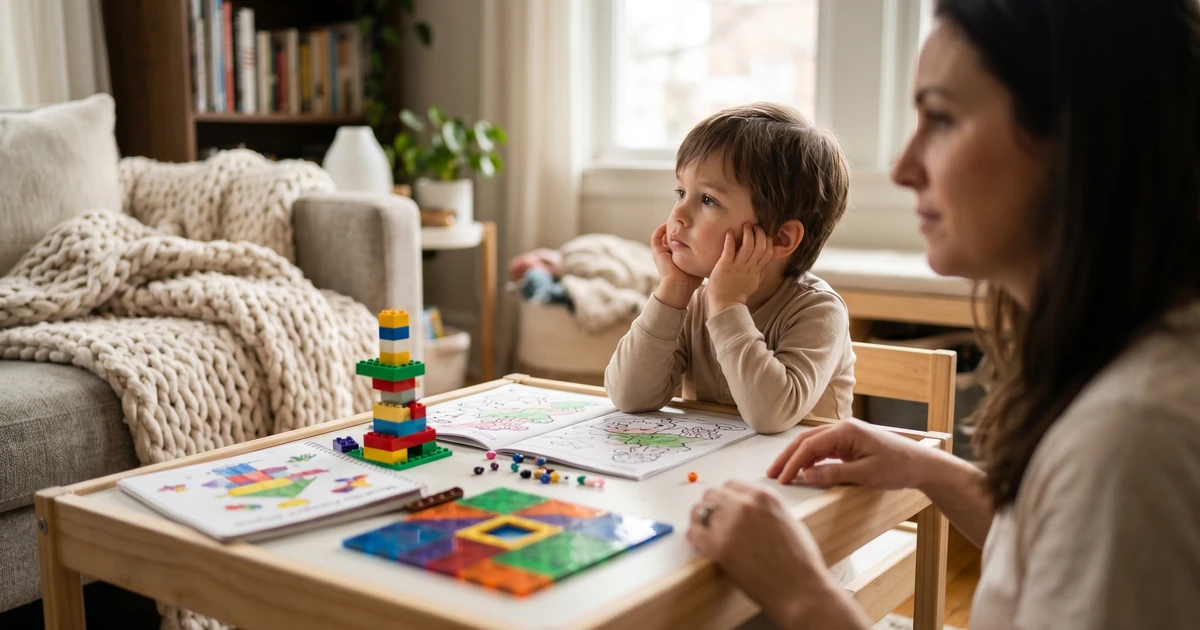
Why Your 4-Year-Old Can't Focus on Activities It's Not ADHD
My daughter once threw a crayon across the room because I asked her to finish one page of coloring. She was three. The crayon hit the dog. Nobody was havin
!A young child sitting at a table, focused on a colorful nature-themed worksheet activity
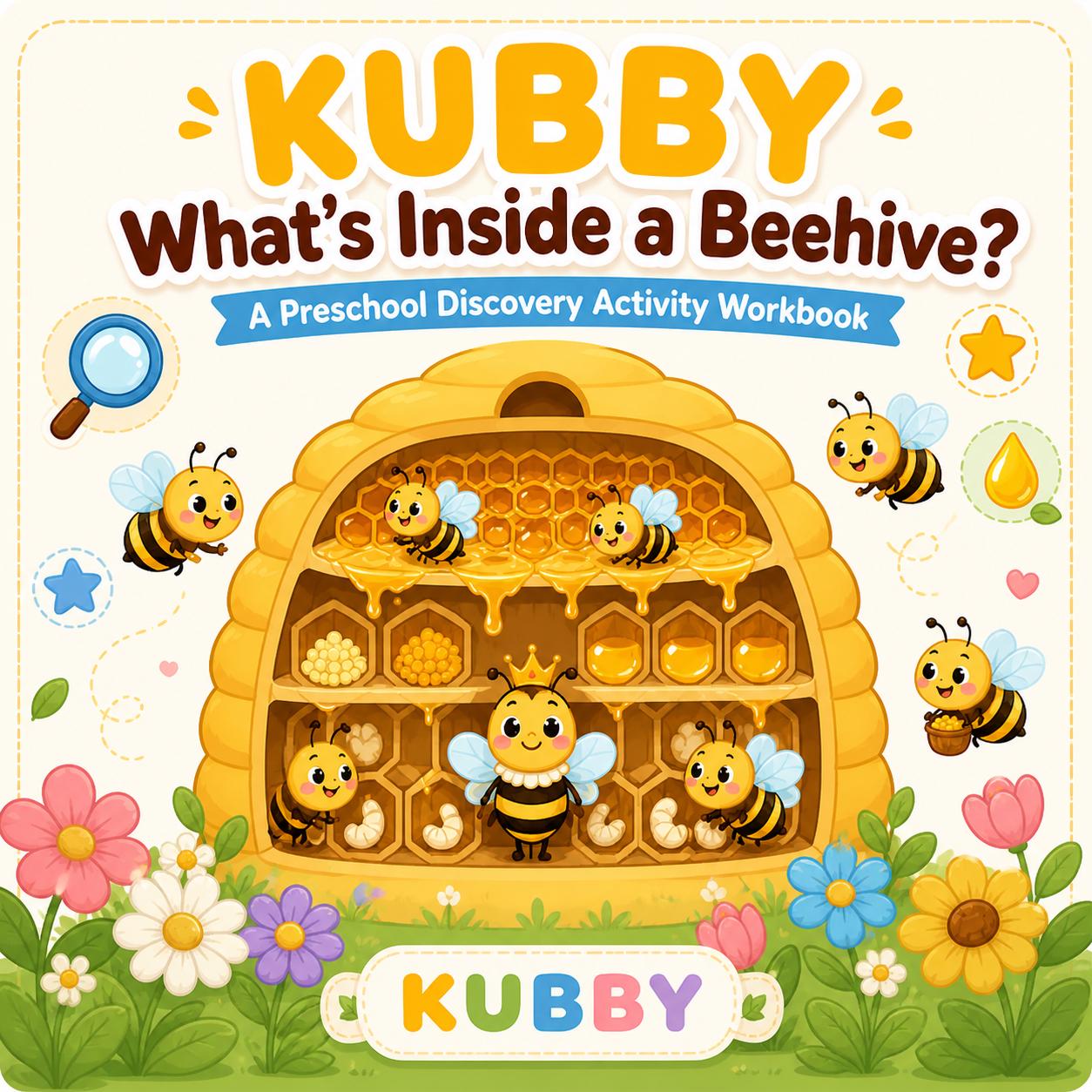
DISCOVERY ACTIVITY WORKBOOKBeehive Discovery 50-Page Printable Preschool Workbook
This 50-page printable workbook turns screen time into hands-on discovery time, guiding preschoolers through the secret world of bees, pollination, and beekeepers. With 25 double-page spreads pairing fascinating facts with immediate activities, it keeps little
My daughter once threw a crayon across the room because I asked her to finish one page of coloring. She was three. The crayon hit the dog. Nobody was having a good morning.
If you’ve ever sat across from a preschooler who simply cannot stay in their seat for more than 90 seconds, you already know the specific exhaustion I’m talking about. You pick an activity. They’re interested for a moment. Then they’re gone, physically or mentally, and you’re left holding a half-finished worksheet wondering what you did wrong.
You didn’t do anything wrong. Preschool attention span is genuinely short by design, and most of the activities we hand kids aren’t built around that reality. The good news is that there are real, practical ways to work with a short attention span rather than fight it, and printable activities can be one of the most effective tools in your toolkit when they’re designed correctly.
Key Takeaways:
- The average preschool attention span is 2 to 5 minutes per year of age, so a 4-year-old realistically focuses for 8 to 20 minutes maximum.
- Short, varied tasks with clear visual cues work far better than long open-ended worksheets.
- Nature-themed printables tap into children’s natural curiosity, which extends focus more than abstract academic tasks.
- Rotating activities in 10-minute blocks prevents burnout and keeps engagement high.
- Screen-free printable activities support attention development without the dopamine spikes from screens that make real-world focus harder.
What “Normal” Preschool Attention Span Actually Looks Like
A preschool attention span is the length of time a child aged 3 to 5 can sustain focused effort on a single task. According to the American Academy of Pediatrics, children in this age range can typically concentrate for 2 to 5 minutes per year of age. That means a three-year-old has roughly 6 to 15 minutes, and a five-year-old might stretch to 25 minutes under ideal conditions.
“Ideal conditions” is doing a lot of work in that sentence. Hunger, tiredness, overstimulation, and screen exposure before an activity can all cut that window in half. So when your preschooler abandons a worksheet after four minutes, they’re often behaving completely normally.
The mistake most parents and educators make is designing activities for the attention span they wish kids had, not the one they actually have.
Short tasks, clear outcomes, and built-in variety are the foundation of any activity that actually works for preschoolers.
Why Printable Activities Work So Well for Short Attention Spans
Printables have a structural advantage over open-ended play or screen-based learning: they have visible edges. A child can see where the page starts and ends. That boundary is psychologically reassuring and helps preschoolers commit to finishing something.
“Children develop executive function skills, including sustained attention, when they practice completing structured, bounded tasks. Even a simple coloring sheet with a defined space teaches a child to start, work, and finish.” - Dr. Adele Diamond, Developmental Cognitive Neuroscientist, University of British Columbia
The best printable activities for preschool attention span development share a few common features:
-
They take 5 to 15 minutes to complete (not 30+)
-
They include visual instructions, not just text
-
They have a clear “done” moment (finished, colored, matched, counted)
-
They’re thematically interesting, not just academically functional
-
They can be done independently once set up
That last point matters enormously for parents. An activity that requires you to sit beside your child for the entire duration isn’t really giving either of you a break.
The 5-Minute Rule: How I Structure Printable Activity Time
After a lot of trial and error (and one memorable crayon incident), I landed on what I call the 5-minute rotation method. It sounds more complicated than it is.
Step 1: Choose 3 to 4 Short Printable Activities
Pick activities that cover different types of engagement: one tracing or fine motor task, one coloring page, one matching or sorting game, and one simple counting or letter activity. Mix the skill types so your child’s brain gets variety without switching topics entirely.
Step 2: Set a Visual Timer
Preschoolers don’t understand “five more minutes.” They understand a timer they can see counting down. A simple sand timer or visual digital timer makes transitions feel fair rather than arbitrary.
Step 3: Let Them Choose the Order
This is small but powerful. Giving a preschooler control over which activity they do first dramatically increases buy-in. They’re not being told what to do; they’re making a choice. That shift in ownership changes behavior noticeably.
Step 4: Celebrate the Stack
When they finish a page, put it in a “done” pile where they can see it growing. The physical evidence of completion is motivating in a way that verbal praise alone isn’t.
Step 5: End Before They’re Done
Stop the session while they’re still engaged, not when they’re melting down. This keeps the experience positive and makes them more willing to return next time.
Ending on a win trains a child to associate focused activity time with success, not frustration.
Nature Themes: Why They Hold Attention Better Than Abstract Topics
I’ve noticed something consistent across the printables I’ve researched and the feedback parents share: nature-themed activities hold preschool attention longer than abstract academic themes. A page about bees, butterflies, or garden creatures outperforms a generic letter-tracing sheet almost every time.
This isn’t surprising when you look at the research. According to the Children and Nature Network, exposure to nature content, even in a classroom or home setting, reduces stress responses in children and supports sustained attention. Kids are biologically wired to be curious about living things. Tapping into that curiosity is one of the most efficient ways to extend focus.
A worksheet that asks a child to trace the letter B is fine. A worksheet that asks them to trace the letter B while learning that bees live in hives and make honey is far more engaging. The academic content is identical. The context makes all the difference.
Pro Tip: Pair nature-themed printables with a 30-second “curiosity hook” before the activity. Say something like, “Did you know bees talk to each other by dancing?” Then hand them the bee worksheet. Curiosity primes the brain for focus.
Comparing Printable Activity Types for Preschool Focus
Not all printable activities are equal when it comes to sustaining attention. Here’s a breakdown of common types and how they perform for the preschool age group:
| Activity Type | Avg. Engagement Time | Best For | Watch Out For |
|---|---|---|---|
| Coloring pages (themed) | 8 to 15 min | Fine motor, calm focus | Too complex = frustration |
| Tracing worksheets | 5 to 10 min | Pencil control, letters | Repetitive if overused |
| Matching games (cut and paste) | 10 to 20 min | Logical thinking, pairs | Needs scissors support |
| Simple mazes | 5 to 8 min | Problem-solving, persistence | Too hard = abandonment |
| Count and color activities | 8 to 12 min | Number sense, attention | Works best at calm times |
| Sorting and categorizing sheets | 10 to 15 min | Thinking skills, language | Needs concept familiarity |
| Nature observation prompts | 10 to 20 min | Curiosity, extended focus | Best paired with outdoor time |
The activities with the longest engagement times tend to involve multiple steps or choices, which keeps the brain active without requiring a completely new setup.
Matching and sorting printables consistently produce the longest independent focus times in the preschool age group.
What to Look for in a Preschool Attention Span Activity Printable
If you’re choosing printables, whether from a store, a blog, or a printable pack, here are the criteria I’d use to evaluate them before printing:
| Criteria | What to Look For | Red Flag |
|---|---|---|
| Task length | Completable in 5 to 15 minutes | Multi-page single tasks |
| Visual clarity | Simple illustrations, clear instructions | Cluttered or text-heavy pages |
| Age fit | Designed for 3 to 5 year olds specifically | Generic “kids” labeling |
| Skill variety | Mix of motor, cognitive, and creative tasks | All one type |
| Theme engagement | Nature, animals, familiar concepts | Purely abstract academic |
| Independent usability | Child can work alone after setup | Requires constant adult guidance |
| Print quality | Clean lines, adequate white space | Pixelated or overly dense |
One printable workbook that meets all of these criteria is the Beehive Discovery 50-Page Printable Preschool Workbook from KubbyLab, which combines bee and nature themes with age-appropriate activities across fine motor, counting, matching, and coloring tasks. It’s one option worth looking at if you want a ready-made pack with variety built in.
But there are many quality printable sets available, and the table above gives you a framework to evaluate any of them.
Quick Cost Breakdown: Printable Activity Options
| Option | Cost Range | Pros | Cons |
|---|---|---|---|
| Free printable websites | $0 | No commitment | Inconsistent quality, limited variety |
| Individual printable pages (Etsy) | $1 to $3 each | Targeted | Adds up quickly |
| Printable workbook packs | $5 to $15 | Variety, cohesive theme | Upfront cost |
| Subscription printable services | $8 to $15/month | Ongoing content | Overkill for occasional use |
| Physical workbooks (store-bought) | $8 to $20 | Tangible, no printing | Can’t reprint, fixed content |
For most families, a mid-range printable workbook pack offers the best balance of cost, variety, and quality. The ability to reprint pages is genuinely useful when a child wants to repeat a favorite activity or when a page gets wet, crumpled, or crayon-obliterated.
For the Complete Guide, Read This Next
If this gave you some useful starting points, the full article goes much deeper. You’ll find 14 specific screen-free printable activities organized by skill type, with guidance on how to sequence them across a week for maximum attention-building benefit.
Read the full guide here: 14 Screen-Free Preschool Printable Activities That Spark Nature Curiosity
You might also find these helpful:
-
Easy Bee Life Cycle Worksheet for Kids (From Egg to Honey) for a single-topic deep dive that pairs beautifully with nature printables
-
35 Quiet-Time Screen Free Learning Activities for Preschoolers for a bigger bank of ideas beyond printables
-
Build Your Own Pollinator Printable Pack for Kindergarten Science if you want to build a custom themed set around pollinators and garden life
Frequently Asked Questions
How long should a preschooler be able to focus on an activity?
The general guideline is 2 to 5 minutes per year of age. A 3-year-old can realistically sustain attention for 6 to 15 minutes on a single task. A 5-year-old may manage 10 to 25 minutes under calm, low-distraction conditions. These are averages, and there’s significant variation between individual children. If your child consistently focuses for less than this range, it’s worth mentioning to your pediatrician, but most parents find their child falls somewhere in that window.
My preschooler refuses to do any sit-down activities. Is that a problem?
Not necessarily. Some children are highly kinesthetic learners and genuinely struggle with seated tasks before age 4 or 5. This is developmentally normal. The strategies that tend to help are shorter sessions (3 to 5 minutes to start), more physical activities like cut-and-paste or stamp pages rather than coloring or tracing, and giving the child choice over which activity to do first. If refusal is extreme and consistent across all structured activities, a developmental pediatrician can help rule out sensory or attentional considerations.
Do printable activities actually help build attention span, or just measure it?
Both, when used correctly. A printable activity doesn’t passively measure attention; it actively practices it. Each time a child starts a task, works through it, and finishes it, they’re building the neural pathways associated with sustained focus and task completion. Over weeks of consistent practice, most parents notice their child’s ability to stay with an activity grows noticeably. The key is keeping the tasks appropriately challenging: not so easy they’re boring, not so hard they’re frustrating.
How many printable activities should I offer at one time?
For most preschoolers, 2 to 4 activities per session is the right range. More than that can feel overwhelming and actually reduce focus. I’d recommend laying out 3 activities and letting your child pick the order. Rotate the specific activities across the week so content stays fresh without requiring you to find new materials daily.
What’s the difference between a printable workbook and individual printable sheets?
A printable workbook is a cohesive set of pages designed to work together, often around a theme or skill progression. Individual sheets are standalone pages that may have no connection to each other. For building attention span specifically, a themed workbook has an advantage because the consistent visual style and topic create a sense of familiarity that reduces cognitive load, leaving more mental energy for the actual task. Both have their place, but themed packs tend to produce calmer, more sustained engagement in preschoolers.
Take the Next Step!
Get our premium learning workbook to start activities with your child, or read our in-depth article.
Recommended Resources & Workbooks
Pair this guide with our hands-on, ready-to-print learning resources.
 Digital Bundle
Learn to Read Program: Levels 1-3
170 sequenced phonics lessons across 199 pages, from first letter sounds to fluent long-vowel reading.
 Digital Learning Bundle
Preschool Learning Bundle
260+ printable worksheets for tracing, ABCs, numbers, shapes, sight words, and kindergarten prep.
 Digital Learning Bundle
Play-Based Learning Bundle for Ages 3-6
230+ play-based learning activities with pretend play, reading, early math, creative arts, and bonus flashcards.
Related Guides & Articles
Explore more of our detailed guides and activities.
14 Screen-Free Preschool Printable Activities That Spark
Discover 14 captivating screen-free preschool printable activities that introduce nature and science. Perfect for quiet time, travel, and curious 3...
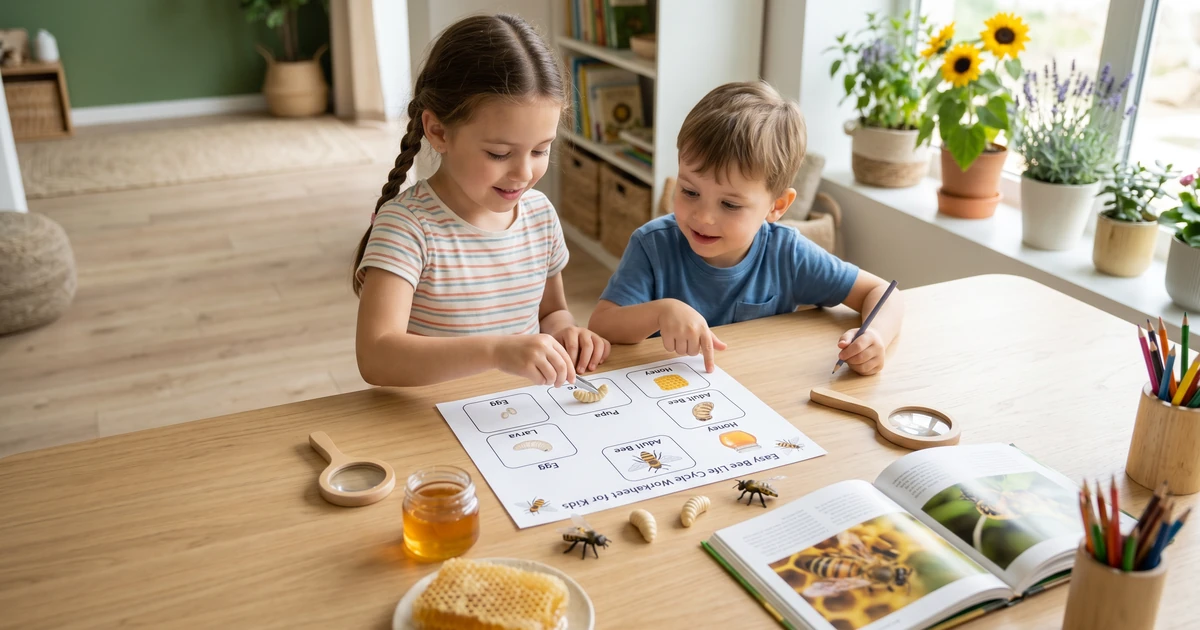
Easy Bee Life Cycle Worksheet for Kids From Egg to Honey
Teaching young children about nature is one of the most rewarding things you can do as a parent or educator. And the bee life cycle worksheet for kids
Build Your Own Pollinator Printable Pack for Kindergarten
Kindergartners are naturally drawn to bugs, flowers, and anything that buzzes or flutters past a window. A well-designed pollinator printable pack ...
35 Quiet-Time Screen Free Learning Activities for Preschoolers
Screen time for preschoolers is one of the most debated topics in early childhood education right now. Parents ask me constantly: "How do I keep my...