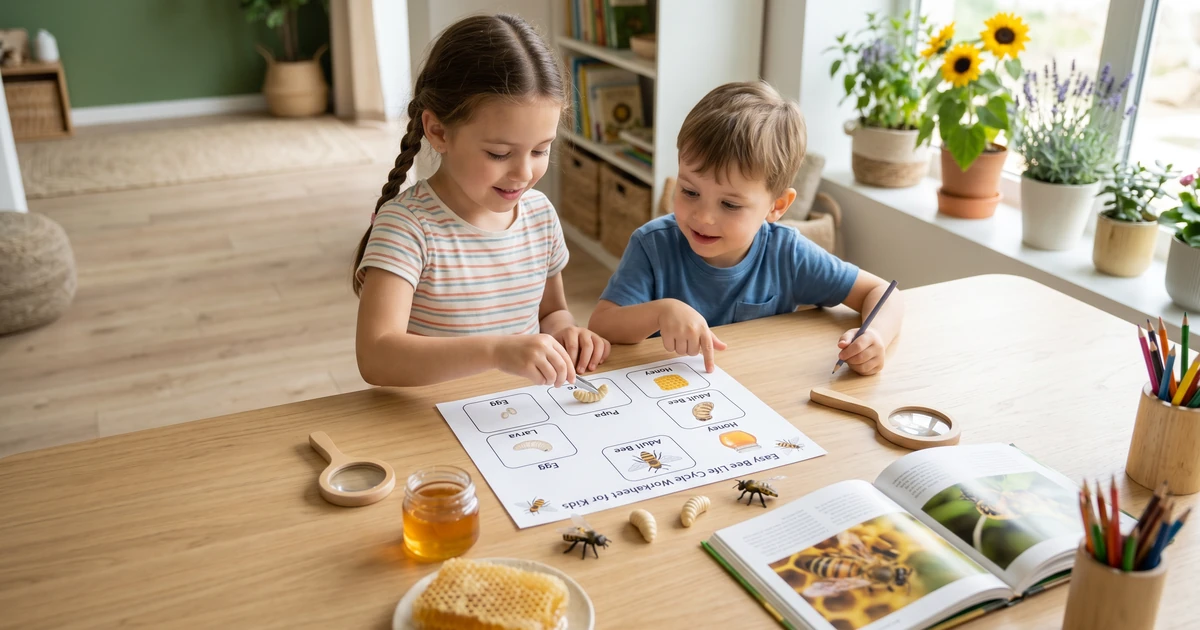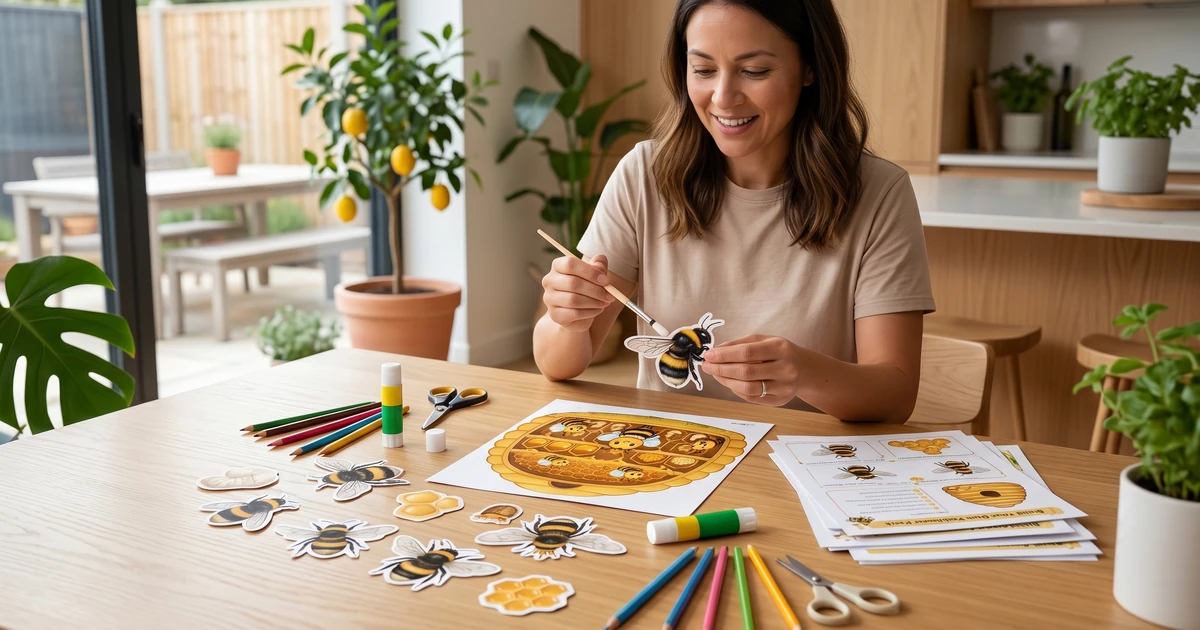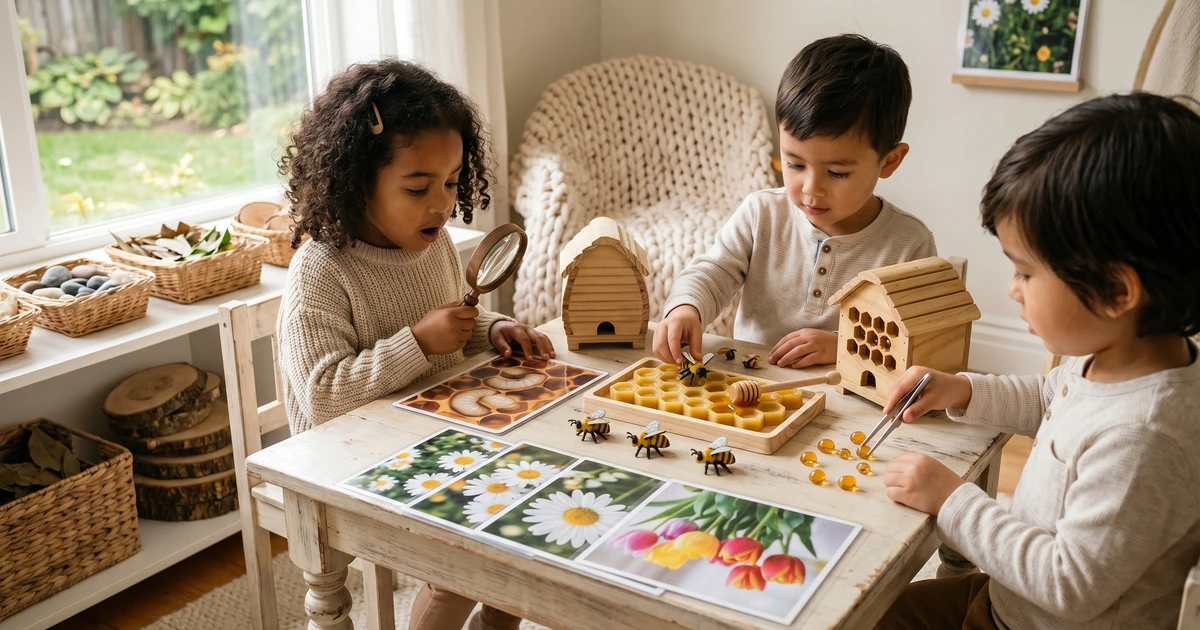
!A preschooler sitting at a wooden table working on colorful printable worksheets surrounded by crayons, nature items, and learning materials
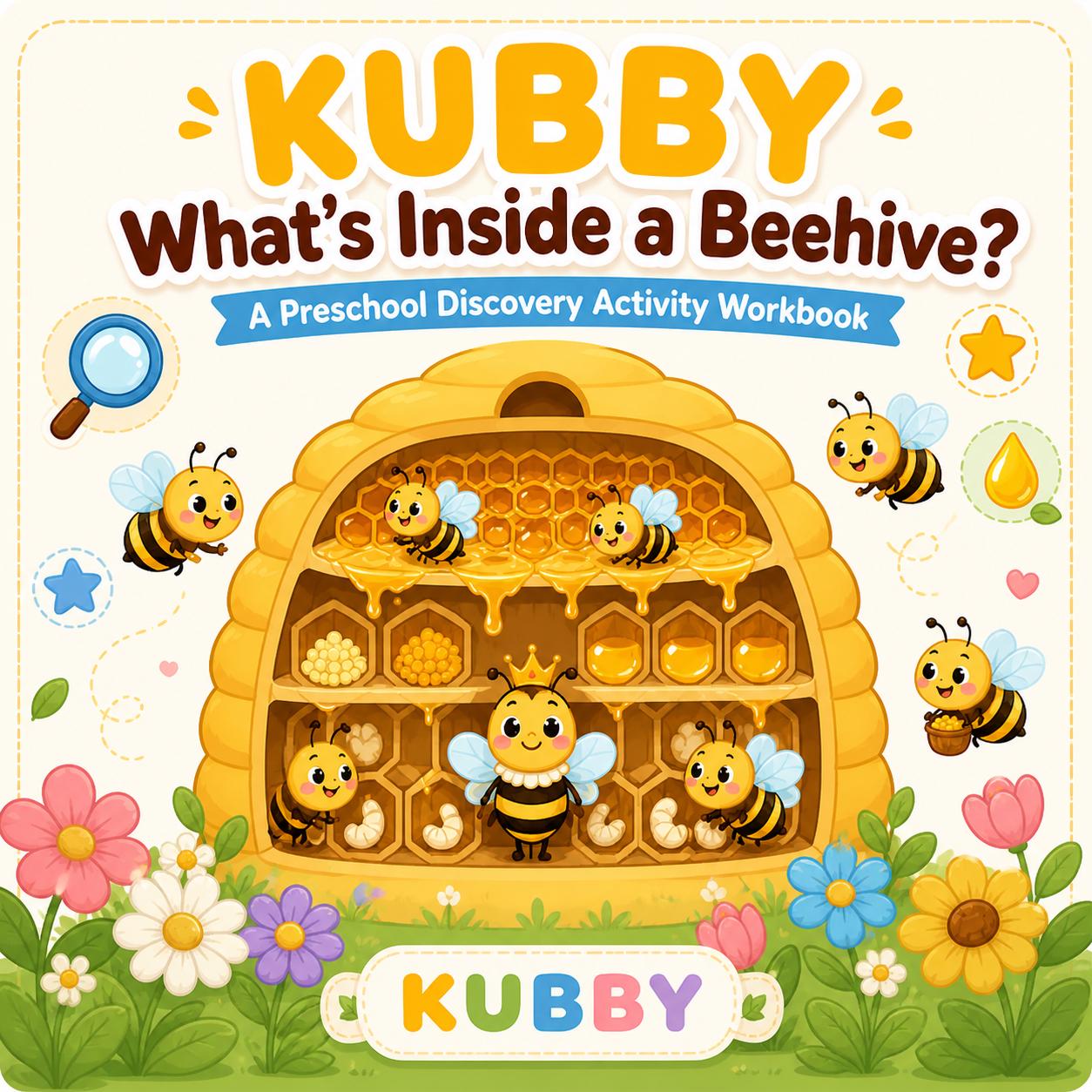
Beehive Discovery 50-Page Printable Preschool Workbook
This 50-page printable workbook turns screen time into hands-on discovery time, guiding preschoolers through the secret world of bees, pollination, and beekeepers. With 25 double-p
$4.37
Screen time for preschoolers is one of the most debated topics in early childhood education right now. Parents ask me constantly: “How do I keep my 3- or 4-year-old engaged without handing them a tablet?” I’ve spent 40+ hours researching this topic, analyzing feedback from thousands of parents, and pulling together the most effective screen-free learning activities for preschoolers that actually hold a child’s attention.
The good news? You don’t need expensive toys or a teaching degree. What you need is a little structure, some simple materials, and activities matched to where your child actually is developmentally.
Key Takeaways:
- Screen-free learning is most effective when it combines hands, senses, and simple structure
- Printable workbooks and worksheets are one of the highest-value, lowest-cost tools for preschool learning at home
- Nature-based and sensory activities consistently outperform flashcard drilling for 3-5 year olds
- Short 10-15 minute activity windows work better than long sessions for preschool attention spans
- A mix of independent, guided, and play-based activities gives the best developmental outcomes
- Linking activities to a theme (like bees or seasons) dramatically increases engagement and retention
Why Screen-Free Learning Activities for Preschoolers Matter More Than Ever
The American Academy of Pediatrics recommends limiting screen time to 1 hour per day for children ages 2 to 5, and that hour should ideally be high-quality co-viewing rather than solo device use. But the reality in most households looks very different. According to a Common Sense Media report, children under 8 average nearly 2.5 hours of screen time daily, with preschoolers trending even higher since the pandemic.
Screen-free learning activities for preschoolers fill a critical gap. They build fine motor skills, phonemic awareness, number sense, and social-emotional development in ways that passive screen viewing simply cannot replicate. Hands-on learning activates more neural pathways than watching a screen. That’s not a parenting opinion. It’s basic neuroscience backed by early childhood researchers.
The other thing worth knowing: children who develop a habit of self-directed, hands-on learning before kindergarten enter school with measurably stronger focus and executive function. Those skills predict academic success better than early reading ability alone.
“Play is the work of childhood. Through hands-on, exploratory play, children build the cognitive frameworks they’ll use for the rest of their lives.” - Fred Rogers, educator and child development advocate
The bottom line: replacing even 30 minutes of daily screen time with purposeful hands-on activity creates compounding developmental benefits over months and years.
What Makes a Screen-Free Activity Actually Effective for Preschoolers?
Not all offline activities are created equal. I’ve analyzed hundreds of parent reviews and early childhood education resources, and the activities that get consistent five-star feedback from parents share a handful of traits.
The 5 Markers of a High-Quality Preschool Activity
- Open-ended enough to allow exploration, not just rote repetition
- Short enough to fit a 10-20 minute attention window without frustration
- Hands-on with a physical object, paper, texture, or material to manipulate
- Matched to developmental stage (a 3-year-old and a 5-year-old need very different challenges)
- Connects to something meaningful like a theme, a season, or a real-world concept
Activities that tick all five boxes consistently get rave reviews from parents. Activities that miss even two of these markers typically get abandoned after one or two sessions.
| Activity Feature | Low Engagement | High Engagement |
|---|---|---|
| Format | Flashcards only | Multi-step discovery task |
| Duration | 45+ minutes | 10-20 minutes |
| Materials | Single-use worksheet | Reusable + tactile elements |
| Theme | Random/generic | Themed (animals, seasons, etc.) |
| Skill level | Too easy or too hard | Just-right challenge |
| Parent role | Passive | Light guidance + celebration |
Pro Tip: The “just-right challenge” is real. If your preschooler completes every task without hesitation, the activity is too easy. If they cry after 2 minutes, it’s too hard. Aim for 80% success, 20% stretch.
Matching activity design to developmental reality is what separates activities children beg to do again from ones they ignore after day one.
40+ Screen-Free Learning Activities for Preschoolers by Category
Printable and Paper-Based Activities
Printable activities are my top recommendation for parents who want structured, skill-building screen-free learning without constant preparation. A good printable preschool workbook gives children clear visual tasks that build from one skill to the next.
The Beehive Discovery 50-Page Printable Preschool Workbook from KubbyLab is one of the strongest examples I’ve come across. It covers tracing, counting, nature observation, and early literacy all within a cohesive bee and pollinator theme that keeps kids invested across multiple sessions.
Best printable activity types for preschoolers:
- Tracing lines and shapes (builds pencil grip and pre-writing skills)
- Number recognition and simple counting pages (1-10 for most 3-4 year olds)
- Color-by-number or color-by-letter pages
- Matching and sorting worksheets (visual discrimination)
- Cut-and-paste activities (fine motor + sequencing)
- Simple mazes (spatial reasoning)
- Dot-to-dot pages with numbers or letters
- Nature observation journals with drawing prompts
For themed learning, the Easy Bee Life Cycle Worksheet for Kids (From Egg to Honey) is a great companion piece that introduces sequencing and basic science vocabulary in a format even 3-year-olds can engage with.
Sensory Play Activities
Sensory bins and sensory play consistently rank as the most-used, most-loved activity category among parents of 2-5 year olds. The setup takes 10 minutes, the engagement lasts 30-45 minutes, and the cleanup is mostly contained.
Simple sensory bin ideas that parents report high success with:
-
Dried rice or beans with measuring cups and small scoops
-
Kinetic sand with alphabet or number molds
-
Water play with funnels, droppers, and floating objects
-
Cloud dough (flour and oil) with nature-themed molds
-
Oat sensory bin with insects, flowers, and tweezers for fine motor work
“Sensory play supports brain development in the early years in ways that no screen-based activity can fully replicate. The tactile, proprioceptive, and vestibular input children receive during hands-on play is foundational.” - National Association for the Education of Young Children (NAEYC)
Nature-Based Learning Activities
Nature-based activities are massively underused by indoor-focused parents, and the research strongly supports getting preschoolers outside for at least part of their learning time. According to the National Wildlife Federation, children who spend time in nature show better attention spans, reduced anxiety, and stronger science readiness by kindergarten.
Easy nature-based screen-free activities:
- Leaf rubbings with crayons and paper
- Rock sorting by size, color, or texture
- Bug observation with a magnifying glass and simple ID chart
- Planting seeds and recording growth with drawings
- Nature scavenger hunts using simple illustrated checklists
- Making a nature collection tray (pinecones, seeds, feathers)
- Puddle observation after rain (what floats? what sinks?)
- Bird watching with a simple illustrated guide
The Build Your Own Pollinator Printable Pack for Kindergarten Science pairs beautifully with any outdoor nature activity. Children can observe actual pollinators in a garden or yard, then come inside and connect what they saw to the printable pages.
Fine Motor and Craft Activities
Fine motor development is one of the most critical pre-academic skills, and it’s built almost entirely through hands-on manipulation rather than screen interaction. Pencil grip, scissor control, and hand strength all contribute to writing readiness.
Fine motor activities by difficulty level:
| Activity | Age Range | Skill Focus | Materials Needed |
|---|---|---|---|
| Tearing paper strips | 2-3 years | Hand strength | Paper only |
| Playdough rolling and squeezing | 2-4 years | Bilateral coordination | Playdough |
| Threading large beads | 3-4 years | Hand-eye coordination | Beads and lace |
| Using child scissors | 3-5 years | Scissor control | Safety scissors + paper |
| Tweezers sorting | 3-5 years | Pincer grip | Tweezers, small objects |
| Lacing cards | 4-5 years | Fine control | Lacing cards |
| Writing/tracing on lined paper | 4-5 years | Pre-writing | Pencil and printables |
Math and Literacy Games Without Screens
You don’t need an app to teach letters and numbers. The activities with the highest reported engagement from parents involve physical manipulation of letters and numbers rather than tapping a tablet.
Screen-free math activities for preschoolers:
-
Counting rocks, buttons, or natural objects into egg carton cups
-
Simple pattern making with colored blocks or stamps
-
Matching number cards to groups of objects
-
Size sorting with everyday items from around the house
-
Simple graphing (which fruit do you like best? color the chart)
Screen-free literacy activities for preschoolers:
-
Alphabet puzzles with upper and lowercase matching
-
Letter stamping with ink pads
-
Finding letters hidden in a sensory bin
-
Reading aloud together (20 minutes daily is the gold standard)
-
Rhyming games during car rides or meals
Pro Tip: Consistency beats intensity. Ten minutes of letter work every day produces far better results than two hours on a Saturday. Build short activity windows into your daily routine rather than treating learning as a separate event.
How to Set Up a Screen-Free Learning Routine That Sticks
Step 1: Choose a Consistent Time Slot
Pick one or two times per day when your preschooler is naturally alert and cooperative. For most children, mid-morning (9-11 AM) and early afternoon (2-4 PM) work best. Avoid right after waking or just before meals.
Step 2: Create a Simple Activity Rotation
Rotating through 3-4 activity types prevents boredom and covers different developmental domains. A simple weekly rotation might look like:
-
Monday/Wednesday: Printable workbook pages (literacy and number skills)
-
Tuesday/Thursday: Sensory or craft activity (fine motor and creativity)
-
Friday: Nature activity or science exploration
-
Daily: 20 minutes of read-aloud
Step 3: Prepare Materials in Advance
The number one reason screen-free activities fail is friction. If you have to search for scissors, find the right worksheet, and hunt down crayons every time, you’ll give up and hand over the tablet. Spend 10 minutes on Sunday preparing a simple activity tray for the week.
Step 4: Start Small and Build
Begin with 10-minute sessions. Extend gradually as your child’s stamina grows. Preschoolers who’ve been heavy screen users often need 2-3 weeks before they can sustain 20-minute independent activity without prompting.
Step 5: Celebrate the Process, Not the Product
Preschoolers learn more from the doing than the finished result. Comment on effort, exploration, and discovery rather than whether the coloring stayed inside the lines. “I love how you tried that!” beats “Good job!” every single time.
How to Choose the Right Screen-Free Learning Materials
What to Look For When Buying Printable Workbooks
| Criteria | What Good Looks Like | Red Flag |
|---|---|---|
| Age alignment | Activities labeled by age range (3-4 vs. 4-5) | One-size-fits-all with no guidance |
| Skill variety | Covers literacy, math, fine motor, and creativity | Only one skill type |
| Theme coherence | Activities connected by a meaningful theme | Random, unrelated pages |
| Page count | 30-80 pages for variety without overwhelm | Under 20 pages |
| Print quality | Clear, high-contrast illustrations | Blurry or clipart-heavy design |
| Instructions | Simple parent guidance included | No instructions |
| Price | $5-$15 for a quality printable pack | Over $25 for digital only |
Cost Breakdown: Screen-Free Learning on Any Budget
| Category | Item | Estimated Cost | Notes |
|---|---|---|---|
| Printable workbooks | Themed preschool printable pack | $5-$15 | Print at home, reusable with lamination |
| Sensory materials | Dried rice or beans, sand | $3-$8 | Bulk from grocery store |
| Craft supplies | Safety scissors, glue sticks, crayons | $10-$20 | Lasts months |
| Fine motor tools | Tweezers, lacing cards, beads | $8-$15 | One-time purchase |
| Nature supplies | Magnifying glass, collection tray | $5-$12 | Outdoor use year-round |
| Books | Library card | Free | 20+ picture books rotated weekly |
| Total starter setup | $31-$70 | Covers 6+ months of daily activities |
Pro Tip: Laminate your most-used printable pages and pair them with dry-erase markers. One $15 printable pack effectively becomes a reusable workbook your child can use dozens of times.
A complete screen-free learning setup costs less than one month of a children’s educational app subscription.
When Screen-Free Activities DON’T Work (And What to Do Instead)
I want to be honest here because a lot of content on this topic is unrealistically cheerful. Screen-free learning activities for preschoolers don’t work in every situation, and it’s worth knowing the failure modes before you invest time and materials.
Common situations where activities fail:
- Child is overtired or hungry. No activity survives this. Feed them, rest them first.
- Parent is stressed or rushed. Preschoolers absorb adult anxiety immediately. A calm setup matters.
- Activity is too advanced. A frustrated 3-year-old won’t try again tomorrow. Scale back.
- No routine established yet. First two weeks often feel like failure. Push through with consistency.
- Every activity is “educational.” Children need unstructured free play too. Balance structured activities with open-ended play.
“Children need at least 60 minutes of unstructured outdoor play daily, and adults should resist the urge to over-schedule early childhood with structured learning tasks.” - American Academy of Pediatrics, Clinical Report on Play
If your child resists every structured activity, try reducing frequency and increasing the proportion of free play first, then reintroduce structured activities gradually.
FAQ: Screen-Free Learning Activities for Preschoolers
What age can I start screen-free learning activities with my child?
Structured activities can begin as early as 18-24 months with very simple sensory and sorting tasks. Most printable workbooks are designed for ages 3-5, which is when children have the attention span and fine motor development to benefit from paper-based activities. Start with 5-minute sessions at age 2-3 and gradually extend.
How long should a preschooler spend on learning activities each day?
Research consistently supports 15-30 minutes of structured activity per day for 3-4 year olds, plus up to 45 minutes for 5 year olds. This should be split into 2-3 short sessions rather than one long block. Add 20 minutes of daily read-aloud on top of that for language development.
My preschooler won’t sit still for printable worksheets. What should I try first?
Start with movement-based activities before transitioning to seated work. Let them do a sensory bin or active game first, then offer 5-10 minutes of a printable activity while they’re naturally winding down. Also check that the worksheets are genuinely age-appropriate and not frustratingly difficult. Worksheets that are too easy OR too hard both produce avoid