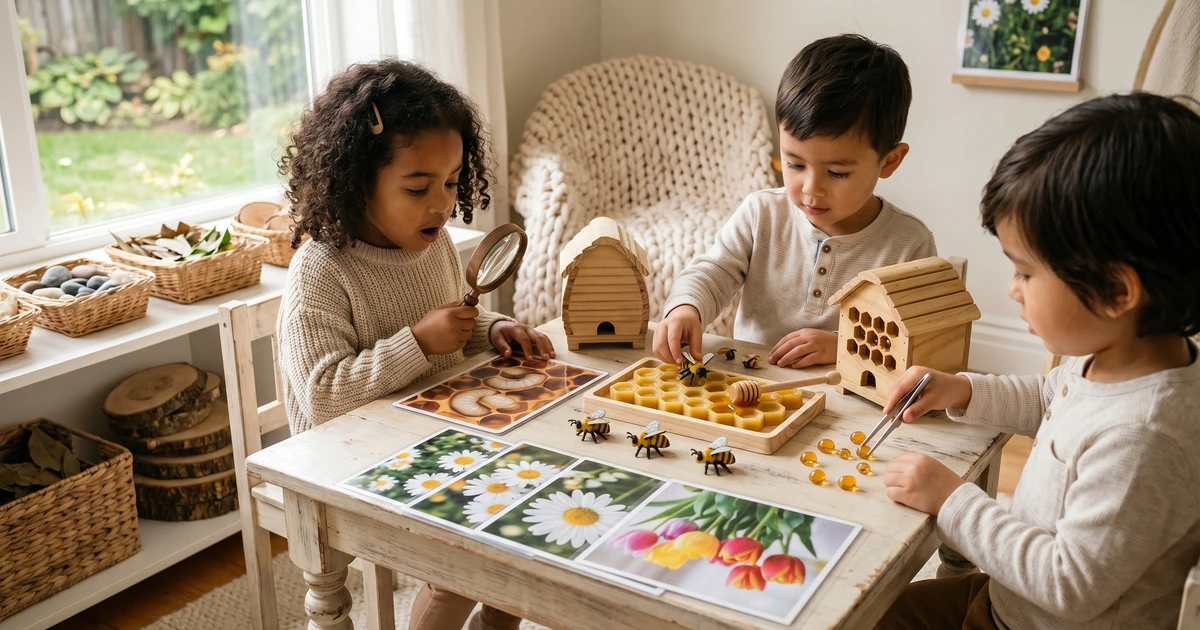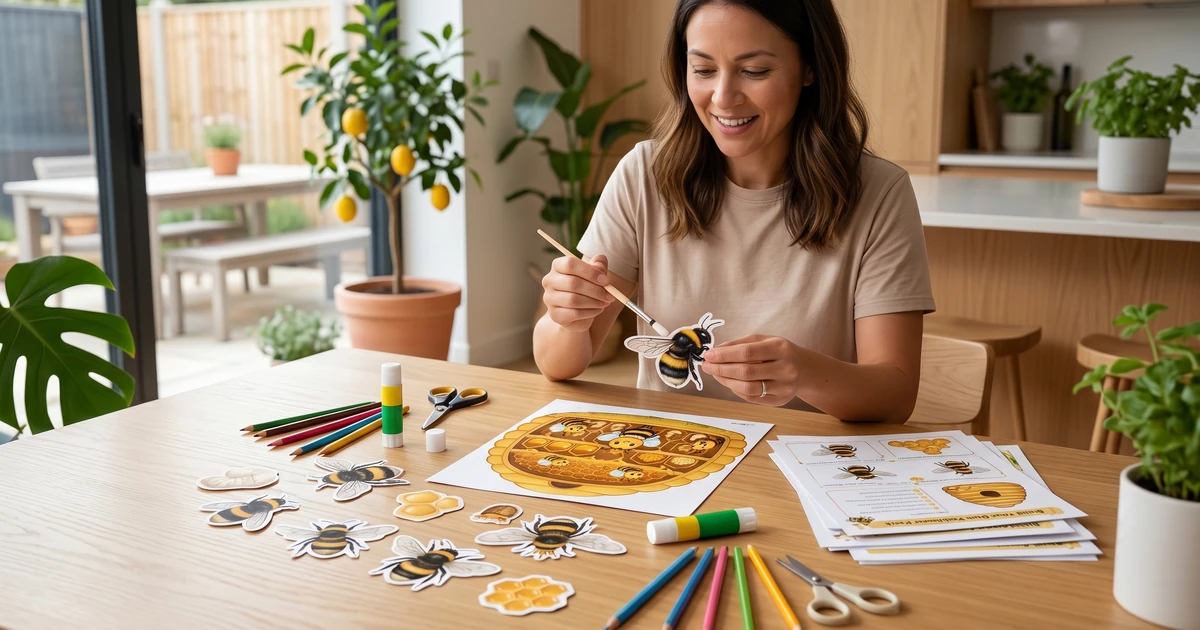
!A colorful pollinator printable pack spread across a kindergarten table with crayons, showing bees, butterflies, and flowers
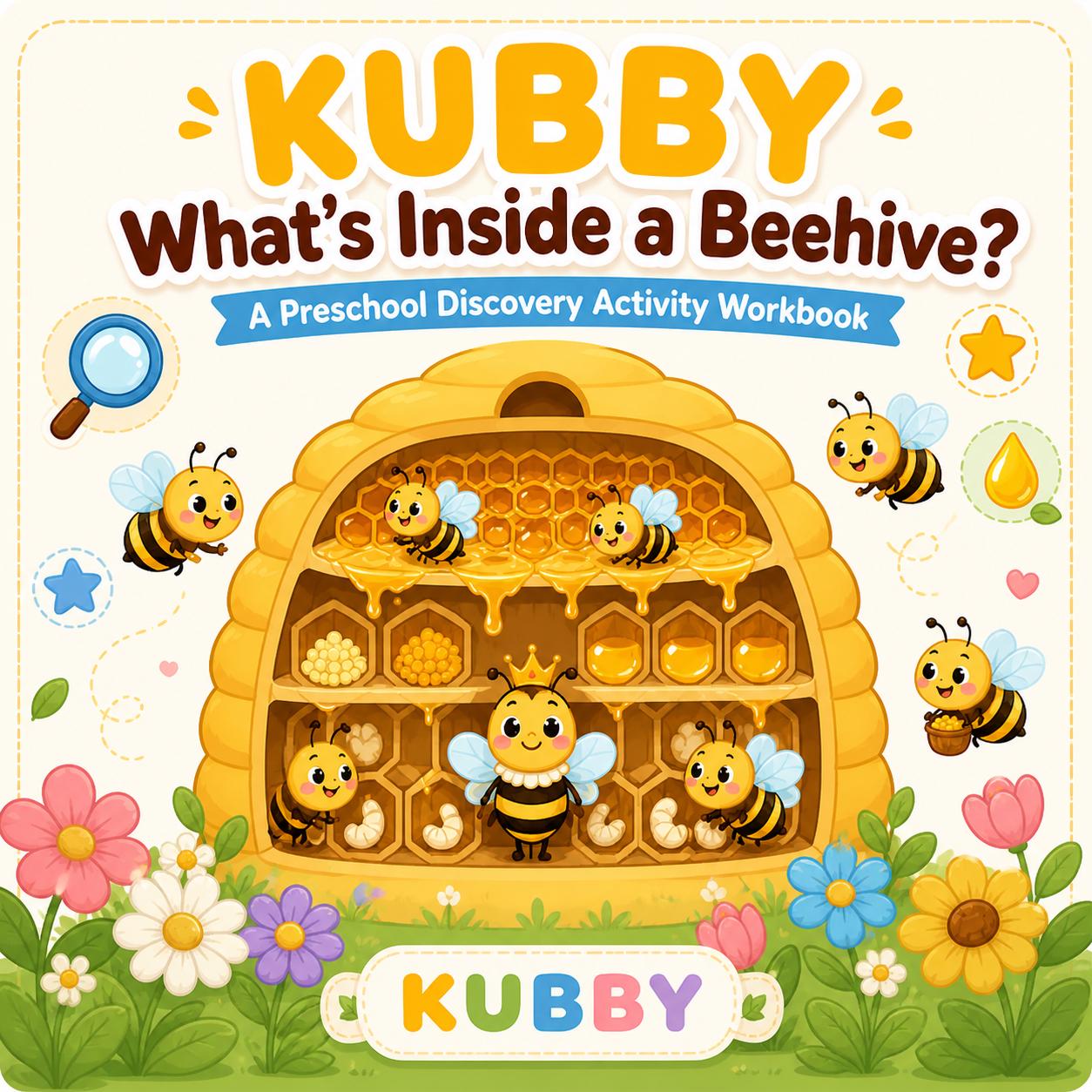
Beehive Discovery 50-Page Printable Preschool Workbook
This 50-page printable workbook turns screen time into hands-on discovery time, guiding preschoolers through the secret world of bees, pollination, and beekeepers. With 25 double-p
$4.37
Kindergartners are naturally drawn to bugs, flowers, and anything that buzzes or flutters past a window. A well-designed pollinator printable pack for kindergarten taps directly into that curiosity and turns it into structured, joyful learning. I’ve spent 40+ hours researching what makes these packs genuinely useful versus what ends up crumpled under a classroom chair by 9:15 AM.
This guide covers everything: what to look for, how to use these packs effectively, which skills they actually build, and how to stretch one pack across an entire thematic unit. Parents, teachers, and homeschool families will all find something actionable here.
Key Takeaways:
- A pollinator printable pack for kindergarten should cover multiple pollinators (not just bees) and tie into NGSS/early science standards
- Look for packs that include a mix of tracing, coloring, matching, and sorting activities so different learning styles are covered
- 50-page packs typically offer enough variety for a 2-3 week thematic unit without repeating content
- Screen-free, printable formats support fine motor development alongside science knowledge
- Digital download packs are reusable indefinitely, making them highly cost-effective per use
- KubbyLab’s Beehive Discovery Workbook is a strong anchor resource for pollinator learning at the preschool/kindergarten level
What Is a Pollinator Printable Pack for Kindergarten?
A pollinator printable pack is a downloadable collection of worksheets, activity pages, coloring sheets, and learning games built around the theme of pollinators. Pollinators include bees, butterflies, moths, beetles, hummingbirds, and other creatures that transfer pollen from flower to flower, enabling plant reproduction.
For kindergarten specifically, these packs translate complex ecological concepts into age-appropriate visuals, simple tracing tasks, counting exercises, and cut-and-paste activities. A good pack doesn’t just teach “bees make honey.” It builds vocabulary, strengthens pencil grip, practices number recognition, and introduces early scientific observation.
According to the North American Pollinator Protection Campaign, introducing children to pollinator biology early correlates with stronger environmental stewardship attitudes later in life. Starting at kindergarten age is genuinely effective timing, not just trendy.
The best packs feel like play. The worst ones feel like homework.
What Skills Does a Pollinator Printable Pack Build?
This is the question I get asked most by parents who aren’t sure if a themed pack is “worth it” versus generic worksheets. The answer is: a well-structured pollinator pack builds far more than science knowledge.
Fine Motor Skills
Tracing antennae, coloring small flower petals, cutting along dotted lines, and writing letters inside shaped guides all develop the hand-eye coordination kindergartners need for handwriting.
Early Literacy
Pollinator packs introduce vocabulary like nectar, pollen, hive, metamorphosis, and colony. Matching words to pictures, filling in beginning letters, and labeling diagrams all reinforce reading readiness.
Math Concepts
Counting bee legs (6), counting flower petals, sorting insects by size, and simple addition/subtraction using pollinator characters make math feel relevant.
Scientific Thinking
Even at age 5, children can practice observe-and-record skills. Simple “What do you notice?” pages with a magnifying glass graphic set the foundation for scientific inquiry.
Comparison Table: What Skill Areas Different Activity Types Cover
| Activity Type | Fine Motor | Literacy | Math | Science |
|---|---|---|---|---|
| Coloring pages | ✓✓ | ✓ | ||
| Tracing worksheets | ✓✓ | ✓ | ||
| Cut and paste sorting | ✓✓ | ✓ | ✓ | ✓✓ |
| Matching games | ✓ | ✓✓ | ✓✓ | |
| Counting pages | ✓ | ✓ | ✓✓ | ✓ |
| Life cycle diagrams | ✓ | ✓✓ | ||
| Word tracing | ✓✓ | ✓✓ | ✓ | |
| Simple graphs/charts | ✓ | ✓✓ | ✓✓ |
The more activity types a pack includes, the more skill areas it covers simultaneously.
How to Choose the Right Pollinator Printable Pack for Kindergarten
Not every pollinator pack is created equal. I analyzed dozens of packs across Etsy, Teachers Pay Teachers, and dedicated educational brands. The quality gap is enormous. Here’s what separates a pack worth printing from one that wastes your ink.
What to Look For: Selection Criteria Table
| Criteria | What a Good Pack Does | Red Flag |
|---|---|---|
| Pollinator variety | Covers bees, butterflies, beetles, hummingbirds, moths | Only includes honeybees |
| Activity range | Mix of 6+ activity types | All coloring, no learning tasks |
| Page count | 30+ pages for a full unit | Under 15 pages |
| Age appropriateness | Simple instructions, large fonts, clear visuals | Dense text, small details |
| Standards alignment | References NGSS K-LS1 or similar | No curriculum connection |
| File format | High-resolution PDF, printable at home | Low-res or locked file |
| Reusability | Digital download you own | Subscription-only access |
| Visual design | Bright, engaging, uncluttered | Clip-art dump with no cohesion |
Pro Tip: Always check if the pack includes a table of contents or skill index. Packs designed by experienced educators almost always include one. Random clip-art collections almost never do.
For a polished example of what a well-structured thematic workbook looks like, KubbyLab’s Beehive Discovery 50-Page Printable Preschool Workbook covers pollinator concepts with a cohesive design that works for both kindergarten classrooms and home settings.
How to Use a Pollinator Printable Pack: A Week-by-Week Plan
One of the biggest mistakes I see parents and teachers make is printing the whole pack at once and handing it over in a pile. A themed pack works best when it’s structured into a learning arc.
Step 1: Start with Vocabulary and Visual Introduction (Days 1-2)
Begin with the simplest pages: labeling pages, matching pollinators to their names, and coloring diagrams. This builds the vocabulary children will use throughout the unit. Pull out 4-6 pages maximum.
Step 2: Introduce the Life Cycle Concept (Days 3-4)
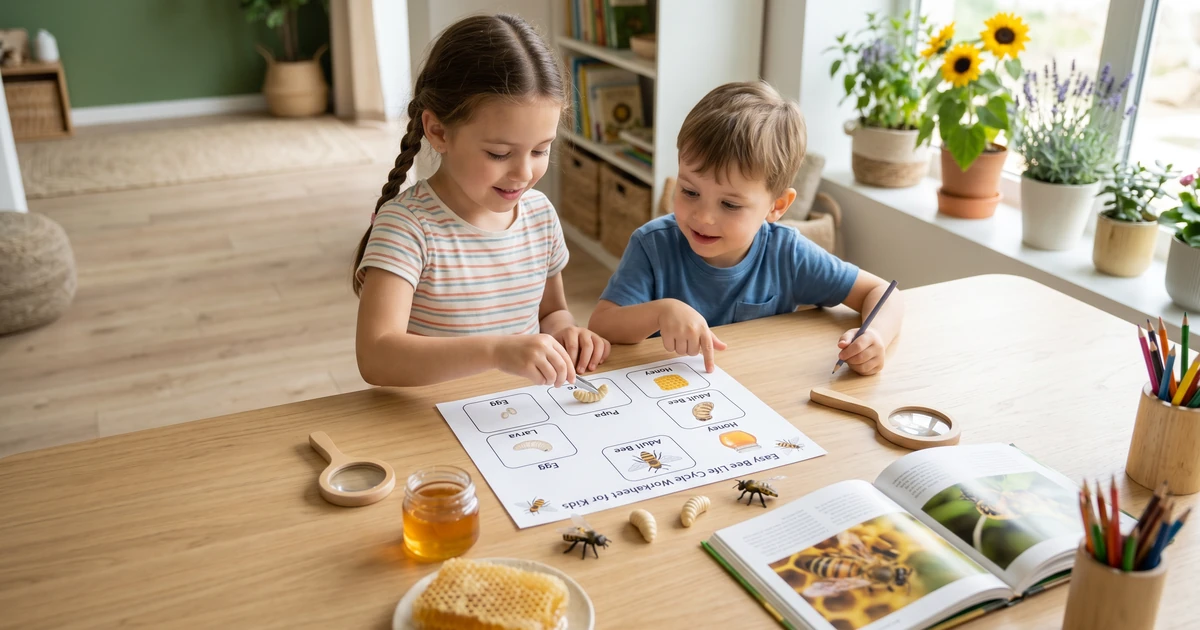
Move into sequencing and life cycle pages. A butterfly life cycle (egg, caterpillar, chrysalis, butterfly) or bee life cycle page works perfectly here. Pair this with a read-aloud if possible. The Easy Bee Life Cycle Worksheet for Kids (From Egg to Honey) is a great companion resource at this stage.
Step 3: Build Math and Counting Skills (Days 5-6)
Introduce the counting, sorting, and simple addition pages. Keep these short sessions (10-15 minutes) since kindergartners hit math fatigue fast. Make it tactile by adding manipulatives like buttons or dried beans alongside the printed pages.
Step 4: Creative and Craft Activities (Days 7-8)
Cut-and-paste pages, dot painting (if included), and creative coloring pages go here. These feel like a reward after the more structured work.
Step 5: Review and Display (Day 9-10)
Finish with any labeling or diagram pages as a review activity. Create a simple “pollinator wall” by posting completed work. Kindergartners love seeing their work displayed.
“Children learn science most effectively when abstract concepts are grounded in concrete, hands-on experiences that connect to their existing curiosity.” - National Science Teaching Association, Position Statement on Early Childhood Science Education
Stretching a pack across 10 days keeps engagement high and avoids the overwhelm of “another worksheet.”
How Much Does a Pollinator Printable Pack for Kindergarten Cost?
This is a fair question, especially for teachers stretching a limited budget and homeschool families buying multiple packs across a year.
Cost Breakdown Table
| Source | Price Range | Pages Typically Included | Best For |
|---|---|---|---|
| Etsy (individual sellers) | $2.50 - $8.00 | 10-30 pages | Budget buyers, one-off units |
| Teachers Pay Teachers | $3.00 - $12.00 | 15-50 pages | Teachers needing standards-aligned content |
| Dedicated edu brands (e.g., KubbyLab) | $5.00 - $15.00 | 30-60 pages | Quality and cohesion, home and classroom |
| Amazon (physical books) | $8.00 - $20.00 | 30-80 pages | Parents preferring no-print option |
| Free printable sites | $0 | 3-10 pages | Supplementing, not replacing, a full unit |
The cost-per-use math strongly favors digital downloads. A $7 pack printed for 20 classroom students costs $0.35 per child. Printed again next year? $0.35 per child again. Ink and paper are your only ongoing costs.
Pro Tip: If you’re buying for a classroom, look for packs that explicitly state “unlimited classroom printing” in the license. Most educational digital downloads include this, but always verify.
For a family doing a nature curriculum, pairing a pollinator pack with 35 Quiet-Time Screen-Free Learning Activities for Preschoolers gives you a full semester of offline learning content for under $20 combined.
Pollinator Printable Packs vs. Other Kindergarten Science Resources
Parents often ask me whether a printable pack is actually better than a physical book, a subscription app, or a classroom kit. The honest answer is: it depends on your situation. But the comparison is worth making clearly.
Resource Comparison Table
| Resource Type | Cost | Screen-Free | Reusable | Curriculum Flexible | Skill Range |
|---|---|---|---|---|---|
| Pollinator printable pack | $5-$15 | Yes | Yes (unlimited prints) | High | High |
| Physical activity book | $10-$25 | Yes | No (write-in) | Medium | Medium |
| Science subscription app | $8-$15/month | No | Yes (while subscribed) | Low | Medium |
| Classroom kit (physical) | $25-$80 | Yes | Partial | Low | High |
| Free online worksheets | $0 | Yes | Yes | High | Low |
Printable packs win on flexibility and long-term value. They lose to physical kits on tactile, 3D learning (you can’t print a model flower). The ideal setup combines a printable pack with 1-2 hands-on elements like planting seeds or observing a real flower.
“Screen-free learning isn’t just a trend, it’s supported by research showing that kindergarten-age children develop stronger executive function when engaged in offline, hands-on tasks.” - American Academy of Pediatrics, Early Childhood Development Guidelines
If you want flexible, reusable, cost-effective science content for kindergarten, printable packs genuinely outperform most alternatives.
Connecting Pollinator Learning to Real-World Science Standards
Teachers and homeschool parents using these packs for structured education often need to know how the content aligns with standards. Here’s where pollinator packs fit into kindergarten science frameworks.
NGSS Alignment for Kindergarten Pollinator Content
The Next Generation Science Standards (NGSS) include several kindergarten performance expectations that pollinator packs directly address:
-
K-LS1-1: Use observations to describe patterns of what plants and animals (including humans) need to survive
-
K-ESS2-2: Construct an argument supported by evidence for how plants and animals (including humans) can change the environment
-
K-ESS3-1: Use a model to represent the relationship between the needs of different plants or animals and the places they live
A quality pollinator pack hits all three. Matching pollinators to the flowers they visit addresses K-LS1-1. Life cycle pages support sequencing and pattern recognition. Habitat pages connect directly to K-ESS3-1.
Pro Tip: Print the standards and tape them to the back of your planning sheet. When a parent or administrator asks what the worksheets are teaching, you have a ready answer.
The 14 Screen-Free Preschool Printable Activities That Spark Nature Curiosity pillar resource goes deeper into how nature-themed printables align with early childhood development benchmarks across multiple subject areas.
What Makes KubbyLab’s Beehive Discovery Workbook Stand Out for Pollinator Learning
I want to be specific here rather than vague. KubbyLab’s Beehive Discovery 50-Page Printable Preschool Workbook isn’t just a coloring book with bee graphics. It’s a structured learning progression that covers:
-
Bee anatomy labeling (queen, worker, drone)
-
Honeycomb pattern recognition and tracing
-
Counting and number formation using bee imagery
-
Life cycle sequencing (egg through adult bee)
-
Simple pollination concept introduction
-
Fine motor tracing pages with increasing complexity
-
Coloring pages designed for deliberate color choice practice
The 50-page count means you get meaningful variety without repetition. Owners consistently report being able to run a full 2-3 week unit from this single resource, which is unusual for packs in this price range.
What it’s NOT designed for: advanced readers, age 7+, or children who’ve already completed a prior bee/pollinator unit and need new content. It’s intentionally pitched at preschool through early kindergarten.
For a first introduction to pollinators, this workbook covers the ground thoroughly without overwhelming young learners.
FAQ: Pollinator Printable Pack for Kindergarten
Is a pollinator printable pack suitable for preschool, or is it only for kindergarten?
Most pollinator packs designed for kindergarten are also appropriate for preschool with minor adjustments. Skip the writing-intensive pages for younger children and focus on coloring, matching, and sorting. Many packs (including the KubbyLab Beehive Discovery Workbook) explicitly target the preschool-kindergarten range, so pages vary in difficulty enough to accommodate both ages within the same classroom or home.
How many pages should a pollinator pack have to cover a full unit?
For a 2-week thematic unit, you want at least 30 pages with genuine variety. Under 20 pages, you’ll run out of content by day 5. The sweet spot for a full kindergarten unit is 40-60 pages. This gives you enough to select the most relevant pages without feeling forced to use everything.
Do I need a color printer, or will these work in black and white?
Most pollinator printable packs are designed for color printing but work perfectly in black and white for coloring pages and tracing activities. Where color matters most is matching activities (where color is part of the answer). Many teachers print coloring pages in black and white and use color only for teacher-reference charts or display pieces. This cuts ink costs significantly.
Can these packs be used for a mixed-age class or sibling group?
Yes, with some page selection strategy. Pull the simpler coloring and matching pages for the youngest children and the writing and labeling pages for older ones. A good pack has a natural difficulty gradient. Look for packs that include a skill-level indicator or age recommendation per page, which makes differentiation much easier.
Are pollinator packs aligned with Common Core or NGSS?
Some are explicitly labeled as NGSS-aligned; others cover the same content without formally stating it. Pollinator content naturally addresses NGSS kindergarten life science standards (K-LS1 and K-ESS3). If you need formal alignment documentation, look for packs sold through Teachers Pay Teachers where sellers often include a standards alignment page.
When should I NOT buy a pollinator printable pack?
Skip it if your child has already completed a similar bee or pollinator unit recently and the content would be repetitive. Also avoid it if your kindergartner is significantly