
Homeschool Mom's Secret: The 'Print and Walk Away' Trick
You planned a calm morning. You had coffee. You had intentions
You planned a calm morning. You had coffee. You had intentions.
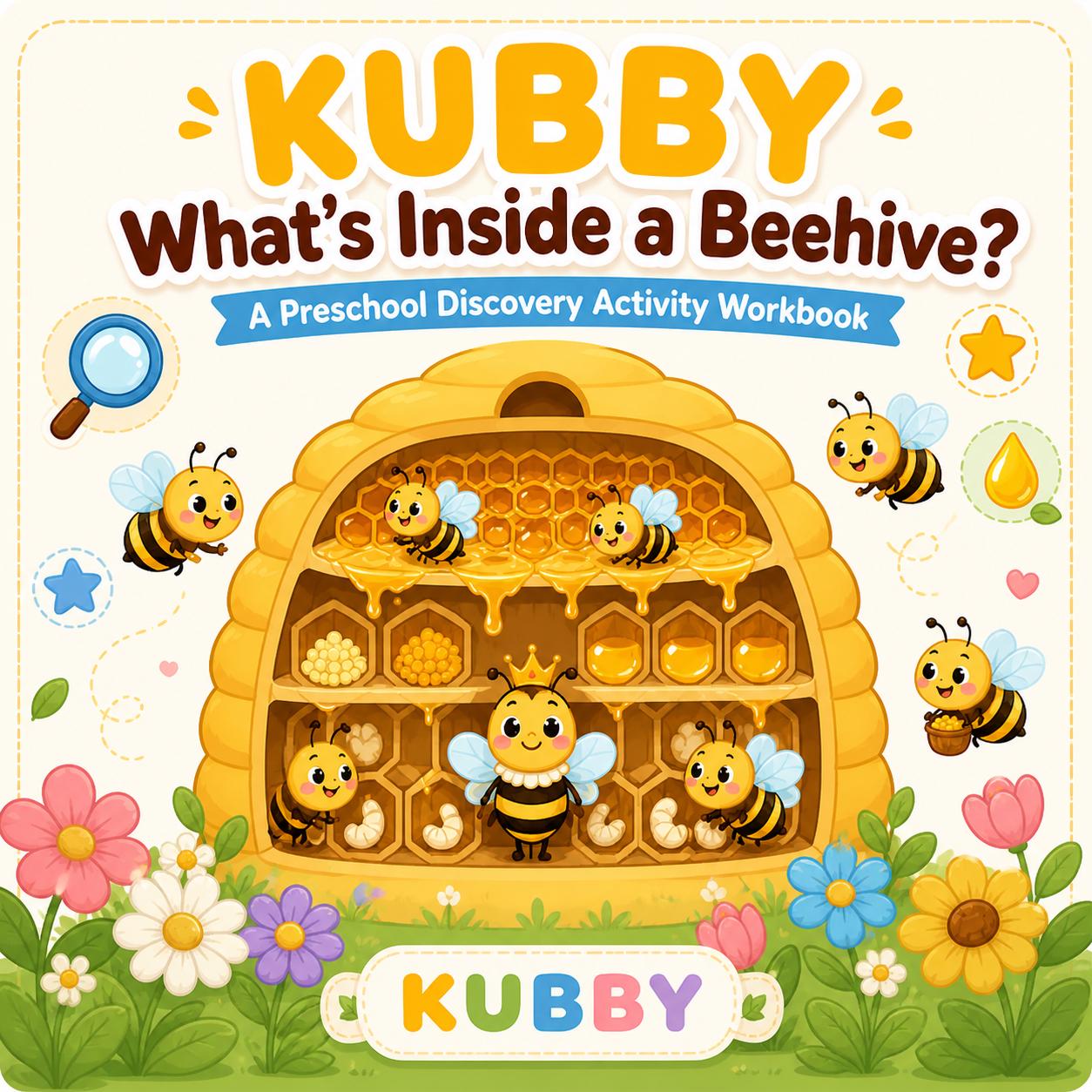
DISCOVERY ACTIVITY WORKBOOKBeehive Discovery 50-Page Printable Preschool Workbook
This 50-page printable workbook turns screen time into hands-on discovery time, guiding preschoolers through the secret world of bees, pollination, and beekeepers. With 25 double-page spreads pairing fascinating facts with immediate activities, it keeps little
Then your 4-year-old asked to watch “just one more” video, and somehow it turned into 45 minutes of tablet time before 9am. Sound familiar?
Finding a print at home preschool curriculum that covers nature topics, holds a preschooler’s attention, and doesn’t require a teaching degree to implement is genuinely hard. Most parents I hear from have tried a mix of Pinterest ideas, random YouTube printables, and half-finished workbooks that looked great in the photo but fell apart in real life.
This page is for you if you’re trying to build something simple, offline, and actually engaging for your 3-5 year old, without spending hours hunting down scattered resources.
!A preschooler sitting at a table coloring a nature-themed worksheet with crayons and leaves nearby
Key Takeaways:
- A print-at-home nature curriculum doesn’t need to be complicated to be effective for preschoolers
- The best printables combine tracing, coloring, observation, and simple science in one activity
- Nature themes (bees, flowers, seasons, insects) are developmentally ideal for ages 3-5
- You can print on standard paper at home, no laminator or special supplies required
- Free and paid options both exist, but cohesive packs tend to work better than piecing together individual sheets
- Screen-free learning builds longer attention spans when introduced consistently
Why Nature Is the Best Subject for Preschool Printables
Preschoolers are concrete thinkers. They learn best through things they can see, touch, and relate to their daily world. A bee buzzing past the window, a flower in the backyard, a pinecone they found on a walk, these are the things that already live in their curiosity.
“Young children learn through direct experience with the natural world. Nature-based learning supports language development, curiosity, and early scientific thinking.” - National Association for the Education of Young Children (NAEYC)
When you pair that natural curiosity with a structured printable, something clicks. The child already cares about the subject. The worksheet becomes a conversation, not a chore.
Nature topics also cover every preschool learning domain in one shot. A simple bee worksheet, for example, can cover fine motor skills (tracing and coloring), early literacy (letter matching), early math (counting honeycomb cells), and basic science (understanding life cycles). That’s a lot of ground from one printed page.
The best print-at-home nature content works because it connects to something the child has already seen in the real world.
What a Strong Print-at-Home Preschool Curriculum Actually Includes
A lot of parents download a free printable, print it once, and then wonder why their kid lost interest after 10 minutes. The issue usually isn’t the child. It’s that isolated worksheets don’t build momentum.
A proper print at home preschool curriculum, even a lightweight one, should include:
- A clear theme that threads multiple activities together (like pollinators, seasons, or insects)
- Skill variety across at least 3 developmental areas (fine motor, literacy, and numeracy)
- Progressive difficulty so earlier pages build toward harder ones
- Open-ended activities alongside structured ones (coloring, drawing, observation prompts)
- Parent guidance or simple instructions so you know what to do without researching separately
Without those five elements, you’re just printing random pages. That’s fine occasionally, but it won’t build a routine.
Pro Tip: Print 3-5 pages at a time and put them in a simple folder or clipboard. When learning feels tangible and “official,” preschoolers take it more seriously. You don’t need a fancy binder.
How to Build a Weekly Nature Curriculum at Home (Without Overwhelm)
You don’t need a structured school timetable. Preschool learning works best in short bursts of 10-20 minutes, repeated a few times a week. Here’s a simple framework I’d recommend:
Step 1: Pick One Nature Theme Per Week
Bees, butterflies, frogs, seasons, trees, flowers. One theme. That’s it. When everything connects, the child’s brain builds associations rather than isolated facts.
Step 2: Print 4-6 Pages That Cover Different Skills
Look for pages that include at least one of each:
-
A tracing or handwriting activity
-
A coloring or art page
-
A counting or sorting activity
-
A simple “what do you know?” prompt or observation page
Step 3: Do One Activity Per Sitting (Not All at Once)
One page in the morning, one after lunch. Keep sessions short. Ending while the child still wants more is the secret to them asking to do it again tomorrow.
Step 4: Go Outside and Connect It to Real Life
After a bee worksheet, look for bees in the garden. After a leaf activity, collect some leaves. The printable becomes a launching pad, not the whole experience.
Step 5: Review and Celebrate at the End of the Week
Flip back through the week’s pages together. Ask what they remember. This is the step most parents skip, and it’s the one that actually cements learning.
Structure doesn’t have to mean rigid. Five simple steps and one theme per week is all it takes.
Comparing Your Options for Print-at-Home Nature Content
Not all printable resources are created equal. Here’s a straightforward comparison of the main routes parents take:
| Option | Cost | Cohesion | Ease of Use | Best For |
|---|---|---|---|---|
| Free Pinterest printables | $0 | Low (scattered) | Medium | One-off activities |
| Teachers Pay Teachers packs | $3-$12 per pack | Medium | Medium | Specific skill focus |
| Subscription curriculum sites | $10-$20/month | High | Low (overwhelming) | Structured homeschoolers |
| Curated printable workbooks | $5-$15 one-time | High | High | Busy parents wanting simplicity |
| DIY from scratch | $0 + time | Depends | Low | Parents with time to plan |
For most parents who aren’t formally homeschooling but want consistent offline learning, a curated printable workbook around a specific nature theme hits the sweet spot. You pay once, print at home, and have a week or two of ready-to-go content.
What to Look for When Choosing Nature Printables for Preschoolers
| Criteria | What to Look For | Red Flag |
|---|---|---|
| Age appropriateness | Designed specifically for ages 3-5 | Generic “K-2” labeling |
| Skill variety | Mix of tracing, coloring, counting | All one type (e.g., only coloring) |
| Theme cohesion | Activities connect to one topic | Random mix of unrelated subjects |
| Print-friendliness | Works in black and white | Requires color ink for basic use |
| Parent instructions | Simple guide included | No explanation of how to use it |
| File format | Instant PDF download | Requires an app or special software |
“Children who engage with nature-themed curricula in early childhood show stronger environmental awareness and science vocabulary by kindergarten entry.” - National Wildlife Federation Education Resources
Printables that work on a home printer in black and white, with minimal prep, are the ones you’ll actually use.
A Quick Word on the KubbyLab Beehive Discovery Workbook
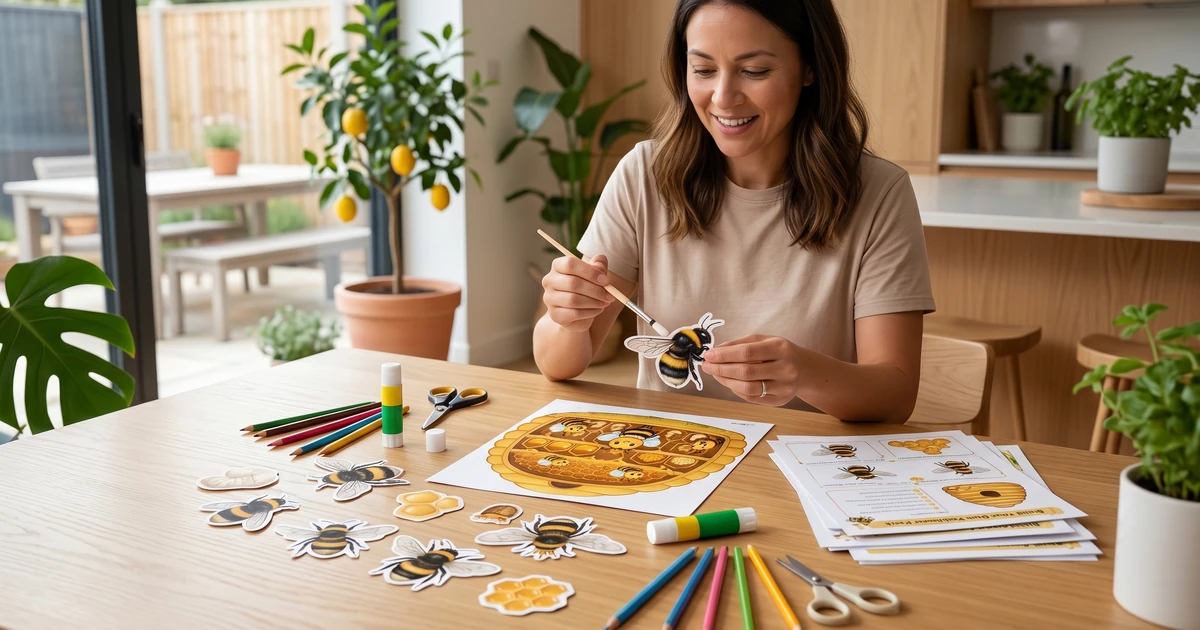
I want to mention this briefly because it fits the criteria above and I’ve looked closely at what it includes. The Beehive Discovery 50-Page Printable Preschool Workbook from KubbyLab is built around a single nature theme (bees and pollinators) and covers tracing, coloring, counting, matching, and early science across 50 pages. It’s designed to print at home, works in black and white, and doesn’t require any special supplies.
It’s one option among several worth considering. The point is that a cohesive, theme-based pack tends to beat a stack of unrelated free downloads when it comes to maintaining a child’s interest over multiple sessions.
Frequently Asked Questions
Can I really build a preschool curriculum just from printables?
Yes, for ages 3-5 you absolutely can. Preschool doesn’t require formal teaching. What it requires is repeated exposure to concepts through play, conversation, and hands-on activities. A well-designed set of printables, combined with outdoor time and conversation, covers the core developmental goals for this age group. Many parents successfully use print-at-home resources as their primary learning structure alongside everyday life.
How many pages should a preschooler do per day?
One to three pages per sitting is plenty. The goal isn’t to get through a workbook quickly. It’s to engage deeply with one activity at a time. A 10-15 minute focused session is more valuable than 45 minutes of rushed page-turning. If your child asks for more, great. If they’re done after one page, respect that and try again later.
Do I need a color printer for nature printables?
Not necessarily. The best-designed printables work in black and white, which keeps printing costs low. Your child can add color with their own crayons or colored pencils, which actually makes the activity more interactive. Before downloading or purchasing, check whether the preview shows the activities working without color backgrounds.
What age is print-at-home nature curriculum appropriate for?
Most nature-themed preschool printables are designed for ages 3-5. Within that range, a 3-year-old will do better with coloring, tracing simple lines, and sorting activities. A 5-year-old can handle letter matching, number writing, and simple sequencing. Look for packs that include a range of difficulty so you can pick the right page for your child’s current level.
How do I keep my preschooler interested in learning activities at home?
Consistency and short sessions are the biggest factors. Keep it to 10-20 minutes, do it at the same time each day (after breakfast works well for most families), and always stop before they’re bored. Pairing the activity with something physical afterward, like going outside to look for what they just learned about, dramatically increases engagement and retention.
Ready to Go Deeper?
Everything I’ve covered here is the starting point. For a full breakdown of screen-free nature activities you can print and use this week, including specific activity ideas organized by skill and age, read the complete guide:
14 Screen-Free Preschool Printable Activities That Spark Nature Curiosity
You might also find these helpful as you build out your nature curriculum:
-
Easy Bee Life Cycle Worksheet for Kids (From Egg to Honey), a great single-topic starting point
-
35 Quiet-Time Screen Free Learning Activities for Preschoolers, ideas that go beyond printables
-
Build Your Own Pollinator Printable Pack for Kindergarten Science, for when you’re ready to expand the theme
Take the Next Step!
Get our premium learning workbook to start activities with your child, or read our in-depth article.
Recommended Resources & Workbooks
Pair this guide with our hands-on, ready-to-print learning resources.
 Digital Bundle
Learn to Read Program: Levels 1-3
170 sequenced phonics lessons across 199 pages, from first letter sounds to fluent long-vowel reading.
 Digital Learning Bundle
Preschool Learning Bundle
260+ printable worksheets for tracing, ABCs, numbers, shapes, sight words, and kindergarten prep.
 Digital Learning Bundle
Play-Based Learning Bundle for Ages 3-6
230+ play-based learning activities with pretend play, reading, early math, creative arts, and bonus flashcards.
Related Guides & Articles
Explore more of our detailed guides and activities.
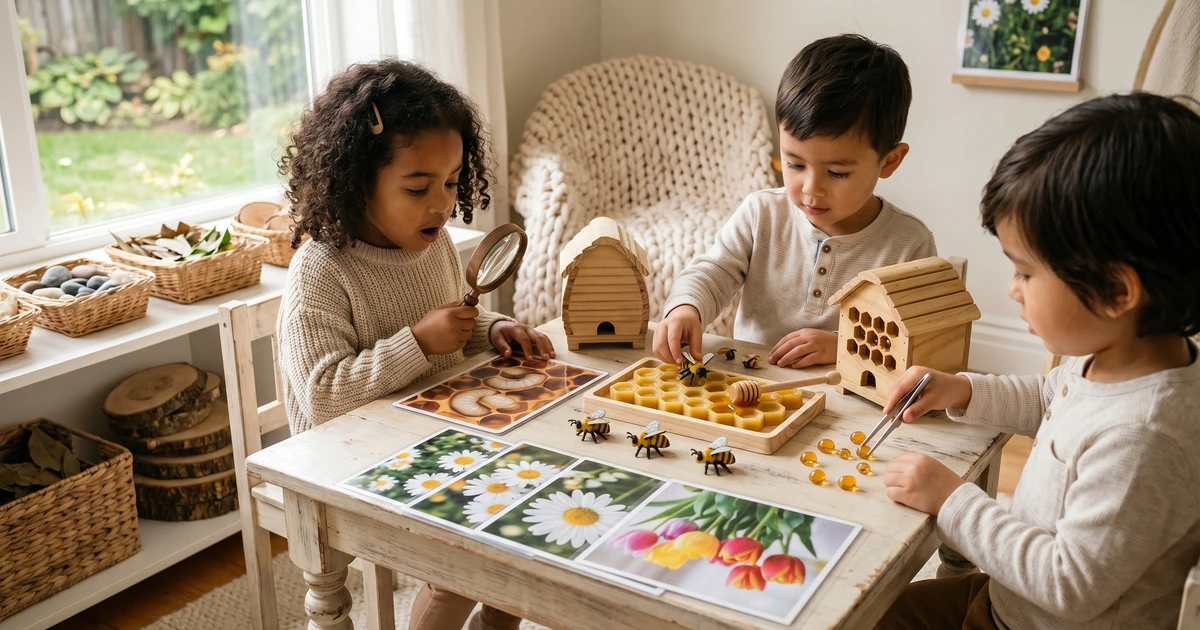
14 Screen-Free Preschool Printable Activities That Spark
Discover 14 captivating screen-free preschool printable activities that introduce nature and science. Perfect for quiet time, travel, and curious 3...
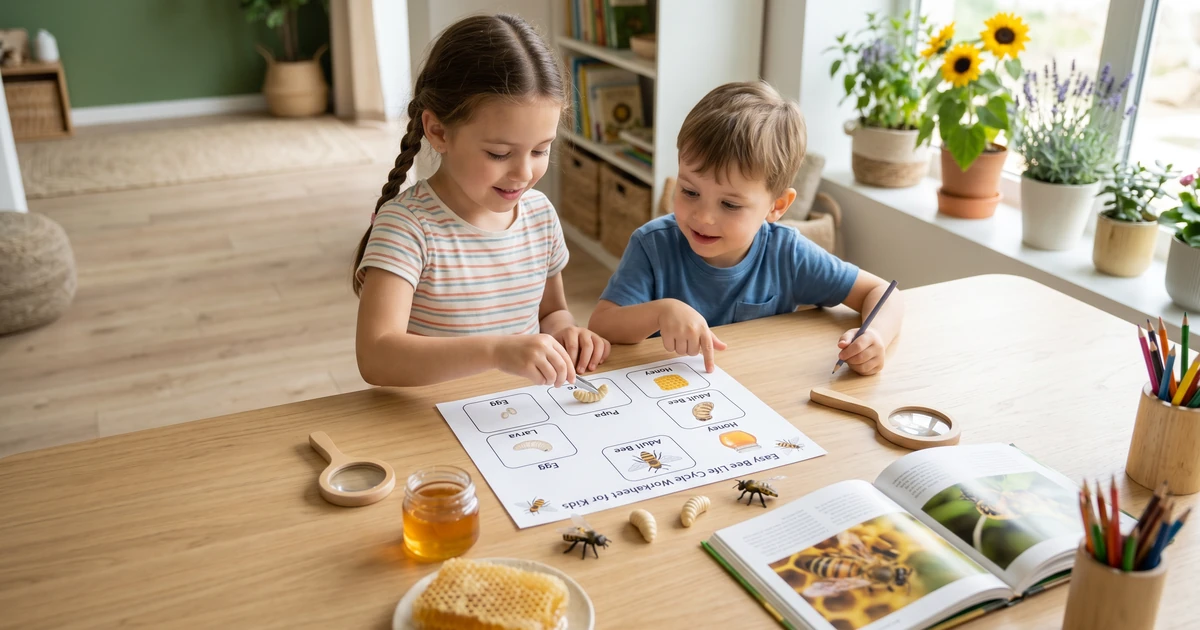
Easy Bee Life Cycle Worksheet for Kids From Egg to Honey
Teaching young children about nature is one of the most rewarding things you can do as a parent or educator. And the bee life cycle worksheet for kids
Build Your Own Pollinator Printable Pack for Kindergarten
Kindergartners are naturally drawn to bugs, flowers, and anything that buzzes or flutters past a window. A well-designed pollinator printable pack ...
35 Quiet-Time Screen Free Learning Activities for Preschoolers
Screen time for preschoolers is one of the most debated topics in early childhood education right now. Parents ask me constantly: "How do I keep my...