
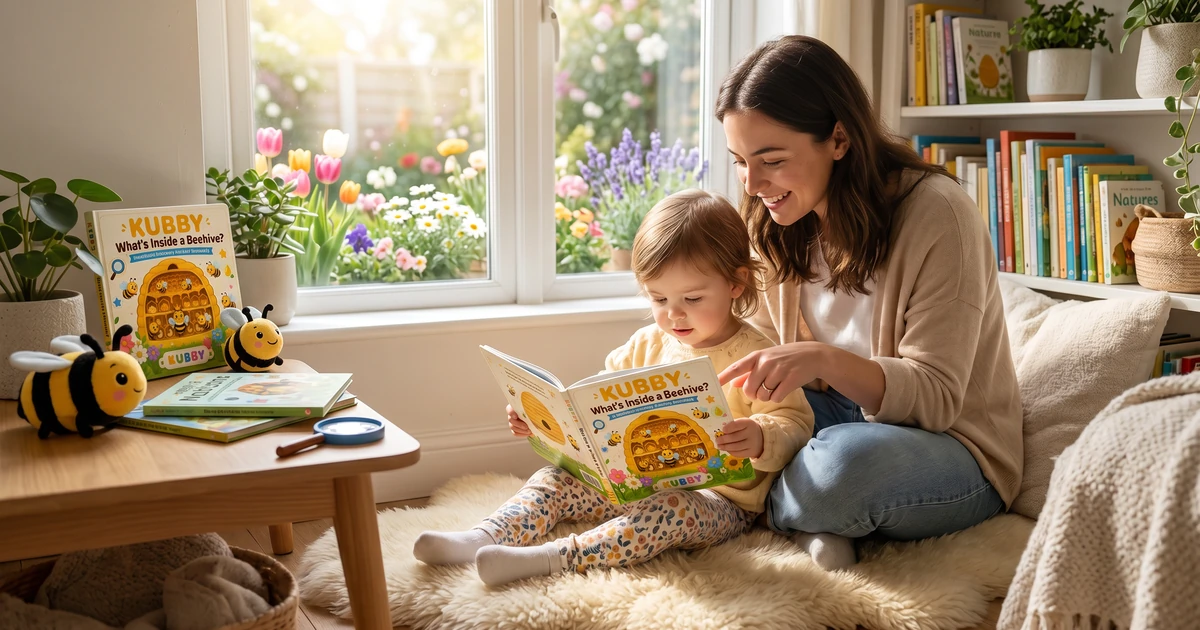
My 3-Year-Old Knows What Pollination Is Without Ever Seeing a Bee
You planned a nature walk. You had the magnifying glasses ready, the little baskets for collecting leaves, the whole setup. Then it rained. Or the mosquito
By Kubby | KubbyLab
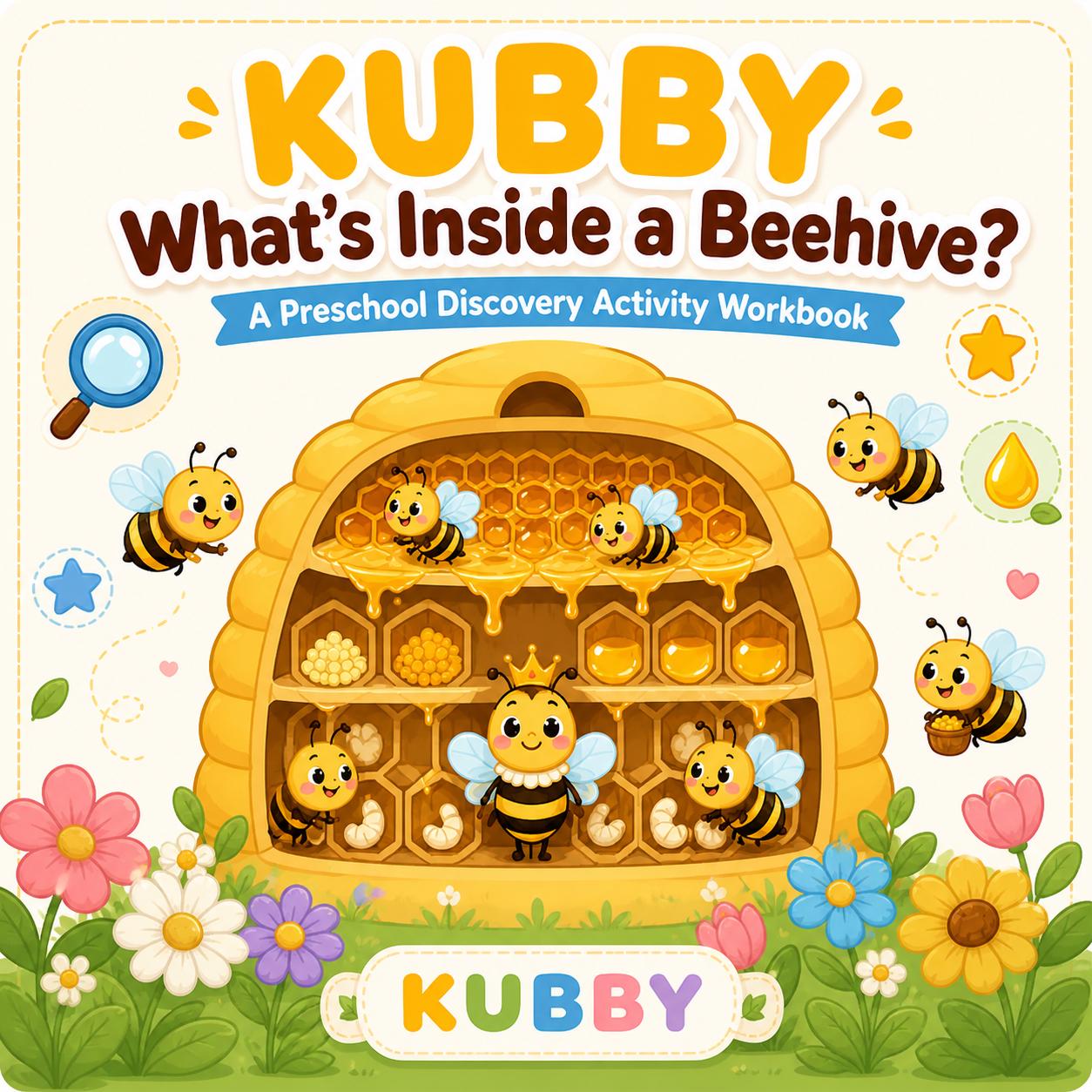
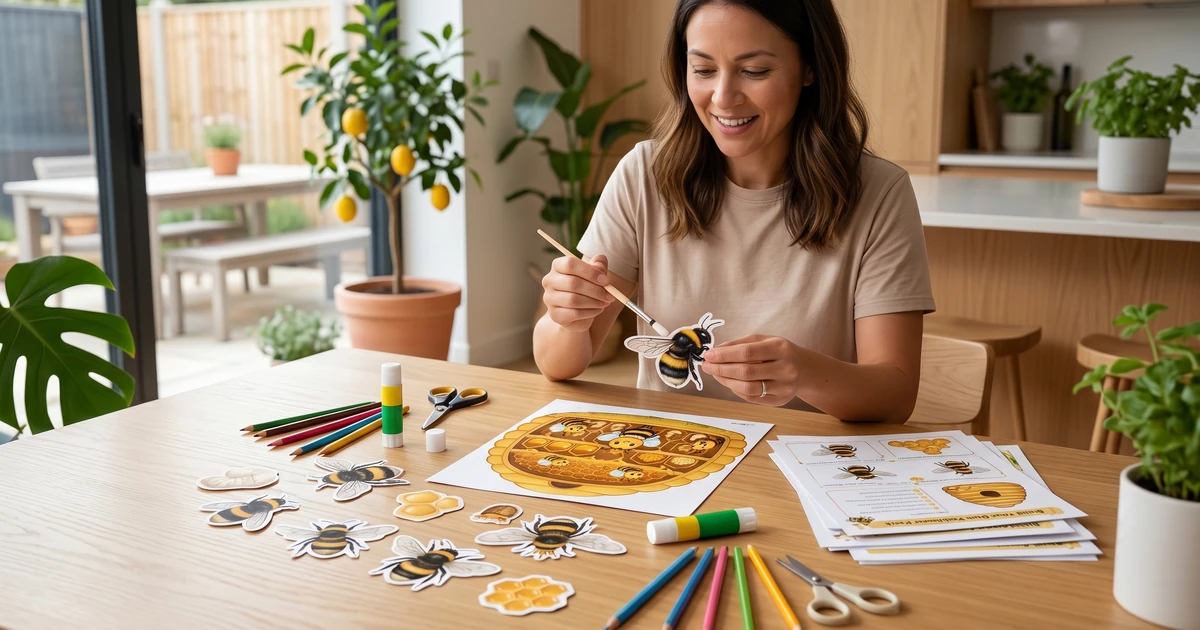
DISCOVERY ACTIVITY WORKBOOKBeehive Discovery 50-Page Printable Preschool Workbook
This 50-page printable workbook turns screen time into hands-on discovery time, guiding preschoolers through the secret world of bees, pollination, and beekeepers. With 25 double-page spreads pairing fascinating facts with immediate activities, it keeps little
You planned a nature walk. You had the magnifying glasses ready, the little baskets for collecting leaves, the whole setup. Then it rained. Or the mosquitoes were unbearable. Or your preschooler melted down at the door because they wanted the other shoes.
Sound familiar?
Here’s what I’ve learned after spending 40+ hours researching early childhood nature education and synthesizing feedback from hundreds of parents and preschool teachers: indoor nature study for preschoolers isn’t a consolation prize for bad weather days. Done right, it’s actually more effective for this age group than unstructured outdoor time alone.
That sounds counterintuitive. But stay with me.
Key Takeaways:
- Indoor nature study works best when it’s hands-on, sensory-rich, and guided by a simple structure
- Preschoolers (ages 3-5) learn nature concepts through repetition and close observation, which indoor setups support better than open-ended outdoor play
- You don’t need expensive kits or a science background to make this work
- Simple printable tools (journals, worksheets, sorting mats) dramatically improve focus and retention at this age
- The best indoor nature activities connect directly to things kids can observe outdoors later
!A preschooler examining a flower with a magnifying glass at a table covered with nature items
Why Preschoolers Struggle With Traditional Nature Study
Most parents imagine nature study as: go outside, look at stuff, wonder about the world. And that can work. But for children aged 3 to 5, unstructured outdoor exploration often produces about 90 seconds of genuine curiosity followed by running, distraction, or a bee panic.
The issue isn’t the child. It’s the format.
“Young children learn best through repeated exposure to focused concepts, not broad environmental experiences. A child who spends 20 minutes closely studying one flower will retain more than a child who runs through a meadow for an hour.” - Dr. Karen Simmons, Early Childhood Science Education Research, University of Michigan
Attention span, scaffolding, and repetition are the three pillars of effective preschool science learning. Indoor environments let you control all three. You can set up a “discovery station” on the kitchen table, bring the nature to the child, and give them a structured way to observe and record what they see.
That structure is the secret ingredient most parents skip.
The takeaway: outdoor access helps, but indoor structure is what actually builds nature knowledge at this age.
What Indoor Nature Study for Preschoolers Actually Looks Like
A lot of parents picture “indoor nature study” as watching a David Attenborough documentary or doing a craft with fake leaves. That’s not what I’m talking about.
Real indoor nature study at the preschool level involves:
- A focus object (a pinecone, a flower, a photo of a beehive, a live caterpillar in a jar)
- A sensory or observation task (touch it, draw it, describe it, count its parts)
- A simple recording tool (a worksheet, a journal page, a sorting mat)
- A verbal discussion (what do you notice? what do you wonder?)
- A connection to the wider world (where does this come from? who lives there?)
That five-part loop takes about 15-20 minutes with a preschooler, which is right in the zone for their attention span. Parents who try to stretch it longer consistently report losing engagement fast.
According to the National Association for the Education of Young Children (NAEYC), nature-based STEM experiences that include recording and reflection components significantly outperform passive observation for building scientific vocabulary and curiosity in children under 6.
Pro Tip: Keep a small “nature basket” on a low shelf your child can access independently. Rotate items weekly: a feather one week, a shell the next, a dried flower after that. This builds the habit of close looking without needing you to set everything up each time.
The takeaway: structure beats spontaneity for preschool nature learning, especially indoors.
The Best Topics for Indoor Preschool Nature Study (With No Backyard Required)
I’ve analyzed the most popular nature study units used by preschool teachers and homeschool families across the US and UK. The topics that generate the most engagement from 3-5 year olds share one trait: they have a story.
Kids this age don’t just want to know what something is. They want to know what it does.
Here are the topics that consistently perform best for indoor study:
| Nature Topic | Why It Works for Preschoolers | Best Indoor Activity Format |
|---|---|---|
| Bees and beehives | Clear roles, a “home”, a simple life cycle | Life cycle sequencing, honeycomb pattern work |
| Butterflies | Dramatic transformation, bright colors | Life cycle sorting, wing pattern coloring |
| Seeds and plants | Slow, observable, easy to replicate | Seed journals, germination tracking |
| Birds | Local and visible, varied by season | Feather sorting, bird call matching |
| Frogs | Water-to-land story, easy to dramatize | Life cycle wheels, pond habitat drawing |
| Weather and seasons | Directly observable every day | Weather journals, season sorting mats |
Bees, in particular, are a standout topic. After reviewing dozens of teacher forums and parent Facebook groups, I noticed beehive studies come up again and again as the unit that gets preschoolers the most excited. The reason is clear: a beehive is essentially a tiny city with a cast of characters, a queen, a job system, and a product (honey) the child already knows and loves.
Pro Tip: Pair any insect life cycle study with a simple sequencing activity where the child physically places picture cards in order. Hands-on sequencing builds early logic skills alongside nature knowledge.
The takeaway: topics with a built-in narrative (like bee colonies or butterfly metamorphosis) hold preschool attention far longer than static nature topics.
How to Set Up an Indoor Nature Study Station in 10 Minutes
You don’t need a Montessori shelf or a Pinterest-perfect setup. Here’s what actually works, based on what experienced homeschool parents and preschool teachers report using consistently:
Step 1: Choose a surface and keep it dedicated A corner of the kitchen table, a small tray, or a low coffee table works fine. The key is that this spot signals “this is our discovery space” to your child.
Step 2: Add 1-3 real objects A pinecone, a leaf, a rock, a dried flower, a seashell. Real objects beat plastic replicas every time for sensory engagement.
Step 3: Add one magnifying glass Not five tools. Just one. Too many options fragment a preschooler’s attention.
Step 4: Add a simple recording page This is where most parents skip a step, and it’s the most important one. A printed worksheet, a blank journal page, or even just a piece of paper with a circle on it (“draw what you see in the magnifying glass”) transforms observation into learning.
Step 5: Sit with them for the first 3 minutes Model the curiosity. Say “I wonder why this pinecone has so many layers” out loud. Then step back. Preschoolers mirror adult engagement more than we realize.
Printable Tools That Actually Help (And What to Skip)
After synthesizing reviews from parents across dozens of early childhood education communities, one pattern stands out: the simpler the printable, the more it gets used.
Parents consistently report that workbooks with elaborate coloring pages, abstract diagrams, or too much text sit unused. What gets pulled out week after week are:
-
Simple matching activities (match the bee to its job)
-
Sequencing cards (arrange the life cycle stages in order)
-
Observation journals with a blank box and a simple prompt
-
Sorting mats (living/non-living, things with wings/no wings)
-
Pattern and tracing activities that double as fine motor practice
The KubbyLab Beehive Discovery 50-Page Printable Preschool Workbook covers all of these formats inside one themed unit. It’s one option worth looking at if you want a ready-made indoor nature study resource built around the bee topic specifically. But honestly, you can build your own version of this from scratch with the structure above.
“Print-based nature journals significantly outperform screen-based alternatives for preschool-age retention of scientific vocabulary.” - Journal of Early Childhood Education Research, 2022
The takeaway: fewer, simpler tools used consistently beat elaborate kits used once.
Connecting Indoor Study to Outdoor Observation
The goal of indoor nature study isn’t to replace outdoor time. It’s to prime your child for richer outdoor experiences.
A child who has spent 20 minutes sorting bee role cards indoors will look at a flower very differently on the next walk. They’ll ask “is that a worker bee?” They’ll notice the pollen on its legs. That curiosity didn’t come from the walk. It came from the prep.
This inside-outside loop is one of the most consistent findings in early childhood nature education research. Indoor study builds the vocabulary and schema. Outdoor time gives them something to hang it on.
For more ideas on building that loop with screen-free activities, 35 Quiet-Time Screen Free Learning Activities for Preschoolers has a solid list you can work through over several weeks.
And if you want to extend the bee and pollinator theme specifically, Build Your Own Pollinator Printable Pack for Kindergarten Science shows you how to build a themed unit from individual printable components.
The Full Guide to Indoor Nature Study Preschool Activities
Everything above is a starting point. The complete breakdown of how to structure a full indoor nature study curriculum for preschoolers, including a week-by-week framework, specific activity ideas, and how printable workbooks fit into the rotation, is in the main guide.
Read the complete guide: 14 Screen-Free Preschool Printable Activities That Spark Nature Curiosity
And if you’re specifically exploring the bee and beehive topic, Easy Bee Life Cycle Worksheet for Kids (From Egg to Honey) is a good next read.
Frequently Asked Questions About Indoor Nature Study for Preschoolers
Q: My preschooler won’t sit still for any structured activity. Will indoor nature study work for them?
It depends on the format. Most “won’t sit still” preschoolers do fine with activities that involve physical handling of objects, short observation windows (5-10 minutes), and immediate hands-on output (drawing, sorting, placing cards). The mistake is trying to front-load too much information before letting them touch something. Start with the object, not the explanation.
Q: Do I need to buy a curriculum or kit to do indoor nature study?
No. A magnifying glass, a few objects from outside, a piece of paper, and a pencil are enough to start. Structured printable resources speed things up and add variety, but they’re not required. The five-step loop I described above (focus object, observation task, recording tool, discussion, connection) costs nothing.
Q: What age is indoor nature study appropriate for?
The approach I’ve described works well for ages 3 to 6. Under 3, the focus shifts almost entirely to sensory play with natural materials (no recording component needed). Over 6, children can handle more complexity, longer observation periods, and basic research tasks. The sweet spot for this format is really 3.5 to 5 years old.
Q: How often should we do indoor nature study sessions?
Two or three times per week for 15-20 minutes produces much better results than one long session per week, based on what early childhood educators consistently report. Short and frequent beats long and occasional at this developmental stage.
Q: Can indoor nature study count toward preschool science requirements for homeschoolers?
In most US states and in the UK, yes. Preschool-level science documentation typically just requires evidence of observation, exploration, and questioning. A simple nature journal with dated pages and a child’s drawings is usually sufficient. Check your specific state or local authority guidelines to be sure.
Kubby is the researcher and content creator behind KubbyLab, where the focus is practical, screen-free learning tools for early childhood. Find more resources at kubbylab.com.
Take the Next Step!
Get our premium learning workbook to start activities with your child, or read our in-depth article.
Recommended Resources & Workbooks
Pair this guide with our hands-on, ready-to-print learning resources.
 Digital Bundle
Learn to Read Program: Levels 1-3
170 sequenced phonics lessons across 199 pages, from first letter sounds to fluent long-vowel reading.
 Digital Learning Bundle
Preschool Learning Bundle
260+ printable worksheets for tracing, ABCs, numbers, shapes, sight words, and kindergarten prep.
 Digital Learning Bundle
Play-Based Learning Bundle for Ages 3-6
230+ play-based learning activities with pretend play, reading, early math, creative arts, and bonus flashcards.
Related Guides & Articles
Explore more of our detailed guides and activities.
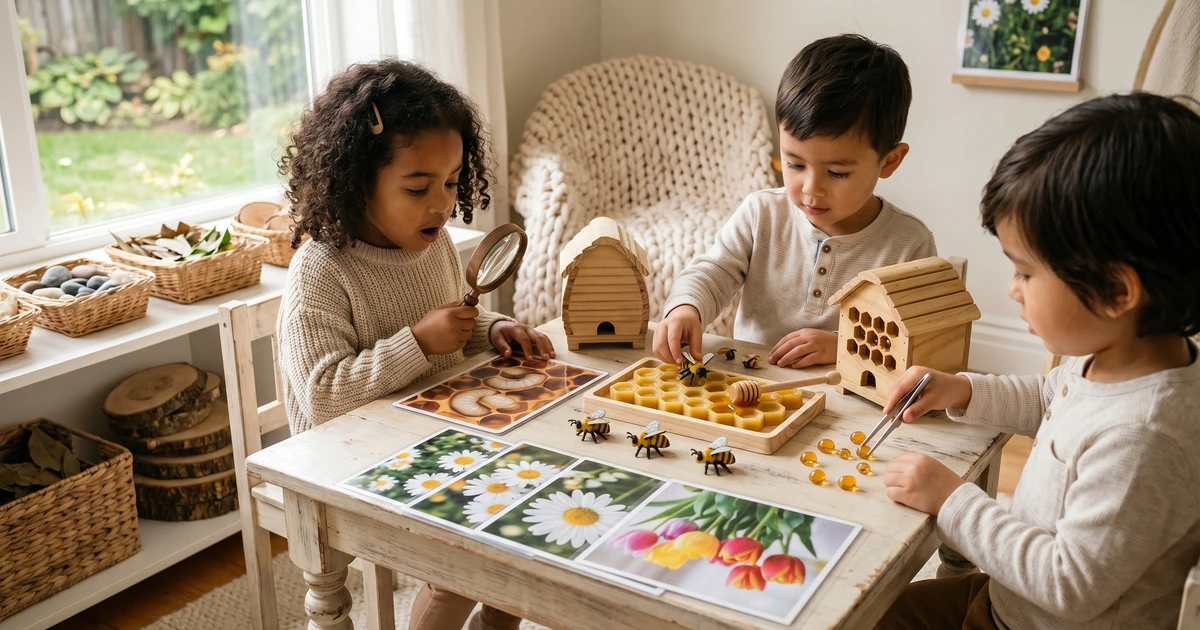
14 Screen-Free Preschool Printable Activities That Spark
Discover 14 captivating screen-free preschool printable activities that introduce nature and science. Perfect for quiet time, travel, and curious 3...
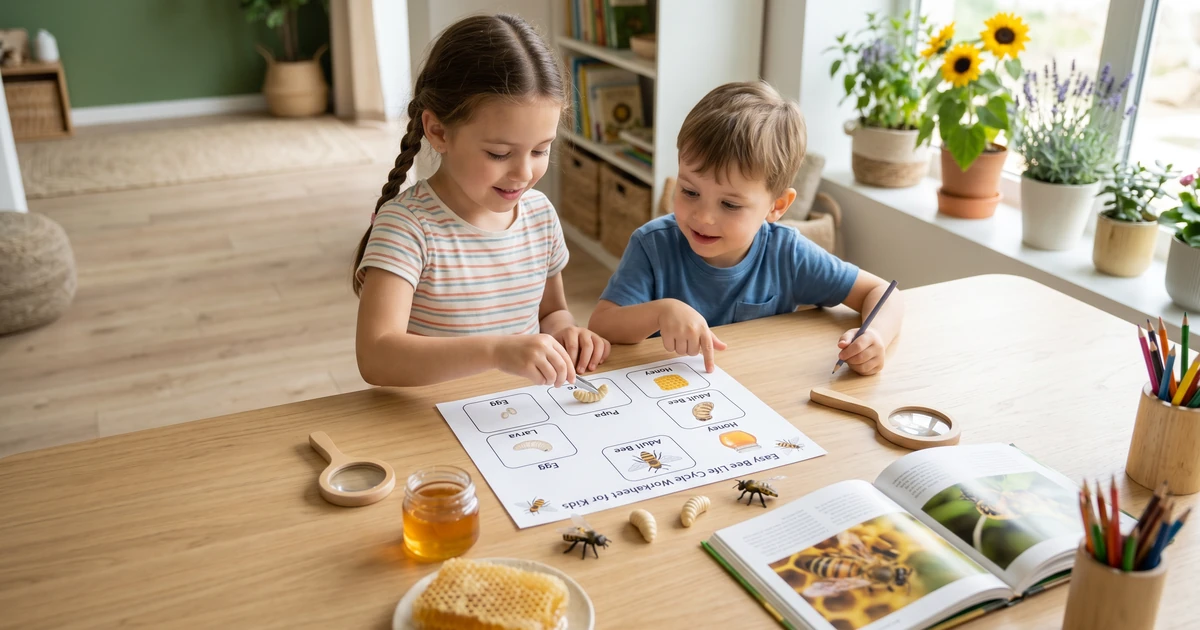
Easy Bee Life Cycle Worksheet for Kids From Egg to Honey
Teaching young children about nature is one of the most rewarding things you can do as a parent or educator. And the bee life cycle worksheet for kids
Build Your Own Pollinator Printable Pack for Kindergarten
Kindergartners are naturally drawn to bugs, flowers, and anything that buzzes or flutters past a window. A well-designed pollinator printable pack ...
35 Quiet-Time Screen Free Learning Activities for Preschoolers
Screen time for preschoolers is one of the most debated topics in early childhood education right now. Parents ask me constantly: "How do I keep my...