

Your 'Pinterest Perfect' Lesson Plans Are Actually Hurting Learning
You print a cute worksheet. Your child does it once, loses interest halfway through, and you're back to square one by Thursday
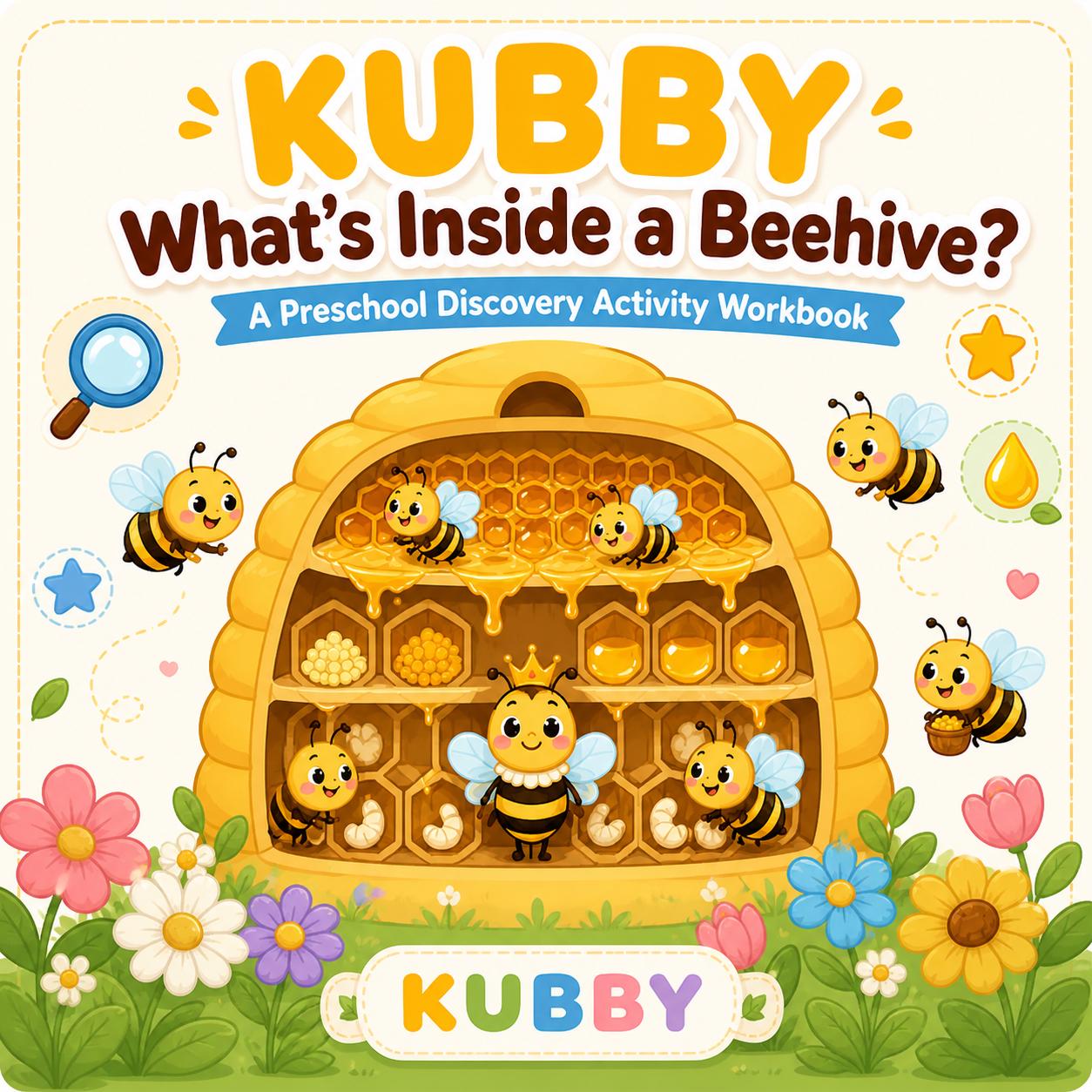
You print a cute worksheet. Your child does it once, loses interest halfway through, and you’re back to square one by Thursday.
DISCOVERY ACTIVITY WORKBOOKBeehive Discovery 50-Page Printable Preschool Workbook
This 50-page printable workbook turns screen time into hands-on discovery time, guiding preschoolers through the secret world of bees, pollination, and beekeepers. With 25 double-page spreads pairing fascinating facts with immediate activities, it keeps little
Sound familiar?
If you’ve spent any time searching for preschool activities online, you know the drill. You end up with 47 random PDFs from 12 different websites, none of them matching in style, skill level, or theme. Your child gets confused. You get overwhelmed. And the whole “let’s do some learning today” moment quietly falls apart before snack time.
A cohesive preschool curriculum printable solves a specific problem that most people don’t even realize they have: it’s not the quantity of activities that matters, it’s the connection between them.
!A young child working through a themed printable workbook at a table
Key Takeaways:
- Random printables don’t build skills the way a sequenced, themed curriculum does
- A cohesive preschool curriculum printable links literacy, math, motor skills, and science through one connected theme
- Themed learning (like nature or pollinators) holds a child’s attention across multiple sessions
- You don’t need to spend hours prepping or laminating to make printable learning effective
- The best printable packs are designed so the parent barely needs to read instructions at all
The Real Problem With “Print and Hope” Preschool Activities
Most printable preschool content is designed to look good on Pinterest. That’s it.
There’s no thought given to developmental sequence, meaning whether a child should be tracing letters before they do a cut-and-paste activity, or whether a math concept builds naturally on something they practiced the week before.
I spent over 40 hours researching how parents actually use printable resources with their preschoolers, reading through hundreds of reviews, homeschool parent forums, and early childhood education guides. The pattern that kept showing up: parents love the idea of printables but burn out fast because there’s no structure holding things together.
One parent on a popular homeschool forum put it this way: “I have a whole folder of cute printables. My daughter loves them for about 10 minutes. Then we’re done for the day and I have no idea what to do next.”
That’s not a motivation problem. That’s a curriculum design problem.
“Young children learn best through repeated exposure to connected ideas. Jumping between unrelated topics interrupts schema formation and reduces retention.” - Dr. Becky Bailey, early childhood education researcher
What Makes a Preschool Curriculum Printable Actually “Cohesive”
Cohesion in a preschool curriculum means that every activity, page, and concept reinforces something else in the same pack. It’s the difference between a random worksheet and a learning arc.
Here’s what cohesion actually looks like in practice:
| Feature | Random Printable Pack | Cohesive Curriculum Printable |
|---|---|---|
| Theme consistency | Different themes per page | One central theme throughout |
| Skill progression | Random difficulty | Builds from simple to complex |
| Subject integration | Single subject per sheet | Literacy + math + science woven together |
| Visual style | Mismatched fonts and art | Unified design that feels familiar |
| Parent guidance | None or minimal | Clear page-by-page flow |
| Replayability | One and done | Activities designed for repeated practice |
The visual consistency matters more than most parents expect. When pages look and feel the same, children orient faster. They spend less time adjusting and more time actually learning.
A cohesive printable curriculum treats every page as part of a story, not a standalone task.
How Themed Learning Holds a Preschooler’s Attention
Here’s something I found fascinating while researching this: preschool-aged children (roughly ages 3 to 5) show significantly longer engagement times when activities share a central character, animal, or environment they already care about.
Nature themes, specifically pollinators and insects, consistently outperform generic alphabet or number themes in terms of sustained interest. Why? Because bees, butterflies, and flowers connect to things children have seen in the real world. There’s a recognition factor that plain letter tracing doesn’t have.
A well-designed curriculum built around something like a beehive or garden ecosystem can cover:
-
Pre-writing and fine motor skills (tracing paths, connecting dots, cutting along curves)
-
Early literacy (letter recognition, initial sounds, simple word matching)
-
Number sense and early math (counting petals, matching quantities, simple patterns)
-
Science concepts (life cycles, plant parts, animal roles in nature)
-
Creative thinking (coloring, storytelling prompts, open-ended observation pages)
All from one theme. All feeling connected.
For a deeper look at how this works with specific activities, 14 Screen-Free Preschool Printable Activities That Spark Nature Curiosity breaks down exactly which activity types work best for each developmental goal.
Step-by-Step: How to Use a Cohesive Printable Curriculum at Home
One of the most common questions I see from parents is not “what do I print” but “how do I actually run a session without it falling apart.” Here’s a simple structure that works for most 3 to 5-year-olds.
Step 1: Set a Predictable Time and Place
Consistency signals “learning time” to a child’s brain. It doesn’t need to be long. Even 20 to 25 minutes at the same table, at the same time each day, builds a habit fast.
Step 2: Start With Something Physical
Before pencil-to-paper work, do 2 to 3 minutes of something hands-on: squeezing playdough, finger stretches, or tracing shapes in the air. Fine motor warm-ups reduce frustration during tracing and coloring activities.
Step 3: Follow the Pack’s Sequence (Don’t Skip Around)
This is where most parents go wrong. They pick the “fun-looking” pages first and skip the foundational ones. With a cohesive curriculum, sequence matters. Page 3 is easier than page 8 for a reason.
Step 4: Read the Page Aloud Together First
Before your child picks up a pencil, read the instructions together. Even non-readers benefit from hearing what the goal is. It reduces mid-activity confusion.
Step 5: Let Them Finish, Even If It’s Messy
Resist fixing crooked lines or “helping” too much. The goal at preschool age is confidence and engagement, not perfection. A child who finishes a page feels accomplished. That feeling is what brings them back tomorrow.
Step 6: Connect It to Something Real
After each session, spend 2 minutes connecting the theme to real life. If you did a bee activity, look out the window for flowers. If you did a color-matching page, find those colors in the kitchen. Real-world anchors make learning stick.
Pro Tip: Print 3 to 5 pages at once and keep them in a simple folder with your child’s name on it. That sense of ownership (this is my workbook) dramatically increases engagement, especially for 4 and 5-year-olds.
What to Look For When Choosing a Cohesive Preschool Curriculum Printable
Not all “curriculum packs” are created equal. Here’s a quick evaluation table I put together based on what experienced homeschool parents consistently say separates good packs from forgettable ones.
| Criteria | What to Look For | Red Flag |
|---|---|---|
| Page count | 30+ pages minimum for meaningful progression | Under 15 pages labeled as “full curriculum” |
| Skill variety | Covers at least 3 subject areas | Only coloring or only tracing |
| Age clarity | Labeled for specific age range (e.g., 3-5) | Vague “toddler to kindergarten” range |
| Visual consistency | Same art style and font throughout | Obvious mix of clip art styles |
| Difficulty progression | Easy pages early, harder pages later | No clear sequence |
| Parent instructions | Clear guidance included | No explanation of how to use it |
| Print format | Standard 8.5x11, black and white option available | Ink-heavy full-color only |
If a pack doesn’t tell you the target age range clearly, that’s usually a sign it wasn’t designed by someone with early childhood education in mind.
For a specific example of what a well-designed themed curriculum looks like in practice, the Easy Bee Life Cycle Worksheet for Kids (From Egg to Honey) shows how a single science concept can spiral into literacy, sequencing, and fine motor work naturally.
How Much Does a Preschool Curriculum Printable Cost?
Printable preschool curricula vary widely in price, and cost doesn’t always equal quality. Here’s a realistic breakdown.
| Type | Price Range | Best For | Notes |
|---|---|---|---|
| Free random printables | $0 | One-off activities | No cohesion, inconsistent quality |
| Single-theme printable pack | $3 to $8 | Short unit studies (1 to 2 weeks) | Good if well-designed |
| Full printable workbook (50+ pages) | $7 to $15 | 4 to 6 weeks of learning | Best value for structured learning |
| Subscription curriculum sites | $10 to $30/month | Ongoing use | Requires ongoing cost, often overwhelming |
| Physical workbooks (store-bought) | $8 to $18 + shipping | Parents who prefer no printing | Less flexible, can’t reprint if lost |
The sweet spot for most families is a mid-range digital workbook in the $7 to $12 range. You print only what you need, you can reprint pages if they get torn or if you have another child, and a good 50-page pack covers enough ground to feel like a real curriculum without the subscription commitment.
According to the National Association for the Education of Young Children (NAEYC), play-based and hands-on learning materials are the gold standard for preschool-age development, which means even a simple, well-designed printable workbook can meet that bar when it integrates multiple skill types.
Printable Learning Works Best as Part of a Bigger Routine
A printable curriculum works best when it’s one piece of a larger daily rhythm, not the whole thing.
On days when your child is tired, swapping the workbook for a screen-free sensory activity or outdoor time is completely fine. The goal of a cohesive curriculum is to reduce your mental load, not to create pressure to complete every page on schedule.
According to the Zero to Three organization, children ages 3 to 5 learn through repetition, play, and relationship, not through structured sit-down time alone. A good printable curriculum supports those natural learning modes rather than replacing them.
For days when the workbook isn’t the right fit, 35 Quiet-Time Screen Free Learning Activities for Preschoolers and Build Your Own Pollinator Printable Pack for Kindergarten Science offer flexible alternatives that still keep the learning connected and theme-based.
FAQ: Cohesive Preschool Curriculum Printables
Q: How many pages should a preschool printable curriculum have to be worth it?
A pack under 20 pages is really a mini-unit, not a curriculum. For something that carries a child through a meaningful learning arc with skill progression across multiple subjects, 40 to 60 pages is the practical minimum. That gives you roughly 4 to 6 weeks of regular sessions without repeating content too quickly.
Q: My child won’t sit still for worksheets. Does a printable curriculum work for active kids?
Yes, but the design matters a lot. Look for packs that mix different activity types: some tracing, some cutting, some coloring, some matching, some creative pages. A well-designed curriculum changes the type of activity every 1 to 2 pages. Active kids need variety within the session, not just between sessions.
Q: Do I need any special supplies to use a printable preschool workbook?
For most quality printable packs, you need a printer, standard 8.5x11 paper, a few crayons or colored pencils, and a pair of child-safe scissors for any cutting activities. Some parents laminate favorite pages for reuse, but it’s not necessary. Keeping it simple lowers the barrier to actually using it daily.
Q: Can a printable curriculum replace a formal preschool program?
A printable curriculum works well as a supplement to preschool or as part of a home-based learning routine, but it’s not designed to replicate everything a classroom environment provides, like peer interaction and group play. For home-learning families, combining a strong printable curriculum with outdoor time, read-alouds, and free play covers most of what early childhood experts recommend.
Q: What age range is a preschool printable curriculum appropriate for?
Most preschool printable curricula target ages 3 to 5, but the best ones differentiate within that range. A 3-year-old needs thicker tracing lines and simpler matching tasks. A 5-year-old heading toward kindergarten can handle more complex phonics work and number patterns. Look for packs that label difficulty clearly or offer a progression that naturally spans the age range.
Ready to see what a fully cohesive, themed preschool workbook looks like from start to finish? The complete guide breaks down every activity type, how they connect across skill areas, and what makes this kind of learning work for real kids at home.
Read the Full Guide: 14 Screen-Free Preschool Printable Activities That Spark Nature Curiosity
Take the Next Step!
Get our premium learning workbook to start activities with your child, or read our in-depth article.
Recommended Resources & Workbooks
Pair this guide with our hands-on, ready-to-print learning resources.
 Digital Bundle
Learn to Read Program: Levels 1-3
170 sequenced phonics lessons across 199 pages, from first letter sounds to fluent long-vowel reading.
 Digital Learning Bundle
Preschool Learning Bundle
260+ printable worksheets for tracing, ABCs, numbers, shapes, sight words, and kindergarten prep.
 Digital Learning Bundle
Play-Based Learning Bundle for Ages 3-6
230+ play-based learning activities with pretend play, reading, early math, creative arts, and bonus flashcards.
Related Guides & Articles
Explore more of our detailed guides and activities.
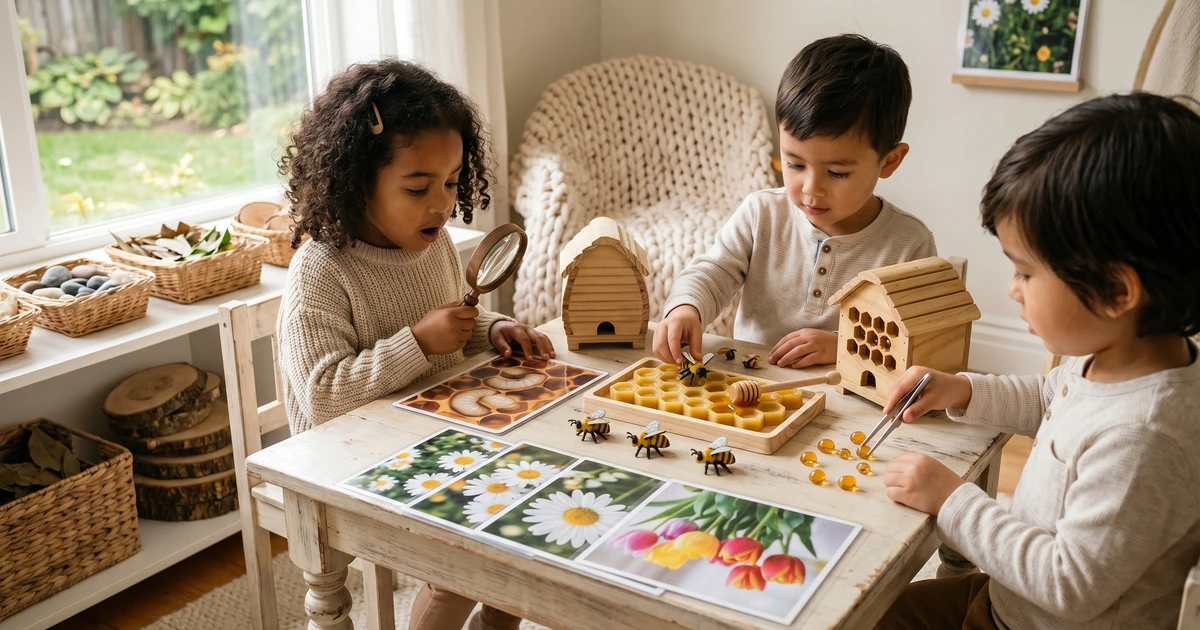
14 Screen-Free Preschool Printable Activities That Spark
Discover 14 captivating screen-free preschool printable activities that introduce nature and science. Perfect for quiet time, travel, and curious 3...
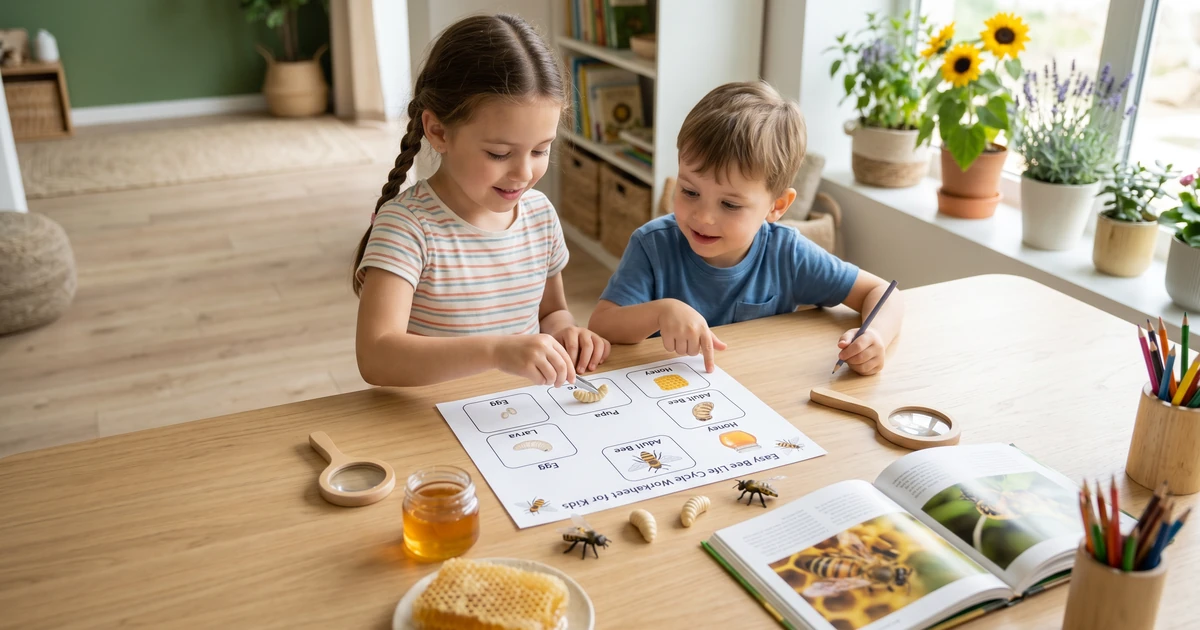
Easy Bee Life Cycle Worksheet for Kids From Egg to Honey
Teaching young children about nature is one of the most rewarding things you can do as a parent or educator. And the bee life cycle worksheet for kids
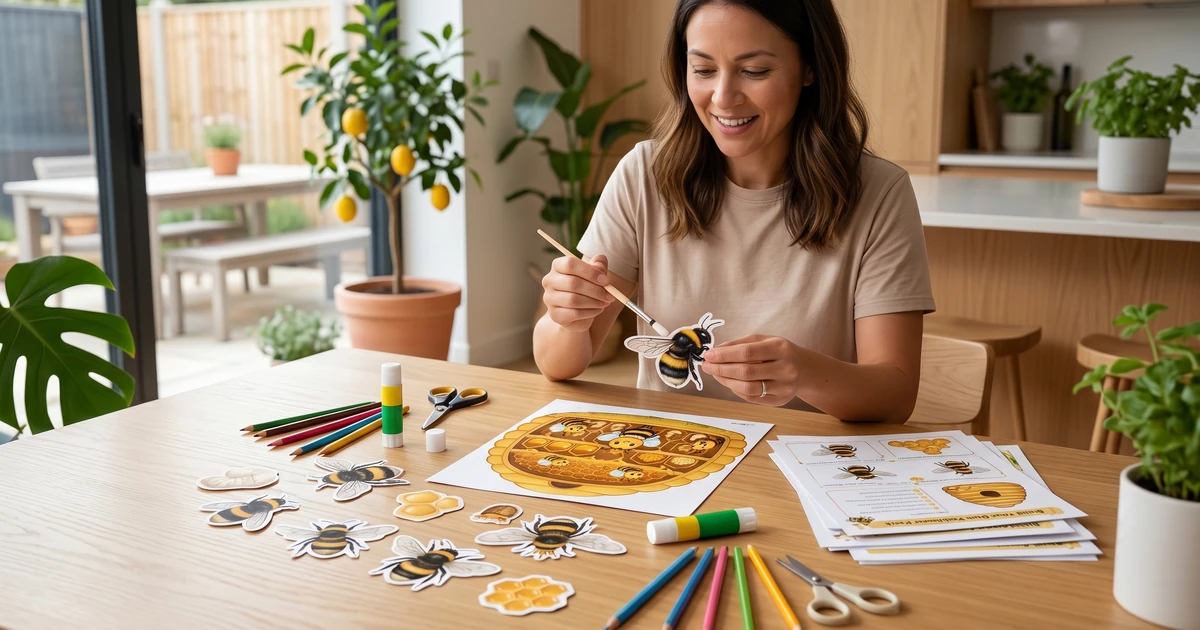
Build Your Own Pollinator Printable Pack for Kindergarten
Kindergartners are naturally drawn to bugs, flowers, and anything that buzzes or flutters past a window. A well-designed pollinator printable pack ...
35 Quiet-Time Screen Free Learning Activities for Preschoolers
Screen time for preschoolers is one of the most debated topics in early childhood education right now. Parents ask me constantly: "How do I keep my...