
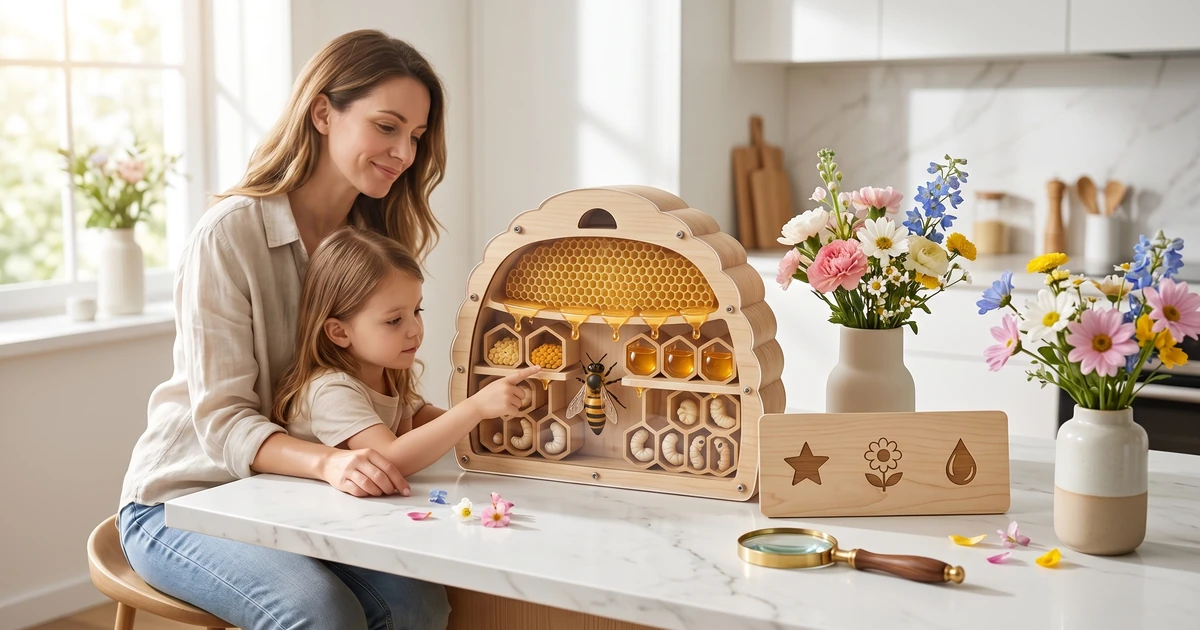
The 'Lazy Mom' Guide to Teaching Kindergarten Science Without
You set up a "simple" volcano experiment. Five minutes later, there's baking soda on the ceiling, vinegar soaking into the carpet, and your preschooler is
You set up a “simple” volcano experiment. Five minutes later, there’s baking soda on the ceiling, vinegar soaking into the carpet, and your preschooler is crying because the red food dye is now permanently on their shirt. You’re not sure whether to laugh or just quietly move to a new house.
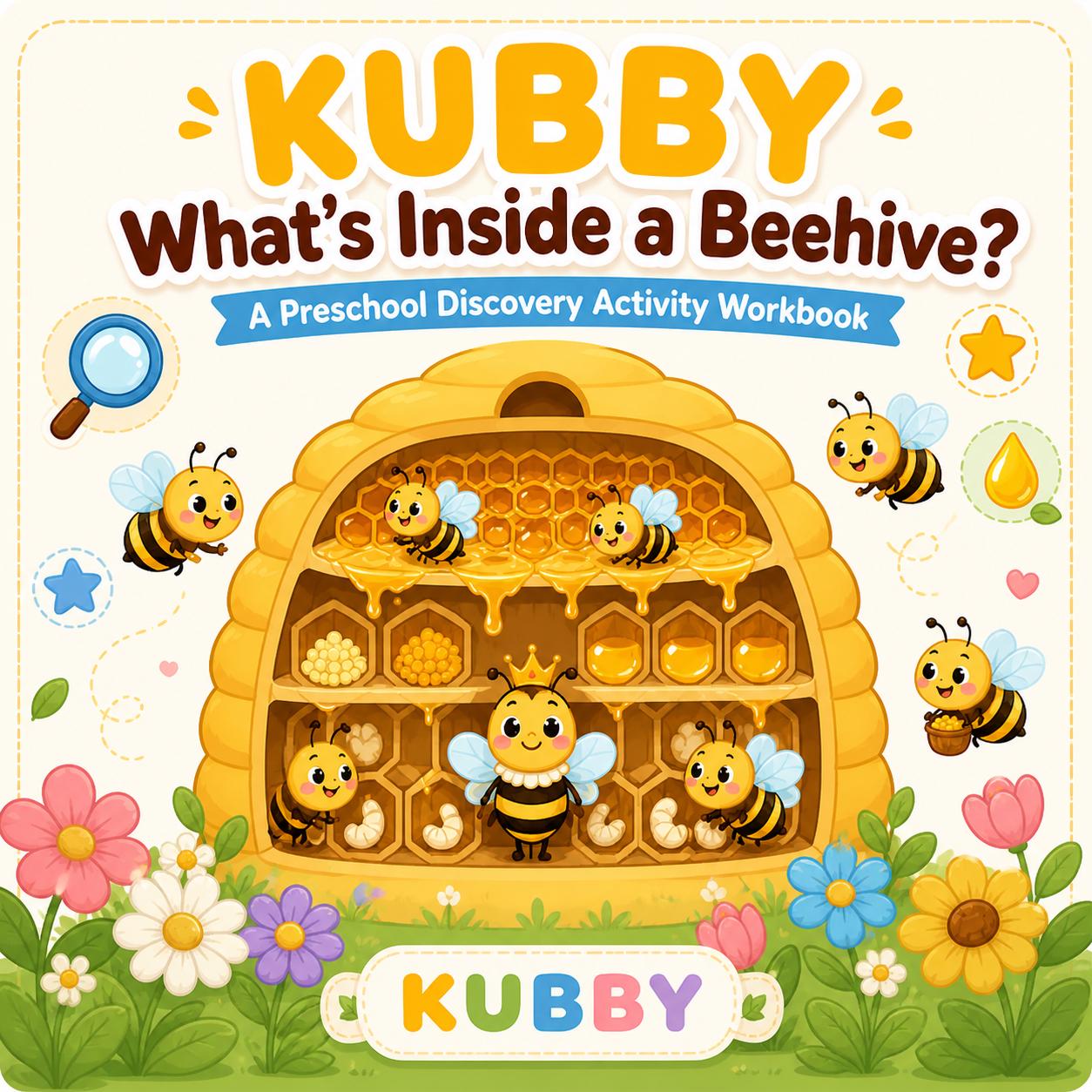
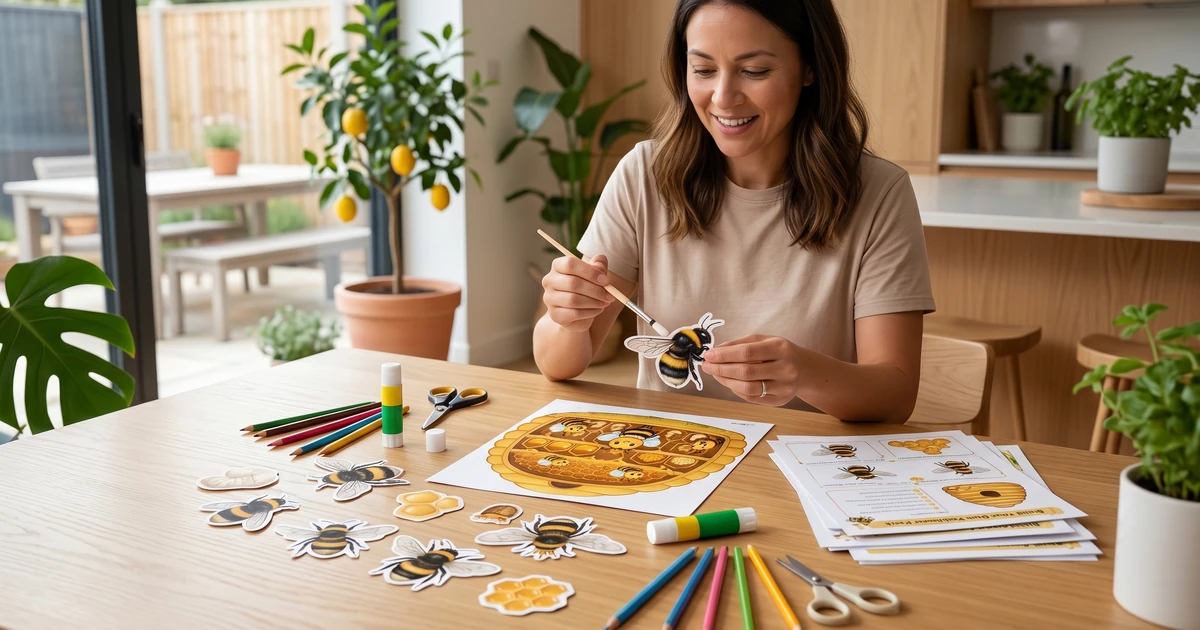
DISCOVERY ACTIVITY WORKBOOKBeehive Discovery 50-Page Printable Preschool Workbook
This 50-page printable workbook turns screen time into hands-on discovery time, guiding preschoolers through the secret world of bees, pollination, and beekeepers. With 25 double-page spreads pairing fascinating facts with immediate activities, it keeps little
Sound familiar?
Mess free science activities for preschool kids sound almost too good to be true. But after spending 40+ hours researching parent reviews, early childhood education forums, and STEM curriculum frameworks, I can tell you: they’re absolutely real, and they don’t require a hazmat suit or a sacrificial tablecloth.
This page is for the parent or educator who loves the idea of science with little ones but needs it to work in an actual home or classroom, not a Pinterest fantasy.
Key Takeaways:
- Mess free science for preschoolers is possible with the right activity format and materials
- Observation-based activities are the most mess free and the most developmentally appropriate for ages 3-5
- Printable science activities eliminate liquid, powder, and sensory mess entirely
- The best low-mess experiments use sealed containers, pre-mixed materials, or dry methods
- Nature-based activities (bugs, plants, seeds) are naturally low-mess and high-curiosity
- A structured 10-15 minute activity window works better than open-ended “explore” sessions for avoiding chaos
!A preschooler doing a mess-free science observation activity at a clean table with nature items and a magnifying glass
Why Preschool Science Gets So Messy in the First Place
Most “preschool science” content online is designed for photography, not reality. The activities look stunning in a flat-lay photo but require 45 minutes of setup, specialty materials, and a parent standing by with a mop.
The real issue is format mismatch. Sensory science (slime, oobleck, paint mixing) is developmentally stimulating, but it’s also high-mess by design. Preschoolers don’t have the fine motor control or impulse regulation to keep these tidy.
“Children aged 3 to 5 are in a stage of parallel and associative play. They explore through touch and movement, which means containment is almost impossible without adult scaffolding.” - National Association for the Education of Young Children (NAEYC)
The fix isn’t to skip science. The fix is to match the format of the activity to what preschool brains and bodies can actually do without exploding your kitchen.
The best mess free science for preschoolers leans on observation, sorting, drawing, and structured prediction, not mixing, pouring, or open-ended sensory play.
The 4 Best Formats for Mess Free Preschool Science
Not all science activities create equal chaos. After analyzing hundreds of parent reviews on platforms like Teachers Pay Teachers, Reddit’s r/Preschool, and early childhood education blogs, I found four activity formats that consistently get high marks for being low-mess AND genuinely educational.
Format 1: Observation Activities
Give a child a magnifying glass and a small tray of natural objects (a pinecone, a feather, a seed, a rock) and you’ve created a full science lesson. They observe, describe, compare, and ask questions. Zero liquids. Zero powders. Total engagement.
Parents consistently report that magnifying glass trays last 20-30 minutes with preschoolers, far longer than most messy experiments.
Format 2: Printable Science Activities
This is the one most parents overlook. Printable science worksheets and activity pages give kids the cognitive experience of science (sorting, predicting, recording findings) without any physical materials beyond a crayon.
A “What does a bee eat?” sorting page, a life cycle sequencing activity, or a “draw what you observe” nature journal page are all genuine science skills. 14 Screen-Free Preschool Printable Activities That Spark Nature Curiosity covers a full range of these if you want a deeper look.
Format 3: Sealed Container Experiments
Classic experiments like oil-and-water mixing, color-watching, or density exploration can be done entirely inside a sealed zip-lock bag or a capped plastic bottle. Kids shake it, watch it, describe it. Nothing comes out.
Pro Tip: Fill zip-lock bags with hair gel and small plastic insects before the activity. Seal with extra tape. Kids can push the bugs around and observe them without opening the bag at all.
Format 4: Dry Sorting and Classification
Sorting seeds by size, organizing rocks by color, classifying leaves by shape: these are all legitimate science skills (categorization, pattern recognition, data collection) with virtually zero mess. A muffin tin and a collection of natural objects is all you need.
Matching the format to the child’s developmental stage is the single biggest factor in whether science time ends in smiles or tears.
A Practical Mess Free Science Activity Plan (By Age)
| Age | Best Activity Format | Example Activity | Mess Level |
|---|---|---|---|
| 2.5-3 years | Observation tray | Touch and describe rocks/feathers | Very low |
| 3-4 years | Sealed container + guided question | Oil and water in a bag | Low |
| 3-5 years | Printable sorting/drawing | Bee life cycle sequencing | Zero |
| 4-5 years | Dry classification | Sort seeds by size/color | Very low |
| 4-5 years | Nature journaling | Draw an outdoor bug find | Zero |
How to Set Up a Mess Free Science Station at Home
One thing I found repeatedly in parent reviews is that structure beats supervision. When the activity has a clear start, middle, and end, preschoolers stay more focused and less likely to improvise in messy directions.
Here’s a simple setup I’ve seen recommended by multiple early childhood educators:
Step 1: Define the Space
Use a placemat, tray, or small table to physically define where the activity happens. This creates a natural boundary. Everything happens on the tray. Anything that falls off the tray is “done.”
Step 2: Pre-Stage All Materials
Don’t hand a preschooler a bottle of glitter and ask them to measure one teaspoon. Pre-stage every material in exactly the amount needed. Sealed bags, small cups with lids, pre-cut cards. The less decision-making around materials, the less opportunity for chaos.
Step 3: Give Them a Job
Preschoolers are less likely to go off-script when they have a specific role. “Your job is to put every seed that is smaller than your pinky into this cup” is more effective than “explore these seeds.” A simple printable recording sheet gives them something to DO with their findings, which channels energy productively.
Step 4: Time It Right
According to Zero to Three, preschoolers have focused attention spans of roughly 2-5 minutes per year of age. A 4-year-old can focus for 8-20 minutes at most. Plan your activity for 10-15 minutes, not 45.
Step 5: Close the Loop
End every science activity with one question: “What did you notice?” Even if the answer is “the rock was cold,” you’ve completed the scientific observation cycle. This also signals the activity is finished, which helps with transitions away from the table.
A well-structured 15-minute science station beats an hour of open-ended messy play for both learning outcomes and parent sanity.
Nature Science: The Most Underrated Mess Free Option
Some of the best mess free science activities for preschool kids are simply going outside and paying attention.
According to the North American Association for Environmental Education, early exposure to nature observation builds foundational science skills including classification, hypothesis formation, and pattern recognition, all before a child ever touches a worksheet.
A 10-minute walk where you collect three different leaves, look at an anthill, or watch a bee on a flower is genuinely rigorous preschool science. When you pair outdoor observation with an indoor printable activity (draw the bee you saw, sort the leaves you found), you’ve created a full science learning loop with minimal mess.
Bees are a particularly excellent starting point. They’re visible in most gardens from spring through fall, they have fascinating life cycles, and they connect directly to broader STEM themes like pollination, ecosystems, and food production. The Easy Bee Life Cycle Worksheet for Kids (From Egg to Honey) is a great companion activity for any backyard bee observation.
Nature observation + a printable recording activity is the gold standard for mess free preschool science.
What to Look For in Mess Free Science Activities
| Criteria | What to Look For | Red Flag |
|---|---|---|
| Materials required | Minimal or none | Long supply lists with powders/liquids |
| Setup time | Under 5 minutes | Requires advance preparation |
| Age appropriateness | Clear 3-5 age range | Designed for older kids, simplified |
| Learning objective | Stated clearly | ”Just for fun” with no skill target |
| Duration | 10-20 minutes | Open-ended with no clear end point |
| Cleanup | Wipe-clean or none | Requires soaking/scrubbing |
Read the Full Guide
I’ve only scratched the surface here. For a complete library of structured, low-mess science and nature activities designed specifically for preschoolers, including printable activity pages, nature journaling prompts, and bee-themed STEM learning, the full guide has everything organized by skill, season, and age range.
Read the Full Guide: 14 Screen-Free Preschool Printable Activities That Spark Nature Curiosity
You might also love these related resources from KubbyLab:
-
35 Quiet-Time Screen Free Learning Activities for Preschoolers for daily activity ideas that don’t require screens or supervision
-
Build Your Own Pollinator Printable Pack for Kindergarten Science if your child is obsessed with bugs and flowers
Frequently Asked Questions
What makes a science activity truly “mess free” for preschoolers?
A mess free science activity for preschoolers uses dry materials, sealed containers, or printable paper-based formats. Observation trays, sorting tasks, drawing worksheets, and sealed zip-lock bag experiments all qualify. Activities that involve open liquids, powders like baking soda, or paints are not mess free regardless of how simple they look online.
Can printable worksheets count as real science for a 3-year-old?
Yes. Sorting, sequencing, predicting, observing, and recording are all genuine scientific thinking skills. A preschooler who sequences a bee life cycle from egg to adult is practicing the same logical reasoning as a child mixing colors in a bowl, with zero mess and a tangible product to keep. At ages 3-5, the cognitive process matters more than the physical medium.
How often should preschoolers do science activities?
Early childhood educators generally recommend short, frequent exposure over long, infrequent sessions. Two or three 15-minute science activities per week builds stronger curiosity and vocabulary than one messy 45-minute experiment. Daily nature observation (even just noticing weather or plants) counts and requires no setup at all.
My child loses interest after 5 minutes. Is that normal?
Completely normal. A 3-year-old’s focused attention span is roughly 6-9 minutes on a novel task. Rather than fighting this, design activities with a clear endpoint at 10-15 minutes. The “close the loop” step (asking “what did you notice?”) helps create a satisfying conclusion so the activity feels complete rather than abandoned.
Do I need to buy science kits for mess free preschool science?
No. The most effective mess free science activities for preschoolers use items you already have: rocks, leaves, seeds, a magnifying glass, and a muffin tin. Printable activity packs add structure and learning objectives without adding physical mess or specialty materials.
Take the Next Step!
Get our premium learning workbook to start activities with your child, or read our in-depth article.
Recommended Resources & Workbooks
Pair this guide with our hands-on, ready-to-print learning resources.
 Digital Bundle
Learn to Read Program: Levels 1-3
170 sequenced phonics lessons across 199 pages, from first letter sounds to fluent long-vowel reading.
 Digital Learning Bundle
Preschool Learning Bundle
260+ printable worksheets for tracing, ABCs, numbers, shapes, sight words, and kindergarten prep.
 Digital Learning Bundle
Play-Based Learning Bundle for Ages 3-6
230+ play-based learning activities with pretend play, reading, early math, creative arts, and bonus flashcards.
Related Guides & Articles
Explore more of our detailed guides and activities.
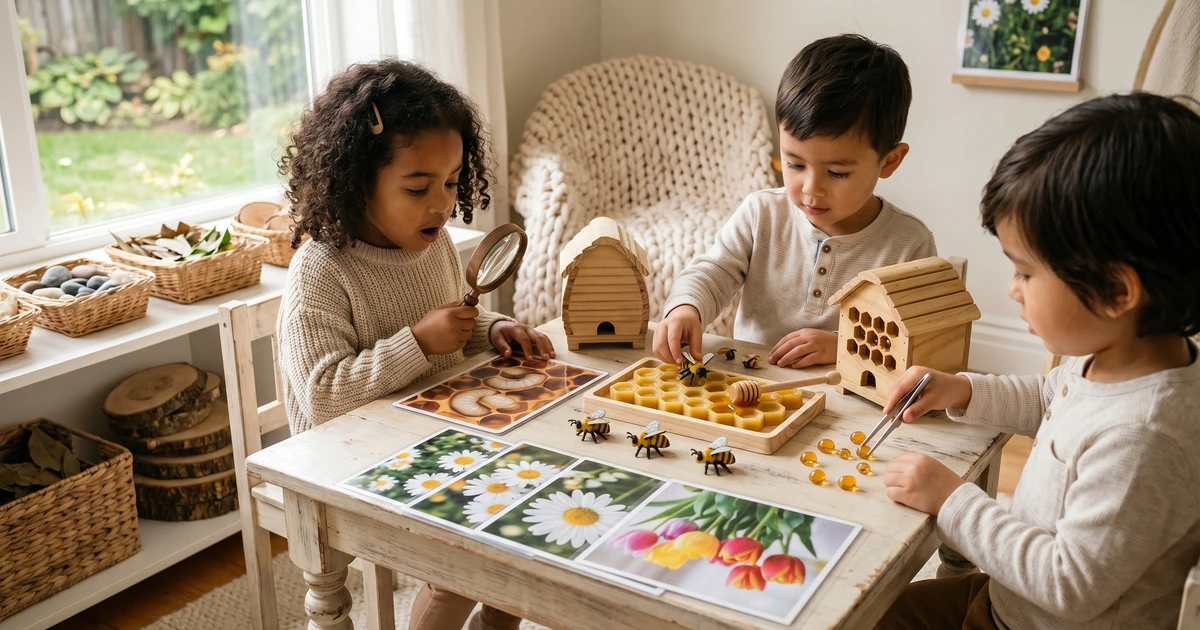
14 Screen-Free Preschool Printable Activities That Spark
Discover 14 captivating screen-free preschool printable activities that introduce nature and science. Perfect for quiet time, travel, and curious 3...
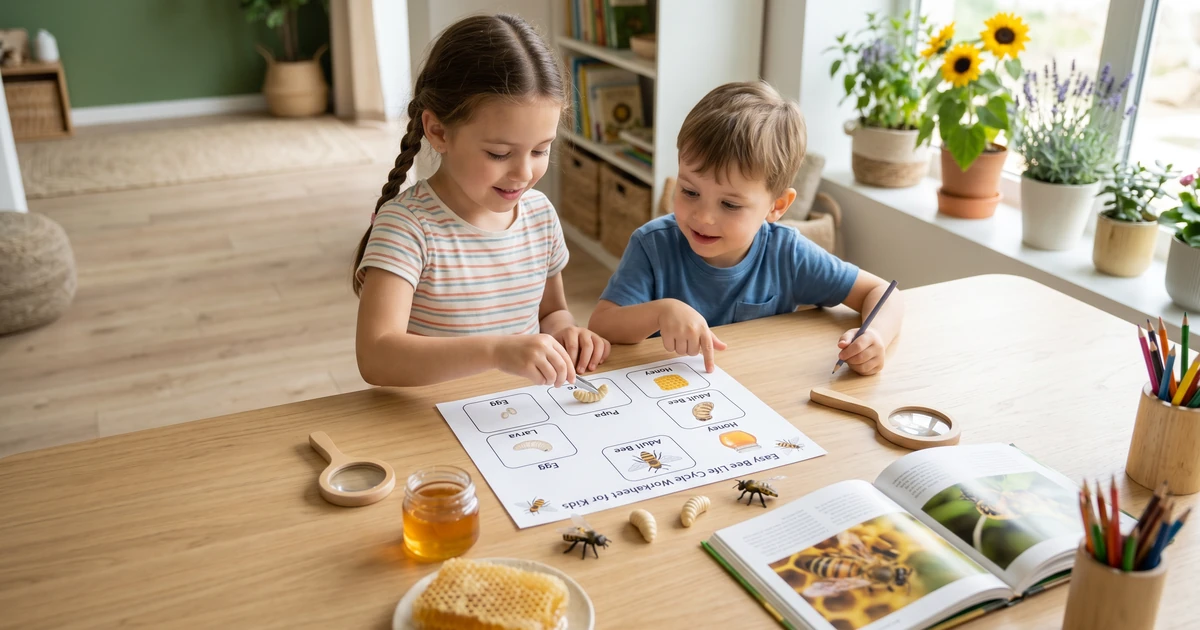
Easy Bee Life Cycle Worksheet for Kids From Egg to Honey
Teaching young children about nature is one of the most rewarding things you can do as a parent or educator. And the bee life cycle worksheet for kids
Build Your Own Pollinator Printable Pack for Kindergarten
Kindergartners are naturally drawn to bugs, flowers, and anything that buzzes or flutters past a window. A well-designed pollinator printable pack ...
35 Quiet-Time Screen Free Learning Activities for Preschoolers
Screen time for preschoolers is one of the most debated topics in early childhood education right now. Parents ask me constantly: "How do I keep my...