
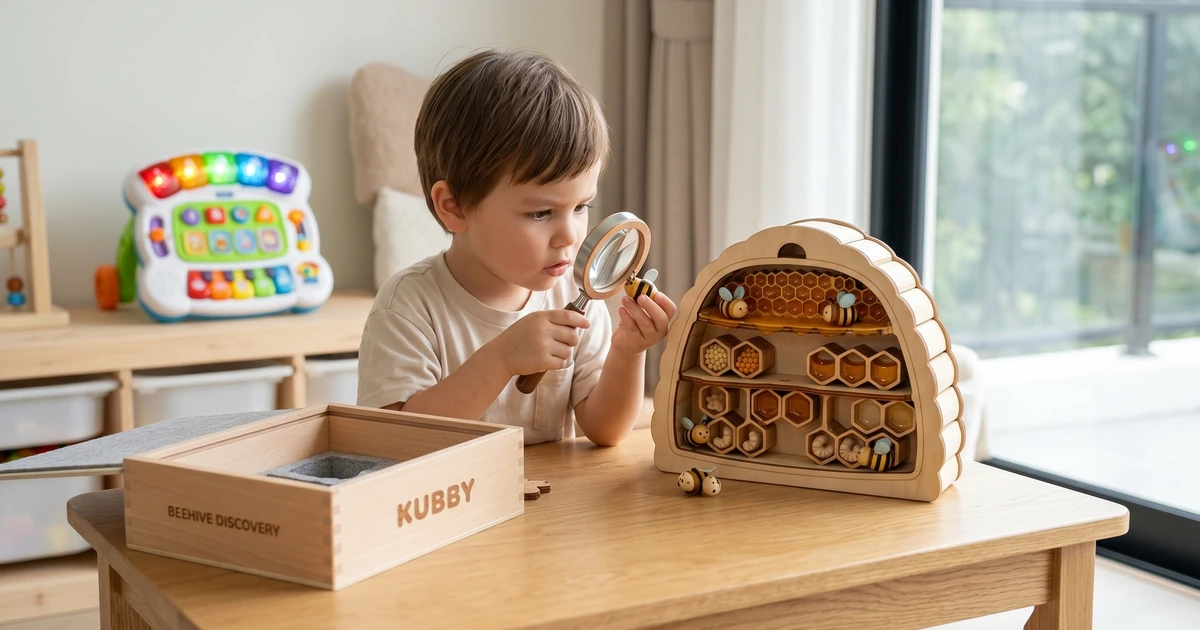
Why Bright, Flashing Toys Are Killing Your Child's Observation Skills
There's a specific kind of afternoon I think every parent and preschool teacher knows. The one where nothing is working. The kids are bouncing off the wall
There’s a specific kind of afternoon I think every parent and preschool teacher knows. The one where nothing is working. The kids are bouncing off the walls, someone is crying over something tiny, and every activity you try lasts about 90 seconds before dissolving into chaos. You’re not failing. You’re just missing one ingredient that preschool-aged children are genuinely wired to need: slow, sensory-rich time in the natural world.
DISCOVERY ACTIVITY WORKBOOKBeehive Discovery 50-Page Printable Preschool Workbook
This 50-page printable workbook turns screen time into hands-on discovery time, guiding preschoolers through the secret world of bees, pollination, and beekeepers. With 25 double-page spreads pairing fascinating facts with immediate activities, it keeps little
Calm nature play activities for preschool aren’t a trend or a luxury. They’re one of the most research-backed ways to help young children regulate their nervous systems, build attention, and actually enjoy learning. I’ve spent a lot of time researching this topic, pulling from early childhood education literature, parent forums, and teacher communities, and what I keep coming back to is this: the simplest outdoor experiences often produce the most profound shifts in a child’s mood and focus.
This page is going to give you a real toolkit. No filler. Just ideas you can use today, tomorrow, or whenever the next hard afternoon hits.
Key Takeaways:
- Calm nature play activities for preschool help regulate children’s nervous systems, not just entertain them
- You don’t need a forest or a big garden. Even a small patch of grass or a windowsill counts
- The best nature play is slow, open-ended, and child-led
- Pairing outdoor sensory experiences with simple printables extends learning indoors
- Activities built around pollinators, insects, and plants are especially engaging for the 3-5 age group
!A preschool child sitting in grass, carefully examining a flower with a magnifying glass
Why Preschoolers Calm Down Faster Outdoors
Nature-based play is defined as any child-directed activity that takes place in or draws from the natural environment, including gardens, parks, beaches, or even potted plants indoors. For preschoolers specifically, this type of play activates what researchers call “soft fascination,” which is the gentle, effortless attention we give to things like moving water, rustling leaves, or a beetle walking across a log.
“Children who spend regular time in natural settings show measurably lower cortisol levels and demonstrate improved self-regulation compared to those with limited nature access.” - University of Illinois Environment and Behavior Research
Cortisol is the stress hormone. Lower cortisol means a calmer child, which means a child who can actually sit, listen, and absorb. According to the American Academy of Pediatrics, unstructured play in nature is directly linked to improved executive function in children aged 3 to 6. That’s the science behind why the best preschool teachers I’ve seen always build in some form of outdoor time, even in the middle of a busy curriculum day.
The core insight: outdoor calm isn’t a break from learning. It IS learning.
5 Calm Nature Play Activities That Actually Work for Preschool
These aren’t complicated. Each one requires minimal setup and produces a noticeably calmer, more focused child afterward.
1. Slow Bug Watching
Give your preschooler a magnifying glass (a $3 plastic one works fine) and a specific mission: find three different insects or bugs in the garden or yard. The mission structure helps children who get overwhelmed by open-ended free time. Bug watching naturally slows kids down because insects move unpredictably and quietly. You have to be still to see them.
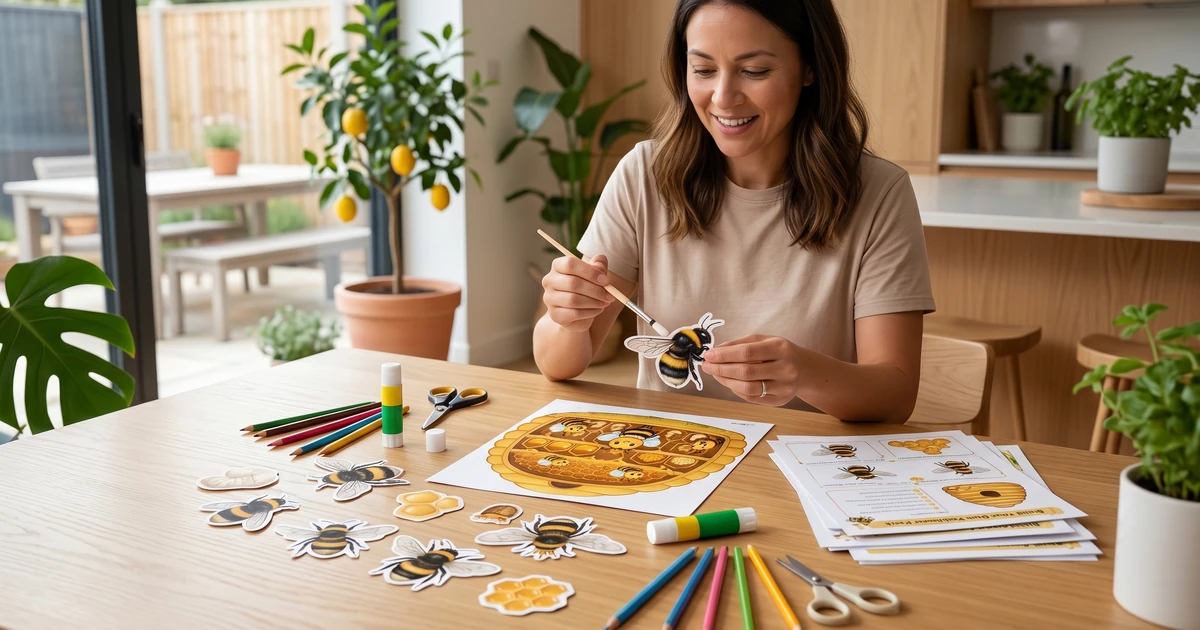
This pairs beautifully with an indoor follow-up activity. After they’ve observed a bee or a butterfly, sitting down with a simple bee life cycle worksheet gives them a way to process what they saw and extend the curiosity.
2. Leaf and Petal Sorting
Collect a handful of leaves, petals, or small stones and sort them by color, size, or texture. This is a sensory regulation activity dressed up as nature science. The tactile engagement (rough bark vs. smooth petal vs. cool stone) helps overwhelmed children ground themselves. Sorting also builds early math thinking without any of the pressure of a formal lesson.
Pro Tip: Use a muffin tin as a sorting tray. It gives children a satisfying structure and reduces the chaos of things sliding everywhere.
3. Nature Journaling With Simple Drawings
You don’t need a fancy sketchbook. A folded piece of paper works. Ask your child to draw one thing they found outside, as detailed as they can make it. This slows observation down dramatically. When a child has to draw a flower, they notice that it has five petals, that the center is a different color, that there’s a tiny insect near the stem.
For preschoolers who aren’t yet confident with drawing, printable nature observation sheets with simple prompts and spaces to color are a huge help. They remove the blank-page panic and give the activity a gentle structure.
4. Water and Natural Materials Play
Fill a shallow bin with water and add a few leaves, small stones, sticks, and flower petals. Let children pour, float, sink, and arrange. This is the preschool equivalent of a meditation practice. Water play reduces anxiety markers in young children almost immediately, and adding natural materials makes it richer than water alone.
Keep it calm by keeping the space small. One bin, one child at a time, or two children with clear space between them.
5. Pollinator Watching
Sit near a flowering plant (even a potted one on a balcony works) and watch for bees, butterflies, or hoverflies. Give the child simple questions: How many times does the bee visit the flower? Does it come back to the same one? What colors do you see?
This activity is surprisingly absorbing for preschoolers. The unpredictability of when a pollinator will appear creates a focused, quiet anticipation. It’s also a perfect gateway into deeper nature science content. The Pollinator Printable Pack for Kindergarten Science is one of the best resources I’ve found for extending this kind of observation into structured learning.
How to Build a Calm Nature Play Routine (Not Just One-Off Activities)
Single activities help. Routines transform. Here’s a simple structure that works for both home and preschool settings.
Step 1: Create a “Go Bag” for Nature Time
Pack a small bag with a magnifying glass, a nature journal or observation sheet, a pencil, and a small container for collecting (a clean takeaway container is perfect). When the bag is ready, nature time has fewer friction points. Children can grab it themselves, which builds independence.
Step 2: Set a Time, Not a Duration
Instead of saying “we’ll do 20 minutes of nature play,” say “we go outside after snack.” Preschoolers respond to routines anchored to events, not clocks. If a child is deeply engaged at 25 minutes, let them stay. If they’re done at 10, bring them in without a battle.
Step 3: Follow With a Quiet Indoor Extension
The transition from outside to inside is where children often dysregulate. Bridging the two with a calm, related activity helps. Sitting down to color a bee worksheet or trace a leaf shape gives the energy somewhere to land. This is where printable workbook pages are genuinely useful as part of a larger routine, not as a replacement for outdoor time, but as a companion to it.
Step 4: Reflect Together (2 Minutes Is Enough)
Ask one question: “What was the most interesting thing you found?” Don’t quiz. Don’t correct. Just listen. This reflection builds language skills, memory consolidation, and the sense that their observations matter.
The routine doesn’t need to be perfect. It just needs to be consistent enough that children know it’s coming.
Comparing Nature Play Formats: What Works Best for Preschoolers
Not all calm nature play looks the same. Here’s a breakdown of the most common formats and how they stack up for the preschool age group.
| Activity Format | Calm Level | Skill Focus | Setup Required | Best For |
|---|---|---|---|---|
| Bug watching | High | Observation, patience | Minimal (magnifying glass) | Highly active children |
| Water + nature materials | High | Sensory regulation | Low (bin + materials) | Sensory-seeking kids |
| Nature journaling | Medium-High | Fine motor, language | Low (paper + pencil) | Children who like drawing |
| Leaf/petal sorting | High | Math, sensory | Minimal | Short attention spans |
| Pollinator watching | Very High | Science, focus | None | All preschoolers |
| Printable nature worksheets | Medium | Literacy, science | Printer needed | Indoor follow-up |
What to Look for in Nature-Based Preschool Activities
Not every “nature activity” is actually calming or developmentally appropriate. Here’s how I evaluate activities before recommending them.
| Criteria | Why It Matters |
|---|---|
| Child-led exploration | Reduces power struggles, builds intrinsic curiosity |
| Open-ended materials | No single “right answer” means no failure |
| Sensory engagement | Grounds overwhelmed nervous systems |
| Low setup time | High setup = abandoned activity |
| Connection to real nature | Plastic nature props don’t produce the same regulation benefits |
| Gentle structure (not rigid) | Helps children who struggle with fully open-ended time |
“The most effective early childhood nature programs offer enough structure for children to feel safe, but enough freedom for genuine discovery to happen.” - National Wildlife Federation Early Childhood Program
How Much Does a Nature Play Setup Actually Cost?
One of the things I hear most from parents and teachers is the assumption that this kind of learning is expensive. It really isn’t.
| Item | Price Range | Notes |
|---|---|---|
| Plastic magnifying glass | $2-5 | Dollar stores carry these |
| Nature journal (DIY) | $0 | Folded copy paper works fine |
| Printable observation sheets | $0-15 | One-time purchase, reusable |
| Sorting tray (muffin tin) | $3-8 | Already in most kitchens |
| Water bin | $0-10 | Any shallow container works |
| Seeds/potted plant for pollinator watching | $3-12 | Lavender or marigolds work great |
Total realistic setup cost: $8-40, one time, and most families have half this already.
Frequently Asked Questions About Calm Nature Play for Preschoolers
Can calm nature play activities work for preschoolers who are really high-energy or have sensory sensitivities?
Yes, and in fact these children often benefit most. High-energy preschoolers need a channel for their energy that also gradually slows them down. Bug watching and pollinator watching work especially well because the unpredictability keeps active children engaged while the required stillness gradually shifts their state. For sensory-sensitive children, start with water and smooth natural materials before introducing rougher textures like bark or soil.
How long should calm nature play activities last for a preschooler?
Between 15 and 40 minutes is typical. Preschoolers aged 3-4 often self-terminate around 15-20 minutes. Children aged 4-5 can stay engaged for 30-40 minutes if the activity is genuinely interesting to them. Don’t set a timer. Watch for when engagement naturally shifts to restlessness and use that as your cue.
Do these activities work indoors if we don’t have outdoor access?
Absolutely. A windowsill with a potted plant, a bin of natural materials, or a collection of leaves and stones from a single 10-minute neighborhood walk can sustain multiple indoor nature activities. The key materials are real (not plastic), varied in texture, and small enough for little hands to manipulate easily. Pair indoor materials with printable nature science worksheets to make the most of limited outdoor access.
How do I introduce nature journaling to a preschooler who says they “can’t draw”?
Start with observation sheets that have prompts and boxes already drawn. This removes the blank-page anxiety completely. Ask them to find something outside, look at it closely, and then color a shape that matches. It doesn’t need to be recognizable. The goal is close looking, not accurate drawing. Over time, children naturally start adding more detail as their confidence grows.
The Bottom Line
Calm nature play activities for preschool are one of the simplest, most effective tools available for helping young children regulate, focus, and genuinely enjoy learning. The research is clear, the setup is cheap, and the results show up fast. You don’t need a forest school or a perfect garden. You need consistent, simple, child-led time with real natural materials.
If you want to go deeper on building this kind of routine into your preschool day or home learning setup, including how printable activities can extend outdoor learning indoors without screens, the full guide covers all of it.
Read the 14 Screen-Free Preschool Printable Activities That Spark Nature Curiosity for the complete breakdown, including specific activity sequences, printable recommendations, and a full guide to building a nature-based learning routine that actually sticks.
For more quiet-time activity ideas that pair beautifully with outdoor play, check out 35 Quiet-Time Screen Free Learning Activities for Preschoolers as well.
Take the Next Step!
Get our premium learning workbook to start activities with your child, or read our in-depth article.
Recommended Resources & Workbooks
Pair this guide with our hands-on, ready-to-print learning resources.
 Digital Bundle
Learn to Read Program: Levels 1-3
170 sequenced phonics lessons across 199 pages, from first letter sounds to fluent long-vowel reading.
 Digital Learning Bundle
Preschool Learning Bundle
260+ printable worksheets for tracing, ABCs, numbers, shapes, sight words, and kindergarten prep.
 Digital Learning Bundle
Play-Based Learning Bundle for Ages 3-6
230+ play-based learning activities with pretend play, reading, early math, creative arts, and bonus flashcards.
Related Guides & Articles
Explore more of our detailed guides and activities.
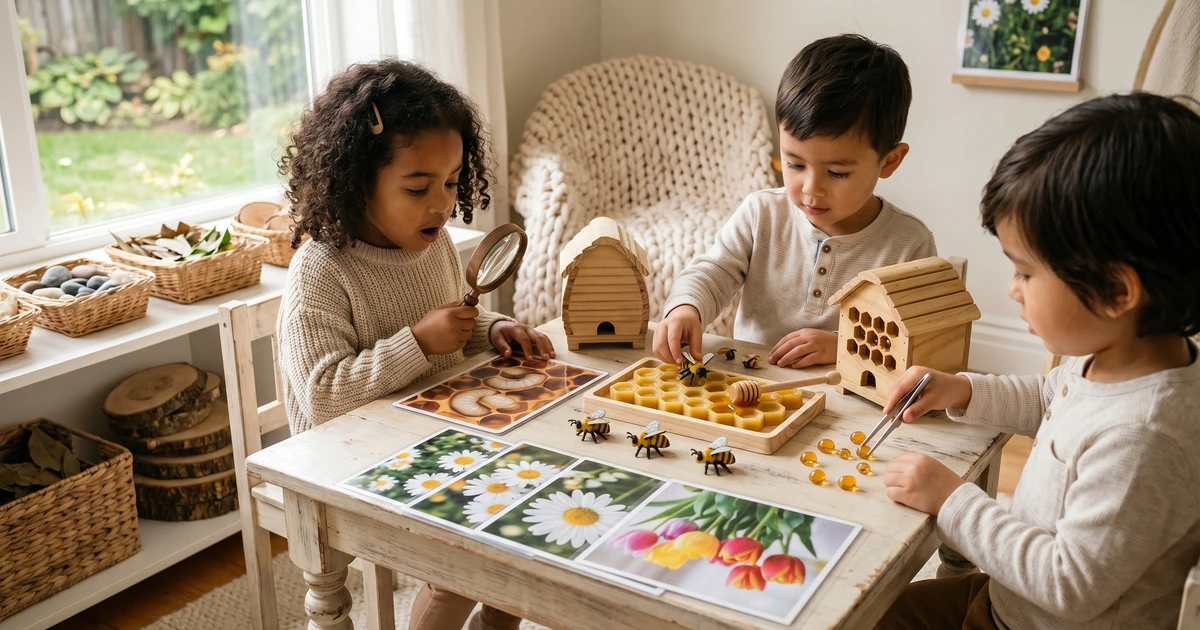
14 Screen-Free Preschool Printable Activities That Spark
Discover 14 captivating screen-free preschool printable activities that introduce nature and science. Perfect for quiet time, travel, and curious 3...
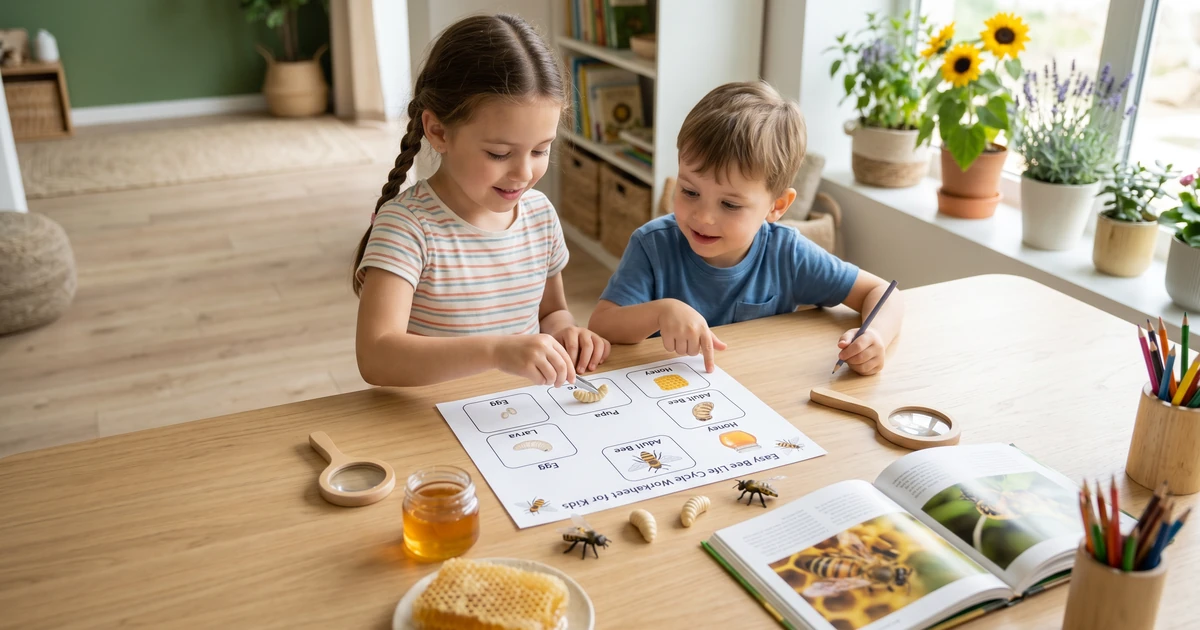
Easy Bee Life Cycle Worksheet for Kids From Egg to Honey
Teaching young children about nature is one of the most rewarding things you can do as a parent or educator. And the bee life cycle worksheet for kids
Build Your Own Pollinator Printable Pack for Kindergarten
Kindergartners are naturally drawn to bugs, flowers, and anything that buzzes or flutters past a window. A well-designed pollinator printable pack ...
35 Quiet-Time Screen Free Learning Activities for Preschoolers
Screen time for preschoolers is one of the most debated topics in early childhood education right now. Parents ask me constantly: "How do I keep my...