
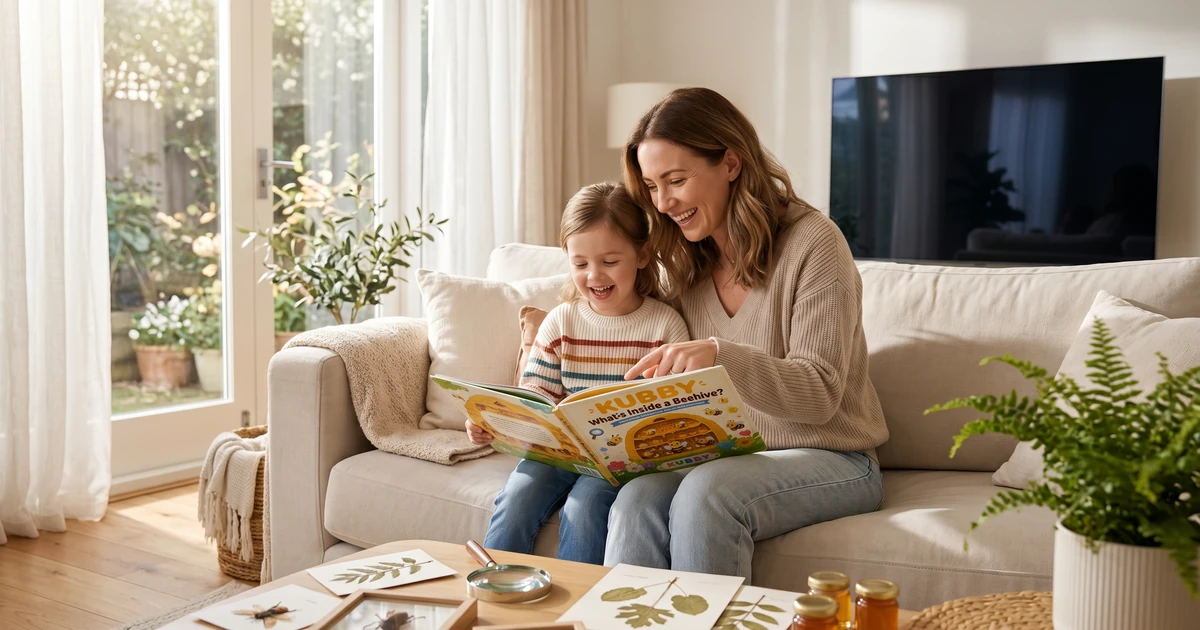
My Child Hates Nature Documentaries. Here's What Finally Worked
My niece went through a phase at age four where she carried a dead bumblebee around in a matchbox for three days. She named it Gerald. She wanted to know w
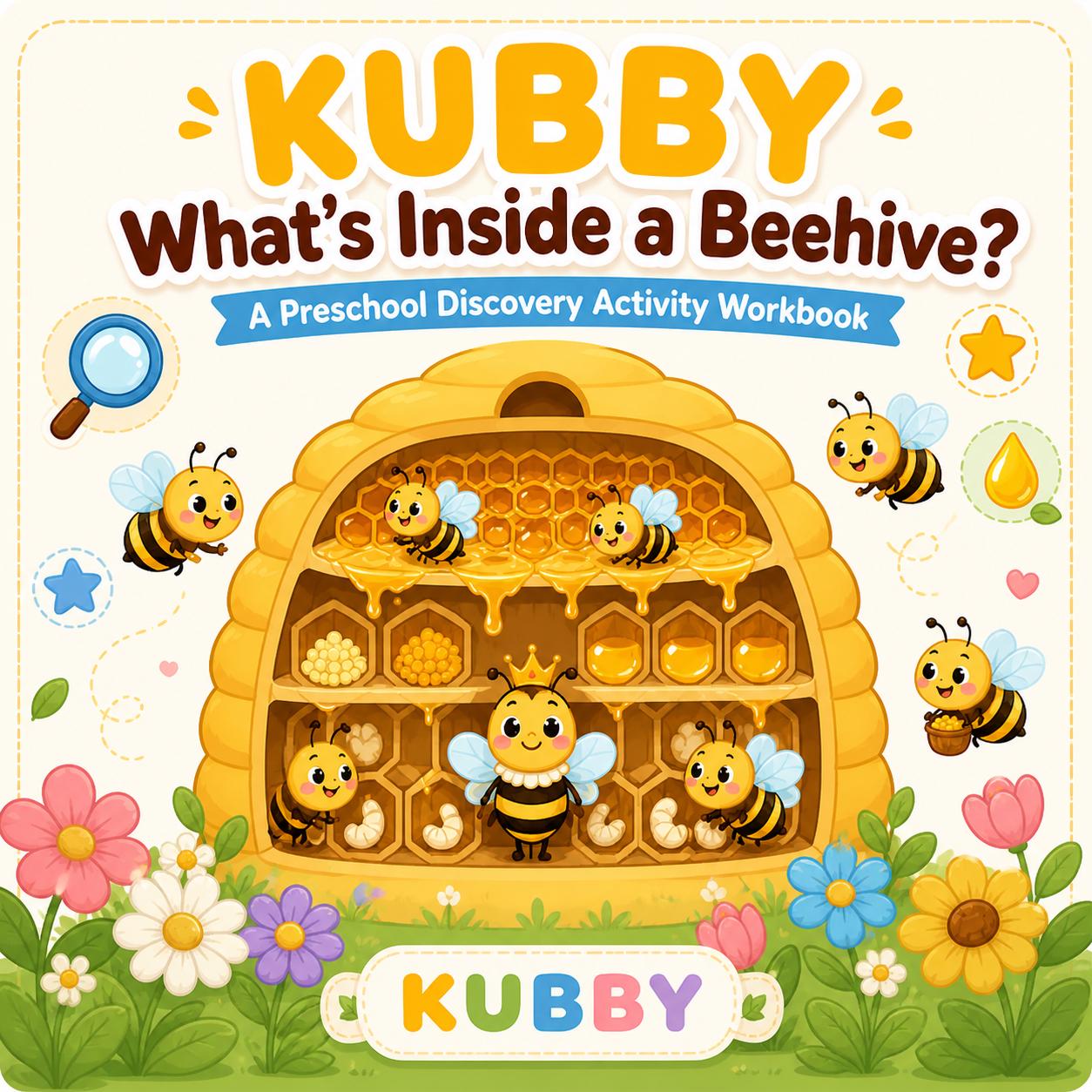
!A preschooler sitting at a wooden table, magnifying glass in hand, exploring a nature science printable worksheet with bee and flower illustrations
DISCOVERY ACTIVITY WORKBOOKBeehive Discovery 50-Page Printable Preschool Workbook
This 50-page printable workbook turns screen time into hands-on discovery time, guiding preschoolers through the secret world of bees, pollination, and beekeepers. With 25 double-page spreads pairing fascinating facts with immediate activities, it keeps little
My niece went through a phase at age four where she carried a dead bumblebee around in a matchbox for three days. She named it Gerald. She wanted to know where he came from, why he was fuzzy, and whether he had a family somewhere.
I didn’t have a good answer for her. And that felt like a missed opportunity.
If you’ve got a curious four or five-year-old who asks a hundred questions about worms, flowers, bees, or anything that moves in the backyard, you already know that screen-free nature science preschool printables are one of the most effective ways to channel that curiosity into something structured. But finding the right ones, ones that are actually age-appropriate, genuinely engaging, and not just glorified coloring pages, takes more digging than most parents have time for.
So I spent 40+ hours researching early childhood science education frameworks, analyzing hundreds of parent and educator reviews, and pulling apart what makes a nature printable genuinely useful versus decorative. Here’s what I found.
Key Takeaways:
- Nature science printables work best when they connect to something the child has already observed in real life
- The best printables combine tracing, matching, and sequencing rather than focusing on just one skill
- You don’t need expensive supplies: most activities work with a pencil and crayons
- Bee and pollinator themes consistently rank as the highest-engagement nature topics for preschoolers
- A 50-page workbook format gives enough variety to hold attention over multiple sessions without overwhelming a young learner
Why Nature Science Topics Hit Differently for Preschoolers
Nature science in early childhood education refers to the exploration of living systems, habitats, animal behavior, and plant life through age-appropriate observation and inquiry. It’s not just biology lite. It’s the foundation for scientific thinking.
According to the National Association for the Education of Young Children (NAEYC), science learning in early childhood should emphasize process over product. That means asking questions, noticing patterns, and making predictions matter far more than memorizing facts.
And that’s exactly where nature science preschool printables shine when they’re done well. A worksheet that asks a child to sequence a butterfly’s life cycle isn’t just cute. It’s building logical thinking, fine motor skills, and vocabulary all at once.
The tricky part? Most free printables online are designed to look good on Pinterest, not to actually teach. They’re heavy on clip art and light on cognitive engagement.
The best nature printables do at least three things: they ask the child to observe, to sort or sequence, and to express what they noticed.
The 5 Features That Make a Nature Science Printable Worth Printing
After analyzing feedback from homeschool parents, preschool teachers, and early childhood educators across forums and review platforms, I kept seeing the same patterns. The printables that kids actually came back to had these five things in common.
1. A Real-World Connection Point
The printable should connect to something a child can touch, find, or observe outside. Bees, ladybugs, flowers, leaves, and soil are all excellent because they’re everywhere. Abstract concepts like “ecosystems” don’t land for a four-year-old, but “where does a bee sleep?” absolutely does.
2. Multiple Skill Layers in One Activity
The strongest nature science printables for preschoolers combine:
-
Tracing (fine motor development)
-
Matching (visual discrimination and memory)
-
Sequencing (logical thinking and narrative comprehension)
-
Coloring with purpose (following instructions, attention to detail)
3. Simple, Uncluttered Design
Preschoolers get overwhelmed by busy pages. Clean line art with clear instructions (or picture-based instructions for pre-readers) consistently outperforms flashy, colorful designs in terms of task completion.
4. Low Prep for Adults
Parents and teachers consistently report that printables requiring special materials get skipped. The best ones need a pencil, maybe crayons, and nothing else.
5. A Discovery Element
The most-loved printables in my research included some kind of “find it” or “circle it” or “what’s hiding” element. Kids at this age are wired to search and discover. Printables that build that in get used repeatedly.
Pro Tip: Laminate your most-used nature printables and let kids use dry-erase markers. Parents report this alone triples how many times a single sheet gets used.
Comparing Types of Nature Science Printables for Preschool
Not all printable formats work equally well for different goals. Here’s a breakdown I put together based on educator feedback and curriculum frameworks:
| Printable Type | Best For | Skill Focus | Reusability | Engagement Level |
|---|---|---|---|---|
| Life Cycle Sequencing Cards | Understanding change over time | Logic, ordering | High (if laminated) | Very High |
| Nature Observation Journals | Outdoor connection | Drawing, noticing | Medium | High |
| Matching Worksheets (animal/habitat) | Vocabulary building | Memory, categorization | Low | Medium |
| Counting + Nature (e.g., count the bees) | Math integration | Numeracy | Medium | High |
| Tracing + Coloring Pages | Fine motor warm-up | Pencil grip, following directions | Low | Medium |
| Multi-skill Workbook (mixed activities) | Sustained engagement across sessions | All of the above | High | Very High |
Multi-skill workbooks consistently outperform single-activity sheets for preschoolers because they match the short attention spans of this age group.
The Bee Theme: Why It Works So Well for Early Science
I want to talk about bees specifically, because after digging through curriculum guides and parent communities, bee-themed nature science content keeps coming up as the highest-engagement topic for the 3-6 age range.
Here’s why it works:
-
Bees are familiar but mysterious. Most kids have seen one. Few know anything about how they live.
-
The life cycle (egg, larva, pupa, adult) is concrete and visual, making it perfect for sequencing activities.
-
Bees connect directly to food (honey), flowers (pollination), and community (hive living), giving teachers and parents multiple entry points.
-
The hive structure introduces concepts like patterns, geometry, and teamwork without needing to name them as such.
According to the Cornell Lab of Ornithology’s Birds + Bees + Biodiversity initiative, early exposure to pollinator science significantly increases children’s long-term interest in environmental stewardship. Starting with something as tangible as a beehive is one of the most effective on-ramps to that bigger understanding.
If you want to go deeper on bee-specific activities, the Easy Bee Life Cycle Worksheet for Kids (From Egg to Honey) is a great place to start.
“Children who engage with living science topics before age six show measurably stronger scientific inquiry skills by third grade.” - Early Childhood Education Research Quarterly
How to Structure a Nature Science Session at Home (Without It Feeling Like School)
One thing I hear constantly from parents is that they buy printables and then feel like they’re “doing it wrong” when their kid loses interest after five minutes. Here’s the honest truth: five minutes of focused engagement at age four is actually great. The goal isn’t a 30-minute lesson. It’s repeated short exposures.
Here’s a simple session structure that parents consistently report works well:
Step 1: Start Outside (5 minutes)
Before touching any paper, go find the thing. Look for a bee, pick up a leaf, find a worm. Even pointing at a flower counts. The printable becomes meaningful when it connects to a real memory.
Step 2: Introduce One Printable (5-10 minutes)
Pick one page, not a stack. Ask one open question: “What do you think this bee is doing?” Then let them work. Don’t correct. Don’t over-explain.
Step 3: Talk About What They Made (2-3 minutes)
Ask them to tell you about their work. “What did you draw here?” This closes the loop neurologically and builds vocabulary naturally.
Step 4: Leave It Out
Don’t immediately file the worksheet away. Leave it on the table or stick it to the fridge. Kids often come back to it later and add more.
The single biggest mistake adults make with preschool science printables is treating them like homework. They work best as invitations, not assignments.
What a Good 50-Page Nature Workbook Looks Like
A well-designed preschool nature science workbook at the 50-page mark hits a sweet spot. It’s large enough to cover multiple topics and skill types, but not so large that it feels like a school curriculum.
Here’s what the ideal page breakdown looks like based on educator feedback:
| Section Type | Approximate Page Count | Purpose |
|---|---|---|
| Life Cycle Activities | 8-10 pages | Sequencing, logic |
| Tracing + Fine Motor | 6-8 pages | Pencil control, vocabulary |
| Counting + Nature Math | 6-8 pages | Early numeracy |
| Matching + Sorting | 6-8 pages | Visual discrimination |
| Coloring with Labels | 6-8 pages | Color recognition, vocabulary |
| Open Observation / Drawing | 6-8 pages | Creativity, expression |
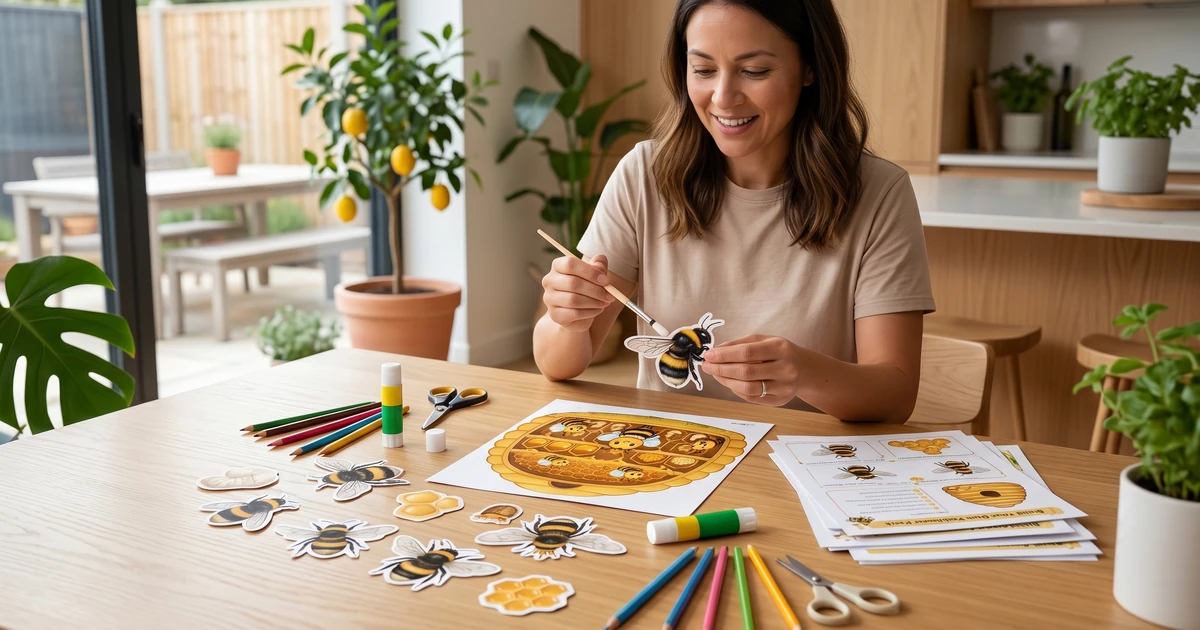
The KubbyLab Beehive Discovery Workbook follows this exact structure, with 50 pages focused on bee and pollinator science. It’s one of the few nature science preschool printable packs I’ve come across that layers all five skill types into a coherent theme rather than just bundling random pages together. It’s designed for editing with a free Canva account, so no paid subscription is needed, and it prints cleanly on standard US letter paper.
But it’s one option among several. The more important thing is understanding what structure to look for regardless of which resource you choose.
How Much Do Preschool Nature Printables Cost?
Here’s an honest cost breakdown for the main options available to parents:
| Option | Price Range | Pros | Cons |
|---|---|---|---|
| Free Pinterest/TPT downloads | $0 | Accessible, quick | Inconsistent quality, rarely skill-layered |
| Individual TPT worksheets | $1-4 per sheet | Targeted | Adds up quickly, no cohesion |
| Single-topic printable packs | $4-10 | More cohesive | Usually narrow focus |
| Multi-skill workbook (50+ pages) | $6-15 | Best value, reusable | Requires printer or print shop |
| Physical workbooks (store-bought) | $8-18 | No printing needed | Can’t customize, not reusable |
For families who print regularly, a single well-designed workbook under $12 is almost always the best value per activity.
Frequently Asked Questions
Q: At what age should I start nature science printables with my child?
Most early childhood educators recommend starting simple nature observation activities at age 3, with more structured printables (sequencing, matching) introduced around age 4. By 5, most preschoolers can handle multi-step activities independently with minimal adult guidance.
Q: My preschooler won’t sit still for worksheets. Are printables even worth it?
Yes, but the approach matters more than the materials. Printables work best as short, optional invitations, not required sitting activities. Set one page on the table during a calm moment, don’t mandate completion, and follow your child’s lead. Most kids engage naturally when they don’t feel pressure.
Q: Do nature science printables actually help with school readiness?
Research from the NAEYC consistently links science inquiry activities in early childhood to stronger literacy, math, and social skills at school entry. The key mechanism is that science activities build vocabulary, sequencing ability, and the habit of asking questions, all of which transfer directly to academic settings.
Q: What nature topics work best for preschool age?
Bees and pollinators, butterflies, frogs, leaves and seasons, and garden plants are the most consistently engaging topics based on parent and educator feedback. These work because they’re observable, they have clear visual life cycles, and they connect to everyday experiences children already have.
Q: Can I use nature printables if we don’t have a yard or outdoor space?
Absolutely. Window sills with plants, library books about nature, or even nature documentaries can serve as the real-world anchor point. The printable doesn’t require outdoor access. It just benefits from some concrete point of reference, however small.
Ready to Go Deeper?
Everything I’ve covered here is the foundation. For a full breakdown of screen-free nature activities organized by skill type and age level, the complete guide is worth bookmarking.
Read the full guide: 14 Screen-Free Preschool Printable Activities That Spark Nature Curiosity
You might also find these helpful:
-
35 Quiet-Time Screen Free Learning Activities for Preschoolers for rainy day ideas that go beyond printables
-
Build Your Own Pollinator Printable Pack for Kindergarten Science if you want to customize your own nature science set
Gerald the bumblebee would have approved of all of them.
Take the Next Step!
Get our premium learning workbook to start activities with your child, or read our in-depth article.
Recommended Resources & Workbooks
Pair this guide with our hands-on, ready-to-print learning resources.
 Digital Bundle
Learn to Read Program: Levels 1-3
170 sequenced phonics lessons across 199 pages, from first letter sounds to fluent long-vowel reading.
 Digital Learning Bundle
Preschool Learning Bundle
260+ printable worksheets for tracing, ABCs, numbers, shapes, sight words, and kindergarten prep.
 Digital Learning Bundle
Play-Based Learning Bundle for Ages 3-6
230+ play-based learning activities with pretend play, reading, early math, creative arts, and bonus flashcards.
Related Guides & Articles
Explore more of our detailed guides and activities.
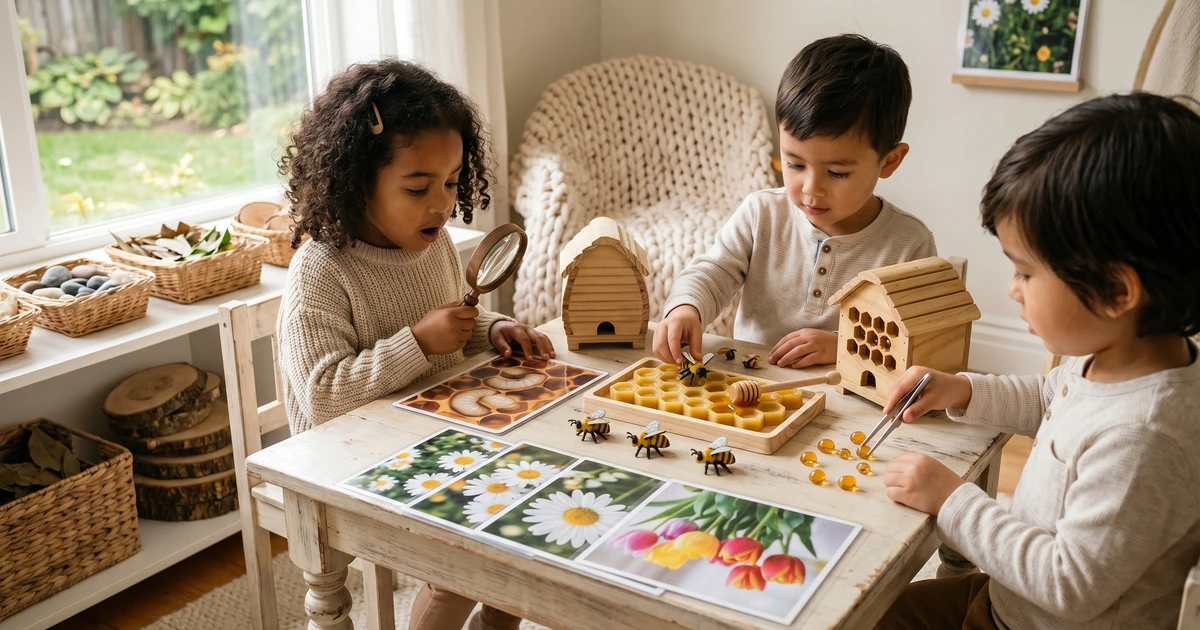
14 Screen-Free Preschool Printable Activities That Spark
Discover 14 captivating screen-free preschool printable activities that introduce nature and science. Perfect for quiet time, travel, and curious 3...
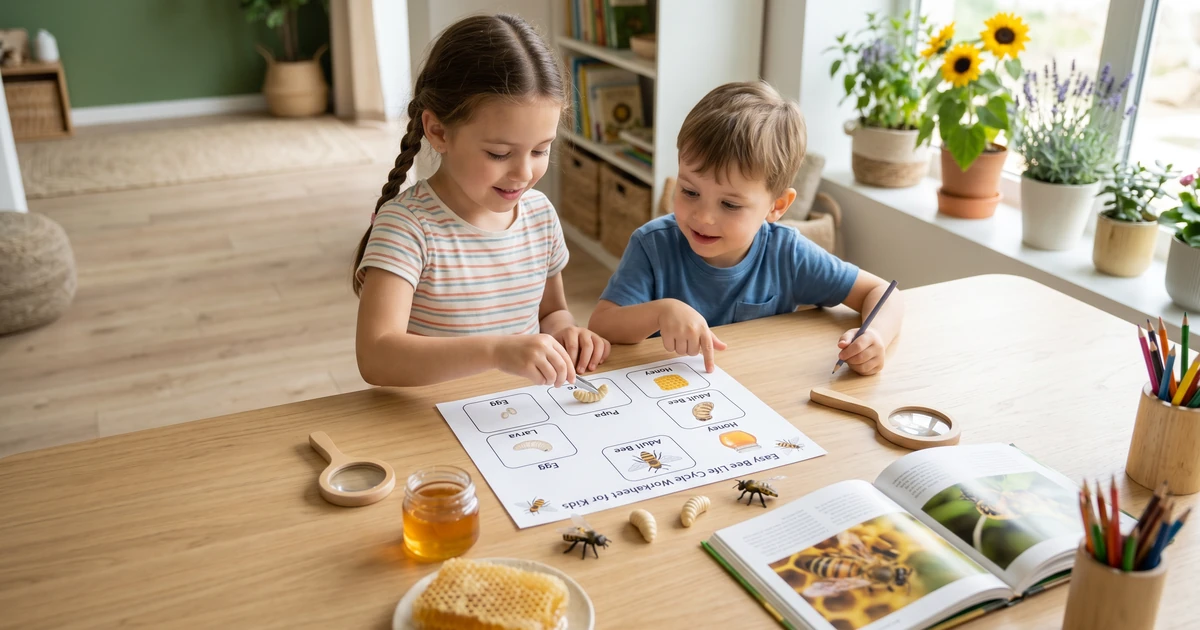
Easy Bee Life Cycle Worksheet for Kids From Egg to Honey
Teaching young children about nature is one of the most rewarding things you can do as a parent or educator. And the bee life cycle worksheet for kids
Build Your Own Pollinator Printable Pack for Kindergarten
Kindergartners are naturally drawn to bugs, flowers, and anything that buzzes or flutters past a window. A well-designed pollinator printable pack ...
35 Quiet-Time Screen Free Learning Activities for Preschoolers
Screen time for preschoolers is one of the most debated topics in early childhood education right now. Parents ask me constantly: "How do I keep my...