
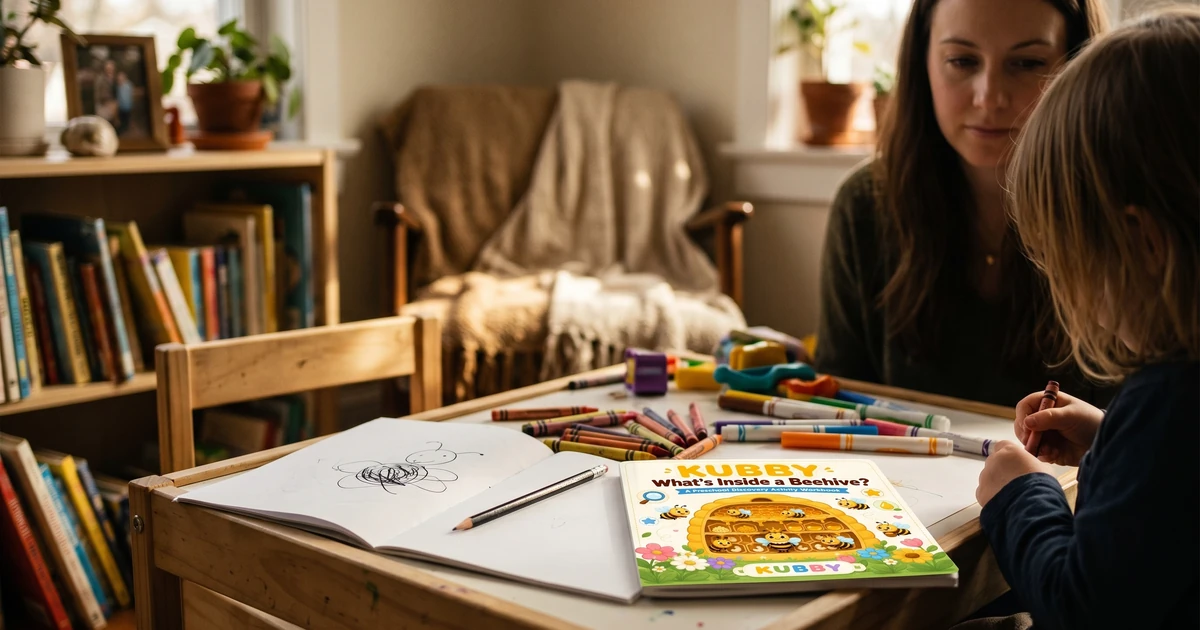
Your 4-Year-Old Can’t Draw a Bee. That’s a Bigger Problem Than You
My daughter stared at a blank page and said, "I don't know what a bee looks like inside."
!A preschooler sitting at a table drawing a bee on a science worksheet, surrounded by crayons and nature objects
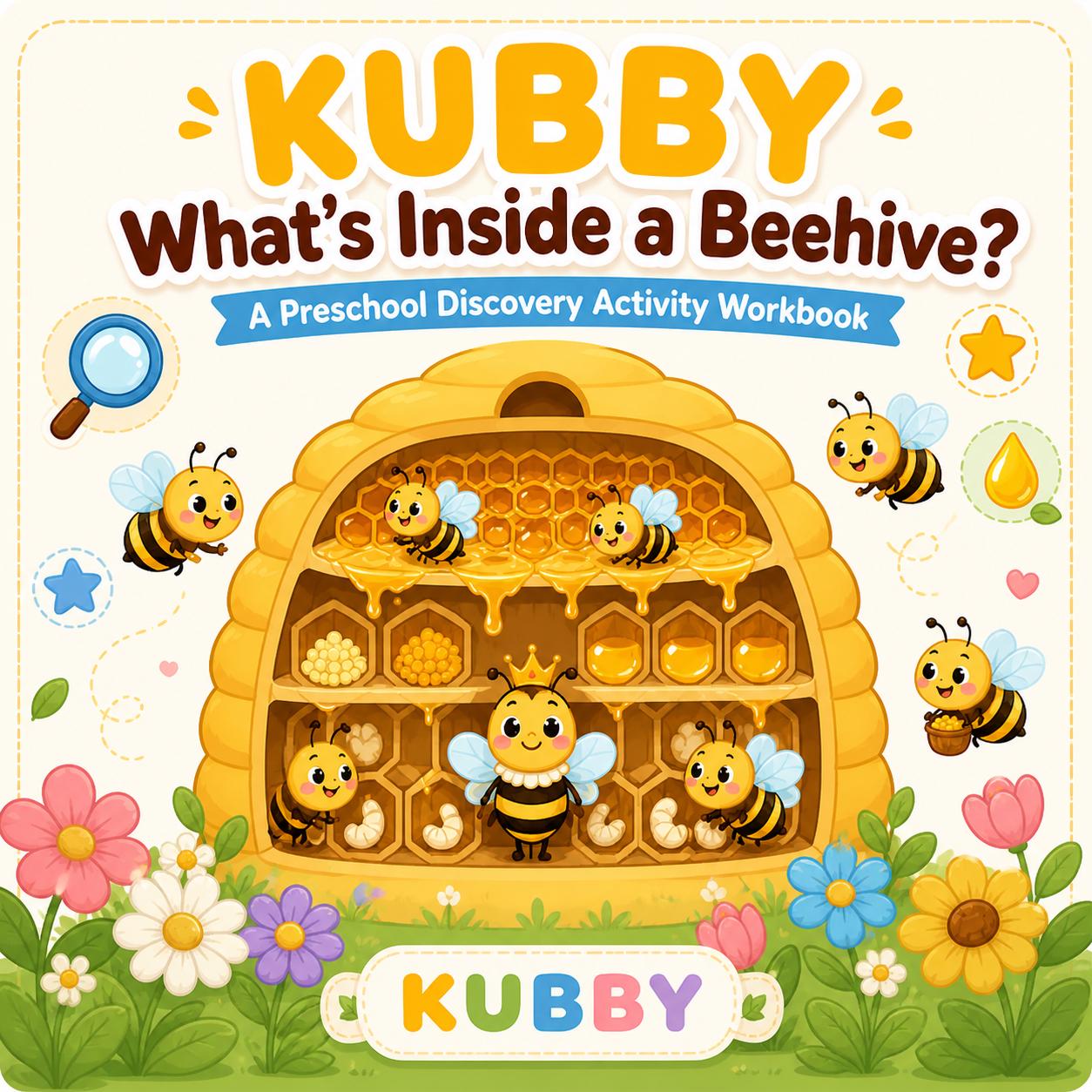
DISCOVERY ACTIVITY WORKBOOKBeehive Discovery 50-Page Printable Preschool Workbook
This 50-page printable workbook turns screen time into hands-on discovery time, guiding preschoolers through the secret world of bees, pollination, and beekeepers. With 25 double-page spreads pairing fascinating facts with immediate activities, it keeps little
My daughter stared at a blank page and said, “I don’t know what a bee looks like inside.”
That moment stopped me. She wasn’t struggling with art. She was struggling with not knowing enough to draw. And that’s actually a really common place for preschoolers to get stuck, especially when it comes to nature and science topics.
Science drawing worksheets for preschool sit at this exact intersection: give a child just enough structure and just enough knowledge, and suddenly they’re not just scribbling, they’re observing. That shift from random marks to intentional drawing is one of the earliest forms of scientific thinking.
If you’ve been searching for ways to help your 3-5 year old engage with science through art, this is the guide I wish I’d had.
Key Takeaways:
- Science drawing worksheets combine early art skills with genuine STEM observation habits
- Preschoolers draw better when given a visual reference or simple labeled diagram first
- The best worksheets are structured enough to guide but open enough to encourage creativity
- You don’t need art supplies beyond basic crayons and pencils to get real results
- Nature themes (bees, butterflies, flowers) work especially well for this age group
Why Preschoolers Struggle to Draw Science Subjects
Most 3-5 year olds are developmentally ready to draw simple shapes, but they hit a wall with science subjects because they haven’t observed the real thing closely enough to represent it on paper.
A butterfly is just “colorful wings” until a child learns it has four separate wing sections, antennae, and a body made of three parts. Once they know that, even a rough crayon drawing starts to reflect actual scientific thinking.
“Drawing is one of the most powerful tools young children have for communicating what they understand about the world.” - Kathy Hirsh-Pasek, developmental psychologist and co-author of Becoming Brilliant
This is why guided science drawing (where a worksheet prompts the child with a labeled reference or step-by-step visual) works so much better than a blank “draw a bee” prompt. The structure doesn’t limit creativity. It actually unlocks it.
The child who can’t draw a bee from memory draws confidently once they know what they’re looking at.
What Makes a Good Science Drawing Worksheet for Preschool
Not all worksheets are equal. After analyzing dozens of parent reviews and early childhood educator feedback, I’ve noticed a clear pattern in what works and what gets ignored after day one.
| Feature | Why It Matters | Age Appropriateness (3-5) |
|---|---|---|
| Visual reference image on the page | Gives child something to observe | Essential |
| Simple labeled diagram | Connects vocabulary to parts | Very helpful |
| Large drawing space | Supports developing fine motor control | Essential |
| Step-by-step guided drawing | Breaks complex shapes into manageable steps | Great for 4-5 year olds |
| Color-by-number or color prompts | Reduces overwhelm, builds confidence | Great for 3-4 year olds |
| Open-ended “what do you notice?” space | Encourages scientific thinking | Good for 4-5 year olds |
| Minimal text on the page | Reduces cognitive overload | Essential |
Pro Tip: Look for worksheets that include both a reference image and a blank drawing area on the same page. When children can glance back and forth between the model and their own drawing, you see noticeably more detail in their work, even at age 3.
The single most important feature is a visual reference the child can look at while drawing.
How to Use a Science Drawing Worksheet (Step by Step)
You don’t need to be an art teacher to run this activity well. Here’s the sequence that works best for preschool-age children, based on what early childhood educators consistently recommend.
Step 1: Introduce the Subject First (2-3 minutes)
Before handing over the worksheet, show your child a photo, a toy, or even a short video clip of the subject. If you’re doing a bee worksheet, watch a 60-second clip of bees flying into a hive. This primes their observation brain.
Step 2: Look at the Worksheet Together
Point to the reference image or diagram together. Name the parts out loud. “See this round part? That’s the bee’s abdomen. It has stripes.” You’re building vocabulary while warming up their observational skills.
Step 3: Let Them Draw Without Correction
This is the hardest part for most parents. Resist fixing the proportions or telling them the legs are in the wrong place. Scientific drawing at this age is about noticing and recording, not accuracy. Praise specifics: “I love that you drew the antennae. How many did you give it?”
Step 4: Ask One “Wondering” Question
When they finish, ask something open-ended: “I wonder why bees have stripes?” or “What do you think this part does?” You’ve just turned a drawing activity into a science conversation.
Step 5: Display It
Putting the drawing on the fridge or in a “science journal” (even just a stapled booklet) tells the child that their observations matter. It also makes them more likely to engage next time.
“When children see their work displayed and valued, their willingness to take creative and intellectual risks increases significantly.” - National Association for the Education of Young Children (NAEYC)
Five simple steps turn a worksheet into a complete early science lesson.
The Best Science Themes for Preschool Drawing Worksheets
Some subjects work much better than others at this age. Here’s what I’ve found consistently holds a 3-5 year old’s attention.
| Theme | Why It Works | Vocabulary You Can Introduce |
|---|---|---|
| Bees and hives | Familiar, lots of visual detail, connects to nature | Wings, abdomen, antennae, thorax, hive |
| Butterflies | Symmetry is easy to notice, beautiful colors motivate drawing | Chrysalis, proboscis, wings, lifecycle |
| Sunflowers | Clear structure, large parts easy to draw | Petals, seeds, stem, leaves |
| Frogs | Life cycle is compelling to kids, simple body shapes | Tadpole, legs, webbed feet, eggs |
| Snails | Slow enough to observe in real life, spiral is a fun shape | Shell, antennae, slime trail |
| Birds | Everywhere, lots of variety, easy to observe | Beak, feathers, talons, wingspan |
Bee-themed worksheets tend to perform especially well with preschoolers because bees connect to so many other concepts: flowers, honey, teamwork, and the seasons. If you want to go deeper on this theme, the Easy Bee Life Cycle Worksheet for Kids (From Egg to Honey) is a great companion resource.
Nature themes with visible structure (body parts, patterns, life cycles) work best for guided science drawing.
How Science Drawing Fits Into a Screen-Free Learning Routine
One thing I hear from parents constantly is that they want more meaningful screen-free time, but they struggle to fill it with activities that feel genuinely educational rather than just “busy.”
Science drawing worksheets check several boxes at once:
-
Fine motor development (holding crayons, controlling marks)
-
Early STEM thinking (observation, labeling, pattern recognition)
-
Language development (naming parts, describing what they drew)
-
Focus and attention practice (staying engaged with one task)
-
Creative expression (no two children draw the same bee)
According to the American Academy of Pediatrics, screen-free hands-on activities are especially important for children under 5 for supporting healthy brain development. Drawing and observation activities fit naturally into the quiet, calm part of the day, whether that’s morning table time, post-nap wind-down, or a rainy afternoon.
For a broader list of ideas that work alongside drawing worksheets, I’ve put together 35 Quiet-Time Screen Free Learning Activities for Preschoolers that pair well with any printable routine.
Science drawing gives preschoolers something rich to do with their hands and their minds, with no screen required.
What to Look For When Choosing a Printable Workbook
If you’re thinking about pulling together a set of science drawing worksheets rather than printing one page at a time, here’s a quick checklist for evaluating quality.
| Criteria | What “Good” Looks Like |
|---|---|
| Age range specificity | Designed specifically for 3-5 or pre-K, not a generic K-5 resource |
| Visual quality | Clear, simple illustrations (not clipart overload) |
| Page variety | Mix of drawing, coloring, labeling, and tracing |
| Theme coherence | Pages feel like they belong together and build on each other |
| Print-ready format | PDF format, standard letter size, no bleed issues |
| Guided drawing steps | At least some pages include step-by-step drawing breakdowns |
| Nature/STEM focus | Topics that connect to real-world science, not just cute pictures |
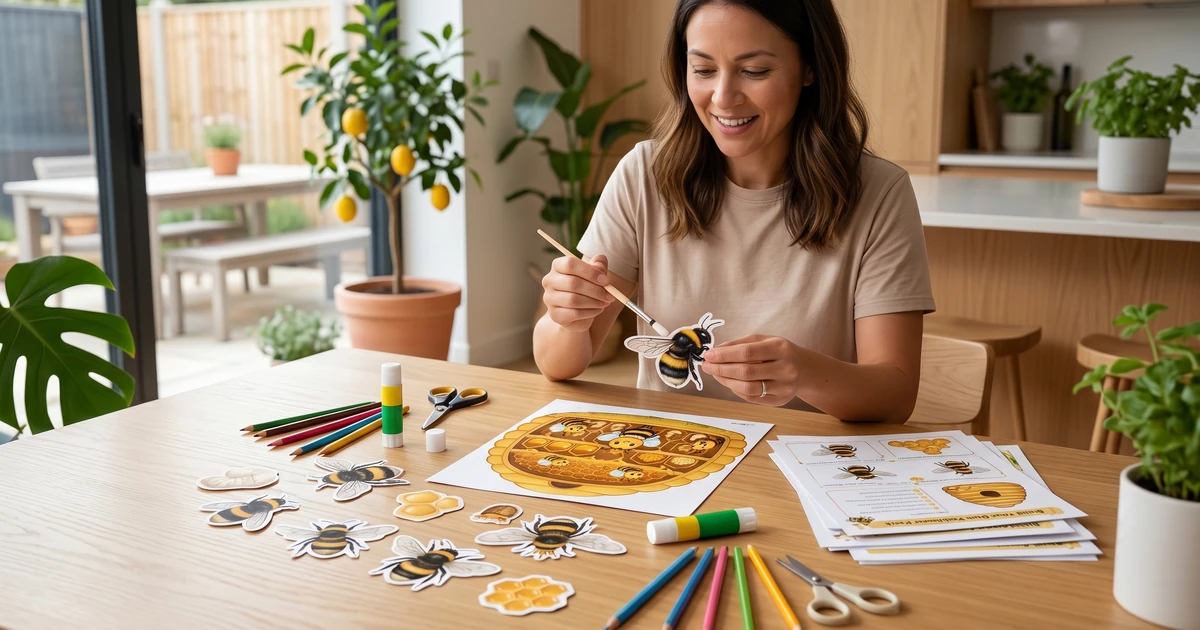
The KubbyLab Beehive Discovery Preschool Workbook was designed with exactly this framework in mind, covering bee anatomy, hive structure, pollination, and nature observation across 50 pages of printable activities. It’s one option worth knowing about if you’re looking for a ready-made set that covers the bee and pollinator theme in depth.
For more ideas in this category, the Build Your Own Pollinator Printable Pack for Kindergarten Science offers a flexible approach if you prefer to mix and match pages.
Cost Breakdown: Printing Your Own vs. Buying a Printable Pack
| Option | Typical Cost | Pros | Cons |
|---|---|---|---|
| Free printables (single pages) | $0 (ink + paper only) | Zero cost, easy to try | Inconsistent quality, no cohesion |
| Individual paid printables | $1-$3 per page | Good quality, specific | Adds up quickly for variety |
| Printable workbook pack | $5-$12 for 30-50 pages | Best value, cohesive theme | Upfront cost |
| Physical workbook (store-bought) | $8-$18 | No printing needed | Can’t reprint, fixed content |
Home printing typically costs $0.03-$0.08 per page in black and white, or $0.10-$0.20 per page in color, depending on your printer. A 50-page workbook printed at home in color runs roughly $5-$10 in ink and paper, making digital packs very cost-effective compared to store-bought options.
Read the Full Guide
For a complete look at how to build a science-based printable routine for your preschooler, including specific worksheet types, how to sequence activities by age, and a full breakdown of nature themes that work best for early learners, read the full resource here:
14 Screen-Free Preschool Printable Activities That Spark Nature Curiosity
It covers everything from first observation activities at age 3 through more structured science drawing at age 5, with practical tips you can use this week.
Frequently Asked Questions
Q: At what age can preschoolers start using science drawing worksheets?
Most children can engage with simple guided drawing worksheets starting around age 3, especially if the worksheet includes a visual reference image and large drawing space. At 3-4, the focus is more on coloring and copying basic shapes. By 4-5, most children can follow a step-by-step guided drawing and begin to label parts with help from a caregiver.
Q: Do science drawing worksheets actually help with STEM learning, or are they just coloring pages?
There’s a meaningful difference between a coloring page and a science drawing worksheet. A worksheet designed for STEM learning includes labeled diagrams, prompts children to observe and record, and introduces accurate scientific vocabulary. Research in early childhood education consistently shows that drawing from observation builds the same attention and categorization skills that underlie later scientific thinking. Pure coloring pages don’t do this, but guided observation drawing does.
Q: My child gets frustrated and says they “can’t draw.” How do I handle that?
This is extremely common and usually means the task feels too open-ended or the child lacks a visual reference. The fix is almost always to give them something to look at while drawing (a reference image on the worksheet itself) and to break the subject down into steps. Starting with “draw a big oval for the bee’s body” rather than “draw a bee” removes the overwhelm completely. Worksheets with built-in step-by-step guidance handle this automatically.
Q: Can I use these worksheets without any other art supplies?
Yes. Basic crayons and a pencil are all that’s needed. Some children enjoy using washable markers for bolder color, but there’s no need for anything specialized. The worksheet does the heavy lifting in terms of structure, so the supplies can stay simple.
Q: How long should a preschooler spend on one science drawing worksheet?
Most preschoolers stay focused on a single worksheet for 10-20 minutes, which is actually a good length for this age group. Some children spend longer if the topic has really caught their interest. Short sessions work fine too, and there’s no need to finish a page in one sitting. The goal is engagement and observation, not completion.
Take the Next Step!
Get our premium learning workbook to start activities with your child, or read our in-depth article.
Recommended Resources & Workbooks
Pair this guide with our hands-on, ready-to-print learning resources.
 Digital Bundle
Learn to Read Program: Levels 1-3
170 sequenced phonics lessons across 199 pages, from first letter sounds to fluent long-vowel reading.
 Digital Learning Bundle
Preschool Learning Bundle
260+ printable worksheets for tracing, ABCs, numbers, shapes, sight words, and kindergarten prep.
 Digital Learning Bundle
Play-Based Learning Bundle for Ages 3-6
230+ play-based learning activities with pretend play, reading, early math, creative arts, and bonus flashcards.
Related Guides & Articles
Explore more of our detailed guides and activities.
14 Screen-Free Preschool Printable Activities That Spark
Discover 14 captivating screen-free preschool printable activities that introduce nature and science. Perfect for quiet time, travel, and curious 3...
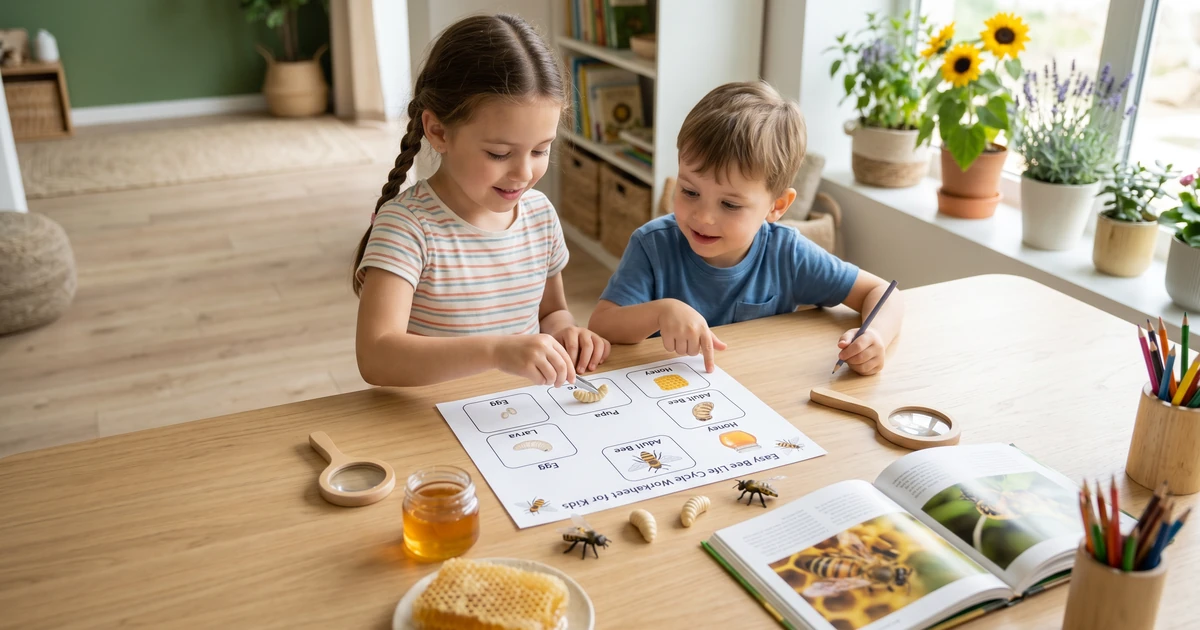
Easy Bee Life Cycle Worksheet for Kids From Egg to Honey
Teaching young children about nature is one of the most rewarding things you can do as a parent or educator. And the bee life cycle worksheet for kids
Build Your Own Pollinator Printable Pack for Kindergarten
Kindergartners are naturally drawn to bugs, flowers, and anything that buzzes or flutters past a window. A well-designed pollinator printable pack ...
35 Quiet-Time Screen Free Learning Activities for Preschoolers
Screen time for preschoolers is one of the most debated topics in early childhood education right now. Parents ask me constantly: "How do I keep my...